
If you have asked three agencies how much SEO costs and gotten three different answers, you are not doing anything wrong. SEO pricing moves with your industry, your site size, the disciplines in the scope, and the people doing the work, so the honest answer comes with numbers attached, not a shrug. Below, we break down the real pricing models, what businesses pay each month, what the different types of SEO cost, where AI search fits in, and the point at which the investment starts paying you back.
Key takeaways from this breakdown:
- Most SEO is sold as a monthly retainer. About 53% of providers use a retainer as their primary model because the work compounds month over month.
- Real monthly ranges are wide but predictable. Starter work runs $500 to $1,000, most small businesses land at $1,500 to $2,500, and competitive national programs sit at $3,000 to $5,000 or more.
- SEO is several disciplines, not one fee. Technical, content, local, and link work each carry their own cost, and content usually takes the largest slice.
- AI search is now a core layer. Generative and answer engine optimization runs roughly $1,500 to $8,000 a month, and AI search visitors convert far better than standard organic clicks.
- SEO pays nothing for the first few months, then starts to climb. A typical program reaches break-even near month nine and compounds from there.
- A low quote is a warning, not a win. Cheap SEO usually buys templated work or offshore execution that costs you more to fix later.
How do SEO providers actually price the work?
Before you compare quotes, you need to know what you are comparing. Three pricing models cover almost every engagement, and the one a provider leads with tells you how they think about the work. The monthly retainer dominates because SEO is continuous. Each month builds on the last instead of starting over, so a fixed fee for an ongoing scope matches how results actually accumulate.
The three models you will see on a proposal:
- Monthly retainer: a set fee for a defined scope of technical work, content, links, and reporting. Best when you want steady, compounding growth.
- Hourly: useful for audits, second opinions, or occasional strategy tweaks where you do not need a full program.
- Per-project: a one-time fee for a fixed deliverable like a migration or a technical cleanup, with a clear start and end.
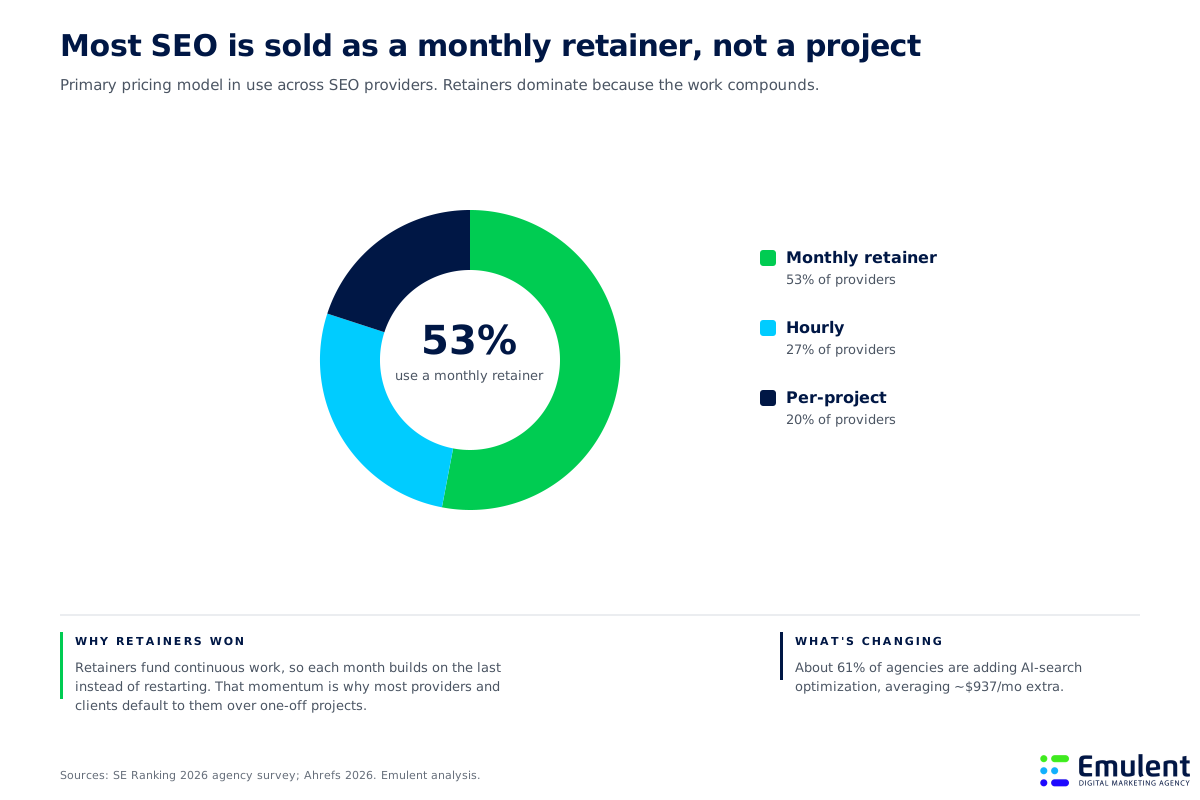
When a provider pushes a one-time project for ongoing growth, that is a mismatch between the model and the goal. Retainers win because rankings are an asset you keep building, not a box you check once. – Emulent Strategy Team
Knowing the model is step one. The number that follows it depends almost entirely on the size of your business and the competition you face, which is where real monthly ranges come in.
What should you expect to pay each month?
Monthly retainers scale with ambition. A solo plumber competing in one town and a national software brand fighting for the same keywords as venture-backed rivals are not buying the same product, even when both invoices say “SEO.” The four tiers below cover where most businesses actually land. Local SEO work at the entry level covers Google Business Profile management and light content. Programs for enterprise SEO at the top of the range fund deep technical work, large content operations, and serious link budgets.
What each monthly tier typically buys:
- Starter ($500 to $1,000): profile management, basic local optimization, and a monthly report. Enough to stay visible, not enough to win a hard market.
- Local and small business ($1,500 to $2,500): fresh content, citation building, review generation, and competitor tracking. Where most local winners sit.
- National and competitive B2B ($3,000 to $5,000+): multi-channel content, technical depth, and active link earning for crowded keywords.
- Enterprise ($10,000 to $20,000+): large-site architecture, specialist teams, and the budget to compete at scale.
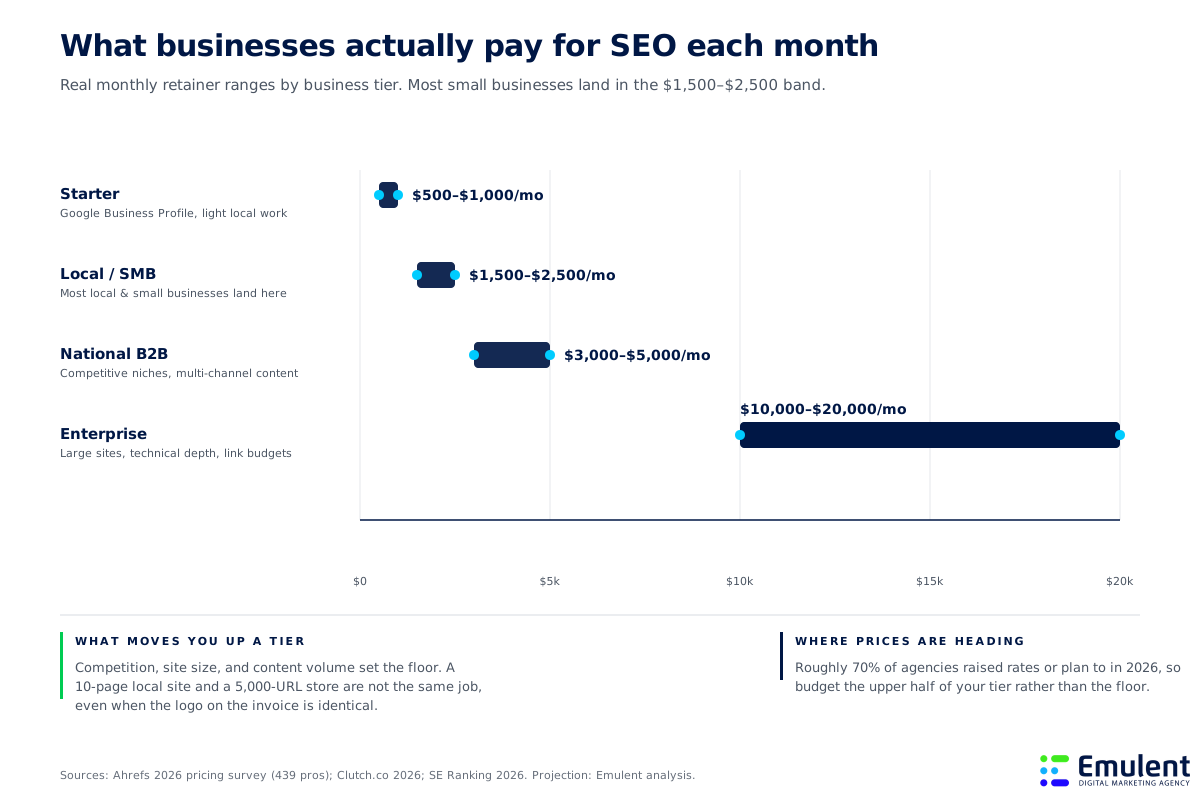
If you choose a tier below your competition, you pay for motion without movement, and the spend quietly disappears. Picking the right tier matters more than picking the lowest price, and it helps to set that budget against your other channels using marketing budget benchmarks for your industry. The monthly figure also hides a second variable: the hourly value of the people behind the work.
Why do hourly rates swing from $70 to $170?
Even inside the same model, who does the work changes the rate sharply. The gap is not random. It tracks the level of judgment you are paying for. A freelancer executes tasks, an agency fields a delivery team, and a consultant sells strategy and accountability. Each is the right answer for a different problem, so the question is not which rate is fairest but which role you actually need.
How the three provider types compare on rate:
- Freelancers (about $72 an hour): strong for defined, hands-on tasks when you already own the strategy.
- Agencies (about $99 an hour): a built-in team across technical, content, and links, priced for coordinated delivery.
- Consultants (about $171 an hour): senior strategy and decision-making, best when direction matters more than volume.
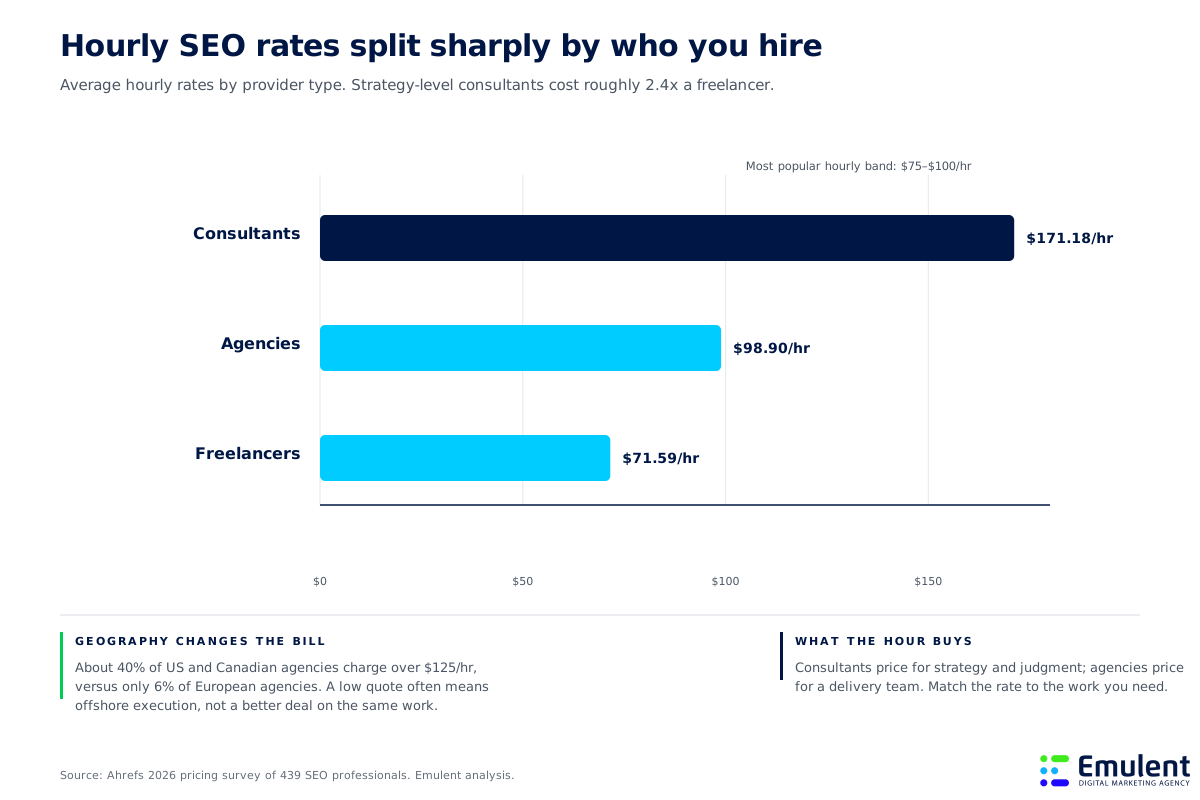
Geography matters too. About 40% of agencies in the United States and Canada charge over $125 an hour, compared with only 6% in Europe, so a quote far below the local norm often signals offshore execution rather than a better deal for the same work. Rates explain the line items, but they do not explain why two providers at the same rate can quote wildly different totals. That comes down to what actually drives the price.
What actually drives your SEO price up or down?
Two businesses can get quotes that differ by thousands of dollars for honest reasons. Price tracks the real hours and expertise a campaign demands, and a handful of factors set that demand. Understanding them lets you read a proposal critically instead of guessing whether you are overpaying.
The factors that move your quote the most:
- Competition: ranking in finance, legal, or e-commerce takes far more work than a low-competition local niche, and the budget follows.
- Site size and condition: A clean ten-page site is cheaper to grow than a 5,000-URL store with technical debt.
- Content volume: a serious content strategy with several pages a month is often the single largest line item.
- Link earning: outreach and authority-building are labor-intensive, and credible links do not come cheap.
- Starting point: a site with existing content and clean technical health reaches returns faster than one starting from zero.
Those drivers vary across parts of a program, so the next useful view is a breakdown of the cost of each discipline.
What do the different types of SEO cost?
SEO is not one service. It is a stack of disciplines, and a retainer is really a blend of them weighted to your situation. Seeing the typical cost of each helps you judge whether a scope is balanced or padded. A proposal that is all content and no technical work, or all links and no on-page foundation, usually signals a gap you will pay for later in weak results.
The core disciplines and what they typically run per month:
- Technical SEO ($500 to $3,000): crawlability, site speed, structure, and schema. The foundation everything else stands on.
- On-page and content ($1,500 to $5,000): the pages that earn rankings and answer intent, and usually the biggest slice.
- Local SEO ($500 to $2,000): profile management, citations, and reviews for businesses that serve a defined area.
- Link building ($1,000 to $5,000): outreach and authority work, priced based on the strategy required to earn quality links.
- AI search, GEO, and AEO ($1,500 to $8,000): the newest layer, and the one with the widest price spread.
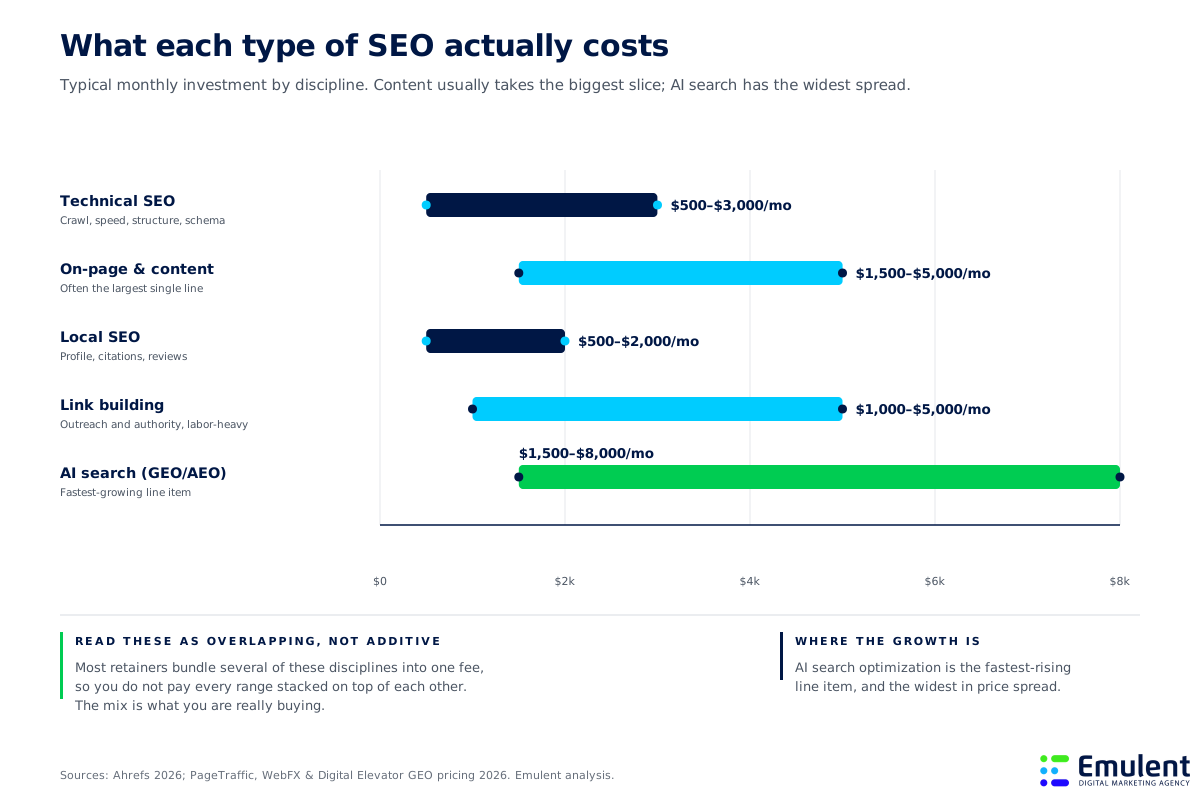
Read these as overlapping, not additive. Most retainers bundle several disciplines into one fee, so you are buying a mix rather than stacking every range on top of each other. Once you can see the pieces, the real question is when the whole program pays you back.
When does SEO actually pay for itself?
SEO does not behave like paid ads, where traffic starts and stops with the budget. It follows an S-curve. The first months fund the foundation with little visible return, results accelerate as rankings compound, then growth eases as the easy wins are captured. For a typical business in a moderately competitive market, break-even arrives somewhere between months six and twelve, with month nine a reasonable middle estimate. After that, the same content keeps working without paying per click.
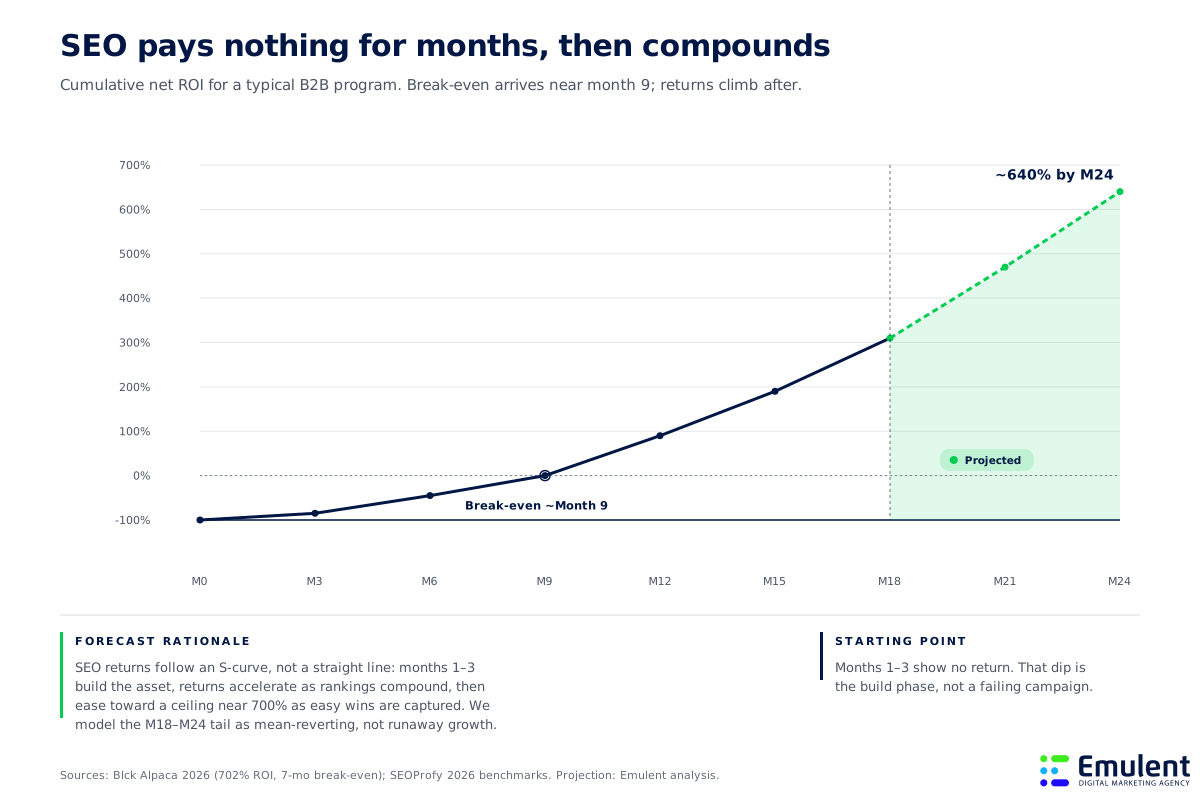
The compounding is what makes the math work. Industry benchmarks put mature B2B programs around 700% ROI, and organic leads close near 14.6% against 1.7% for outbound. You can run a rough number yourself in four steps.
A simple way to estimate your SEO return:
- Estimate added monthly organic revenue: projected organic visitors times conversion rate times average deal value.
- Total your annual SEO cost: retainer plus tools and any content fees.
- Sum the revenue across the year: remember it builds gradually, not all at once.
- Apply the formula: ROI equals revenue minus cost, divided by cost, times 100.
The teams that abandon SEO at month four are usually right on the edge of return and never see it. The mistake is judging a compounding asset on a linear timeline. – Emulent Strategy Team
Comparing that return against your paid channels is the clearest way to justify the spend. It helps to hold it next to your average cost per lead and your customer acquisition cost benchmarks, since organic acquisition cost trends toward zero as traffic compounds. For in-house teams weighing the build-versus-partner question, our guide on how SEO agencies boost ROI for in-house marketers covers where outside help pays off. With the return understood, the last budgeting question is which direction prices are heading.
Will SEO get cheaper or more expensive from here?
Plan for prices to rise, not fall. The global SEO services market was near $81 billion in 2024 and is projected to reach about $172 billion by 2030, with a compound annual growth rate above 13%. Growing demand drives provider rates up, and survey data already shows about 70% of agencies raising fees or planning to do so.
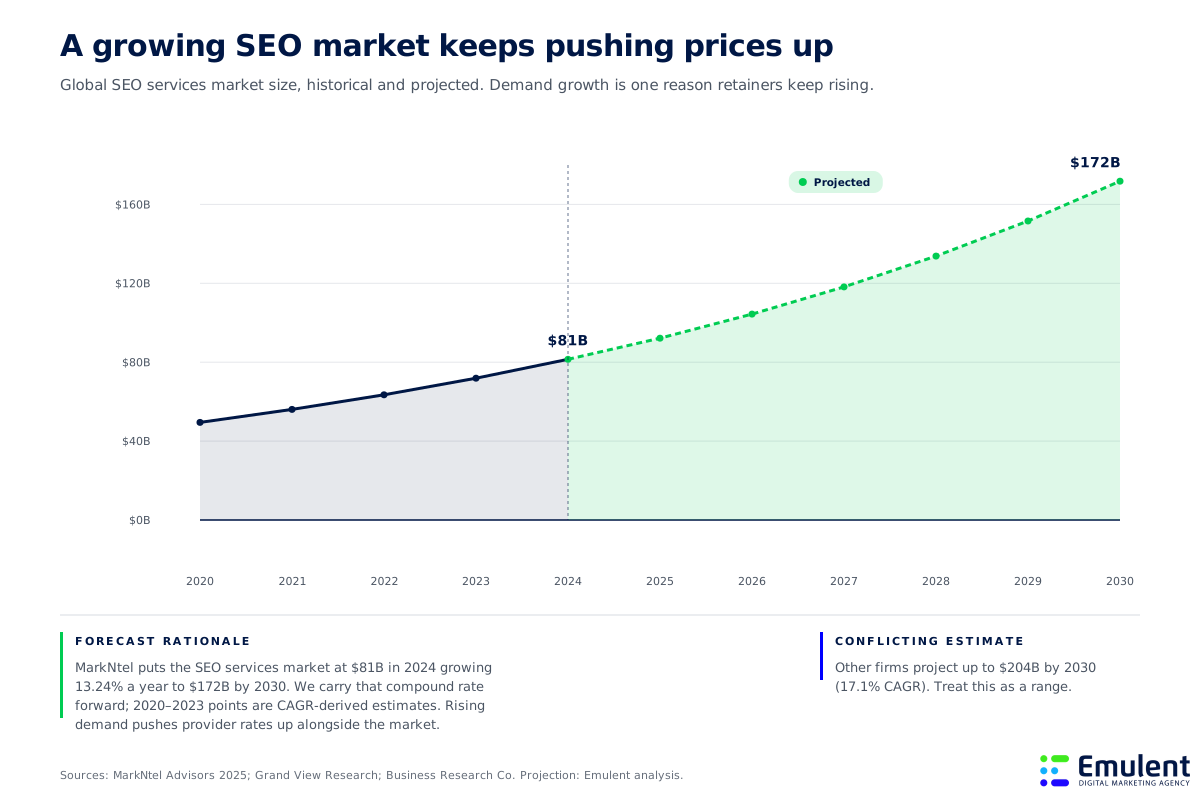
You can follow how the work itself is shifting in our ongoing coverage of SEO trends. The takeaway for budgeting is simple: lock in a strong program now rather than waiting for a cheaper market that is not coming. The clearest example of that upward pressure is the newest discipline on the list, where search is moving inside AI answers.
How much should you budget for AI SEO?
Search is no longer just a page of blue links. As Google AI Overviews and assistants like ChatGPT, Gemini, and Perplexity answer questions directly, a growing share of discovery happens within AI responses; your site needs to be cited in them. AI search optimization is the work of earning those citations, and it blends content structure, entity consistency, schema, and digital PR. Most mid-market programs run $2,000 to $8,000 a month, with entry-level monitoring closer to $1,500 and enterprise programs reaching well beyond that.
What the AI SEO budget actually covers:
- Answer engine optimization (AEO): structuring content with direct answers, FAQ schema, and clean markup so models can quote your pages.
- Generative engine optimization (GEO): building consistent brand entity signals across the sources AI systems trust for consensus.
- Citation tracking: monitoring whether and how often AI mentions your brand, since rankings alone no longer tell the story.
- Cross-platform coverage: a search everywhere optimization approach that treats Google, AI Overviews, and chat assistants as one connected surface.
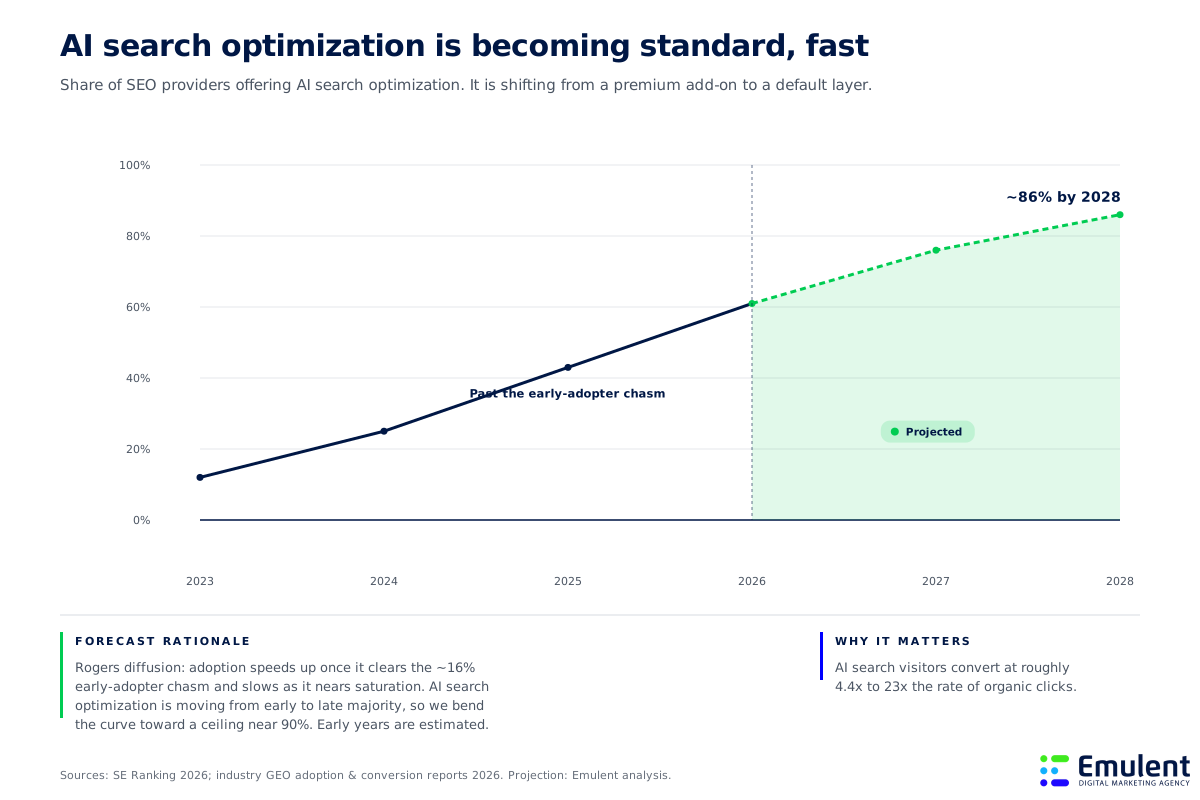
AI search is following the same adoption curve every channel does. The brands that treat it as optional today are the ones paying a premium to catch up in two years. – Emulent Strategy Team
The reason it earns the budget is conversion. AI search visitors arrive with a recommendation already in hand and convert at several times the rate of a cold organic click, which changes the return math in its favor. Because the field is new and loosely defined, it also attracts the kind of low-quality offers worth learning to spot.
How do you spot cheap SEO that will cost you more?
The most expensive SEO is the kind you have to undo. Discount providers tend to cut corners with templated tactics or risky shortcuts that can trigger penalties and erase months of progress. A price far below the ranges above is the clearest signal to slow down and ask harder questions.
Warning signs worth walking away from:
- Guaranteed number-one rankings: no honest provider can promise placement Google controls.
- One-size-fits-all packages: templated plans ignore the cost drivers and disciplines that make your situation unique.
- Hidden line items: link building and content quietly billed on top of a low headline retainer.
- AI SEO as a buzzword: a cut-rate quote for AI search usually means bulk content with new labels, not real entity and citation work.
- No clear reporting: if you cannot see what the work produced, you cannot judge the return.
A suspiciously low quote is rarely a discount on the same work. It is usually a smaller scope or a riskier method, and you pay the difference later in recovery. – Emulent Strategy Team
The goal is not to find the cheapest provider but the one whose scope, method, and reporting match the result you need.
Getting SEO pricing right with Emulent
The honest version of SEO pricing comes down to matching the model, tier, right mix of disciplines, and provider to your actual competition and goals, and then holding the spend accountable to a return you can see. Our team builds programs scoped to where you compete, with transparent reporting and a clear path to break-even, so your budget funds growth rather than guesswork. If you want help pricing, scoping, or auditing your SEO, schedule a digital marketing consultation with the Emulent team, and we will give you a straight answer.