
Most SEO coverage for 2026 starts in the same place: AI Overviews are everywhere, zero-click is up, organic clicks are down. The headlines are accurate, but they stop short of what marketing leaders actually need to decide. The useful question is how these trends interact with each other, where they leave traffic on the table, and what the data says about budgeting your next four quarters. We pulled together seven trend lines that we think reframe the 2026 picture, each one paired with a forecast we are willing to defend.
Key takeaways from the 2026 search data:
- The open web’s audience keeps shrinking. About 65% of US Google searches end without a click, and that figure rises to 83% on queries that trigger an AI Overview.
- Position 1 is not what it used to be. When an AI Overview appears, the top organic result loses roughly two-thirds of its clicks (27.6% to 9.1%).
- Top-10 rank no longer guarantees AI Overview citation. Overlap fell from 75% in Q2 2025 to 28% in Q2 2026, and is projected to stabilize near 20%.
- Younger searchers fragment by platform. Among Gen Z, TikTok hits 65% and ChatGPT-style tools hit 42% as a search starting point, while Boomers still funnel 91% of search through Google.
- AI referrals are small but high-quality. ChatGPT and Perplexity send less than 1% of total referrals, yet those visits convert at roughly 14%, about 5.1 times Google organic.
- Budget is following behavior. 60% of marketing teams have reallocated SEO budget toward AI search optimization in 2026, with adoption tracking a Rogers diffusion S-curve.
What does the long-term zero-click trend actually tell us?
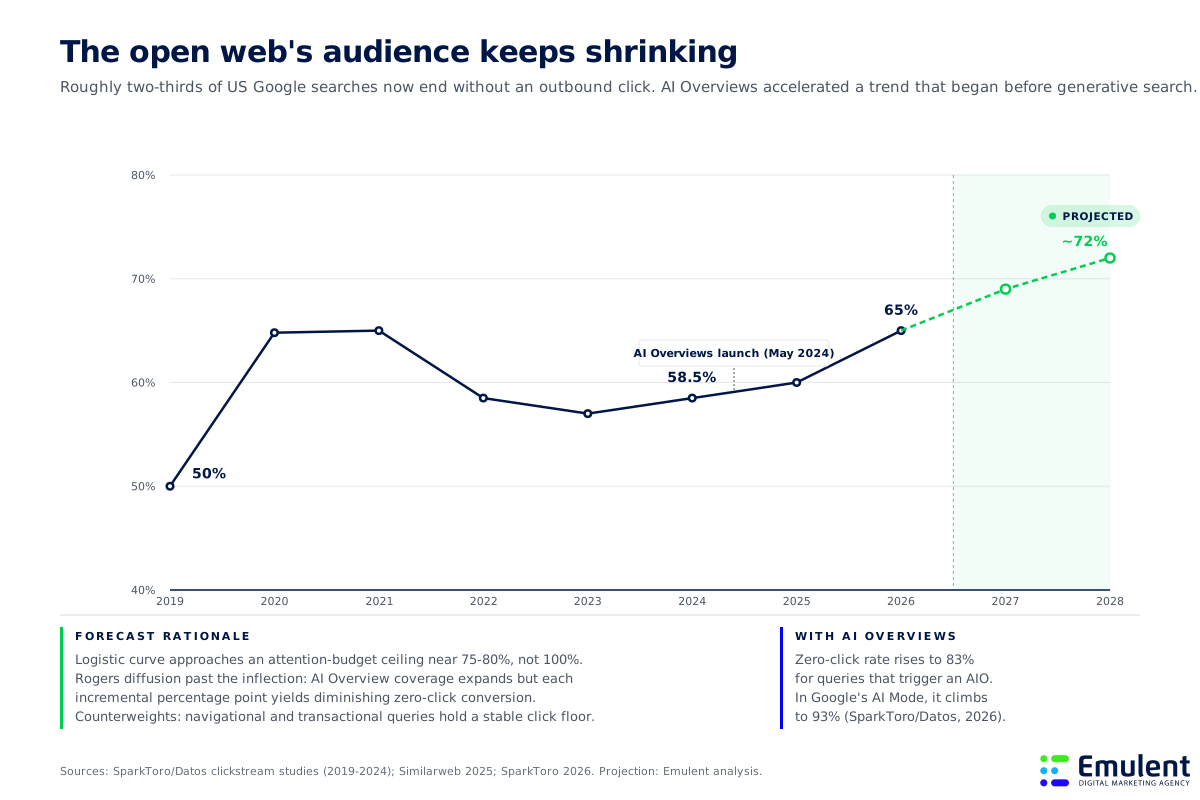
The zero-click trend did not start with AI Overviews. SparkToro and Datos measured a 50% zero-click rate in 2019, two years before the first Helpful Content System rollout. That baseline matters because it tells us the SERP was already absorbing query intent through featured snippets, People Also Ask boxes, and Knowledge Panels well before generative search arrived. AI Overviews accelerated a curve that was always pointing the same direction.
Our projection lands at roughly 72% by 2028, not 90%. Three behavioral effects pull against a runaway curve:
- Saturation ceiling. Navigational and transactional queries have a hard floor for clicks because users need to reach a destination to complete the task. That floor sits around 25 to 30% of all queries and will not shrink to zero.
- Diminishing returns on AIO expansion. Each new query type Google covers with an AI Overview converts a smaller share of users to zero-click behavior than the last. The early wins were informational queries; the next tranche has lower marginal yield.
- Counterweight: branded demand. As marketers respond to traffic loss by investing in brand awareness, branded queries grow, and those queries click through at near-normal rates.
“We tell clients to stop treating zero-click as an emergency and start treating it as a planning input. The 2019 baseline says this was always coming. The right response is to redesign measurement so impressions in the SERP count as much as outbound clicks.” – Emulent Strategy Team
The trend line sets the context for everything that follows. The next question is how steeply the click loss hits any individual ranking position.
How big is the click loss when AI Overviews appear in your SERP?
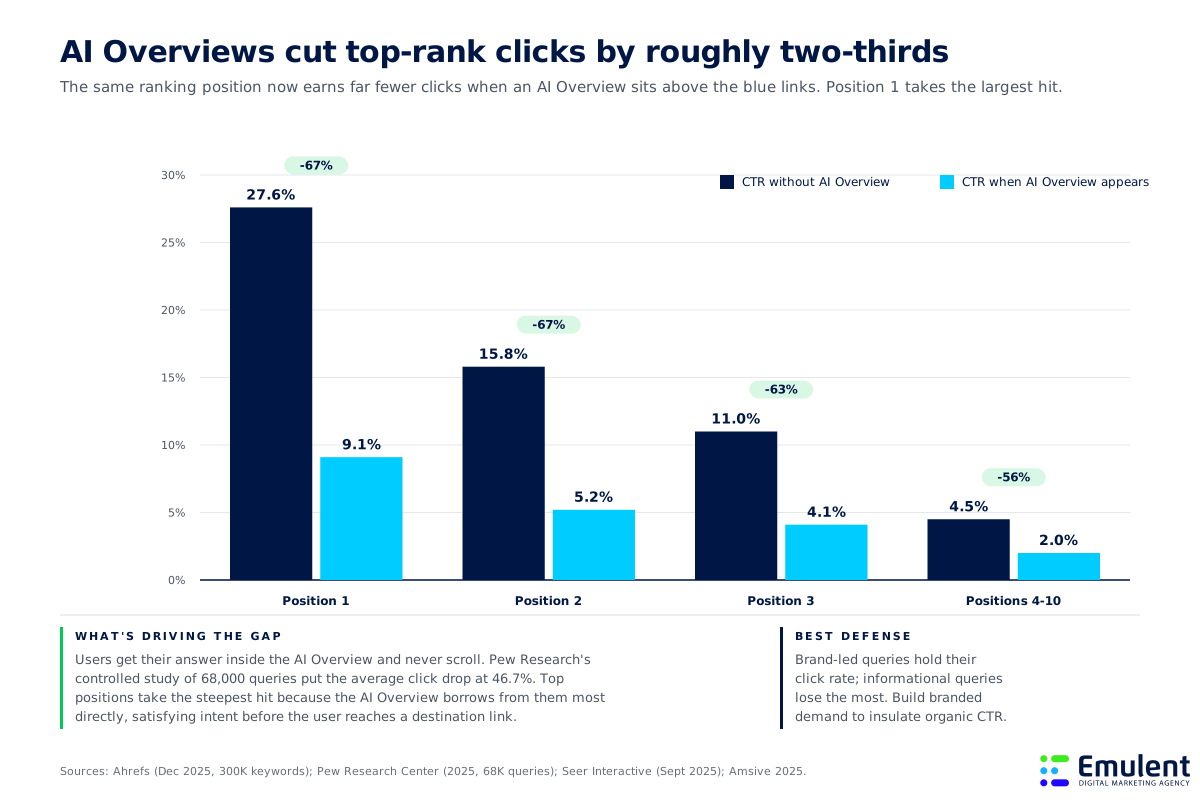
Pew Research’s controlled study of 68,000 queries placed the average click decline at 46.7% when an AI Overview appears. Position-level data from Ahrefs (December 2025) and Seer Interactive (September 2025) is rougher on the top ranks. Position 1 loses about two-thirds of its clicks. Position 2 loses almost the same. Long-tail positions hold up better in percentage terms because they were earning so little to begin with.
What this implies for how you should diagnose traffic loss:
- Page-by-page, not site-wide. Site-level traffic declines mask which pages are bleeding and which are stable. Compare 12-month CTR per page in Google Search Console before assuming you have a domain problem.
- Impressions are the new headline metric. Pages with rising impressions and falling clicks are still earning visibility, just not traffic. That is a brand and citation opportunity, not a ranking failure.
- Brand queries are partial insurance. Branded search retains close to its pre-AIO click rate. The largest declines hit unbranded informational queries.
Position-level CTR loss explains the magnitude of the change. The next layer is which query types Google chooses to summarize with an AI Overview in the first place.
Which query types still send clicks to your site?
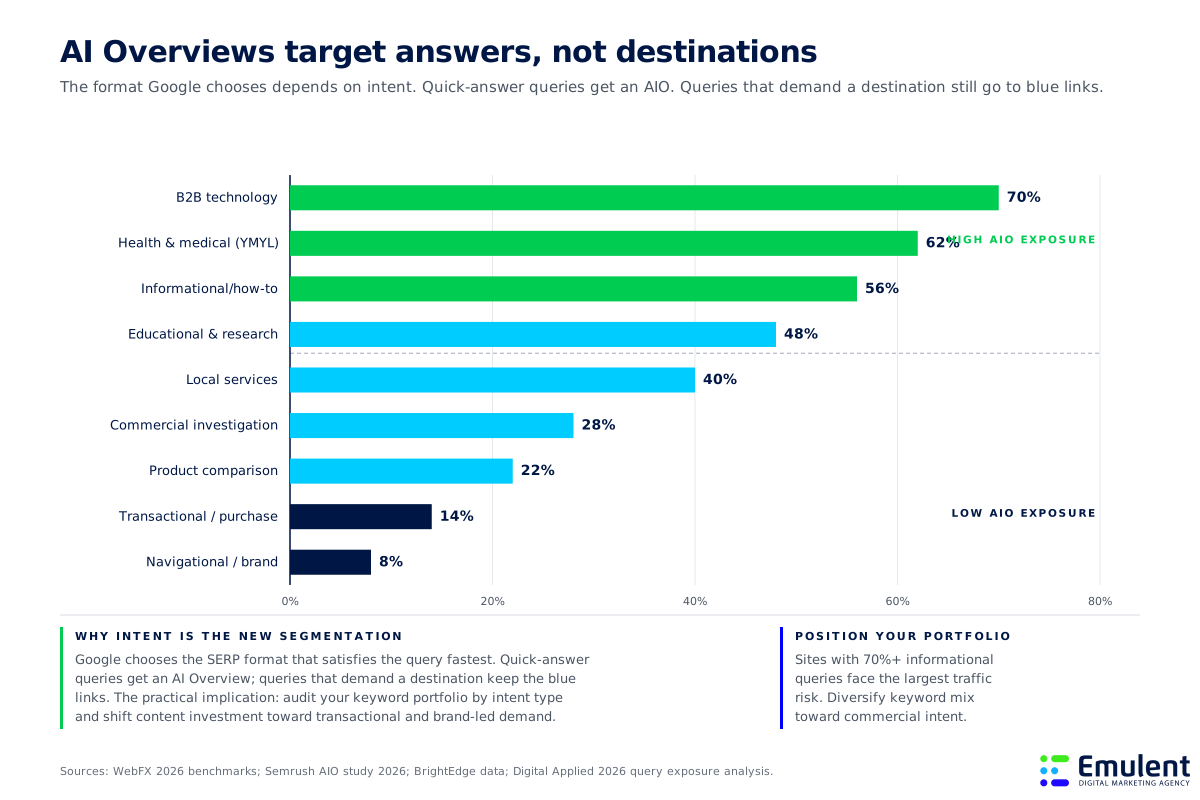
Not every query gets an AI Overview, and the gap by intent is large. B2B technology and YMYL health queries trigger AIOs more than 60% of the time. Transactional and navigational queries trigger them less than 15% of the time. The split is not random. Google chooses the format that satisfies the query fastest. When a user wants a quick answer, AI Overview wins. When the user is heading to a destination, the blue links still earn the click.
This single chart tells you where to spend the next quarter of content investment. AI SEO services and content strategy services typically start with an intent audit before any keyword work, because the wrong intent mix puts you in the highest-exposure zone of the SERP.
Three moves that protect click-dependent revenue:
- Audit your keyword portfolio by intent. Map every ranking keyword to one of: informational, commercial, transactional, or navigational. If more than 60% of your traffic comes from the informational bucket, you have a structural exposure problem.
- Build commercial and transactional depth. Product comparison pages, pricing pages, and decision-stage content all sit in the lower-AIO-exposure band of the SERP.
- Treat informational content as citation bait. The page may not earn the click anymore, but if it gets cited in the AI Overview, your brand surface area grows for free.
Intent decides what shows up in the SERP. The next force shaping search is what happens outside Google entirely.
Where do younger searchers go before they ever reach Google?
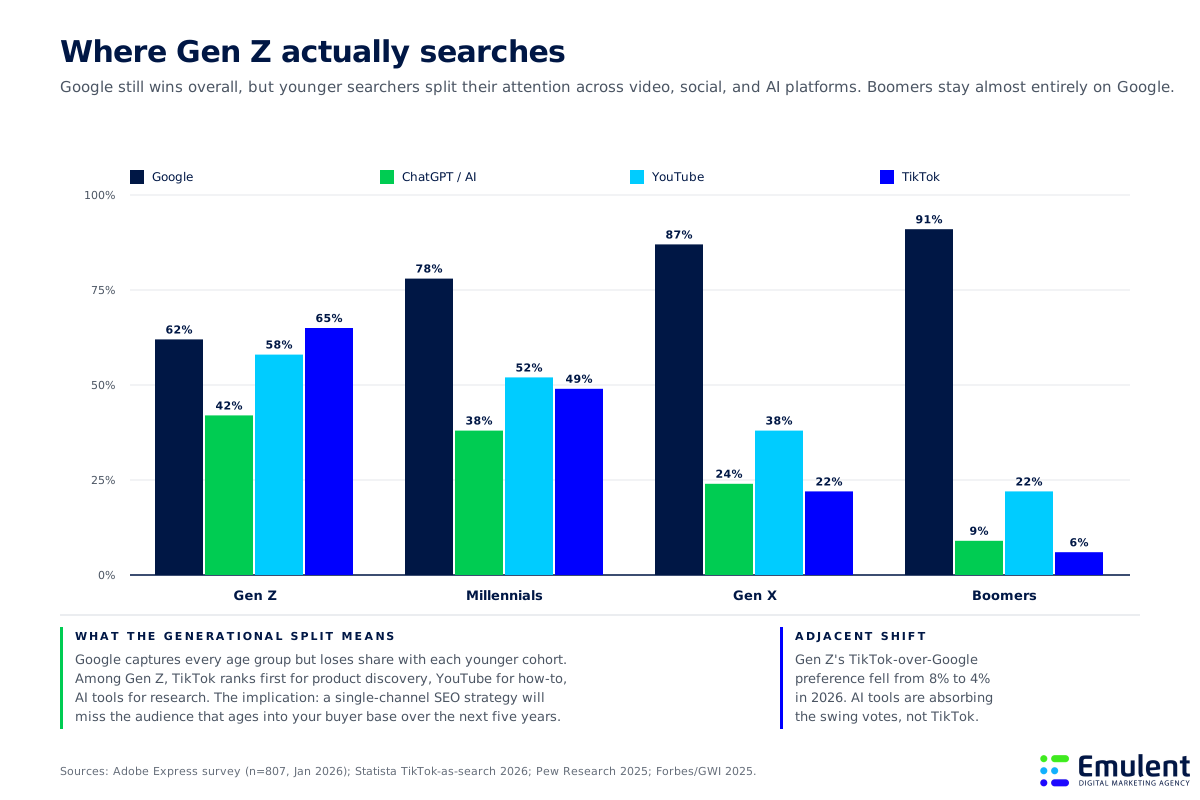
The Adobe Express survey of 807 US consumers (January 2026) put Gen Z’s TikTok-as-search usage at 65%, with YouTube at 58% and ChatGPT-style tools at 42%. Google still wins on absolute usage at 62%, but it is no longer the default starting point. Boomers, by contrast, run 91% of their search through Google.
Two things in this chart deserve attention. First, the gap between generations is widening, not converging. Second, Gen Z’s preference for TikTok over Google fell by half between 2024 and 2026 (8% to 4%), and the absorbed preference appears to be moving to AI tools rather than to Google. That is the actual structural threat, and it is why search everywhere optimization has shifted from a buzzword to a budget line item.
“A single-channel SEO program will get you ranked on Google. It will not get you discovered. We now treat YouTube transcripts, TikTok hooks, Reddit visibility, and ChatGPT citation as the same project, because for our clients’ buyer cohort under 35, they are.” – Emulent Strategy Team
If your buyer base ages into Gen Z over the next five years, the fragmentation chart is your strategic horizon. The next chart shows how that fragmentation is already reshaping which pages get cited where.
Does a top-10 ranking still earn an AI Overview citation?
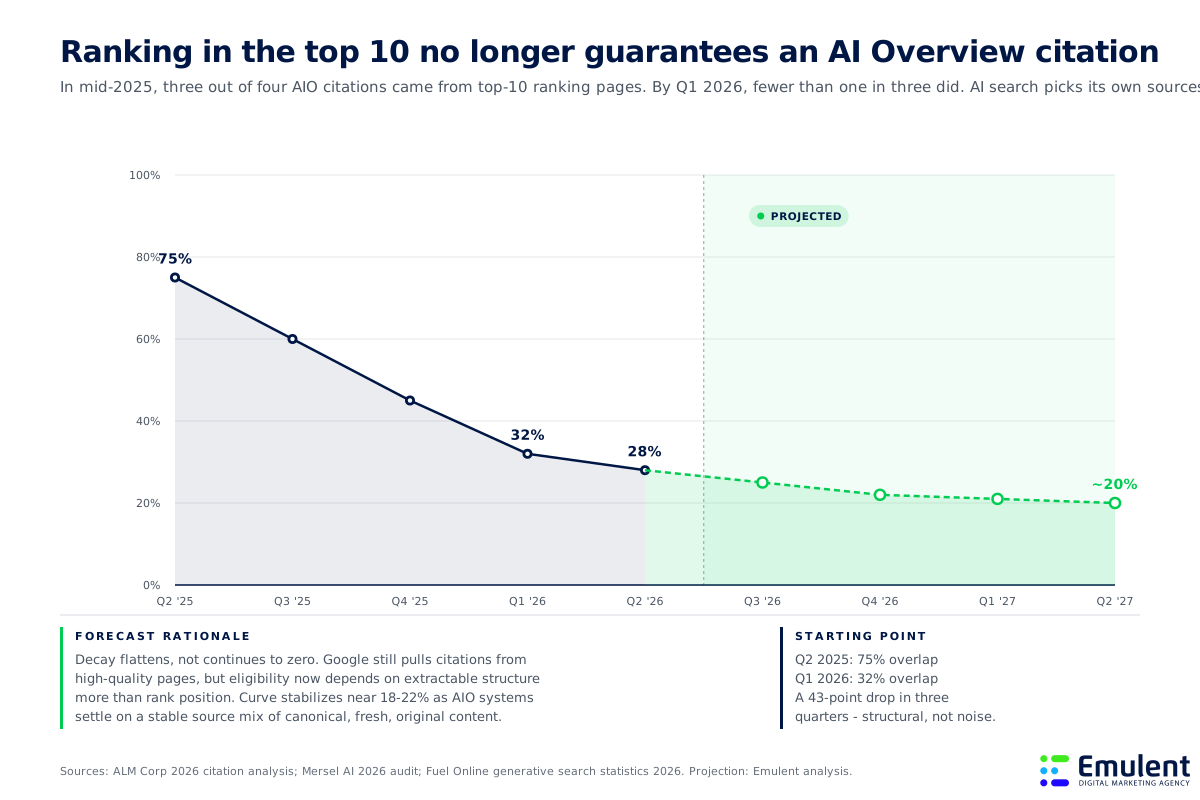
This is the chart that has reshaped our conversations with clients more than any other in 2026. ALM Corp and Mersel AI both measured the overlap between top-10 organic rankings and AI Overview citations through the second half of 2025 and the first half of 2026. The drop is steep: 75% overlap in Q2 2025, 28% by Q2 2026. Ranking pages and cited pages are no longer the same set.
Google’s Information Gain patent (US20200349181A1) describes the underlying mechanism. AI Overview eligibility is increasingly tied to whether a page adds information the existing answer set does not already contain. A page can rank well on conventional signals (links, authority, intent match) and still be invisible to the AI Overview because it duplicates information that other sources already provide.
What changes if AIO citation matters more than blue-link rank:
- Original data and first-party research move up the priority list. SE Ranking found that sites with original data gained 22% in visibility after the March 2026 core update. Paraphrased content lost 71% of its traffic.
- Author authority moves from “nice to have” to “structural.” The Helpful Content Update and the March 2026 core update both weight verifiable experience signals more heavily than before. Anonymous content is losing ground regardless of quality.
- Schema and answer structure are now extraction infrastructure. The model has to be able to pull a clean answer from your page. FAQ schema, clear heading hierarchy, and direct-answer paragraphs are no longer optional.
If rank is decoupling from citation, then the value of a click that does arrive should rise. The next chart shows that exactly that is happening.
Why does AI-referred traffic convert at five times the rate of Google organic?
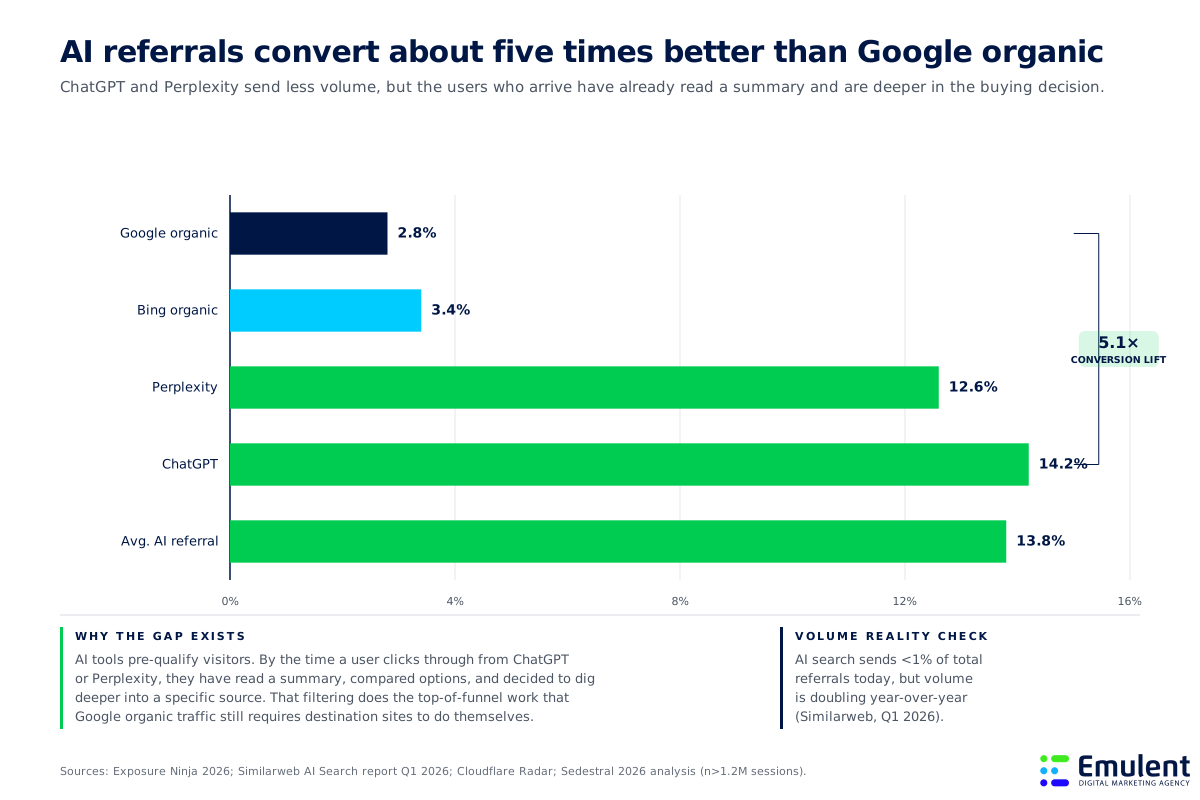
Exposure Ninja’s 2026 analysis put the ChatGPT conversion rate at 14.2%, compared to 2.8% for Google organic. Similarweb’s Q1 2026 AI Search report and our own client data both put Perplexity at a similar range. The 5.1x lift is consistent across enough independent measurements that we are comfortable calling it real and durable.
The mechanism is simple and worth understanding clearly. A user who arrives from ChatGPT has already done the comparison. They read the synthesized answer, identified the source that fit their need, and clicked through specifically to dig deeper. That pre-qualification work used to happen on the destination site, often across multiple sessions. AI search compresses it into one prompt, which means the visit that arrives is much further along the funnel.
Three implications for how you measure SEO success in 2026:
- Volume metrics undersell AI-referred traffic. A 1% share of referrals at 14% conversion is doing more revenue work than a 30% share at 2.8% would suggest at first glance.
- Citation tracking is the new rank tracking. Platforms like Topify and BrightEdge now track brand citation frequency across ChatGPT, Perplexity, and Gemini. Without that visibility, you cannot quantify the channel.
- Conversion attribution windows need to widen. AI-mediated discovery can happen days before a direct visit, and last-touch attribution will misallocate credit to branded search or direct traffic.
The conversion data answers the “is this channel worth investing in” question with a yes. The last chart shows that marketing teams have already started moving.
How are marketing teams reallocating budgets in 2026?
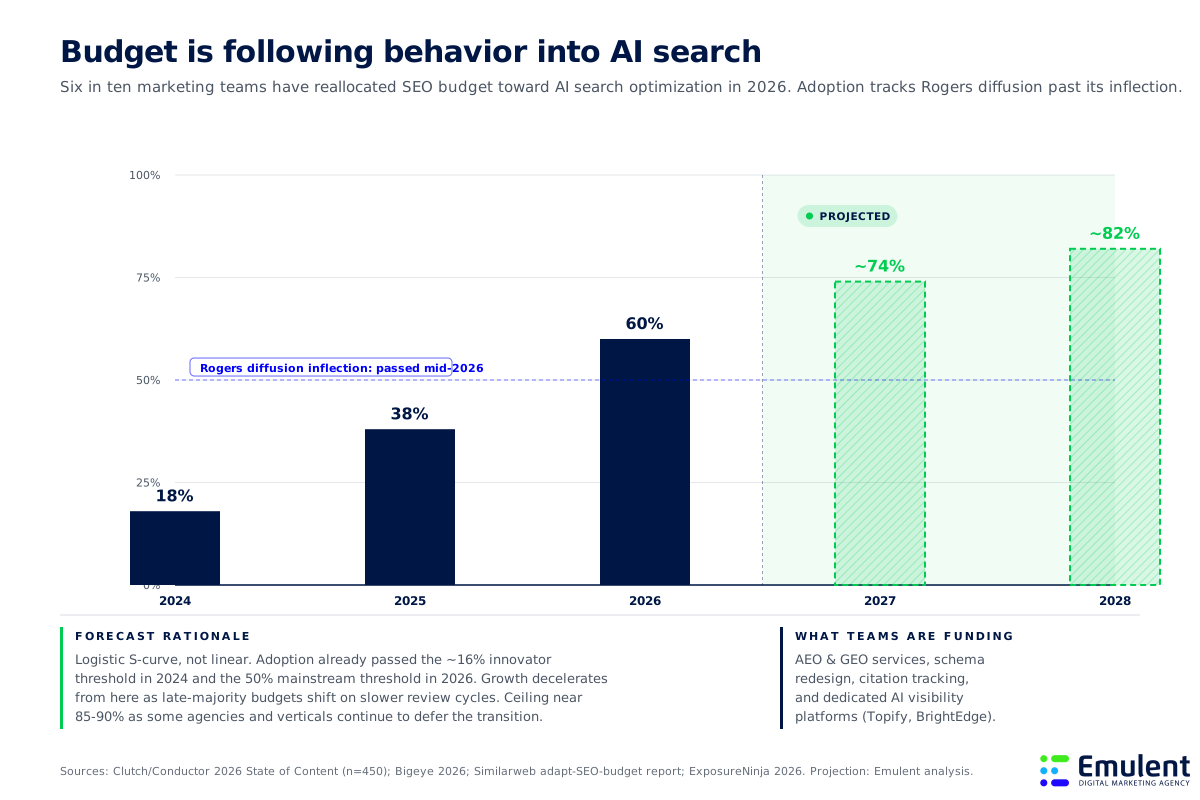
Clutch and Conductor’s January 2026 survey of 450 marketing professionals found 87% increasing content marketing budgets in 2026, with the increase concentrated in AI search optimization. Bigeye put the share of teams reallocating SEO budget toward AI search at 60% for 2026. Both numbers point to the same thing: the budget conversation has moved from “should we do this” to “what percentage.”
The S-curve shape matters more than the headline number. Adoption passed the 16% innovator threshold in 2024 and the 50% mainstream threshold in mid-2026. Rogers diffusion predicts deceleration from here, not acceleration, because the late-majority segment moves on slower review cycles and is more risk-averse. We project the curve to flatten around 82% by 2028 as some agencies and verticals continue to defer.
“We have stopped recommending separate AI search and traditional SEO programs. They are the same project at different surfaces. The same E-E-A-T signals that earn rankings also earn citations. The same structured content that gets featured snippets also gets extracted into AI Overviews.” – Emulent Strategy Team
For teams budgeting the next twelve months, three line items deserve specific attention. Generative engine optimization for ChatGPT, Perplexity, and Gemini citation. Entity-based SEO work that makes your brand legible to AI systems as a named entity, not a string of keywords. And an honest review of your AI SEO checklist against the technical work that makes content extractable. The agencies that started this in 2024 are 18 months ahead. The ones that start in 2026 still have time, but the gap will widen.
How the Emulent team can help with SEO in 2026
The seven charts above frame the strategic problem. The execution work behind them sits at the intersection of technical SEO, content strategy, brand visibility, and measurement. Our team handles all four under one roof, which is the only way to keep the signals coherent across Google rankings, AI Overview citations, and AI chatbot referrals. If your organic traffic is down and you are not sure which of these trends is driving it, that diagnostic is the first project we usually run. If you are confident in the diagnosis but need help executing the response, that is the second.
If you would like to talk through what your 2026 SEO strategy should look like, contact our team to start the conversation.