
US charitable giving crossed $600 billion for the first time in 2025, and nonprofits everywhere are asking how to increase donations in 2026. The honest answer starts with reading last year correctly. We pulled the latest numbers from Giving USA 2026, M+R Benchmarks 2026, and the Fundraising Effectiveness Project, then built our own forecasts to show where nonprofit fundraising is actually heading. Most advice this year celebrates the record. We think the organizations that grow in 2026 will be the ones that built repeatable systems instead of chasing a one-time spike. Our nonprofit fundraising and marketing trends resource tracks these shifts as they move.
What this 2026 nonprofit donation study covers:
- Plan for a slower 2026: Last year’s record was driven by a tax change, not healthier giving. Our model points to about $635 billion this year.
- Retention beats acquisition: Monthly donors stay at 71% and first-time donors at 24%, and long-term donors supply most of the money.
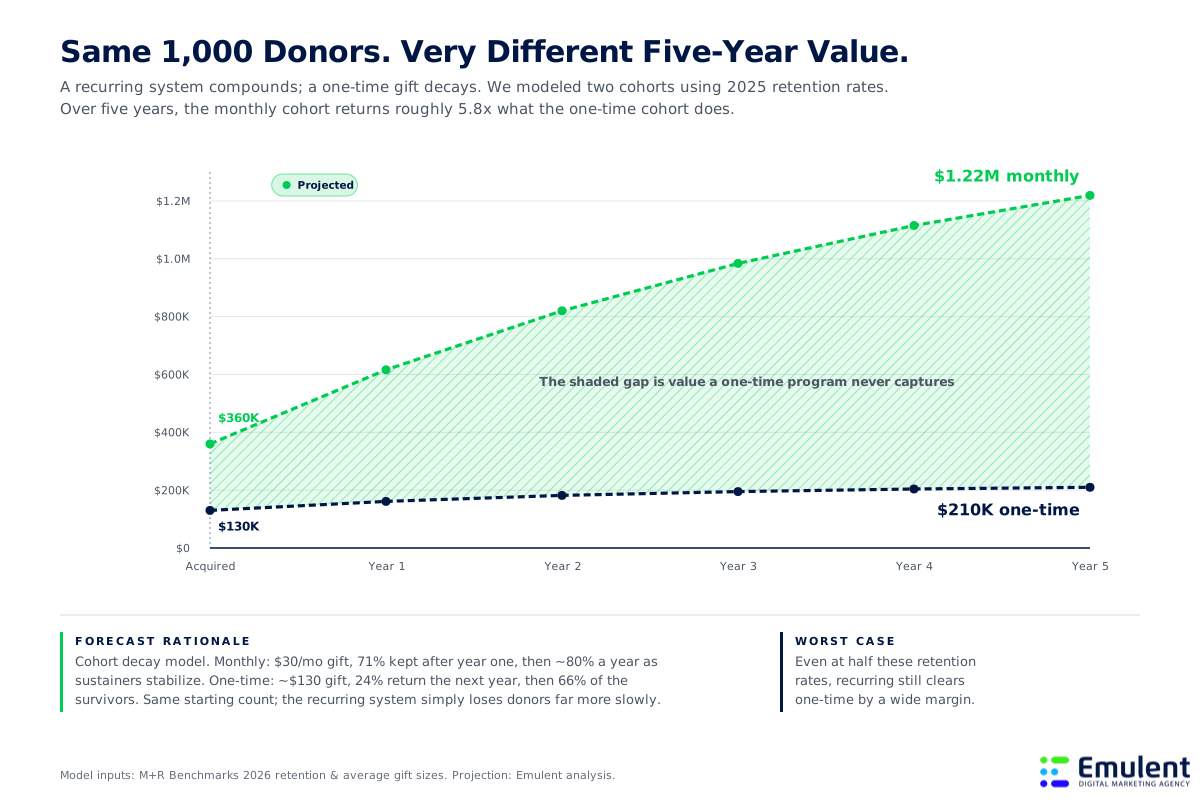
- Recurring donors compound: A monthly cohort out-earns a one-time cohort by roughly 5.8 times over five years.
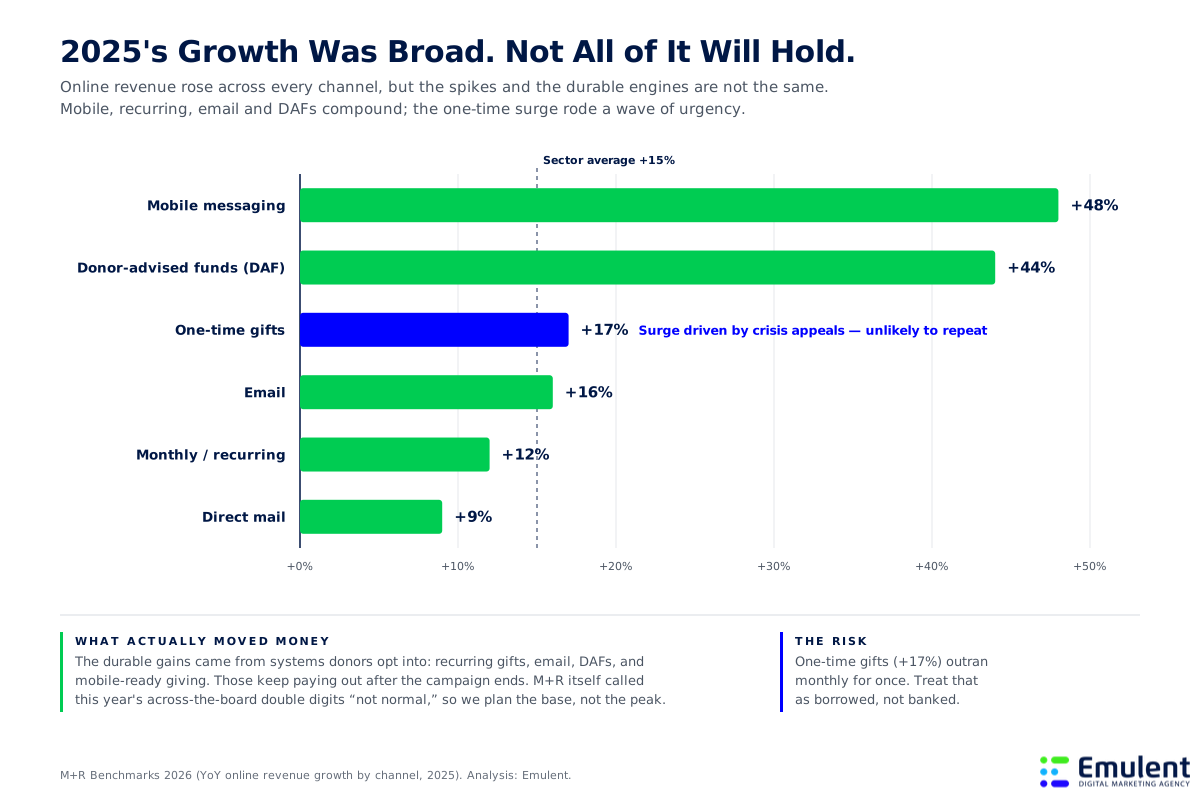
- Sort durable channels from spikes: Recurring giving, email, and donor-advised funds repeat. The one-time surge will not.
- The mobile donation page leaks: Mobile is half your traffic and a quarter of your revenue, and the page is usually the problem.
- Stop funding what loses money: Paid search clears break-even while TikTok costs $590 per donation.
Will 2026 Look Like 2025? Plan As If It Won’t
The headline number is real. Giving USA 2026 reported $617.2 billion in total US giving for 2025, up 5.7% in current dollars and about 3% after inflation. Bequests jumped 19.7% to $62.19 billion, and mega-gifts reached $19.2 billion, including MacKenzie Scott’s $6.65 billion.
The cause behind the number tells a different story. The tax law passed in July 2025 changed the rules for charitable deductions, and many donors pulled their giving forward to lock in the old treatment. The Fundraising Effectiveness Project shows the strain underneath: individual giving rose 2.9% in the first half of 2025 while the donor count fell 1.9%. Fewer people gave more money, which is not a foundation you can build a budget on.
What the 2025 tax law changed for donors:
- Universal deduction starts in 2026: Non-itemizers can deduct gifts again, but only starting this year, so 2025 itemizers rushed to give first.
- A new floor for itemizers: Gifts now have to clear 0.5% of income before they count, trimming the benefit for many donors.
- A cap for top earners: The highest bracket’s deduction value was reduced, pushing wealthy donors to give in 2025.
- Donor-advised funds excluded: Gifts into a DAF do not qualify for the new deduction, so donors front-loaded those too.
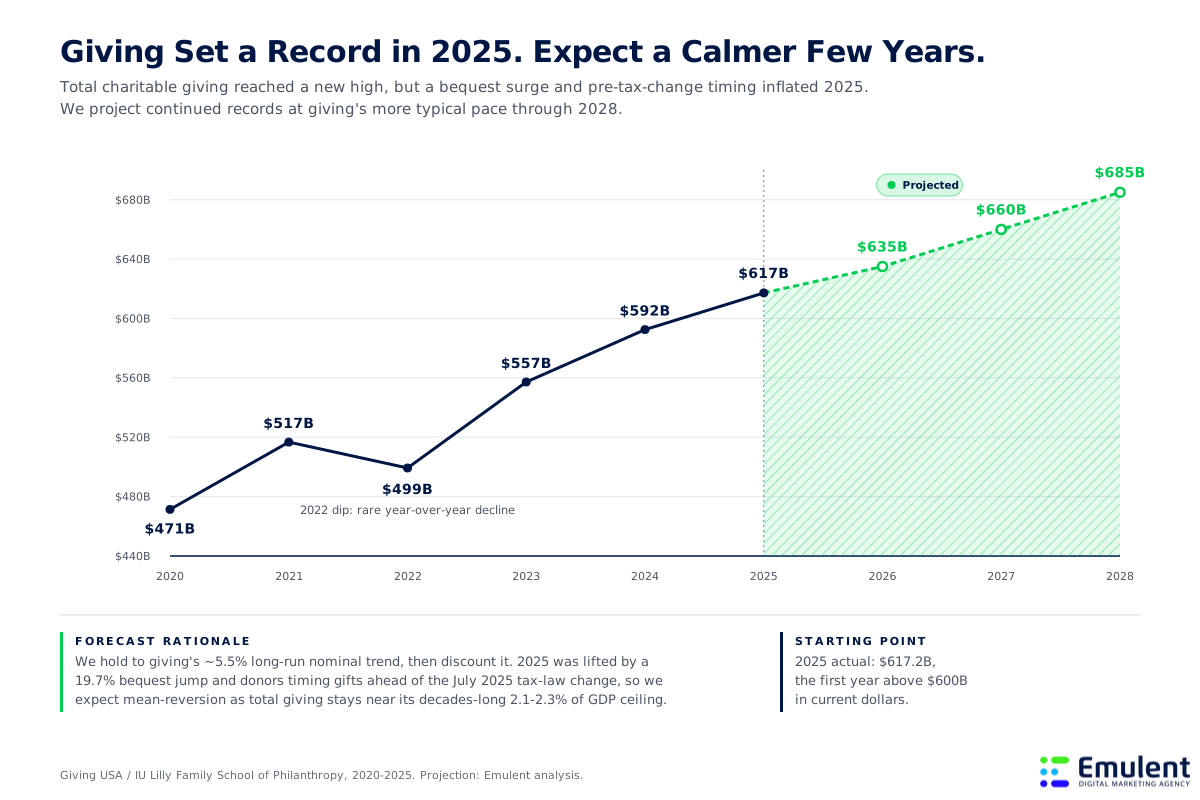
Our forecast accounts for the pull-forward. We project total giving near $635 billion in 2026, $660 billion in 2027, and $685 billion in 2028, built on the long-run growth trend and discounted for the bunching effect and a return toward giving’s normal share of the economy. For your 2026 plan, budget for slower top-line growth and expect the donors who gave early in 2025 to be quieter this year. A steady plan beats an optimistic one, which is the view we bring as a nonprofit marketing agency.
“The record year was a tax story wearing a fundraising costume. The programs that win in 2026 already moved past the sugar high.” – Emulent Strategy Team
Which Donors Actually Come Back? Retention Decides Your Revenue
Most nonprofits grade themselves on total revenue raised or new donors acquired. Those are the easy numbers to report and the wrong ones to manage by. The number that pays next year’s bills is retention, and it changes enormously by donor type.
Donor retention by type, and what each one tells you:
- Monthly donors stay at 71%: The most loyal group by far, and the cheapest revenue you will ever raise.
- Repeat donors stay at 66%: Once someone gives twice, the odds of a third gift climb sharply.
- All online donors stay at 48%: Less than half of your overall file returns, which is why the mix matters.
- First-time donors stay at 24%: Three out of four never give again, so a first gift is the start of the work, not the finish.
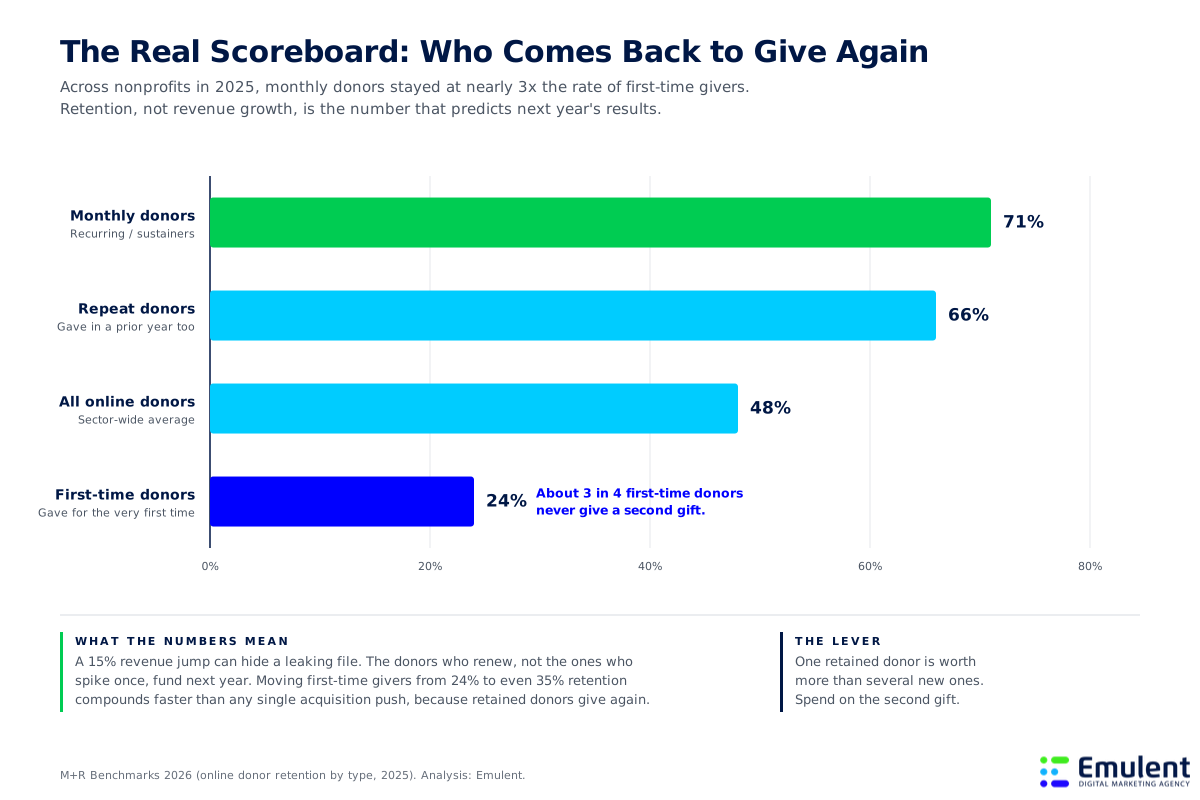
The Fundraising Effectiveness Project found that donors of two years or more account for 62% of all dollars raised. A retained donor costs nothing to reacquire, so every point of retention is worth more than a point of new traffic. We have written before about how ranking number one can be a vanity metric, and donor acquisition counts carry the same trap: they look like progress while the real engine stalls.
Retention runs on trust, and trust runs on a clear identity donors recognize gift after gift. That is why we treat nonprofit branding as a retention tool, not a logo exercise. When a donor knows what your organization stands for and sees it confirmed in every receipt and report, the second gift gets easier to ask for.
Is a Monthly Donor Worth More Than a Big One-Time Gift?
Yes, and the gap is wider than most boards assume. We modeled two groups of 1,000 newly acquired donors using the retention rates and average gift sizes from M+R Benchmarks 2026. One group gives $30 a month. The other gives a single $130 gift and behaves like a typical one-time donor afterward. Over five years, the monthly group returns about $1.22 million while the one-time group returns about $210,000. The recurring group is worth roughly 5.8 times more.
- Predictable monthly revenue: Recurring gifts let you forecast and plan instead of guessing campaign to campaign.
- Compounding retention: Monthly donors who pass the first year stay at high rates, stacking value every year after.
- Donor-advised fund gifts: DAF gifts averaged $1,430, more than ten times a one-time gift, and grew 44% in 2025.
Monthly recurring revenue grew 12% in 2025 and now makes up 27% of all online revenue. If you want to put numbers behind this for your own program, our customer lifetime value benchmarks show how the math plays out across sectors.
“A monthly giving program is the single highest-return project most nonprofits are under-investing in. The five-year math is not close.” – Emulent Strategy Team
Building a monthly program is mostly a communication problem. Recurring donors stay because they keep hearing what their gift accomplished, which is where steady nonprofit content marketing earns its keep. A donor who gets one good impact story a month renews without being asked.
Which Channels Are Real Growth, and Which Are Just Noise?
M+R Benchmarks 2026 reported online revenue growth by channel against a sector average of 15%. It is tempting to read the top line and pour money into whatever grew fastest. We read it differently. December alone drives 37% of annual online revenue, so the year-end calendar still rewards a disciplined push.
How to read the 2025 channel growth numbers:
- Mobile messaging (up 48%): Real growth, but off a small base, so treat it as a rising supporting channel, not your core.
- Donor-advised funds (up 44%): A durable, high-value channel that deserves a dedicated ask.
- One-time gifts (up 17%): The tax-bunching surge, not a channel you can count on next year.
- Email (up 16%): The quiet workhorse, returning about $54 per 1,000 messages, with a welcome series earning a 1.6% click rate.
- Monthly recurring (up 12%): The compounding engine from the section above.
One channel is quietly shrinking and deserves attention. Organic search now drives about 39% of nonprofit web traffic and is sliding as AI overviews and zero-click results keep searchers from reaching your site. The answer is not to abandon search but to show up where the answers now appear, which is the case we make for nonprofit SEO built for how people search today. Our approach to search everywhere optimization is designed for exactly this shift. On the tooling side, 78% of nonprofits now use generative AI in some part of their work, so the content playing field has leveled and craft is the difference again.
Why Do Most Donation Pages Lose Mobile Givers?
Because most donation pages were built for a desktop visitor who no longer shows up. M+R Benchmarks 2026 found donation-page completion rates of 11% on desktop, 8% on mobile overall, and just 4% on mobile for smaller nonprofits. Mobile now makes up 52% of all traffic but produces only 28% of revenue. The average desktop gift is $168 and the average mobile gift is $88. The audience moved to the phone and the giving experience stayed on the desktop.
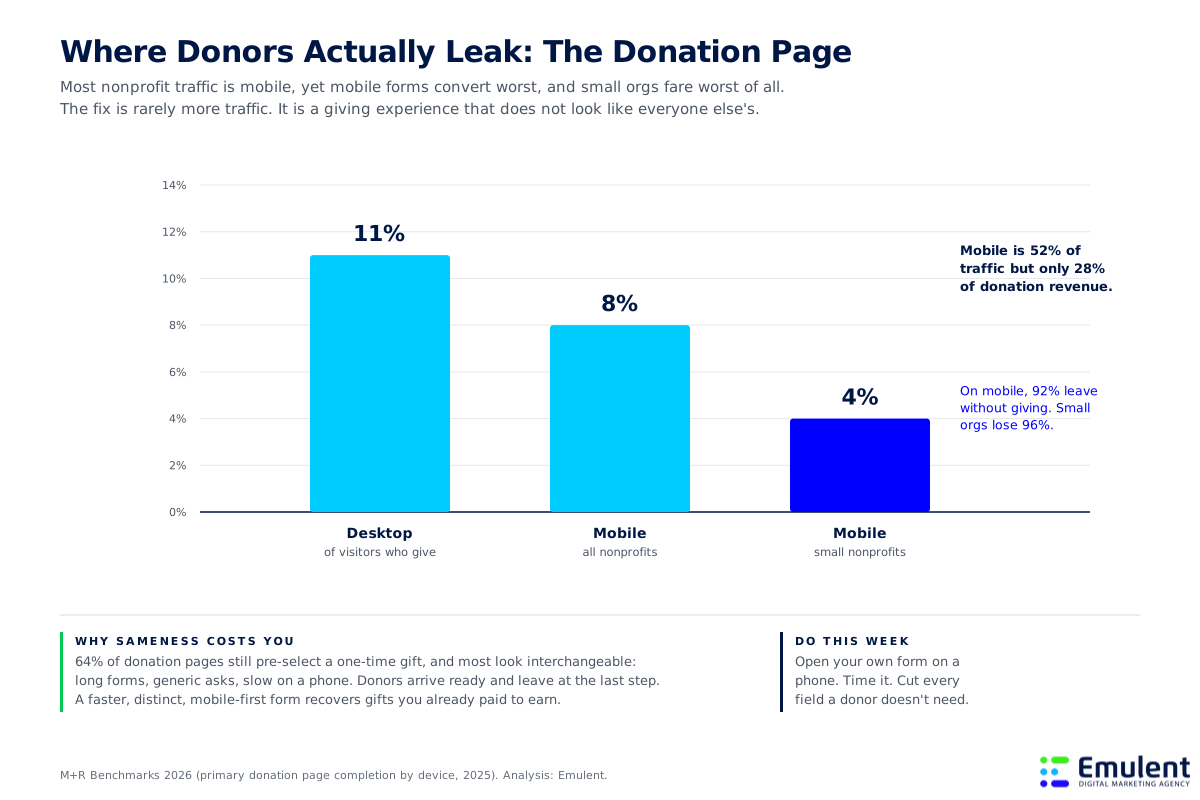
- The completion gap: Mobile finishes far fewer gifts than desktop, and smaller nonprofits fare worst at 4%.
- Smaller mobile gifts: Phone donors give roughly half what desktop donors give, so the experience caps the gift.
- One-time by default: 64% of pages default to a one-time gift, steering donors away from the recurring option worth nearly six times more.
- Look-alike design: Pages that read like every other nonprofit give donors no reason to feel anything, so they stall.
A page that defaults to monthly, loads fast on a phone, and asks for the gift in as few taps as possible recovers revenue you are already paying to attract. This is the core of how we approach nonprofit web design, where the page is a conversion tool first.
The deeper problem is sameness. A page that sounds like your organization and shows the specific outcome a gift buys beats a generic template. We cover practical ways to stand out in differentiation techniques for a saturated market.
What Should You Stop Funding This Year?
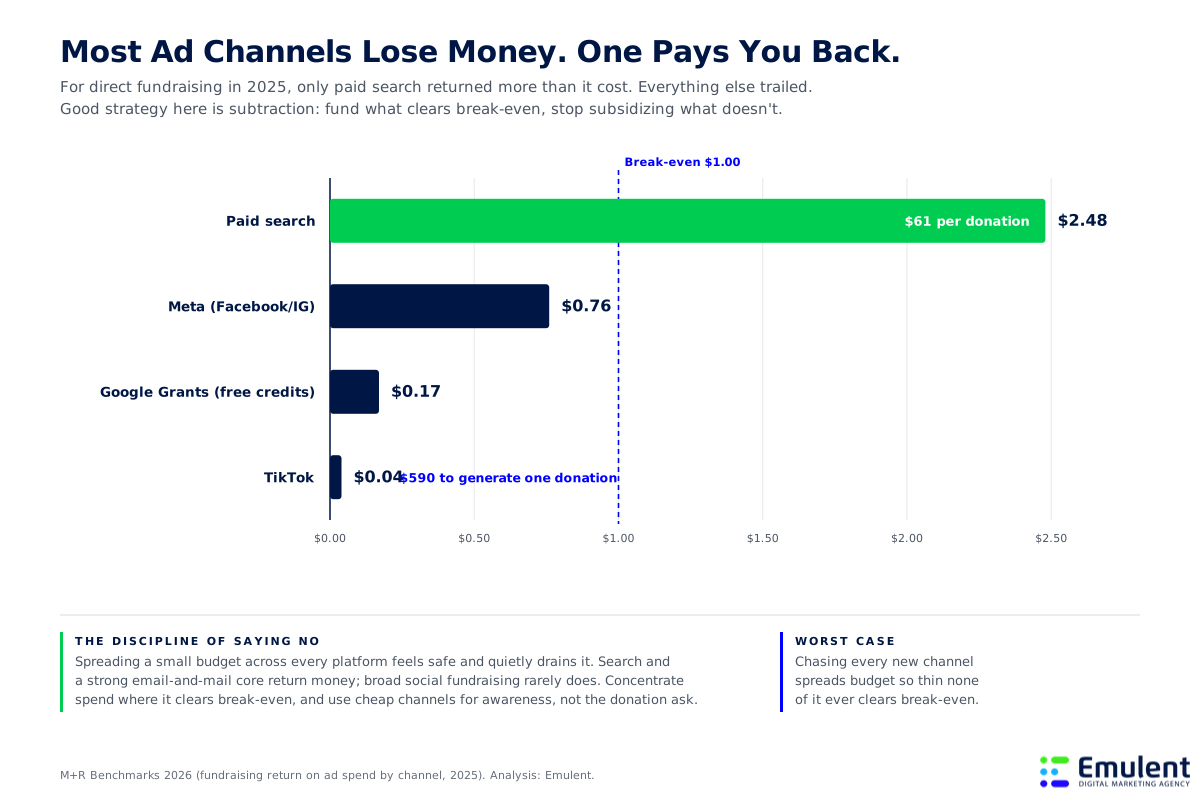
Spreading a fixed budget across channels that lose money is just a slower way to run out of it. The return on ad spend data from M+R Benchmarks 2026 is blunt, and it points to a clear set of keep, hold, and cut decisions.
Return on ad spend by paid channel:
- Paid search ($2.48 returned): The only channel above the $1.00 break-even line, at about $61 per donation.
- Meta ($0.76 returned): Below break-even at about $74 per donation, useful for reach but not for direct return.
- Google Grants ($0.17 returned): Free inventory, but low intent, so treat it as awareness rather than revenue.
- TikTok ($0.04 returned): About $590 per donation, the clearest line item to cut.
The move is concentration, not diversification. Fund the channel that clears break-even, hold the channels that build audience for later conversion, and stop pouring money into the ones that cost more than they return. Cutting a losing channel frees budget for the work that compounds: the monthly program, the email calendar, and the donation page. A good strategy is mostly a list of things you have decided not to do, an idea we explore in your brand strategy should help you say no.
“Good fundraising strategy is a list of the things you refuse to fund. A channel that costs $590 per donation belongs at the top of that list.” – Emulent Strategy Team
How Emulent Helps Nonprofits Grow Donations
We help nonprofits turn these decisions into running programs: a brand donors recognize, a donation flow built to convert on a phone, content that keeps recurring donors giving, and a search presence built for how people find causes now. We bring the forecasting and the discipline to spend on what compounds and cut what does not.
If you want a second read on your 2026 nonprofit fundraising plan, contact the Emulent team and let us talk.