
A real brand strategy earns its keep on the days you turn something down. Most companies treat brand strategy as a visual exercise, then wonder why every campaign, partnership, and product page pulls in a different direction. As a brand strategy agency, we hold a different view: strategy is a decision filter that tells you which opportunities to decline, and the data shows that filter is worth real money.
Key takeaways from this article:
- Strategy is a filter, not decoration: A brand strategy that cannot reject an opportunity is a mood board with a budget attached.
- Pleasing everyone earns indifference: Consumers say they would not miss 78% of brands if they vanished tomorrow, a record high that we project will keep climbing toward the low 80s.
- Difference drives pricing power: Kantar attributes 94% of a brand’s ability to charge a premium to perceived meaningful difference, not to how often the brand comes to mind.
- Focus compounds financially: The strongest brands grew share prices 435% from 2006 to 2025, beating the S&P 500 by 82 points.
- Enforcement is the gap: 95% of companies document brand guidelines, yet only 25-30% enforce them, leaving a 23-33% revenue lift on the table.
- A decision filter is buildable: Five questions, applied before every yes, keep the brand pointed at the business goals it exists to serve.
Why Is Brand Strategy a Filter Instead of a Mood Board?
Ask ten companies for their brand strategy and eight will hand you a logo suite, a color palette, and a tone-of-voice page. Those are outputs of strategy, not the strategy itself. A working brand strategy is a short set of commitments: who you serve, what you stand for, what you charge for, and what you refuse to do. If a document cannot help your team reject a tempting sponsorship, a discount promotion, or a product line extension, it is decoration.
The test is simple. Put last quarter’s three hardest marketing decisions next to your brand guidelines. If the guidelines would have produced the same answer no matter which way you decided, they are not doing strategic work. We built our own brand strategy checklist around this exact failure mode, because we kept inheriting beautiful brand books that had never once changed a decision.
“The fastest way to audit a brand strategy is to ask what it has vetoed in the last ninety days. If the answer is nothing, you don’t have a strategy. You have a style guide.” – Emulent Strategy Team
That veto power matters because the alternative, a brand that accommodates everything, has a measurable cost in the market.
What Does It Cost When a Brand Tries to Please Everyone?
Indifference. Havas has tracked brand attachment since 2009, and the 2025 Meaningful Brands study found that people would not care if 78% of brands disappeared tomorrow, the highest reading in the study’s history and up five points year over year. Our projection has that number decelerating but still climbing toward roughly 81% by 2028 as AI-generated content floods every channel with interchangeable messaging.
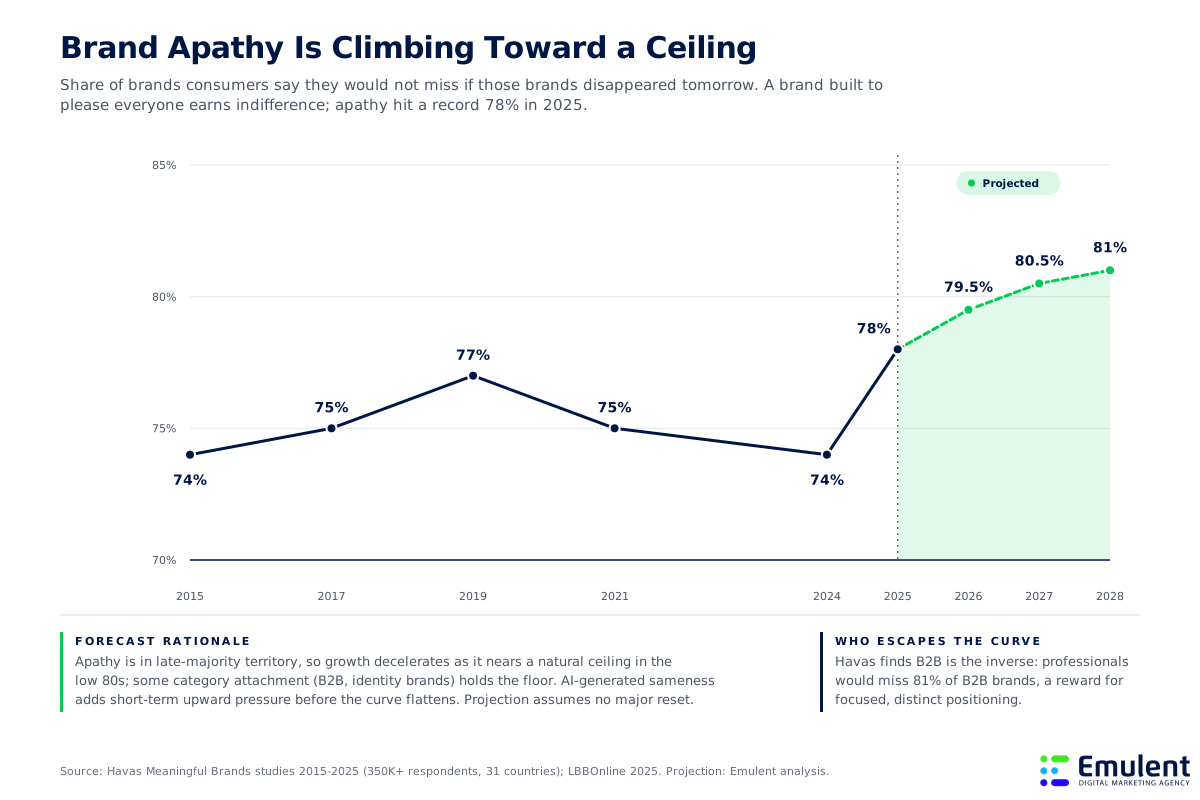
The mechanism behind the chart is well documented. Kantar’s tracking shows perceived meaningful difference, the single biggest predictor of brand power, has declined for eight consecutive years in the UK, and the share of Australian brands rated meaningfully different fell 51% over the past decade. Brands chase the same audiences with the same claims, and consumers respond by caring about none of them. Standing apart in that environment takes deliberate differentiation in a saturated market, and differentiation is, at its core, the discipline of saying no to positions everyone else already occupies.
Where the please-everyone cost shows up first:
- Message dilution: Every added audience forces softer claims, and soft claims are the raw material of the 78% apathy figure.
- Price sensitivity: When buyers see no difference, the only remaining lever is discounting, which trains customers to wait for the sale.
- Switching exposure: Havas notes apathy flips to abandonment after one bad experience, because nothing emotional holds the customer in place.
The B2B inverse proves the point: Havas found professionals would miss 81% of B2B brands, a reward for categories where focused, specific positioning is still the norm. The cost of sameness leads directly to the question of what focus actually buys you.
How Does Saying No Build Pricing Power?
Kantar’s Meaningful Different and Salient model puts a number on it: 94% of a brand’s pricing power is explained by how meaningfully different the brand is perceived to be. Salience, simply coming to mind quickly, explains almost none of it. You can be famous and still have zero room to charge a premium.
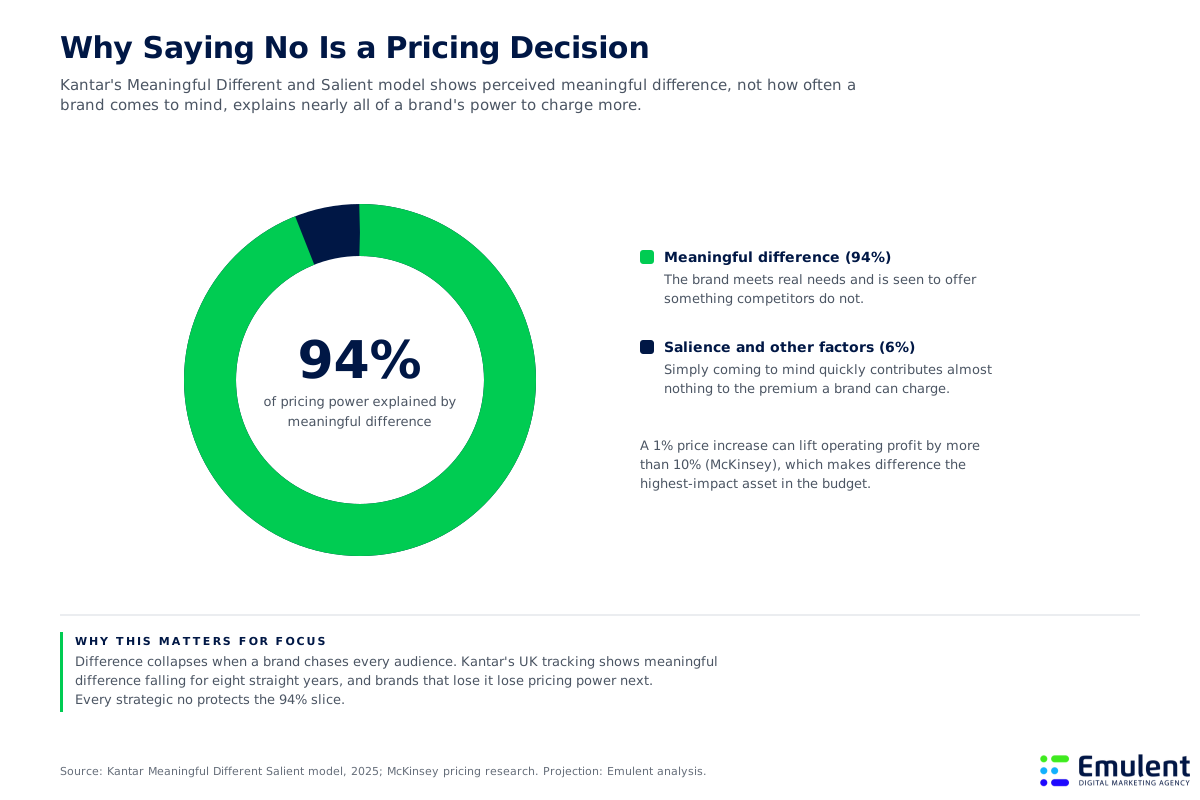
This is why we treat every strategic no as a pricing decision. Difference only survives when a brand declines to copy the category. Each me-too campaign, each chase of a competitor’s audience, each feature built because a rival has it shaves a little off that 94% slice. And the slice is expensive to lose: McKinsey’s pricing research shows a 1% price increase can lift operating profit by more than 10%, which makes perceived difference the highest-impact asset most companies own.
“Clients ask us how to raise prices without losing volume. The honest answer is that the price conversation was settled months earlier, by every decision that made the brand more or less substitutable.” – Emulent Strategy Team
Pricing power is the short-term payoff of focus. The long-term payoff shows up in two decades of market data.
Does Focus Actually Show Up in Financial Results?
Yes, and over a long enough window the gap is hard to argue with. Kantar’s BrandZ analysis tracked the share-price performance of its Strong Brands Portfolio, companies rated highest on meaningful difference, from 2006 through 2025. The portfolio grew 435%, against 353% for the S&P 500 and 171% for the MSCI World Index.
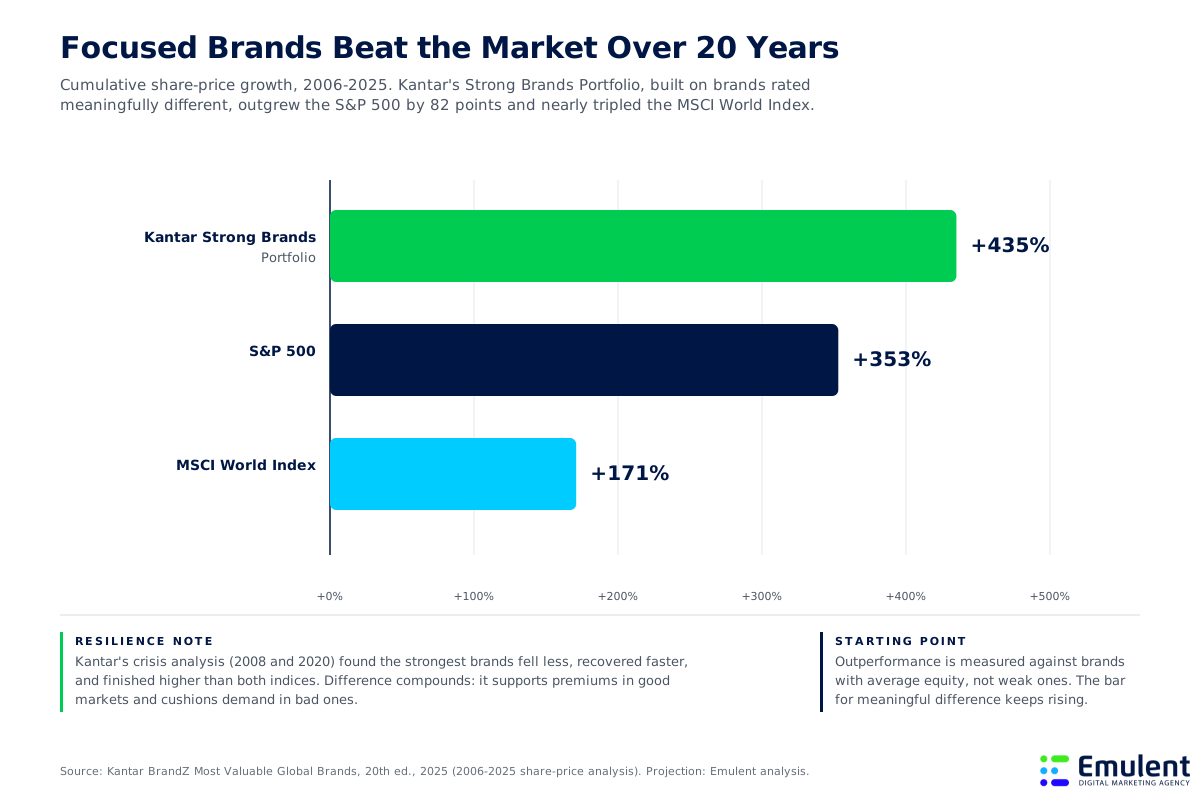
The resilience data matters as much as the headline. In Kantar’s analysis of the 2008 financial crisis and the 2020 pandemic, the strongest brands fell less, recovered faster, and finished higher than both indices. A focused brand is a shock absorber: customers who chose you for a specific reason have a reason to stay when budgets tighten. A brand that won customers on price or convenience alone has nothing to hold them with. We track how this plays out across categories in our brand development and storytelling trends research, and the pattern repeats: the brands that compound are the ones that committed to a position early and defended it.
So the evidence favors focus. The harder problem is operational: most companies already wrote the rules and simply do not use them.
Where Do Most Brand Strategies Actually Fail?
At enforcement. Marq’s State of Brand Consistency research finds 95% of companies have documented brand guidelines, and 68% report that consistency contributed at least 10% to revenue growth. Yet only 25-30% actively enforce those guidelines across the company. The strategy exists; the willingness to use it as a filter does not.
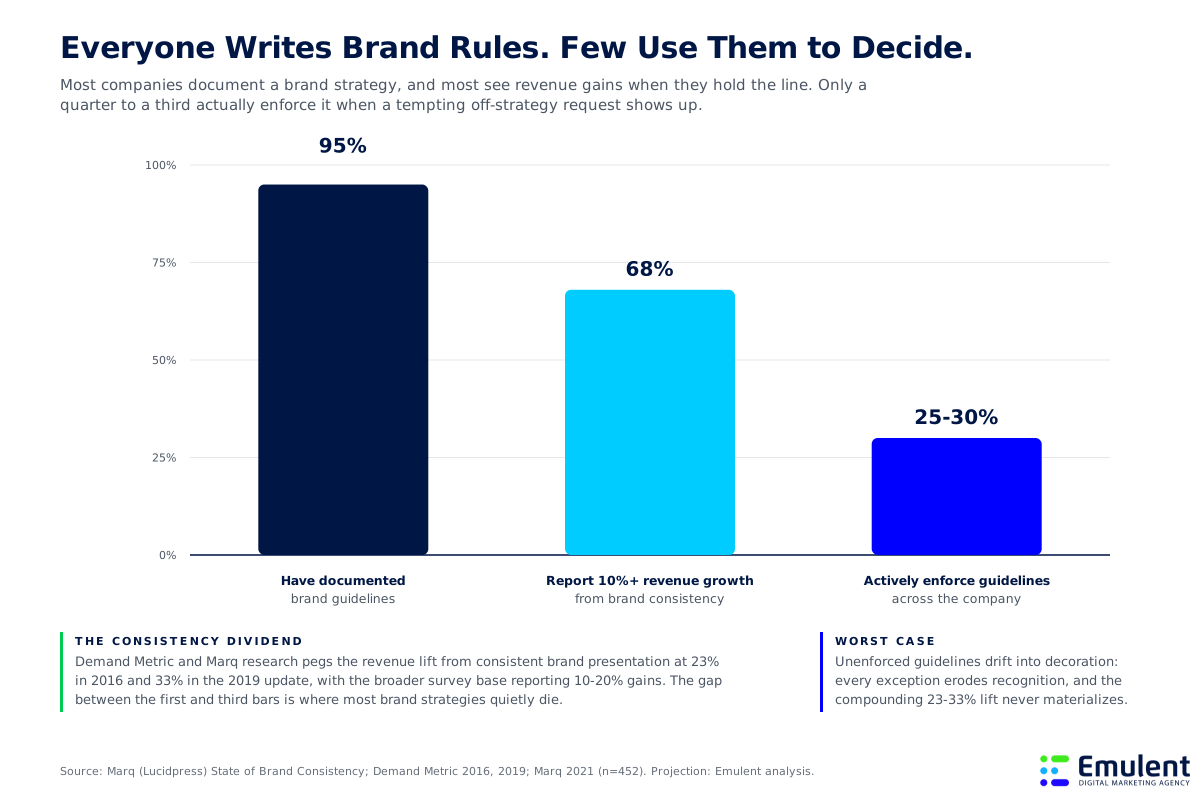
The money at stake is documented: Demand Metric’s research with Lucidpress pegged the revenue lift from consistent brand presentation at 23% in 2016, and the 2019 update found 33%. That lift compounds only when the brand is expressed the same way in every channel and every interaction, which is the thesis behind our brand everywhere optimization work. A strategy enforced on the website but waived for sales decks, job postings, and the support inbox is enforced nowhere, because customers experience the brand as one continuous thing.
This is also why brand strategy cannot be a one-off project. We designed our brand experience system around ongoing development instead of build-and-bail engagements, because the deck-heavy model fails at exactly this stage: the agency ships a strategy, leaves, and nobody is left holding the veto. It is part of why we built Emulent differently, with senior strategists who stay accountable for whether the filter gets used, not for whether the slide deck won an award.
“We are not defined by design awards. A brand strategy succeeds when a mid-level marketer, six months from now, declines an off-strategy request without needing permission. That moment is the product.” – Emulent Strategy Team
Closing the enforcement gap requires giving teams something concrete to enforce with, which is where the decision filter comes in.
What Does a Working Decision Filter Look Like?
A decision filter is a one-page instrument that converts your strategy into a pass/fail test any team member can run in five minutes. We use a version of this exercise at the start of every engagement, and it borrows from our own selectivity philosophy: the goal is to be 1 of 1 in the buyer’s mind, never 1 of many. Take your last ten marketing yeses and score each against five questions.
The five questions in the decision-filter exercise:
- Audience test: Does this serve the specific buyer we named in the strategy, or a vaguer, larger “everyone” we find flattering?
- Difference test: Could a competitor run this exact initiative with their logo swapped in? If yes, it builds the category, not the brand.
- Business-goal test: Does this connect to a revenue, margin, or retention goal we have written down, or does it only generate activity?
- Premium test: Will this make our price easier or harder to defend a year from now?
- Consistency test: Can we express this the same way in every channel, or does it require the brand to act out of character somewhere?
Score honestly and most teams find that four or five of their last ten yeses should have been noes. Each of those misses spent budget and, worse, spent difference. Run the filter before commitments instead of after, and the brand starts compounding instead of leaking.
How Can the Emulent Team Help You Build a Brand That Says No?
We help companies turn brand strategy into a working decision filter: defining the position worth defending, pressure-testing it against your business goals, and staying involved so the filter gets enforced long after the kickoff. You work directly with senior strategists, not a hand-off chain. If you want help with your brand strategy, contact the Emulent team for a no-pressure conversation about where your brand stands and what it should start declining.