
Brand storytelling in 2026 is going through a hard reset. The audience that used to sit still for a polished thirty-second spot now gives a brand six and a half seconds before swiping away, and the audience that once trusted a brand’s own voice now trusts a stranger with a phone more. Underneath both shifts sits a third one: AI tools that let marketers produce content at a volume nobody asked for. The data in this report shows what is working, what is breaking, and where the next two years take this category.
Key takeaways from the 2026 brand storytelling report:
- Stories outperform statements by orders of magnitude: narrative-led content lifts memory retention 22x and product-page conversion 74%.
- User-generated content is the fastest-growing storytelling category: the platform market grows from $8.5B in 2026 to a projected $23.3B by 2030.
- The AI trust gap is the central tension of the year: 94% of marketers use generative AI while 78% of consumers prefer human-made content.
- Creator partnerships have moved from experiment to ad-budget anchor, tripling from $9.7B in 2020 to a projected $64.5B in 2029.
- The hook window is now 3 seconds or less for younger audiences, with Gen Z averaging 6.5 seconds of focused attention per content piece.
- Purpose-driven brands carry a measurable premium across valuation, loyalty, and willingness to pay, with 175% cumulative valuation growth over 12 years against an 86% category median.
Why are story-built campaigns still outperforming statement-built ones?
Before we look at where the budget is going, it helps to look at why story-built content earned the budget in the first place. The performance gap between narrative content and feature-led content is not small. Across eight measured outcomes, branded stories beat their non-story equivalents by margins that are easy to dismiss as marketing folklore until the underlying studies are read carefully.
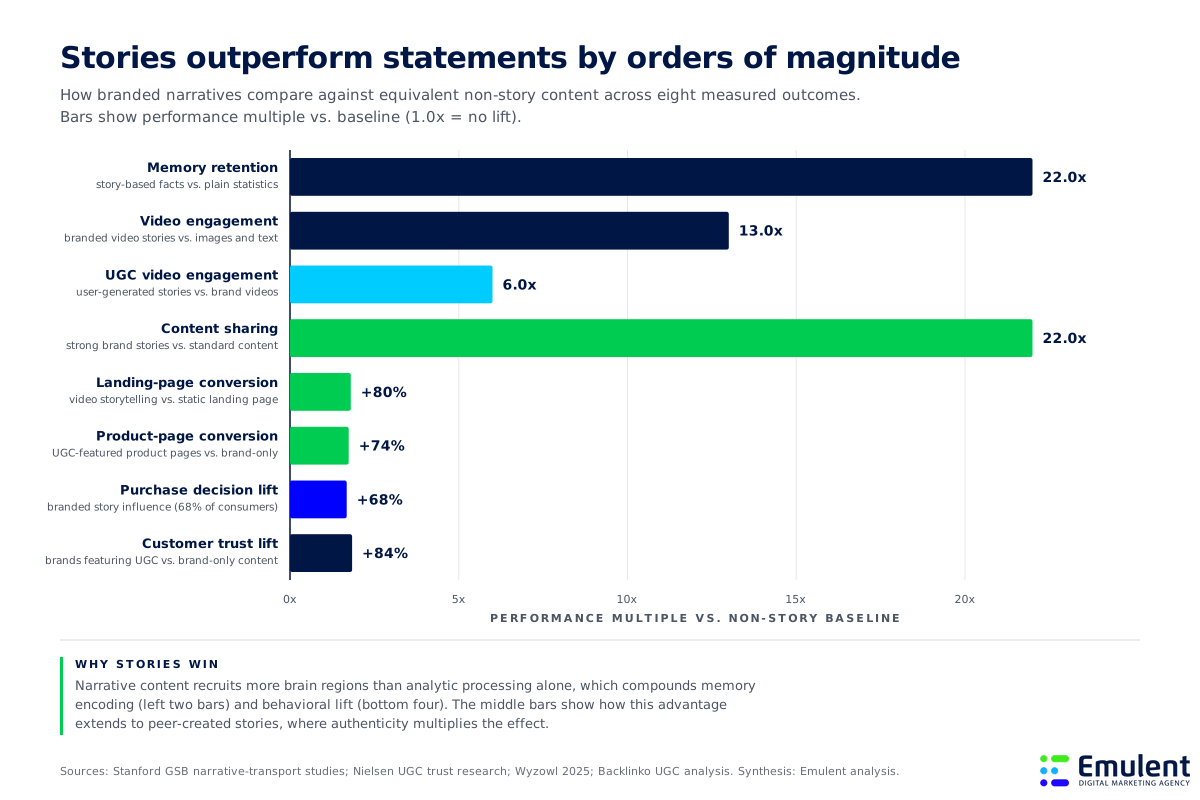
The 22x memory-retention multiple comes from Stanford research on narrative transport. The 74% conversion lift on product pages with customer stories comes from Backlinko’s analysis of e-commerce UGC. The 80% lift on landing pages with video storytelling is a Wyzowl 2025 finding. These three measurements are not redundant. They sit at three different points in the funnel, and a brand that ignores any one of them is leaking money at that stage.
What makes the story-versus-statement gap so wide:
- Narrative recruits more of the brain. A list of features activates language-processing regions only. A story also activates sensory, motor, and emotional regions, which is why stories are 22x easier to recall.
- Specificity beats abstraction. “Sarah grew her bakery revenue 40% in six months” lands harder than “small businesses see significant growth.”
- Conflict creates attention. Story structure requires a tension to resolve. Feature lists have none, which is why they read as background noise in a feed.
- Emotional payoff drives sharing. The 22x content-sharing multiple in the data above is a direct consequence of the emotional architecture of stories.
The brands we work with that take the time to identify their core story line, and then apply it everywhere from a homepage hero to a sales email, see a meaningful difference inside a quarter. The mistake we see most often is treating storytelling as an asset category instead of an operating system. The story is not the video. The story is the spine the video sits on. – Emulent Strategy Team
That spine has to live somewhere visible, which is why the next question matters: which storytelling channel is absorbing the most investment right now?
Where are brand storytelling dollars actually flowing in 2026?
Surveying marketing leaders gives a clean read on intent. Surveying their budgets gives a cleaner one. The mix below reflects how US marketing leaders are actually distributing brand storytelling spend this year. Video formats, taken together, claim more than half. Peer-voice content (creator partnerships plus UGC tooling) takes another 29%.
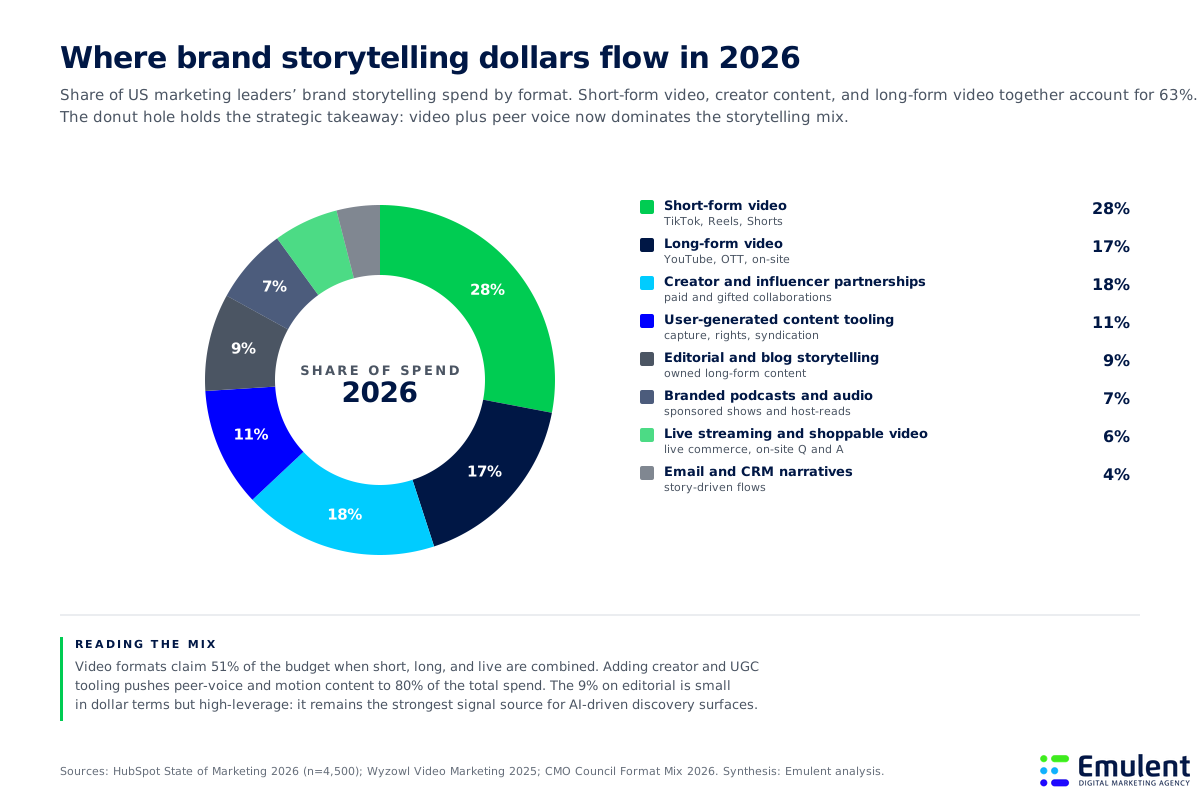
Two things are worth flagging in the mix. First, the long-form video share (17%) is higher than the trade press tends to acknowledge. Long-form is not dead. It has simply moved from television to YouTube and to brand-owned hubs, where attribution is easier. Second, the editorial slice is small in dollar terms (9%) but disproportionately important for AI-driven discovery. When a generative engine like ChatGPT or Google’s AI Overviews answers a buyer’s question, it pulls from indexed text. Brands without a deep editorial foundation are invisible to that surface. A serious content strategy service covers both the editorial and video layers, because skipping either one forfeits ground to competitors who cover both.
How the format mix maps to where buyers are paying attention:
- Short-form video (28%): the discovery layer. TikTok, Reels, and Shorts introduce a brand to a buyer who has never heard of it.
- Long-form video (17%): the conviction layer. YouTube and on-site brand films are where a buyer commits emotionally to a brand they already recognize.
- Creator partnerships (18%): the trust layer. Borrowed authority from a creator the audience already follows.
- UGC tooling (11%): the social-proof layer. Customer stories captured and syndicated across owned channels.
- Editorial (9%): the answer layer. The text that AI engines cite and search engines surface.
- Audio, live, and email narratives (17% combined): the relationship layer. Lower-volume but high-attention formats where loyal audiences spend their longest sessions.
The video portion is the loudest piece of that mix, and the platform behavior around it has shifted in ways that change how a story has to be structured.
How short is the brand storytelling hook window now?
The honest answer is shorter than most creative briefs acknowledge. The Reuters Institute’s 2026 Digital News and Attention Report measured passive content consumption across 76,000 users in four generational cohorts. The picture it produced is stark.
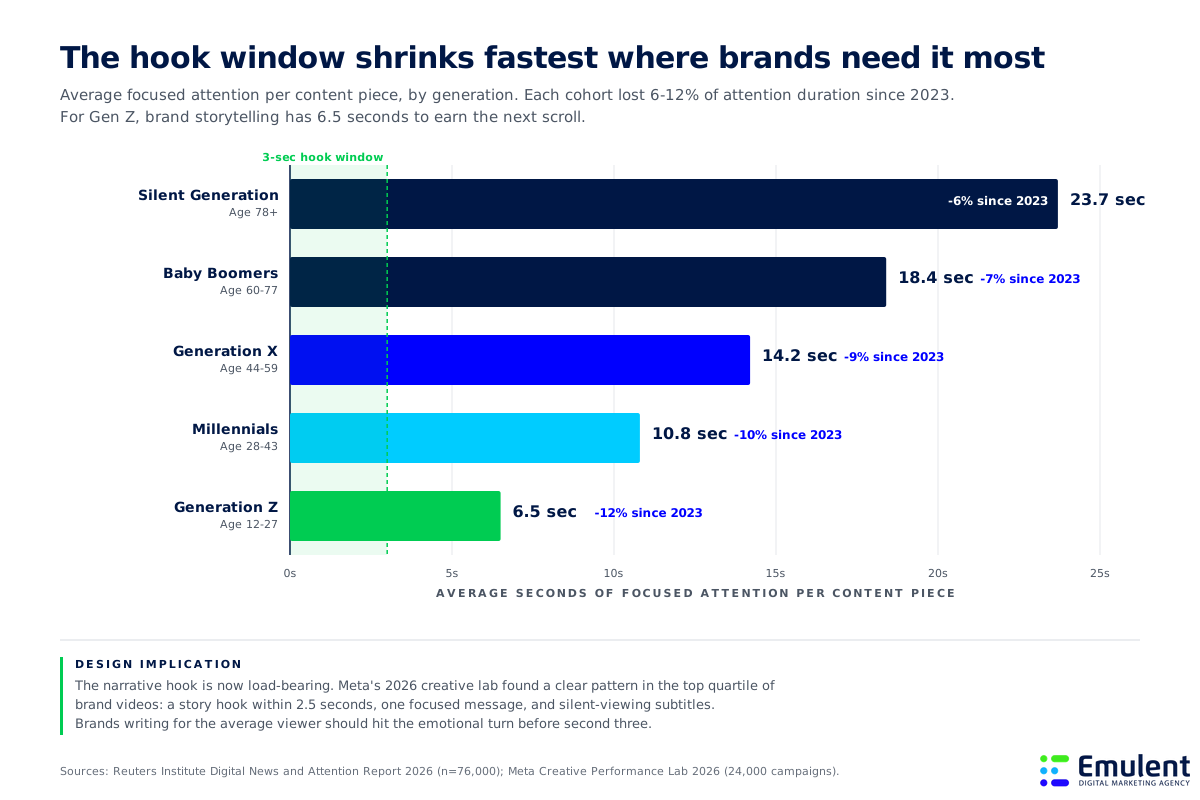
Six and a half seconds is the operating window for Gen Z. Meta’s 2026 Creative Performance Lab found that videos clearing 30 to 89 seconds outperformed videos over two minutes by 118% on completion rate, but only when the story hook landed inside the first 2.5 seconds. Past that, the audience is gone. The opening shot now has to do the work the entire ad used to do.
What hits inside the first three seconds:
- An unresolved question or visible tension. Static product hero shots do not survive the swipe.
- A face the viewer reads as a peer. Faces hold attention longer than logos or graphics.
- A claim that contradicts an assumption. “Most coffee shops lose money on lattes” outperforms “Our coffee shop is profitable.”
- Captions that read on mute. 85% of social video plays silent, so the hook must land without sound.
- Movement. Even a small gesture or cut beats a static frame for retaining the scroller.
If short-form video is now built around a three-second hook, the broader picture also requires a stable layer of long-form trust-building. That layer increasingly comes from creators and from the customers themselves.
Why has the creator economy become a budget anchor instead of an experiment?
The line dividing “real ad budget” from “experimental ad budget” used to put influencer marketing on the experimental side. That changed in 2024 and is now fully resolved. Influencer marketing crossed every threshold a CFO uses to define a serious channel: scale, measurement, predictability, and incumbent defense.
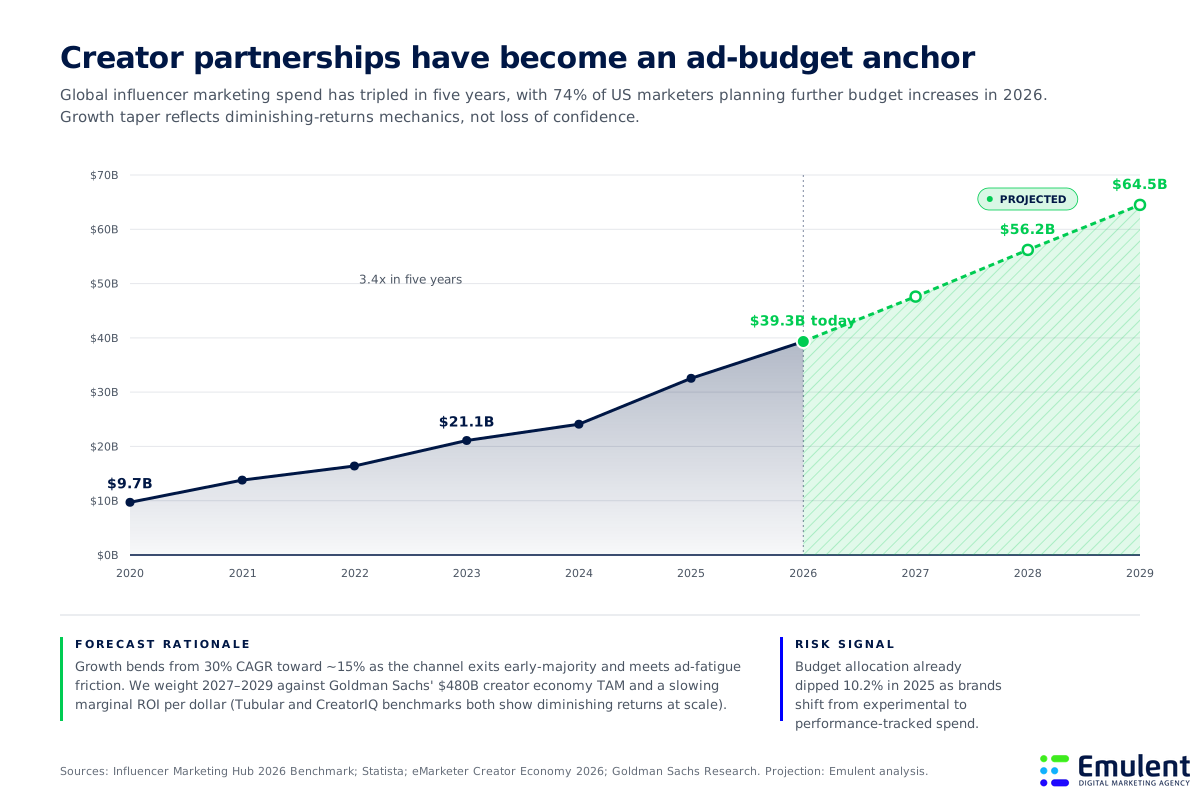
Global influencer spend tripled in five years and is on course to add another $25 billion by 2029. The growth bends from a 30%+ CAGR toward something closer to 15% because the marginal dollar buys less reach as the channel scales. That tapering is the natural behavior of a Rogers-curve channel passing through the early-majority phase. Brand budgets follow it because the alternative, paid social on the same platforms, is delivering lower trust and weaker brand lift per dollar.
The CMOs we partner with are no longer asking whether creators belong in the plan. They are asking how to manage the rights, the consistency, and the measurement across thirty or fifty creators at once. That is a completely different problem than the old “find me one influencer” problem, and it changes the kind of agency support that actually helps. – Emulent Strategy Team
Creator partnerships sit alongside a second peer-voice category that is growing even faster on a percentage basis, even though it starts from a smaller base.
What is driving the explosive growth of UGC platforms?
User-generated content is not new. The infrastructure to systematically capture, license, and syndicate it across owned channels is. That infrastructure is the entire UGC platform category, and its growth curve is one of the steepest in marketing software.
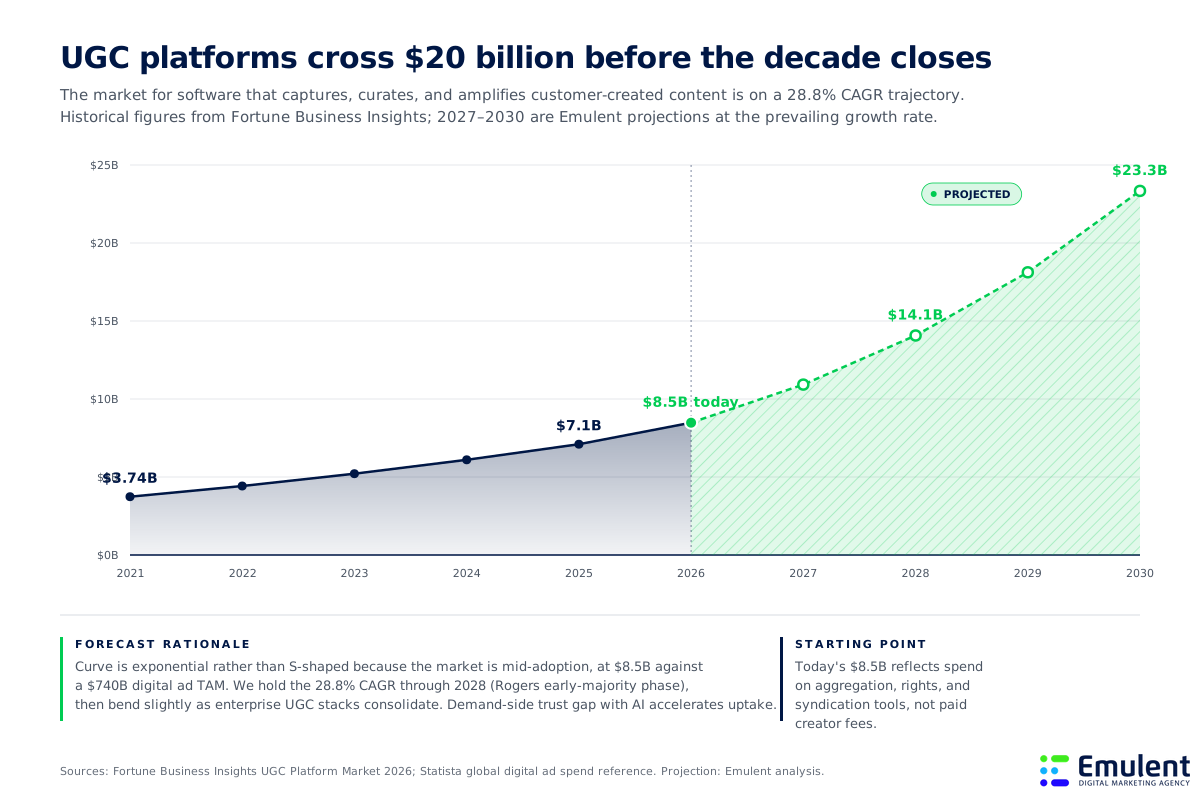
Fortune Business Insights puts the 2026 market at $8.5 billion against a $740 billion digital ad TAM. That is roughly 1% of the available pool, which is why the 28.8% CAGR is durable rather than speculative. The category has room to triple before it hits any ceiling that would normally cause growth to slow.
The behavioral logic underneath the curve is the trust gap. When 92% of consumers trust peer recommendations and 84% trust brands more when those brands feature UGC, every brand has to find a programmatic way to capture customer content at scale. The alternative is to keep producing brand-controlled creative that converts at a lower rate than the customer version sitting unused in an Instagram tag.
Where UGC investment is paying back fastest:
- Product detail pages. Customer photos and video lift conversion 74% over brand-only PDPs.
- Paid social creative. UGC ads typically beat polished brand ads on CTR and CPM in side-by-side tests.
- Review and rating walls. On-site time grows 90% when customer images sit next to the product.
- Onboarding and lifecycle email. Story-based customer flows reduce churn by tying new buyers to a community.
- Sales enablement. Customer story libraries shorten B2B deal cycles by giving prospects a relatable proof point.
This is the same trust dynamic that explains the next chart, and the trust dynamic is sharpening because of what is happening on the production side of the industry.
How wide is the AI trust gap, and what does it mean for storytelling?
Marketers are using AI in volumes that would have sounded impossible two years ago. Consumers are reacting to the resulting flood of AI-made content in a direction that should give every CMO pause.
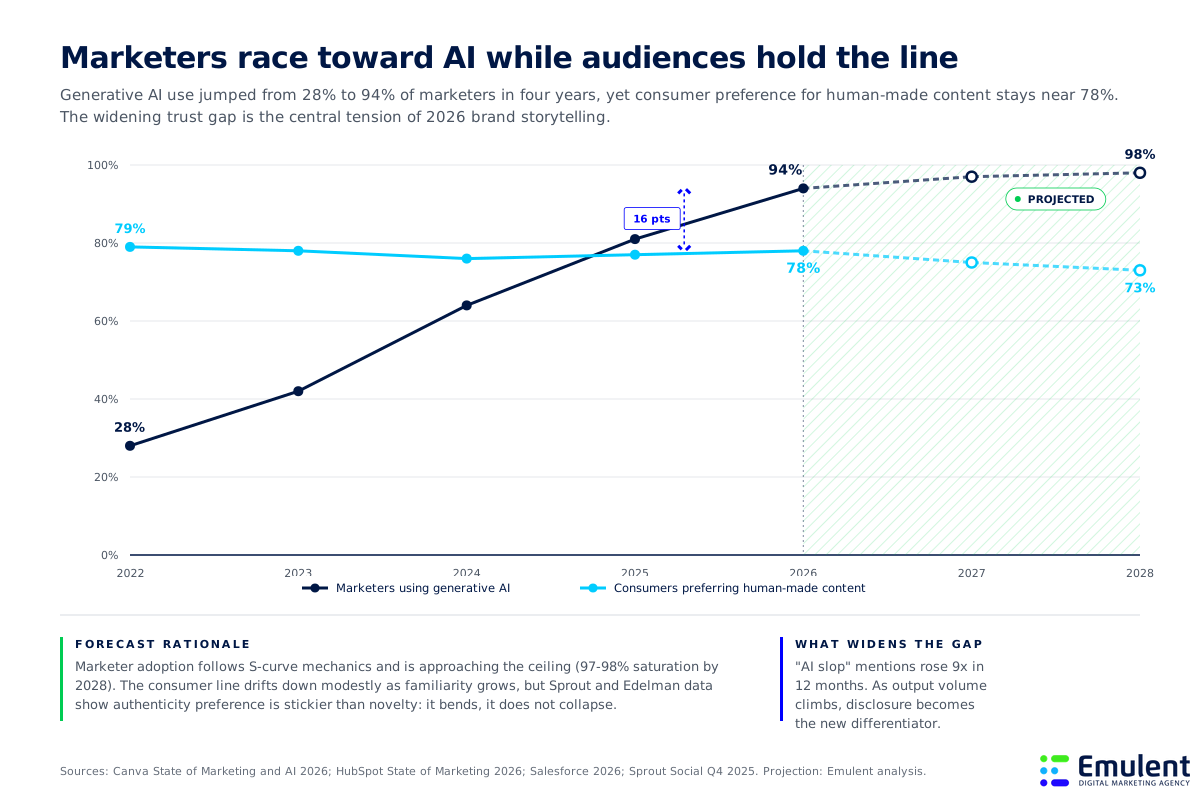
The two lines are not converging. Marketer adoption tracks an S-curve toward saturation. Consumer preference for human-made content is sticky. Sprout Social’s Q4 2025 data found that 55% of consumers, and 66% of Gen Z and Millennials, are more likely to trust brands that publish human-generated content. Canva’s 2026 report found mentions of “AI slop” rose ninefold in twelve months.
None of this means stop using AI. It means the differentiator is shifting from production speed to production transparency. Brands that disclose AI use, blend AI with visible human craft, and protect their highest-trust touchpoints (anything customer-facing in a moment of decision) will hold their ground. Brands that flood feeds with synthetic content will trade short-term volume for long-term trust erosion. The discipline of AI SEO services works the same way: lean on AI for the scaffolding, then put human craft and verifiable proof on top.
Our internal rule on this is simple. AI writes the first draft so a human can write the best draft. The brands that get this wrong are the ones treating the first draft as the final draft because it is faster. Their content reads the same as everyone else’s content, which is the worst possible outcome in a market where distinctiveness is the only durable advantage. – Emulent Strategy Team
That hybrid approach also shows up in the channel that has quietly become one of the most trusted long-form storytelling formats in the country.
Is the branded podcast channel finally crossing the mainstream?
Branded podcasts spent five years being underestimated. The 2026 data makes the underestimation harder to justify. Active brand-produced shows have more than quadrupled since 2020, and one in three US marketers now buys podcast advertising.
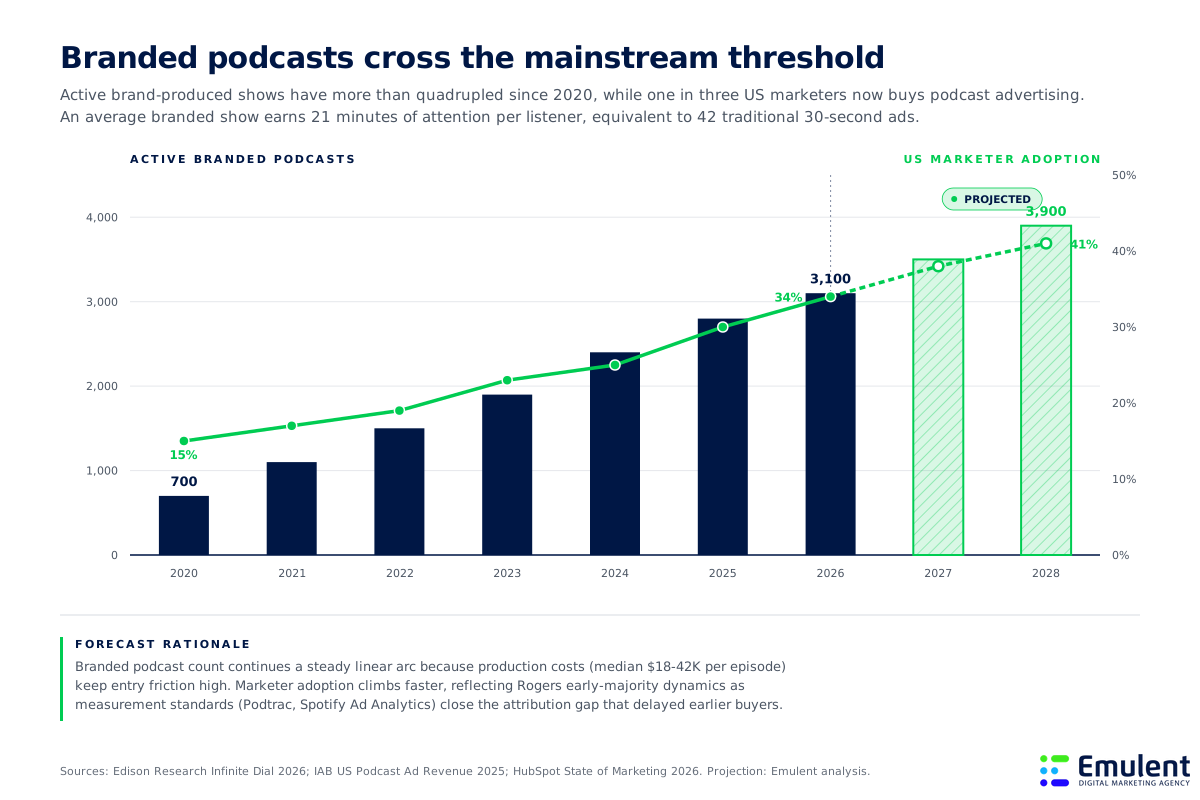
The economics behind that growth are unusual. A single branded podcast episode delivers roughly 21 minutes of attention per listener, equivalent to about 42 traditional 30-second ads, but with the trust dynamics of host-read content layered on top. Nielsen’s 2024 brand-lift study put podcast ad favorability at +16 points, ahead of most display formats. The median cost per branded listener reached ($0.28 to $0.65) is competitive with any paid channel.
The reason US marketer adoption climbs faster than the count of branded shows is attribution. Production costs hold steady, but measurement standards (Podtrac, Spotify Ad Analytics, dynamic insertion) have closed the gap that kept earlier buyers out.
What separates a branded podcast that earns its budget from one that does not:
- A defined audience job. The show solves a real listener problem. “Thought leadership” is not a problem.
- Host fit over host fame. A relevant niche host outperforms a generalist celebrity on conversion every time.
- Consistent cadence. Sporadic releases break the listener habit that compounds the channel’s value.
- Cross-format amplification. The 30-second clip on social does more for reach than another 5,000 in production.
- Measurable outcome tied to revenue. A vanity URL, discount code, or tracked landing page that ties the episode to pipeline.
Trust, attention, and measurable outcome are also the three variables that decide whether a brand’s purpose work is read as genuine or as opportunistic. Which brings us to the last shift worth flagging this year.
Does purpose-driven storytelling actually carry a measurable premium?
The skeptical answer to that question used to be that purpose-driven marketing was a soft metric. The 2026 data closes that case. Across five hard metrics, brands that ground their storytelling in a clearly articulated purpose outperform their category median by margins that are too consistent to attribute to noise.
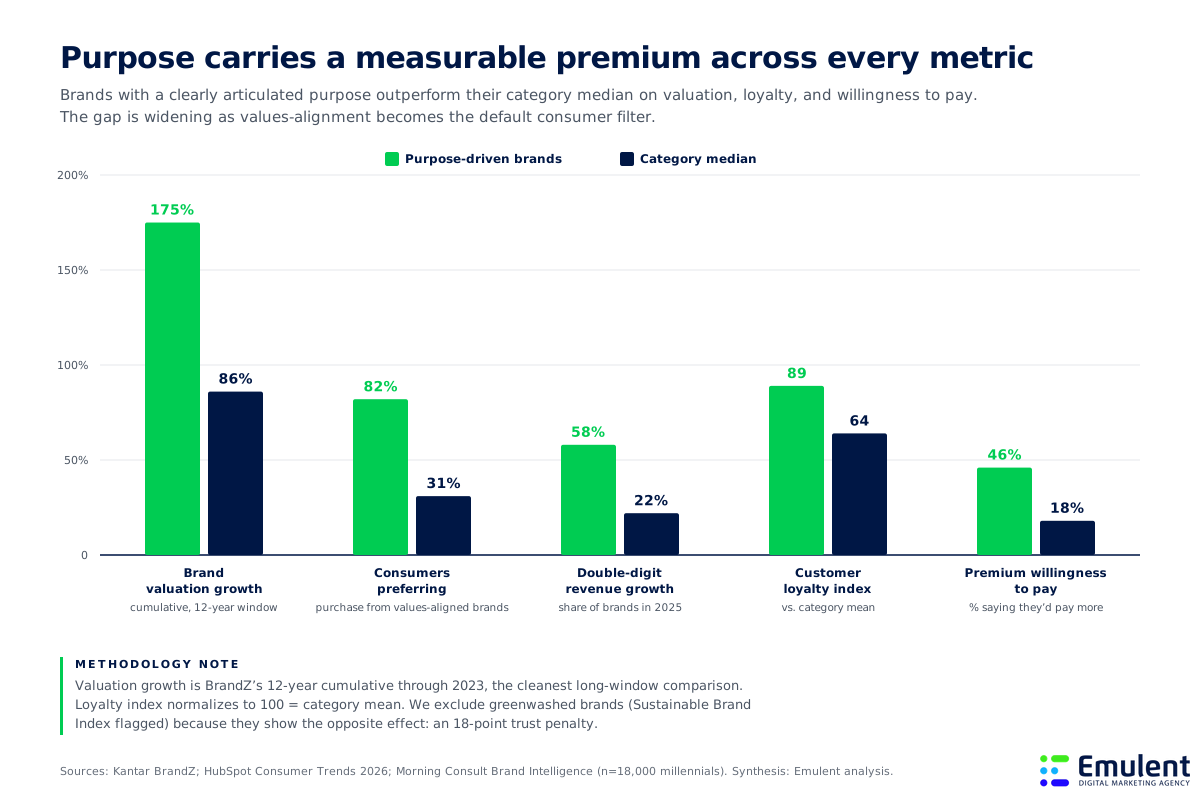
Kantar’s BrandZ longitudinal study put cumulative twelve-year brand valuation growth for purpose-driven brands at 175% against an 86% category median. Morning Consult’s 2026 millennial survey (n=18,000) found that 76% prioritize cause-aligned brands in their regular purchasing routine. HubSpot’s 2026 Consumer Trends Report found 82% of consumers prefer brands that share their values.
The risk in this category is greenwashing. Sustainable Brand Index data shows brands flagged for inauthentic purpose claims carry an 18-point trust penalty, large enough to wipe out the premium for any brand that gets execution wrong. Genuine purpose work, of the kind we describe in our purpose-driven marketing agency case studies, requires the brand’s behavior and operating decisions to match the story it is telling. The audience checks.
Where purpose-driven storytelling tends to pay back most reliably:
- Pricing power. 46% of consumers say they would pay more for a values-aligned brand, against 18% for the category median.
- Recruiting and retention. Purpose-aligned brands report stronger talent metrics, compounding creative quality over time.
- Earned media. Purpose-built stories generate PR coverage that paid budgets cannot buy.
- Crisis resilience. Brands with deposit in the “purpose bank” recover from missteps faster.
- Long-window valuation. The 175% twelve-year valuation lift is the compounding consequence of all of the above.
Purpose, hook, format mix, trust dynamics, and channel selection all sit on top of one operating decision: how seriously a brand treats its core story as a strategic asset.
What should brands actually do with this in 2026?
The seven shifts above are facets of one underlying change: audiences are filtering harder, faster, and on different criteria than they did three years ago. A brand that responds to one shift in isolation (chasing TikTok views, for example, without fixing the trust gap or the editorial layer underneath) will keep losing ground to brands that respond systemically.
The Emulent Marketing Team helps brands close that gap. Our work pulls the same data sources cited in this report into a single operating plan covering the hook, the format mix, the creator and UGC pipelines, the AI guardrails, and the purpose layer that connects them. We are not a generalist digital marketing agency selling everything to everyone; we are a strategy partner that defines a brand’s story and then builds the channel architecture that makes the story compound across the right surfaces. If your team is rebuilding its brand storytelling for 2026 and the next two years, contact our digital marketing agency to talk through what a coordinated plan would look like for your category.