
Most corporate branding strategies fail in the spreadsheet before they fail in the market: American companies put 68.8 cents of every branding dollar against the roughly 5% of buyers who are already shopping, and starve the brand system that decides which company the other 95% remember when they finally are. That is the position this article defends with current data, and it cuts against most of what ranks for this topic. The usual guide tells you to define your mission, design a visual identity, and stay consistent. None of that is wrong. It just skips the decision that determines whether any of it matters: where the money goes.
We are going to show you the gap between what marketing leaders say the split should be and what they actually fund, explain the buyer psychology that makes the gap so expensive, and give you a way to rebalance without betting a quarter’s pipeline on it.
The Budget Split Marketers Call Ideal Is Not the One They Fund
Marketing leaders already know the right answer, and then fund the wrong one. In the Fall 2025 edition of The CMO Survey, run by Duke University’s Fuqua School of Business with Deloitte and the American Marketing Association, 260 U.S. marketing leaders said their ideal branding budget would split 50/50 between long-term brand building and short-term brand performance. Their actual split: 31.2% long-term, 68.8% short-term. The people setting the budgets rate their own allocation as more than 18 points off their own target.
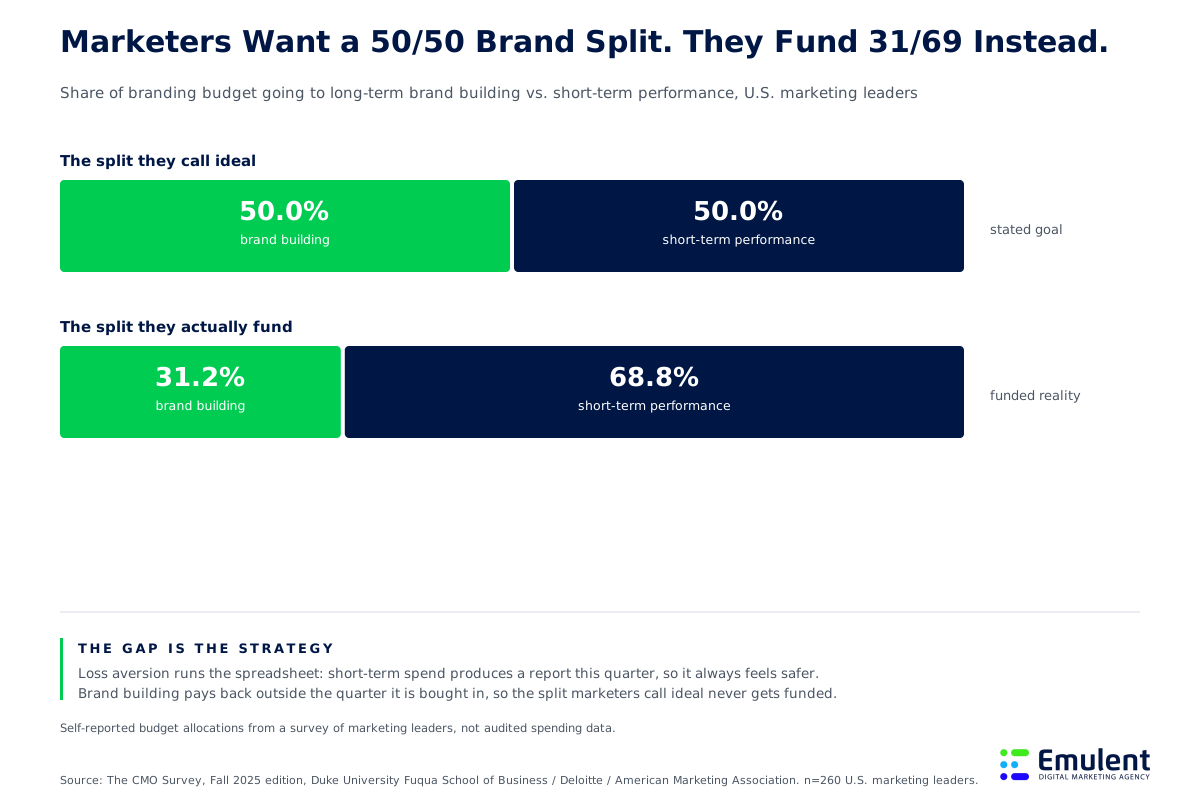
The gap is loss aversion doing what loss aversion does. A dollar spent on performance media produces a dashboard this quarter, so cutting it feels like a guaranteed, visible loss. A dollar spent on brand building pays back over quarters and years, so cutting it feels free. Behavioral economists have measured for decades that people weigh a certain near-term loss far more heavily than a larger, delayed gain. Budget season is that experiment run annually, with your growth as the stakes.
Earlier survey editions show where the erosion lands. In the Spring 2024 CMO Survey, brand-building investment fell from 5.5% of the marketing budget to 3.9% in a single year, one of the two hardest-hit categories in the entire budget. When money gets tight, brand is what gets cut first, because it is the line item whose loss no one sees this quarter.
“When a client shows us a budget, we can usually predict their next two years. If 90% of it needs to produce a lead in 30 days, they are renting attention forever. Brand building is the only spend that gets cheaper to benefit from over time, and it is always the first thing finance cuts because nobody misses it until year three.” – The Strategy Team at Emulent
Your Real Audience Is the 95% Who Are Not Buying Yet
Only about 5% of your potential buyers are in the market in any given quarter, and around 20% in any given year. That finding comes from research by Professor John Dawes of the Ehrenberg-Bass Institute, published with the LinkedIn B2B Institute in 2021. Companies switch providers of services like banking, software, legal counsel, and telecom roughly every five years. So in any single quarter, 95% of the companies you want as customers are not shopping for what you sell. Not comparing you to anyone. Not reading your retargeting ads with intent. Just gone, until their cycle comes around.
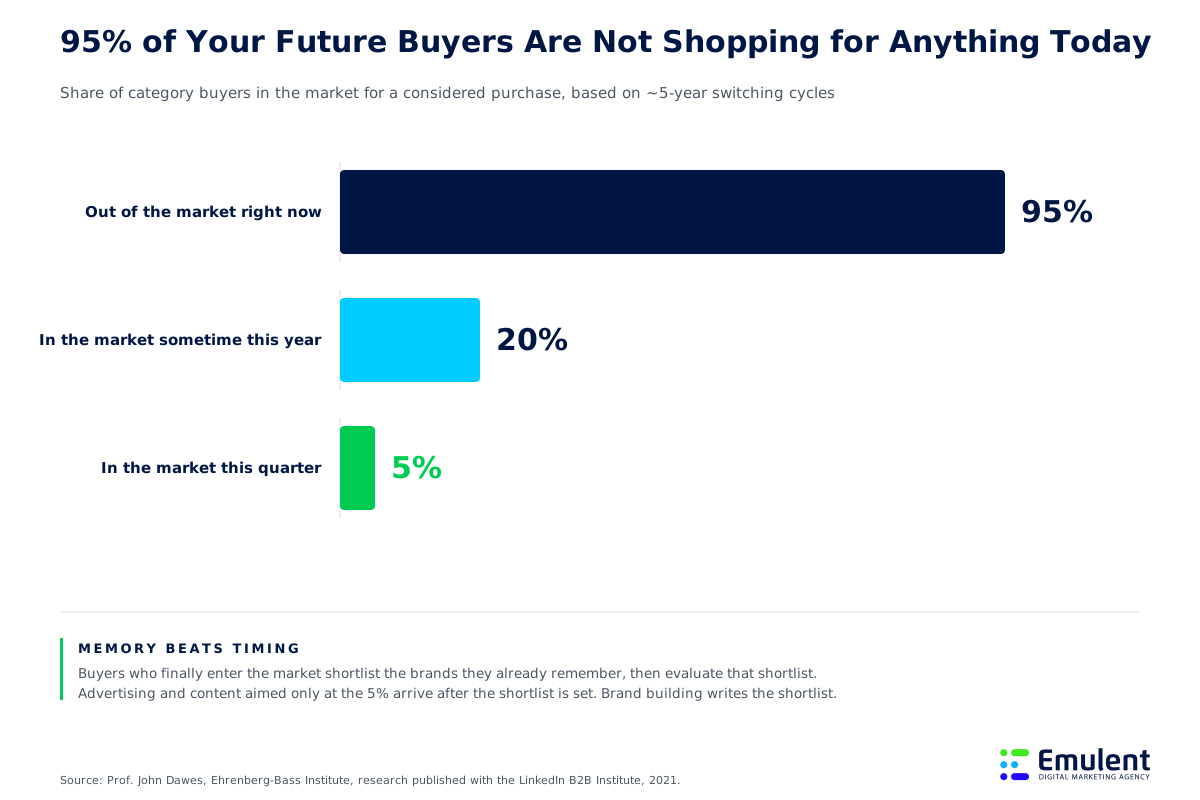
Here is why that number should reorder your budget. Buyers who enter the market do not start from a blank page. They start from memory. They write a shortlist of the two or three companies they already know, then run their evaluation inside that shortlist. Dawes’s research adds the uncomfortable detail: when buyers finally do search, they strongly prefer brands they are already familiar with. Marketing aimed only at in-market buyers arrives after the shortlist is written. Corporate branding is the work of writing yourself onto that shortlist during the years when the buyer is not listening for a pitch.
This is the behavioral case for the 50/50 split the CMO Survey respondents already believe in. Performance spending harvests the 5%. Brand spending plants the 95%. A company that funds 69% harvesting against 31% planting is squeezing this quarter’s yield from a field that gets smaller every season.
Trust Now Competes With Price and Quality, and Brands Are Winning It
Trust in brands rose 12 points in three years while trust in every major institution went nowhere. The 2025 Edelman Trust Barometer Special Report on brand trust found that 68% of people now trust brands in general to do what is right, up from 56% in 2022 across the same 15-market survey. Government sits at 54% and media at 55%. Brands people personally use score 80%, higher than any institution measured. Edelman’s headline conclusion: trust now equals price and quality as a purchase consideration. Worth flagging honestly: this is a 15-market global survey average, not a U.S.-only measurement, and it reports stated attitudes rather than tracked behavior.
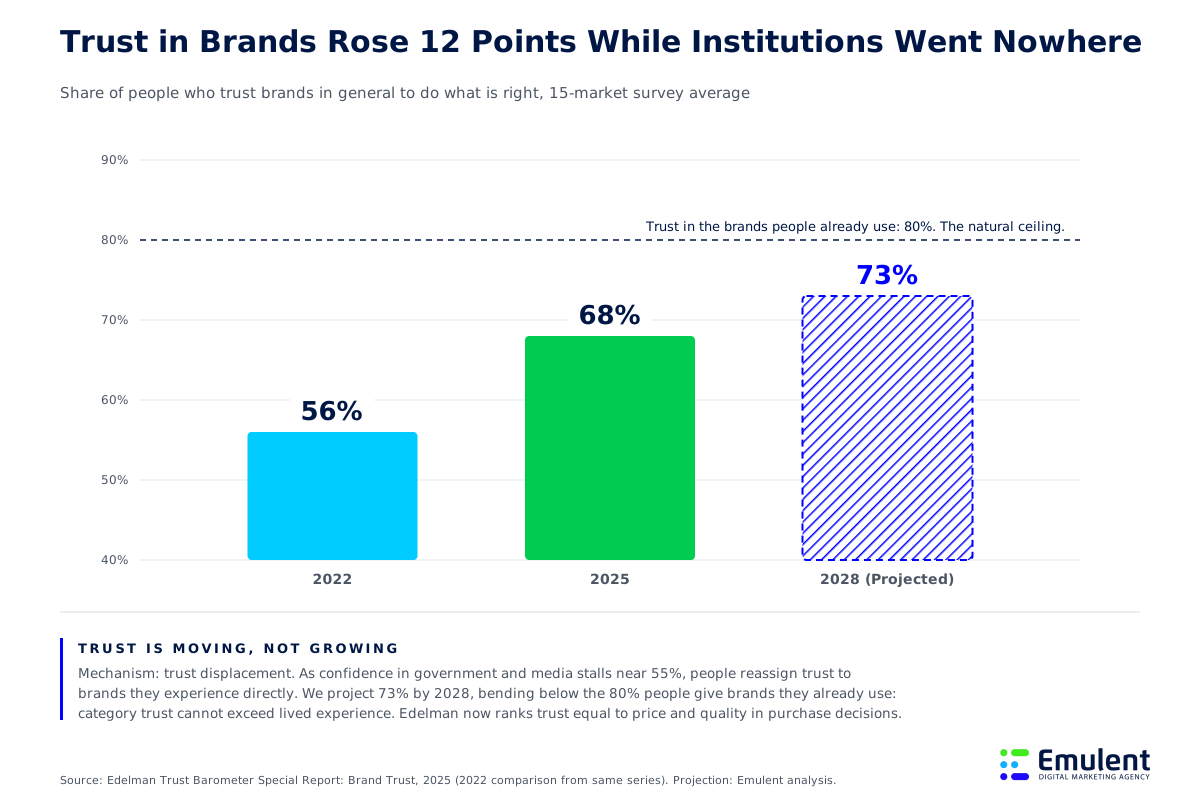
The psychology underneath the trend is displacement, not persuasion. People carry a roughly fixed need to place confidence somewhere. As institutions keep disappointing, that confidence gets reassigned to entities people can verify through direct experience, and a brand is the most verifiable entity in most people’s daily lives. You use the product. You call the support line. You see whether the promise holds. Repeated direct experience is how humans cross a trust threshold, and brands get thousands of repetitions where institutions get headlines.
“Buyers have the same amount of trust to give; they are just far more careful now about where they put it. That is a harder market and a better one, because trust earned through repeated, consistent experience cannot be bought by a competitor with a bigger ad budget in Q4. It has to be built on the same slow schedule you built it on.” – Bill Ross, Founder of Emulent
For a corporate branding strategy, the implication is direct. If trust competes with price, then every inconsistency, a website that contradicts the sales deck, stock photos where real people should be, a voice that changes by channel, is a price increase the buyer feels but never itemizes. We have written before about why a cohesive look and voice makes or breaks your brand, and the trust data is the mechanism behind that position: consistency is how a buyer’s brain decides you are safe.
The Crowd You Are Differentiating Against Nearly Doubled
Americans filed 5.67 million new business applications in 2025, an all-time record, against roughly 3.5 million in 2019. The U.S. Census Bureau’s Business Formation Statistics show the surge holding for six straight years: 5.41 million in 2021, 5.06 million in 2022, 5.48 million in 2023, 5.22 million in 2024, then the 2025 record. Anyone waiting for the pandemic spike to fade has been wrong for six consecutive years.
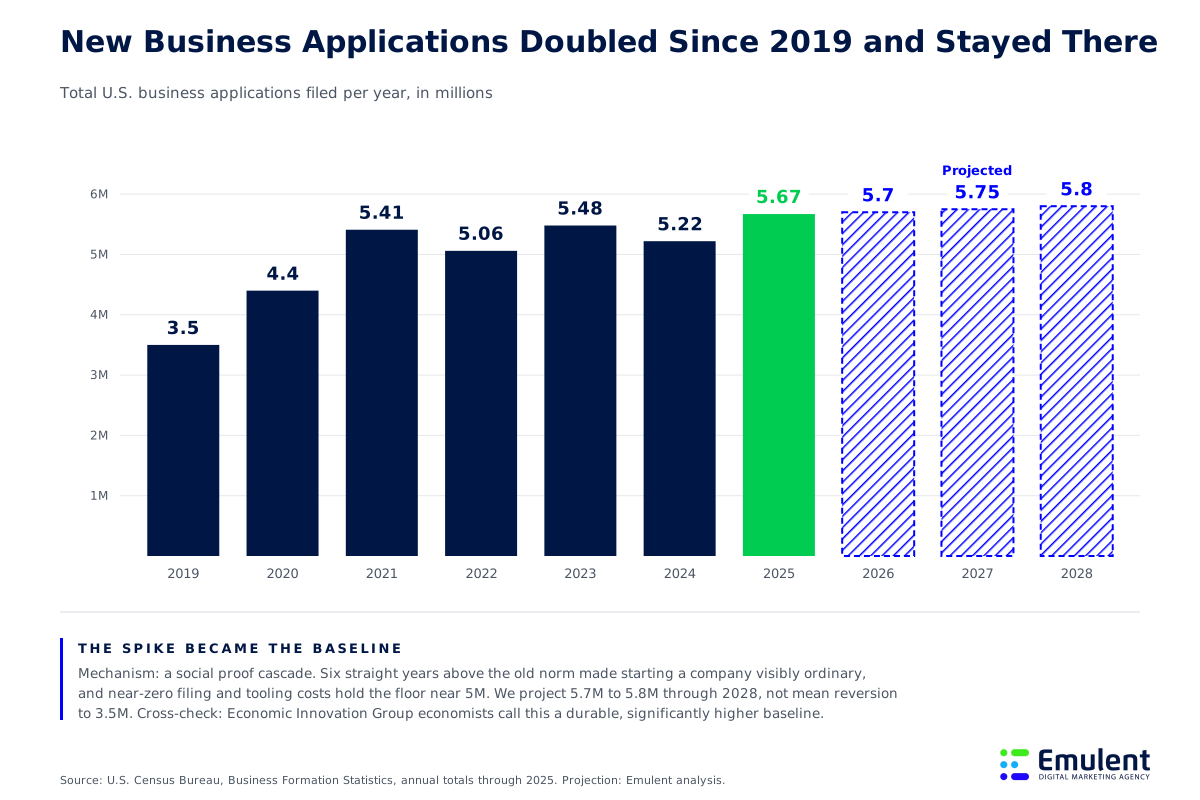
Every one of those filings is a claim on your buyers’ limited attention and memory. Human memory for brands does not expand because the market got crowded. Buyers still hold a shortlist of two or three names per category, which means the shortlist got harder to make while most companies were cutting the budget line that makes it. That is the competitive meaning of the Census data: differentiation stopped being a positioning-workshop luxury and became a survival requirement, because the number of companies fighting for the same slot in the same buyer’s memory nearly doubled.
The Ehrenberg-Bass research carries a warning for how to respond. Distinctive brand assets, the colors, voice, imagery, and style buyers use to recognize you, only work through repetition over years. Dawes warns in particular against new marketing leaders refreshing logos and identities to make their mark, because a change resets memory the company spent years paying for. In a market this crowded, changing your identity too often costs far more than keeping it a few years too long.
What a Corporate Branding Strategy Actually Contains
A corporate branding strategy is a decision system, and if yours could not tell you what to turn down, it is a mood board. We hold that a logo is not a brand strategy, and the inverse is the definition worth using: a real strategy specifies who you serve, the position you claim against named competitors, the promise you can keep at scale, and the verbal and visual system that makes every encounter recognizably yours. Then it gets enforced everywhere a buyer meets the company, which is why brand development is a system, not a project. A project ends at the style-guide PDF. A system shows up in the sales deck, the careers page, the invoice, and the voicemail greeting.
The visible layer of that system is where most budgets quietly leak credibility. Real brand photography of your actual people and work replaces the stock imagery buyers have learned to scroll past, and we have published the evidence on why professional team photos build instant trust. Brand videography gives the 95% something to remember you by that a spec sheet never will. And content strategy services tie the whole system to the questions your buyers actually carry, so the brand earns memory instead of renting reach.
The strategy also has to say no on your behalf. A positioning that excludes nobody attracts nobody, and the fastest test of a corporate branding strategy is whether it has ever cost the company a deal it was right to walk from. We have made this argument in full before: your brand strategy should help you say no. If everything fits the brand, nothing is the brand.
One warning as you build or buy this work. The branding industry sells a lot of decks that restate your inputs in nicer fonts. Before you engage anyone, including us, read our piece on the red flags to watch for when choosing a branding agency. An agency that leads with awards, mockups, and a rebrand recommendation before it has asked about your revenue model is decorating, not strategizing.
“We Cannot Measure Brand” Is a Measurement Choice, Not a Fact
Brand investment is measurable. It just cannot be measured on the same dashboard as paid search, and treating those as the same statement is how the 31/69 split defends itself every budget season. The trick is to measure business outcomes, not applause. Impressions, views, follower counts, and design awards are vanity metrics, and a branding program that reports them is asking you to pay for decoration.
Track what a stronger brand changes in buyer behavior. Branded search volume: are more people typing your name into Google, which no competitor can intercept? Direct traffic and direct inquiries: are buyers arriving already decided? Win rate against the same competitors: are you converting a higher share of the deals you were always in? Price resistance: are discount requests shrinking? Sales-cycle length: are deals closing faster because trust was built before the first call? Every one of those moves cash, and every one of them responds to brand strength on a 6-to-24-month lag. Set the baseline before the work starts, or you will have nothing to prove the case with when finance asks.
Run the same discipline on the current state before you spend anything. Our brand audit checklist walks through the inventory: where your identity contradicts itself, which claims no competitor could copy, and which of your materials a buyer could attribute to any company in your category with the logo removed. Most companies find the last problem within ten minutes.
How to Rebalance Without Betting the Quarter
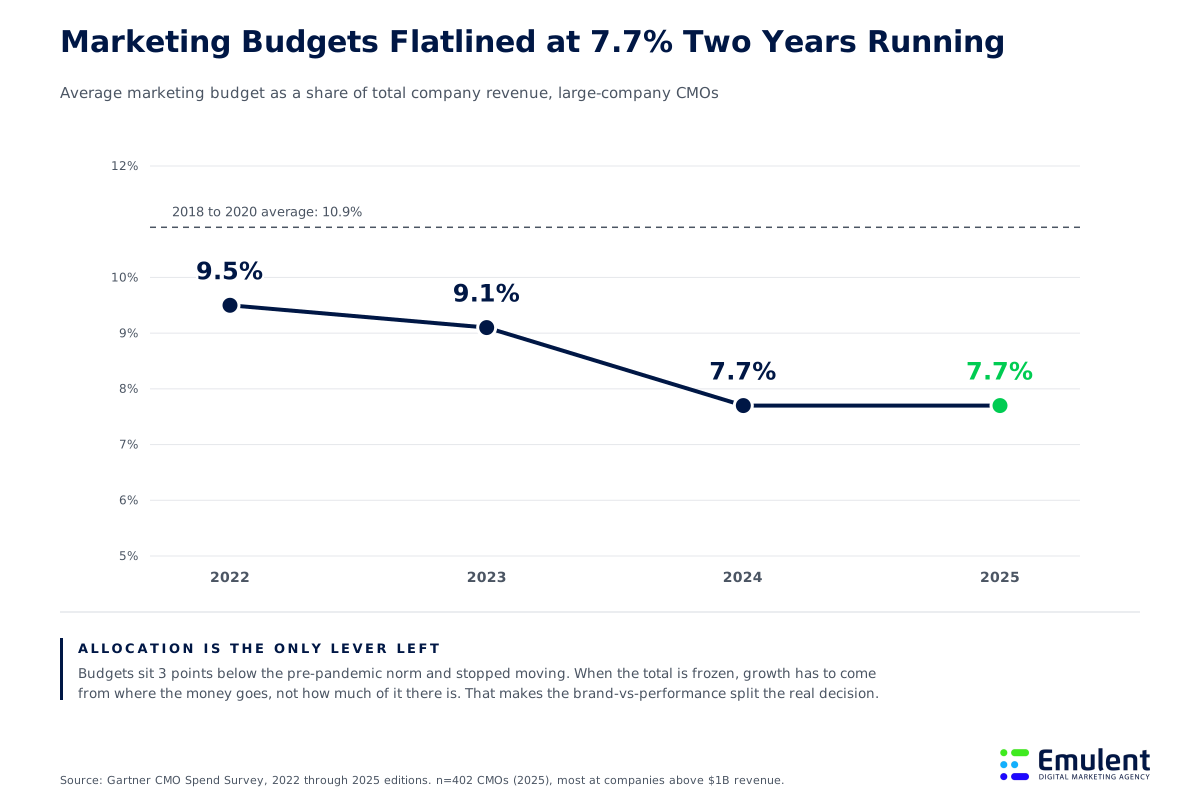
Do not fund the correction with new money, because there is no new money. The Gartner 2025 CMO Spend Survey found marketing budgets flat at 7.7% of company revenue for the second year running, and the 2023 edition of the same survey shows the slide that got there: 9.5% in 2022, 9.1% in 2023, then 7.7%. That sits about three points below Gartner’s 2018-to-2020 average of 10.9%. The total is frozen, so allocation is the only lever left. For the fuller picture of where those dollars go by industry, our marketing budget benchmarks report breaks the data down.
Move in steps a CFO can live with. Shift 5 percentage points of the branding budget from short-term performance to brand building each quarter until you reach the 50/50 split the CMO Survey respondents named as ideal, which takes four to six quarters from the average 31/69 starting point. Sequence the brand spend by what compounds: positioning and messaging first, since every later asset inherits them; then the visual and verbal identity system; then photography, video, and content built on that foundation. Cut from the bottom of the performance stack, the audiences and campaigns already showing rising cost per acquisition, because those are the dollars fighting hardest for the shrinking 5%.
Expect the dashboard to look worse before the business looks better. Cost per lead will tick up for two or three quarters because you are deliberately harvesting less. The metrics from the previous section, branded search, win rate, cycle length, price resistance, are what tell you the planting is working. If leadership cannot hold through that window, do not start; a rebalance abandoned at quarter three costs the performance results and the brand results at once.
The Split Is the Strategy
Corporate branding strategy gets written about as a creative discipline, and the ranking guides will keep telling you to define your mission and pick your colors. Do those things. But the data in this article says the defining choice is arithmetic: marketing leaders who know 50/50 is right are funding 31/69, in a market where 95% of buyers are deciding from memory, trust now competes with price, and the number of companies fighting for the same mental shelf space nearly doubled since 2019. Fix the split and every downstream branding decision starts working harder. Keep the split and no amount of design will save it. If you want a partner for that work, our brand strategy agency team builds the system end to end, and we will tell you if your split does not need fixing yet, because results are the only contract we want holding you here.