
A new logo feels like progress, and it is the easiest part of a rebrand to approve in a room full of opinions. But a logo is a signature, not a brand strategy. Brand strategy is the set of decisions that signature signs off on: who you are for, what you promise them, and why they should pick you over the nine other firms that do roughly the same thing. Skip those decisions and you are left polishing a mark that stands for nothing in particular.
Most agencies will not tell you this, because the artwork is the fun part to present and the easy part to bill. Ask one plain question and the gap shows: what does your brand promise, in a single sentence, that a competitor could not copy by lunchtime? Here are six ways we think about brand strategy at Emulent, and why the difference between owning a brand and running one is where most of the money is won or lost.
Key Takeaways
- A logo is the smallest decision in a brand, not the strategy itself.
- You can spot real strategy work and tell it apart from branding theater before you sign anything.
- A brand is a system you run, not a project you finish.
- Saying no to the wrong work is how a brand earns a clear position.
- The point of brand strategy is being chosen, not collecting trophies.
- A brand only works when it shows up the same way everywhere, including the places you do not control.
Branding is a set of decisions, not decoration
The logo, the color palette, the typeface: these are expressions of choices that should already be made. When those choices are sharp, the visuals almost design themselves, because there is a clear brief to design against. When they are vague, no amount of gradient or kerning rescues the result. You get something that looks fine and means nothing.
The logo-first habit is so common that companies mistake the artifact for the strategy. They commission a mark, a palette, and a tidy rulebook, then assume the brand is handled. The decisions that actually carry the weight sit one level up from the artwork.
The decisions a brand makes before any visual work begins:
- Positioning. Where you sit in the buyer’s mind against the alternatives.
- Audience. The specific people you can serve better than anyone else.
- Promise. The one thing a customer can count on from you every time.
- Proof. The evidence that makes the promise believable instead of a slogan.
Here is the catch. Almost every company owns the rulebook. Very few actually run it.
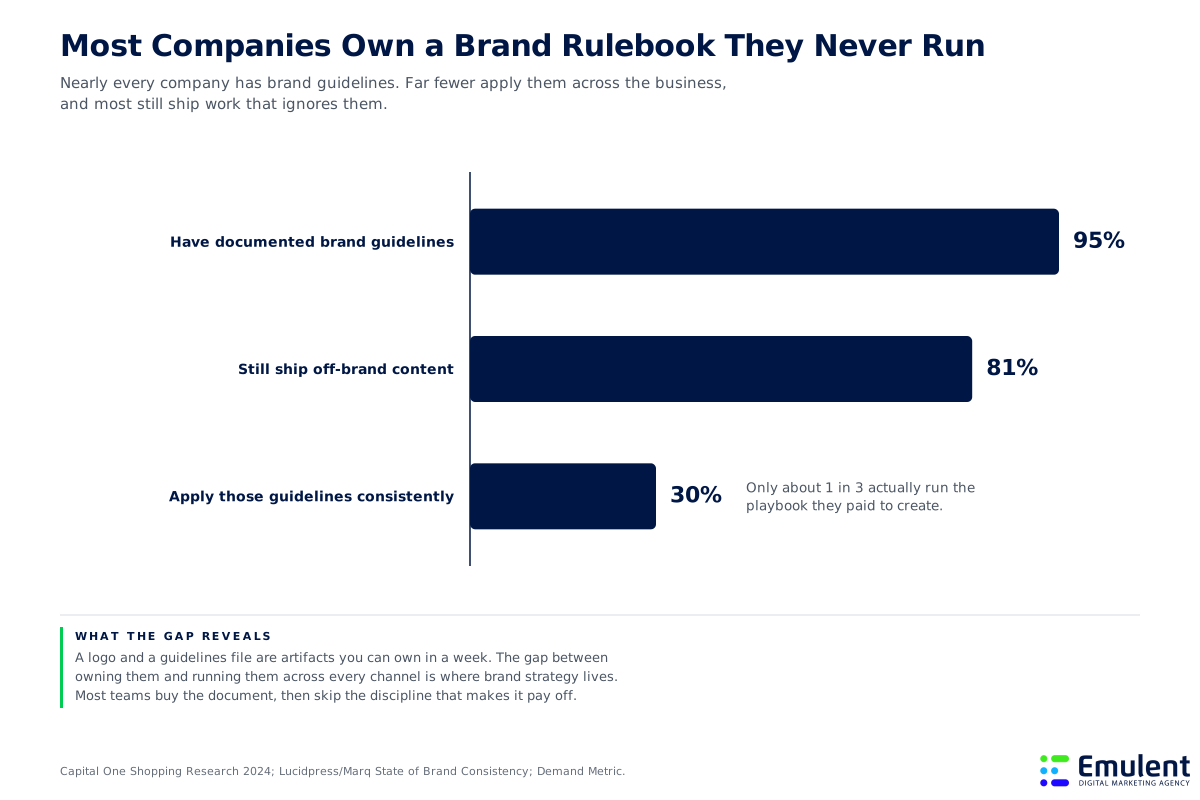
A guidelines file is something you can own in a week. The gap between owning it and applying it across sales decks, product screens, support replies, and paid ads is where brand strategy actually lives. That gap is a discipline problem, not a design problem, and a fresh logo does nothing to close it.
– Emulent Strategy Team
What real brand strategy work looks like (and what it doesn’t)
Branding theater follows a script. A big reveal deck. Mood boards built from stock photography. A sixty-page guidelines PDF heavy enough to feel substantial. Then the senior people who charmed you in the pitch quietly hand the account to juniors, and you spend the next year explaining your own business to a rotating cast.
Real strategy work is less of a show. It is a run of hard questions about who you serve, what you will stop doing, and what you can honestly claim that a competitor cannot. Those conversations rarely photograph well, and they are the entire point. At Emulent, the people who earn your trust in the first meeting are the people who do the work. Founders and senior strategists stay on the account from the first question to the last decision.
How to tell strategy work from branding theater before you sign:
- Who stays on the account. The senior people who pitched should do the work, not pass it to a junior team.
- What questions come first. Real strategy opens with who you will stop serving, not which font feels expensive.
- What you can claim. A promise a rival cannot copy, backed by something real.
- What you keep at the end. Decisions you can act on, not only a thick document.
That last point matters most. Strategy depends on judgment, and judgment does not transfer cleanly through a handoff. The brief that lives in a senior strategist’s head is worth more than the binder it gets summarized into.
– Emulent Strategy Team
Why a brand is a system you run, not a project you finish
A brand is not a launch event with a countdown and a press release. It is a system you operate every quarter, across messaging, content, product, sales, and support. Treat it as a one-off project and it behaves like one: a burst of attention, then a slow slide back to invisible.
The way you fund it tells the truth about whether you believe that. Decades of campaign data point to a brand-heavy split for durable growth, with business buyers weighted a little more toward near-term demand because their sales cycles run long.
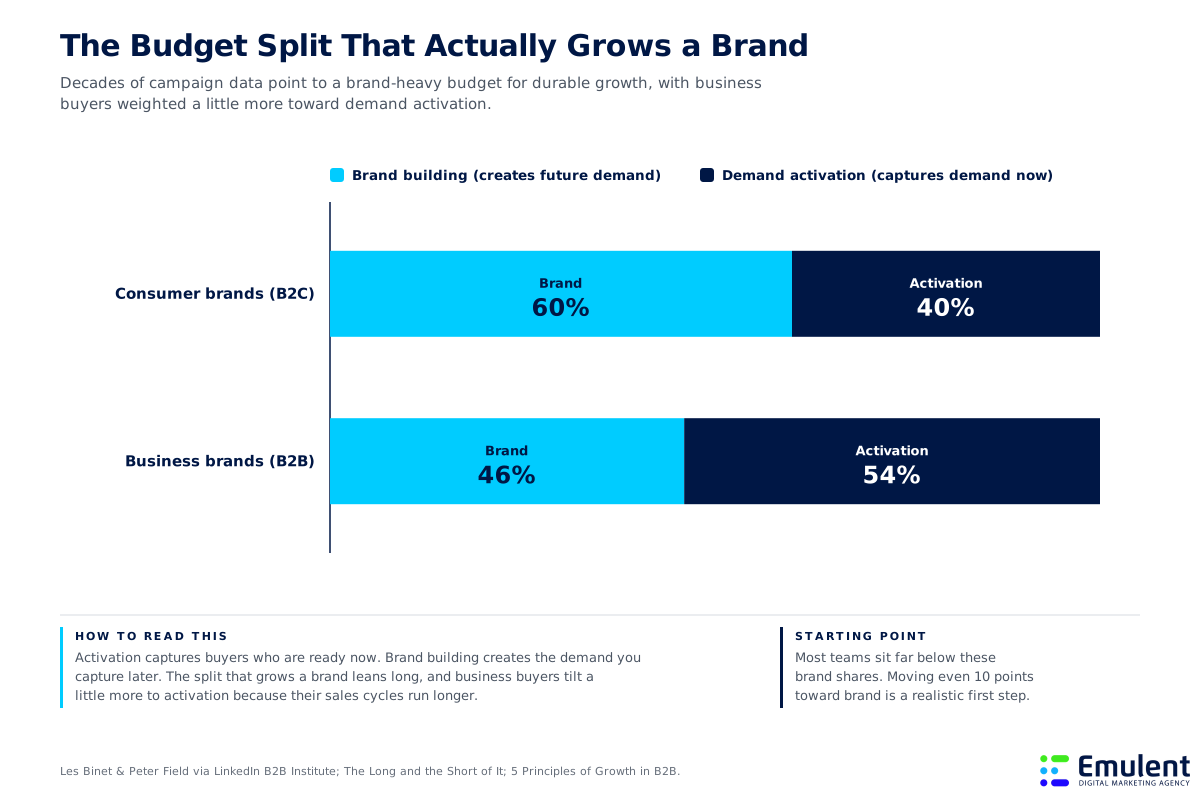
The split is the headline, and the deeper idea is duration. Demand activation captures the buyers who are ready right now. Brand building creates the buyers who will be ready next year. Pour everything into the first and you are renting attention you have to buy again next month. Fund the second as well and you start to compound.
What a brand system keeps running long after a launch day:
- Messaging. The same promise repeated across channels until it sticks.
- Content. A steady output that keeps the brand in front of future buyers.
- Experience. Product, sales, and support all confirming the same story.
- Refinement. Ongoing development as the market shifts, instead of a one-time handover.
This is also why we do not build and bail. A brand handed over and abandoned starts decaying the day the invoice clears, because brand development works as a system rather than a one-off project. We stay, and we keep developing it as the market changes around it.
– Emulent Strategy Team
How saying no builds a clearer position
A position is defined as much by what you reject as by what you chase. Brands that try to be for everyone end up memorable to no one, because a promise wide enough to cover all buyers is too thin to stick with any of them. Focus is the cost of being remembered.
So strategy is mostly a series of nos. Saying no is harder than it sounds, because every no closes a door someone in the room wanted open. A new audience looks like growth. An extra feature looks like value. A logo refresh looks like momentum. Taken alone, each one seems reasonable, and that is exactly how brands drift into sameness, one sensible yes at a time. A brand strategy that helps you say no protects the single sharp idea a buyer should keep.
The nos that sharpen a position:
- No to the wrong audiences. Buyers you cannot serve better than a rival only dilute the focus.
- No to story-blurring features. Every add-on that complicates the message carries a cost.
- No to me-too tactics. Anything that makes you look like the rest of the field weakens recall.
- No to clients we cannot make distinct. We hold ourselves to the same standard we set for the work.
That last refusal is how a company stops being one of many and becomes one of one in the mind that matters. We work with a small number of companies we believe we can make genuinely distinct, rather than spreading thin across a long roster.
Why being chosen beats winning awards
We are not defined by design awards, and we say so on purpose. Awards reward craft judged by other designers. Buyers do not page through award annuals before a purchase. The outcome that pays the bills is simpler and harder: being the brand a buyer already knows when they finally step into the market. And most of the time, they are not in the market at all.
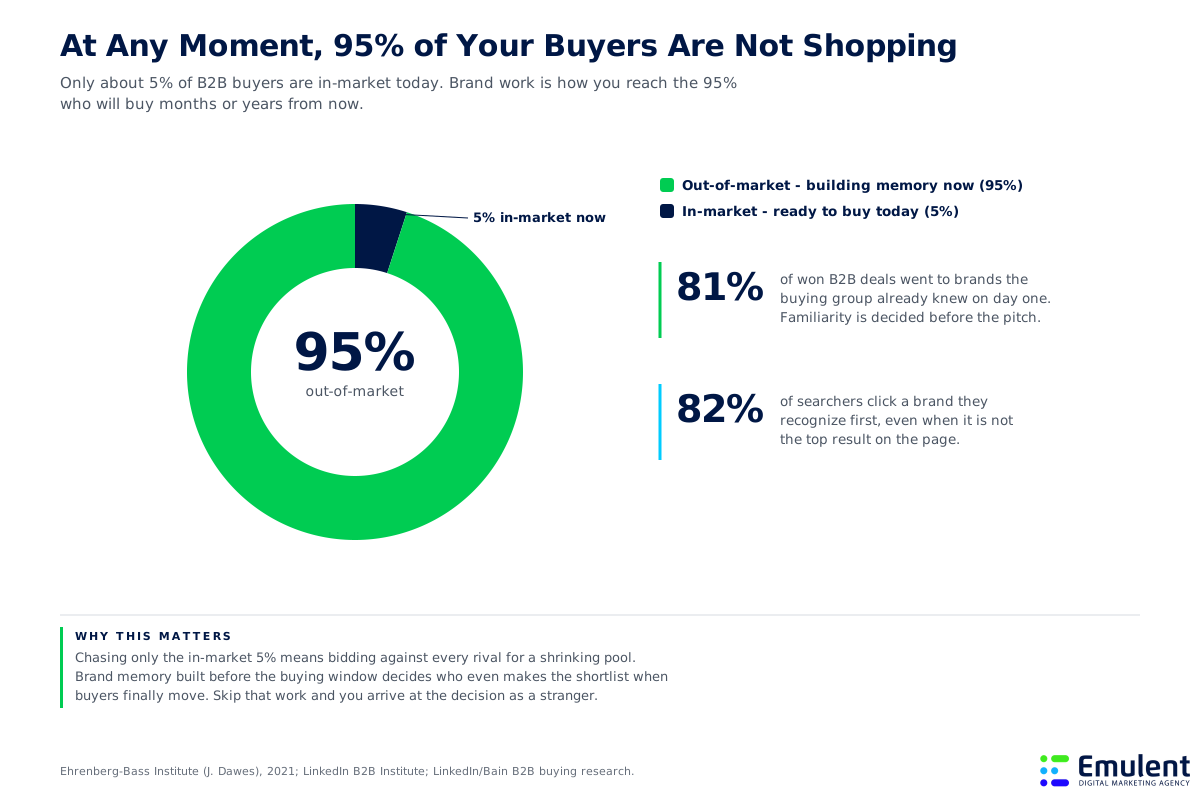
Chase only the small group ready to buy this quarter and you are bidding against every rival for a shrinking pool, usually on price. Brand memory built before the buying window decides who even makes the shortlist when those buyers move. The trap is treating attention you can measure this week as the only attention worth buying. The work that builds memory is harder to credit to a single line in a report, so it gets cut first, and the damage shows up much later as a market that has simply forgotten you exist. We design for brands that win customers rather than trophies.
The outcomes worth measuring instead of trophies:
- Recall. Whether buyers remember you before they start looking.
- Shortlist presence. Whether you make the consideration set without being prompted.
- Familiarity at first click. Whether your name gets chosen over an unknown one.
- Pipeline that does not reset. Whether demand keeps arriving without buying it fresh each month.
– Emulent Strategy Team
Why your brand has to work everywhere, even where you can’t control it
A brand is not a logo sitting on a homepage. It is the consistent promise a person meets in a paid ad, a sales call, an onboarding email, a support reply, and a checkout screen. Every one of those moments either confirms the promise or quietly contradicts it. One off-brand surface can undo ten that were on-brand, because trust is built slowly and dented fast. That is why a brand has to show up the same way everywhere, not live in a single style guide nobody opens.

And the places you do not fully control are growing. More searches now end without a visit to anyone’s website. AI answers a question before a person ever reaches your page, and discovery increasingly happens on surfaces no brand owns. Recognition is the hedge against all of it. Branded, local, and transactional queries resist the zero-click shift, and a buyer who already trusts your name will still seek it out, type it in, and choose it.
The places a brand has to hold up, owned or not:
- Owned surfaces. Your site, product, and email, where consistency is fully in your hands.
- Earned and paid surfaces. Ads, listings, and reviews that confirm or contradict the promise.
- Search and AI answers. Results and summaries that increasingly decide who gets named.
- Word of mouth. What a customer repeats about you when you are not in the room.
So the work cascades in one direction. Decide the strategy: the audience, the promise, the position. Express it consistently in the logo, yes, and then in every word, screen, and reply that follows. The mark is the easy last step. The system that keeps it meaningful everywhere is the job.
How Emulent can help with your brand strategy
The Emulent Marketing Team builds brand strategy from the decisions up. We define the positioning, audience, and promise first, carry that through every place a buyer meets you, and keep the senior people who designed it on the work as your market changes. No theater, no handoff, no build-and-bail.
If you need help with brand strategy, contact the Emulent team and we will start with the decisions that matter most.