
A branding agency should be judged by one outcome: whether the brand it builds wins customers. Awards, mood boards, and clever logos make for handsome case-study covers, but they never appear on a balance sheet. We treat a brand the way an investor treats a position, with a clear view of how it will earn trust, hold a price, and bring buyers back. What follows is how we separate a branding partner who moves the business from one who produces decoration.
The short version of what follows:
- Branding is a set of decisions, not a coat of paint. The logo is the last 5 percent of the work and the least valuable part of it.
- Measure a brand by business impact. Decades of campaign data tie 60 to 80 percent of long-term sales growth to brand investment, not short-term promotions.
- A brand only works when it shows up the same way everywhere. B2B buyers now meet a brand across 10 channels before deciding, double the count from 2016.
- Consistency is the gap most companies never close. About 90 percent say it matters; near 10 percent run a brand they call very consistent.
- AI answers are removing the click. The brand a buyer already trusts is the one the model names and the buyer chooses.
- Saying no to most work makes the rest better. Focus is what lets a brand become one of one instead of one of many.
Is branding a design project or a business decision?
Most branding conversations start at the logo and stop there. We start at the decision the brand has to win: why a buyer chooses you, pays your price, and tells someone else. A logo cannot answer any of those questions on its own. Brand strategy is the work of deciding what you stand for, who you serve, what you refuse to do, and how you prove it. The visual identity is the expression of those choices, not a substitute for them.
When the design comes first, you get a pretty shell around a hollow position, and buyers feel the hollowness even when they cannot name it. When the decisions come first, the design has something to carry. So the practical test for any branding partner is simple: do they spend the first month on questions about your customers and your economics, or on color swatches? If you skip the decisions, you pay for a redesign in two years and the underlying confusion is still there. That confusion is what makes the next question so important, because it is also what a brand is supposed to fix.
What should you actually measure when you measure a brand?
A brand is supposed to do two jobs: build demand that exists tomorrow and help capture demand that exists today. The mistake we see most often is funding only the second job. When you spend close to 100 percent on performance ads, the brand stops building memory, and the cost of buying each customer climbs within 18 to 24 months. The data on the right split is unusually settled for marketing.
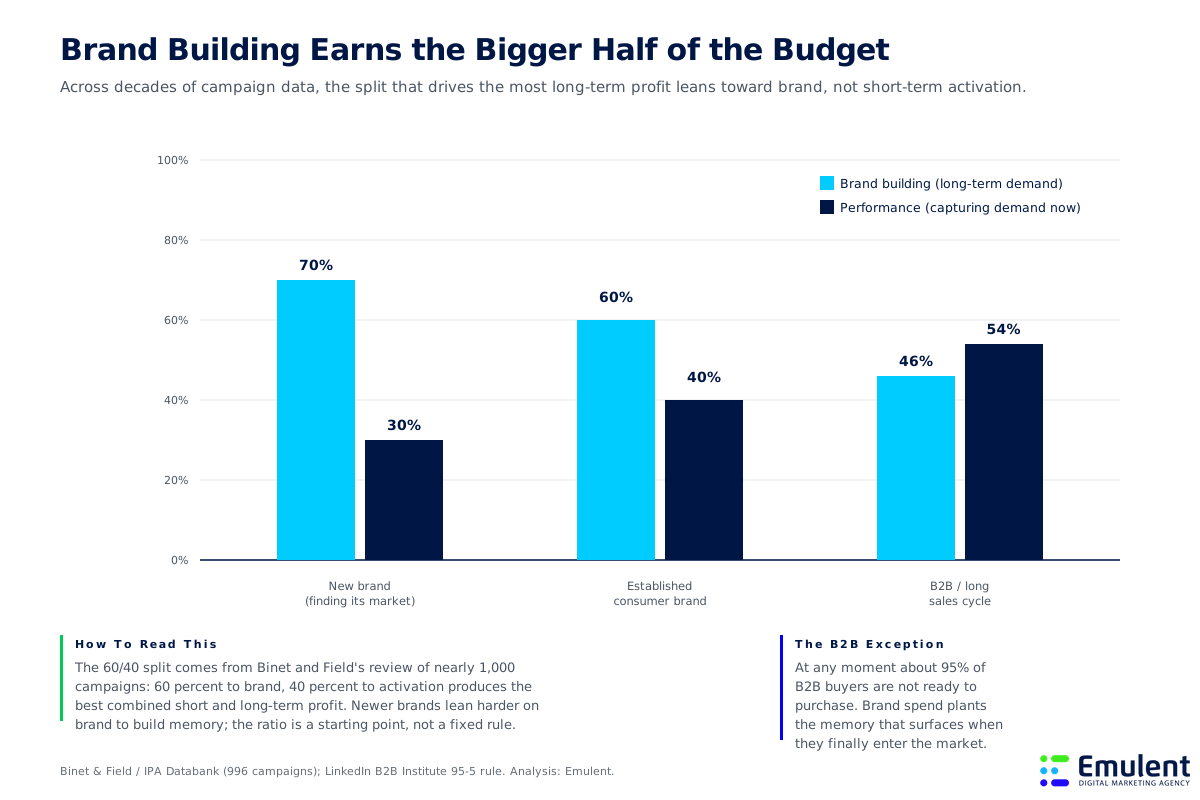
- The 60/40 baseline. Across nearly 1,000 campaigns, Binet and Field found that roughly 60 percent to brand and 40 percent to activation drives the best combined short and long-term profit.
- New brands lean harder on brand. A 70/30 tilt builds the memory a young company needs before performance ads have anything to convert.
- B2B runs closer to even. At any moment about 95 percent of business buyers are not ready to purchase, so brand spend plants the memory that surfaces when they finally enter the market.
Read that way, brand stops being a cost center and becomes the thing that lowers your cost to acquire every future customer. Awards do not capture that. Revenue, margin, and acquisition cost do. And the reason a well-funded brand pays back is that buyers keep meeting it in more places than they used to.
Why does a brand only work when it shows up the same way everywhere?
The path to a purchase has stretched across far more contact points than it used to. A buyer might see you in an AI answer, a podcast mention, a sales email, a review site, and a colleague’s recommendation before they ever reach your site. Each of those is a chance to look like the same company, or a different one.
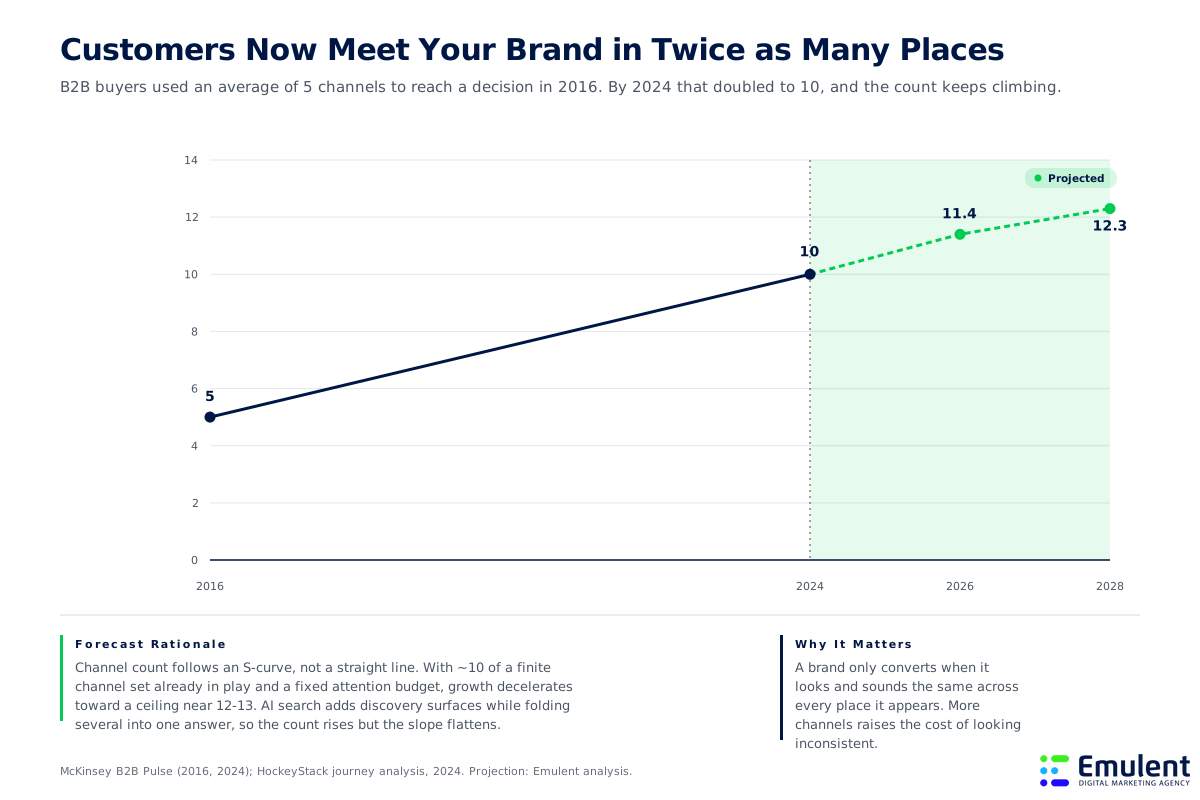
When the count of places was small, an inconsistent brand was survivable. At 10 or more, every gap between channels costs you recognition, because the buyer has to re-learn who you are at each stop. This is the case for treating brand presence across every channel as one connected job rather than a pile of separate ones. We build a brand experience system so the company sounds and looks like itself whether a buyer finds you through search, social, sales, or word of mouth. That same logic raises the stakes on a problem most companies already know they have but rarely fix.
How do you keep a brand consistent without a build-and-bail agency?
Brand consistency is the rare lever that raises revenue without raising spend, and almost no one pulls it all the way. The numbers expose a wide gap between intention and practice.
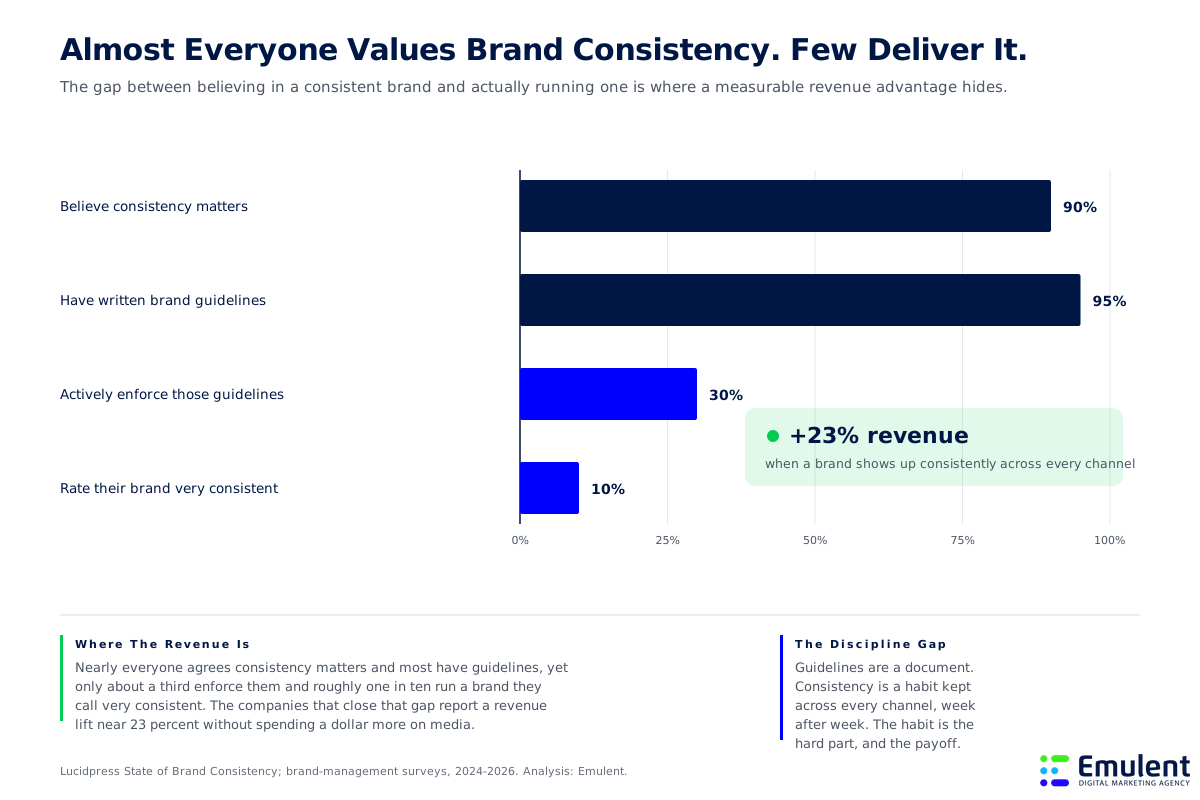
Companies that present a brand consistently across channels report revenue near 23 percent higher than those that do not. Most never get there because they treat branding as a one-off project: an agency hands over a logo and a guideline document, then disappears. A document does not keep a brand consistent. A habit does, kept week after week as new ads, pages, and decks get made. That is the difference between a one-time handoff and an asset that compounds.
What closing the consistency gap takes:
- Decisions written down so anyone can apply them. Not just colors and fonts, but voice, the claims you will and will not make, and the rules for how the brand behaves.
- An owner who stays. Someone accountable for the brand after launch, not a team that moves on once the files are sent.
- A check on every output. The work only stays consistent if someone reviews what ships against the standard, every time.
Keeping a brand whole is harder when the rules of discovery themselves keep changing, which is exactly what is happening with search.
What happens to branding when AI answers the question and the click disappears?
Search used to send people to your site, where your brand could do its work. AI answers increasingly settle the question on the results page, so the click never happens. The drop in paid click-through on these queries has been steep and looks set to hold.
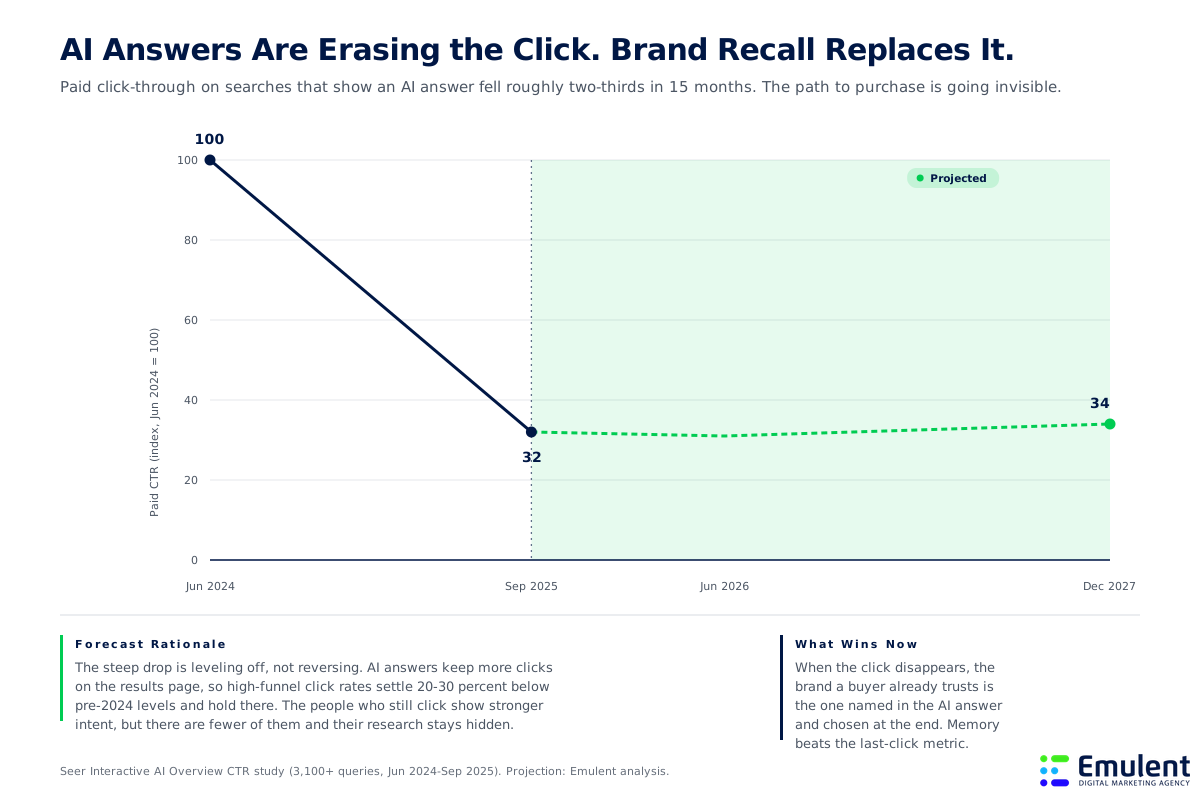
When the click disappears, the buyer still has to choose someone. They choose the brand the model names and the brand they already trust. That makes brand recall the asset that survives the shift, and it makes optimizing for AI search a branding job as much as a technical one: the models cite sources they read as credible and consistent across the web. A scattered brand gives an AI engine little to latch onto. A coherent one gets named. So the agencies still selling clicks are selling a shrinking thing, while the brands that invested in being known are pulling ahead. Which raises the last question, about how an agency should choose its work.
Why does saying no to most clients make the work better?
A brand built to stand out cannot come from an agency trying to please everyone. Distinct positions require a way to stand out in a crowded market that competitors cannot copy, and that takes focus that a high-volume shop cannot give. We would rather be one of one for a handful of clients than one of many for everyone. That selectivity is the reason we can put senior people on the work instead of routing it through junior layers and a polished pitch deck.
It is also why we built the agency the way we did, around founder access and people who have done the work, rather than around process and theater. When our founder is in the room, the brand decisions get made faster and with more honesty, because no one is performing for a renewal. A brand that wins customers is a brand someone cared enough to argue about. You cannot fake that at scale, and you should not trust an agency that says it can.
Building a brand that earns its keep
A brand becomes an asset when its decisions are clear, its funding reflects its long-term payoff, it shows up the same way everywhere, and someone keeps it that way after the launch. Our team helps companies build brands on that standard, then keep them sharp as search, channels, and buyer behavior shift. If you want a branding partner measured by customers won rather than trophies collected, talk with the Emulent team about your brand.