
Choosing a branding agency is one of the higher-stakes calls a company makes, because your brand shapes how customers read your business before they ever speak to you. The tricky part is that the best agencies and the worst ones often look identical in a pitch room. Both bring confident decks, polished case studies, and a charming presenter. The gap shows up months later, in who does the work and whether the brand holds together once the launch buzz fades. Here are the red flags we watch for, and the questions that separate a branding agency built to perform from one built to impress.
Key takeaways before you start your search
- Strategy over decoration: A logo-first pitch is a warning sign. Branding is a set of business decisions, not artwork.
- Pitch team versus delivery team: Find out who actually does the work before you sign anything.
- Process beats theater: Most companies own brand guidelines, but few run them. Vet for execution, not presentation.
- Built for the relationship: Average client-agency tenure has climbed back to about seven years. Pick a partner who plans to stay.
- Proof over awards: Consistent branding can lift revenue by roughly a third. Ask to see outcomes, not a trophy shelf.
- One brand, every channel: A brand only works when it reads the same everywhere a customer meets it.
Is the agency selling decisions or decoration?
The first red flag is easy to miss because it feels like progress: an agency that opens with logo concepts and color palettes before it has asked a single question about your customers, your competitors, or what you sell. A logo is the output of branding, not the work itself. The real work is a stack of decisions about who you serve, what you promise, why anyone should believe you, and how you will stay different when a competitor copies your look a week after launch.
When you buy decoration instead of brand strategy, you get an identity that looks current and says nothing. It cannot defend a price, win a hard pitch, or hold its ground in a crowded category. Agencies that lead with strategy ask uncomfortable questions early, and those questions are what let a brand stand out in a saturated market rather than blend into it.
When an agency shows you a logo in the first meeting, it is telling you what it values. We would rather spend that hour learning why your best customers chose you, because that answer decides every design call that follows. – Emulent Strategy Team
A sharp strategy still fails if the wrong people build it, which leads to the question most companies forget to ask in the room.
Who will actually do the work, the senior team or the bench?
The deck-heavy, outcome-light pattern is the most common trap in agency selection. The senior partners who win your trust in the pitch are often not the people who touch your account once the contract is signed. The work quietly slides to junior staff while you keep paying senior rates, and the brand drifts because nobody with real judgment is steering it day to day.
Direct access to senior people, including the founder, is a genuine differentiator rather than a nice extra. It means the person who understood your business in the pitch is the same person making calls when a deadline gets tight or a decision gets hard. At Emulent, that access runs straight to the founder, by design.
Questions to ask about who staffs your account
- Name the team: Ask who, by name and title, will work on your account weekly, and whether they are in the room right now.
- Senior hours: Ask how many senior hours your retainer actually buys versus how many go to junior production.
- Escalation path: Ask who you call when something goes wrong, and how fast they answer.
A strong team is only half the picture. The other half is whether the agency runs a real process once the kickoff meeting ends.
Process or theater: what happens after you sign?
A great pitch is theater. The actual work of branding is maintenance, and that is where most agencies, and most companies, fall apart. The data on this gap is stark. Nearly every company owns a set of brand guidelines, but only a small share runs them with any consistency, and almost none manage to stay on-brand across every channel at once.
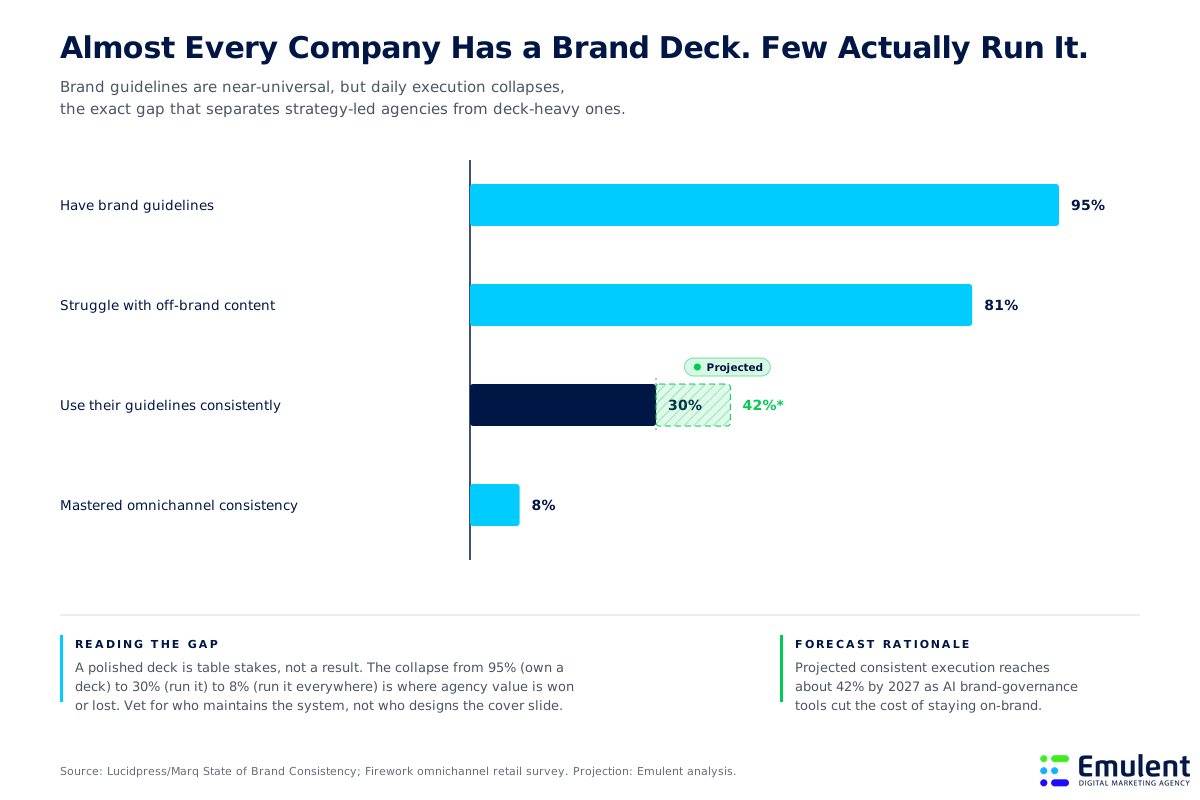
The execution gap: owning a brand deck is near-universal, but running it is rare, which is exactly where agency value is won or lost.
The collapse from owning a deck to running it everywhere is the clearest test of an agency worth hiring. A shop built on theater hands you a beautiful set of guidelines and walks away. A shop built on process gives you the templates, the review steps, and the governance that keep the brand intact as your team grows and your channels multiply. Ask what the first ninety days look like after launch, because the honest answer tells you which kind of agency you are dealing with.
The pretty deck is the easy part. The hard part is making sure the social post, the sales email, and the trade-show booth all feel like the same company six months from now. That is the job, and it is unglamorous. – Emulent Strategy Team
A real process only pays off if the relationship lasts long enough for the work to compound, which is why agency tenure has become a signal worth reading.
Are they built for a launch or a relationship?
Build-and-bail is a quiet red flag. An agency optimized for one-off launches treats your brand as a project to finish, not a system to grow. For years that short-term posture matched the market, as average client-agency tenure slid from more than seven years in the 1980s down to barely three by the late 2010s. That trend has reversed.
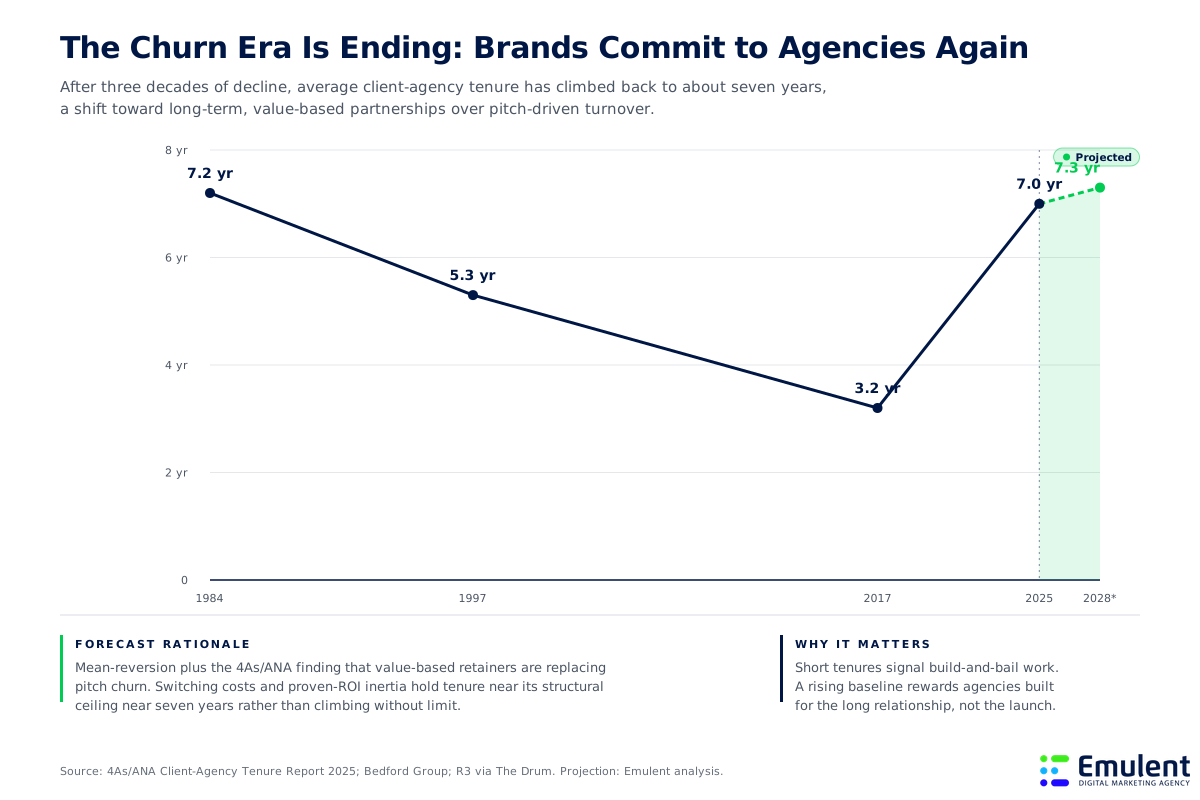
After three decades of decline, tenure has rebounded to roughly seven years as companies move toward long-term, value-based partnerships.
The rebound signals a shift toward partnerships built on results rather than the next pitch. Brand equity compounds over time, and every agency switch resets the clock. An agency that expects to be around in five years invests differently in your account today. We built Emulent for that kind of relationship on purpose, which is part of why we describe ourselves as a different kind of agency rather than a project shop.
If an agency is already thinking about its next client while pitching you, you will feel it in year two. We would rather grow with a handful of brands than churn through a hundred. – Emulent Strategy Team
Long relationships matter because consistency compounds into revenue, and that payoff is something a good agency can show you.
Can they prove that consistency actually pays?
The last red flag is an awards wall with no business outcomes behind it. Design recognition is pleasant, but it does not pay your bills. What pays is consistency, and the numbers back it up: companies that present their brand the same way across every channel report meaningfully higher revenue, with measured lifts that have grown from roughly a quarter to a third across successive studies.
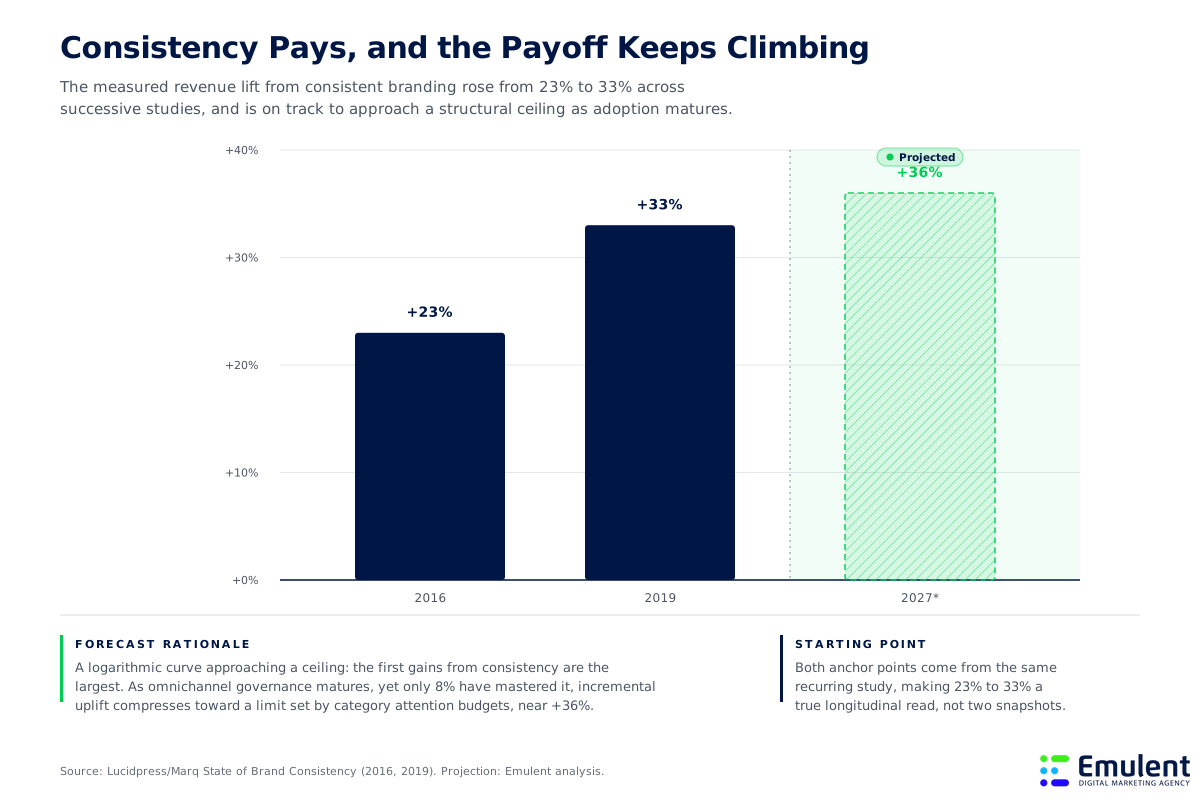
The measured revenue lift from consistent branding keeps climbing, even as it nears a practical ceiling set by category attention budgets.
That payoff only lands when the brand shows up the same way everywhere a customer meets it, from the website to a cold email to a booth at a trade show. Getting a brand to read consistently across every channel is its own discipline, the heart of brand everywhere optimization, and it is the work that turns a nice identity into a revenue engine. We treat the brand as the operating system for the whole customer experience, an idea we built into our experience system.
We are not defined by design awards. We are defined by whether a client sells more, charges more, and gets remembered. Ask any agency to show you that, and watch how quickly the conversation gets honest. – Emulent Strategy Team
All of this gets easier to judge when you walk into the room with a simple scorecard instead of a gut feeling.
What belongs on your agency-vetting scorecard?
You do not need a complicated rubric to spot the red flags above. You need a short list of questions and a willingness to wait for clear answers. The agencies worth hiring will welcome the scrutiny, because it is how they win on substance rather than charm.
A quick scorecard to bring to every pitch
- Strategy first: Did they ask about your business and customers before showing any visuals?
- Named team: Can they tell you exactly who does the work and how to reach a decision-maker?
- Run the system: Do they have a clear plan for the first ninety days after launch, not just a deliverable?
- Built to stay: Is their model designed for an ongoing relationship rather than a single project?
- Proof of outcomes: Can they point to revenue, pricing power, or recognition, not only awards?
- Willing to say no: Do they take every account, or are they selective about fit?
That last point matters more than it looks. An agency that says yes to every brand has spread itself thin, and your account becomes one of many rather than one of one. Selectivity protects the quality of the work you are paying for. If you want a deeper version of these questions, our brand strategy checklist walks through the full set.
How Emulent helps you choose, and build, the right brand
We help companies make brand decisions that hold up under pressure and stay consistent everywhere customers meet them. That means senior people on your account, a real process after launch, and a partnership measured by what your brand does for the business rather than how it looks on a shortlist. If branding is on your plate this year and you want a frank conversation about where yours stands, talk to our team. We will tell you what we see, including the parts that are working.