
Delete your worst pages. That is the growth tactic almost nobody wants to hear, and it is the one that moves sites fastest right now. Low-value, outdated pages do not simply sit there failing quietly. They spend crawl budget your money pages need; they split your authority across URLs competing for the same query, and they feed a quality judgment Google applies across your entire domain. This article covers how to score every page you own, which ones to cut first, when merging beats deleting, and what to expect after the cut.
What you will take away:
- Quality is judged sitewide. Google’s own documentation says hosting large amounts of unhelpful content can make your other content perform less well in Search.
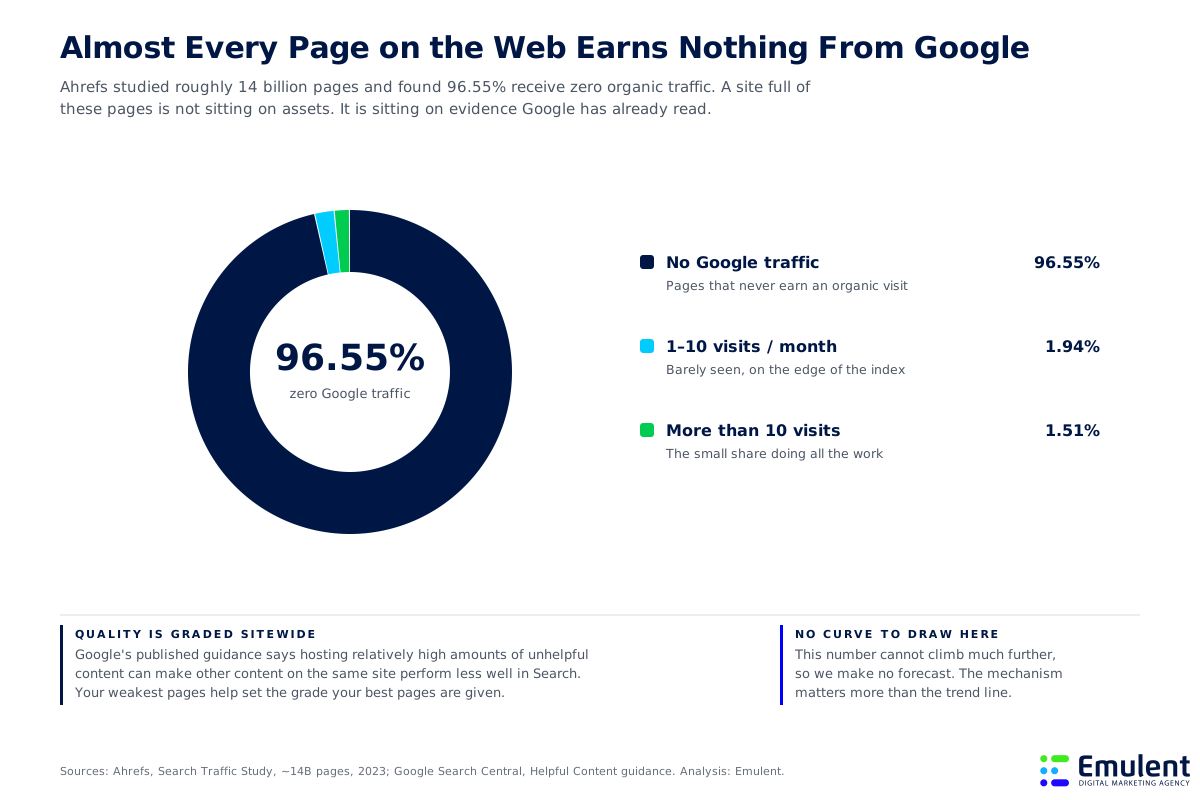
- Zero-traffic pages are the norm, not the exception. Ahrefs found 96.55% of the roughly 14 billion pages it studied earn no organic traffic from Google.
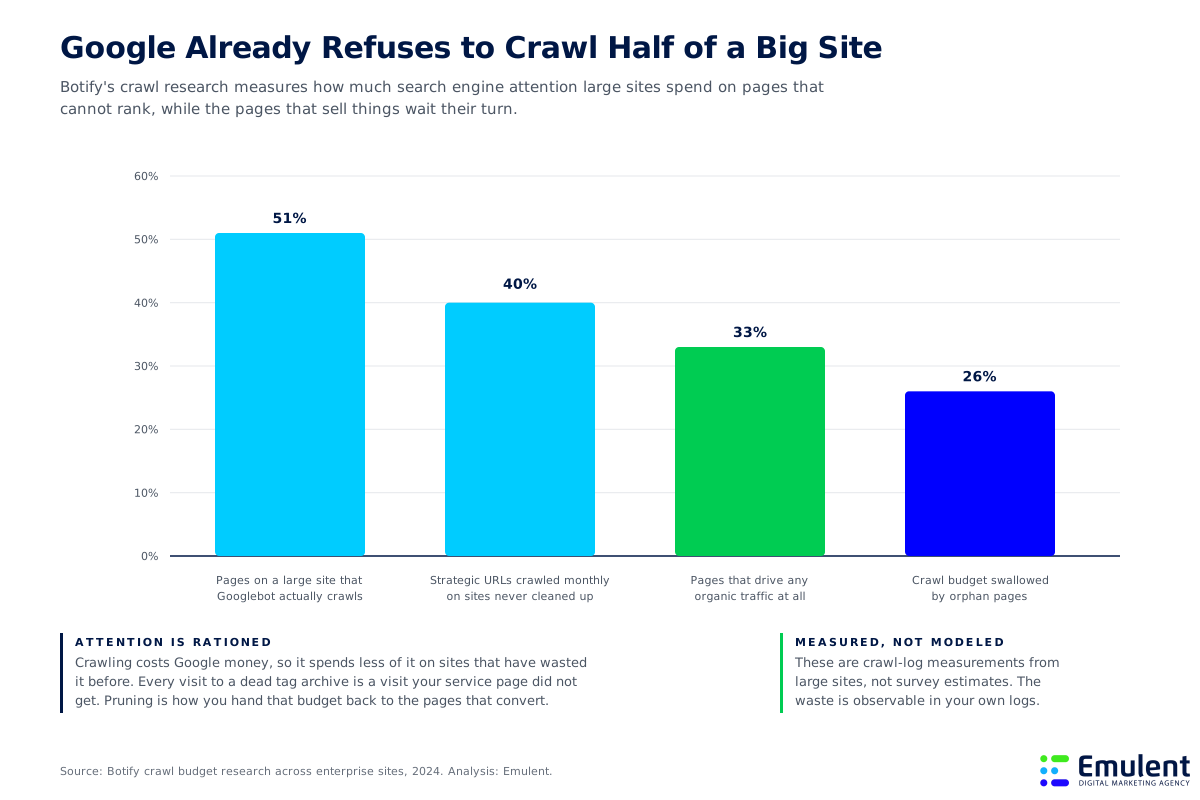
- Crawl attention is rationed. Botify measured Googlebot crawling only about half the pages on large sites, with orphan pages swallowing 26% of the visits it does make.
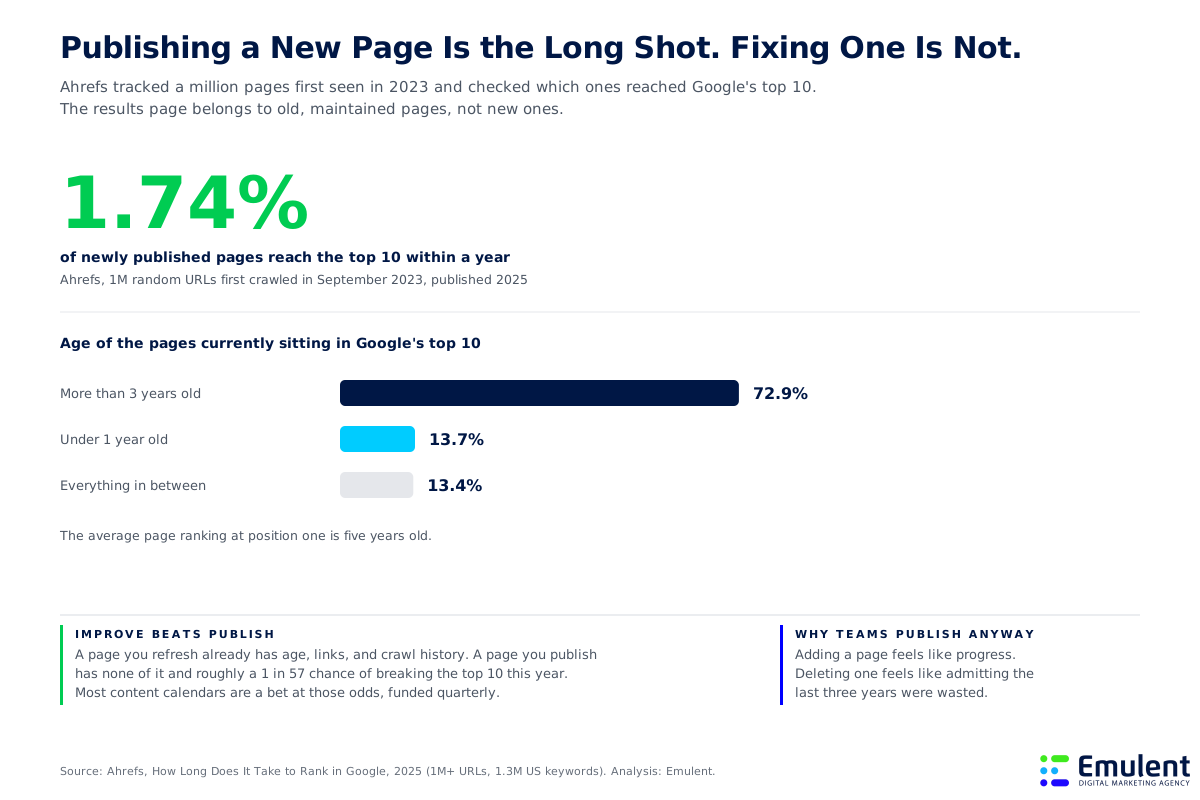
- Improving beats publishing. Only 1.74% of newly published pages break into Google’s top 10 within a year, and almost three-quarters of the pages holding those spots are over three years old.
- Cut the pages Google now answers itself first. AI Overviews absorbed the informational queries most thin blog posts were written to catch.
- Merge before you delete when intent overlaps. Five weak pages chasing one query become one page that can win it.
Google Grades the Whole Site, Not Just the Page
Your weakest pages help set the grade your strongest ones receive. Google’s ranking systems operate at the page level, but Google’s published guidance on helpful content states that hosting a relatively high amount of unhelpful content can cause other content on the same site to perform less well in Search. That is not an SEO theory. That is the search engine telling you your dead pages testify against your live ones.
The dead-page problem is bigger than most teams believe. Ahrefs studied roughly 14 billion pages and found 96.55% receive zero organic traffic from Google, with another 1.94% scraping together one to ten visits a month. If a large share of your indexed URLs sits in that first bucket, Google has already reached a verdict on them.
This is old doctrine at Google, not a new penalty. The Panda update brought sitewide quality scoring in 2011, and the Google helpful content update made that principle permanent. Fifteen years of algorithm history point one direction, and content teams still count pages like assets on a balance sheet.
“Before we look at what a client should publish next, we ask which pages they would be embarrassed to show a prospect. Then we ask why those pages are still indexed. That question settles more content debates than any keyword report we have ever presented.” – Emulent Strategy Team
Junk Pages Spend Crawl Budget You Do Not Get Back
Googlebot will not crawl everything you publish, and it spends less time on sites that have wasted its time before. Botify’s crawl research across large sites found Google crawling only about 51% of pages. On sites nobody has ever cleaned up, just 40% of strategic URLs get crawled in a given month, and roughly a third of pages drive any organic traffic at all. Orphan pages, the URLs no longer linked from anywhere in your structure, consume 26% of the crawl budget on average.
Every crawl spent on a dead tag archive or a 2019 announcement post is a crawl your pricing page did not get. Botify’s log analysis documented one vehicle marketplace where 99% of ten million pages had never been crawled at all. After the URL inventory was cut and internal linking rebuilt, crawl activity rose 19 times over and organic traffic doubled inside three months. No new content. No new links. Just less garbage in the way. That work sits at the center of enterprise seo services, and it is why big sites often grow by subtraction.
Score Every Page: Keep, Improve, or Kill
Pull twelve months of data and sort every URL into three buckets before anyone argues about a single one. Gut feel protects pet pages, and pet pages are usually the problem. Scoring wins the argument because it replaces opinions about how hard someone worked on a page with evidence about what the page returned.
How to score a page:
- Keep: It earns organic traffic, conversions, or links, and the information is still accurate. Leave it alone and protect the internal links pointing at it.
- Improve: It targets a real query and holds some rankings or links, but the content is shallow, stale, or beaten. Rewrite it with current data, more depth, and better internal links.
- Kill: Twelve months with no traffic, no conversions, no referring domains, and no strategic reason to exist. Delete it and return a 410, or redirect it if it holds link equity worth rescuing.
- Score on four inputs: organic sessions, conversions or assisted revenue, referring domains, and freshness. A page failing all four for a year rarely earns a second year.
- Protect the non-search pages: careers, legal, and sales support pages stay even at zero search value. Mark them noindex so they stop spending your quality budget.
The instinct is to shove everything into the improve bucket and publish new pages on top of it. The data argues hard against that. Ahrefs tracked a million URLs first crawled in September 2023 and found only 1.74% of newly published pages reached the top 10 within a year. Meanwhile 72.9% of the pages currently holding top 10 positions are more than three years old, and the average page at position one is five years old. A page you refresh already owns age, links, and crawl history. A page you publish owns none of it.
Traffic alone should not save a page either. A post can rank, get crawled, get read, and sell nothing, which is why ranking 1 is nothing more than a vanity metric until it produces customers. Put conversions in the scoring model beside sessions, and when the two disagree, let conversions decide. Choosing what to stop doing is the part of content strategy services that teams skip, and it is the part that pays first.
“Teams keep publishing because adding a page feels like progress and deleting one feels like admitting three years of work were wasted. That is loss aversion writing your content calendar. The money you spent on a dead page is gone whether you keep the page or not. The only live question is what it costs you to leave it up.” – Bill Ross, Founder
Kill the Pages Google Now Answers Itself
Start the kill list with the informational posts you wrote to catch questions Google now answers on the results page. Those posts were built for a search results page that no longer exists. Semrush tracked more than 10 million keywords through 2025 and watched AI Overview coverage climb from 6.49% of queries in January to a peak of 24.61% in July, then settle near 15.69% in November after Google recalibrated. Pew Research, measuring real browsing behavior across 68,879 searches by 900 US adults, found 18% of Google searches in March 2025 produced an AI summary, rising to 60% for searches that began with a question word.
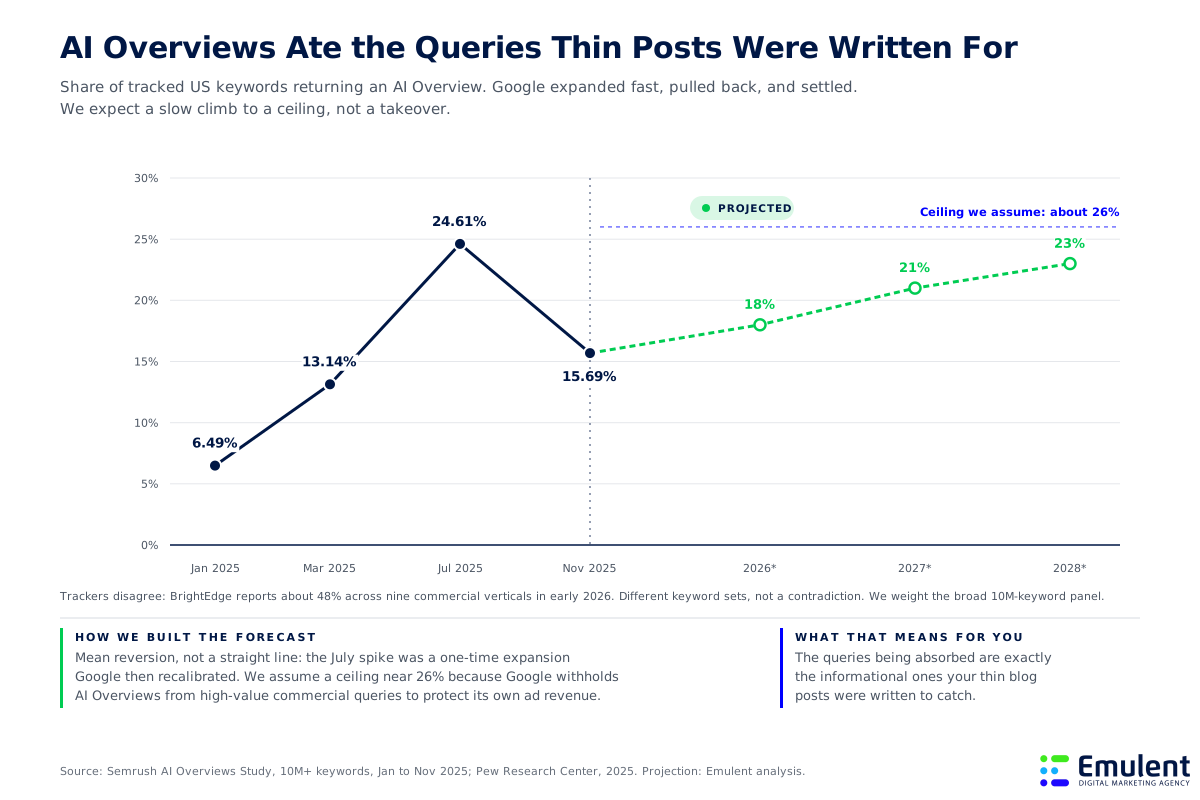
Projection: Emulent analysis based on mean reversion after a one-time expansion, assuming a ceiling near 26% because Google withholds AI Overviews from high-value commercial queries to protect its own ad revenue and navigational searches rarely trigger them, cross-checked against Semrush’s study of 10 million keywords (2025) and Pew Research Center browsing data (2025). Trackers disagree: BrightEdge reports roughly 48% across nine commercial verticals in early 2026, measuring a different keyword panel.
Read the composition, not just the coverage. AI Overviews concentrate on informational queries with little commercial value, which is precisely the ground your “what is” and “how to” posts were written to hold. Service pages, pricing pages, and comparison pages are far less exposed. That hands you a clean rule for the kill list: a thin informational post targeting a query that now returns an AI summary has almost no path back, and rewriting it does not bring the click back. Cut it, fold anything worth keeping into a page that serves a buyer, and read how AI Overviews affect SEO before you plan the replacement.
Merge Before You Delete When the Intent Overlaps
Deletion is for pages with nothing worth saving. Consolidation is for the far more common case: several weak pages circling the same question, none of them winning it. Five 400-word posts on variations of one query split your authority five ways. Merged into one page, they concentrate it, and the survivor inherits the links, the age, and the internal signals of everything folded into it.
Signals that merging beats deleting:
- Your pages compete with each other. Two URLs trading positions for one query is keyword cannibalization, and Google settles it by trusting neither page fully.
- Shared intent, scattered depth. Each thin page answers a fragment of a question the reader wants answered in one place.
- Links worth rescuing. A weak page with a few quality referring domains gets merged and redirected, never deleted. Point a 301 redirect at the page that now covers the topic, not at your homepage, which Google often treats as a soft 404.
- Annual posts stacking up. Trends for 2022, trends for 2023, trends for 2024. Collapse them into one evergreen URL you update in place so the page keeps its age and its links.
“When a client shows us a redirect map that sends forty dead posts to the homepage, we know the pruning was done to make a spreadsheet look tidy. Redirect to the page that answers the same question, or serve a 410 and let it go. Google can tell the difference, and so can the reader who lands there.” – Emulent Strategy Team
The Pages That Survive Have a Higher Bar to Clear
Every ranking you hold buys a fraction of the clicks it once did, which raises the price of carrying a page that earns none. Ahrefs re-ran its click-through study across 300,000 keywords in February 2026 and found average position-one CTR on keywords that trigger an AI Overview fell from 7.3% in December 2023 to 1.6% in December 2025. On comparable informational keywords with no AI Overview, CTR still fell by roughly half, from 7.6% to 3.9%. Pew reached a matching conclusion by a completely different method: users clicked a traditional result in 8% of visits when an AI summary appeared, against 15% when it did not.
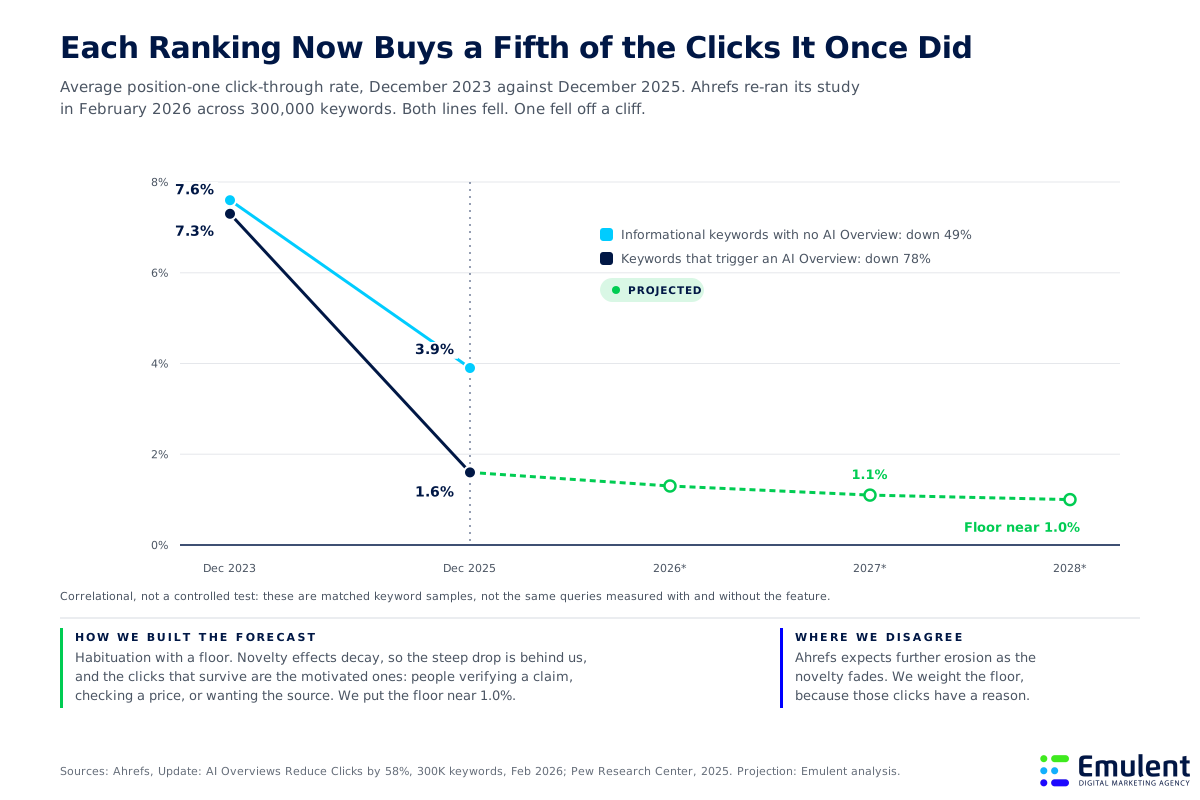
Projection: Emulent analysis based on habituation, where novelty effects decay and the steep first drop does not repeat, assuming a floor near 1.0% because the clicks that survive are motivated ones (people verifying a claim, checking a price, or wanting the original source) and those motives do not disappear, cross-checked against Ahrefs’ February 2026 CTR study, whose authors expect further erosion. We weight the floor, they weight the slide, and we would rather say so than pretend the forecast is settled. These figures are correlational, drawn from matched keyword samples rather than the same queries measured with and without the feature.
The strategic read holds whichever forecast you prefer. When a top ranking returns a fifth of the clicks it used to, a page has to be strong enough to be clicked or cited to justify the crawl it consumes. Thin pages fail both tests at once. They give AI systems nothing worth citing and readers nothing worth clicking, which is why serious ai seo work opens with a pruning pass rather than a publishing plan. Fewer, deeper pages concentrate the authority signals these systems use to choose sources.
What Actually Happens After You Cut
Expect a dip before the climb. Rankings and keyword counts commonly wobble for two to six weeks while Google recrawls the site, reads the redirects, and rescores what remains. Teams that panic in that window and restore the deleted pages reset the clock and learn nothing. Watch conversions and revenue during the dip rather than keyword counts, because keyword counts are the number you deliberately reduced.
Run the cut in this order:
- Export everything first. Full URL list, twelve months of Search Console data, analytics, and referring domains, in one sheet, before a single page comes down.
- Batch it. Cut 10% of the list, wait three to four weeks, read the results, then continue. Deleting a thousand pages in an afternoon leaves you no way to learn what worked.
- Fix the internal links. Every link pointing at a deleted page becomes a broken link or a redirect hop. Update the source pages instead of asking redirects to carry the load.
- Update the sitemap the same day. Removed URLs come out of the XML sitemap immediately, or you keep inviting Google to crawl pages you just killed.
- Re-audit in six months. Content decays. Pruning is maintenance, not a project you finish.
When Pruning Is Not Your Problem
If your site has fifty pages and no traffic, do not hire anyone to prune it. Pruning fixes dilution, and you do not have enough pages to dilute anything. Your problem is that nothing you have published is good enough to compete, and cutting six posts will not change that. Write one page that beats what ranks today, then write another. Come back to pruning when you have enough inventory for weak pages to cost you something.
The same honesty applies to who runs the audit. A junior contractor with a traffic export can tell you which pages have no sessions. Knowing which zero-traffic page is a future power page and which is dead weight takes judgment about buyers, not a spreadsheet filter, and that is the same reason authentic content requires senior expertise, not outsourcing. The cheapest audit produces the most expensive mistake: deleting the quiet page that earned three backlinks and two enterprise deals last year.
Cut the Dead Weight, Then Build on What Is Left
A smaller site that answers real questions beats a bigger one that half-answers a thousand. We run content audits, keep-improve-kill scoring, consolidation maps, and the redirect and sitemap cleanup that makes the whole thing hold. We have done it for fifty-page sites and for sites with millions of URLs, and we will show you which pages are dragging yours down before you spend anything with us. If you want a second opinion on what to cut, talk to a marketing agency willing to tell you to publish less.