
Most content creation services sell the same promise: more posts, faster, at a lower price per word. That model produces volume, and volume is easy to spot. Buyers have learned to recognize generic, sourceless writing on sight, and recognizing it changes how they feel about the brand behind it. We think the more useful question is not how much content a team can produce, but whether the reader can tell that a person who knows the subject wrote it. Here is how we judge that, and what the current data says about why it matters.
Key takeaways:
- Volume is an input, not a result: Content earns its place through leads, pipeline, and customers who stay, yet only about 42% of content teams can tie their work to revenue at all.
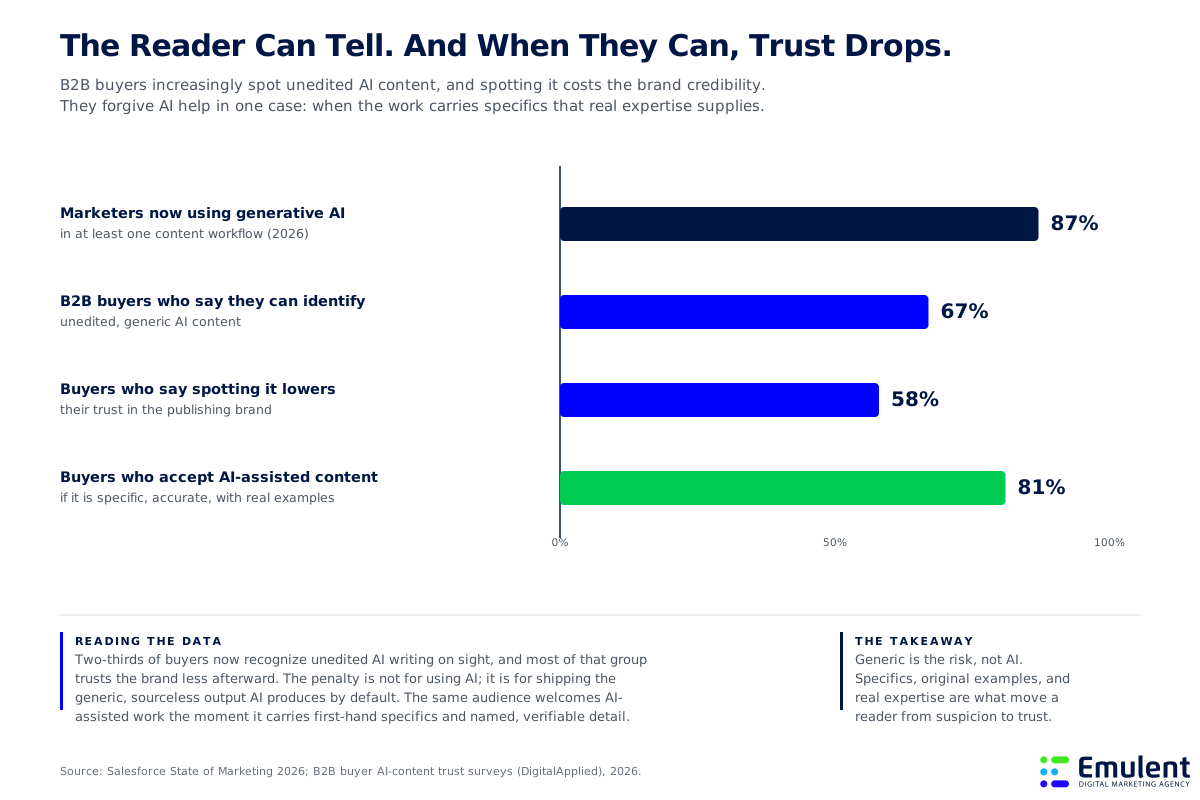
- The reader can spot generic writing: Around 67% of B2B buyers say they can identify unedited AI content, and 58% trust the brand less once they do.
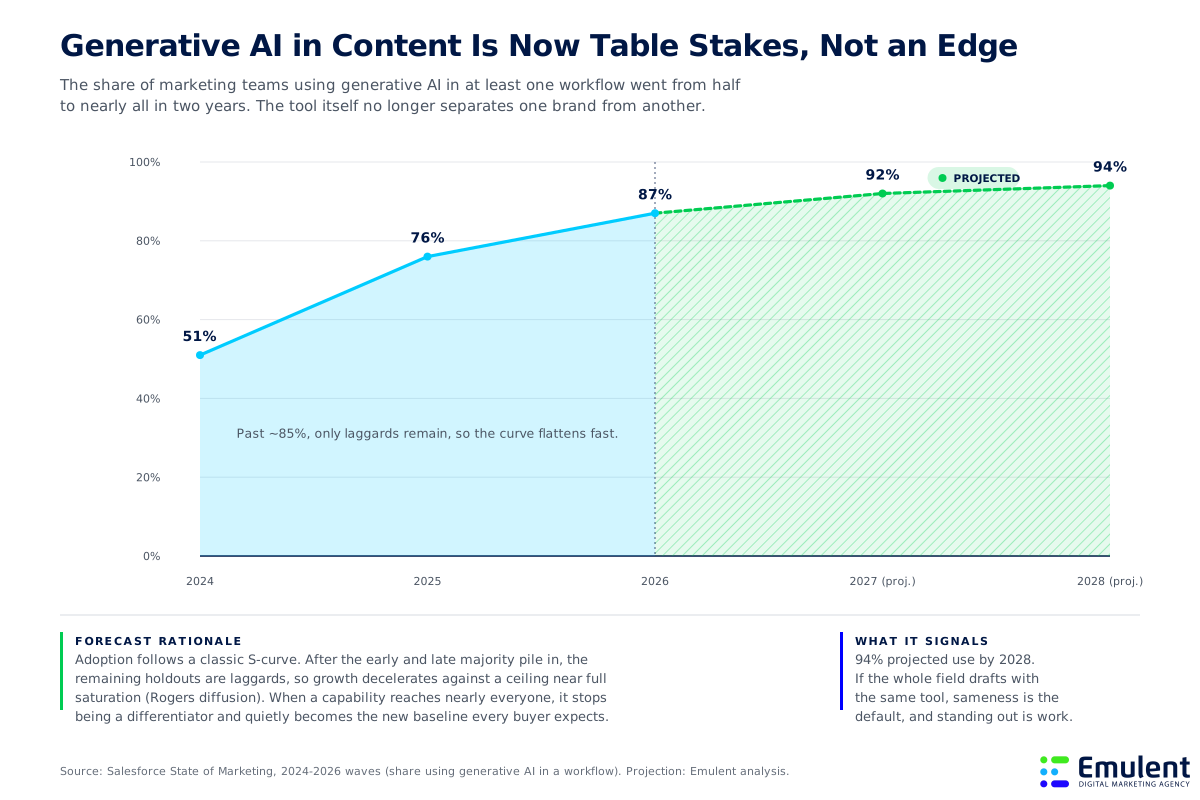
- The tool no longer sets you apart: Generative AI use among marketers reached 87% and is heading toward the mid-90s by 2028, so sameness is now the default and standing out takes real expertise.
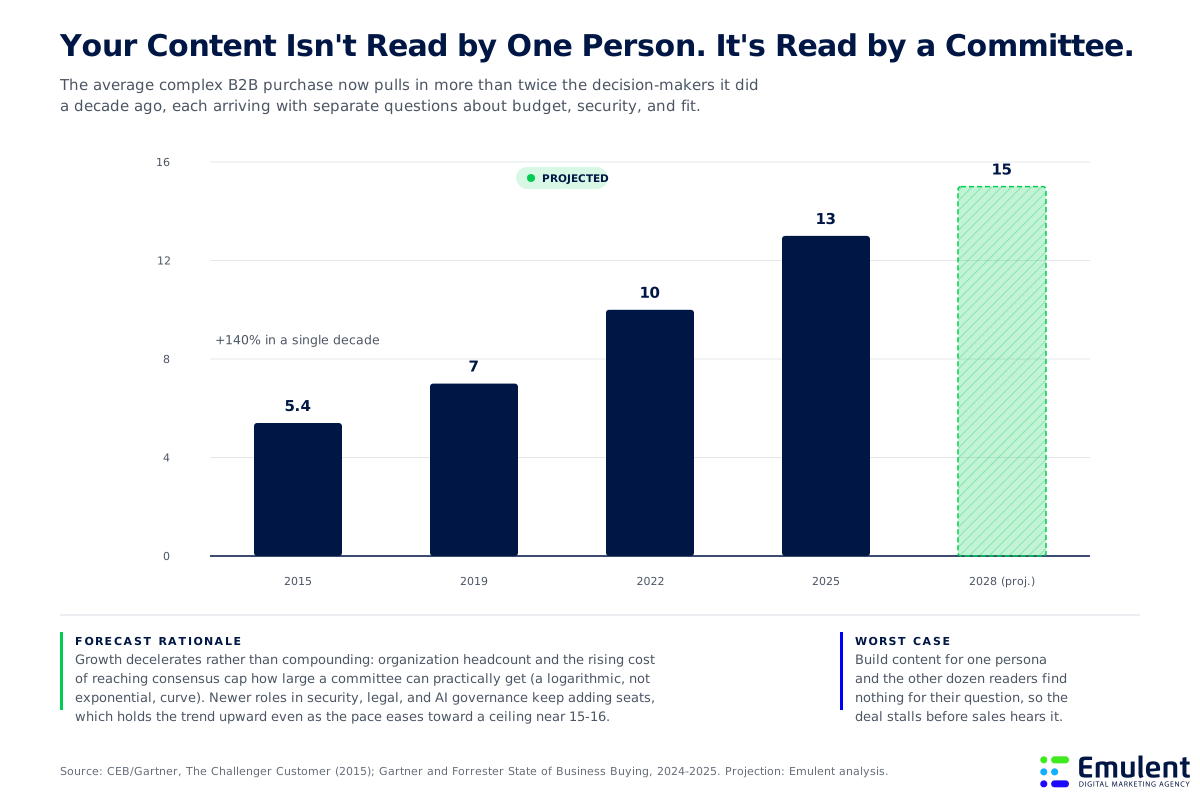
- You are writing for a committee, not a person: The average complex B2B purchase now involves about 13 decision-makers, up roughly 140% in a decade, each with a different question.
- Content compounds as a system: A published article keeps producing leads for years while paid leads keep getting more expensive, but only when the work runs as a connected system instead of a feed of one-off assets.
Is Your Content Judged by What It Publishes or What It Produces?
A content program is easy to measure the wrong way. You count posts shipped, words written, and the keywords you now rank for. Those numbers feel like progress because they keep going up. They are inputs. The result that pays for the work is pipeline: leads, qualified conversations, and customers who renew. A ranking is a means to that end rather than the end itself, which is why we treat a number-one position as a step and not a scoreboard. Only about 42% of content teams can connect their work to revenue at all, and that group earns roughly three times the budget growth of teams that cannot. The difference is rarely talent. It is whether anyone tied the content to an outcome before the first draft.
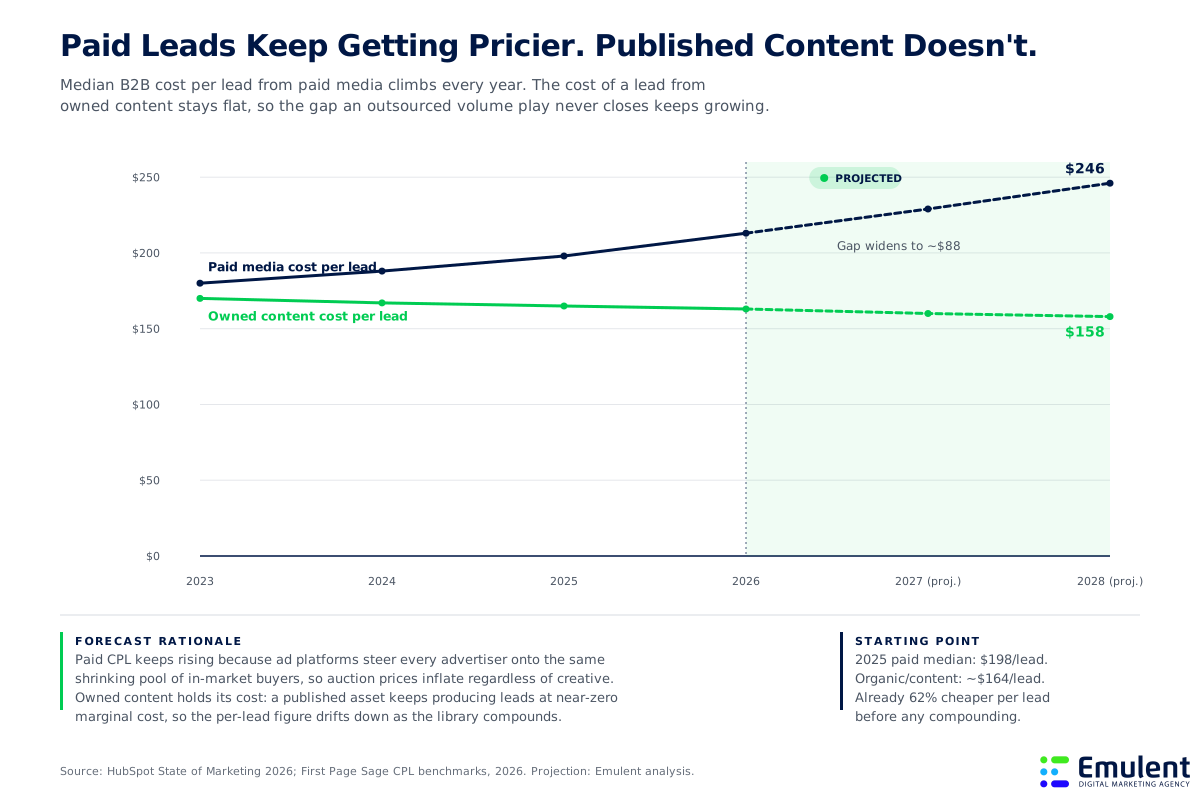
The economics reward outcomes over output in a way most providers never quantify. A lead from paid media keeps getting more expensive because ad platforms push every advertiser toward the same shrinking pool of in-market buyers. A lead from a published article costs almost nothing to produce again once the piece exists, so its per-lead figure drifts down as the library grows. Content brings in roughly three times the leads of outbound at about 62% lower cost per lead, and a strong post keeps working for years. The catch is real: that return only appears when a piece is built to answer a buying question, not to fill a slot on a calendar. Content that gets read but never sells is the most common failure we are asked to fix.
Outcomes worth tracking instead of volume:
- Pipeline contribution: the leads and opportunities a piece sourced or influenced, not its pageviews.
- Cost per qualified lead: what content spends to produce a buyer-ready conversation against what paid spends for the same result.
- Assisted conversions: the content a closed deal actually touched on its way in.
- Retention and expansion: whether your content keeps existing customers using the product and buying more.
– Strategy Team, Emulent Marketing
A program built on outcomes still falls flat if the writing itself reads like a commodity, which is the first thing buyers notice.
Why Does Outsourced Content Read Like Outsourced Content?
The tell is real, and it has a cause. Commodity content is built from the outside in. A writer who does not know your field starts with whatever a keyword tool suggests, fills a word count, and hands back something that is technically on topic and says nothing only you could say. Generative AI use among marketing teams reached 87% in 2026 and is climbing toward the mid-90s. When nearly everyone drafts with the same model, that model’s default voice becomes the default voice of the whole category. The tool is now a baseline everyone shares rather than a skill that sets anyone apart.
Substance is the part a shared tool cannot supply. It comes from someone who has done the work: a real number from an actual project, an objection you hear on sales calls every week, a trade-off a beginner would not know exists. Readers reward that kind of specificity. In buyer surveys, 81% say they accept AI-assisted content when it is accurate, specific, and carries original examples, and the same readers reject the generic version. This is why we keep content with a consistent senior team instead of routing it through an offshore queue or an unedited model. The people writing have to know the subject well enough to say something a search result does not already contain. Answer engines reward it too, since content with original data and statistics earns more visibility in AI search than restated consensus.
Signs a piece was built from the outside in:
- No first-hand specifics: broad claims with no numbers, names, or examples a practitioner would actually cite.
- Keyword padding: the same phrase repeated where a real explanation belongs.
- Surface breadth, no depth: every subtopic mentioned, none of them answered well.
- A voice that fits any brand: swap the logo at the top and nothing about the writing would change.
– Strategy Team, Emulent Marketing
When the underlying tool is identical across a market, sameness stops being neutral and starts costing you, which is where standing out earns its keep.
When Everyone Has the Same AI, What Stops You From Sounding the Same?
Blending in feels safe. It is not. In a crowded market, the generic option is the one a reader scrolls past, and the reader has gotten much better at scrolling past. About 67% of B2B buyers say they can identify unedited AI content, and 58% say spotting it lowers their trust in the brand that published it. Consumer comfort with brands using AI fell from 57% to 46% in a single year. Buyers have not turned against AI. They have turned against the flat, sourceless writing it produces by default when no one adds real knowledge.
Standing out in content does not come from a louder headline or a brighter graphic. It comes from a point of view a reader cannot get from the ten pages already ranking for the same term. That takes a position: a clear stance on what works, an honest note on what does not, and proof drawn from your own experience. A high-volume content mill cannot do this, because a position requires judgment and a willingness to be wrong in public. We would rather publish fewer pieces that each say something than a steady stream that repeats what everyone else already said. The brands that win the read are the ones a buyer remembers later, and no one remembers the average.
What a distinct content position looks like in practice:
- A stated stance: a claim you are prepared to defend, not a neutral summary of both sides.
- Honesty about limits: naming what does not work builds more trust than another round of superlatives.
- Proprietary proof: your data, your results, and examples from your own client work.
- A consistent voice: a recognizable way of saying things that carries across every piece you publish.
– Strategy Team, Emulent Marketing
Standing out matters more once you remember who is actually reading, because it is rarely the single buyer most content is written for.
Are You Writing for One Reader or a Buying Committee of Thirteen?
Most content is written for one imagined reader. Real B2B decisions are not made that way. The average complex purchase now involves about 13 decision-makers, up roughly 140% from 5.4 a decade ago, and the count is still climbing toward the mid-teens. Finance wants the cost case. IT wants security and how it fits the existing stack. Legal wants the terms. The person who will use the product wants to know it solves their daily problem. Each one arrives with a different question and their own research, and content written for a single persona leaves most of the room with nothing to read. That gap is where B2B marketing programs quietly lose deals.
Writing for the committee is a different job than writing for a buyer. It means listing the questions each role brings and producing something that answers them, then making those pieces easy to forward, because buyers spend only a sliver of their time with any vendor and do most of the deciding when you are not in the room. When the group sees content built for the whole organization rather than one job title, Gartner found they are far more likely to call the result a high-quality decision. Content that ignores the committee does more than underperform. It lets a deal stall on a question no one bothered to answer, and a stalled deal rarely restarts on its own.
Questions different committee members need your content to answer:
- The economic buyer: what is the return, and what is the cost of doing nothing.
- The technical buyer: does it integrate with what we run, and is it secure.
- The end user: does this make my work easier the week we turn it on.
- The skeptic: what proof do you have, and where could this go wrong.
Serving a dozen readers across a decision that runs for months is not a one-time asset you commission and forget. It only works as a connected system.
Should Content Be a Stack of Assets or a Connected System?
Many content creation services sell a calendar and call it a strategy. A calendar tells you what publishes on Tuesday. It does not tell you why a piece exists, what it connects to, or what happens after it goes live. Treating content as a pile of isolated assets is the reason so much of it gets read once and forgotten. The pieces that compound are the ones that fit together: a discovery article that hands the reader to a comparison, a comparison that hands them to proof, proof that answers the last objection before a sales conversation. A real content strategy decides how those pieces link before anyone writes a word.
A system also explains the economics from earlier. Content built and maintained as a connected whole keeps producing leads for years, which is why its cost per lead keeps falling while paid keeps climbing. Brand and content built as a system compound, and the same work done as one-off campaigns decays the moment you stop paying for it. We treat content as the connective tissue of the whole experience, where every piece earns its place on a path from a first search to a signed deal. That includes the discipline of saying no: a system means deciding what not to publish, so the work that ships moves someone forward instead of padding a quota.
What separates a content system from a content calendar:
- A reason per piece: every asset answers a known question at a known stage of the decision.
- Internal connection: each piece points to the next logical step rather than into a dead end.
- Upkeep, not only new pieces: updating and improving what already ranks usually beats endlessly adding more.
- A stop rule: the willingness to skip content that serves volume but not the reader.
– Strategy Team, Emulent Marketing
How Emulent Helps You Make Content That Sells
Good content is harder than producing a lot of it, because the part that works is the part a shared tool cannot copy: real expertise, a clear position, and writing aimed at every person who decides. Our team builds content as a system rather than a feed. A consistent senior group learns your field, commits to a point of view worth defending, writes for the full buying group, and ties the work to pipeline so you can see what it returns. You keep ownership of the strategy with no lock-in, and we maintain the pieces that compound instead of chasing a publish count.
If you want help making content marketing work for your business, contact the Emulent team and we will show you what a program built for outcomes looks like.