
Conversion copywriting is the discipline of writing content that does more than inform. It moves a reader from learning about a problem to asking you to solve it. Most marketing teams have already won the first half of that battle: their articles rank, their guides get read, and their time-on-page numbers look healthy. What they have not built is the bridge from attention to inquiry, and that bridge is the difference between content that performs in a dashboard and content that converts into revenue.
Key takeaways from this article:
- Content now carries the sales conversation. B2B buyers complete roughly 80% of the purchase journey before they speak with anyone, so your content must do the persuading a rep used to do.
- Every piece needs a defined next step. Readers who finish an article with no obvious action simply leave, and matched calls to action convert about three times better than generic ones.
- Education without proof stalls. Short educational posts are the most produced B2B format and the least likely to be rated effective, while proof formats outperform their production volume.
- Readers enter at different trust levels. Visitors arriving from AI tools already convert above the all-channel average because they show up with their question answered.
- Sequencing beats volume. A smaller library of content mapped to a trust ladder outperforms a large library of disconnected posts.
Why Does Content That Gets Read Still Fail to Sell?
The most common diagnosis we hear from marketing leaders is some version of “our content is good, but it doesn’t generate pipeline.” The traffic is real. The engagement is real. The inquiries never come. The cause is almost never the quality of the writing. It is the assumption baked into the writing: that someone else, somewhere later in the process, will handle the selling.
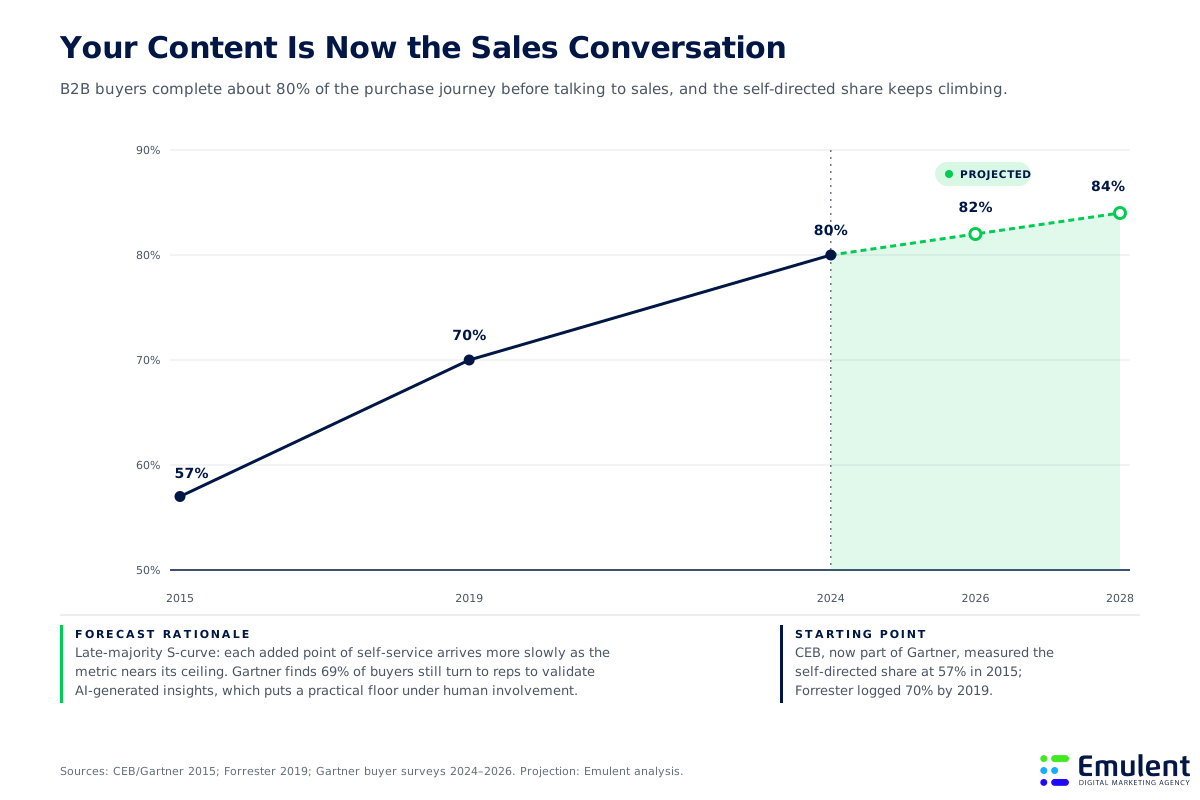
That assumption no longer holds. The share of the B2B buying journey completed without a salesperson has climbed from 57% in 2015 to roughly 80% today, and our projection has it settling near 84% by 2028. Your articles, comparison pages, and case studies are not warming people up for a sales conversation. For four-fifths of the journey, they are the sales conversation.
Most content is written as if a salesperson will finish the argument. Nobody is coming to finish the argument. The page either closes the gap between interest and action, or the reader closes the tab.- Emulent Strategy Team
When content carries this much of the load, every piece needs to answer a question the reader has not asked out loud: “what would working with you actually look like?” Content that only educates leaves that question hanging, and an unanswered question feels like risk. Risk sends readers back to the search results, where a competitor who answered it wins the inquiry your content earned. Closing that gap starts with the smallest unit of conversion copywriting: the next step you ask the reader to take.
What Should You Ask the Reader to Do Next?
If a reader finishes your article and the only options are “subscribe to our newsletter” or a contact form in the footer, you have asked a person in the middle of their research to either commit to nothing or commit to everything. Both asks fail for the same reason: they ignore where the reader actually is. The fix is micro-CTA mapping, which means assigning every content type a next step that is one rung up from the content itself, not five.
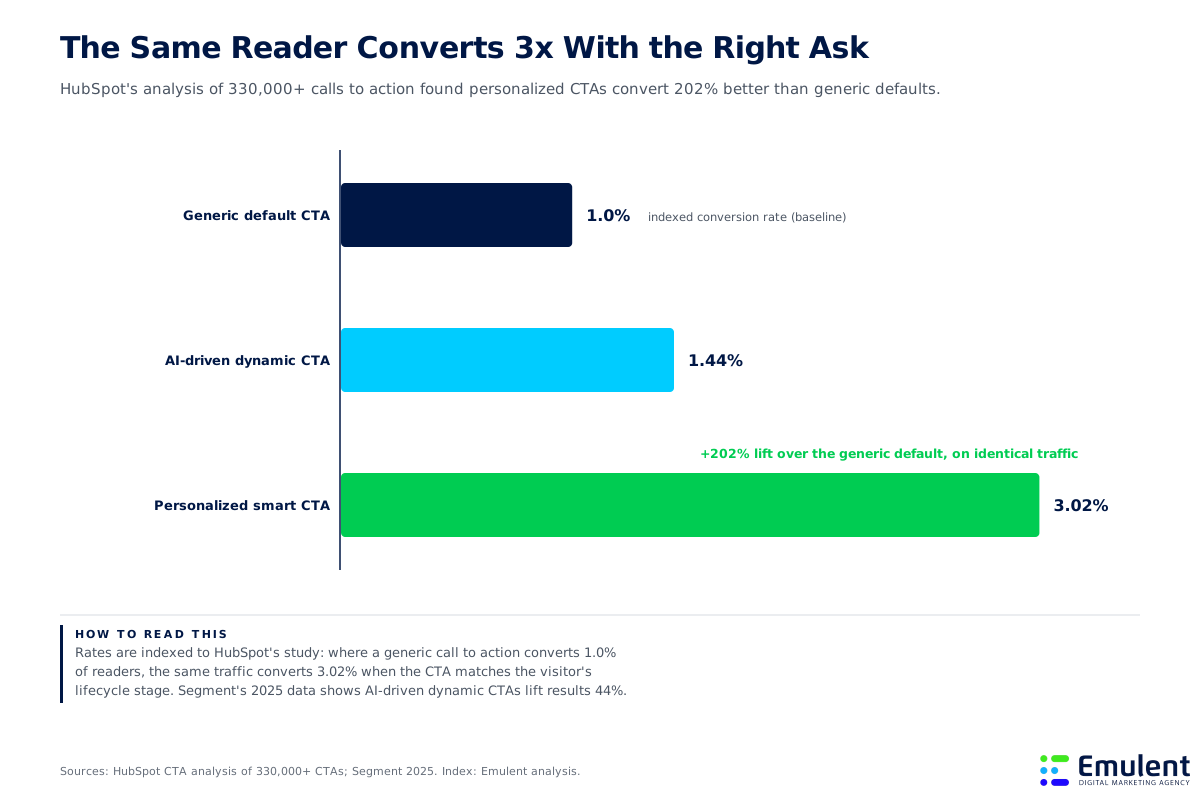
The data on this is unambiguous. An analysis of more than 330,000 calls to action found that CTAs matched to the visitor’s stage convert 202% better than generic defaults. Same traffic, same pages, three times the conversions, purely because the ask fit the reader.
How we map micro-CTAs to content type at Emulent:
- Awareness articles and trend pieces: Offer a related deep-dive or a practical checklist. The reader is diagnosing a problem, so the ask is “keep learning with us,” not “talk to us.” Our B2B content strategy checklist is an example of the kind of asset that fits here.
- How-to and framework content: Offer a tool, template, or self-assessment. The reader is testing whether your approach works, so let them try it before you ask for a conversation.
- Comparison and “best of” pages: Offer a short consultation or audit framed around the decision they are making. These readers are close to choosing, and a soft conversation is the natural next rung.
- Case studies and proof pages: Make the direct ask. A reader on a case study is evaluating you specifically, and a vague CTA here wastes the highest-intent moment on your site.
- Pricing-adjacent content: Remove friction rather than add persuasion. Answer the objection on the page and pair it with a low-commitment scheduling link.
Skip this mapping and the cost is invisible but constant: every visitor who was ready for a small step but only offered a giant one leaves without a trace, and your analytics will tell you the content “engaged” them. The right ask, though, only works if the content before it has earned enough trust to justify it. That is where most educational content falls short.
Does Education Alone Earn Enough Trust to Win the Inquiry?
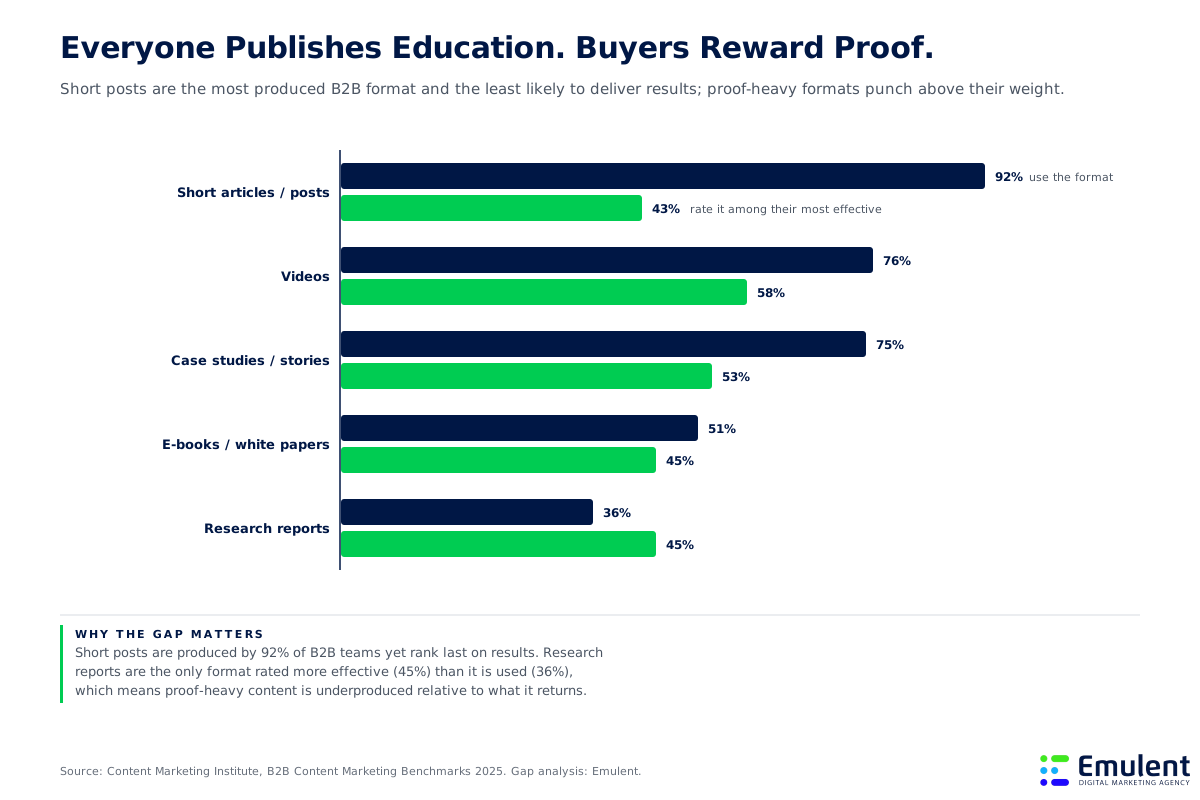
Education attracts. Proof converts. Most B2B content programs are heavily weighted toward the first and starved of the second, and the industry’s own data shows the imbalance. Short articles are produced by 92% of B2B teams, yet they rank last when marketers rate which formats actually produce results. Research reports show the opposite pattern: only 36% of teams produce them, but 45% rate them among their most effective formats. Proof-heavy content is the only category that outperforms its production volume.
A prospect can agree with every word of your advice and still have no reason to believe you can deliver it. Education proves you understand the problem. Only evidence proves you can solve it.- Emulent Strategy Team
The practical move is not to publish less education. It is to weld proof into the education you already publish. We cover the broader positioning side of this in our guide to proof-based messaging in a saturated market, but at the level of an individual page, the pattern is simple to apply.
Ways to add proof inside educational content:
- Replace generic examples with client outcomes. “One manufacturing client cut cost per lead 38% with this structure” teaches the same lesson as a hypothetical and sells while doing it.
- Show your work, not just your conclusions. Original data, screenshots, and before-and-after detail signal that the advice came from practice rather than from other articles.
- Anticipate the skeptic. Name the situations where your advice fails. Honest boundaries are a form of proof, because they demonstrate firsthand experience.
- Link claims to evidence pages. Every recommendation should sit one click from a case study or result that backs it up, which also builds the internal pathways search engines and AI systems reward.
Once each piece carries both a lesson and a reason to believe it, the remaining question is order: which piece should a reader meet first, second, and third on the way to an inquiry.
How Do You Sequence Content From First Read to the Ask?
We think of this sequencing as a trust ladder. The bottom rung is recognition: the reader learns you exist and that you understand their problem. The middle rungs are credibility: frameworks, original data, and proof that your approach works. The top rung is the ask. Each piece of content should live on a specific rung, link upward to the rung above it, and never ask for more trust than its rung has earned. A first-time visitor offered a sales call is being asked to jump rungs; a case-study reader offered a newsletter is being walked back down them.
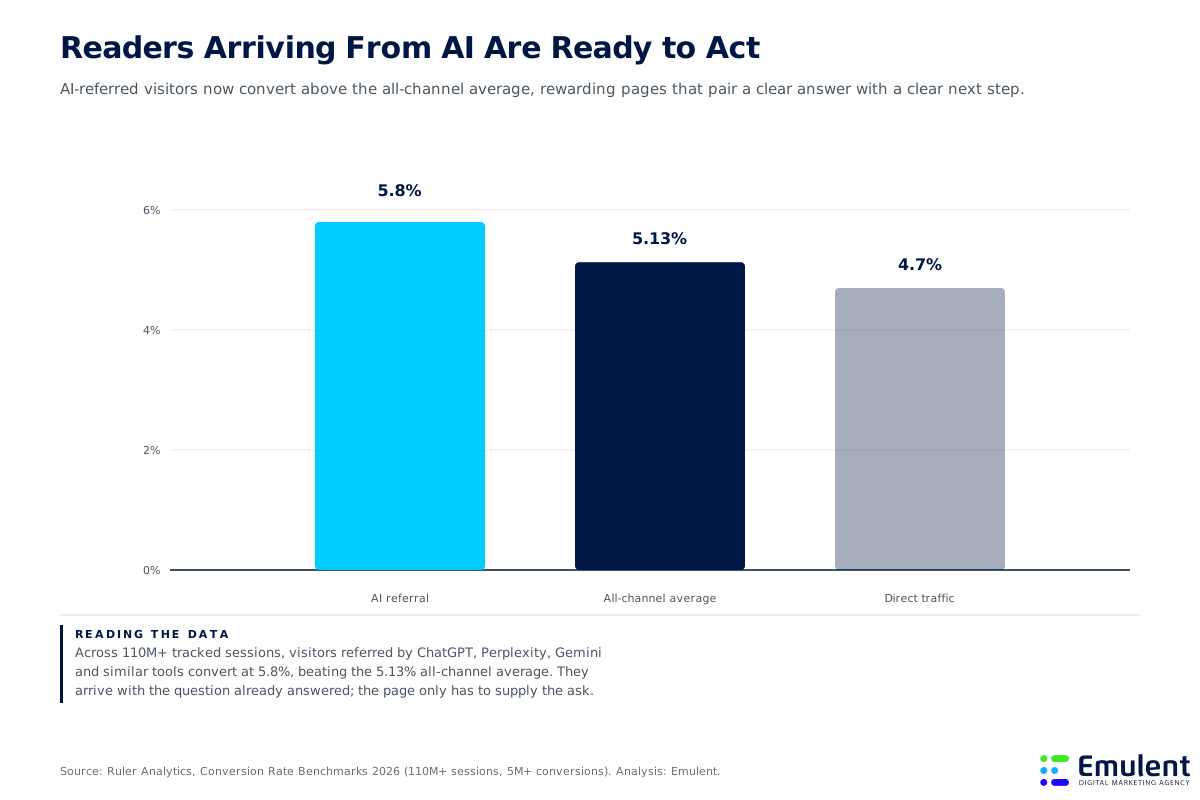
The ladder matters more now because readers no longer enter at the bottom. A growing share of visitors arrive from ChatGPT, Perplexity, Gemini, and Google’s AI answers having already consumed a synthesized version of the basics. Tracked across more than 110 million sessions, these AI-referred visitors convert at 5.8%, above the 5.13% all-channel average. They land mid-ladder, pre-qualified, with their introductory question already answered.
The old funnel assumed you controlled the entry point. AI search ended that. Your job now is to make every page work as a front door for a reader who already knows the basics and wants to know why you.- Emulent Strategy Team
Serving these readers means structuring pages so the credibility and the ask are visible without requiring the awareness-stage preamble, and it means earning citations in AI answers in the first place, which is the focus of our AI SEO and generative engine optimization work. It also changes how we plan content strategy overall: instead of asking “what topics should we cover this quarter,” we ask “which rung of the ladder is thin, and what does a reader on that rung need to climb?” Teams that skip this question keep publishing bottom-rung education for readers who entered halfway up, which is precisely how content earns plenty of readers and very few customers.
How the Emulent Team Helps You Build Content That Converts
We help companies close the gap this article describes. Our team audits your existing library against the trust ladder, maps a micro-CTA to every content type, rebuilds key pages around education plus proof, and structures the whole system so that readers arriving from search, social, or AI answers each meet an ask that fits where they are. The work is grounded in your conversion data, not in publishing volume for its own sake.
If your content is earning attention but not inquiries, we would be glad to take a look. Contact the Emulent team for help with content marketing that is built to convert.