
Keyword cannibalization is one of the most common reasons a site’s most important pages never rank the way they should. When two or more of your URLs target the same query and the same intent, Google has to pick a winner, and it often rewards neither. If you have ever asked why your page is not ranking when the content itself is strong, the answer is frequently sitting elsewhere on your own site. In this update, we pair current click data with two Emulent projections to show where the damage happens, what it costs, and how to reverse it at scale. One housekeeping note first: an earlier version of this report cited a position 1 click-through series and a citation-lift figure from sources that no longer meet our sourcing standard, so this update rebuilds those claims on eligible data. The positions stand; several numbers changed, and we say so where they did.
Key takeaways:
- Your worst competitor may be you: Real cannibalization requires the same keyword, the same intent, and measurable net harm. Two pages ranking for one term is not automatically a problem, and merging the wrong pair can lose traffic.
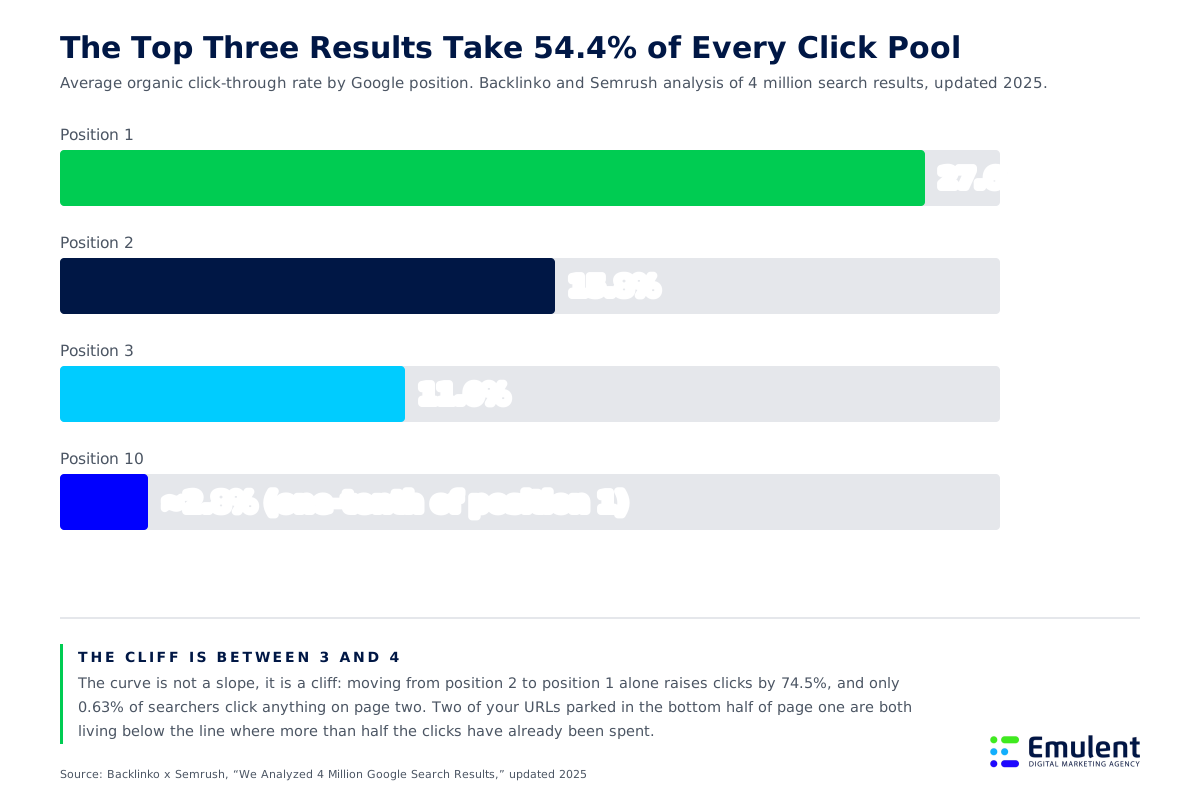
- Clicks, not ranking counts, are the scoreboard: The top three results take 54.4% of all clicks, and moving from position 2 to position 1 alone raises clicks by 74.5%. Two rankings parked lower on the page earn a fraction of what one strong page returns.
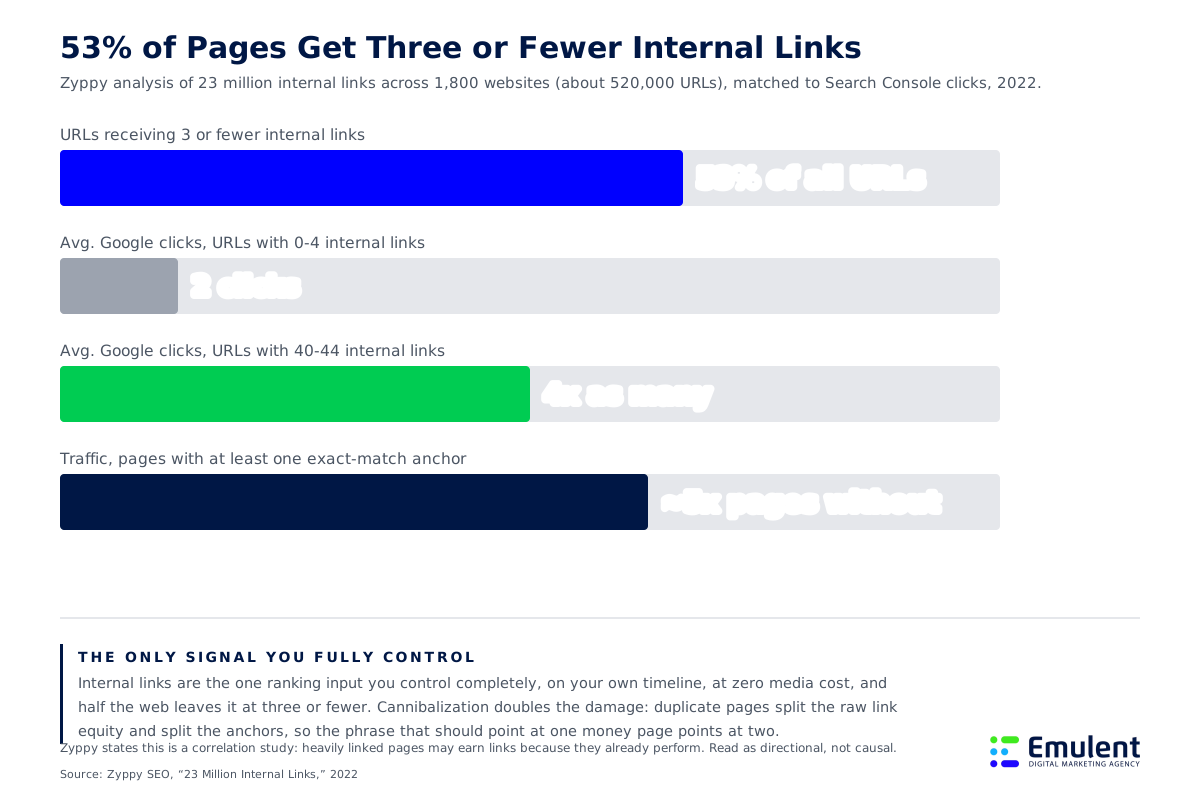
- Internal links decide which page wins: 53% of URLs receive 3 or fewer internal links, and pages with 40 to 44 links tend to earn roughly 4x the search clicks. Duplicate pages split that equity so neither URL climbs.
- Say no at the template level: On large sites, most cannibalization is manufactured by templates, and one template rule can retire more competing URLs than a year of page-by-page edits.
- Intent decides winners before authority does: A great page aimed at the wrong question loses to a weaker page aimed at the right one, and the live SERP tells you which question Google believes searchers are asking.
- The click pool is shrinking, which raises the stakes: An AI summary on the results page correlates with roughly half the clicks, and we project AI Overview coverage settling near a third of queries by 2028. Splitting a smaller pool across competing pages costs more every year.
Is Your Site Competing With Itself? How to Diagnose Real Cannibalization
Most advice treats any keyword overlap as an emergency. We don’t, because the data doesn’t. Pages rank for hundreds of long-tail variations, and two URLs sharing one head term can still be a net positive if each one satisfies a different need. Real cannibalization has three ingredients: the same target keyword, the same search intent, and measurable harm, such as both pages stalling below the top three or Google swapping which URL it shows from week to week. That URL flip-flopping in Search Console is the clearest tell, because it means Google cannot decide which page deserves the query, so it keeps testing and neither page accumulates stable engagement signals.
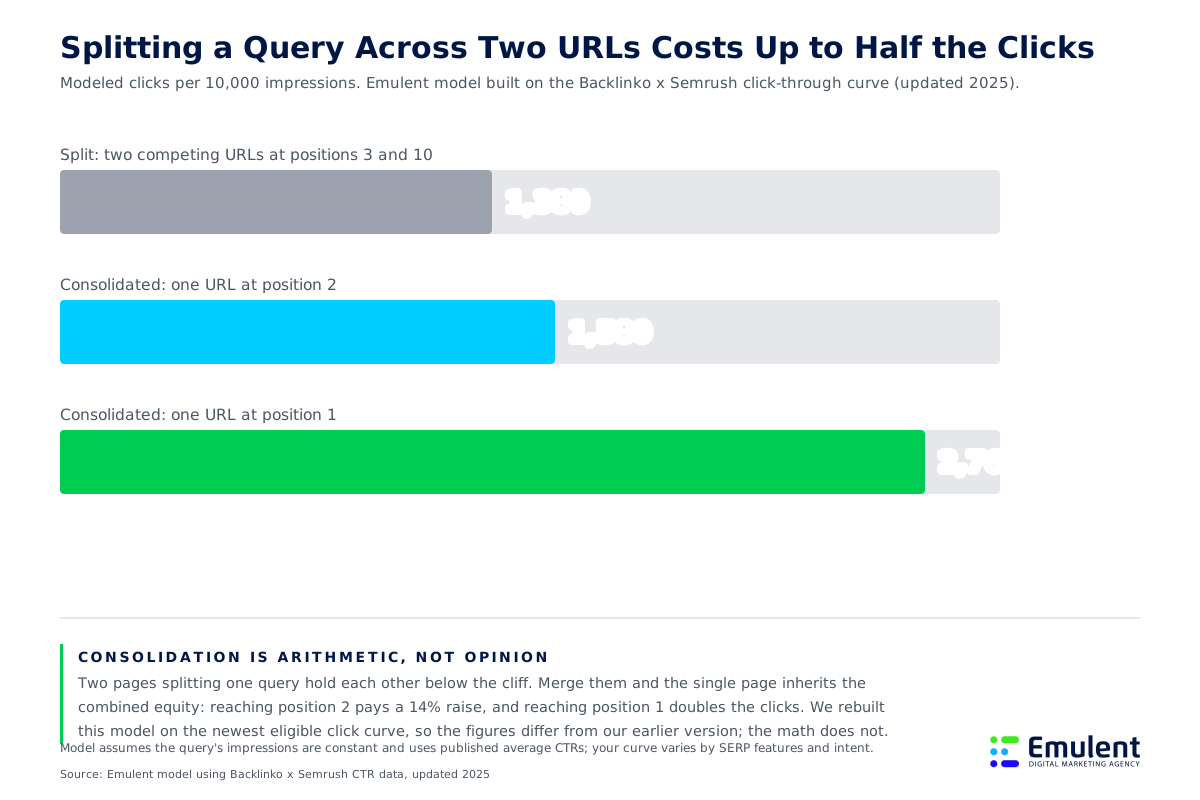
When those three ingredients are present, the cost is larger than most teams expect. We modeled it on the newest eligible click curve, Backlinko and Semrush’s analysis of 4 million search results (updated 2025): two competing URLs sitting at positions 3 and 10 earn about 1,380 clicks per 10,000 impressions, one consolidated page at position 2 earns 1,580, and one page at position 1 earns 2,760, exactly double the split. Our earlier version of this model, built on a curve we can no longer cite, showed the same shape with different figures. The arithmetic survives the source change: splitting a query is a pay cut on every impression.
“Half the cannibalization fixes we audit made traffic worse, because someone merged two pages that were quietly winning different long-tail queries. Diagnose with click data first. The specifics matter more than the checklist.” – The Strategy Team at EmulentThree signals the overlap is truly costing you:
- URL swapping in Search Console: The ranking URL for a query changes repeatedly, which means Google is unsure and neither page is building stable history.
- Both pages stuck below the top three: Two URLs parked on page one’s lower half or page two, with neither breaking through for months.
- Heavy long-tail overlap: When you compare each page’s full query list, most terms appear on both lists. If each page owns a distinct long-tail set, leave them alone.
Whether that harm is worth fixing comes down to what the clicks are actually worth, and that is where most ranking reports fall apart.
Which Number Should You Trust: How Many Pages Rank, or What the Clicks Return?
A report that says “we rank twice on page one for this keyword” reads like a win. It usually isn’t. Google’s click curve is brutally nonlinear. Per the Backlinko and Semrush data, position 1 averages a 27.6% click-through rate, the top three results capture 54.4% of all clicks, position 1 earns ten times what position 10 does, and only 0.63% of searchers click anything on page two. The count of ranking URLs is an input. Leads, pipeline, and revenue per impression are the outcome, and cannibalization quietly taxes all three, the same way a site can look busy while producing nothing, a pattern we broke down in why your website gets traffic but doesn’t convert.
Reframe your ranking reports with these questions:
- What is our total click share for the query? Sum the expected CTR of every URL you rank, then compare it to what one URL at a higher position would earn.
- Which URL converts better? The page Google prefers and the page that produces leads are often different pages. That gap is your consolidation brief.
- What would position 2 be worth in revenue? Put a dollar figure on the delta so the fix competes for resources like any other investment.
The fastest way to concentrate those clicks is to concentrate authority, and internal linking is where most sites leak it.
Is Your Internal Linking Starving the Pages That Pay the Bills?
Zyppy’s 2022 study of 23 million internal links across 1,800 sites found that 53% of URLs receive 3 or fewer internal links, while pages with 40 to 44 links tend to earn roughly four times the search clicks. Anchor text compounds the pattern: pages with at least one exact-match internal anchor saw about five times the traffic of pages without one. Zyppy states plainly that this is a correlation study, and we read it the same way: heavily linked pages may earn links because they already perform. The direction is still hard to argue with, and cannibalization makes it worse in two directions at once. Duplicate pages split the raw link equity, and they also split your anchors, so the phrase that should point at one money page now points at two, and some of those signals simply get discarded.This is why we treat internal linking as a system, never a one-time sprint. A sprint decays the moment it ends: new posts link wherever the writer finds convenient, orphans accumulate, and authority drifts back toward whatever the template promotes. A system compounds, because every new page follows the same rules and feeds the same money pages. It behaves like the rest of search: momentum is the asset, which is the same reason pausing SEO costs more than it appears to save.
“Internal linking is the only ranking signal you control completely, on your own timeline, at zero media cost. Treating it as a launch task instead of a standing system is how money pages end up with two links and a shrug.” – The Strategy Team at EmulentA durable internal linking system includes:
- A links-per-publish rule: Every new post links to two or three priority pages with intent-matched anchors before it goes live.
- One URL per anchor phrase: If a commercial anchor points to more than one destination, you have codified your own cannibalization.
- A quarterly starvation audit: Pull internal link counts for revenue pages and fix anything below five before touching new content.
- Anchor variety on purpose: Mix exact, partial, and natural-language anchors to the same target rather than repeating one phrase.
Rules like these are easy to follow on a 40-page site. On a 40,000-page site, the template has to do the work for you.
Which Fixes Scale? Template-Level Changes That Lift Thousands of Pages at Once
On large sites, cannibalization is rarely an editorial accident. It is manufactured by templates: indexed tag and category archives that shadow your pillar pages, faceted URLs that spawn near-duplicates, boilerplate location pages that differ only by city name, and pagination that competes with page one of itself. Fixing these one URL at a time is how teams burn a year and lift nothing. Changing the rule that generates them lifts every affected page in a single deploy, which is the core discipline behind our enterprise SEO work.
The harder half of this lens is subtraction. Good strategy here is defined by what you decline to publish. A keyword map that assigns one primary keyword and one intent per URL only works if you also refuse to create pages that don’t earn a row: no new post for every phrasing variation, no thin location page without local substance, no archive left indexable by default. Each page you decline to publish is a competitor your money page never has to beat.
Template moves that remove cannibalization at the source:
- Archive and tag policy: Noindex thin tag, date, and author archives, or consolidate them into curated hubs that link down to one canonical page per topic.
- Canonical logic for facets and parameters: Point filtered, sorted, and session-parameter URLs at the clean category URL so crawl equity stops splitting.
- A related-links module with rules: Make the template inject links upward to the mapped money page from every child page, using the assigned anchor.
- Title and H1 patterns with guardrails: Generate patterns that force differentiation, so 500 location pages cannot all resolve to the same head term.
Templates control which pages exist. Intent controls whether the right one wins, and it is the variable most audits never test.
Does Your Best Page Answer the Question Google Thinks Searchers Are Asking?
Sometimes the page that “should” rank is losing because it answers the wrong question. Intent mismatch looks like cannibalization in the data, two URLs trading a query, but the root cause is different: your comprehensive guide is targeting a keyword Google has decided is transactional, or your service page is chasing a query the SERP treats as research. Authority cannot fix that. The live results page is the arbiter, and it is public. If eight of the top ten results are comparison articles and you are pointing a product page at the term, you are bringing the right page to the wrong contest.
This is also why overlap is sometimes fine. The same keyword can carry two intents, and a hotel brand can rank a booking page and a travel guide side by side because each serves a different searcher. Rather than asking whether two pages share a keyword, ask whether they answer the same question. Getting that mapping right starts with disciplined keyword research that records intent next to every term, not just volume and difficulty, and it stays right when every new piece follows the same assignment rules, the way our modern content creation checklist enforces one primary keyword and one intent per URL before a draft begins.
A 30-minute intent audit you can run this week:
- Read the SERP’s format: For your target query, log what ranks: guides, product pages, comparisons, tools, or videos. That format is Google’s verdict on intent.
- Match or retarget: If your page’s format disagrees with the verdict, either rebuild the page to match or move it to a query whose intent it already serves.
- Check the runner-up: If a second page of yours matches the SERP format better than your preferred page, that page should carry the keyword, and your map should change.
Intent is also the variable AI search systems read most closely, which brings us to where all of this is heading.
The Click Pool Is Shrinking, and That Changes the Math of Every Fix Above
The honest forward view: there are fewer clicks to split, and they are not coming back. Pew Research Center tracked the real browsing of 900 US adults across 68,879 searches in March 2025 and found that people clicked a traditional result on just 8% of visits when an AI summary appeared, versus 15% without one. The sources cited inside the summary got clicked on 1% of visits, and 26% of sessions ended right on the summary page, versus 16% without one. Ahrefs reached a matching conclusion from the other direction: in its December 2025 re-run of a 300,000-keyword study, the presence of an AI Overview correlated with a 58% lower click-through rate for the top-ranking page, with position 2 losing about half its clicks and even position 10 dropping nearly 20%.
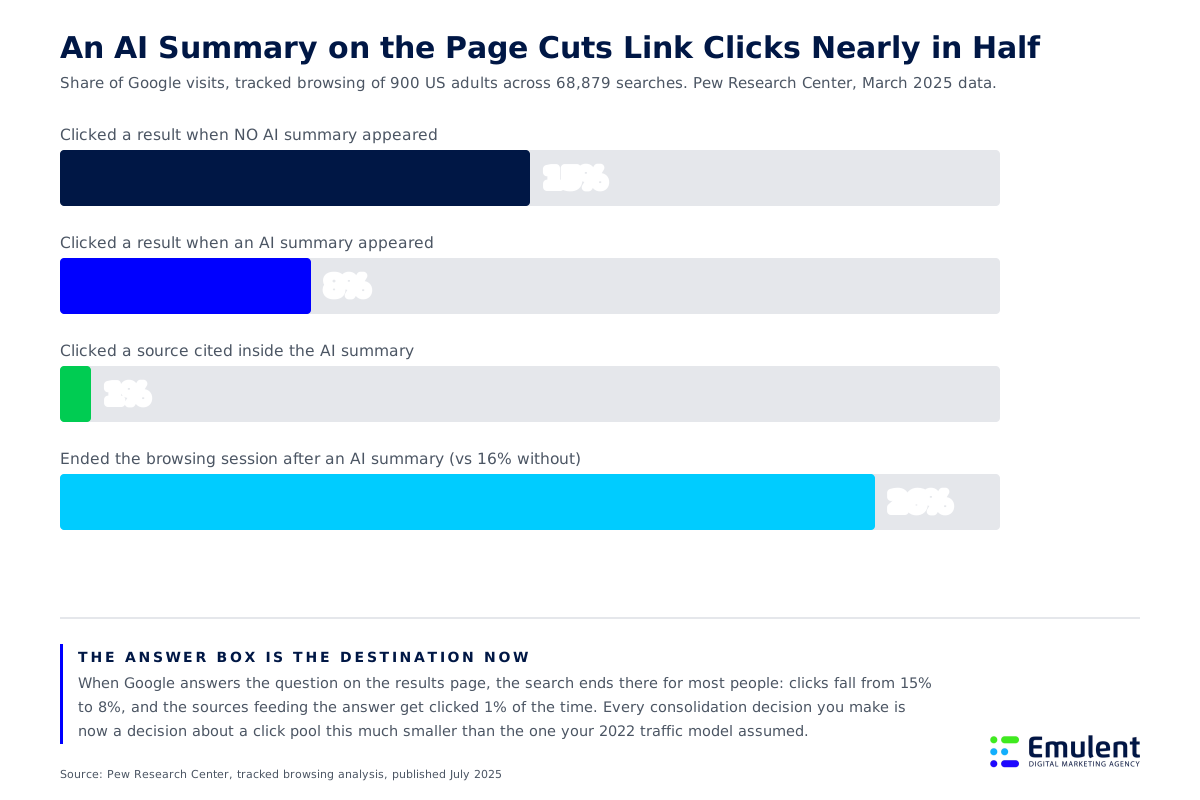
A smaller pool changes the arithmetic of every section above. Splitting 1,380 clicks that should have been 2,760 was expensive on the old curve; splitting a pool that an answer box has already halved moves consolidation from cleanup task to survival economics. One strong page per topic wins the ranking, the link equity, and the citation at the same time.
How Big Do AI Overviews Actually Get? Our Projection Says a Third, Not All
Planning for a collapse is as costly as pretending nothing changed, and the coverage data supports neither panic nor denial. Semrush’s study of more than 10 million keywords tracked AI Overviews appearing on 6.49% of queries in January 2025, 13.14% in March, a peak just under 25% in July, and a pullback to 15.69% by November, while ads alongside AI Overviews grew from about 3% of those SERPs to roughly 40% over the same year. Google did not roll the feature out in a straight line; it expanded fast, watched the ad numbers, and eased off. If you want the release-by-release history, our AI Overviews rollout page tracks it.
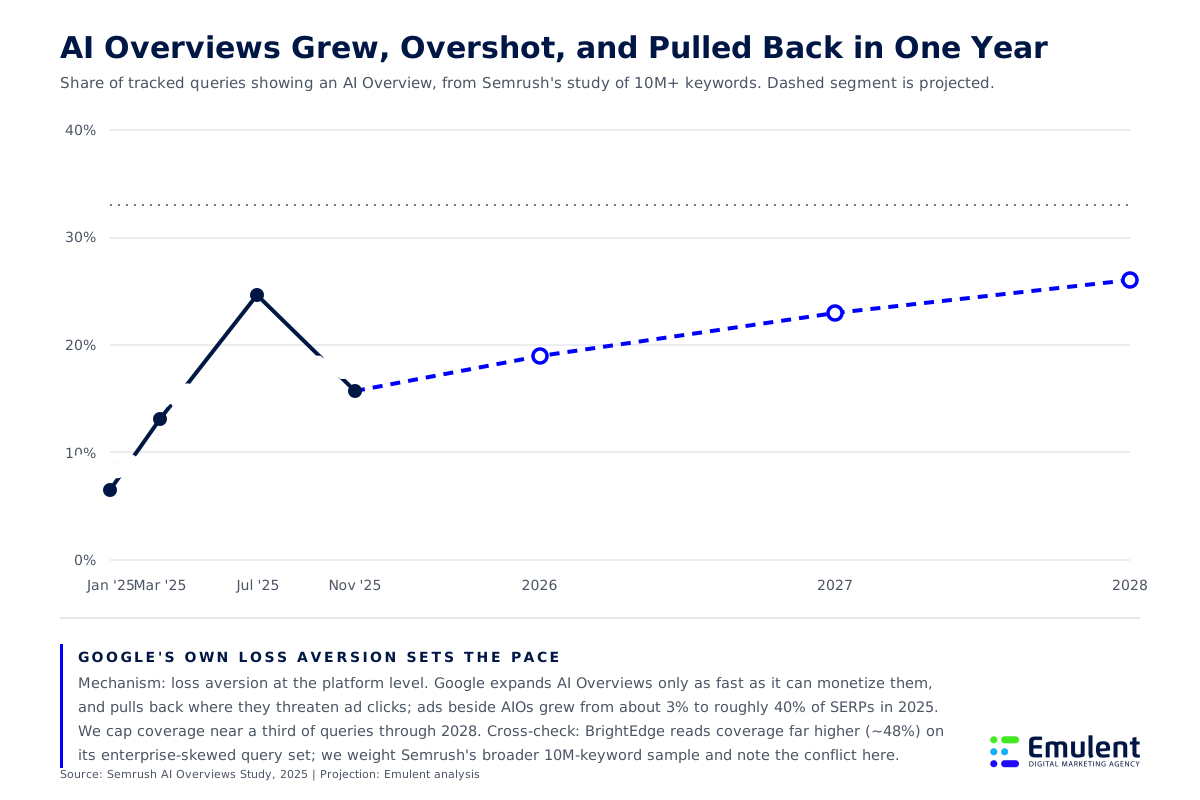
Projection: Emulent analysis based on platform-level loss aversion (Google expands AI Overviews only as ad monetization matures and pulls back where they threaten ad clicks), assuming a near-term ceiling around a third of queries because monetized transactional and navigational searches stay protected, cross-checked against BrightEdge’s higher reading (~48%) on its enterprise-skewed query set, a conflict we state rather than average away; we weight Semrush’s broader 10-million-keyword sample.
“Google is a loss-averse advertiser before it is anything else. Watch where the ads go and you will know where AI Overviews are allowed to grow. Plan against that incentive, not against the doom headlines in either direction.” – Bill Ross, Founder of EmulentGrounded expectations to plan against:
- Expect fewer clicks per ranking, permanently: Budget models built on pre-2024 click curves will overpromise, badly, on informational queries.
- Expect coverage to keep climbing, not spiking: Our floor-and-ceiling read says a third of queries by 2028, concentrated where Google can sell ads beside the answer.
- Expect consolidation to compound: The consolidated, heavily linked, intent-matched page you build to fix cannibalization is exactly the kind of source answer engines cite.
Your Next Searcher May Not Search, and One Page Per Topic Is How You Get Cited
The click pool is also draining sideways, into assistants. Pew’s survey series shows ChatGPT use among US adults climbing from 18% in 2023 to 23% in 2024 to 34% in early 2025, and Pew’s 2026 survey puts it at 44%, with Pew noting the 2026 question wording expanded to include other chatbots. Answer engines do not show ten blue links; they assemble one response and cite a handful of sources. A site with three overlapping pages on a topic gives those systems three mediocre candidates instead of one obvious one. The cannibalization fix and the citation strategy are the same fix.
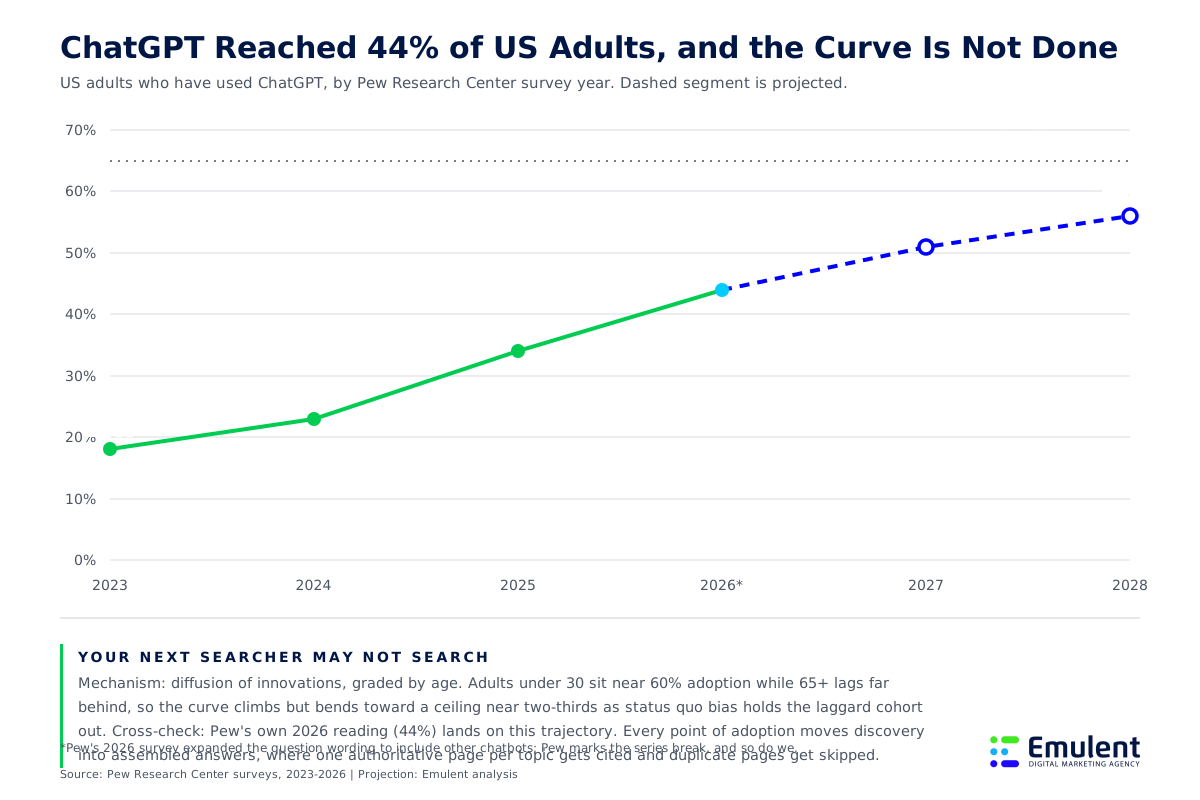
Projection: Emulent analysis based on diffusion of innovations graded by age (adults under 30 sit near 60% adoption while 65 and older lag far behind), assuming a ceiling near two-thirds of adults because status quo bias holds the laggard cohort out, cross-checked against Pew’s own 2026 measurement of 44%, which lands on the trajectory; Pew flags the 2026 wording change and our chart carries the same flag.
Positioning one authoritative page per topic to be cited everywhere answers get assembled is the premise of our search everywhere optimization approach, and the technical half of earning those citations, structured answers, clean entities, and crawlable authority, is the day job of our AI SEO practice. Every duplicate URL you retire makes the surviving page easier for both a ranking algorithm and an answer engine to choose.
How the Emulent Team Can Help
Fixing cannibalization well requires click data, an internal linking system, template-level engineering, and an honest read on intent, all working together, and it holds up only when new content follows the same one-keyword, one-intent rules, which is the discipline our content strategy work installs. The Emulent Marketing Team diagnoses which overlaps are truly costing you, consolidates with the math in hand, and sets up the systems that keep new pages from recreating the problem. If your most important pages are underperforming, contact the Emulent Team and we will show you exactly where the clicks are leaking.