
Your content isn’t building authority because authority is no longer awarded to articles. It is awarded to bodies of work, and both Google’s AI systems and your buyers stopped judging pages one at a time. A publishing calendar full of standalone posts, each chasing its own keyword, is the most common content strategy in America right now, and the 2026 data says it is the fastest way to stay invisible.
The fix is not more content. The fix is a content set: a deliberate, interlocking group of pages that covers one topic so completely that machines cite it and buyers trust it.
We are going to show you the numbers behind that claim, the psychology underneath the numbers, and the working process we use to build depth on purpose.
Volume Stopped Signaling Anything
Half of everything published on the web is now machine-written, and the growth curve has already flattened. Graphite’s Common Crawl analysis, averaged across three AI detectors, found that AI-generated articles primarily made up 35.9% of new web articles by November 2023, reached 49.6% in Q1 2025, and have hovered around 50% for five straight quarters through Q1 2026. Graphite’s own read on the plateau matches ours: publishers noticed that pure AI output does not earn distribution, and the payoff collapsed.
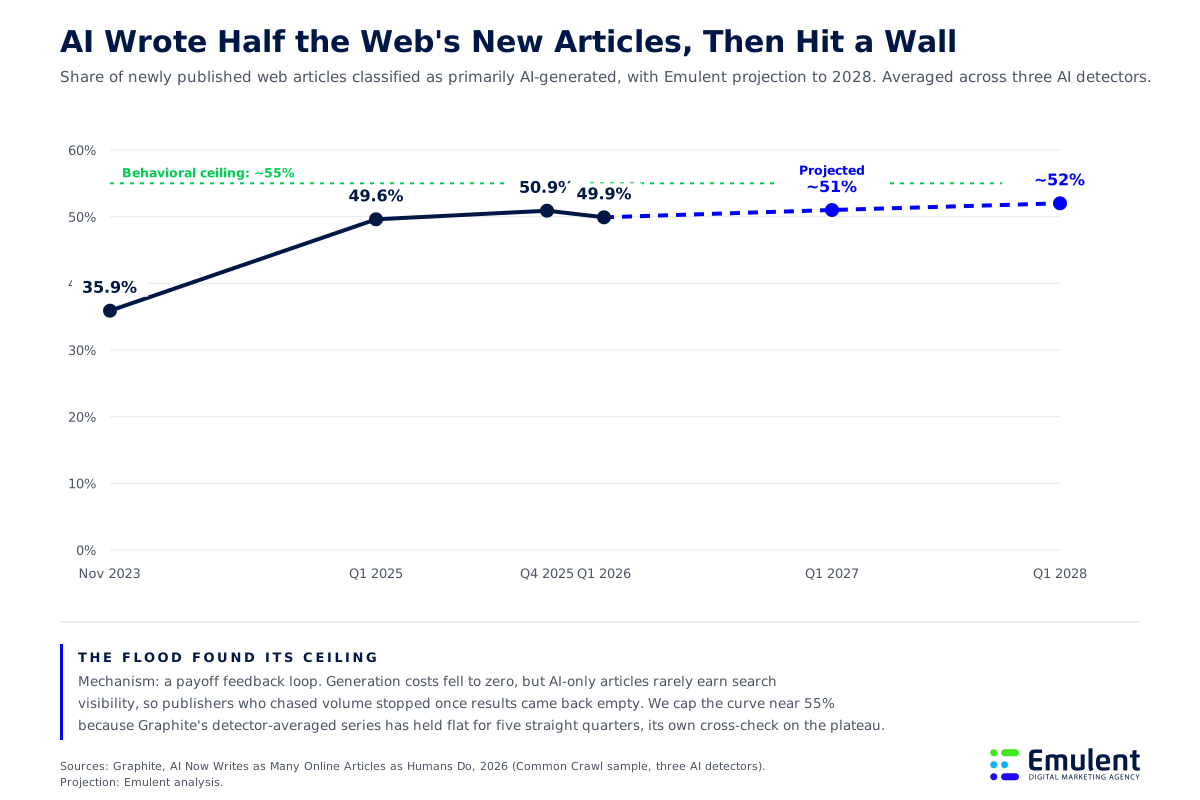
Projection: Emulent analysis based on a payoff feedback loop (AI-only articles rarely earn search visibility, so volume production loses its incentive), assuming a ceiling near 55% because zero production cost keeps supply high while zero distribution payoff caps it, cross-checked against Graphite’s own detector-averaged series, which has held flat for five consecutive quarters.
Here is the mechanism that matters for your strategy: costly signaling. For twenty years, a full blog told visitors and search engines that a company had invested real effort. That signal worked because content was expensive to produce. The moment generation costs fell to zero, volume stopped signaling investment, the way a handwritten letter stopped meaning much once mail merge existed. Publishing a lot now proves nothing. Publishing something nobody else could have written still does.
The distribution data makes the point brutally. The same Graphite research on search and answer engines found that while roughly half of new articles are AI-generated, only 14% of the articles actually ranking in Google Search are, and only 18% of articles cited by ChatGPT and Perplexity are. The other 82 to 86% of visible content is human-written work with something original in it.
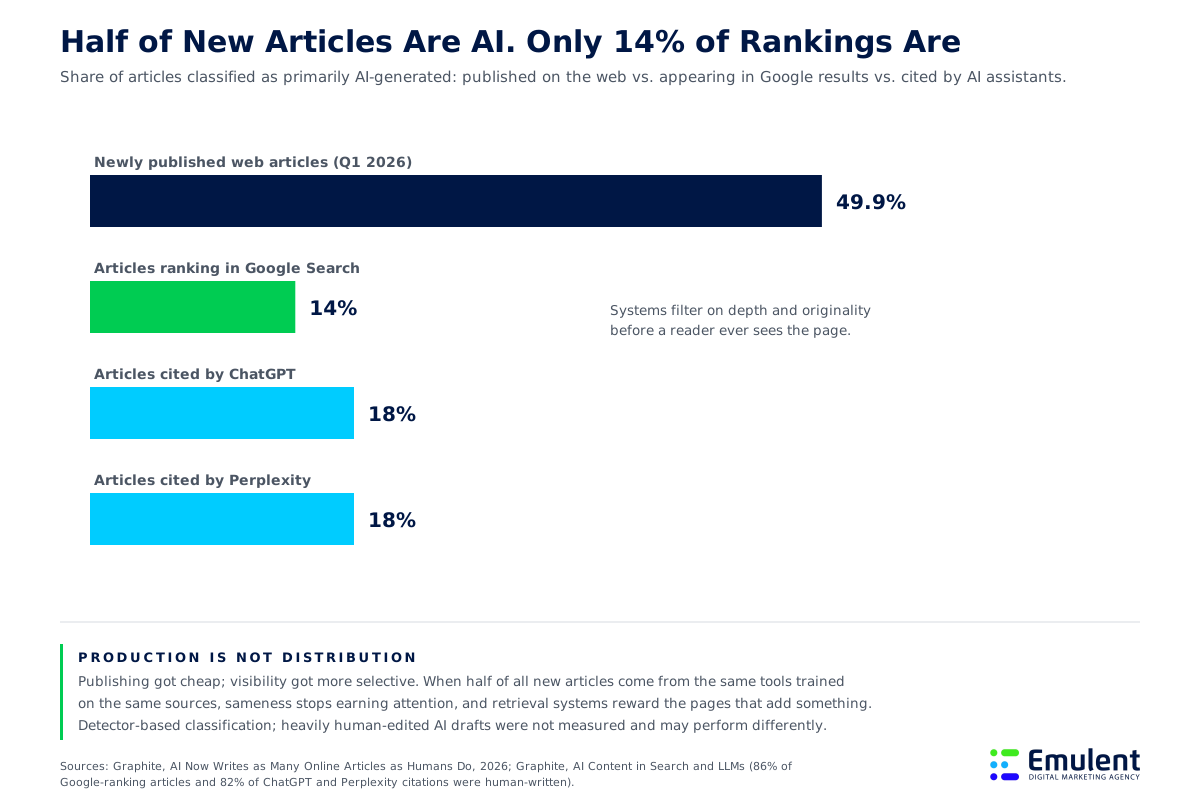
One caveat we print, because most articles quoting this study do not: the classification is detector-based, and heavily human-edited AI drafts were not included in the measurement. The finding is not “never touch AI.” The finding is that undifferentiated content gets filtered before a reader ever sees it. Google said as much when it rolled out the Google Helpful Content Update, which rewards sites that demonstrate first-hand depth and demotes content produced primarily to rank. The flood made the filter necessary. The filter is now the market.
A Standalone Article Faces Lottery Odds
The single post you published last Tuesday is almost certainly going nowhere, and that was true before AI crowded the field. Ahrefs analyzed roughly 14 billion pages and found that 96.55% of pages receive zero organic traffic from Google, with another 1.94% receiving between 1 and 10 visits per month. In its 2025 follow-up on ranking speed, only 1.74% of one million random new URLs reached the top 10 within a year, down from 5.7% in 2017. And 72.9% of the pages sitting in Google’s top 10 are more than three years old; the average #1 result is five years old.
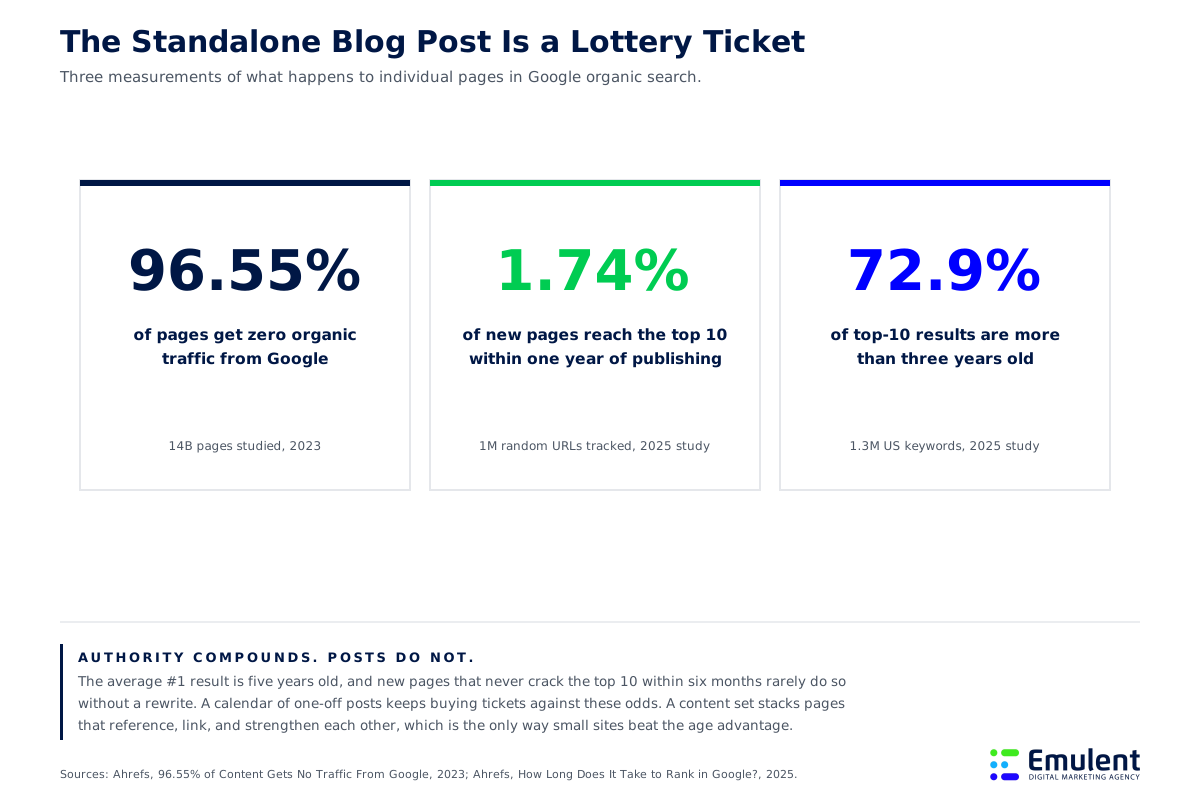
Read those three numbers together, and the standalone article reveals itself as a lottery ticket. Every one-off post enters a contest where the incumbents have a multi-year head start, and the odds of a new entry are under 2 in 100. A content set changes the math because the pages no longer compete individually. Each new piece inherits internal links, shared entities, and reader trust from the pages around it, and each existing piece grows stronger as the set grows. Age advantages are beaten by structural advantages, not by frequency.
“When a company tells us their content isn’t working, we don’t read the posts first. We list the topics. If the last twenty posts cover fifteen different subjects, there is no mystery to solve. They didn’t build authority on anything because they never stayed anywhere long enough to earn it.” – Emulent Strategy Team
Query Fan-Out Rewards the Body of Work, Not the Page
In February 2026, the strongest evidence yet arrived that Google itself now grades the body of work. Ahrefs analyzed 863,000 keyword SERPs and 4 million AI Overview citation URLs and found that only 38% of pages cited in AI Overviews also rank in the top 10 for the same query. Seven months earlier, in the July 2025 version of the same study, the figure was 76%. The remaining citations now split almost evenly between pages ranking 11 to 100 and pages outside the top 100 entirely.
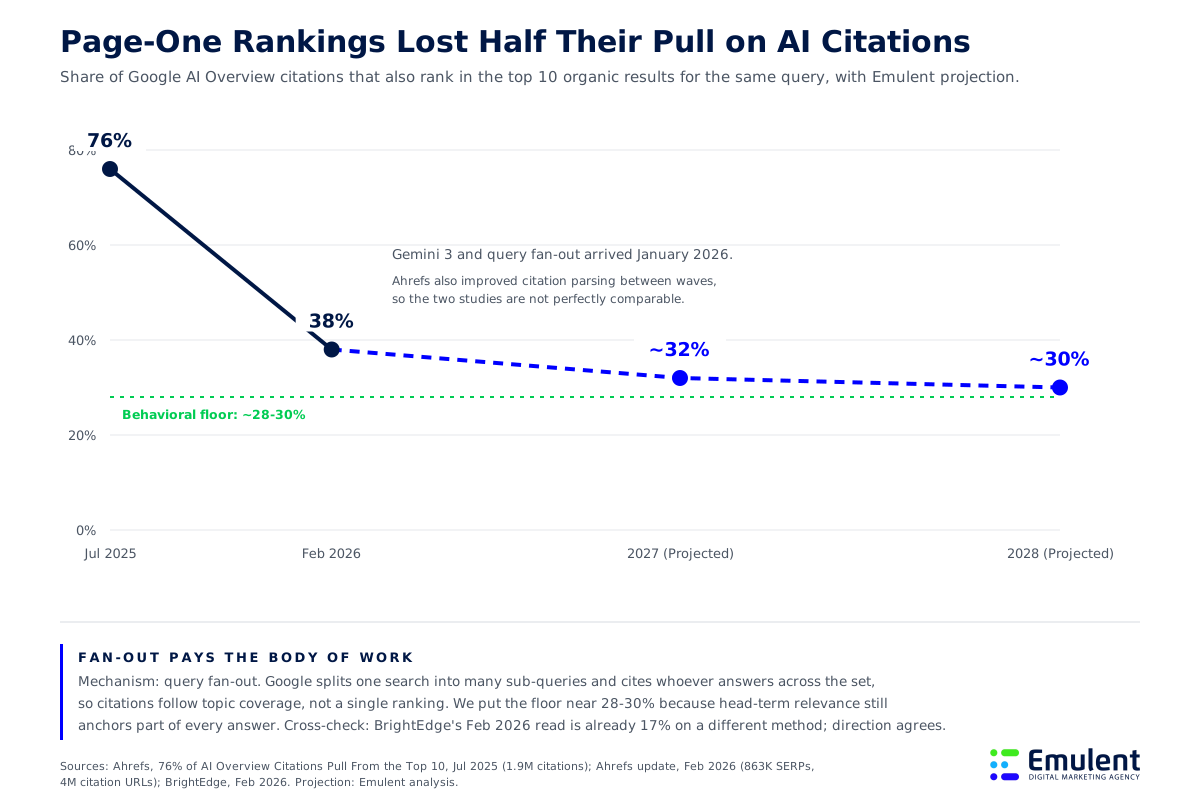
Projection: Emulent analysis based on the query fan-out mechanism (Google splits one search into many sub-queries and cites whoever answers across the set), assuming a floor near 28-30% because head-term relevance still anchors part of every answer, cross-checked against BrightEdge’s February 2026 analysis, which reads roughly 17% on a different methodology and dataset. Ahrefs also improved its citation parsing between waves, so the two studies are not perfectly comparable; the direction, confirmed by two independent firms, is what we project.
The mechanism has a name: query fan-out. When someone searches, Google’s Gemini-powered system splits the question into a cluster of related sub-queries, runs them all, and assembles its answer from whoever answers well across that cluster. A site with one strong page answers one sub-query. A site with a complete content set answers eight of them, which is why pages that never ranked for the head term are now getting cited over pages that did. Ranking #1 for a keyword and being absent from the nine questions around it is the exact profile of a site that wins the vanity metric and loses the customer. If you want a deeper technical breakdown of the feature itself, our resource on the Google AI Overviews update covers the rollout, and our AI SEO work is built around exactly this shift from keywords to question clusters.
This is also why we tell clients that a #1 ranking, on its own, joined the vanity metrics pile. It was always a proxy for visibility. The thing it was a proxy for is now assembled from many pages at once.
When the Answer Replaces the Click, Depth Gets You Into the Answer
The reason citations matter this much is that clicks are evaporating where AI answers appear. Pew Research Center tracked the real browsing behavior of 900 US adults across 68,879 Google searches in March 2025. When no AI summary appeared, users clicked a result 15% of the time. When one did appear, that fell to 8%. Clicks on the source links inside the summary happened in just 1% of visits, and 26% of AI-summary searches ended the browsing session entirely, against 16% without one.
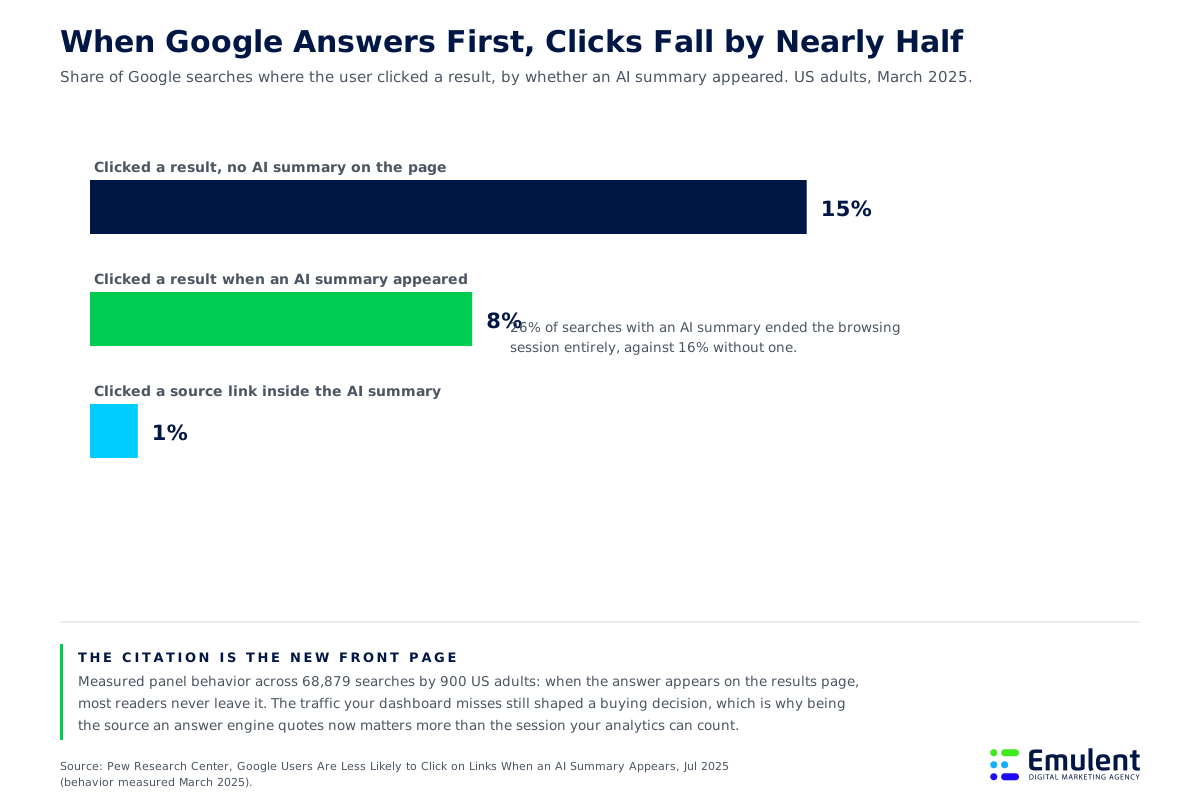
Most marketing teams respond to this data by mourning their traffic dashboards. We read it differently. The buyer did not disappear; the buyer read an answer assembled from somebody’s content and moved on carrying that impression. The only question that matters is whose content built the answer. Being the cited source in front of a buyer who never clicks is worth more than a page-two ranking in front of nobody, and it is earned by covering the topic more completely than the other candidates, on Google, in ChatGPT, in Perplexity, everywhere a buyer asks. That whole-field visibility problem is what our search everywhere optimization service exists to solve.
“Buyers have a trust threshold, and one good article never crosses it. Nobody hires a firm because of a blog post. They hire the firm they’ve now encountered five times, answering five related questions, without contradicting itself once. Depth isn’t an SEO tactic. It’s how familiarity gets manufactured.” – Bill Ross, Founder of Emulent
What a Content Set Is, and Why Most Topic Clusters Fail
A content set is a group of pages built to answer every question one specific buyer has on the way to one specific decision, interlinked so that both readers and retrieval systems experience them as a single body of work. That sounds like the “topic cluster” advice every agency blog has recycled for years, so here is where we break from it: most topic clusters fail because they are built from keyword tools instead of buyers. A team exports 40 keywords, sorts by volume, and writes a thin page for each. The result is coverage without depth: a pillar page that defines the topic, ringed by posts that restate the pillar in different word orders. Google’s systems, and your readers, can tell the difference between 12 pages that each add something and 12 pages that share one idea.
Three properties separate a real content set from a keyword cluster wearing a trench coat:
- Every page adds information the others don’t. A new number, a mechanism, an original chart, a step with real thresholds. If a page could be deleted and the set would lose nothing, the page was padding. This is the single test we run most often, and it kills about a third of most proposed calendars.
- The set is organized around one buyer’s decision, not one keyword’s variants. The person choosing an HVAC contractor has questions about cost, timing, warning signs, financing, and what happens on install day. That is a set. “HVAC repair,” “HVAC repair near me,” and “HVAC repair cost” pointed at three separate pages is not a set; it is keyword cannibalization waiting to be diagnosed.
- It has a finish line. A content set closes when the buyer’s questions are answered. A calendar never closes, which is exactly what’s wrong with it.
Depth also has to serve a commercial spine. A set that answers every informational question and never connects to the decision produces the pattern we documented in why your content gets read but never sells: engaged readers, empty pipeline. Every set we build for clients through our content strategy services maps each page to the stage of the decision it moves, so the deepest resource on the topic is also the one that points somewhere.
How to Build Depth on Purpose
Here is the working process, with the thresholds we actually use.
1. Pick one topic your revenue depends on, and commit to it exclusively. Not three topics. One. The Ahrefs age data means you are fighting incumbents with a five-year head start, and split attention loses that fight everywhere at once. Choose the topic where a new customer is worth the most and where your team has real practitioner knowledge, because that knowledge is the raw material machines can’t fake.
2. Map the buyer’s questions before you touch a keyword tool. Interview whoever talks to customers and write down the 20 to 40 questions real buyers ask between first symptom and signed contract. Then run keyword research to attach search language and demand to each question, not the other way around. Fan-out sub-queries look far more like sales-call questions than like keyword-tool exports, which is why sets built this way get cited.
3. Audit what already ranks, and assign each page an information gain requirement. Read the top results for each question and write one sentence per planned page: “This page will contain ___, which no ranking page contains.” Current primary-sourced data, a named mechanism, real numbers on cost and time, an honest recommendation with a downside. If you cannot fill in the blank, do not write the page; fold the question into another one. A structured competitive audit and research pass at the start of a set saves months of publishing pages the web already had.
4. Build the interior architecture as it matters, because it does. Every page links to the pages that answer the reader’s next question, with anchors that say what’s behind the link. One page owns each question; overlap gets merged, not published. The set’s hub page earns its links by being the best summary of the whole decision, not a table of contents in a costume.
5. Publish in connected batches, then maintain. Three to five related pages launched together give retrieval systems a structure to read instead of an orphan to ignore. After launch, the Ahrefs finding is your maintenance rule: a page outside the top 10 after six months rarely gets there without a rewrite, so schedule the rewrite instead of a new post. Our modern content creation checklist covers the per-page standards, from sourcing to schema, that keep each piece up to the set’s level.
When to Stop Publishing
Here is the advice that costs us money to give: most companies we audit should publish less, and some should publish nothing new for a quarter. If your site has 200 posts across 60 topics, the highest-return content work available to you is not post 201. It is merging the overlaps, deleting the zombie pages, and rewriting the 15 posts closest to your revenue into one real set. Fewer, deeper pages beat more, thinner pages in the 2026 data at every step of the funnel we can measure: the flood made sameness worthless, fan-out pays coverage instead of frequency, and the click collapse means only cited sources get seen at all.
Stopping publication is not the same as stopping SEO, and the distinction matters. Maintenance, consolidation, and rewrites are the work; going dark entirely has a real cost, which we quantified in our article What Happens if You Pause SEO. Kill the calendar, keep the discipline.
So return to the claim we opened with. Your content isn’t building authority because you have been producing articles when authority is granted to bodies of work. Machines assemble answers from whoever covers the territory; buyers trust whoever they keep encountering; and neither one is counting your posts per month. Pick the one topic your business needs to own, build the set that closes it, and let the 96.55% keep buying lottery tickets.