
A content strategy is a short set of decisions: the argument your business commits to making, the specific buyer who needs to hear it, and the list of things you refuse to publish. Everything else that travels under the name, the calendar, the keyword list, the channel plan, is scheduling. After 20 years of watching companies buy content, our founder Bill Ross keeps landing on the same test: if the document could belong to your closest competitor with a find-and-replace on the company name, it is a production plan wearing a strategy costume.
The industry’s own numbers make the case better than we can. So let’s start there.
The Gap That Gives the Game Away
Ninety-seven percent of B2B marketers told the Content Marketing Institute’s 2026 B2B research that they have a content strategy. In the same survey, fielded in mid-2025 with 1,015 mostly North American marketers, only 12% said their marketing exceeded its goals over the prior 12 months. Another 47% met most goals, and the remaining four in ten sat in mixed results or worse. Those are self-reported answers, which usually flatter the respondent, and the picture still looks like this.
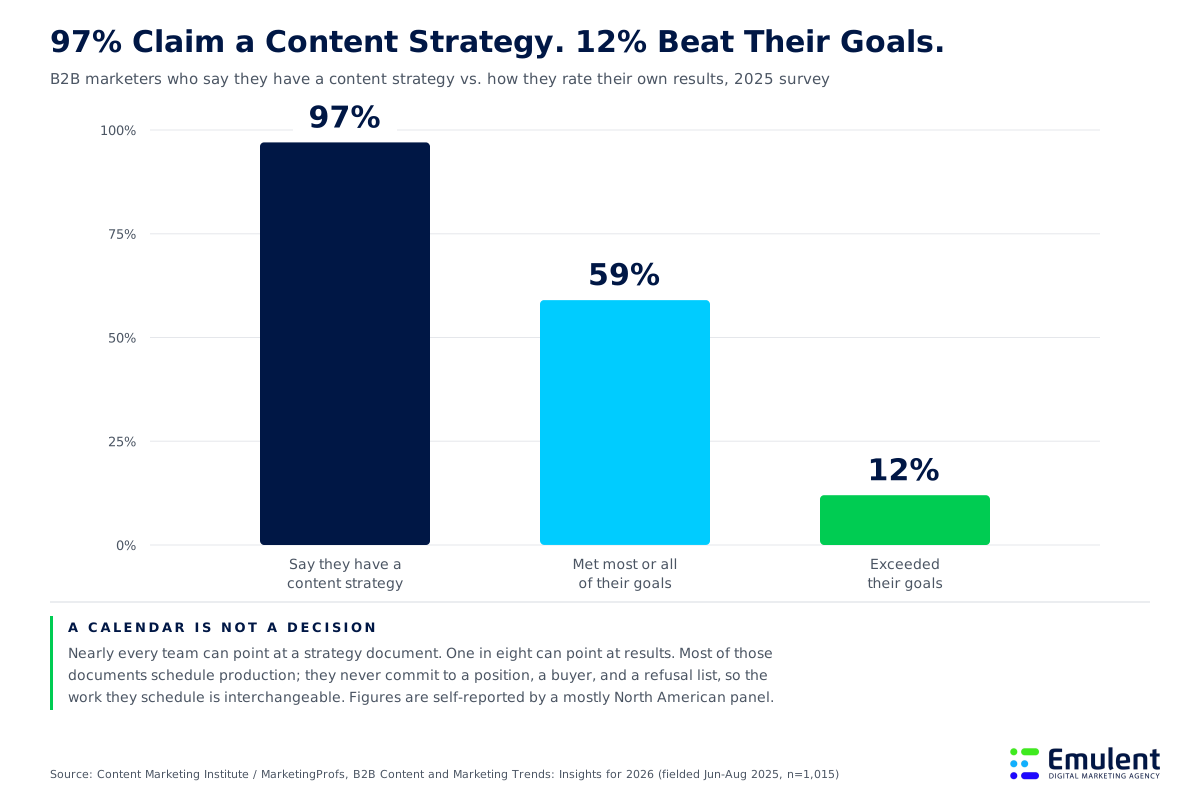
A word can hide a lot. When 97% of an industry claims to have a strategy and one in eight beats its goals, the word is doing decorative work. What most of those teams actually have is a calendar: topics, dates, formats, owners. Useful documents, all of them. None of them decides anything. When we open our b2b content strategy checklist with a new client, the first section has no dates in it at all, because dates come last.
The Definition: Three Decisions on One Page
Here is the definition Bill has used across two decades of client work, and it fits on one page. A content strategy answers three questions in writing:
1. What do we argue? One committed, arguable claim about how your buyer’s problem actually gets solved. A claim a competitor could disagree with. “We help businesses grow” argues nothing. “Most local firms should fix their reviews and photos before spending a dollar on ads” argues something, and it costs you the ad-first prospects who disagree.
2. Who has to hear it? One primary buyer, described by the decision they are trying to make, the objections they carry, and where they go when they research. A persona with a stock photo and a fake name is theater. A sentence like “the operations lead who inherited a website nobody can defend in a board meeting” is a decision.
3. What do we refuse to publish? The subtraction list. Topics your competitors cover that you will skip because they serve the algorithm and bore the buyer. Formats you will skip because you cannot produce them credibly. This is the part almost nobody writes down, and it is the part that makes the other two real.
“If your content strategy doesn’t cost you anything, it isn’t one. A real strategy tells you what you won’t say, which prospects you’ll lose on purpose, and which trendy topic you’ll skip this quarter. The calendar version never says no to anything, and that’s exactly why it never works.” – Bill Ross, Founder, Emulent
Notice what the definition leaves out: channels, cadence, word counts, tooling. Those matter, and they belong downstream. We treat this the same way we treat brand work, where a logo is not a brand strategy: the artifact people can see is the output of the decisions, never a substitute for them. The same logic drives our brand development services, where positioning gets settled before a single asset gets made.
Why the Calendar Impostor Survives
Producing feels like progress and deciding feels like risk, so teams produce. That is the whole psychology, and the CMI data backs it up: among marketers whose content strategy improved, 74% credited refining the plan itself, the largest factor by far, ahead of new technology at 51%. The fix was never more output. The fix was sharper decisions. Yet only 16% of marketers even list “developing a content strategy” among their top challenges, while 40% struggle to make content that prompts action. They believe the strategy box is checked. The results say the box was mislabeled.
There is a second reason the impostor survives: a calendar is easy to approve. A committed argument invites a fight in the room. Someone asks “what if a prospect disagrees,” and the honest answer is “then we found out early, for free.” Most organizations would rather publish 40 inoffensive posts than one that draws a line, and that preference is why so much content gets skimmed and forgotten. We wrote about the reader’s side of this pattern in why your content gets read but never sells: agreement without preference produces traffic without revenue.
“When we audit a content budget, we don’t start with the analytics. We ask one question: show me the sentence in your library that a competitor would refuse to publish. If nobody can find it, the budget bought volume, and volume is the first thing we cut.” – The Strategy Team at Emulent
AI Made the Impostor Cheap. It Did Not Make It Work
AI is the best thing that ever happened to the calendar-as-strategy crowd, and the worst thing that ever happened to their results. The 2026 CMI research found that among B2B marketers using AI for content creation, 87% report improved productivity and 80% report improved operational efficiency. Then the ladder drops: 65% see better creative capabilities, 58% see better content quality, and only 39% see better content performance. A full 34% see no performance change at all, and 12% say quality actually fell.
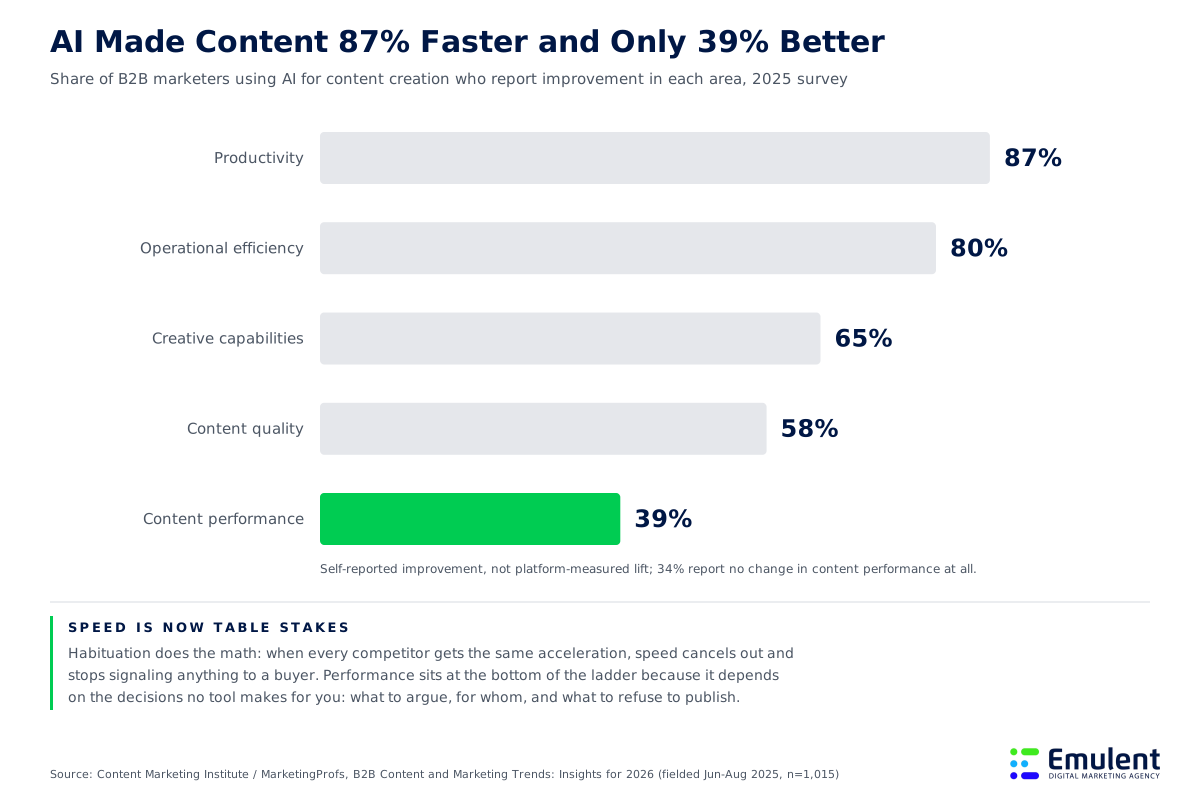
The mechanism is habituation. A speed advantage only pays while your competitors lack it, and nobody lacks it anymore. CMI’s own annual surveys draw the curve: 72% of B2B teams used generative AI in the 2023 fielding, 81% a year later, and 89% used AI content creation tools in the 2025 fielding. We project that curve reaching roughly 93% in 2026 and flattening near a 96 to 97% ceiling by 2028. Projection: Emulent analysis based on a diffusion-of-innovations S-curve, assuming a 96 to 97% ceiling because status quo bias and compliance-restricted teams keep a permanent laggard segment out, cross-checked against Forrester’s 2023 forecast of 36% annual growth in generative AI spend through 2030, which points the same direction.
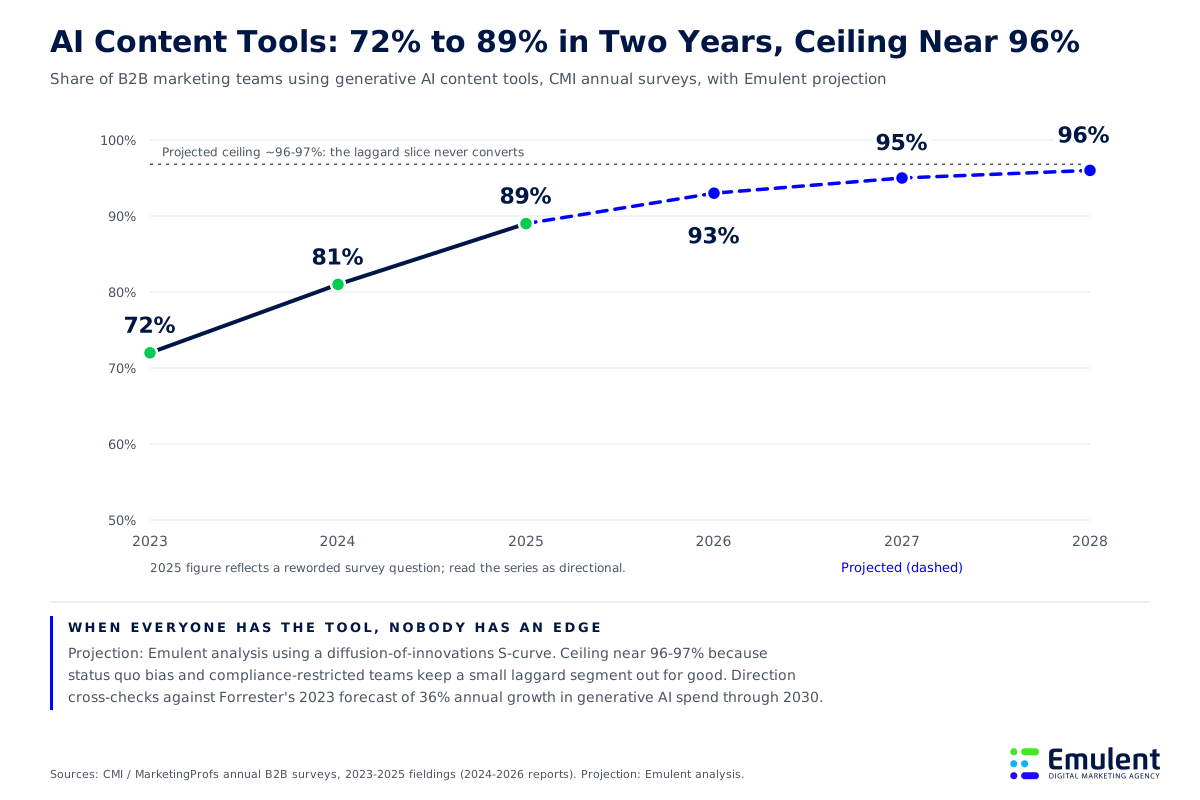
Read those two charts together and the position writes itself: if AI made your content cheaper and nothing else about your program changed, you never had a strategy. You had a cost center, and now it is a cheaper cost center. The tool moved every metric it controls and left flat the one metric that pays, because performance depends on the three decisions above, and no model makes those for you. That is also why we argue that authentic content requires senior expertise, not outsourcing: the scarce input was never typing.
The Search Page Stopped Paying for Consensus Content
While production got cheap, distribution got ruthless. Semrush’s 2025 study of U.S. clickstream data measured AI Overviews on 6.49% of Google queries in January 2025 and 13.14% by March, a doubling in 90 days. Pew Research Center’s July 2025 analysis, built on 68,879 real searches from 900 U.S. adults, put the March 2025 share at 18% on its panel; the two studies measure differently, so treat them as two readings, never one blended number. We project the share of searches carrying an AI answer climbing toward roughly 52% by 2028 and bending flat near 55 to 60%. Projection: Emulent analysis based on an S-curve bounded by query mix, assuming a 55 to 60% ceiling because Pew measured that only 8% of one-to-two-word searches trigger an AI summary while 60% of question-form searches do, cross-checked against Gartner’s 2024 forecast of a 25% drop in traditional search volume by 2026, which agrees on direction.
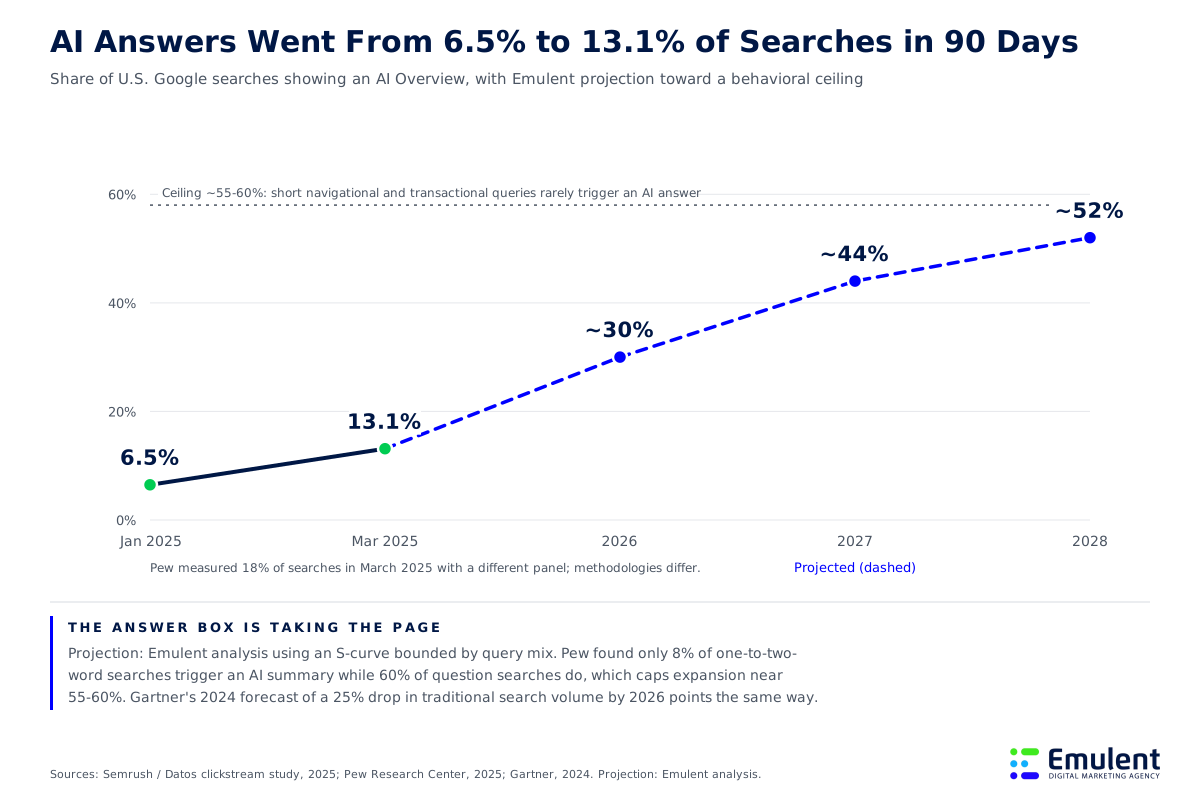
What happens to clicks when the answer box shows up? Pew measured it: users clicked a result link in 15% of visits without an AI summary and 8% of visits with one. Links cited inside the summary got clicked in 1% of visits. The behavioral driver is satisficing. People take the first good-enough answer and stop, and when a machine can assemble page one’s consensus into a paragraph, consensus content earns nothing for the sites that supplied it.
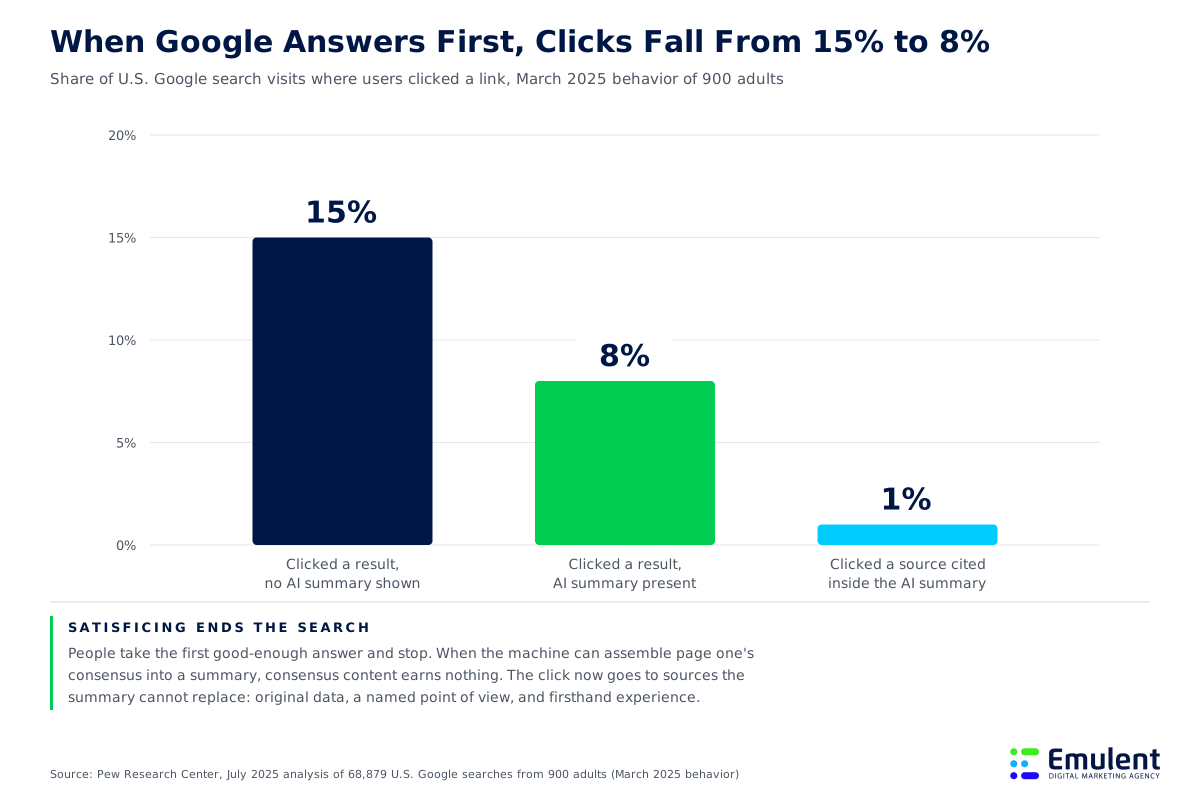
This changes what a keyword is for. A term is no longer a traffic faucet; it is a question your buyer asked, and the only content that still earns the visit is content the summary cannot replace: original data, firsthand experience, and a named point of view. Our keyword research work now sorts terms by “can a summary fully answer this,” and our ai seo engagements focus on becoming the source the answer cites rather than the eleventh restatement below it. The same thinking extends past Google into every answer engine, which is the whole premise of search everywhere optimization. We took this position before the Pew numbers landed, in stop writing B2B content for Google, start writing for the buying committee, and the 2025 data moved it from opinion to arithmetic.
What Buyers Reward Instead: A Committed Argument
Buyers have been telling researchers this for years. In the 2024 Edelman-LinkedIn B2B Thought Leadership Impact Report, a survey of roughly 3,500 management-level professionals across seven countries including the U.S., 73% of B2B decision-makers said an organization’s expertise-led content is a more trustworthy basis for judging its capabilities than its marketing materials, and 75% said a single strong piece led them to research a product they had not been considering. The same study found only 15% rate the quality of what they read as very good or excellent. Those are survey opinions, so hold them loosely, and still: the demand side says the bar for a committed, useful argument is low and the reward for clearing it is real.
The psychology underneath is costly signaling. An argument that could lose you a prospect proves you believe it. Polished, position-free content signals nothing anymore, because generating polish now costs zero. That inversion, where believable beats beautiful, runs through everything we track in our content marketing trends research, and it is the single biggest reason the calendar impostor fails harder every year.
How To Write Yours on One Page
Block two hours with the people who actually talk to customers. No agency required. Write five sentences:
The buyer sentence. Who makes the purchase decision, what decision are they stuck on, and what happens to them if they choose wrong. If you cannot write this without the word “anyone,” stop and interview three customers first.
The argument sentence. The one claim about solving their problem that you will defend across every piece. Test it: would a competitor publish it word for word? If yes, sharpen until no.
The refusal sentence. Name at least three topics or formats you will skip for the next 12 months, and why. This is where the two hours get uncomfortable, which is how you know it is working.
The meeting-place sentence. Where the buyer researches: the queries, the communities, the referrers. Pick the two channels where your argument can win, and give yourself permission to be absent everywhere else.
The scoreboard sentence. The revenue behavior you will count: qualified conversations, proposal requests, sales-cycle length. Rankings and traffic can inform the work. They cannot be the scoreboard, because a #1 ranking that converts nobody is a decoration.
Every piece you plan afterward must trace to those five sentences, and any piece that cannot gets cut before it is written. That single filter does more for performance than any tool purchase we have ever seen.
When Not To Pay Anyone for Content Yet
If you cannot write the buyer sentence and the argument sentence today, do not hire us, and do not hire anyone else, for content production. You would be paying professional rates to make the 97% problem prettier. Fix the decisions first: talk to ten customers, write the five sentences, argue about the refusal list until it hurts. Some companies do that internally in a month. Companies that want a partner in the decision work itself, before a single post is scheduled, are the ones our content strategy services exist for, and even then the engagement starts with subtraction, because the fastest performance gain in most content programs is publishing less, better.
The Definition, One More Time
A content strategy is the argument your business commits to making, the buyer who needs to hear it, and the list of what you refuse to publish, written down on one page. That definition looked opinionated 20 years ago. In 2026 it is just a description of the survivors: production is at commodity cost, the search page answers consensus questions itself, and 97% of your competitors are holding calendars they call strategies. The 12% who beat their goals are not producing more than you. They decided more than you. Write the page.