
Dental practice marketing in 2026 looks very different from the playbook most offices still run. The market is growing but maturing, patients screen practices by their reviews before they ever call, and AI search now answers many questions before a single click happens. This guide pulls the numbers that matter for dental patient acquisition, shows where they are heading through 2028, and explains what to do about each shift.
Key takeaways for dental practice owners and marketers:
- A bigger pie, tighter slices: U.S. dental services revenue should reach about $196B by 2028, but yearly growth stays near 4.4%, so practices fight harder for the same local patients.
- Reviews are the gate: Roughly 83% of patients use online reviews to judge a dentist, and 95% reconsider after a negative one.
- AI is rewriting discovery: Close to half of health searches already show an AI Overview, and that share keeps climbing toward a local-search ceiling near 70%.
- Google still owns the budget: High-performing practices send about 45% of their marketing spend to paid search and SEO combined.
- Patients are worth the chase: A new patient costs $150 to $800 to win but carries a $7,000 to $10,000 lifetime value.
- Budgets are creeping up: Average marketing spend is moving from about 5% of revenue toward 5.7% by 2028 as acquisition gets pricier.
How big is the dental market you are competing for?
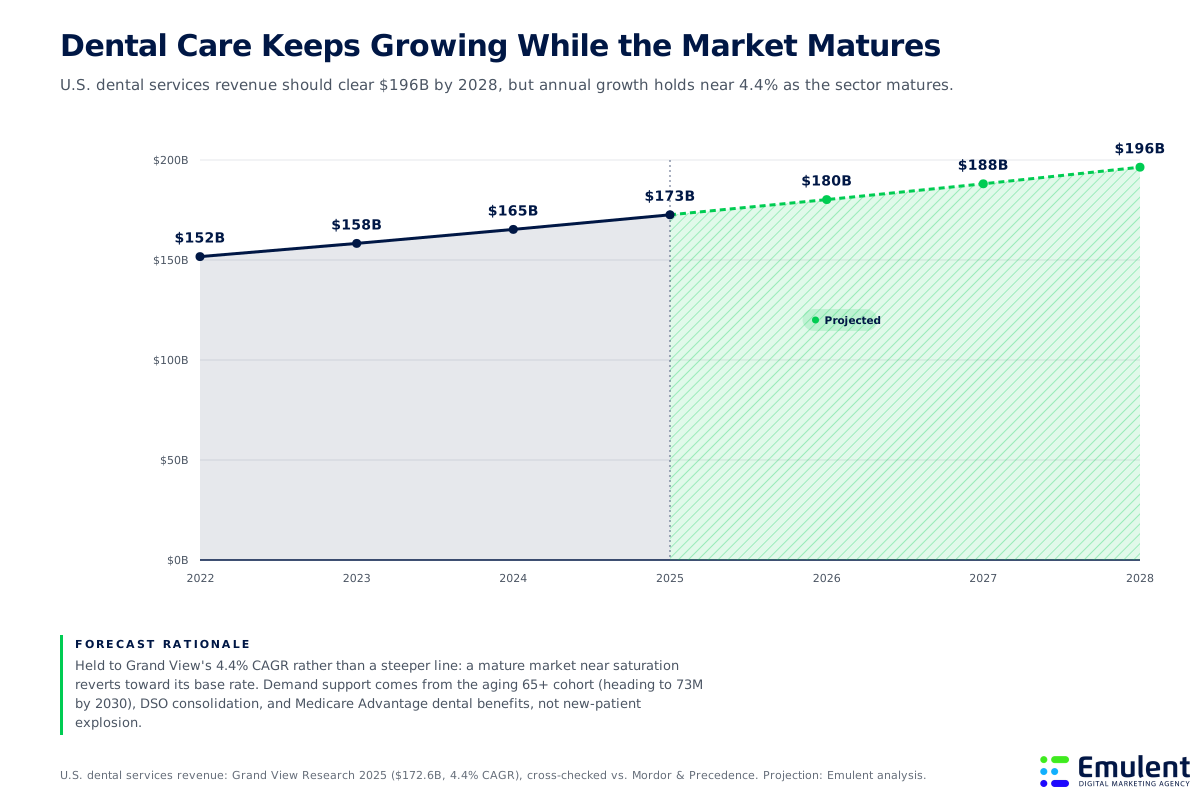
The U.S. dental services market sat near $172.6B in 2025 and should clear $196B by 2028. That sounds like easy growth, but the yearly rate holds around 4.4%, which is the signature of a mature market rather than a young one. An aging population, private-equity-backed group practices, and expanded Medicare Advantage dental benefits keep demand steady. None of those forces hand new patients to your front desk.
This matters because a slow, steady market is a zero-sum fight at the neighborhood level. When the category is not creating fresh demand, your growth has to come from a competitor down the road. Practices that treat marketing as a fixed cost tend to drift while sharper offices take their share. We see the same pattern across healthcare marketing: steady category growth rewards the practices that compete deliberately for attention, not the ones that wait for it.
A maturing market is good news and a warning at the same time. Demand is reliable, but it will not rescue a practice that stops earning attention. Growth now comes from winning the patient your neighbor is also chasing. – Emulent Strategy Team
Winning that contested patient starts well before they pick up the phone. It starts with what they read about you.
Why do reviews decide who gets the call?
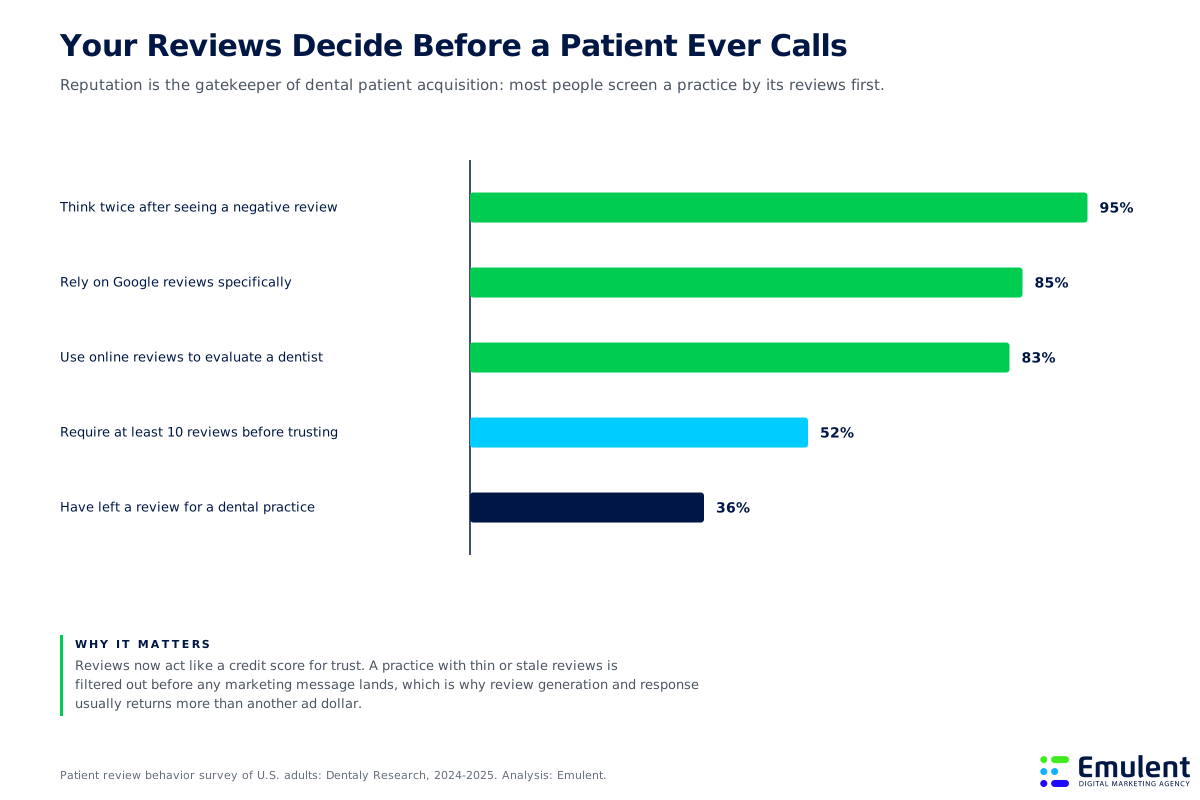
Reviews now work like a credit score for trust. About 83% of patients use online reviews to evaluate a dentist, 85% lean on Google reviews specifically, and 95% think twice after reading a negative one. More than half will not consider a practice with fewer than ten reviews. A patient does not weigh your clinical skill at this stage. They weigh what other people said.
The risk of ignoring this is quiet but real. A practice with thin or stale reviews gets filtered out before any ad, mailer, or referral has a chance to work. You can spend heavily to get found and still lose the patient at the review check. That is why review generation and thoughtful responses usually return more than another dollar of ad spend.
Three review habits that protect new-patient flow:
- Ask at the right moment: Request a review right after a positive visit, when the experience is fresh and the patient is happy.
- Reply to every review: A calm, HIPAA-safe response to criticism often reassures future patients more than the complaint worries them.
- Keep them recent: Patients and search engines both favor fresh reviews, so a steady trickle beats a one-time push.
Strong reviews get you considered, but only if patients can find you in the first place. That part of the equation is changing faster than anything else in dental marketing.
What happens to dental search when AI answers first?
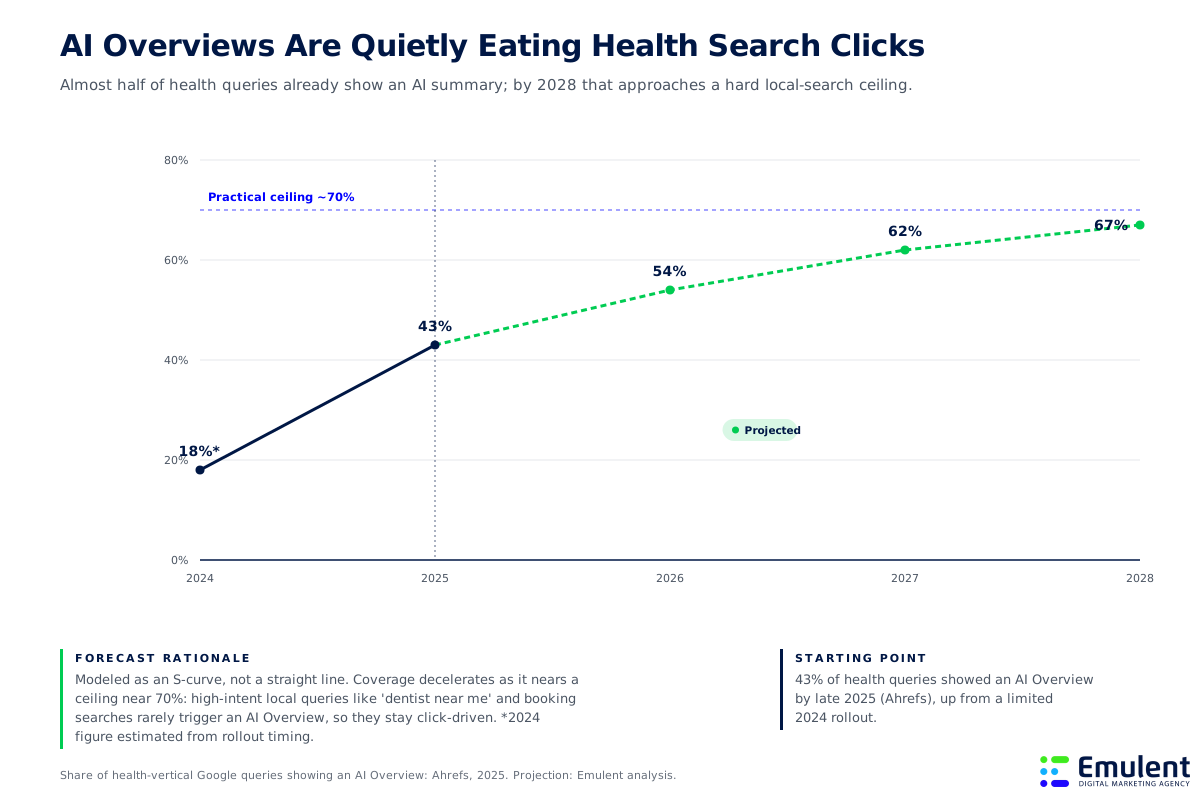
By late 2025, about 43% of health-related searches showed an AI Overview, up from a limited rollout the year before. We project that share climbing toward 67% by 2028. It does not race to 100% because high-intent local queries like “dentist near me” and appointment bookings rarely trigger an overview. Those stay click-driven, which is exactly where new patients live.
The split is the whole story. Informational content, the “signs you need a crown” type of blog post, is losing its clicks to AI summaries. Local and action searches still send patients to maps, listings, and service pages. If your strategy leans on informational traffic, expect it to fade over the next year or two. The practices that win get cited inside Google AI Overviews and still show up in the local pack.
This shift is why we treat AI SEO as its own discipline rather than a tweak to old SEO. Optimizing to be the source an AI trusts and quotes is different from ranking a page in a list. Teams that want a starting structure can work through our AI SEO checklist and pair it with strong local SEO so both the AI answer and the map result point to your practice.
The question patients ask has not changed. Where they get the answer has. Your job in 2026 is to be the practice the AI cites and the listing the map shows, because those are now two separate wins. – Emulent Strategy Team
Once you know where patients actually decide, the next question is where your money should go to meet them there.
Where should a dental marketing budget actually go?
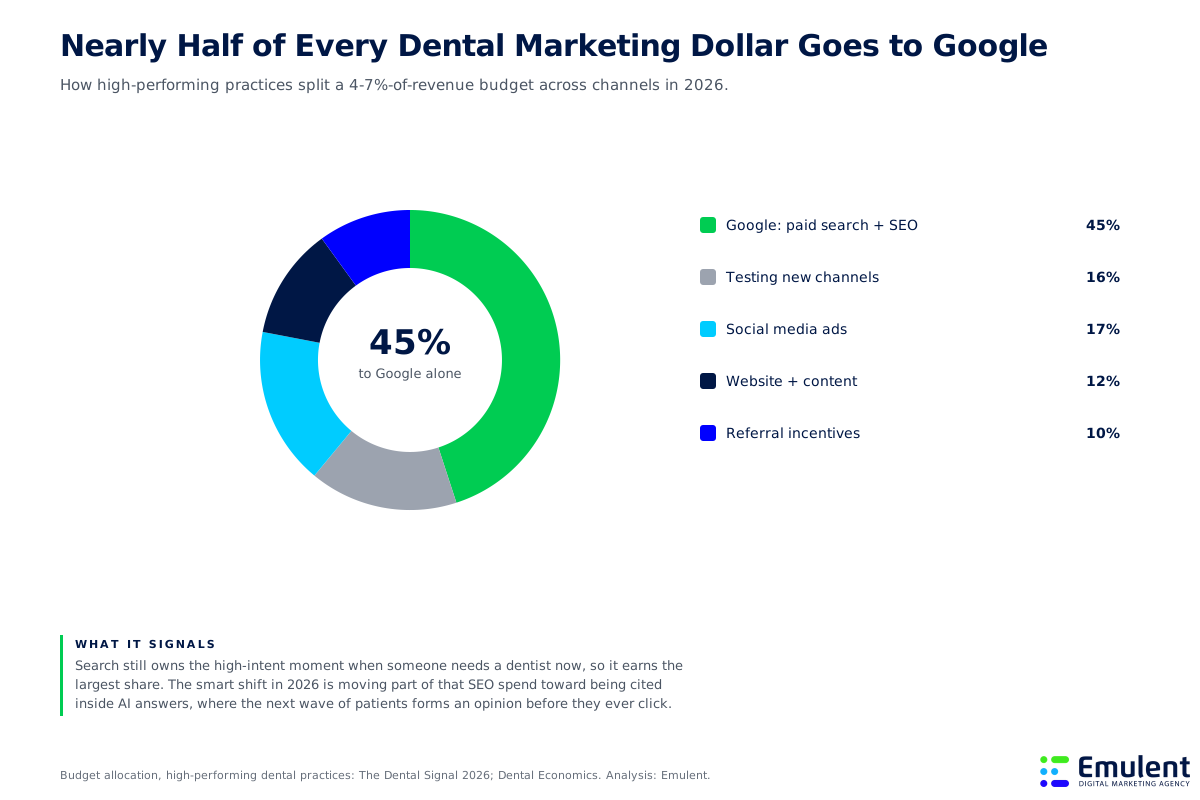
High-performing practices send roughly 45% of their marketing budget to Google, split between paid search and SEO. Social ads take about 17%, website and content around 12%, referral incentives 10%, and the rest goes to testing new channels. Search earns the biggest slice because it captures people in the moment they need care now, which is the highest-intent moment in the whole funnel.
The smart move for 2026 is not to abandon that mix. It is to redirect part of the SEO budget toward being visible inside AI answers, a practice often called search everywhere optimization. Patients increasingly form an opinion from an AI summary, a TikTok recommendation, or a map listing before they reach your site. A budget built only for blue links will slowly lose ground.
How to pressure-test your channel mix:
- Protect the high-intent core: Keep paid search and Google Business Profile funded, since they convert people who are ready to book.
- Fund the new front door: Move a slice of content spend toward AI citation and structured, answer-ready pages.
- Measure by patient, not by click: Track which channel produced a booked patient, because clicks and impressions no longer tell the full story.
Allocating a budget across channels only makes sense once you know what a patient costs to win and what one is worth to keep.
What does it cost to win a patient, and is it worth it?
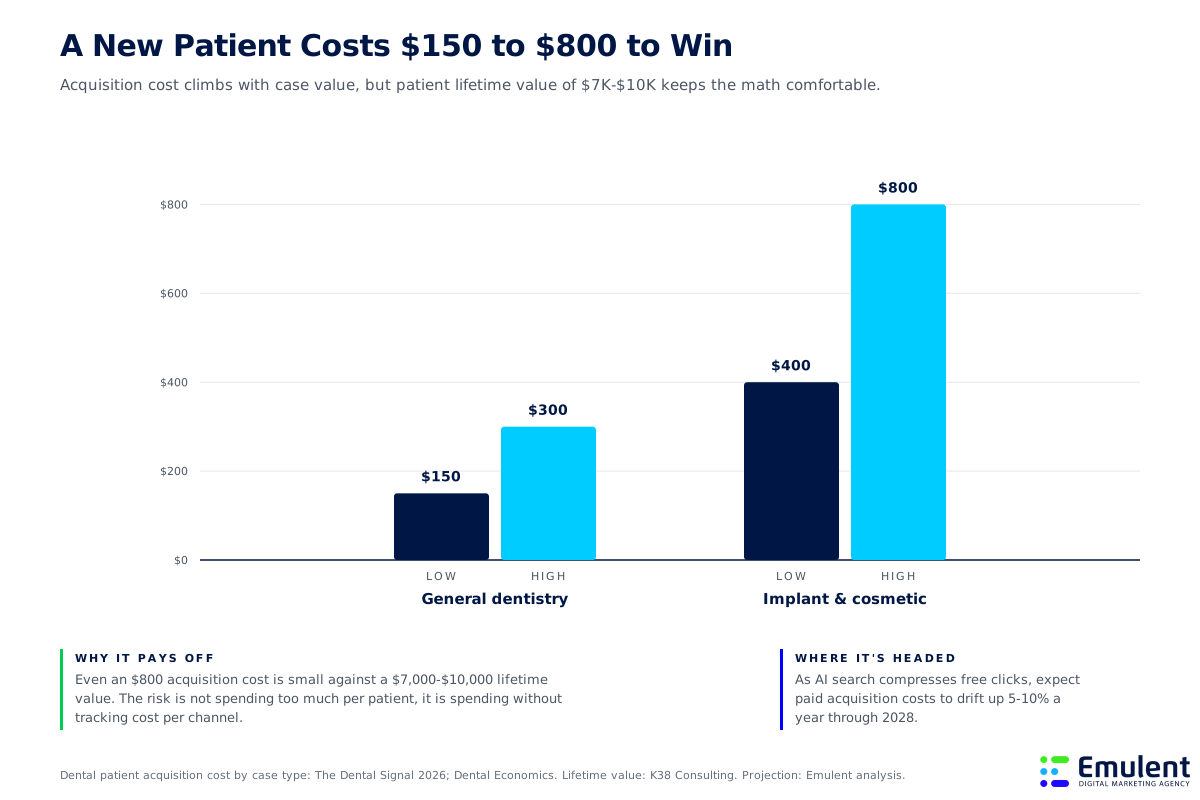
A new general-dentistry patient costs about $150 to $300 to acquire. Implant and cosmetic cases run higher, from $400 to $800, because the keywords are pricier and the buying decision takes longer. Set against a patient lifetime value of $7,000 to $10,000, even the high end of that range is a sound investment. The math works as long as you know your numbers.
The danger is not spending too much per patient. It is spending without tracking cost per channel. A practice that cannot say which campaign produced which booking is flying blind, and it will keep funding channels that look busy while quietly losing money. Tie every dollar to a booked patient and to that lifetime value figure, and the budget defends itself.
We expect acquisition costs to drift up 5% to 10% a year through 2028 as AI search trims free organic clicks and pushes more demand into paid channels. Practices that track tightly now will absorb that increase without panic. Practices that do not will feel it as a slow squeeze on profit.
Patient acquisition cost is only scary in a vacuum. Put it next to lifetime value and channel tracking, and an $800 patient becomes one of the best investments a practice can make. – Emulent Strategy Team
Rising costs lead straight to the budget question every owner eventually asks.
How much should you budget as costs climb?
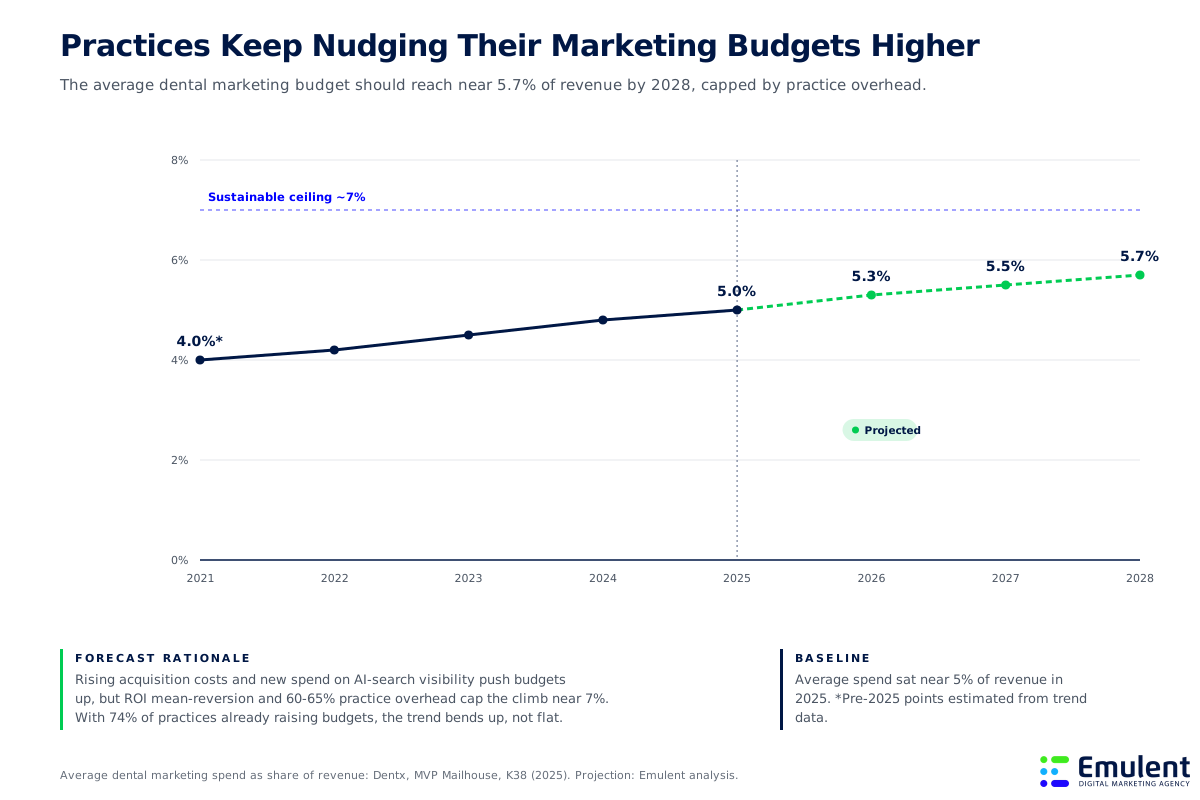
The average dental practice spent about 5% of revenue on marketing in 2025, and we project that figure reaching near 5.7% by 2028. The climb is real but bounded. Roughly 74% of practices have already raised their budgets, while rising acquisition costs and new spend on AI visibility push the number up. Practice overhead of 60% to 65% caps how high it can sustainably go, which is why the line bends toward 7% rather than past it.
Percentages are a starting point, not a rule. A new practice filling empty chairs may need 10% or more, while a mature office with a strong referral base can hold near 4%. The figure that matters is return, not the percentage itself. Use marketing budget benchmarks to sanity-check your spend, then adjust based on open chair time and local competition.
When to raise your dental marketing budget:
- Open chair time is consistent: Unbooked hours cost more than the marketing needed to fill them.
- Current campaigns show positive return: Scaling a profitable channel beats starting from zero on a new one.
- A new competitor enters your market: Defending visibility is cheaper than rebuilding it after you lose ground.
Set against the broader picture in our healthcare marketing trends work, dental sits right in the middle of the shift toward AI-shaped discovery and tighter attribution. The practices that adjust their budget around those forces, rather than around a fixed percentage, will be the ones still growing in 2028.
Where does this leave your practice?
The pattern across every chart points the same way. Demand is steady, trust runs through reviews, discovery is moving into AI answers, and the cost of a patient is rising while remaining worth it. Practices that pair sharp local visibility with AI-ready content, honest channel tracking, and a budget tied to return will keep their schedules full as the rest of the market gets noisier.
Our team builds exactly that kind of program for dental offices, from review systems and digital marketing for dentists to AI search visibility and patient-level attribution. If you want help turning these dental marketing trends into a plan your practice can run, contact the Emulent team for a no-pressure conversation about where your next patient will come from.