
A post-redesign ranking drop is a subtraction problem, not a mystery. Somewhere between the old site and the new one, a specific signal changed on a specific set of URLs, and until you can name both, every fix you buy is a guess. Most teams skip straight to the guessing. They find a list of eight common causes, recognize three of them, and start rebuilding. Six weeks later they have restored content that never dropped, rewritten redirects that already worked, and bought a speed package that changed nothing, because the loss was somewhere else the whole time.
There is a harder possibility waiting underneath all of it. Part of what you think you lost may never have been yours to lose.
First prove the drop is real
The opening question is not why traffic fell. It is whether traffic fell. A redesign replaces every template on the site, and analytics tracking lives inside those templates. The tag gets dropped from the new header. The consent banner changes and starts blocking measurement by default. Someone spins up a fresh property and the historical comparison quietly breaks. Internal traffic stops being filtered. Any one of these produces a chart that looks exactly like an SEO collapse and has nothing to do with Google.
The check takes ten minutes and costs nothing. Google Search Console reports clicks from Google’s side of the transaction, so it does not depend on your tracking code at all. Pull Search Console clicks for the 28 days before launch and the 28 days after, then pull the same window from your analytics. If Search Console is flat and analytics fell off a cliff, you have a measurement break. Fix the tag, apologize to whoever you scared, and go back to work.
If both sources agree that clicks fell, you have a real event. Now the work starts.
“Before anyone signs a recovery retainer, spend two weeks and zero dollars. Search Console, a crawler, and the pre-launch export you should already have will tell you more than the first month of any engagement. If an agency wants to start fixing before it can name the URLs that dropped, it is selling you activity.” – The Strategy Team at Emulent
A click loss and a ranking loss are not the same emergency
Rankings and clicks come apart now, and a redesign is a terrible time to confuse them. Pew Research Center tracked the browsing of 900 US adults across 68,879 Google searches in March 2025 and found that users clicked a standard result link in 8% of visits to pages carrying an AI summary, against 15% of visits to pages without one. Clicks on the sources cited inside the summary ran at 1%. Sessions ended outright on 26% of pages with a summary, compared with 16% without.
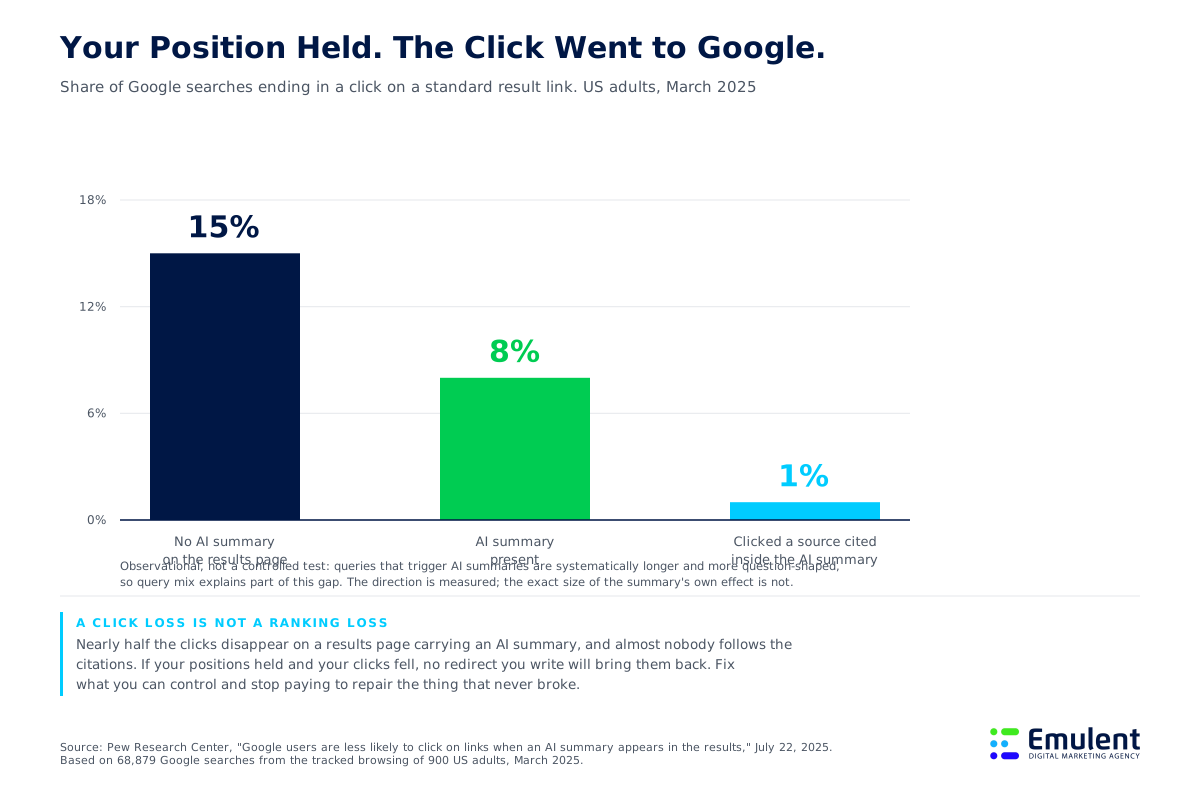
Read that against your own numbers before you touch a redirect. If Search Console shows your average position holding and your impressions steady while clicks fall, the results page changed, not your site. No redirect map recovers a click that Google’s own answer absorbed. Teams burn entire quarters rebuilding pages that never lost a position, because the dashboard said traffic was down and the redesign was the most recent thing that happened.
Which pages are exposed is not random, and this is where the diagnosis gets useful. The same Pew data shows AI summaries appearing on 8% of one and two word searches and 53% of searches running ten words or longer. Question-shaped queries, the ones starting with who, what, when or why, produced a summary 60% of the time.
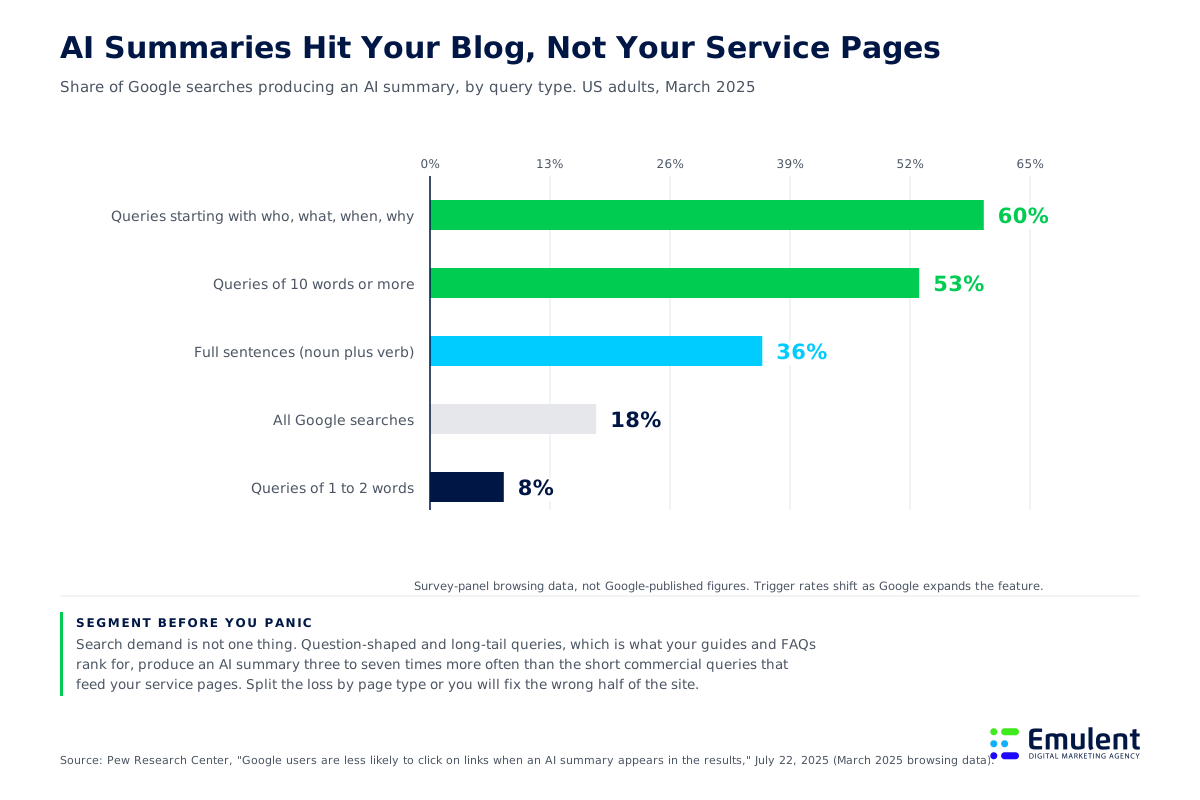
Your guides, FAQs and blog posts rank for exactly the long, question-shaped queries that trigger a summary most often. Your service pages rank for the short commercial ones that trigger it least. So split the loss by page type before you diagnose anything. A site that lost 40% of blog clicks while service page clicks held did not break during the redesign. It met the way AI Overviews affect SEO, and it would have met that with or without a new theme. A site where the service pages fell has a real problem, and that is where every hour of the next two weeks belongs.
This is also the moment to stop tracking positions as the scoreboard. A page that holds rank one and sends nothing is a decoration, which is why we treat ranking number one as a vanity metric rather than a result. Count the pages that produce revenue, and count what happened to them.
Your launch window was probably contaminated
Here is the confound almost nobody checks. We took every confirmed core and spam update from Google’s Search Status Dashboard and asked a simple question of each calendar year: if you had launched on a randomly chosen date, what are the odds that your first 30 days of post-launch data sat on top of an update rollout? In 2025 the answer was 53%. In 2024 it was 63%.
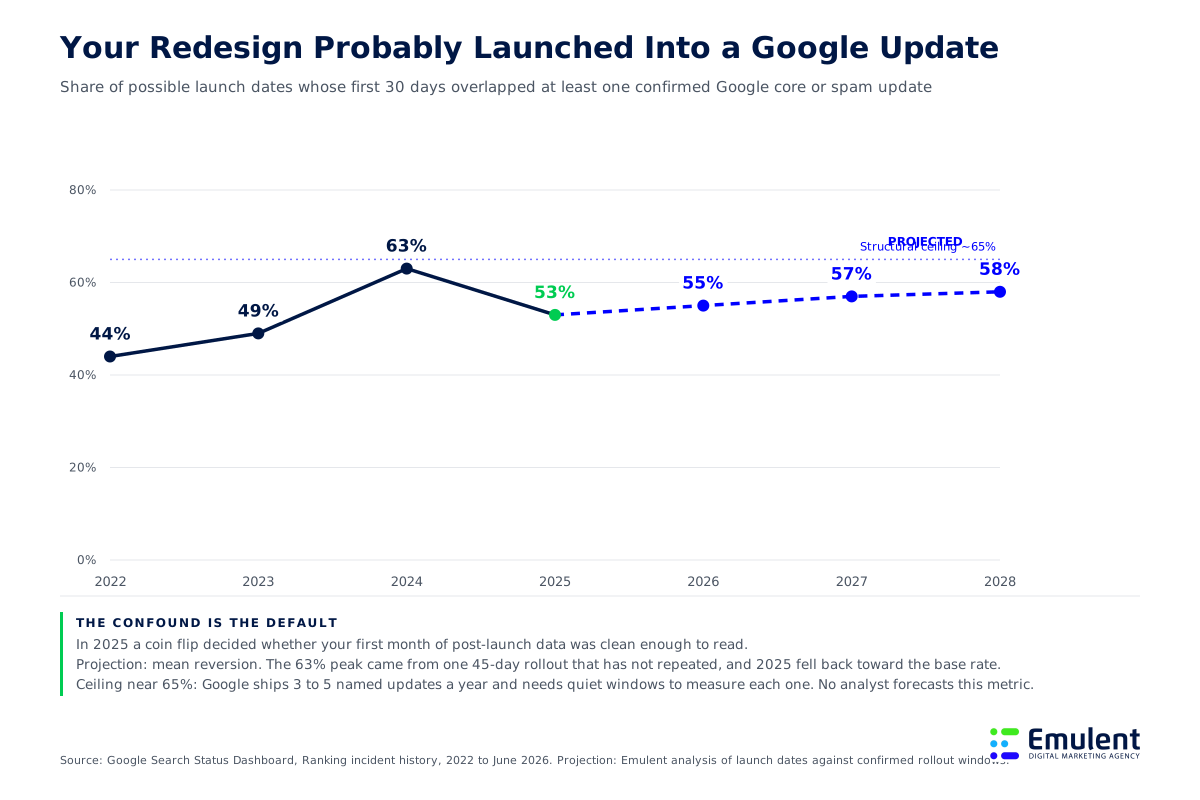
Projection: Emulent analysis based on mean reversion, assuming a ceiling near 65% because Google ships three to five named ranking updates a year at twelve to twenty-six days each and needs quiet windows between them to measure each one, cross-checked against Google’s own published cadence rather than a third-party forecast, since no analyst tracks this metric.
A coin flip decided whether your before-and-after comparison meant anything. If a core update was rolling out while you were watching your new site settle, your chart is measuring two events at once and cannot separate them. Check the dates first. Open the dashboard, find the rollout windows, and lay them against your launch date and your drop date. Then read the complete Google algorithm update history to see what the update in question was actually rewarding, because a core update that punished thin content and a redesign that thinned your content will produce the same graph for very different reasons.
The timing matters more than teams expect, because these rollouts are long.
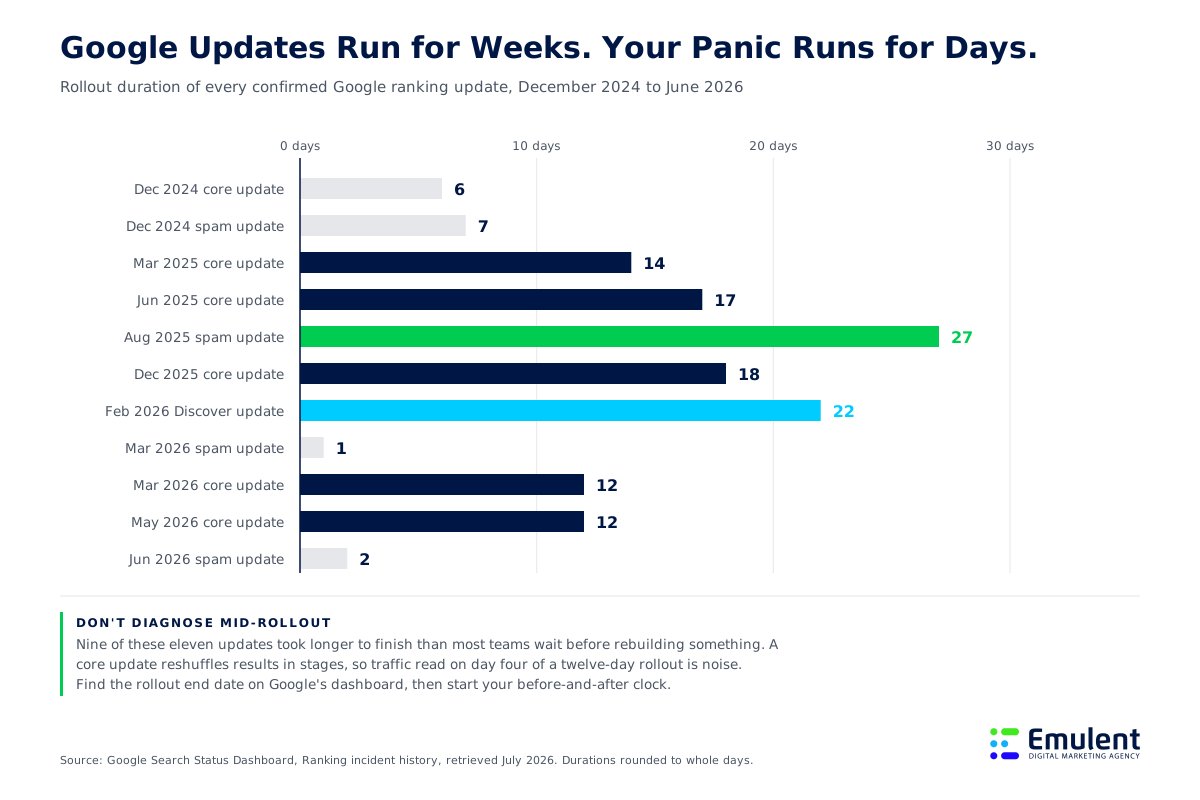
Nine of the eleven ranking updates Google confirmed between December 2024 and June 2026 took longer to finish than most teams wait before they start rebuilding. Core updates roll out in stages, so traffic read on day four of a twelve-day rollout is noise dressed up as a signal. Find the completion date, then start your clock.
“The redesign is the most vivid thing that happened, so it becomes the cause. That is not analysis, it is availability bias with a dashboard attached. The mind reaches for the change it can picture, and a new homepage is easy to picture while a twelve-day ranking rollout is not. The discipline is to make yourself look at the boring explanation first.” – Bill Ross, Founder, Emulent
Now run the diff
Diagnosis by subtraction means comparing the site against itself. You need two things: a list of URLs that earned clicks before launch, and the current state of each one. Export the last 90 days of Search Console data from before the launch, sorted by clicks. That is your inventory. Everything below is a comparison against it, and none of it is a checklist you run start to finish. You run it until the pattern names itself, then you stop.
Redirects. Crawl the old URL list against the live site and record the status code each one returns. A 404 on a page that used to earn clicks is the finding. Google is explicit that permanent redirects do not cost you PageRank, so a missing one is a self-inflicted wound rather than a tax. Two failure modes hide inside redirects that technically exist. Chains, where an old URL hops through two or three stops before landing, and lazy mapping, where a hundred specific pages all point at one category page or the homepage, which Google treats as a soft 404 and drains of relevance. Pattern rules are how this happens: someone writes one broad rule instead of a hundred specific ones. If you are writing the map now, our 301 redirect htaccess reference covers the syntax and our regex reference for SEO and website design work covers the pattern matching that keeps the rules from overreaching.
Indexability. Staging sites are blocked from search on purpose, and the block sometimes ships to production. Check the robots.txt file and check for a noindex tag in the head of your templates, not just the homepage. One noindex left on a page template takes out every page built from it. Search Console’s page indexing report names the excluded URLs and the reason, which turns this from a hunt into a lookup.
Content. Compare the old page against the new one for the pages that lost clicks. Redesigns cut copy to make pages feel cleaner, and the copy that gets cut is usually the copy that was answering the query. Pull the queries each dropped page used to earn impressions for, then read the new page and ask whether it still answers them. If the answer left, the ranking followed it out the door.
Consolidation damage. Redesigns merge pages. Three service pages become one, or a category page absorbs its children, and now two URLs compete for the same intent while neither owns it. That is keyword cannibalization, and it presents as a slow slide rather than a cliff, which is why it survives the first round of diagnosis.
Internal links. This is the one that hides best. Navigation restructures, footer cleanups and new templates all quietly remove the links that were feeding your important pages. Crawl the old site if you still have a copy, crawl the new one, and compare inbound internal link counts for your top twenty revenue pages. A page that went from forty internal links to four did not lose its content. It lost its support.
Stop blaming the theme
Speed is the first thing everyone blames and the last thing that usually explains a drop. According to the 2025 HTTP Archive Web Almanac, working from Chrome UX Report field data collected in July 2025, 48% of mobile origins and 56% of desktop origins pass all three Core Web Vitals. Largest Contentful Paint is where sites fail: only 62% of mobile origins score good on it, against 77% for Interaction to Next Paint and 81% for Cumulative Layout Shift.
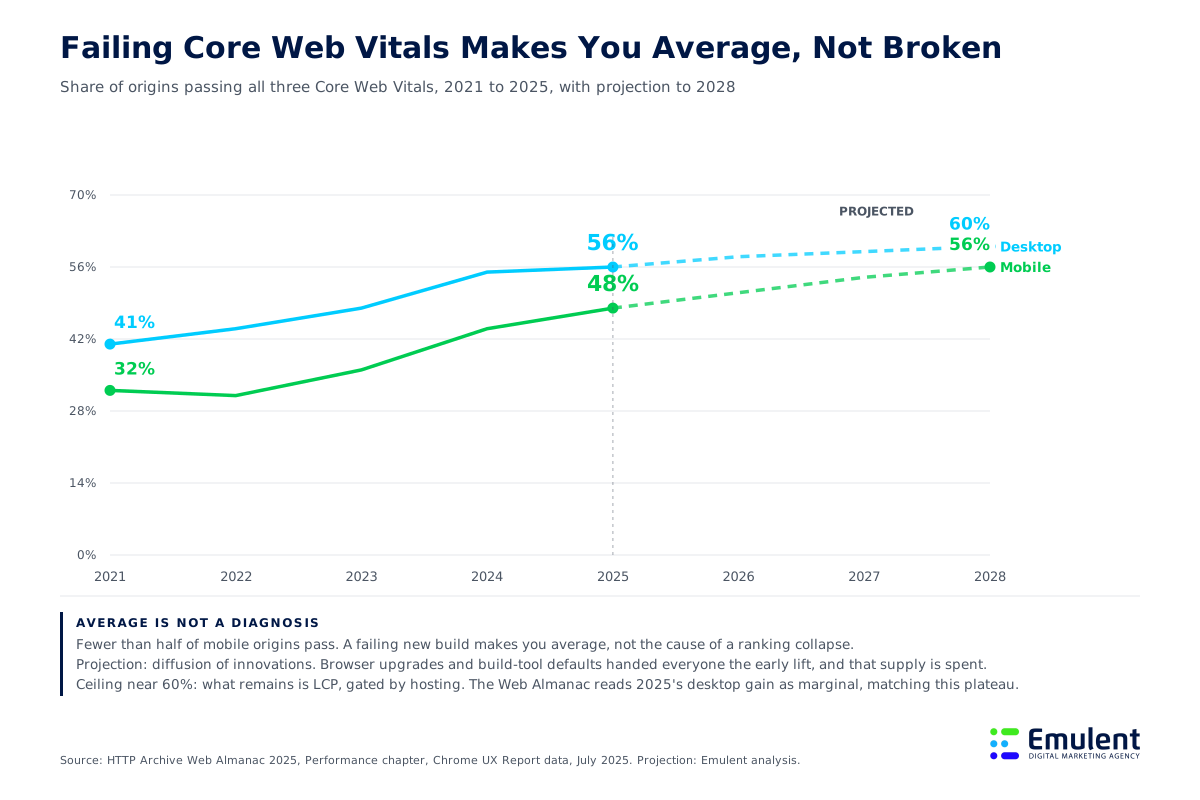
Projection: Emulent analysis based on diffusion of innovations, where browser upgrades and the default settings in modern build tools handed the early gains to every site automatically and that supply is now spent, assuming a ceiling near 60% on mobile because the remaining failures are LCP, which is gated by server response time and hero media that the long tail of shared-hosting sites will never pay to fix, cross-checked against the Web Almanac’s own reading that the 2025 desktop gain was marginal.
So if your new site fails Core Web Vitals, you have joined the majority. You have not caused a ranking collapse. Vitals behave like a tiebreaker between pages Google already considers comparable, which means they rarely explain a page falling from position four to position thirty. The number that would justify action is not your absolute score. It is the delta. If the old template passed and the new one fails, you have a regression worth chasing, and the culprit is almost always a hero image, a page builder loading assets it does not need, or a host with a slow server response. Our guide to improving page speed on a WordPress website covers the sequence. If the old template failed too, speed is not your story and a speed engagement is money spent on the wrong problem.
“The most overpriced deliverable in post-launch recovery is the performance package, sold to teams whose rankings dropped for reasons that have nothing to do with performance. It is easy to sell because the score is red and red feels like the answer. Ask for the before number. If nobody captured one, the package is being sold on a feeling.” – The Strategy Team at Emulent
Fix in this order, and leave the rest alone
Sequence matters because the fixes have wildly different payback windows and some of them foreclose your ability to diagnose anything else.
- Indexability, same day. A noindex or a robots block is a page that Google cannot see at all. Nothing else you do matters while it stands. Fix it, then request indexing on the affected templates.
- Redirects for pages that earned clicks, this week. Work down your Search Console export by clicks, not alphabetically and not by whatever the crawler surfaced first. The top fifty URLs usually carry most of the value. Google’s site move guidance says a medium-sized site takes a few weeks for most pages to move in the index, so expect the recovery to trail the fix by two to four weeks rather than showing up on Monday.
- Content restoration on revenue pages, this month. Restore what answered the query on the pages that pay you. Leave the blog for later, and be honest that some of the blog is not coming back regardless of what you restore.
- Internal links, this month. Rebuild the paths to your money pages. This is cheap, it is fast, and it is the fix most teams skip because no tool nags them about it.
- Everything else, only if the evidence points there. Schema, metadata, speed, images. Real work, wrong week.
What to leave alone: do not rewrite pages that did not drop. Do not rebuild the old site. Do not file a disavow. Do not republish content with new dates. Every one of these adds a change to a site you are still trying to measure, and each new change makes the next diagnosis harder. If you are still in the planning stage of a rebuild rather than the wreckage of one, our website redesign checklist is the version of this article that runs before launch instead of after.
If you never took a baseline, say so out loud
Some readers are going to reach this section and realize they cannot run the diff, because nobody exported the old URL list, nobody crawled the old site, and the staging environment is gone. We would rather tell you the truth than sell you a diagnosis we cannot support: without a baseline, attribution is guesswork, and anyone who promises you a root cause is performing confidence.
What you can still do is real, though it is slower. Search Console retains 16 months of data, which gives you the pre-launch query and page performance even when the old site is gone. The Wayback Machine often holds the old templates. Your backlink tool knows which URLs earned links, and those are the URLs whose redirects matter most. Between those three, you can reconstruct enough of the old state to run a partial comparison. Start there, and treat the gap in your evidence as a finding rather than an embarrassment.
Then rebuild the habit. Before the next launch, export the URL list, crawl the old site, screenshot the Search Console baseline, and store all of it somewhere that survives the project. A competitive audit and research engagement produces this as a byproduct, but you do not need to buy anything to keep a copy of your own site.
The redesign was not the mistake. Stacking was.
Google says this itself, in the plainest language it ever uses: combine a site move with a redesign of the content and URL structure and you will probably see some traffic loss. Most redesigns are not one change. They are a new CMS, a new URL structure, a new information architecture, new templates, rewritten copy and often a new host, all shipped on the same Friday. When the traffic falls, there are six candidate causes and no way to isolate any of them, because everything moved at once.
The teams that recover fastest are the ones that changed one thing at a time, or at least kept a record of what they changed. If you are planning the next one, ship the URL structure and the redirects first, let the index settle for a month, then ship the design. It is slower and it is duller and it is the difference between a diagnosable outcome and a shrug. This is the part of website design that nobody puts in the pitch deck, and it is the part that decides whether the new site earns anything.
Which brings the whole thing back to where it started. The drop is a difference between two states of your site, and the difference is knowable. Name the URLs that lost, name the signal that changed on them, and check whether the calendar was working against you before you accept the story that the redesign did it. Do that and you will spend your recovery budget on the one thing that broke, instead of on all eight things that might have. A site that ranks and does not convert has a different problem entirely, and if that is where you land after the rankings return, the honest answer is that traffic that does not convert was never the win you were defending.