
Once your video clears a modest technical floor- clean audio, a steady image, and the right format for the screen it plays on- extra production polish stops building trust and starts costing you. That is the answer to the title, and it cuts both ways. Yes, video quality can hurt your brand, but the quality that hurts you is almost never the one companies budget against. Businesses keep buying sharper cameras and slicker motion graphics while shipping videos with muddy audio, horizontal framing crammed into vertical feeds, and a gloss that reads as advertising the moment it autoplays. Buyers punish those failures. They do not reward the drone shot.
The Quality Bar Moved, and It Isn’t Where You Think
More companies are making more video on flatter budgets, which means the field you are competing against looks different than it did three years ago. Wistia’s 2026 State of Video Report, built on 13 million videos, 79 million hours of viewing data, and a survey of more than 900 professionals, found that 76% of companies now produce at least one video a month, and almost 40% spent under $5,000 on production for the entire year. We track this shift closely in the state of brand videography, and the pattern is consistent: volume is up, spend is settling, and the winners are not the companies with the biggest gear budgets.
That changes what “quality” means. When every competitor can publish watchable video, technical adequacy is table stakes and stops separating anyone. What separates brands now sits in three places buyers actually notice: whether they can hear you without effort, whether the video fits the screen in their hand, and whether a real human being shows up on camera. Everything above that line is decoration.
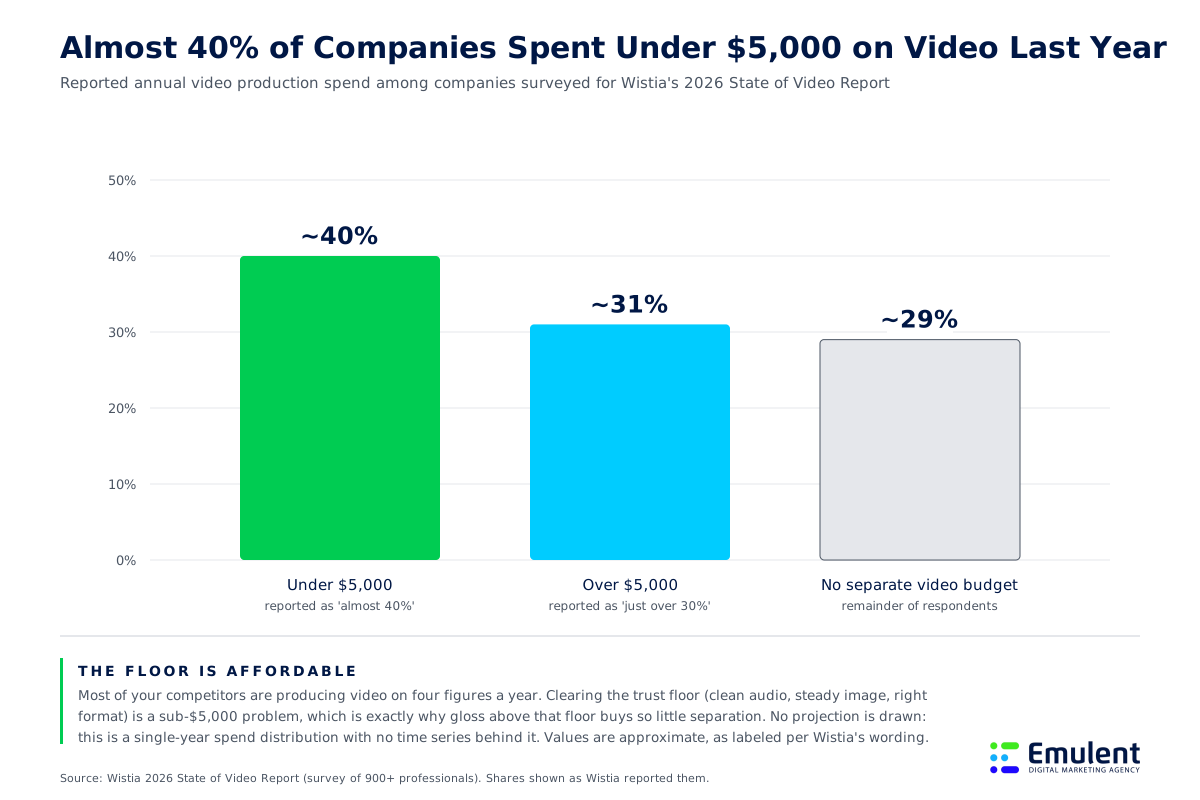
Sit with that spend distribution for a second. Most of the companies you compete with are producing video on four figures a year. Clearing the trust floor is a sub-$5,000 problem. Which is exactly why spending $40,000 to climb above that floor buys so little separation: the gap buyers can perceive closes long before the gap in your invoices does.
Bad Audio Is the Video Quality Problem That Costs You Money
If your videos have one technical flaw worth panicking about, it is sound. The psychology here is called processing fluency: when a message is hard to process, people do not blame the microphone, they quietly downgrade the messenger. A viewer straining to hear you through echo and hiss experiences your company as harder to deal with, and that feeling transfers to the work you sell. The reverse is also true. Clean, close, intelligible speech feels competent even on modest footage.
Our position: a $300 lavalier or shotgun microphone will do more for how trustworthy your videos feel than any camera upgrade you are weighing. Viewers forgive a plain frame in seconds. They never stop noticing bad sound, because bad sound taxes them for the entire runtime. If you are choosing where the next dollar of video budget goes, it goes to audio, then lighting the speaker’s face, then everything else.
Polish Stopped Being Proof
For two decades, an expensive-looking video worked as a costly signal. Buyers could not see your operations, but they could see that you spent real money presenting yourself, and they read that spend as evidence of a company willing to invest in itself. That signal is collapsing, because the cost that made it credible is falling to zero. Wistia’s 2025 State of Video Report found 41% of companies using AI for video creation, up from 18% a year earlier, and its 2026 survey shows the number one hesitation among holdouts is doubt about output accuracy, not cost. Meanwhile Deloitte’s 2026 TMT Predictions describes generative AI video as approaching Hollywood quality.
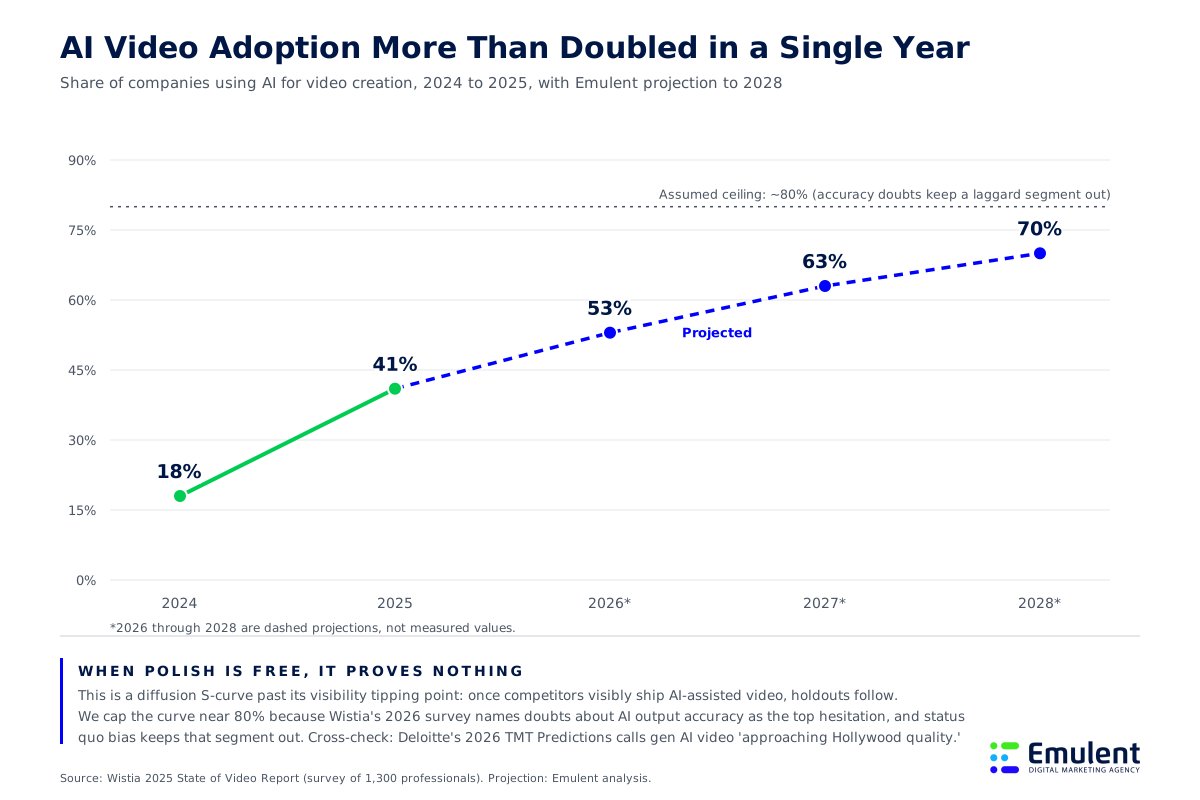
Follow the logic to its uncomfortable end. When anyone can render cinematic gloss for the price of a subscription, gloss proves nothing about the company behind it. Worse, high polish now pattern-matches to “ad,” and viewers have spent years training themselves to skip ads. The production value you bought to signal investment can read as the thing your buyer’s thumb is calibrated to scroll past.
“For twenty years, an expensive-looking video was a costly signal. It said this company can afford to invest in itself. AI ended that. Gloss is free now, so gloss proves nothing. The only signal left that money can’t fake is a real person, on camera, willing to put their name next to the claim.” Bill Ross, Founder, Emulent
What Buyers Reward Now: Real People, On the Record
The fastest-growing video format among businesses is also the least cinematic one: customers talking. Wistia’s annual surveys show the share of companies planning customer testimonial videos climbing from 17% in 2023 to 37% in 2024, 38% in 2025, and 47% in 2026. Nearly triple in three years, while flashier formats like original series and online courses sit at the bottom of the priority list.
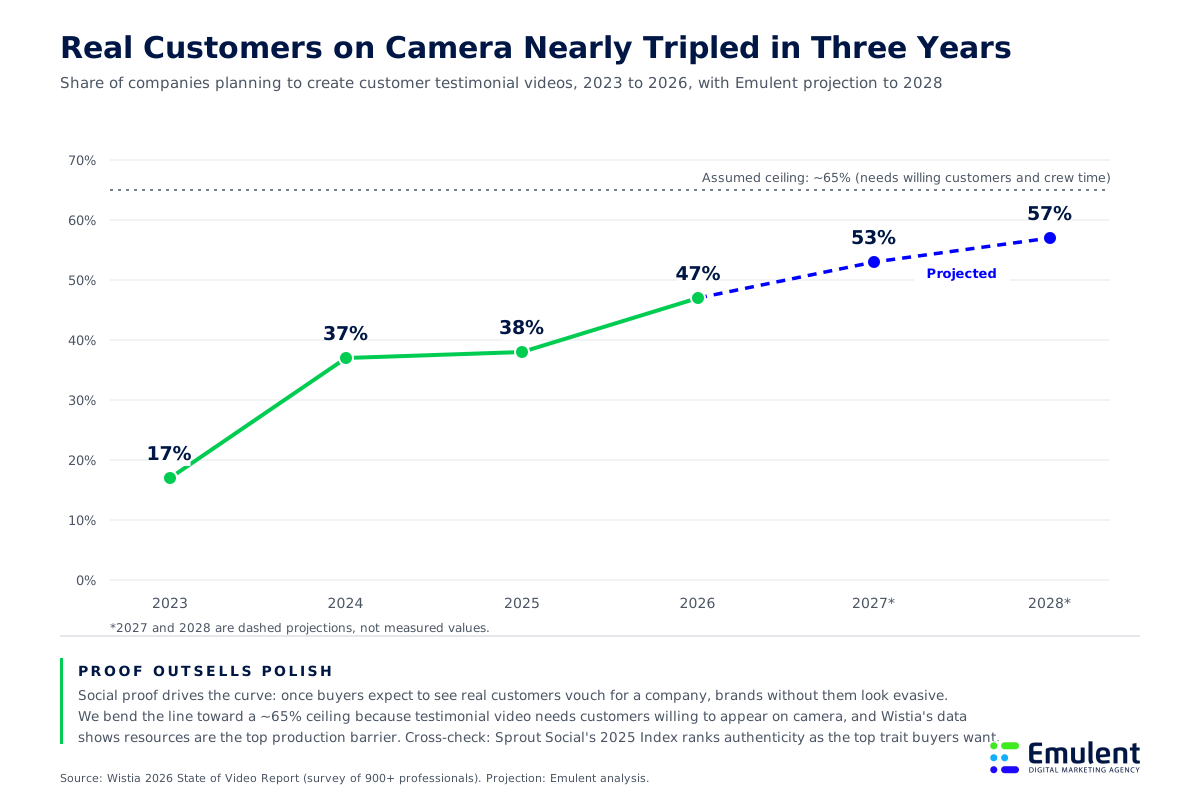
The mechanism is social proof, and it is doing the work polish used to do. A customer with a name and a face vouching for you is the one video asset a competitor cannot generate, and buyers know it. Consumer research points the same direction: Sprout Social’s 2025 Index found authenticity and relatability are the two traits consumers value most from brands, and about half say original content is what makes their favorite brands stand out. Deloitte’s 2025 Digital Media Trends reaches a matching conclusion from the entertainment side: creators earn credibility with audiences precisely because they read as people rather than productions.
So the unpolished founder walkthrough, the customer interview shot in their actual office, the support engineer explaining a fix at her desk: treat these as the highest-trust formats available to you, because that is what the data says they are. The craft that matters is telling your brand story on video through people who actually did the work. The same psychology shows up in still imagery, which is why professional team photos build instant trust while stock imagery bounces off. Realness is the asset. Production exists to serve it, not to bury it.
Format Is a Quality Decision, Not an Afterthought
Here is the quality failure almost nobody budgets for: shipping the right video to the wrong frame. Wistia’s platform data shows vertical HD uploads grew 24% year over year while 720p uploads fell 8%, because business viewing keeps shifting to the phone. A razor-sharp 16:9 film shrunk into a sliver of a vertical feed, captions missing, key visuals unreadable, reads as lower quality than modest footage composed for the screen it actually plays on. Your buyer never sees your master file. They see the crop.
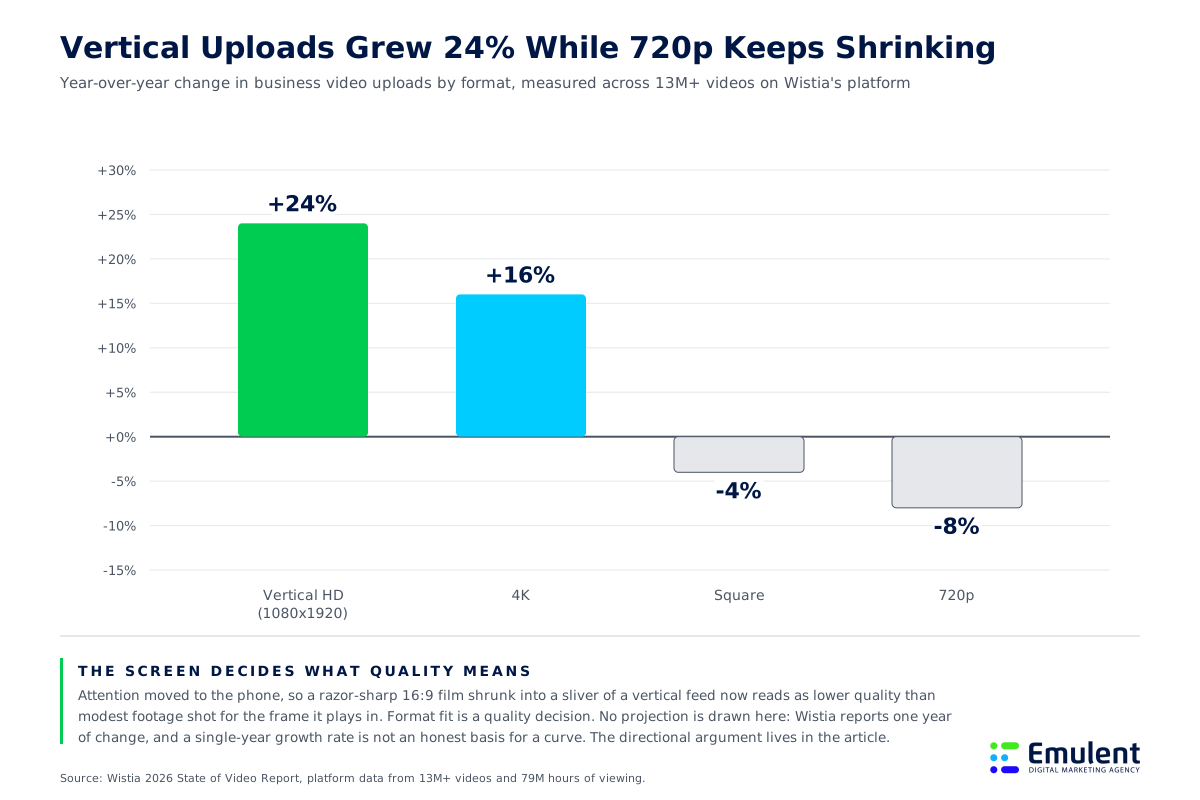
Treat format like a system requirement. One shoot should feed a vertical clip with burned-in captions, a horizontal cut for your site and channel, and stills that match your visual identity, which is where video planning overlaps with brand photography. This is also the argument for treating video inside a larger structure rather than as a one-off purchase: brand development is a system, not a project, and a video that looks great in one placement and broken in four others fails the system test. Long-form still earns its keep where intent is high, a pattern we chart in our YouTube long form video marketing trends report, but long-form on YouTube and vertical clips in feeds are different products cut from the same footage, not the same file uploaded twice.
The Budget Math: Spend to the Floor, Then Stop Climbing
The video budget arms race is cooling, and the data says most companies have figured out the same thing we are telling you. In Wistia’s 2025 survey, 57% of companies planned to increase video budgets. One year later, only 40% did, 46% held flat, and fewer than 10% planned cuts. Gartner’s 2025 CMO Spend Survey frames the wider context: total marketing budgets sat flat at 7.7% of company revenue for a second straight year. Video is settling into a standing line item, priced like plumbing instead of fireworks.
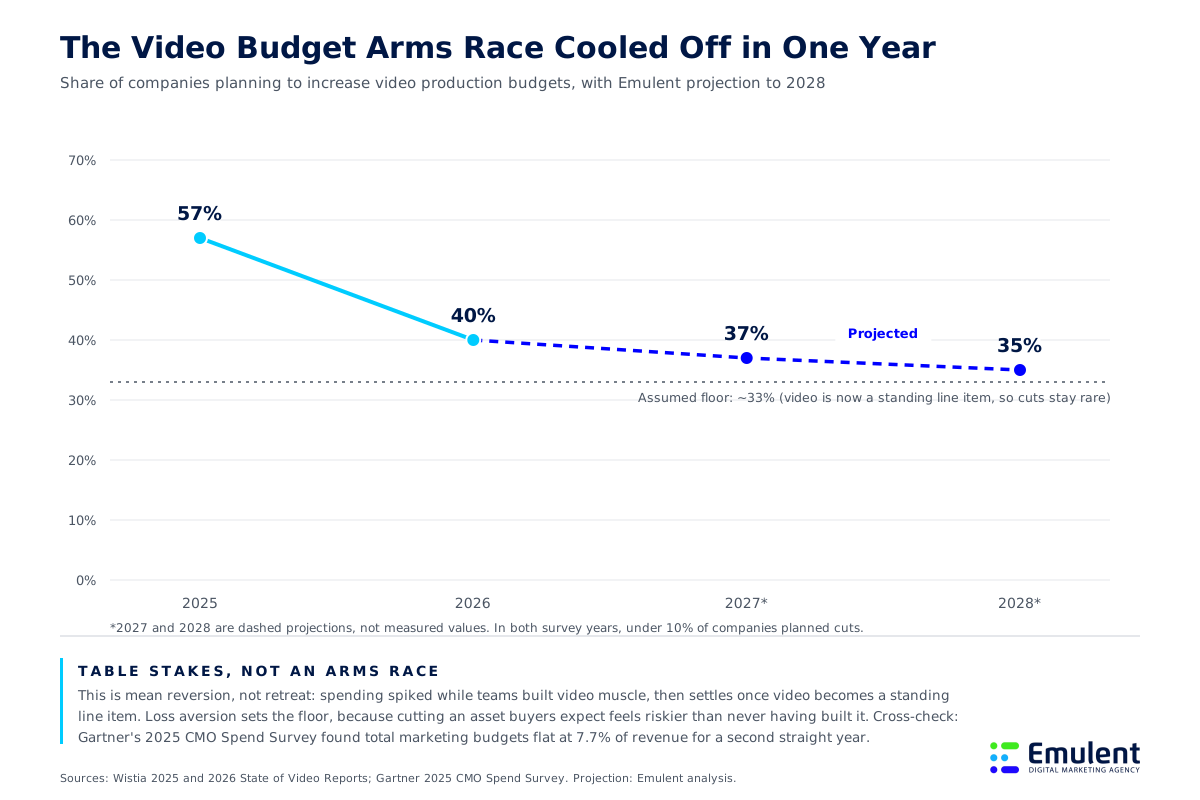
Our advice costs us money to give, and we will give it anyway. If your videos already clear the floor, do not buy more polish this quarter. Buy more truth: another customer on camera, another process filmed where it happens, captions and cuts for every placement. And measure the spend against pipeline, not applause. We have written before about why views are the vanity metric for video marketing, and a beautiful film with a big view count and no attributable revenue is the video version of expensive art. When you do price real production, price it against the job. Our brand videography pricing guide lays out what each tier should actually buy you, and the honest ranges are lower than most agencies want you to believe.
“We have sat across from owners who spent $30,000 on a brand film and would not spend $300 on a microphone. Buyers forgive a plain frame. They do not forgive straining to hear you. Fix the sound, fix the captions, fix the format. Then, and only then, let’s talk about cameras.” The Strategy Team at Emulent
A 20-Minute Video Quality Audit You Can Run Today
Open your three most-viewed videos on your phone, with the sound off, the way most feeds serve them. Then score against these thresholds:
- Audio: Play 30 seconds through phone speakers in a room with background noise. If you strain at any point, the video fails, whatever it cost. Re-record voiceover with a dedicated microphone before publishing anything new.
- Sound-off comprehension: Watch 60 seconds muted. If a stranger could not name your company and the point of the video, add burned-in captions and an on-screen claim in the first 3 seconds.
- Format fit: Check each placement. Feed clips should be native vertical with captions; site and YouTube cuts should be horizontal. One file doing both jobs means both jobs are being done badly.
- Human presence: Count the seconds of real, named people from your company or your customer list in the first minute. Under 10 seconds means you are publishing decoration. Book one customer interview this month.
- The ad test: Show the opening 5 seconds to someone outside marketing and ask what it is. If the answer is “an ad,” your polish is triggering skip behavior, not trust.
- Revenue trace: Name the page, offer, or conversation each video is supposed to feed. A video with no next step attached is a view generator, and views are not the scoreboard.
Fail two or more checks and you have a quality problem worth fixing this quarter. It just is not the problem a camera solves. This audit is the first thing our brand videography team runs on a new client’s library, and roughly none of the fixes that come out of it start with buying equipment.
The Honest Answer to the Title
Is your video quality hurting your brand? If buyers can hear you clearly, read you with the sound off, watch you in the format their thumb lives in, and see real people standing behind the work, then no, and no amount of added polish will move revenue. If any of those fail, yes, and the fix costs hundreds, not tens of thousands. The companies losing the video game in 2026 are spending premium money to look like an ad while their competitor’s customer looks into a phone camera and says, by name, that the work was worth it. Clear the floor, put humans on the record, and spend the difference doing the job video exists to do: making more customers. If you want the fuller case for the investment itself, we have laid out why your business needs brand video.