
A brand story video can move a customer from indifference to a purchase, yet most of them never do. The reason is rarely the camera or the edit. It is the choice of story. Brand storytelling has become the default advice for every marketing team, so the formats now look alike: a founder at a desk, a timeline of company milestones, a montage set to hopeful music. We have produced and studied enough of these to know which ones return money and which ones quietly disappear. This piece lays out how we think about a brand story video, told through the beliefs we apply to every project we take on.
Key takeaways
- Adoption is no longer an edge. Nine in ten businesses already publish video, so the question that matters is whether yours earns attention.
- The company-history reel is the fastest way to look like everyone else. Putting the customer in the hero role, with your brand as the guide, is what makes a story yours.
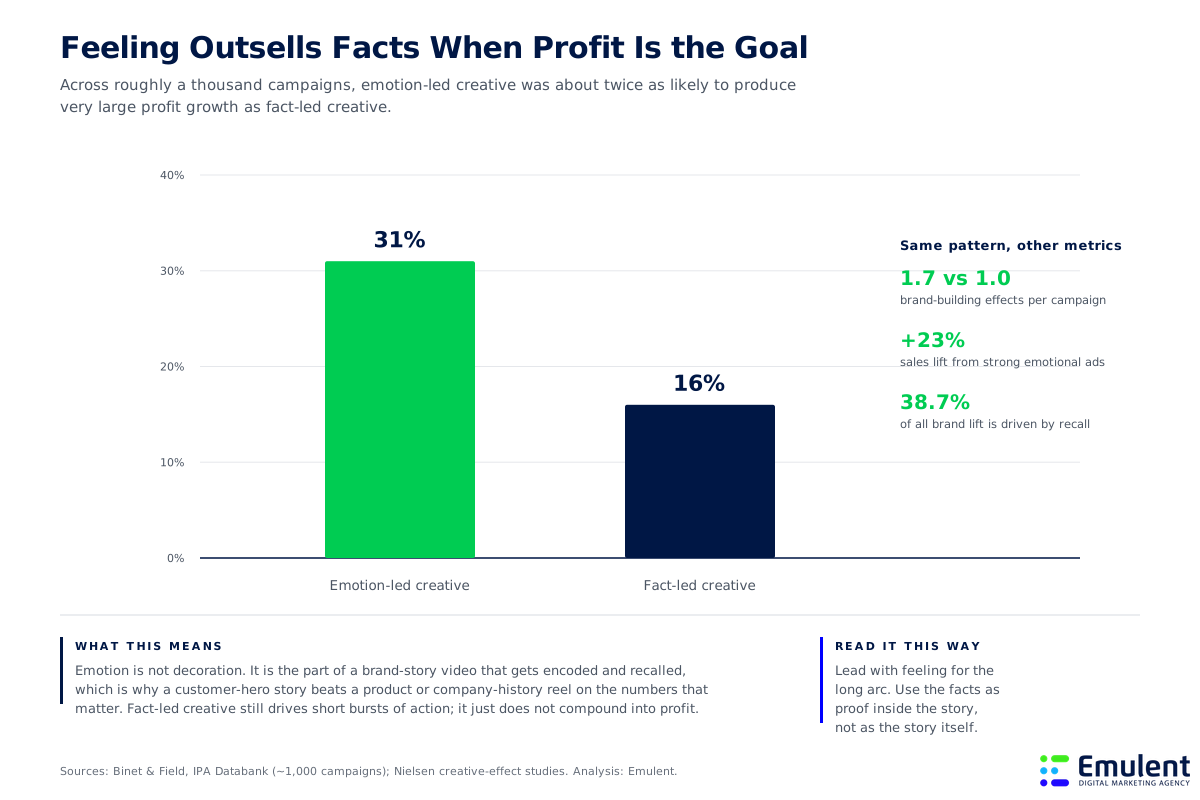
- Emotion is the part of a story that gets remembered. Across about a thousand campaigns, emotion-led creative was roughly twice as likely to produce very large profit growth as fact-led creative.
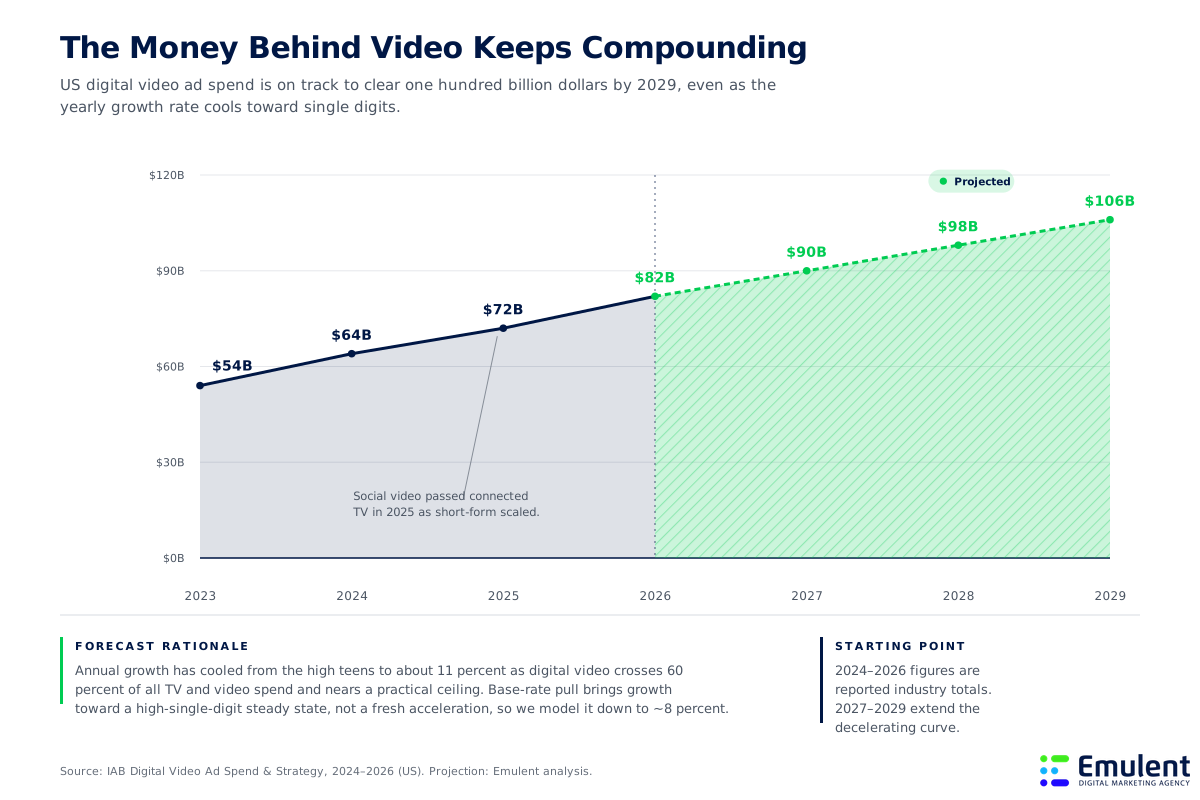
- One film is not a strategy. An anthem cut into sales and social versions rides a US video ad market on track to clear one hundred billion dollars by 2029.
- Views are an input. Judge a brand story video by recall, branded search, assisted conversions, and shorter sales cycles.
Has video already peaked, and what does that change for your story?
For years the case for video was simply that not enough companies made it. That window has closed. The share of businesses using video climbed from about six in ten in 2016 to roughly nine in ten today, and our projection has it flattening near full saturation through the rest of the decade. When a tactic reaches that ceiling, being present stops being a difference. Everyone in your category already has a brand video. The advantage moves to whoever tells a story worth finishing.
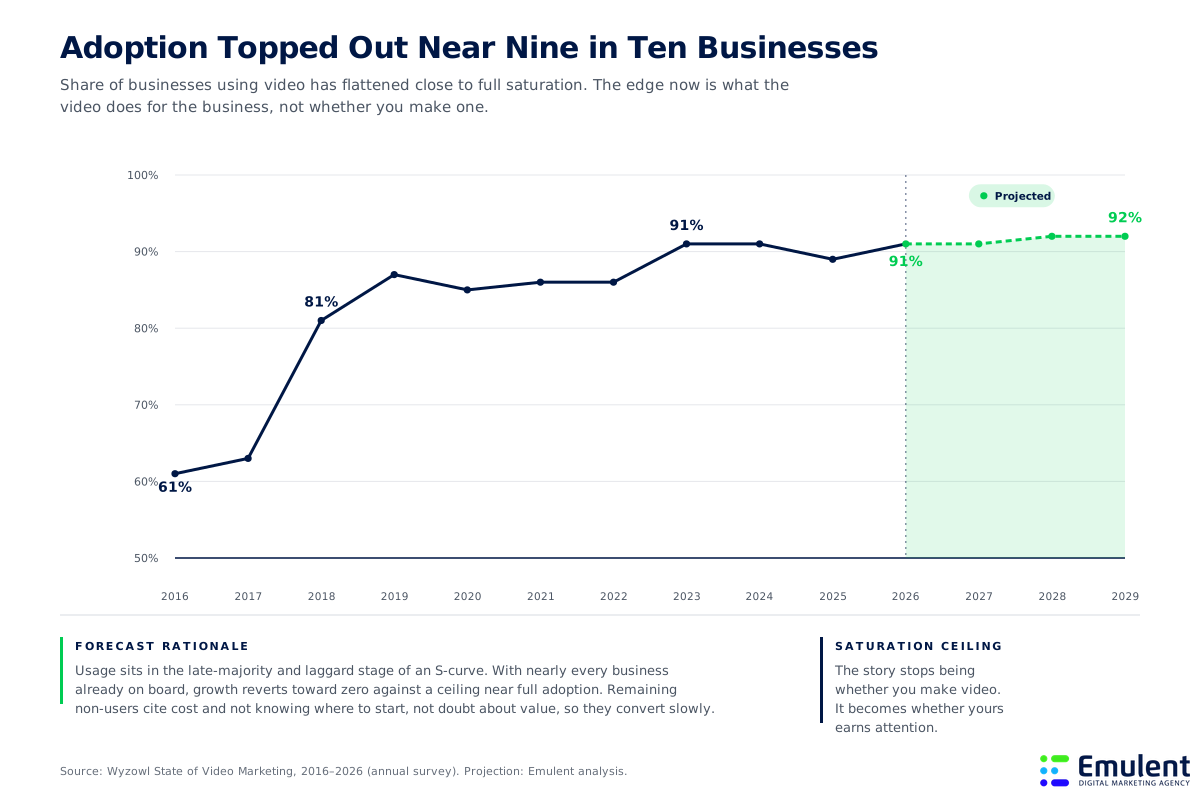
This shapes how you should set expectations. Short-form keeps pulling more attention and more budget, but attention itself is finite, and the odds of any single film going viral are low and falling as feeds fill up. A realistic goal for a brand story video is not a viral moment. It is a piece that the right person remembers and acts on. We would rather promise you a film your actual buyers will recall next quarter than one chasing a number you cannot put in the bank. If you read the brand video trends with that honesty, the next trap becomes obvious. When everyone is making video, the safe-looking choice, the one that feels professional and uncontroversial, is usually the one that makes you invisible.
Here is what we hold a brand story video accountable for:
- Memory with the right people: the target buyer can recall the brand and the feeling without being prompted, not a stranger who happened to scroll past.
- A reason to act: the film points somewhere, whether that is a search, a visit, or a conversation, instead of ending on a logo and a shrug.
- A shelf life: the story still works months after launch, because it is built on your buyer’s situation, not a passing trend.
Why does the “about us” video make you invisible?
The most requested brand video is some version of the company history. It opens on the founders, walks through the origin, lists the values, and closes on the logo. It feels safe because it is true and it belongs to you. The trouble is that it casts your brand as the hero of the story, and your customer has no part in it. People do not care about your history until they care about your help. Putting yourself at the center is the single most common reason a brand story video fails to connect.
The flip is easy to describe and hard to do well. Make the customer the hero. Cast your brand as the guide who hands them a plan. Show a person who looks like your buyer, facing the problem your buyer faces, and getting somewhere better because of you. That is the same arc behind the stories people actually finish, and it is what separates a memorable film from a corporate reel.
The numbers back the flip. Across roughly a thousand campaigns studied over three decades, emotion-led creative was about twice as likely to produce very large profit growth as fact-led, feature-listing creative. A customer-hero story is emotional by design. The about-us reel is a list of facts about you. One compounds into profit and pricing power. The other earns a polite nod and is forgotten.
“Every founder wants to tell the origin story. We usually talk them out of it. The customer is the hero of the film, and your brand earns its place by being the one who helps them win.” – Strategy Team, Emulent Marketing
Differentiation here is a business decision. In a market where every competitor has the same kind of video, the company that refuses the template is the one that gets remembered, and that refusal takes the discipline to say no to the obvious choice. Casting your brand as the guide is a brand strategy question before it is a production question.
Signs your brand video has slipped into the about-us trap:
- It opens with you: the first ten seconds are about the company instead of the viewer’s problem.
- The customer is a prop: real buyers appear only as smiling extras, never as the person the story is about.
- The middle is a feature list: the film reads like a brochure narrated aloud.
- The feeling is pride, not relief: it makes your team feel good and leaves the buyer feeling nothing.
What actually makes a brand story stick in memory?
A popular line in video marketing claims people remember 95 percent of a message from video and 10 percent from text. It gets repeated because it is convenient, not because it holds up. No credible study supports those exact figures. The honest version is more useful anyway. Memory for advertising is driven by recall, and recall is driven by emotion and story structure, not by the medium on its own.
Here is what the evidence actually shows. Motion creative carries a large recall edge over static formats, around a 26 point gap in brand recall between video and display. On top of that, emotionally strong ads lift recall about 27 percent over an average execution, and most people are more likely to remember a story than a list of facts. Recall is the single largest driver of brand lift, which means the part of your film that lodges in memory is the part that pays you back later.
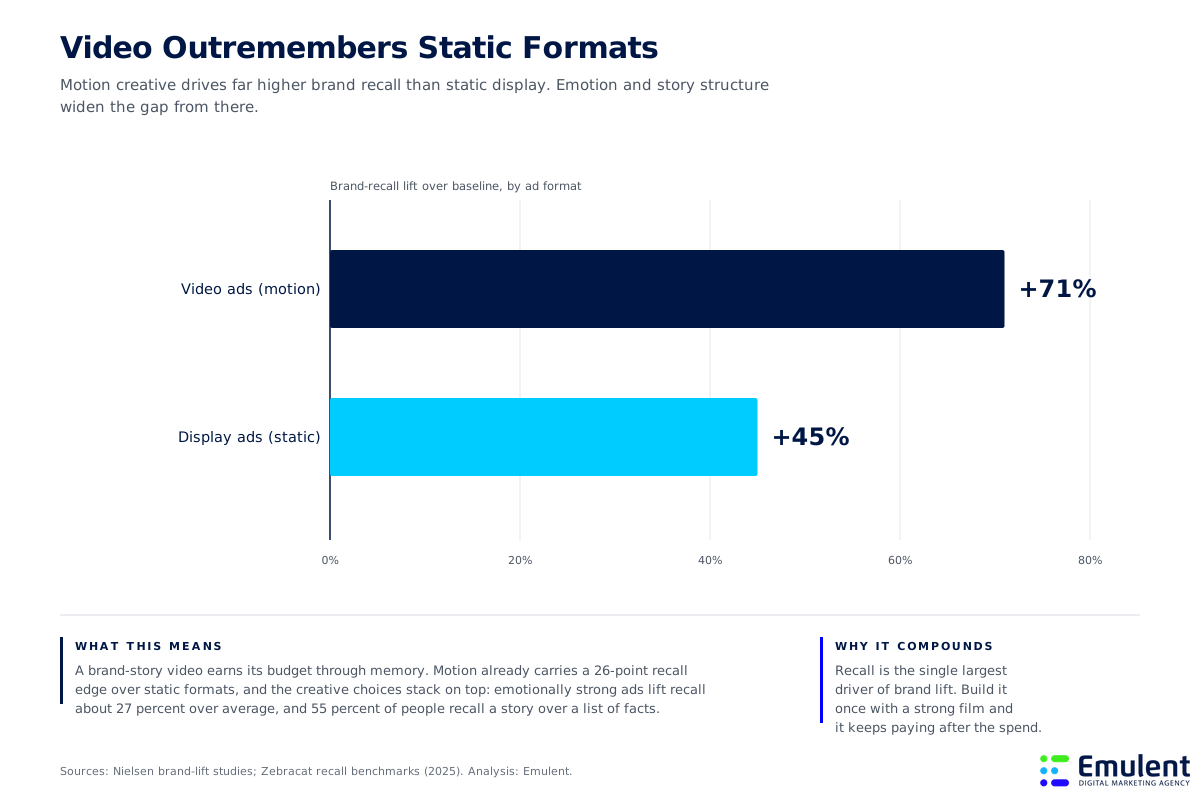
So the craft question is not whether the film is polished. It is whether a stranger will remember the feeling and the brand a week later. That comes from a short list of choices, and you can learn the storytelling structures that make them work. Specs and features still belong in the film, but as proof inside the story, not as the story itself.
“We retired the 95 percent stat years ago. What we trust is simpler: a strong feeling, attached to your brand, that a real buyer can recall without prompting. Build that and the recall does the selling.” – Strategy Team, Emulent MarketingWhat makes a brand story encode in memory:
- A recognizable face: a character the viewer reads as themselves, not a generic everyperson.
- Real stakes: a problem with a cost, so the resolution actually means something.
- One feeling: a single clear emotion carried all the way through, rather than five competing ones.
- A concrete moment: a specific scene the viewer can picture, instead of an abstract claim about value.
One film, or a system of cuts?
Most companies treat a brand story video as a project. They commission one anthem film, launch it, and move on. Then the film ages, the channels shift, and a year later there is nothing to show but a single asset gathering dust. Brand storytelling on video pays off when it runs as a system, not a one-time event.
The practical version is “one story, many cuts.” The anthem film is the master. From it you pull a 60 to 90 second sales version for your website and pitches, a set of 6 to 15 second hooks for social, vertical edits for mobile feeds, captioned versions for silent viewing, and short testimonial pulls that stand on their own. Each cut speaks to people who consume content differently, and together they keep one consistent story in front of your market for months from a single shoot.
This compounds with where the money is going. US digital video ad spend is on track to clear one hundred billion dollars by 2029, with social and short-form taking the largest share of new budget. A single film captures a sliver of that. A library of cuts, fed by one anthem and refreshed on a schedule, rides the whole curve.
The decay is the whole point. When the system stops, recall fades and you start over. When it runs, each release builds on the memory of the last, which is exactly why brand development works as a system rather than a campaign. Running the cuts on a calendar turns one shoot into an ongoing content strategy instead of a single launch.
“A single brand film is a fireworks show. A story system is a furnace. One looks impressive for a night. The other keeps your brand warm in the market all year.” – Strategy Team, Emulent MarketingThe cuts one anthem film should produce:
- The sales version (60 to 90 seconds): the tightened story for your homepage, sales calls, and pitches.
- Social hooks (6 to 15 seconds): the sharpest moments built to stop a scroll.
- Vertical and captioned edits: formats made for mobile feeds and silent autoplay.
- Standalone testimonial pulls: real-customer segments that carry proof on their own.
Are you measuring views, or revenue?
View counts are the easiest number to report and the least useful one to act on. A million views with no lift in inquiries tells you the film traveled, not that it worked. A brand story video earns its budget through business results: people who remember you, search for you by name, convert after seeing it, and stay longer as customers. Reporting views as success is how good films get defended and weak films get repeated.
We track the brand video against outcomes you can connect to revenue. Recall is the foundation, since it drives the largest share of brand lift. From there, watch the things that touch the income statement. None of them are as instant as a view counter, and all of them are worth more. If your video reporting still leads with views, that is the first thing to change.
“Views are the applause. Revenue is the ticket sales. We have watched companies fall in love with the applause and then wonder why the lights got turned off.” – Strategy Team, Emulent MarketingOutcomes worth tracking instead of view counts:
- Brand recall: can buyers name you and recall the story unprompted after exposure.
- Branded search: the lift in people searching for your name after the film runs.
- Assisted conversions: the share of converters who saw the video on the way in.
- Sales-cycle length: whether deals that saw the film close faster than those that did not.
- Retention: whether customers who connected with the story stay longer.
Where the Emulent team comes in
A brand story video is worth the money when it does three things: it puts the customer at the center, it lands one feeling that sticks, and it runs as a system instead of a single asset. That is the work our team does. We help you find the story your buyers actually want to be part of, produce the anthem film and the full set of cuts, and measure it against results you can take to a board. If your current video is a company-history reel that nobody finishes, we can help you replace it with one that earns recall and pays it back.
Ready to make a brand story video that sells instead of sits? Contact the Emulent team to talk through your brand video.