
Brand storytelling frameworks turn raw business stories into structured narratives that move readers from awareness to action. The right framework gives your homepage, case studies, landing pages, ads, and editorial content a backbone that fits the format and the reader’s intent. The wrong one, or no framework at all, leaves your brand sounding like a list of features chasing a buyer who has already moved on.
Key takeaways from this article
- The market is signaling: global content marketing revenue is on track to top $170 billion by 2030, and the share built on narrative formats is growing faster than the average.
- Stories outperform features by wide margins: story-shaped facts are recalled up to 22 times more often than the same facts presented as bullet points.
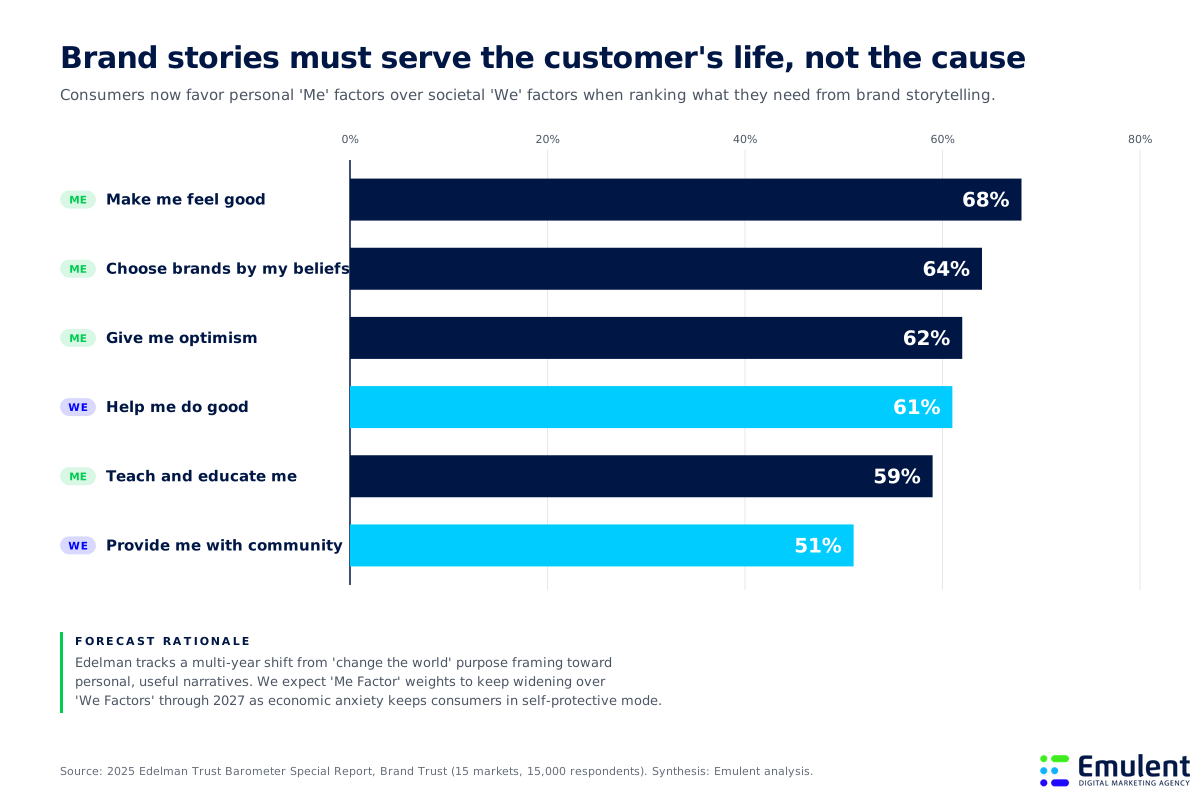
- Consumer expectations have shifted: 68% of people want brands to make them feel good, and personal “Me” factors now outrank societal “We” factors as drivers of brand trust.
- Video storytelling has reached late-majority adoption, meaning distinctiveness, not adoption, is the new battleground.
- Story-shaped B2B formats lead engagement: video stories and customer case studies are the top two formats buyers engage with during their purchase journey.
- There is no universal framework: StoryBrand fits homepages, STAR fits case studies, AIDA fits ads, Minto fits executive reports. Match the structure to the format.
Why does brand storytelling justify a real budget line?
Brand storytelling is no longer a soft skill that sits next to “real” marketing work. It is a structural commitment with measurable returns. Global content marketing revenue climbed from $36.8 billion in 2018 to roughly $107 billion in 2026, and the curve is projected to continue toward $170 billion by 2030 as more of that spending shifts into narrative formats.
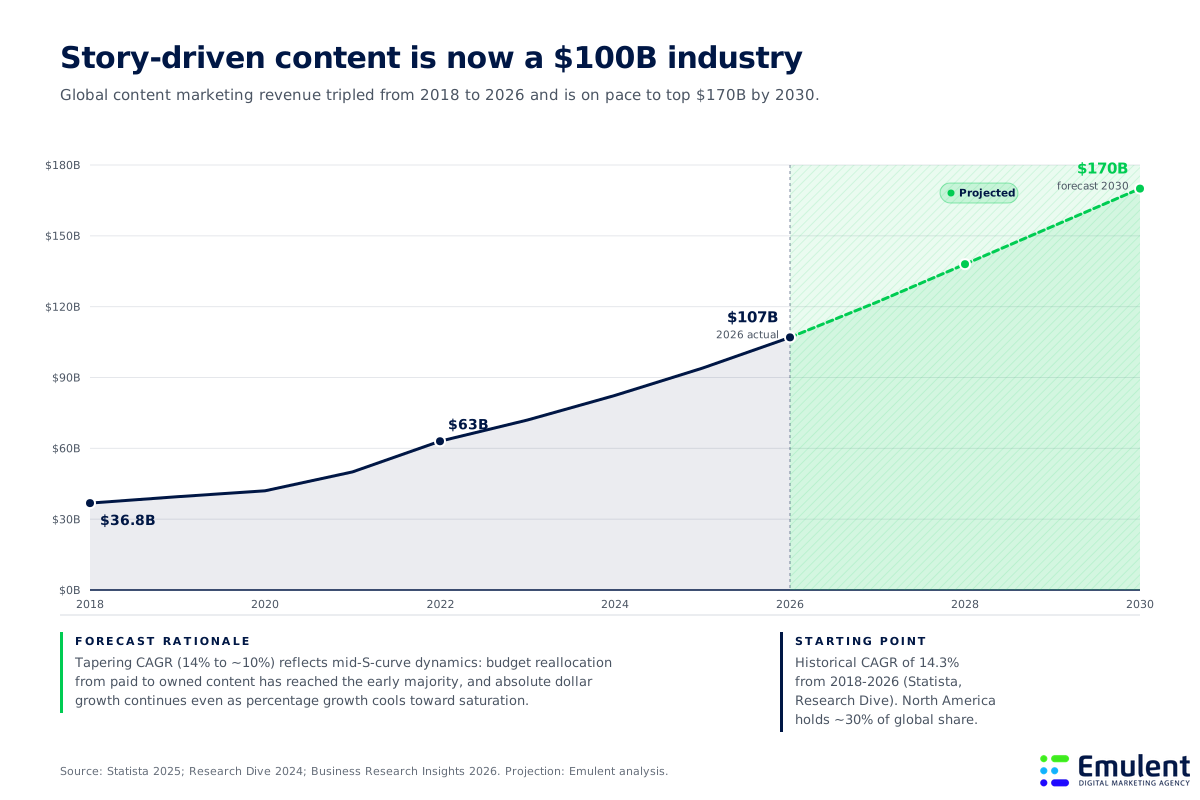
The shape of that growth matters more than the headline number. Most of the gain since 2022 came from formats that are explicitly narrative, including branded video, episodic content, and customer-led case studies. When we audit content programs at Emulent through our content strategy services, the teams that treat storytelling as an organizing principle, not a tactical layer, are the ones whose growth rates outpace category averages. Frameworks are the mechanism that turns a creative instinct into a repeatable practice, which sets up the question of what they actually deliver.
What is the measurable lift of telling a story instead of listing features?
The case for frameworks is strongest when you compare narrative content to feature-led content on the same job. The multipliers below are not soft brand metrics. They are direct comparisons of recall, lead generation, customer lifetime value, and on-page conversion.
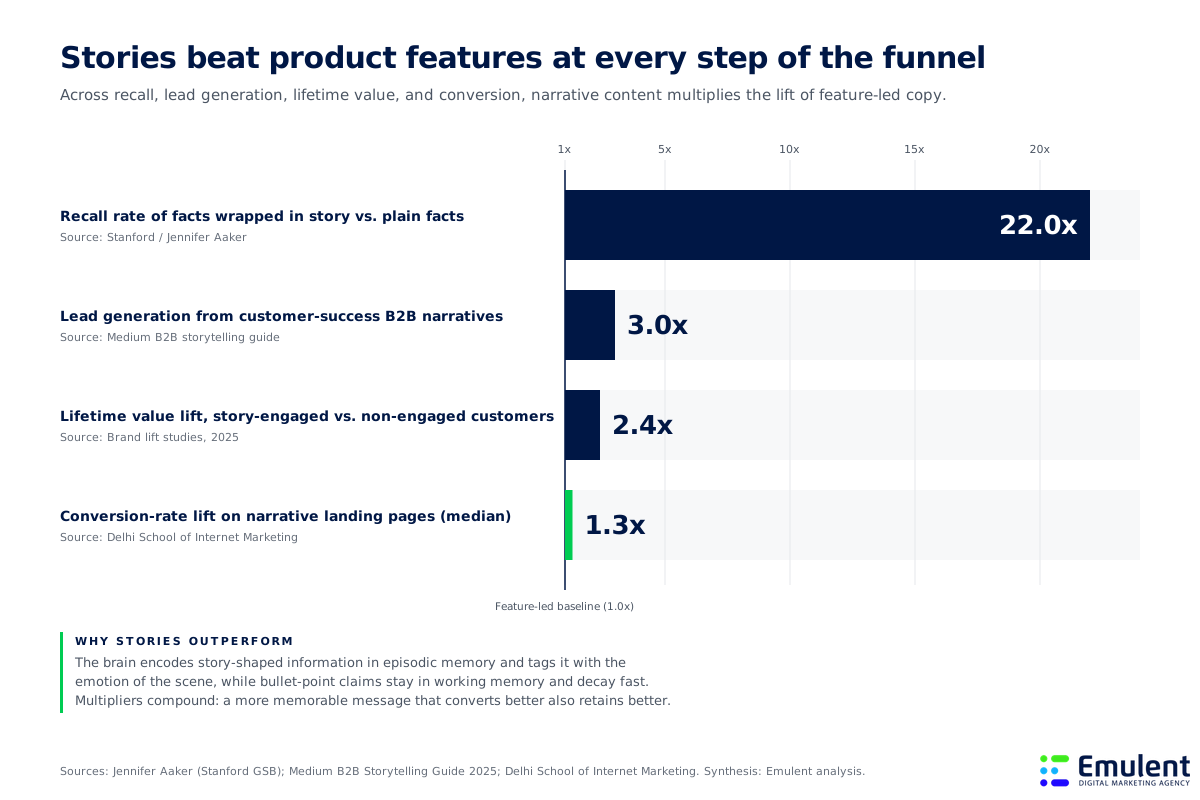
Read these numbers as a stacked argument. A story-shaped fact gets remembered 22 times more often than the same fact in bullet form. That recall advantage feeds the next step in the funnel, because a remembered message generates more inbound interest, which is where the 3x lead-generation lift from customer-success narratives shows up. From there, story-engaged customers stay longer, which is the source of the 2.4x lifetime-value gap. Conversion-rate lift on the landing page itself is the smallest multiplier in the set, and that is the point. Story-led marketing compounds across the funnel rather than depending on any single moment to convert.
“The biggest mistake we see in content audits is treating storytelling as decoration. Story is the load-bearing wall. If your case studies, landing pages, and emails do not have a structural arc, your conversion rate is depending entirely on luck and traffic volume.” – Emulent Marketing Strategy Team
If multipliers like these are reproducible, the question becomes what consumers actually want a brand story to do for them.
What are the core storytelling frameworks every brand should know?
Most brand content reads the way it does because someone wrote a first draft and then tried to retrofit a structure onto it. The fix is to pick the framework first. The fourteen below cover almost every brand storytelling job you will face, and they sort into four families based on what they are built to do.
Which frameworks center on transformation?
Transformation frameworks are built around change. The reader watches someone (usually the customer) move from one state to another, and the brand is the catalyst that enables the change. These are the right call when the story you need to tell is about who the reader will become, not just what they will get.
Frameworks built around transformation arcs
- The Hero’s Journey: Joseph Campbell’s twelve-stage arc, where a character is called to a challenge, struggles through it, and returns transformed. In brand work the customer is the hero and the brand is the mentor. Best for founder origin videos, brand documentaries, and transformation testimonials.
- Three-Act Structure: Setup, confrontation, resolution. The most flexible structure in the toolbox because it matches how Western audiences expect a story to unfold. Best for case studies, sales emails, and any landing-page narrative under 400 words.
- Five-Act Structure (Freytag’s Pyramid): Extends the three-act model with rising and falling action to create more emotional depth. Best for long-form brand documentaries, founder narrative videos, and episodic content where you need the reader to feel the highs and the lows.
- The Pixar Pitch: “Once upon a time… every day… until one day… because of that… ever since.” A cause-and-effect chain that mirrors how people naturally tell stories about their own lives. Best for founder bios, product launch narratives, and customer success stories that need to feel real.
- The Virgin’s Promise: Kim Hudson’s alternative to the Hero’s Journey, where the protagonist grows inward rather than conquers outward. Best for mission-driven brands, personal brands, and campaigns about identity, values, or self-expression.
What do consumers want brand stories to do in 2026?
Edelman’s 2025 Trust Barometer Special Report reframed brand purpose for the post-pandemic, post-inflation consumer. The headline finding was that purpose is no longer about changing the world. Purpose is now personal. Consumers want brands to be active partners in daily life, and that shift has direct implications for how you structure your storytelling.
How to translate the Me Factor data into storytelling choices
- Lead with the customer’s daily life, not the brand mission: a homepage that opens with “we believe in a better future” tests the patience of a reader whose top need is to feel good in the next thirty seconds. Open with their situation instead.
- Use optimism as a structural beat, not a slogan: the Hero’s Journey, the Pixar Pitch, and the Virgin’s Promise all build optimism through structure (the transformation, the resolution, the return). Slogans cannot do that work.
- Treat education as story material: 59% of consumers want brands to teach them something. Story-shaped educational content (Kishotenketsu, Three-Act) outperforms feature lists at the same job.
This shift in consumer expectation aligns with a parallel shift in format. The medium consumers most associate with brand stories is video, and video is now where the saturation curve gets interesting.
Has video storytelling already saturated the marketer mind?
Marketer adoption of video as a core storytelling channel passed the 50% inflection point in the late 2010s. Today, it sits at the late-majority edge of the diffusion curve, which changes the strategic question from “should we be doing this” to “how do we stand out now that everyone is.”
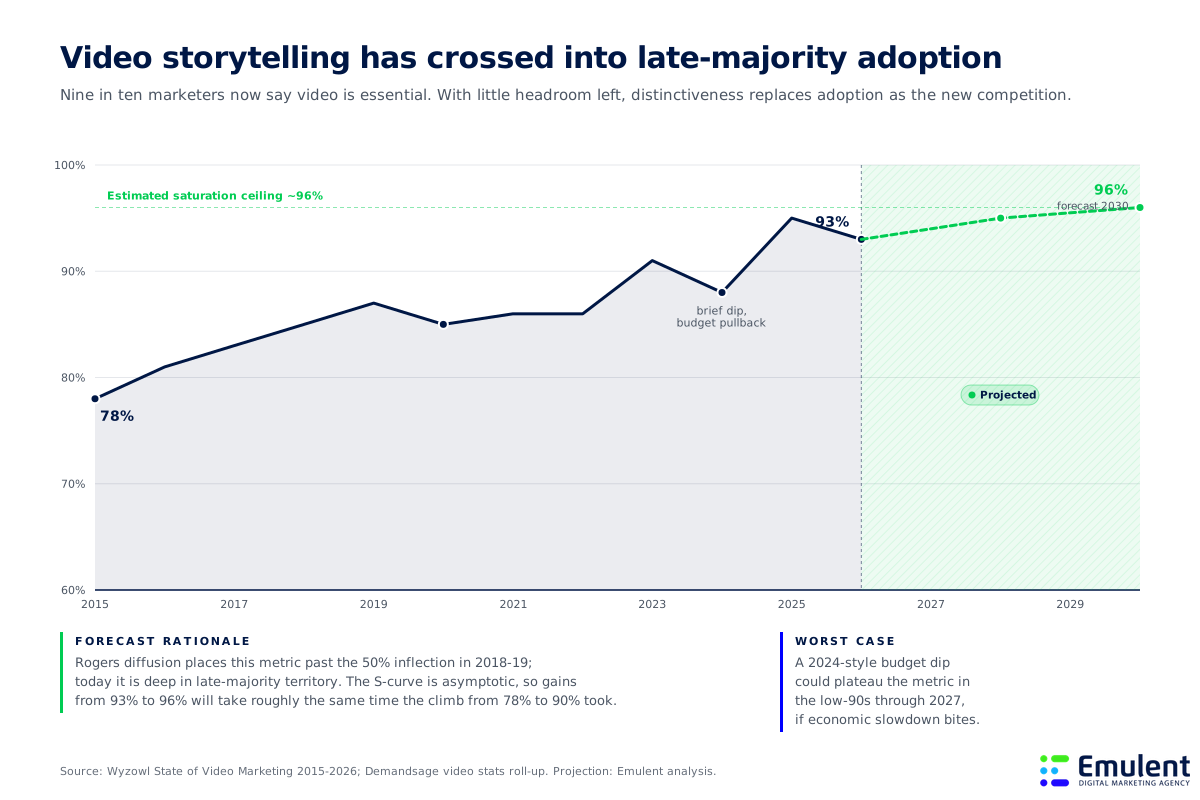
Two patterns are worth attention. First, the 2024 dip from 91% to 88% was not a rejection of video. It was a budget pullback driven by economic conditions, and the metric snapped back to 95% in 2025. Second, the remaining headroom from 93% to the projected 96% ceiling will take years to close, because late-majority adopters are by definition the most resistant. That is the same reason challenger metrics decay slower than their growth predicts. For your brand video production investment, this means the next round of gains has to come from creative distinctiveness, not from being one of the first to show up.
“Saturation is not a reason to slow down on video storytelling. It is a reason to invest more in structure. When everyone has a video budget, the brands that win are the ones whose videos follow a deliberate framework instead of cycling through trends.” – Emulent Marketing Strategy Team
The distinctiveness question raises a practical one for B2B teams: which formats actually move buyers, and which ones look good in a content audit but fail to drive pipeline?
Which B2B content formats are buyers actually engaging with?
Demand Gen Report’s annual B2B buyer survey gives a clean read on which formats buyers reach for at different stages of a purchase decision. Two of the top three are explicitly narrative.
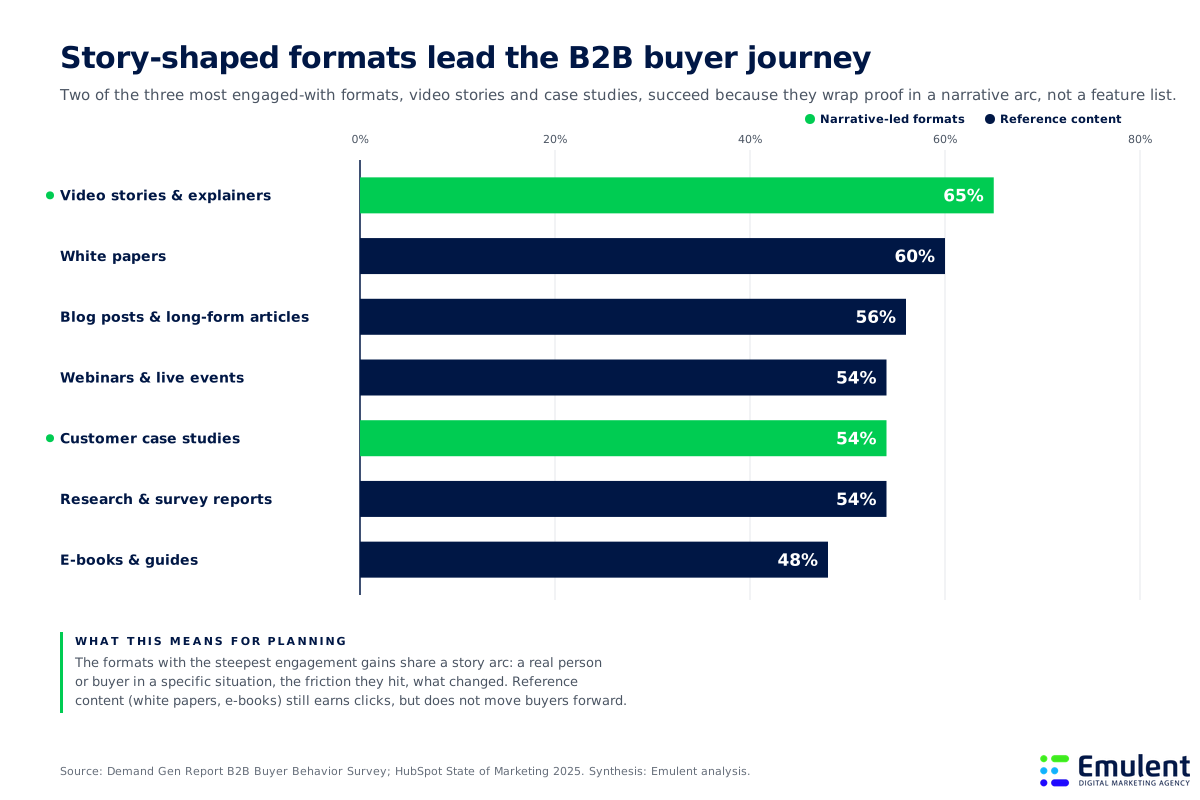
The pattern is consistent. Formats that wrap proof in a narrative arc (video stories at 65%, case studies at 54%) sit at the top of the engagement chart. Reference formats (white papers, e-books) still earn clicks, but reference content alone rarely moves buyers forward. The right structure for a case study is STAR (Situation, Task, Action, Result), and the right structure for video is most often the Three-Act or the Pixar Pitch.
How to upgrade an existing case study with a story framework
- Replace the lead with the client’s pre-engagement situation: most case studies open with a company description. Start instead with what the buyer was struggling to do and what was at stake if they did not solve it.
- Make the task explicit: the goal is to set up a measurable yardstick before introducing the action. A case study that names the target up front earns the right to claim the result later.
- Show the work, not just the outcome: the action section is where credibility is built. Vague descriptions of “strategy” weaken trust. Specific, sequenced actions strengthen it.
- Land the result with proof: numbers, screenshots, customer quotes. Buyers do not believe assertions. They believe artifacts.
Knowing which formats matter is half of the work. The other half is matching the framework to the format, and that is where most brands lose efficiency.
How do you match the storytelling framework to the content format?
There is no universal framework. There is a best fit for each job. The matrix below condenses how the frameworks from the original storytelling guide map onto the eight most common brand content formats. The green cells are best-fit pairings, the darker navy cells are good fits, and the light cells are workable but not optimal.
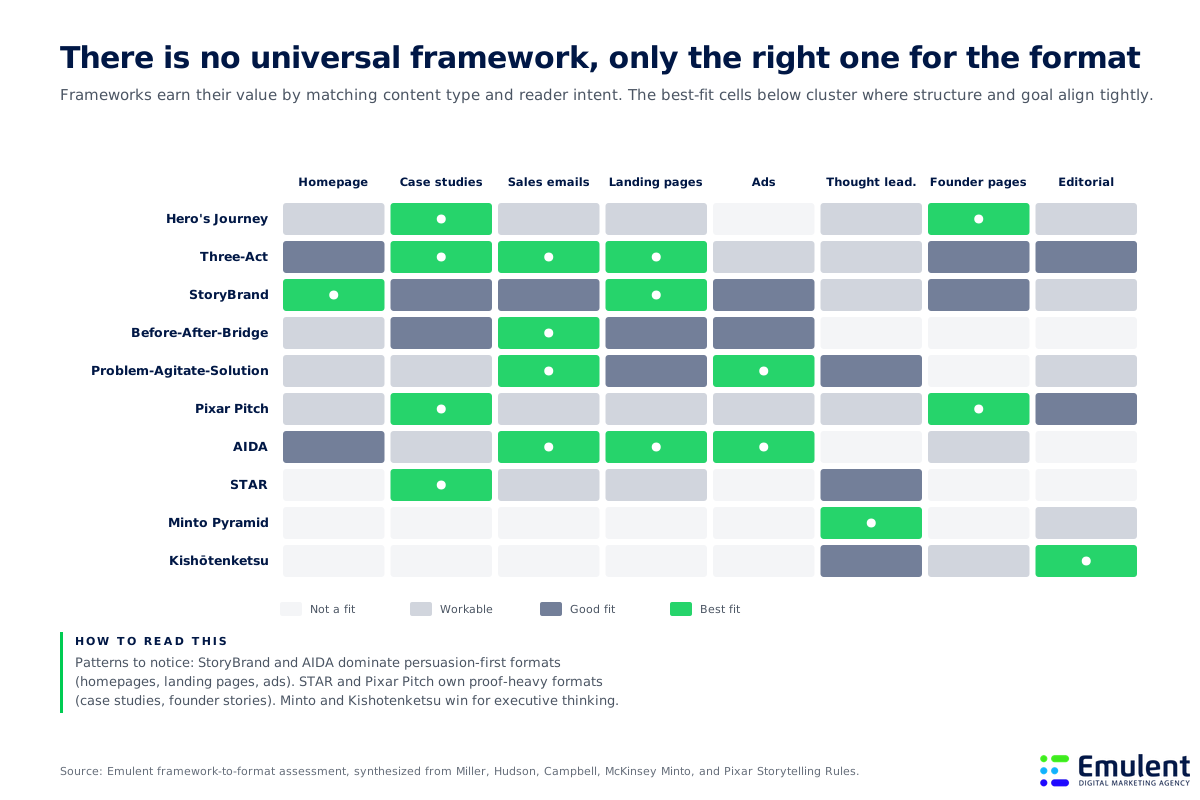
Three patterns are worth reading off this matrix. StoryBrand and AIDA dominate the persuasion-first formats where the reader has not yet committed (homepages, landing pages, advertising). STAR and the Pixar Pitch own the proof-heavy formats where the goal is credibility (case studies, founder stories). Minto Pyramid and Kishotenketsu are the right calls for the executive-thinking formats (thought leadership, editorial), where a reader is investing time and expects you to respect it.
“Pick the framework before you pick the words. Most teams write a first draft and then try to retrofit a structure onto it. Writing the structure first lets you put the strongest beat where it belongs and saves a round of revisions.” – Emulent Marketing Strategy Team
Matching the framework to the format is a discipline, not an instinct. The teams that internalize this matrix stop relying on talent alone and start building a repeatable system, which is the foundation of a consistent brand strategy across channels.
What does a story-led content operation actually look like in practice?
Frameworks only work if they are embedded in the content workflow rather than living in a slide deck. The teams we partner with through our digital marketing services share four operational habits that make storytelling repeatable.
Operational habits that turn frameworks into output
- Brief by framework, not by topic: every content brief names the framework before it names the assets. A brief that says “case study, STAR” gives a writer more direction than one that says “case study about Acme.”
- Audit existing pages against the matrix: the fastest content wins come from rewriting top-performing pages that use the wrong framework. A homepage running AIDA when it should be running StoryBrand will outperform itself with a simple structural rebuild.
- Train sales and customer success teams in two frameworks: Three-Act for customer stories and SCR (Situation, Complication, Resolution) for executive presentations. These two cover roughly 80% of the storytelling work that happens outside marketing.
- Build a brand story library: a shared repository of customer narratives, founder anecdotes, and product origin moments, indexed by which framework each one fits. This converts storytelling from a per-campaign hunt into a per-campaign retrieval.
These habits are what separate brands that talk about storytelling from brands that ship it consistently.
How can Emulent help you build a story-led content program?
If your homepage opens with your history, your case studies read like data dumps, or your sales emails close with “let me know if you have questions,” you are leaving multipliers on the table. We help brands choose the right framework for each format, rebuild high-traffic pages around it, and train internal teams to keep the system running after we step back. Contact the Emulent team if you want a second set of eyes on your brand storytelling, and we will walk through the matrix with your content together.