
Video marketing has crossed the line from competitive advantage to baseline expectation. Nine in ten businesses now use video, U.S. digital video ad spend will pass $80 billion this year, and most buyers say a video has convinced them to make a purchase. The question for your business is no longer whether brand video is worth it. The question is what it costs you to keep showing up without it, and how to start in a way that pays for itself.
Key takeaways from this article:
- Adoption is done growing: 91% of businesses use video marketing, so simply having video no longer differentiates you. Quality and consistency do.
- The budget shift is structural: Digital video will capture more than 60% of all TV/video ad dollars in 2026, and we project spend approaching $96 billion by 2028.
- Video sells while you sleep: 83% of marketers say video directly increased sales, and 85% say it generated leads.
- Absence has a price: 96% of consumers research products with explainer videos. Every placement where you have no video is a first impression handed to a competitor.
- One shoot should feed twelve months: Treated as a compounding asset instead of a campaign expense, a single production day can supply a year of content.
- You only need three videos to start: A brand story, an explainer, and customer proof cover the full buying journey.
Why Is the Adoption Data a Warning Rather Than a Pep Talk?
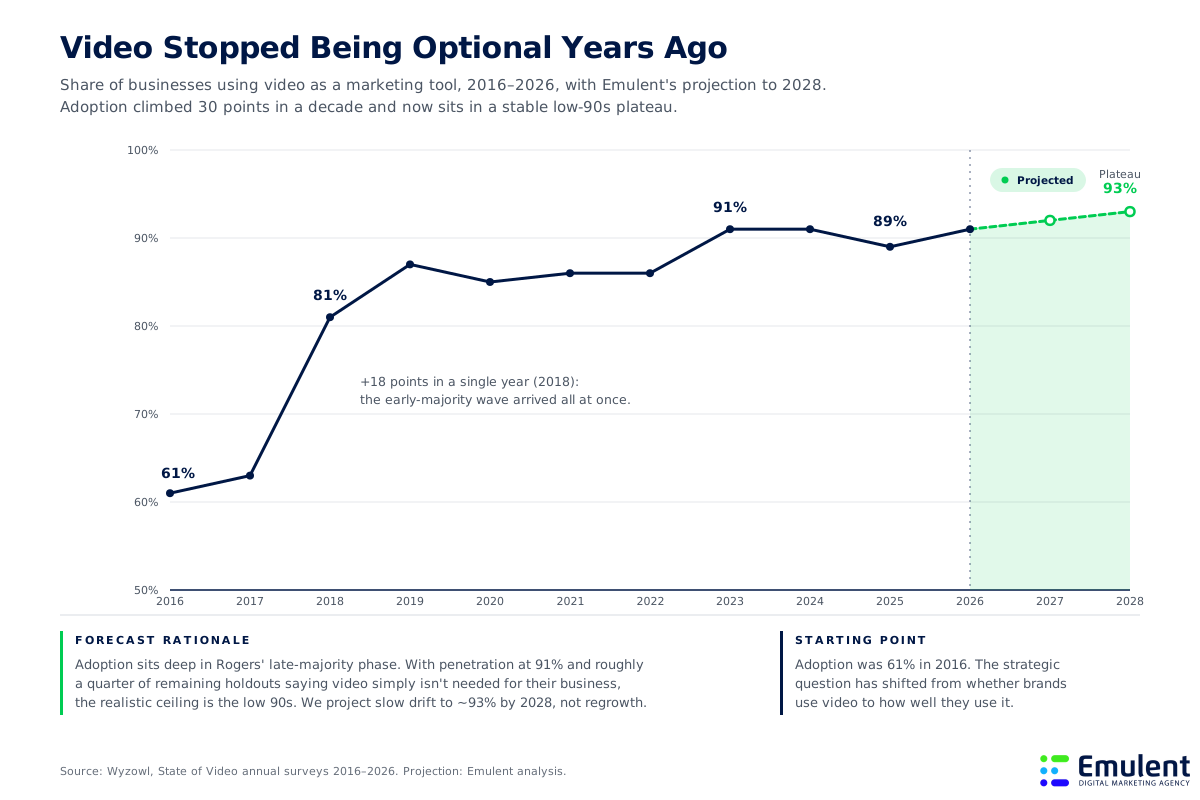
In 2016, 61% of businesses used video as a marketing tool. By 2026 that figure reached 91%, and our analysis projects only a slow drift toward 93% by 2028. The curve has flattened because we are deep in the late-majority phase of adoption: nearly everyone who is going to adopt video already has. Most marketers who use video also report that they consider it an important part of their overall strategy, which means your competitors are not experimenting with video. They are committed to it.
Read that plateau carefully, because it changes the strategic stakes. When 6 in 10 businesses used video, producing any video at all set you apart. At 91% adoption, having video is table stakes and the gap moves to execution: how clearly your videos communicate, how consistently you publish, and how well each asset maps to a stage of the buying journey. We track these shifts in our annual state of brand videography report, and the pattern is consistent across industries. The businesses that win are not the ones that adopted video first. They are the ones that operationalized it. That commitment shows up most clearly in where advertising budgets are moving.
What Does $80 Billion in Video Ad Spend Tell You About Buyer Attention?
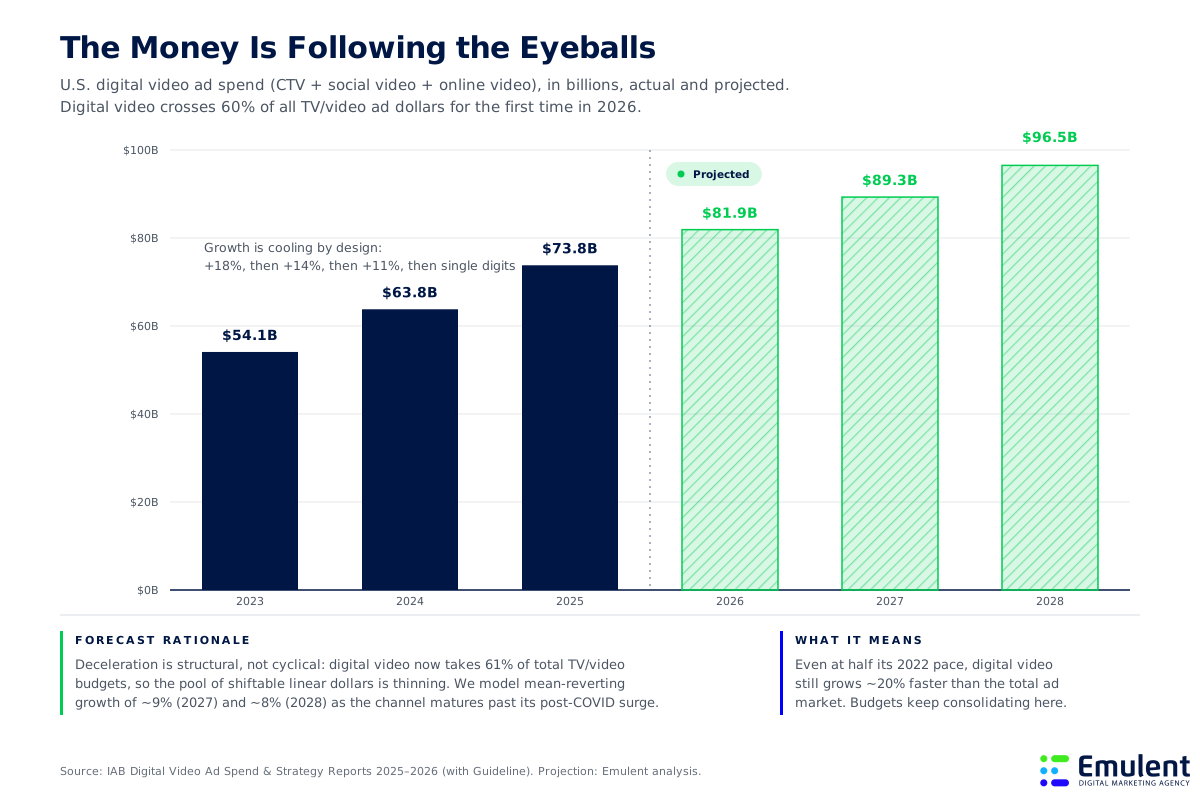
Advertisers are ruthless about following attention, which makes ad spend one of the most honest signals in marketing. U.S. digital video ad spend grew from roughly $54 billion in 2023 to nearly $74 billion in 2025, and the IAB projects it will reach about $82 billion in 2026, the first year digital video takes more than 60% of all TV and video ad dollars. We project continued growth to roughly $96 billion by 2028, though at a decelerating rate as the pool of shiftable linear TV dollars thins out.
The composition of that spend matters as much as the total. Social video is now the largest category and is growing faster than connected TV, a shift we unpack in our research on social media advertising trends. For a business deciding where to invest, the takeaway is direct: the largest advertisers on earth have concluded that video is where buying decisions get influenced, and they are pricing that conclusion in billions. If your organic presence has no video, you are competing for the same attention with text and static images, and paying for the disadvantage in conversion rate. The reason that disadvantage is so expensive becomes clear when you look at what video does inside the funnel.
How Does Brand Video Act as Your 24/7 Salesperson?
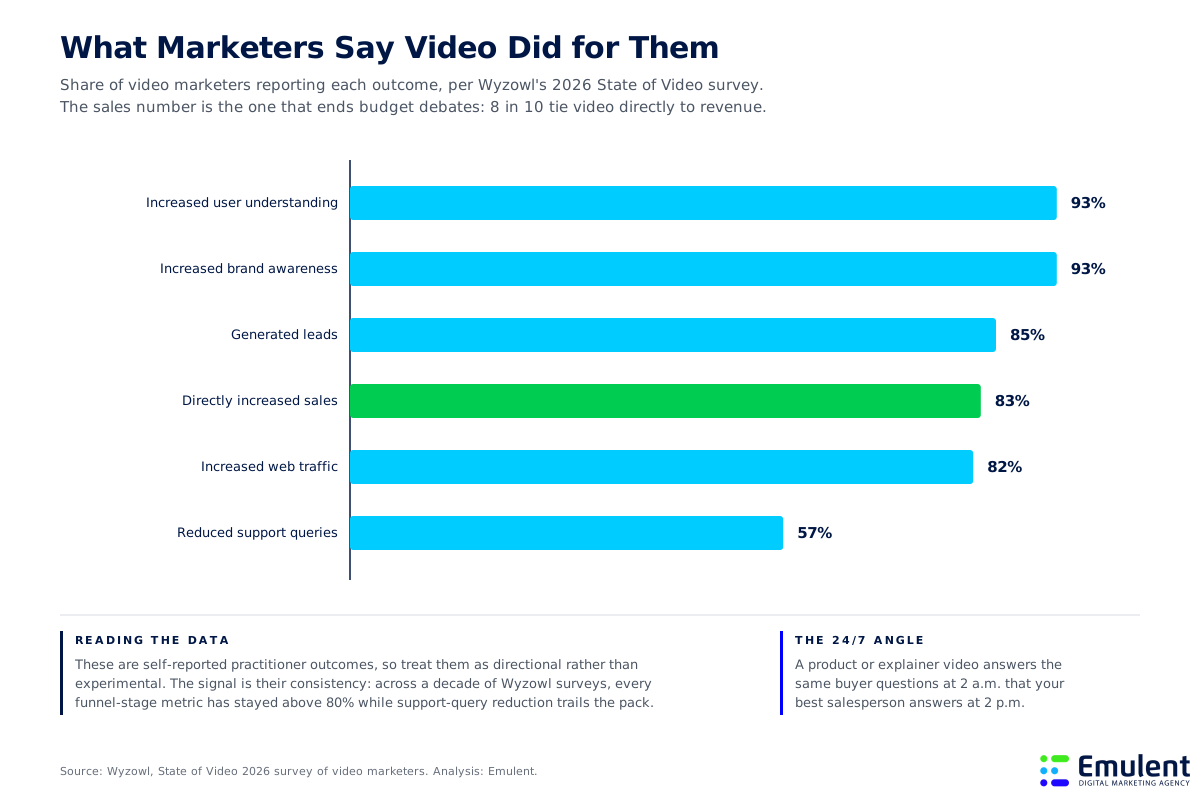
Your best salesperson explains the product, answers objections, builds trust, and asks for the sale. A good brand video does the same four jobs, except it does them at 2 a.m. for a buyer in a timezone you have never sold into. The survey data backs the analogy: 93% of video marketers say video increased understanding of their product, 85% say it generated leads, and 83% say it directly increased sales. Even the trailing metric is valuable: 57% report fewer support queries, because the video answered the question before a ticket was opened.
The most underrated property of a brand video is that it never has an off day. It delivers your best pitch, with your best framing, every single time someone hits play. No human sales team can promise that consistency. – Emulent Strategy Team
These numbers are self-reported, and we encourage clients to read them as directional rather than experimental. But the consistency is the signal: across more than a decade of industry surveys, every funnel-stage outcome has held above 80%. A salesperson who produced those results would never be let go. The harder question is what happens in all the moments when that salesperson is simply absent.
What Does It Cost You to Be Invisible Where Buyers Watch?
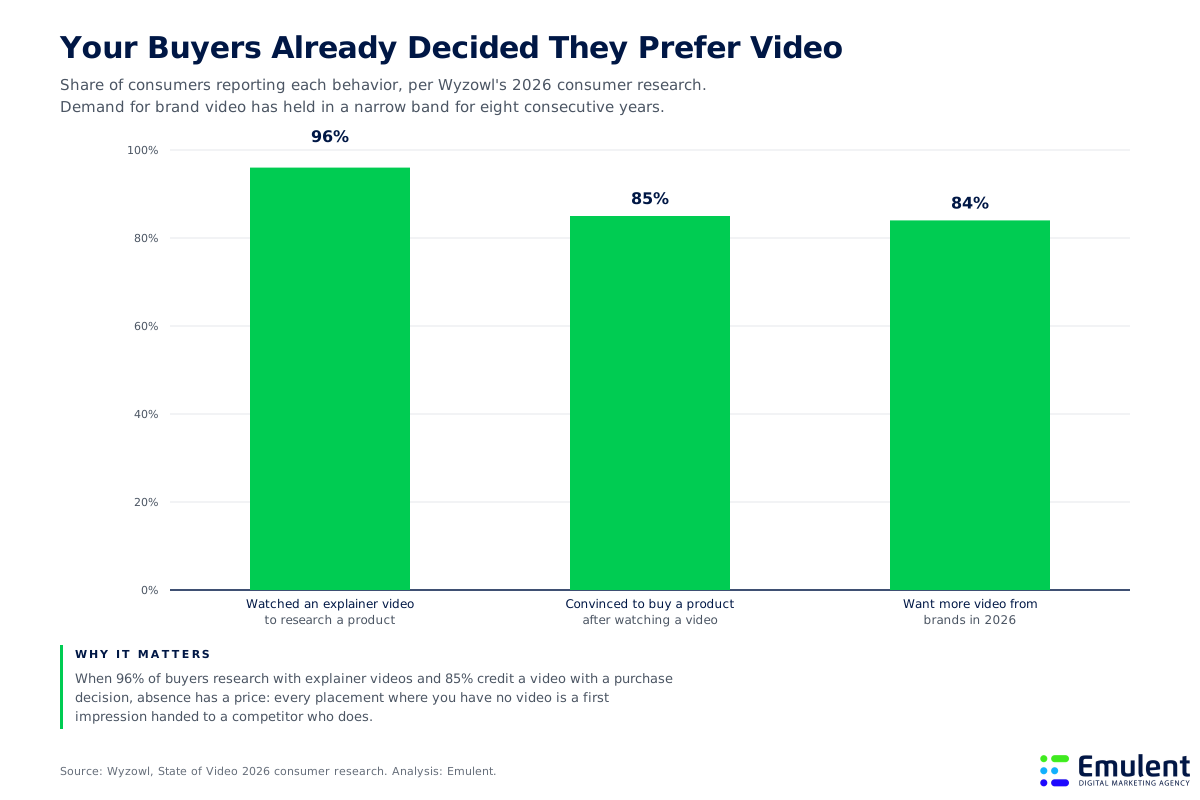
Flip the data to the buyer’s side and the cost of absence comes into focus. 96% of consumers have watched an explainer video to research a product. 85% say a video convinced them to make a purchase. 84% want more video from brands this year, a preference that has held within a narrow band for eight straight years. This is not a trend that might reverse. It is a settled behavior.
Where your absence is visible right now:
- Search results: Video carousels and YouTube results occupy prime positions for commercial queries. No video means a competitor occupies that real estate for searches with your buyer’s intent.
- AI-generated answers: AI search experiences increasingly cite and surface video. Brands without video assets have one less way to appear, which is why video is part of any serious search everywhere optimization strategy.
- Social feeds: Platform algorithms prioritize native video. A brand posting only static images is structurally throttled before content quality even enters the equation.
- Your own product and service pages: When 96% of buyers research with video, a page without one sends those buyers off-site to finish their research, often onto a competitor’s video.
Most businesses calculate the cost of video production. Almost none calculate the cost of the placements they forfeit without it. The second number is usually larger, and it compounds every month you wait. – Emulent Strategy Team
If a buyer’s first exposure to your category happens through video, and you have none, your competitor made the first impression on your behalf. The way to make that math work in your favor is to stop treating video as a one-time expense.
Why Should You Treat Video as a Compounding Asset, Not a Campaign Expense?
The businesses that struggle with video ROI almost always share the same accounting error: they treat a video as a campaign line item that gets spent once. The businesses that report strong returns treat each production as an asset library. One well-planned shoot day can yield an anchor video plus dozens of derivative pieces, which means the cost per asset falls with every cut you publish.
What a single brand shoot should produce over twelve months:
- One anchor video: A 2-4 minute brand or product story for your homepage and sales conversations. Long-form anchors also feed discovery, a dynamic we cover in our YouTube long-form video marketing trends research.
- 8-15 short cuts: Vertical clips for Reels, Shorts, TikTok, and LinkedIn, each built around one idea from the anchor.
- Page-level assets: Silent looping background video, testimonial pull-clips for service pages, and FAQ answers for support content.
- Sales enablement pieces: Clips your team embeds in proposals and follow-up emails, where a familiar face raises reply rates.
- Paid creative variants: Multiple hooks and aspect ratios for ad testing without a new production budget.
This only works if the shoot is planned against a publishing calendar before the camera turns on, which is a content strategy exercise as much as a production one. Plan the derivatives first and the shoot list writes itself. Skip that step and you get one nice video, no library, and a CFO who is right to question the spend. The good news is that the entry point is smaller than most businesses assume.
Where Should a Business With Zero Videos Start?
You do not need a content studio, and you should not try to build one in month one. Three videos cover the full buying journey, and they should be produced in a deliberate order so each one informs the next. This is the roadmap we use with clients beginning brand videography from a standing start.
The first three videos, in order:
- The brand story (60-90 seconds): Who you are, who you serve, and why you do this work. It humanizes the company, lives on your homepage and About page, and gives every other video a foundation of trust to build on.
- The explainer (1-3 minutes): What you sell and how it solves the buyer’s problem, in plain language. This is the workhorse: it serves your highest-intent pages, answers the questions your sales team repeats daily, and is the format 96% of buyers already use to research.
- The customer proof video (60-120 seconds): A real customer describing the before and after in their own words. Nothing you say about yourself converts like something a customer says about you, and this asset closes the loop for buyers comparing finalists.
Sequence matters more than polish for the first three. Story builds trust, the explainer builds understanding, proof builds conviction. A business that publishes those three videos has covered more of the buying journey than competitors with fifty random clips. – Emulent Strategy Team
Produce all three in one or two shoot days, cut the short-form derivatives from the same footage, and you have applied the compounding model from day one. From there, publishing cadence and measurement decide how fast the asset library grows.
How Can Emulent Help You Put Brand Video to Work?
The Emulent Marketing Team plans, produces, and distributes brand video as a system: strategy and shot planning built against your buying journey, production that yields a full asset library rather than a single file, and distribution mapped to the search results, social feeds, and AI answers where your buyers already are. If you are ready to make video an asset that compounds instead of an expense that expires, contact the Emulent Team for help with your video marketing.