
A long sales cycle is a memory problem, not a follow-up problem. By the time a buyer fills out your form, 94% of buying groups have already ranked a favorite vendor, and that favorite goes on to win the deal about 77% of the time. Every dollar you spend chasing the hand that went up is buying a seat at a decision made months earlier, in a room you were never in. The dollars that win long-cycle deals get spent on people who are not buying anything today and will not buy anything this year.
The deal is closed before you know it exists
Bain’s 2025 research found that 85% of B2B buyers purchase from their “day one” list, the vendors they already had in mind before they searched for anything. The 6sense Buyer Experience Report for 2025, built on more than 4,000 buyer responses, puts a finer point on it: 94% of buying groups had ranked a preferred vendor before they contacted a single seller, and that pre-call favorite won 77% of the time. Only about 15% of purchases go to a company that got added after research began.
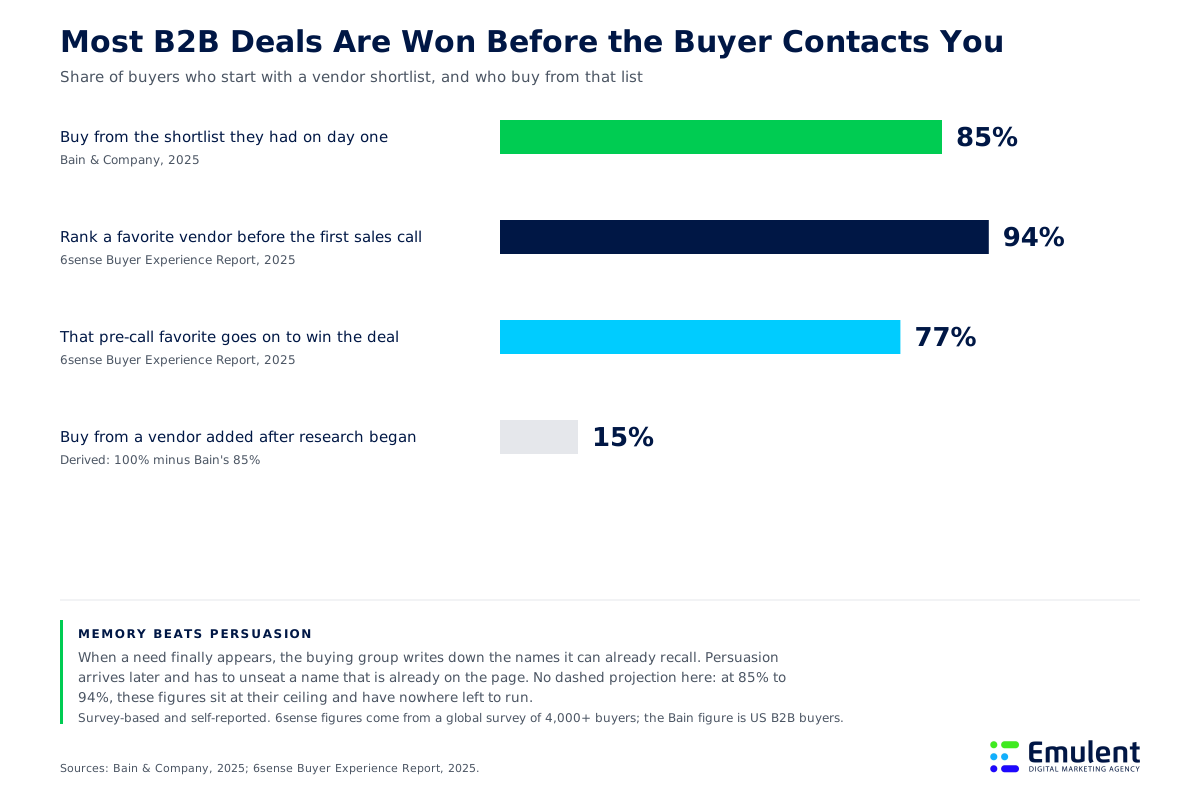
Read those numbers together and the job changes. Your sales team is not competing for the deal. They are auditioning to confirm a choice that a group of people made without them. The pipeline report on your wall measures the last stretch of a decision and tells you almost nothing about the stretch where it was actually decided.
The most-quoted statistic about long sales cycles is nine years old
B2B buyers spend only 17% of their time meeting with potential suppliers. That line appears on nearly every page ranking for this topic, cited in 2026 as though it describes today. Follow it upstream and the trail ends at Gartner’s 2017 Digital B2B Buyer Survey, a sample of 750 people. That number describes a buyer who shopped before the pandemic, before AI summaries, before procurement got a veto in the first month.
We will not use it, and we would tell you to strike it from your next deck. A statistic you cannot date is a claim without evidence, and a marketing plan built on one is a plan aimed at a buyer who no longer exists. The current numbers are easy enough to find, and they say something sharper than the old one did. Gartner’s survey of 646 B2B buyers, fielded in late 2025, found that 67% prefer a rep-free buying experience. The prior edition, fielded a year earlier, found 61%, along with 73% who actively avoid suppliers that send irrelevant outreach. Those are dated measurements of the person you are selling to right now, and they are two of the numbers we track in our running read on b2b marketing trends.
Long cycles are a memory problem
Gartner reports that 99% of B2B purchases are set off by an organizational change. A new CFO. A merger. A failed audit. A plant expansion. A line that finally went down for good. None of those events are on your calendar, and none of them arrive faster because you sent a fourth email.
What you can influence is what the buying group can recall on the morning the trigger fires. That is the mechanism underneath every number in this article: people build a shortlist from memory first and research second. They write down the names they already carry, then go looking for reasons to keep or cut them. Research is verification, not discovery.
The 6sense data shows buyers now making first contact at about 61% of the way through their process, down from roughly 70% in the two prior years, pulled earlier mostly by a need to check what a vendor’s AI features actually do. Earlier contact is not earlier influence. Those same buyers had already ranked a favorite before they picked up the phone.
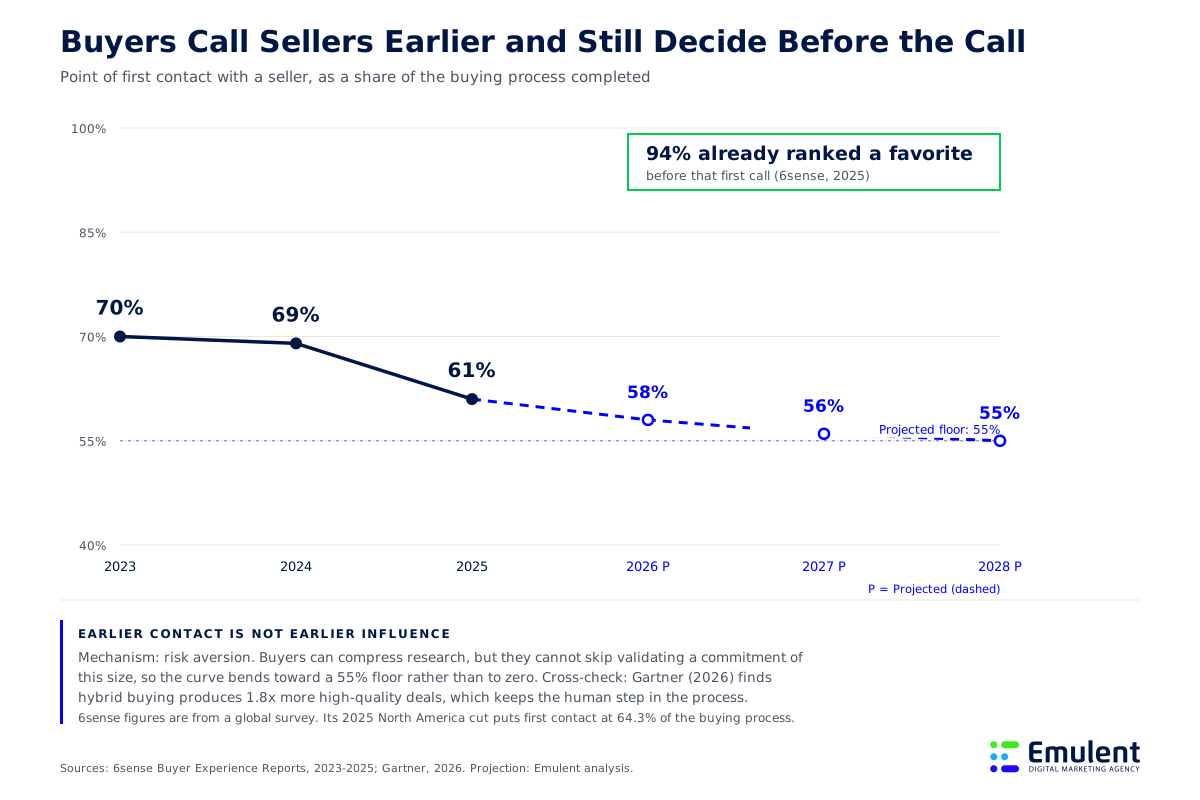
Projection: Emulent analysis based on risk aversion, assuming a floor near 55% because buyers can compress their research but cannot skip validating a commitment whose median value in the 6sense study runs $300,000 to $400,000, cross-checked against Gartner’s finding that hybrid buying, meaning digital tools used alongside a rep, produces 1.8 times more high-quality deals than going it alone.
Buyers calling you at month six instead of month seven does not give you a longer runway. It gives you a shorter one. If you plan against sales cycle length benchmarks for your industry and work backward, the marketing that decides a ten-month deal is running before the buyer has a budget line.
Cut the follow-up budget before you cut the visibility budget
The instinct in a long cycle is to add follow-up. Another sequence, another BDR, another retargeting pool, another email that opens with “just checking in.” 6sense found that sales development outreach plays a minimal role in when buyers make first contact, because buyers deliberately ignore unsolicited outreach until they are ready. Gartner found 73% actively avoid suppliers who send irrelevant outreach.
So the follow-up budget is not neutral. It is negative. It takes a stranger and turns them into a stranger who avoids you.
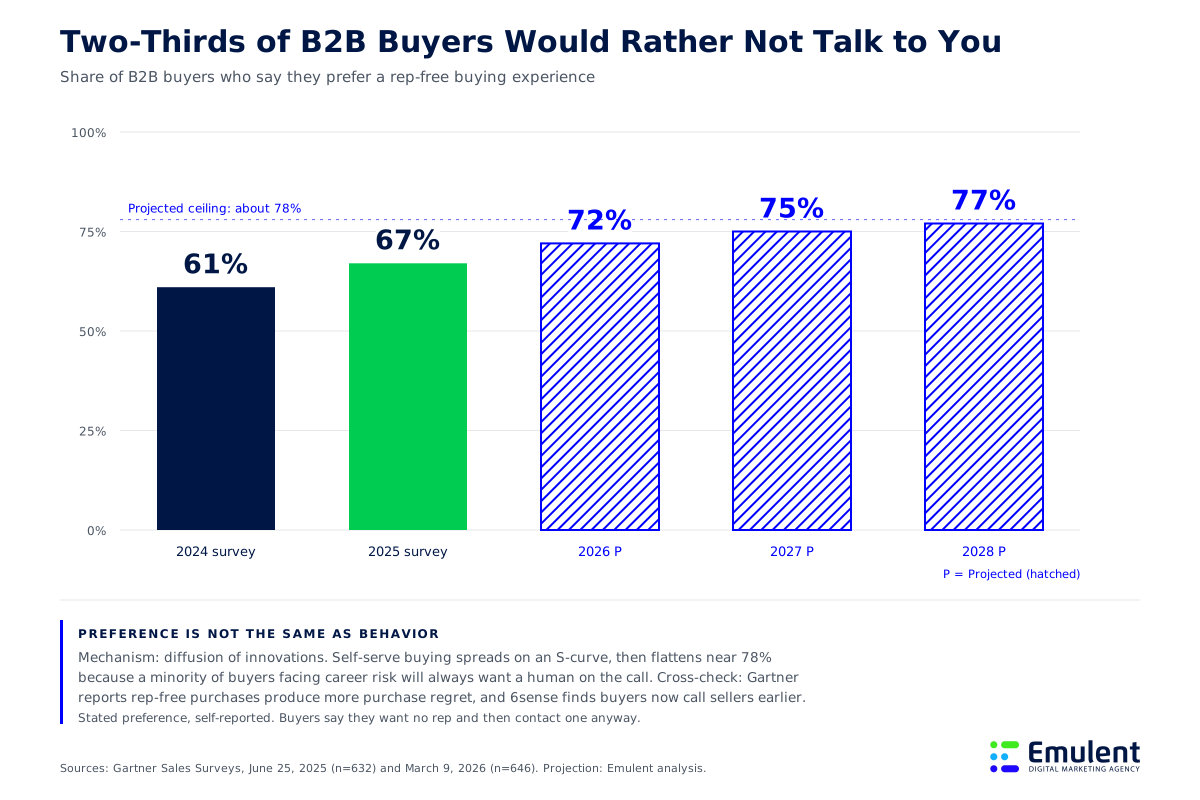
Projection: Emulent analysis based on diffusion of innovations, assuming a ceiling near 78% because a minority of buyers carrying personal career risk will always want a human on the call, cross-checked against Gartner’s own finding that rep-free purchases produce more purchase regret and that confident buyers are twice as likely to report a high-quality deal.
Here is what we would cut from a long-cycle budget, in order. BDR sequences aimed at accounts showing no engagement signal at all. Gated PDFs whose only purpose is to convert a person doing homework into a lead record and then a phone call, because a form fill in month two of a ten-month process is not a buyer, it is a researcher, and calling them makes you the vendor who interrupts. Any spend justified by a cost per lead number that nobody has ever traced to a closed deal.
What replaces it is the unglamorous half of b2b marketing services: showing up, in public, in front of people who are not buying, for longer than feels comfortable. That is what a content strategy is for in a long cycle. Not to catch demand. To be remembered when demand appears.
Half the pipeline meetings we walk into are arguments about follow-up cadence. Nobody in the room has asked whether the buyer had ever heard of the company six months before that form fill. Cadence cannot fix a name nobody recognizes. You are optimizing the last two weeks of a decision that took ten months. The Strategy Team at Emulent
Your content is the sales rep for the first 60%
Two 2025 studies measured how much AI is in the B2B buying process and came back 49 points apart. Gartner’s survey found 45% of buyers used AI during a recent purchase. 6sense found 94% used a large language model somewhere in the process. Both are honest. They asked different questions of different samples.
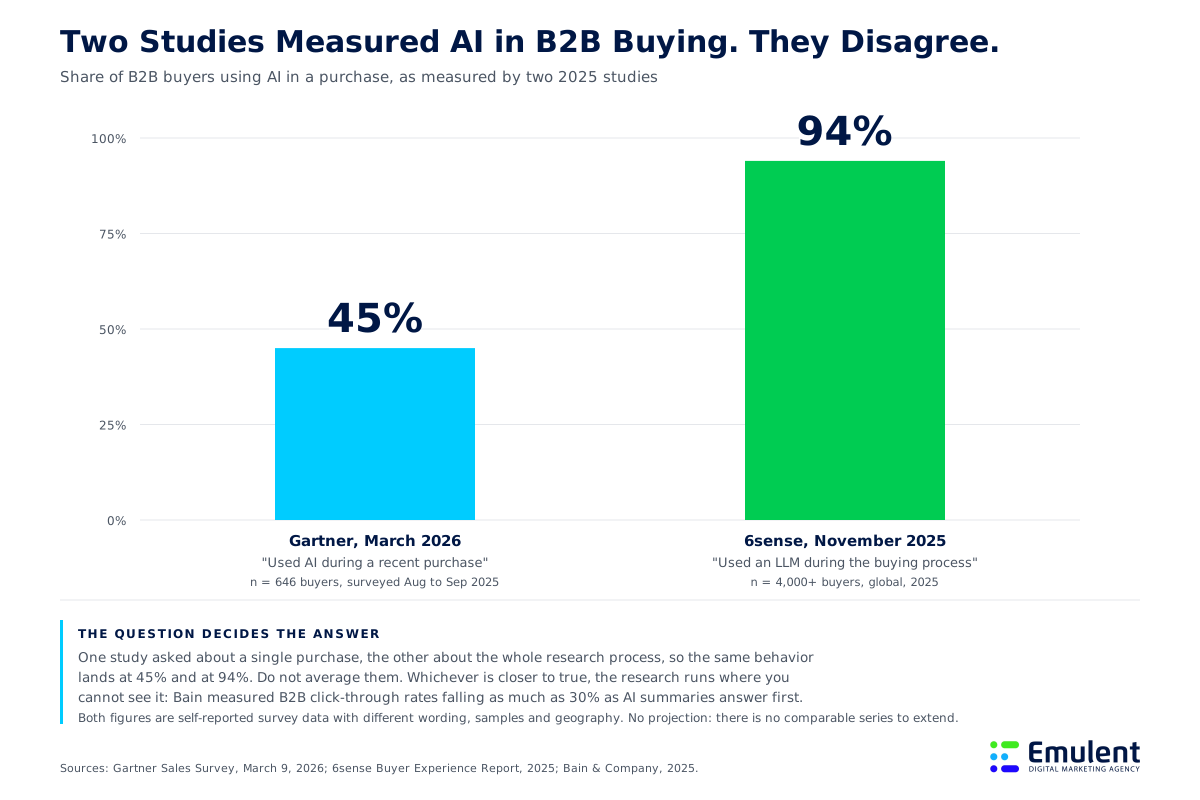
Do not average them, and do not pick the more dramatic one because it makes a better slide. Ask instead what both numbers agree on: the research is running where you cannot see it, and a growing share of it runs through a machine that summarizes you rather than showing you. Bain measured B2B click-through rates falling by as much as 30% in some categories, including B2B software, as AI summaries answer the question on the results page.
Which means your writing now has to survive two readers it was never designed for. A buying group member reading it at 11pm with no rep in the room. And a model that will name three vendors in an answer and drop the rest. That is the work behind ai seo and search everywhere optimization: being the source the answer cites, not the page it replaced. Most long-cycle content fails this test because it was written to rank, not to be used, which is why your content gets read but never sells.
One more number from that same Gartner survey deserves a place on a wall somewhere: 69% of buyers report inconsistencies between what a company’s website says and what its sellers tell them. In a three-week cycle, nobody notices. In a ten-month cycle, that contradiction has ten months to surface, and it surfaces in front of the person on the committee who was already skeptical.
Sell to ten people who have to agree
Gartner puts a complex B2B buying group at six to ten decision makers, each arriving with four or five pieces of research they gathered alone. The 6sense study puts the average group around ten people, each averaging 16 interactions with the vendor that eventually won. Multiply it out and one deal costs roughly 160 interactions.
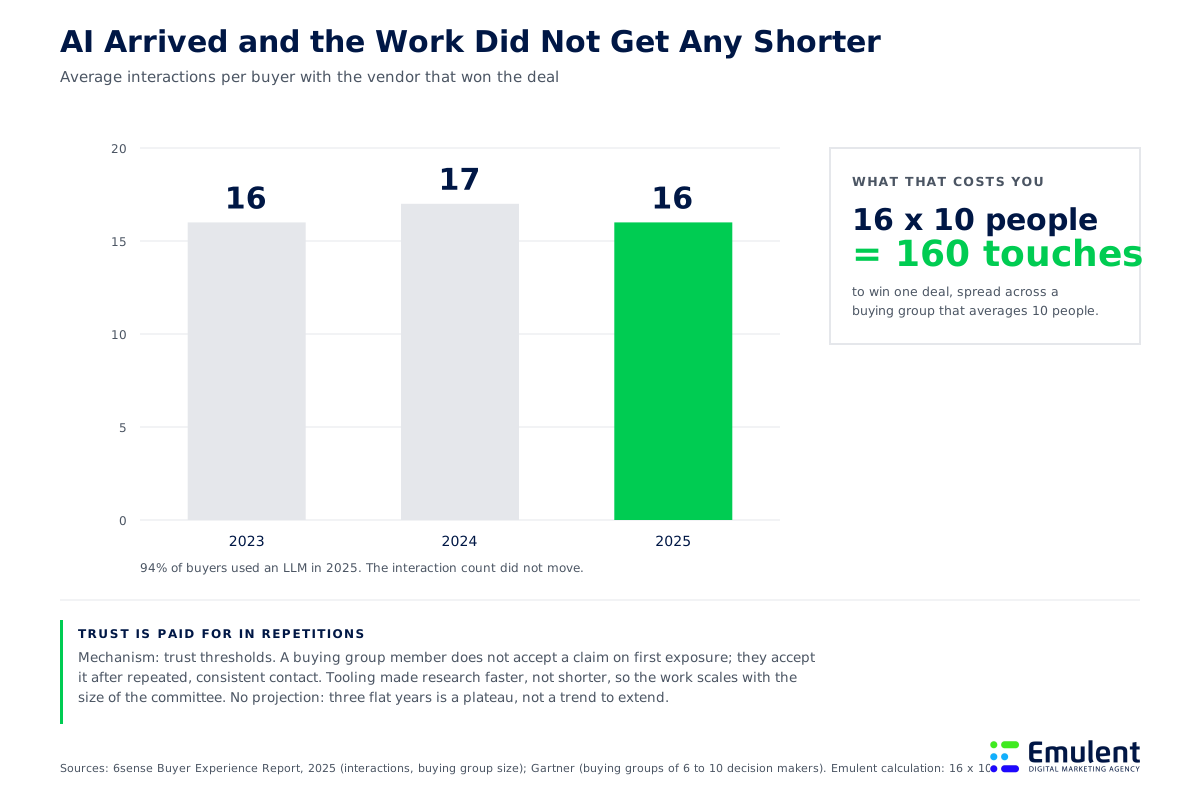
The interaction count has not moved in three years: 16, then 17, then 16, in the same year that 94% of buyers started using an LLM. AI made the research faster. It did not make the trust cheaper. Trust gets paid for in repetitions, and the bill scales with the size of the committee, not with the sophistication of your tooling.
Which tells you what to build. The person who wants you is doing your selling in meetings you will never attend, against a CFO who has never seen your ad and an IT lead who found one bad review. Hand them the thing they can forward: a one-page business case with your numbers in it, a security answer that does not require a call, an implementation timeline with real weeks on it. That is the practical version of what we mean when we say to stop writing B2B content for Google and start writing for the buying committee, and our b2b content strategy checklist is where we keep the working version.
How to measure a ten-month cycle without lying to yourself
Long-cycle marketing gets cut first because it is the only spend whose payoff lands three CFO meetings from now. The fix is not a better attribution model. It is measuring the thing that actually predicts the deal, which is whether you were on the list before the list existed.
Run this every quarter, and stop reporting MQL counts to your board:
- Unaided recall in your named accounts. Ask 20 target accounts to name three vendors in your category without prompting. If fewer than one in five names you, you are not on the day-one list, and no sequence will put you there this quarter.
- Shortlist placement, won and lost. Ask every closed deal a single question: were we on your list on day one? Track the percentage that says yes. Below 50% is a visibility problem wearing a sales problem’s clothes.
- First-contact position. Did they call you first, or third? The vendor buyers reach out to first wins about 80% of the time, so this is a leading indicator, not a vanity number.
- Time from first known touch to first contact. If your cycle runs ten months and your average buyer first heard of you in month six, your visibility spend is starting four months late.
- Cost per lead as a diagnostic only. It is useful for spotting a broken channel. It is worthless as a scoreboard, because in a long cycle a cheap lead and an expensive one are the same person at different moments.
This is also why we refuse long-term contracts. A twelve-month agreement is a comfortable way to hide twelve months of invisible work, and it removes the pressure to show a client that their name is landing on lists it was not landing on before. The measures above are harder to hide behind than a ranking report, which is exactly why we do not require long-term contracts.
Rankings and impressions are decorations. The only question worth asking about a long-cycle program is whether the next buying group in your category writes your name down before they open a browser. If you cannot answer that question, you do not have a measurement problem. You have a marketing problem, and the measurement was just hiding it. Bill Ross, Founder, Emulent
When not to do any of this
Three situations where the advice above will waste your money.
Your cycle is short and your deal is small. If you sell a $6,000 product that closes in three weeks, capture demand and skip the rest. Memory-building is expensive, and you do not need it when the buyer decides in the same session they discovered you.
You cannot fund twelve months. Six months of visibility spend that then stops is worse than never starting, because memory decays and you will have paid to be forgotten at exactly the moment a trigger fires. Pick one channel and one audience you can hold for a year, or wait until you can.
Your positioning is undecided. Spending to be remembered before you have decided what you want to be remembered for buys you memory of a blur. Ten people cannot agree on a company they cannot describe. Fix that first with real brand positioning services, and we have told prospects exactly that and sent them away, because the alternative is charging them for reach that has nothing to carry.
What the wait actually costs you
A long sales cycle does not give you more time to persuade. It gives the buyer more time to decide without you. Ten months of research, 160 interactions, ten people, and a favorite chosen before anybody dialed your number. The follow-up sequence you are about to build will arrive at the end of all of that, and it will arrive to a group that already wrote three names down.
Be one of the three. That is the whole job, and it starts about a year before you think it does.