
B2B marketing trends in 2026 share a single underlying truth: the buyer has changed faster than most go-to-market plans. Pipeline still gets built, but the inputs that built it five years ago no longer scale, and the metrics most teams still report against have quietly stopped meaning what they used to mean. This guide lays out the shifts that matter for B2B teams aiming to drive qualified pipeline this year, grounded in current data from Gartner, Forrester, 6sense, ITSMA, Demandbase, and the Content Marketing Institute, plus our own analysis of where the numbers go next.
Key takeaways from this report:
- Budgets have stabilized, but the mix has not. B2B marketing spend has converged near 9% of revenue. Dollars are rotating out of broad-reach demand gen into ABM, intent data, and AI tooling.
- The buying committee is the real customer. The median group has grown from 5.4 stakeholders in 2015 to 11.2 in 2026, reaching 22 at enterprise deals when external influencers count.
- AI use is universal; AI value is not. 94% of B2B marketers use AI tools, but most apply them to copy. The real pipeline impact sits in scoring, orchestration, and content discoverability.
- ABM has matured into the default growth engine. Mature programs generate 2.6 times more pipeline per dollar than broad-reach demand gen, with higher win rates and larger deals.
- Most of the buyer journey is invisible. 73% of B2B buying activity now happens before vendors are aware of it. Visibility during research, not pitch quality, decides the shortlist.
- MQL volume is the wrong metric above mid-market. Lead-to-close rates collapse as deal size grows. Coverage and multi-threading are the inputs that move enterprise pipeline.
What is actually happening with B2B marketing budgets in 2026?
The budget number itself has settled. Gartner’s 2026 CMO Spend Survey puts the cross-industry median at 9.1% of revenue, down slightly from 9.5% in 2025 but well above the 2024 trough. Forrester’s Budget Planning Survey shows 83% of B2B marketing decision-makers expect investment to grow in the next twelve months. The total dollar amount is climbing modestly. What it pays for is changing quickly.
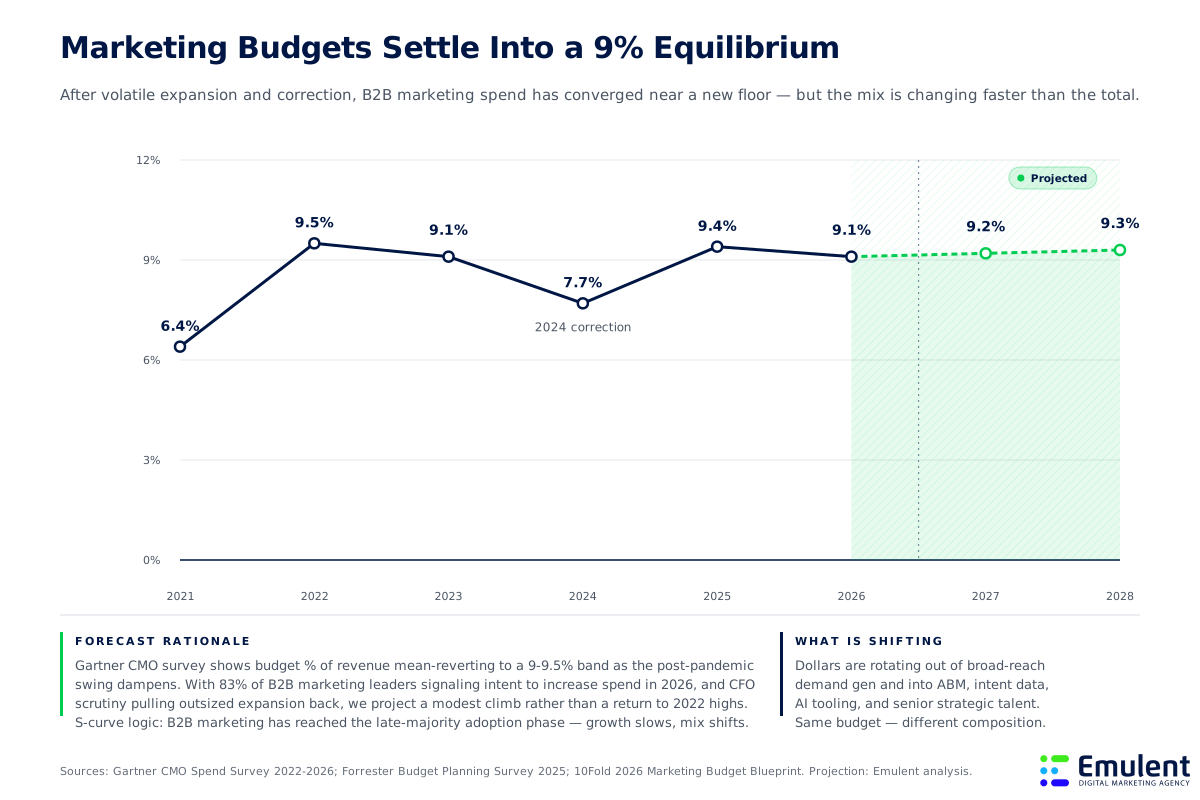
The composition shift matters more than the topline. CMOs are pulling money out of broad-reach demand gen and unfocused content production, then pushing it into ABM platforms, intent data, AI tooling, and senior strategic talent. Teams that treat 2026 as a continuation of 2024’s playbook will spend the same money for noticeably worse results, because channels that worked five years ago carry diminishing returns against a buyer who finishes most of the journey alone.
The biggest 2026 budget mistake we see is treating marketing spend like a fixed allocation problem. The question is no longer “what percentage of revenue.” It is “which dollar inside that percentage is buying compounding equity, and which dollar is renting attention we will lose when the campaign ends?” – Emulent Strategy Team
To defend a 2026 budget to finance, the strongest argument is a revenue-backward model that maps spend to pipeline coverage by deal tier, not industry benchmarks. The benchmark sets a sanity check. The model sets the case. Without one, every cut conversation starts from the wrong premise, which leads directly to the next shift: the buyer your spending has to reach is fundamentally different.
Why have buying committees become the real customer?
The single most consequential change in B2B over the past decade is also the quietest. The median buying committee has nearly doubled in size since 2015, and the growth has not stopped. Forrester’s State of Business Buying 2026 puts the typical enterprise decision at 22 people when external influencers are counted. 6sense tracks the internal-only number at 11.2 stakeholders for deals over $50,000, up from 9.7 in 2024.
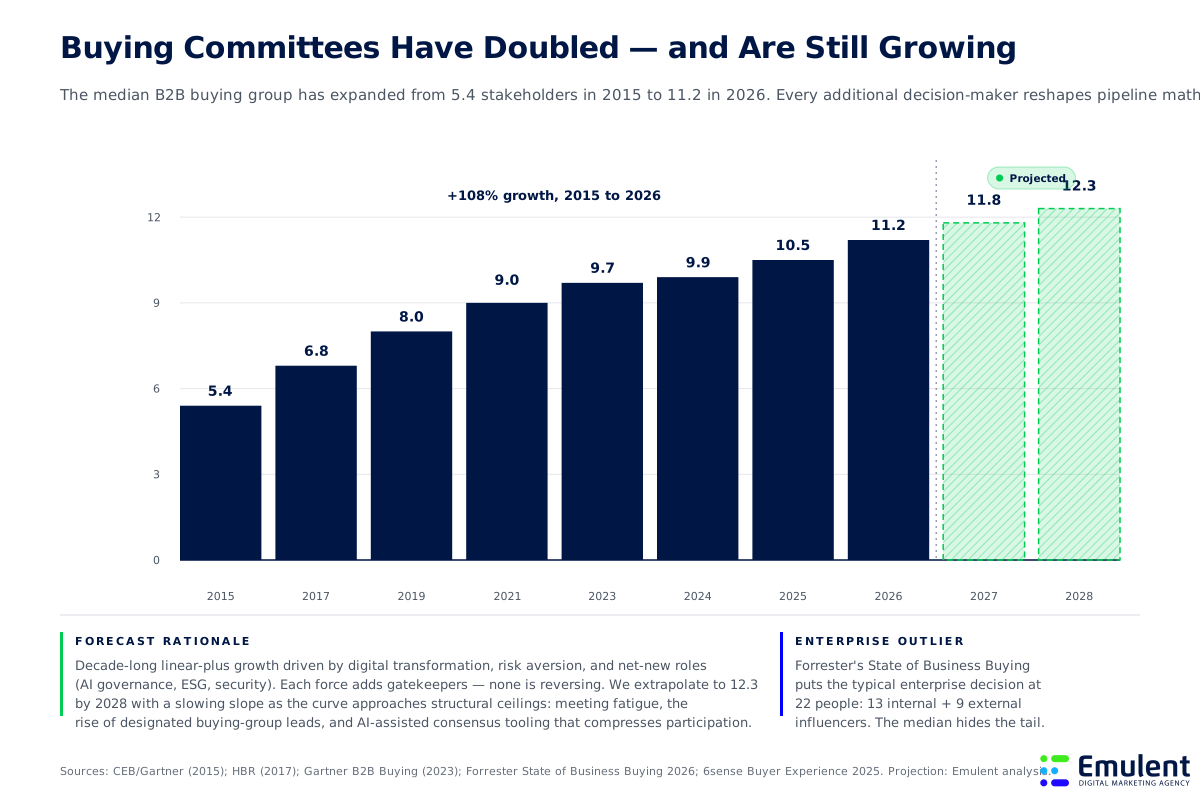
Each added stakeholder brings a different success metric and risk tolerance. Marketing built for a single buyer breaks against a group, because content that wins a champion’s heart may fail Finance’s ROI scrutiny or trigger a Security review the champion never anticipated. This is why “the deal stalled” has become the most common closed-lost reason in enterprise CRMs. The deal did not stall against a competitor. It stalled against a question your content did not answer.
Three practical implications of the committee shift:
- Build for parallel personas. Security, Finance, IT, and the line-of-business buyer research in parallel. Your content library has to serve each of them with material the champion can forward.
- Equip the champion to sell internally. Internal complexity, not vendor performance, is the top reason deals fall apart. ROI calculators, security briefs, and implementation timelines are the artifacts that travel inside the committee.
- Measure committee coverage as a leading indicator. The number of mapped, contactable stakeholders per target account predicts deal velocity better than any single MQL count.
The growing committee also explains why timing matters more than messaging in 2026. By the time a champion takes a sales call, the committee has often already shaped a preferred vendor in a place most marketing teams cannot see.
How do you market when 73% of the buyer journey is invisible?
Per Gartner’s 2026 buying research, roughly 70% of the B2B journey now happens before any vendor contact. 6sense puts the share higher in software categories, and 95% of closed deals go to a vendor already on the buyer’s Day-One shortlist. If your brand is not visible during anonymous research, you are not in the deal.
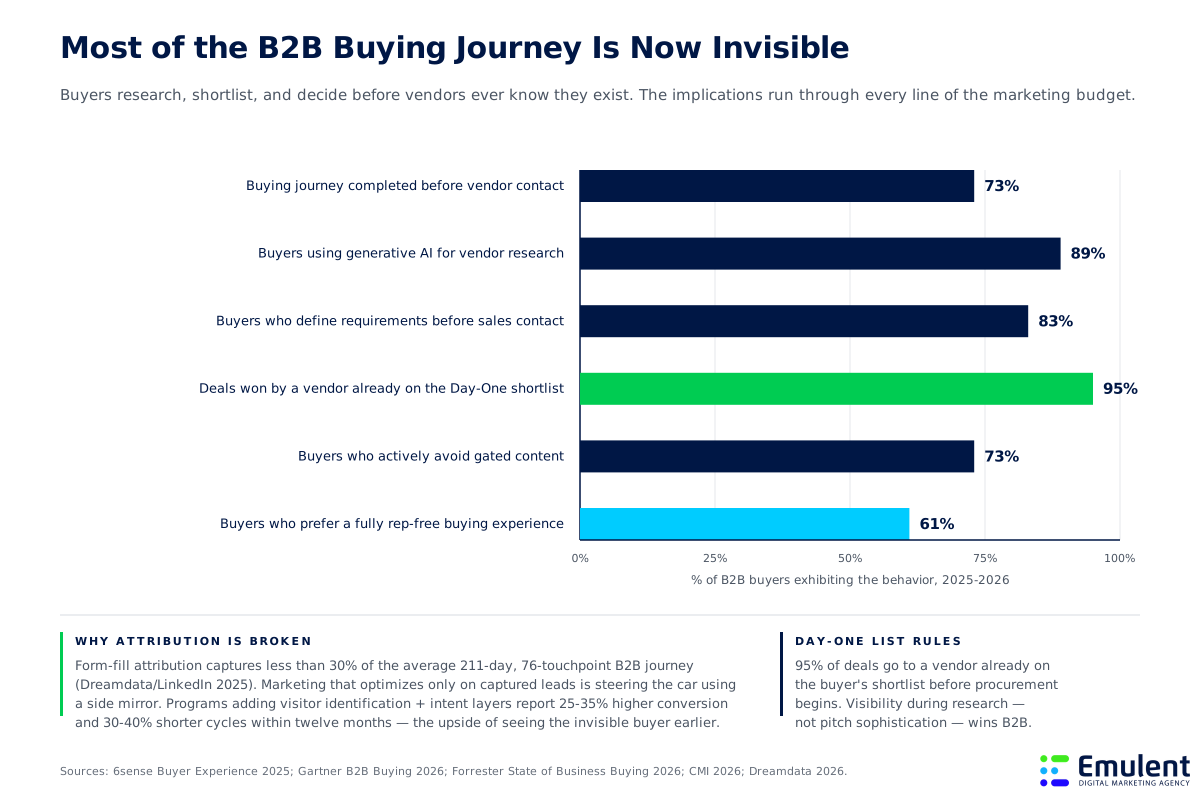
This is what makes form-fill attribution dangerous in 2026. It captures less than 30% of an average 211-day, 76-touchpoint journey, which means a team optimizing on form fills alone is steering with a side mirror. The same teams then cut investment in the channels that built the shortlist, because those channels did not “convert” in the attribution model. Pipeline drops two quarters later, and no one connects the cut to the cause.
The fix is to layer two capabilities into the stack: search everywhere optimization to be present where buyers actually research (Google, AI chatbots, G2, Reddit, podcasts, LinkedIn), and a signal layer that detects in-market accounts before they raise a hand. Visitor identification, third-party intent data, and review-site signals do not replace attribution. They illuminate the part of the journey attribution misses, and they let SDR effort concentrate on accounts already moving.
We have stopped asking clients “what is your cost per lead.” It is the wrong question for most B2B businesses now. The right question is “what is your cost per identified in-market account, and what percentage of the committee have you reached.” Teams that switch to those inputs find pipeline faster, because they stop chasing form fills that were never going to close. – Emulent Strategy Team
Where does generative AI actually move pipeline in 2026?
AI adoption among B2B marketers has crossed every reasonable diffusion threshold. The Content Marketing Institute pegs use at 94-95% in 2026. The interesting question is no longer whether teams use AI, but where it actually moves pipeline.
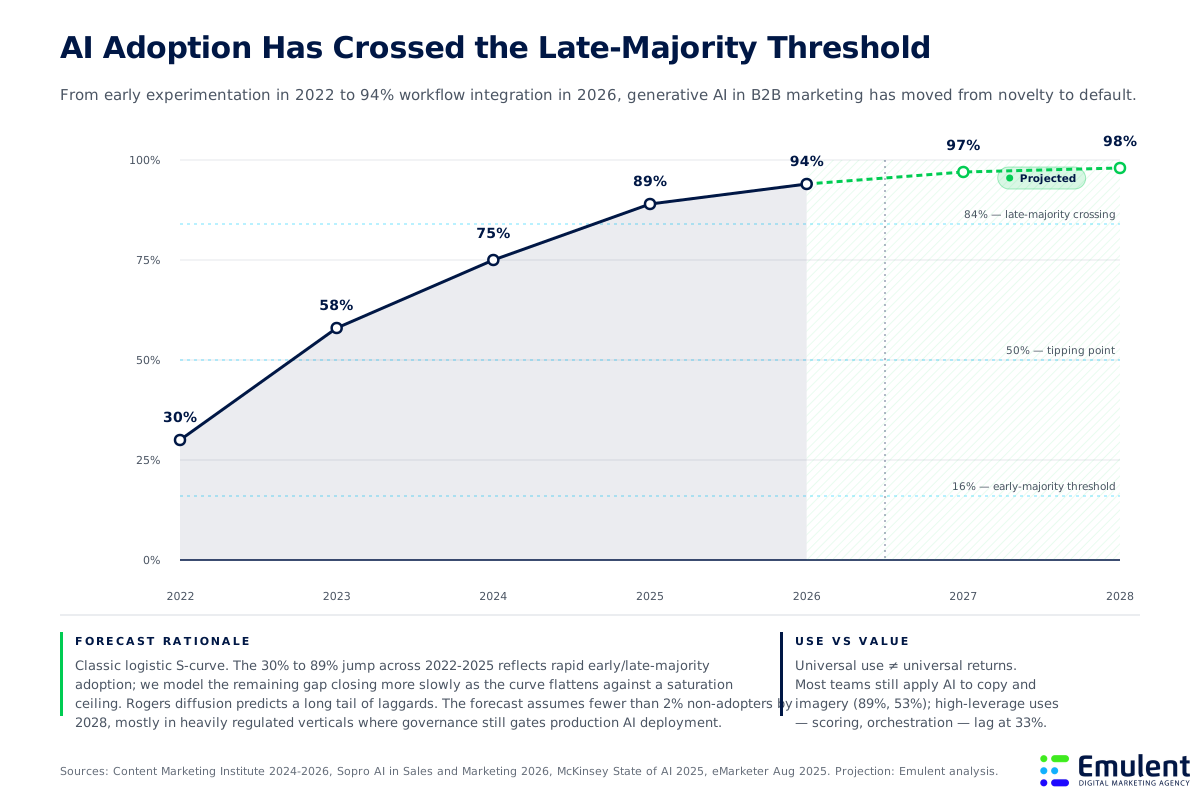
Most teams have applied AI to the easy use cases: drafting copy (89% of teams) and generating creative assets (53%). These save hours but rarely move pipeline. The higher-impact applications sit in three places. Predictive lead scoring that fuses first-party engagement with third-party intent. Content discoverability optimization, which is what AI SEO services exist to do, ensuring your content appears when buyers query ChatGPT, Claude, or Perplexity. And AI-assisted SDR workflows that personalize outreach based on actual research behavior rather than generic firmographics.
The reason 89% of B2B buyers now use generative AI for vendor research matters more than the adoption number itself. It means your share of voice in LLM responses is becoming as important as share of voice on Google’s first page was a decade ago. Teams that fail to optimize for answer engines will discover the problem the same way teams discovered mobile readiness in 2015: too late, with traffic and pipeline already gone. A practical starting point is the AI SEO checklist our team maintains, which covers the structural fixes that make content extractable by LLMs.
What does mature ABM look like, and why does it win?
Account-based marketing in 2026 is no longer an experiment. ABM Leadership Alliance and Demandbase data show ABM-led programs generate 2.6 times more pipeline per marketing dollar than broad-reach demand gen, with 41% higher win rates and 33% larger average deal sizes. ITSMA’s Momentum survey shows 87% of B2B marketers report higher ROI from ABM than from any other strategy.
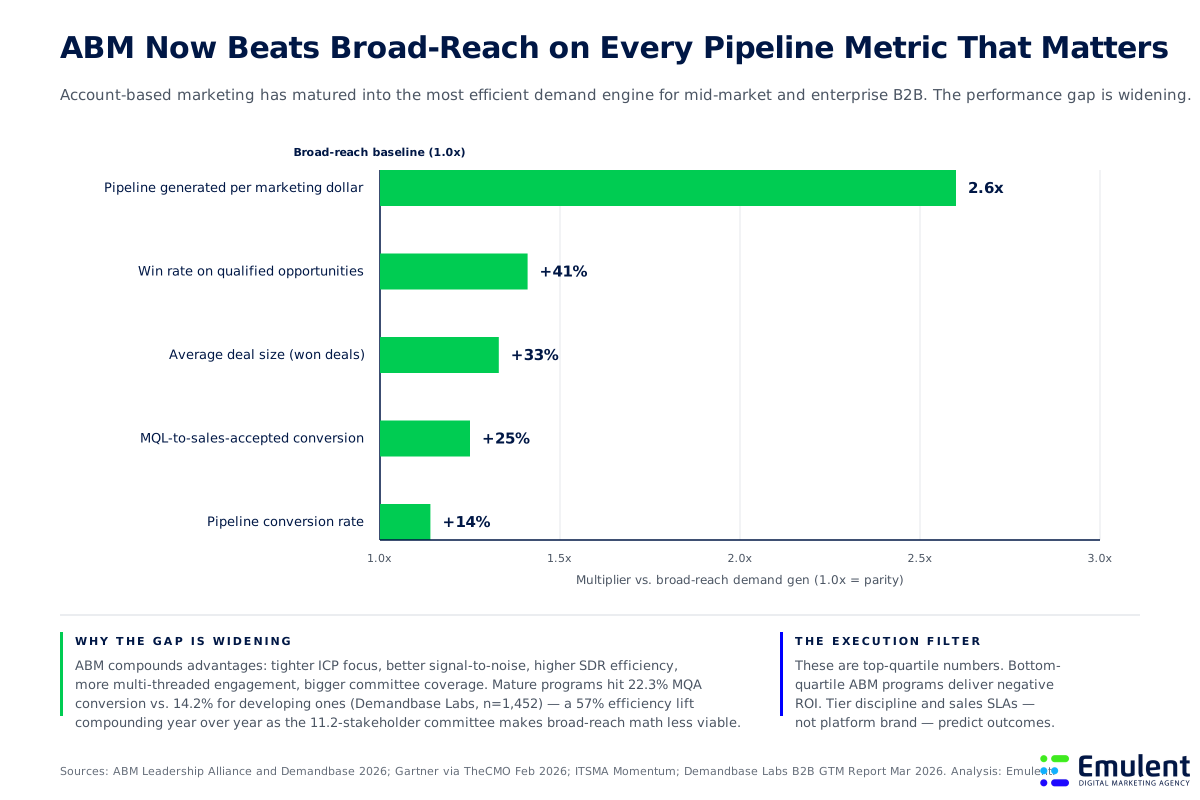
The performance gap is widening because ABM compounds. Tight ICP focus produces better signal-to-noise, which produces higher SDR efficiency, which produces more multi-threaded engagement, which produces shorter cycles and bigger deals. Demandbase Labs’ analysis of 1,452 tenants shows mature programs hit 22.3% Marketing Qualified Account conversion versus 14.2% for developing ones, a 57% efficiency lift that grows year over year.
The catch is that average ABM performance hides enormous variance. Top-quartile programs deliver 9x returns. Bottom-quartile programs deliver negative ROI on the platform investment alone. The differentiator is not the platform brand. A $60,000 platform run with rigorous tier discipline, a written sales SLA, and committee multi-threading discipline outperforms a $200,000 platform run as ABM theater. Every time.
Most ABM programs fail in the first six months for the same reason: the team confuses platform purchase with operating model. ABM is not a tool. It is a way of organizing marketing, sales, and customer success around 50 to 200 named accounts. If those three teams are not jointly accountable to the target account list, the platform will not save you. – Emulent Strategy Team
Where is the 2026 B2B marketing dollar actually going?
Looking at the budget by category rather than as a single percentage of revenue reveals the actual story. Forrester and 10Fold’s 2026 surveys both show roughly 42% going to Programs (content, campaigns, paid media, events), 35% to Personnel, and 23% to Technology. The category split looks unchanged from 2024 on the surface, but the composition inside each bucket has rotated sharply.
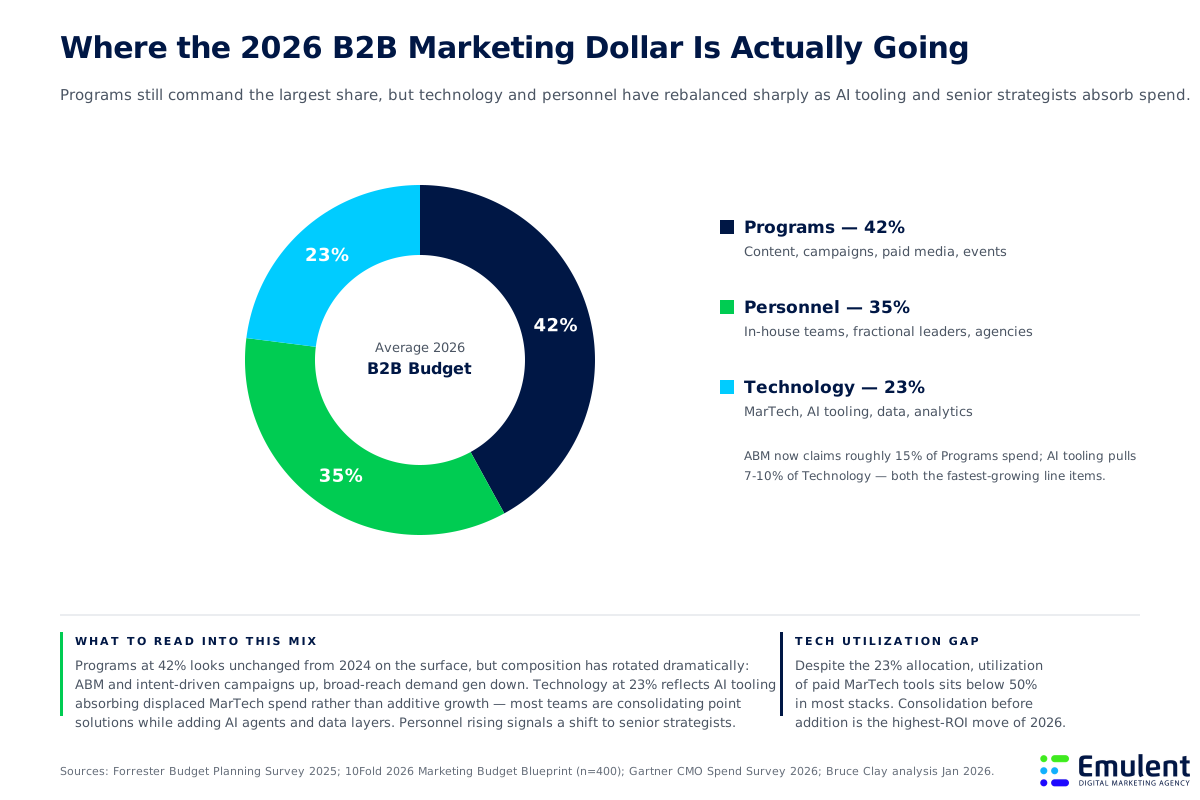
Inside Programs, ABM now absorbs roughly 15% of the total marketing budget, the highest share it has ever held. Inside Technology, AI tooling pulls 7-10%, mostly displacing legacy point solutions that teams are consolidating rather than adding to. Inside Personnel, the shift is toward fewer, more senior people. Junior content producers are getting absorbed by AI workflows. Senior strategists, RevOps leads, and program owners are not.
Three under-discussed budget moves for 2026:
- Consolidate before you add. MarTech stacks now have utilization below 50% on paid tools. Killing the bottom quartile usually frees 4-7% of total budget to redirect into ABM or AI tooling.
- Move agency spend up the value chain. AI has compressed execution tasks from weeks to hours. The agency relationship that pays back in 2026 focuses on strategy, brand, and program design, not on producing volume.
- Hold a 10% test budget for emerging channels. Whatever your channel mix is today, some of it will be irrelevant in 18 months. A controlled experimentation budget is the cheapest insurance against being late to the next shift.
What do longer sales cycles demand from marketing?
Sales cycle length now scales sharply with deal size. SMB deals close in roughly 84 days. Mid-market deals run 121 days. Enterprise deals stretch to 218 days. Strategic deals over half a million dollars take a median of 312 days from first qualified contact to closed-won. Forrester’s data shows the median B2B cycle has more than tripled over the past decade.
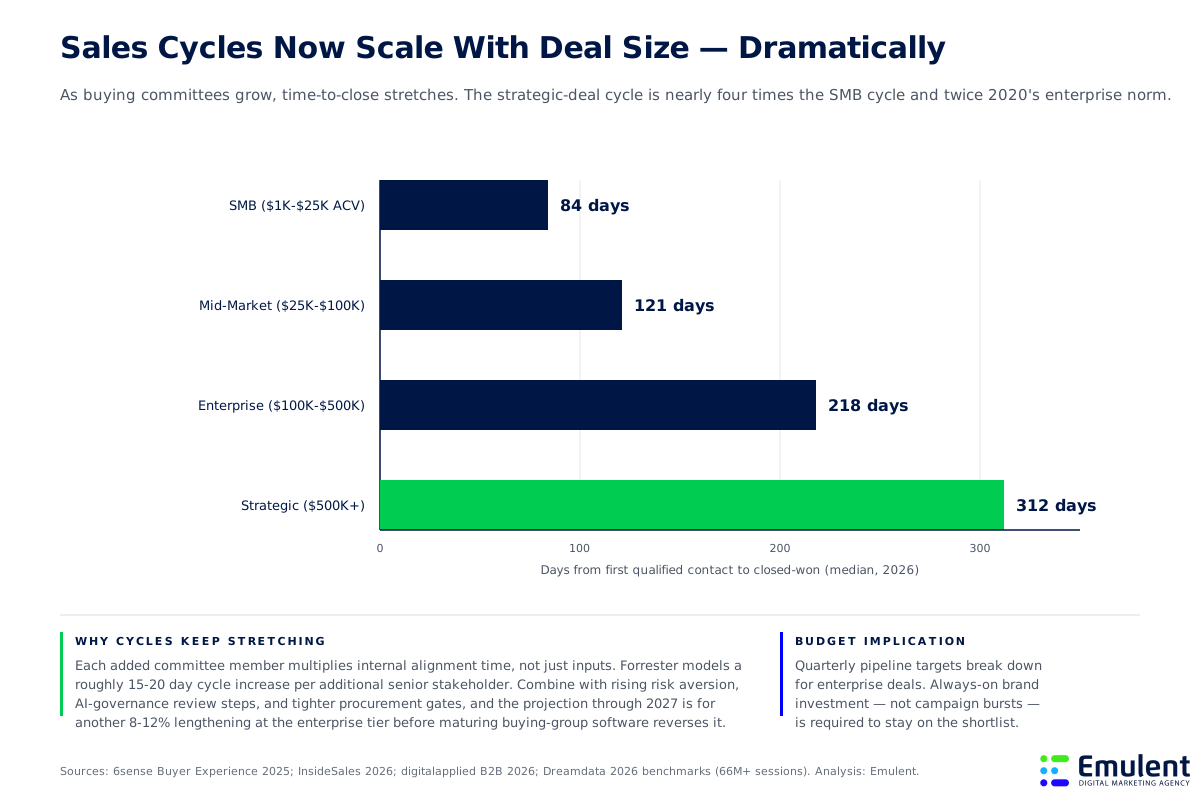
The lengthening is structural, not cyclical. Each added committee member adds roughly 15-20 days of internal alignment, per Forrester’s modeling. Combine that with rising risk aversion, AI-governance review steps, and tighter procurement gates, and the projection through 2027 is for another 8-12% lengthening at the enterprise tier before maturing buying-group software begins to reverse it.
Long cycles change what marketing has to do. Quarterly pipeline targets break down for enterprise deals, because the deal a customer signs in Q4 was influenced by content they read in Q1. Always-on brand investment, not campaign bursts, is required to stay on the shortlist. This is one reason the most effective B2B marketing services integrate brand, demand, and ABM under a single program owner rather than treating them as separate budgets with separate measurement frameworks. When those programs are siloed, the brand budget gets cut to fund this quarter’s lead volume, and the shortlist position erodes invisibly.
Why is MQL volume the wrong metric above mid-market?
The data on touchpoints and conversion makes the problem stark. SMB deals close 1.6% of leads in roughly 14 touchpoints. Strategic deals close 0.2% of leads but require an average of 51 touchpoints to do it. Touchpoint volume rises 3.6 times from SMB to strategic, while conversion rate drops 8 times.
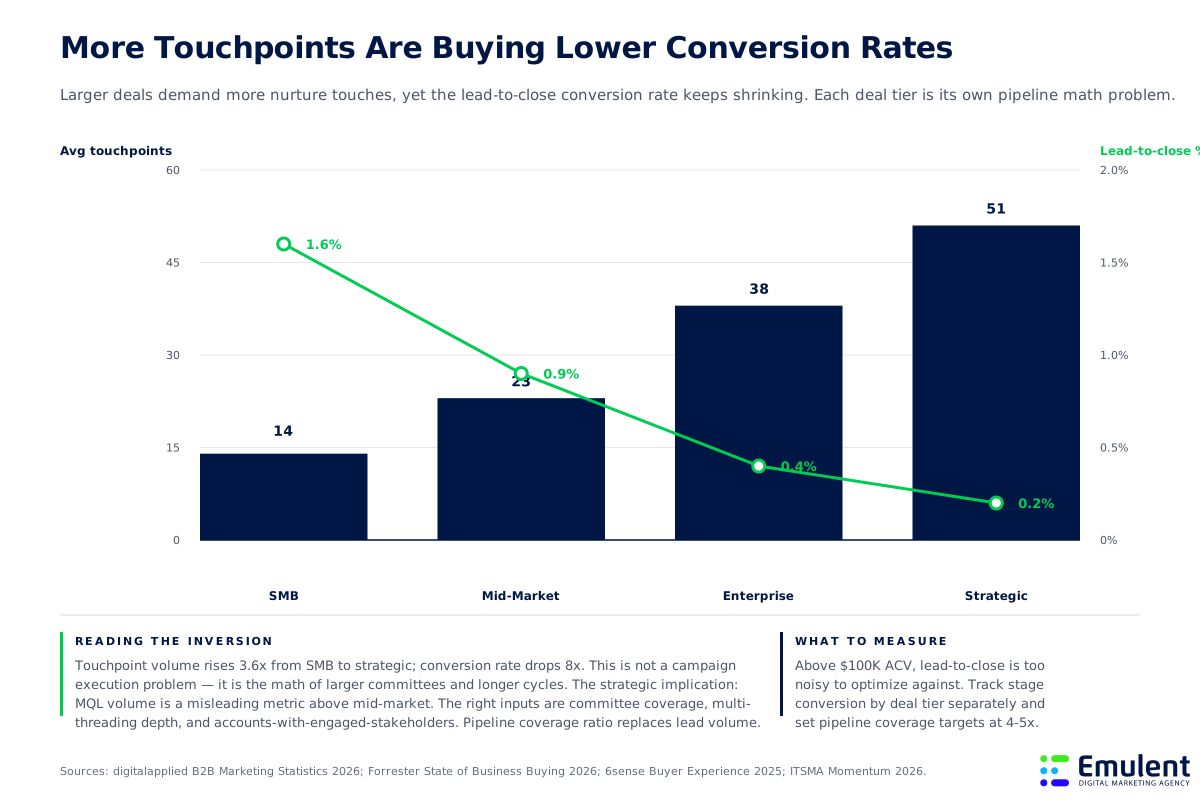
This is not a campaign execution problem. It is the math of larger committees and longer cycles. A 0.2% close rate looks alarming on a dashboard, but it reflects the reality of selling a $500K product to a 13-person committee over 312 days. The strategic implication is that MQL volume becomes a misleading metric above the mid-market tier. Teams that keep chasing it spend money on lead acquisition that will never convert at a meaningful rate, then question why pipeline is not growing in proportion to spend.
The metrics B2B marketing teams should track in 2026:
- Committee coverage by account. Mapped, contactable stakeholders per target account. Predicts deal velocity better than any single conversion event.
- Multi-threading depth. Stakeholders actively engaged per open opportunity. Single-threaded deals close at 30-40% the rate of deals with three or more engaged contacts.
- Pipeline coverage ratio by tier. Target accounts in pipeline relative to bookings target, segmented by deal tier. Healthy enterprise coverage runs 4-5x.
- Content-influenced pipeline. The percentage of closed-won deals with at least one content touchpoint in the 90 days before opportunity creation. Reveals dark-funnel content value that last-click attribution erases.
- Share of LLM voice. How often your brand appears in AI-generated answers for category-defining queries. The 2026 equivalent of share of search.
If you are still running a quarterly pipeline review with MQL volume on the first slide, you are reporting on a metric that no longer correlates with revenue for any deal larger than mid-market. Replace it with account-tier pipeline coverage, and the conversation with sales and finance immediately gets more honest. – Emulent Strategy Team
How Emulent can help
The trends in this report point in one direction. B2B pipeline in 2026 belongs to teams that integrate brand visibility, ABM execution, AI-aware content, and committee-level measurement under a single operating model. The teams still running 2022’s playbook will spend more and get less.
We help B2B marketing leaders make that transition. That includes building defensible 2026 budget models, designing ABM programs that survive the first six months, restructuring content for AI answer engines, and replacing legacy MQL-based reporting with metrics that actually predict revenue. If you are working through any of these shifts and want a second set of senior eyes on the plan, contact the Emulent team and we will set up a working session focused on your specific pipeline goals.