
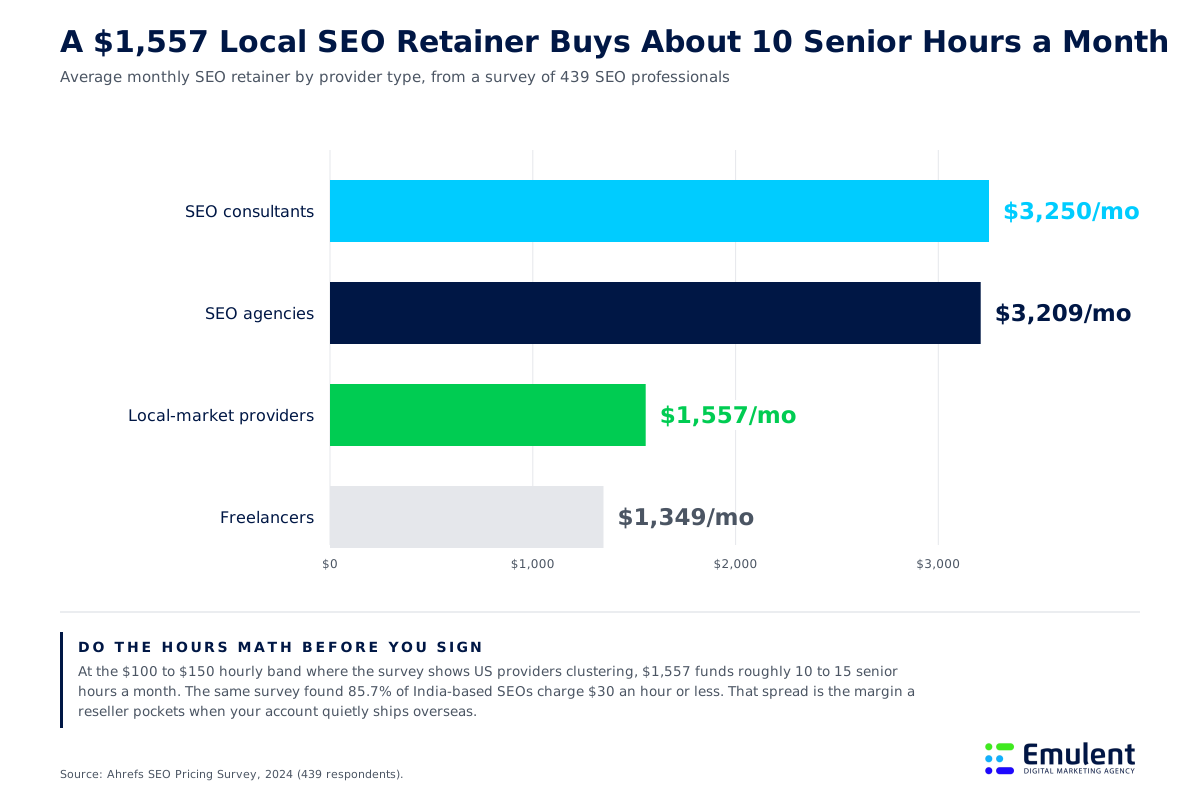
Let me start by saying we keep everything in-house – we don’t outsource. With that said, a large share of local SEO retainers pay for a markup, not a marketer. The agency that signed you sells the account to a white-label fulfillment shop, the shop assigns it to whoever is available, and the person actually touching your Google Business Profile has never heard your voice, seen your town, or read a single review of your business. The pricing data makes the arbitrage visible: Ahrefs’ 2024 survey of 439 SEO professionals found that 85.7% of India-based SEOs charge $30 an hour or less, while the same survey shows US providers clustering between $100 and $150 an hour. That spread is the entire business model of the reseller, and none of it shows up in the proposal.
Resellers survive because sales calls reward confidence and punish nothing. So stop grading confidence. The seven questions below take about fifteen minutes to ask, and each one forces a specific, checkable answer that a reseller cannot give without either lying or admitting the model. We wrote them from the buying side of the table: what we would ask before handing anyone a retainer, including us.
Why the stakes just went up
The window for hiring a mediocre local SEO agency and getting away with it has closed, because the map of local discovery redrew itself in twelve months. The 2026 Local Consumer Review Survey from BrightLocal, a panel of 1,002 US consumers, found Google’s share of review usage fell from 83% to 71% in a single year, local news sites dropped from 48% to 29%, Apple Maps nearly doubled from 14% to 27%, and generative AI tools jumped from 6% to 45% of consumers looking for local recommendations. These are self-reported survey figures rather than platform-measured behavior, but a 39-point swing survives any reasonable margin of error.
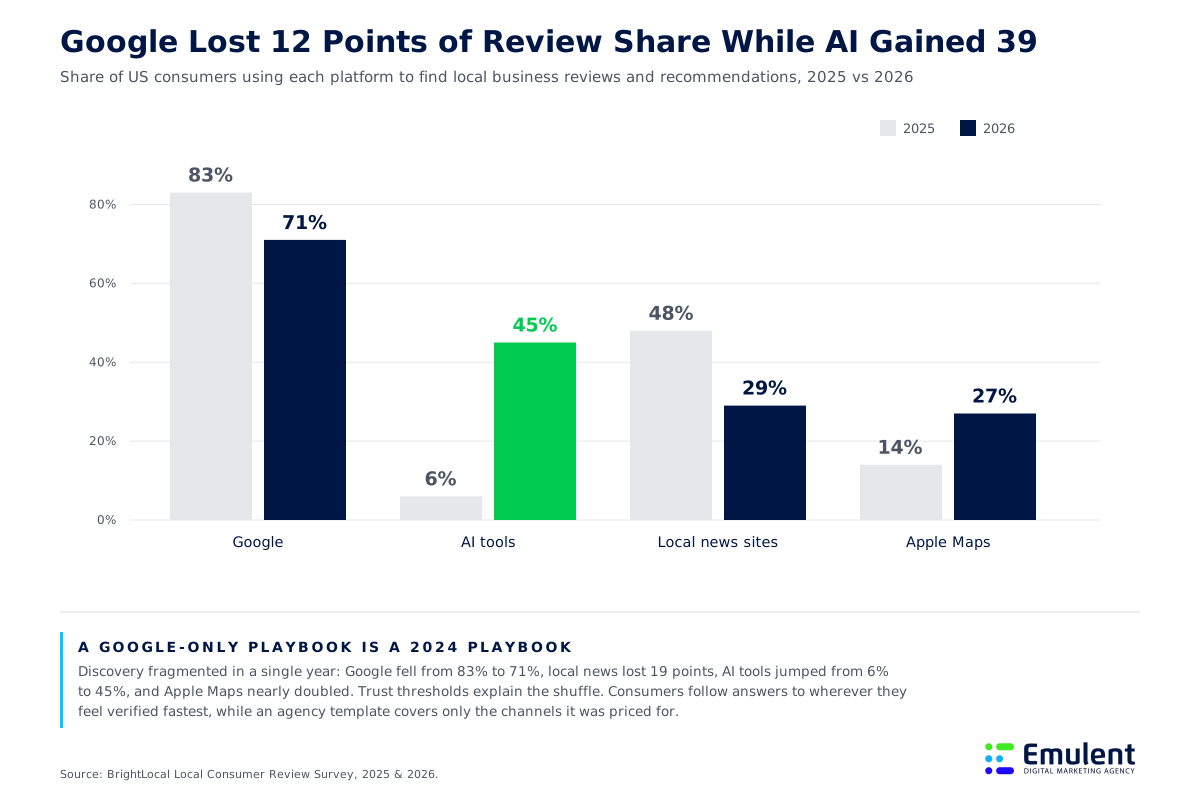
An outsourced fulfillment shop runs the same 2024 checklist for every account: citations, a few posts, a monthly ranking report. That playbook covered maybe 80% of local discovery two years ago. A current Google local SEO service has to cover the map pack, the review profile, and the AI answer layer at once, which is a scope no fulfillment template was priced to deliver. Today it covers a shrinking slice, and the agency selling it to you either does not know or is betting you do not. The questions that follow find out which.
Question 1: Who, by name, will work on my account, and can I meet them before I sign?
Names are the whole test. A reseller cannot name the people who will do your work because the reseller does not know who they are; the fulfillment vendor assigns capacity after the contract clears. So ask for the names, the roles, and a fifteen-minute call with the person who will manage your Google Business Profile. An agency that does the work in-house will make that call happen this week. An agency that hedges (“you’ll have a dedicated account manager”) just told you the practitioner and the person you talk to are different people, in different companies, on different continents.
The account manager tell deserves its own sentence: an account manager is not a marketer. They relay your requests to the fulfillment queue and translate the queue’s output back into a report. We have argued before that authentic content requires senior expertise, not outsourcing, and the reason is behavioral, not sentimental: a writer who has never spoken to a customer cannot reproduce the specifics that make a service page believable, and buyers detect the absence of specifics as risk.
Price is the second half of this question, because the retainer tells you almost nothing about who does the work. Ahrefs’ 2024 pricing survey puts the average monthly retainer at $3,209 for agencies and $3,250 for consultants, while SEOs serving a local market average $1,557.08 a month. Run the hours math on your own quote: at honest US rates, $1,557 buys roughly 10 to 15 senior hours a month. If a proposal promises 40 hours of monthly activity at that price, the labor is not happening at US rates, and you should ask where it is happening instead.
“When the person selling the plan will never touch your account, what you are actually buying is their commission, and the expertise stays in the brochure.” – The Strategy Team at Emulent
Question 2: What did you learn about my market before this call?
A real agency shows up to a sales call already knowing three things about you: who outranks you in the map pack, what your reviews say about you, and one thing on your website they would fix first. Not because they did free work, but because a strategist cannot resist looking. A reseller shows up with a slide deck about themselves, because the deck is the product; your market never enters the process at any point, including after you sign.
Push on this one with a follow-up: ask which competitor they would model and why. Template shops fail this instantly, since the same package gets sold to a plumber in Tucson and a dentist in Buffalo, and no template has an opinion about your competitors. In-house teams pass it without noticing they were tested. Our own engagements start with competitive audit and research before any work is scoped, because scoping work before reading the market is how budgets get spent on tasks the market never asked for.
Listen for the shape of the answer, not just the content. A specific answer sounds like “your top competitor has 340 reviews to your 60, and that gap matters more than any keyword right now.” A vague answer sounds like a description of a process. Processes are what agencies sell when they have nothing to say about you.
Question 3: Why does this need a 12-month contract?
Every justification you will hear for a long contract (“SEO takes time to work”) is an argument for patience, not for paperwork. Patience is your decision to make month by month. The contract exists because the agency’s economics depend on keeping revenue after the client would have chosen to leave, and outsourced shops need it most of all: their model front-loads cheap setup work and coasts on minimal-effort months afterward, which only pays off when you cannot exit. We have decoded the standard clauses in long-term SEO contracts, and we have published the math on why we refuse long-term contracts and why most agencies never will.
The honest version of “SEO takes time” fits inside a month-to-month agreement: an agency confident in its work will tell you results compound over two to three quarters, then let this month’s progress argue for next month’s invoice. Loss aversion does the reseller’s selling here, so name it in the room: the contract is framed as protecting your investment, when it protects theirs.
“A long contract is an agency betting you will want to leave before the work pays off. The only retention tool we want is this month’s results, because the moment paperwork retains a client better than performance does, the agency stops performing.” – Bill Ross, Founder, Emulent
Question 4: Show me the month-three report you would send me
The sample report is a confession, so read it like one. If the first page is keyword rankings, you are looking at an outsourcer, because ranking reports are what fulfillment software generates for free and what account managers forward without reading. We have said it plainly before: ranking #1 is nothing more than a vanity metric. The report you want opens with calls, direction requests, form fills, and booked jobs, because those are the numbers your accountant recognizes.
Rankings also measure a surface that shrinks every year. SparkToro’s 2026 clickstream analysis with Similarweb found that 68% of US Google searches now end without a click to any website, up from 60.45% in its 2024 study with Datos and roughly 45% a decade ago. The series mixes panels across years, so treat the trend rather than the decimals as the finding; the trend is not ambiguous. Google answers more queries on the results page every year, and we have covered how AI Overviews affect SEO as the newest accelerant. An agency still selling position tracking as the scoreboard is selling you a smaller and smaller piece of the game.
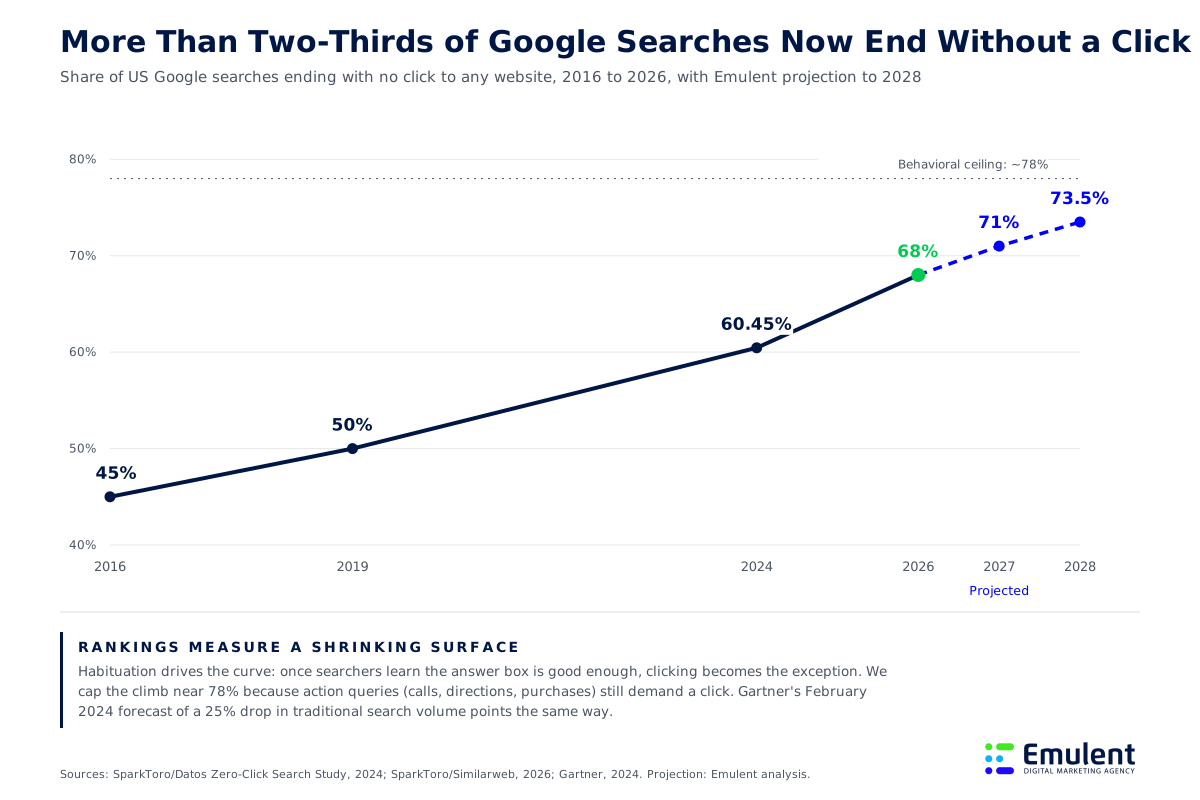
The projection above is ours, and the reasoning travels with it. Habituation explains the slope: once searchers learn the on-page answer usually suffices, clicking becomes the exception, and each year of AI Overviews trains the habit deeper. The ceiling sits near 78% because a durable share of local queries are action queries, meaning the searcher needs to call, get directions, or book, and those still require leaving the page. Gartner’s February 2024 forecast that traditional search volume would fall 25% by 2026 points the same direction, though it measures volume leaving Google entirely while our curve measures behavior inside it.
“A ranking report is the agency grading its own homework. Ask what the phone did last month, because the phone does not care who ranks third for a keyword nobody with a credit card searches.” – The Strategy Team at Emulent
Question 5: How, exactly, will you get me reviews?
There is one legal answer to this question: build a system that asks real customers at the right moment, makes leaving a review effortless, and responds to what comes in. Anything else you hear, including “we have a network,” “we can seed some early momentum,” or a guaranteed number of five-star reviews per month, describes conduct the FTC’s 2024 rule banning fake reviews now punishes with civil penalties for knowing violators, set at $51,744 per violation when the rule took effect in October 2024. Per violation means per review. The FTC sent its first warning letters under the rule in December 2025, and the penalties land on the business whose profile carries the reviews, not just on whoever wrote them. Offshore fulfillment shops manufacture reviews because it is the cheapest output that looks like progress, and the agency that hired the shop will not be the one explaining your profile to a regulator.
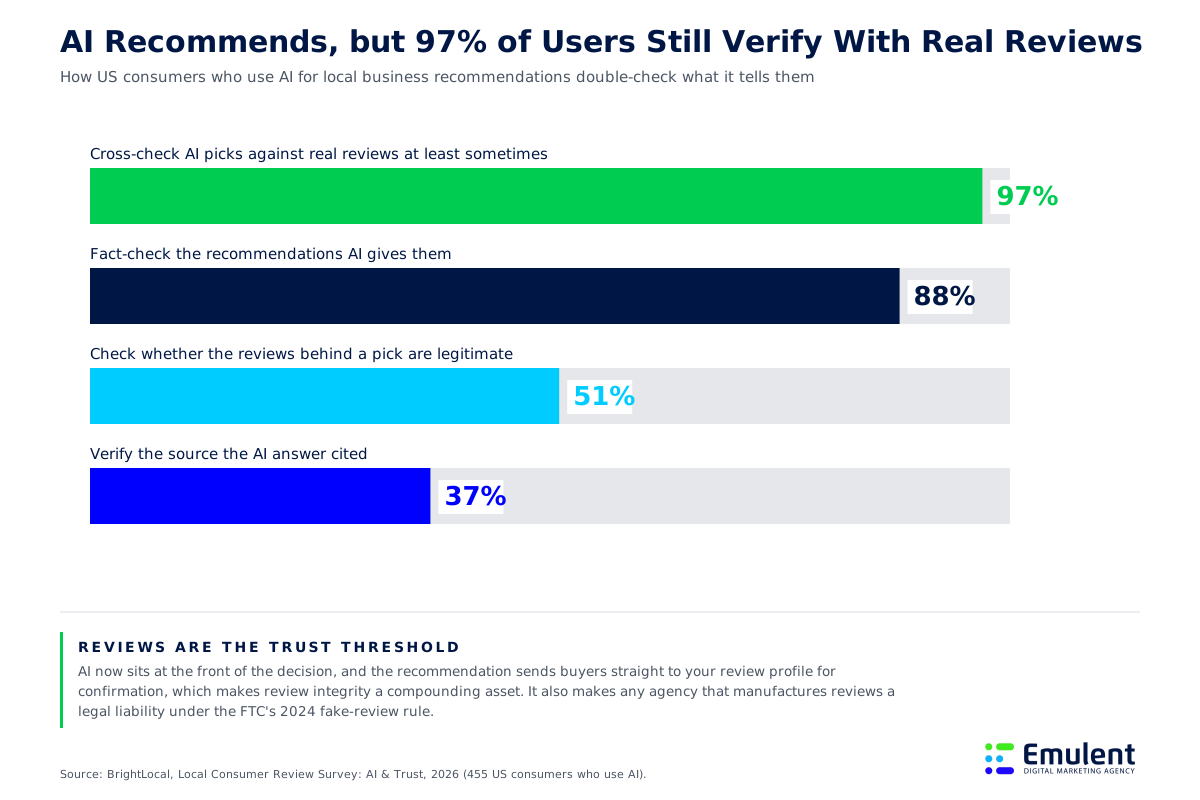
Reviews also matter more now, not less, because AI moved to the front of the buying decision and reviews became the verification layer behind it. BrightLocal’s 2026 AI and trust research found that 88% of consumers who use AI for local recommendations fact-check what it tells them, and 97% cross-check AI picks against real reviews at least sometimes. The AI names you; the review profile closes or kills the deal. A thin, stale, or obviously padded profile now fails two audiences at once: the human reading it and the model deciding whether to recommend you at all.
Question 6: What, in concrete terms, are you doing about AI search?
“We’re keeping an eye on it” is a disqualifying answer in 2026. The BrightLocal survey cited above found the share of US consumers using ChatGPT and similar tools for local business recommendations went from 6% in the 2025 edition to 45% in the 2026 edition, which made AI the third most used local discovery channel behind only Google and Facebook. One year. A 39-point jump. A fulfillment shop running a citations-and-posts template has no line item for this, because templates are written for the market as it existed when the template was priced.
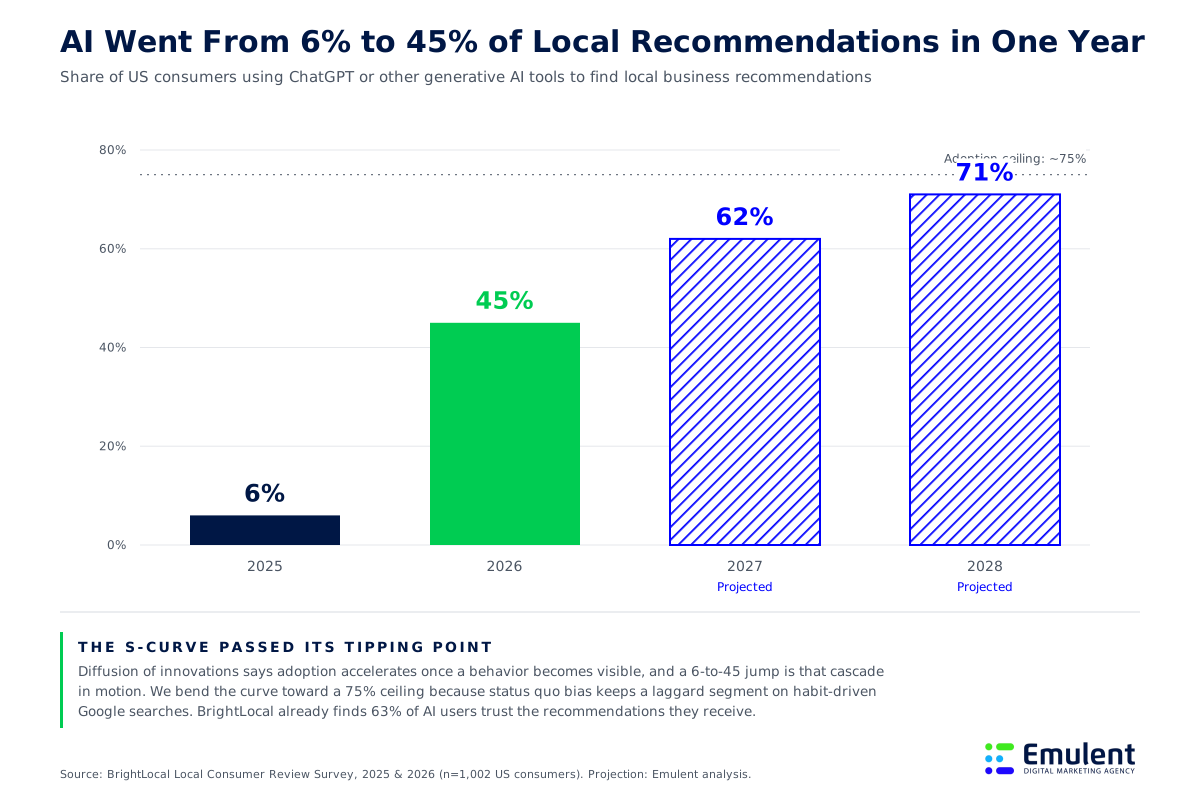
Our projection bends rather than climbs forever, and here is the reasoning in plain language. Diffusion of innovations predicts exactly the pattern the survey caught: a slow single-digit start among early adopters, then a cascade once the behavior turns socially visible, then a flattening approach toward a ceiling. We put the ceiling near 75% because status quo bias is stubborn; a meaningful segment of consumers will keep typing into Google out of habit for years, and no model reaches them. BrightLocal’s companion finding that 63% of AI users already trust the recommendations supports the steep middle of the curve, since trust is the input that converts trial into habit.
A good answer to this question names work: structured data that machines can parse, consistent business facts across the sources AI tools actually read, review depth on platforms beyond Google, and content that answers questions the way a person asks them. That is the substance of real AI SEO services, and an agency doing this work can show you where your business currently appears, and fails to appear, in AI answers for your own service and city. Ask for that screenshot on the call. It takes two minutes to produce and cannot be faked from a template.
Question 7: When we part ways, what do I keep?
You should own every asset the engagement touches: your Google Business Profile, your website and hosting account, your analytics, your content, and admin access to all of it, from day one, in your name. Agencies that register your profile under their accounts, build your site on a proprietary platform you cannot export, or “manage credentials for you” have built an exit toll, and exit tolls are the outsourcer’s second retention tool after the long contract. Ask this question last and watch how fast the answer comes; ownership questions produce a pause in every agency that planned on you never asking.
Get the answer in writing before signing: a one-line email confirming that all accounts and content are yours on departure, with no transfer fee. And know what leaving actually costs you, because the honest answer is measurable rather than scary. We have written about what happens if you pause SEO, and the compounding you give up is a real cost; being locked out of your own business profile is a manufactured one. An agency confident it will keep you on merit loses nothing by making your exit clean.
The pattern behind the seven questions
Every question above tests the same variable from a different angle: distance. Distance between the person selling and the person doing. Distance between the report and the revenue. Distance between the contract’s length and the agency’s confidence. Distance between your market and their template. Resellers are distance businesses; the markup lives in the gap. In-house senior teams answer all seven questions in one meeting without preparing, because there is no gap to hide.
Take the questions into every sales call you sit through, including one with us. If you want to hear how we answer them, talk to a marketing agency that publishes its positions in advance and asks you to hold it to them, month by month, with no contract doing the retaining.