
Most marketing agency contracts are built on six-to-twelve-month minimums, 60-to-90-day exit notices, and reporting decks full of impressions. We built Emulent the other way: a month-to-month digital marketing agency where senior people do the work and revenue is the only scoreboard. People in our industry call that crazy. We think the standard model is the crazy one, and the math below explains why.
Key takeaways:
- Patience and lock-in are different things. SEO and content genuinely need six to twelve months to compound. A clause that blocks you from leaving protects the agency, not the strategy.
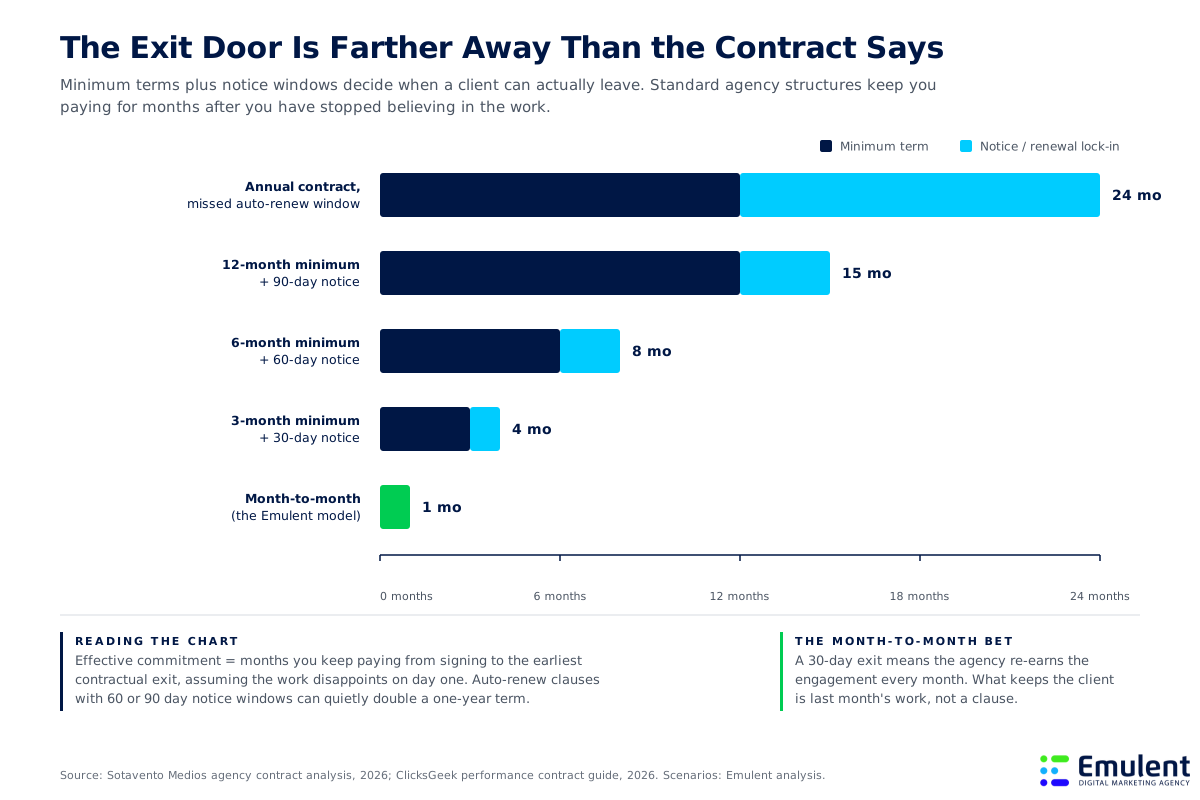
- Standard contracts run longer than they look. A 12-month minimum with a 90-day notice is a 15-month commitment, and a missed auto-renew window can stretch it to 24.
- The clock is working against you. Median B2B SaaS customer acquisition payback stretched from 11 months in 2021 to 18 in 2026, so a wasted quarter costs more than it ever has.
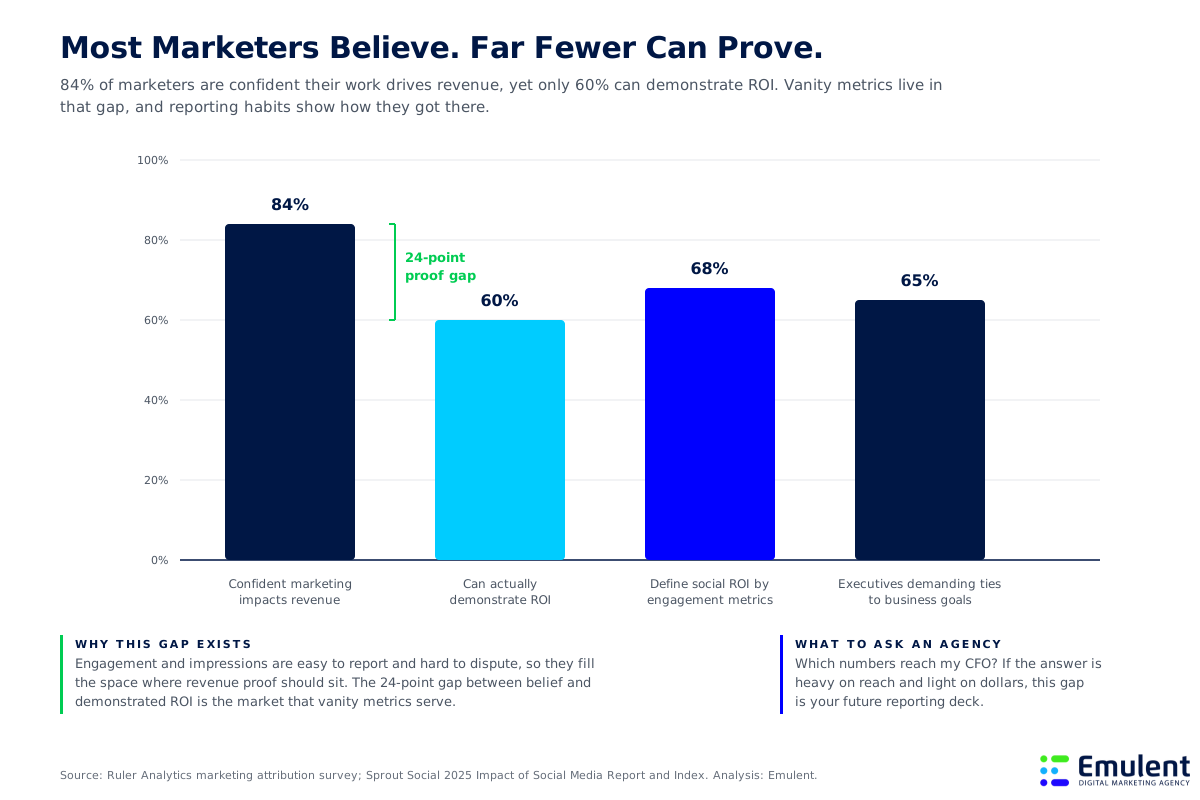
- Belief outruns proof. 84% of marketers are confident their work drives revenue, but only 60% can demonstrate ROI. Vanity metrics live in that 24-point gap.
- Month-to-month moves the risk where it belongs. When a client can leave in 30 days, last month’s work becomes the contract.
- Five questions expose any agency’s model before you sign: term, team, payment, metrics, and ownership.
Why Do Agencies Say They Need Long Contracts?
Here is a question that tells you almost everything about a marketing agency before you sign anything: if you’re confident in the work, why do you need me locked in for a year? We’ve asked it for close to two decades and never found an answer we could say to a client with a straight face.
The industry’s answer is that marketing takes time, and there is a real kernel of truth in it. SEO and content need six to twelve months to compound, and anyone promising overnight results is lying to you. We’re not arguing against patience. Patience is the job.
We’re arguing against lock-in, which is a different thing entirely. “Give the strategy time to work” and “you cannot leave for twelve months” are not the same sentence. The first is honest counsel. The second is a clause that shields the agency from the consequences of mediocre work. The industry has spent years blurring those two ideas together because the blur is profitable, and that blur shows up in three specific structures.
Patience is a strategy decision. Lock-in is a billing decision. Any agency that treats them as the same sentence is telling you which one it actually cares about. – Emulent Strategy Team
Which Three Agency Incentives Quietly Work Against You?
The three structures that appear in almost every standard agency agreement:- The lock-in. Six-to-twelve-month minimums are standard across B2B marketing, and most agreements bury a 60-to-90-day termination notice inside them. Read that plainly: if the work is bad in month three, you often can’t act on it until month five or six, and you pay full freight the whole way out.
- The billable hour. When an agency sells you hours, it has quietly inverted your interests. You want the outcome; they’re paid for the effort. Every efficiency they find, every automation and reusable system, is revenue they have to not bill you for. The model rewards taking longer.
- The vanity metric. Impressions, reach, ranking improvements on keywords nobody searches. Pretty dashboards that climb up and to the right while leads, sales, and revenue sit flat. These numbers exist to make month eleven look productive enough to trigger month twelve’s renewal.
Run the numbers on the first one and the picture gets uncomfortable fast. Once you add notice periods and auto-renew traps to the stated term, the real exit door sits much farther away than the contract’s headline number suggests:
The third structure leaves a paper trail too. Industry research shows 84% of marketers are confident their work impacts revenue, yet only 60% can demonstrate ROI. And the reporting habits explain how: 68% of marketing leaders still define social ROI by engagement metrics, even while 65% of executives are asking for direct ties to business goals. That 24-point gap between belief and proof is exactly where vanity reporting lives, and it is the gap in-house marketers most often inherit from their agencies.
None of these structures is abstract. Each one lands on your P&L in a specific way, and the third one is getting more expensive every year.
What Do These Structures Cost You in Real Dollars?
The lock-in costs you bargaining power. The only real power a client has is the ability to walk, and a long contract sells that power back to the agency at the exact moment you’re most likely to need it. Skip that protection and a bad month three becomes a conversation instead of a countdown.
The billable hour costs you a shared direction. You spend the engagement subtly working against each other, you pushing for outcomes while they protect hours, instead of rowing the same way. The waste rarely shows up on an invoice, but it shows up in how slowly things ship.
The vanity metric costs you the most, because it costs time you can’t get back. Every quarter spent admiring impressions is a quarter your acquisition math gets harder, and that math has been deteriorating for five straight years. The median B2B SaaS company earned back its customer acquisition cost in about 11 months in 2021. By 2026 that figure sits at 18 months, parked right at the ceiling most investors will tolerate, with customer acquisition costs up 40% to 60% since 2023 on paid-channel inflation alone. We track these customer acquisition cost benchmarks closely, and the trend is the single strongest argument for impatience with bad reporting in B2B marketing.
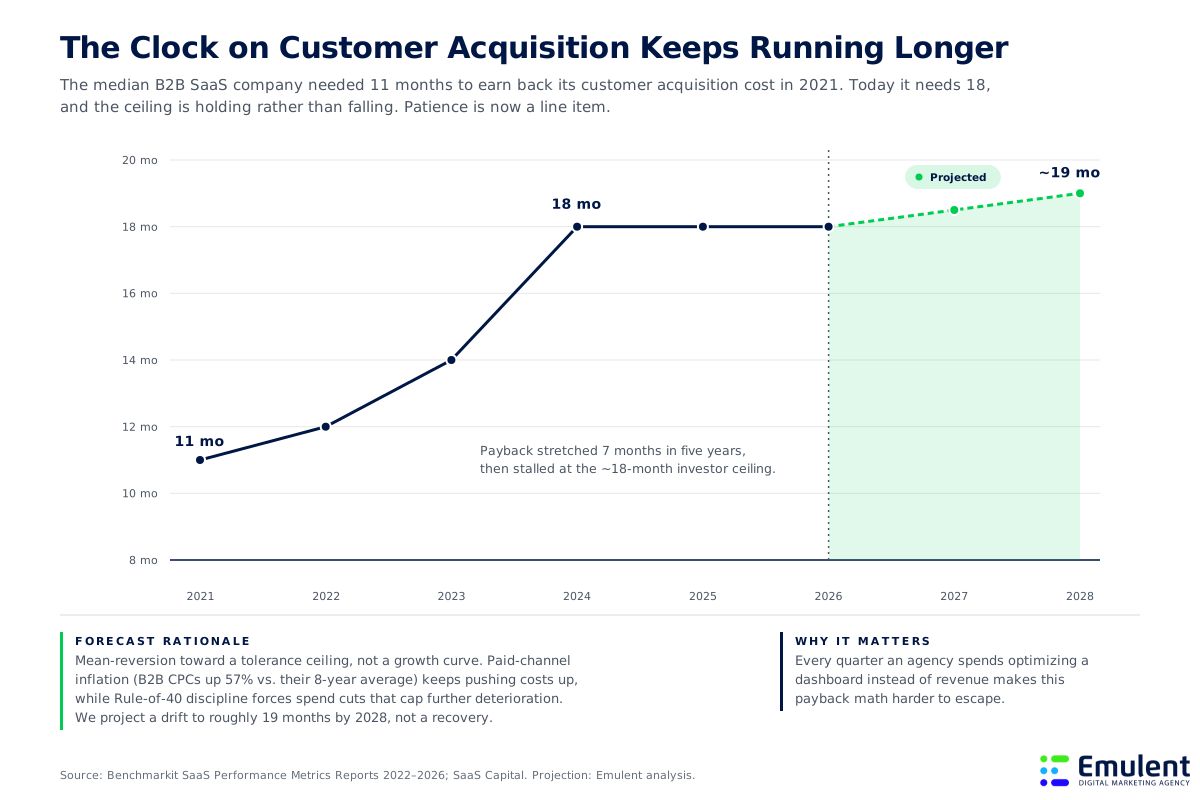
When payback was 11 months, a wasted quarter stung. At 18 months, a wasted quarter compounds. The cost of an agency polishing a dashboard instead of a pipeline has roughly doubled, quietly, while nobody was watching the right number. – Emulent Strategy Team
When it costs more and takes longer to win a customer, you cannot afford a partner whose incentives point at a dashboard instead of a dollar. So we bet the other way on all three structures.
How Does a Month-to-Month Agency Model Hold Up in Practice?
Our three opposite bets, and the honest reason each one works:- Month-to-month, always. You can leave whenever the work stops earning its keep. That reads like a risk we’re taking on; in practice it functions as a discipline we impose on ourselves. If a client can walk in 30 days, we cannot coast. The quality of last month’s work is the contract.
- Senior people, start to finish. No junior swap-ins after the pitch, no re-explaining your business to a new account manager every quarter. Bill Ross leads the work personally, with twenty years behind it. That only pencils out because we deliberately keep a small client roster. We’d rather be entrenched in a few businesses than spread thin across many.
- Revenue reporting only. Leads, sales, pipeline, the numbers your CFO recognizes. If a metric doesn’t connect to your business, it doesn’t go in the deck to look busy.
You don’t have to take our word that this holds up. Lubrizol’s CDMO team called us “intellectually generous” and stayed because the SEO results kept coming, with no clause keeping them. Reprocell came to us to crack the U.S. market, saw organic reach climb 263%, and then handed us every other business unit they had. Nobody was contractually trapped into any of it. They stayed because leaving never made sense, which is the only retention strategy we wanted when we built Emulent differently on purpose.
There is a catch, and you deserve to hear it. This model moves the risk onto us instead of removing it, which is where we think it belongs. There’s no clause to hide behind in a slow month and no twelve-month runway to bury an early misstep. We have to be good, repeatedly, on purpose. The model asks something of you too: clarity about what success looks like, and the patience mentioned earlier to let real strategy compound. Real results take longer than next Tuesday. What we promise is that you’ll never pay us out of obligation instead of conviction.
If the work can’t survive a 30-day decision window, the problem is the work. A contract long enough to hide that fact only delays the day you find out. – Emulent Strategy Team
Whether you hire us or anyone else, the same logic gives you a practical filter you can apply this week.
What Should You Ask Any Agency Before You Sign?
Five questions that reveal an agency’s real model, and what to listen for:- What’s your minimum term, and what’s the notice period to leave? The shorter both are, the more confident they are in the work.
- Who actually does the work: the people in this room, or someone I haven’t met? Find out before the contract, not after.
- How are you paid: for hours, or for outcomes? Listen for whether your incentives and theirs point the same way.
- Which numbers will you report, and how do they connect to revenue? If the answer is heavy on impressions and light on dollars, you have your answer.
- Who owns what we create together? Your brand-specific work should belong to you, full stop.
An agency that flinches at any of those is telling you something. An agency that welcomes them is telling you something better.
Ready to Work With an Agency That Earns It Monthly?
The Emulent Marketing Team runs every engagement on the model described here: month-to-month terms, senior strategists doing the actual work, and reporting that starts and ends with revenue. If you’re evaluating agency partners, renegotiating an existing agreement, or want a second set of eyes on the five questions above, we’re glad to talk it through with no pressure and no clause waiting at the end. Contact the Emulent Team if you need help with your digital marketing, and we’ll earn the second month the same way we earn the first.