
Most advice on creating engaging content opens with a list of content ideas. We think that is the wrong place to start. The reason no one engages with your content is rarely a shortage of ideas. It is that the supply of content has exploded while attention and engagement have fallen, so competent, generic posts now disappear the moment they hit a feed. This piece looks at why that happens and what actually earns engagement, through the lenses we use when we build a client’s content strategy.
Five takeaways from this article:
- Run the “so what” test before you publish. If a post has no specificity, no stakes, and no surprise, it is noise the moment it joins a feed where half the new articles are written by machines.
- Publish answers, not announcements. Audiences engage with content that solves their problem, not content built around your launch calendar. Company-first posts teach people to scroll past you.
- The first line is the whole post. Most readers leave before they reach your second sentence, so the opening carries the entire bet, not the polish further down.
- Stop scoring yourself on likes. The like has lost about two-thirds of its value since 2021 and keeps falling. Saves, shares, replies, and leads are the responses worth chasing.
- Expect a floor, not a rebound. The content flood settles near the mid-50s and engagement rates flatten near a practical minimum, so the durable play is substance plus conversation run as a system, not the next format.
Does your content pass the “so what?” test?
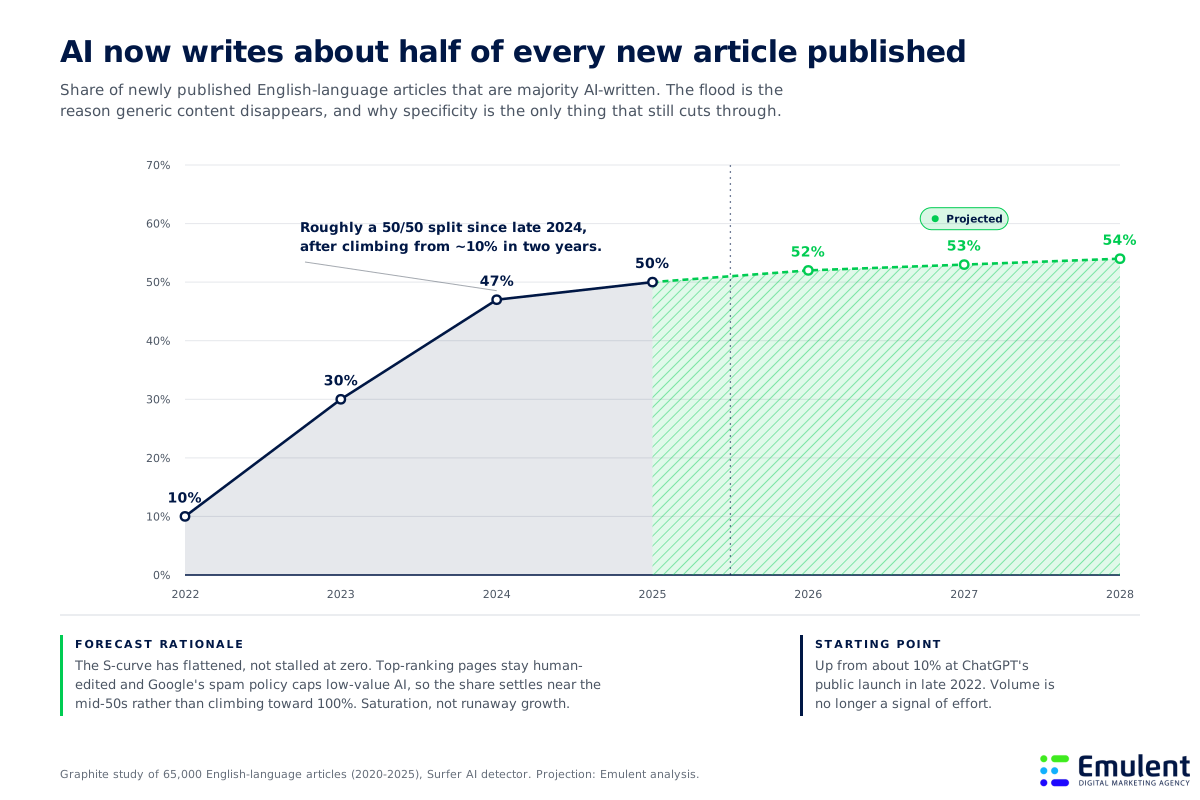
The first thing to accept is the size of the pile your content lands in. By 2025, about half of every newly published English-language article was written mostly by machines, up from roughly one in ten when ChatGPT launched. When anyone can produce a competent post in seconds, producing one is no longer proof of effort or insight. Competent and generic is now the default, and the default is invisible. This is the core problem behind marketing in a saturated market, and it is why standing out has stopped being optional.
So the bar moved. Before a post goes out, we run it through one filter.
The three questions every post has to pass:
- Specificity: Does it carry a real number, name, or example that a search summary could not generate on its own? “Improve your engagement” is a category. “Carousels earn about 109% more interaction per person reached than Reels” is a fact someone can use.
- Stakes: Does the reader gain or lose something by knowing this? If nothing changes for them, there is no reason to keep reading.
- Surprise: Does it push against something the reader already assumes? Content that confirms the consensus adds nothing the flood does not already hold.
If a draft fails all three, more editing will not save it, because the problem is not the writing. The piece simply restates what everyone already published, and that is the content that ranks nowhere and gets no engagement no matter how clean the prose. The fix lives in the substance, not the polish.
Substance is not only about facts, though. The most common reason content fails this test is that it answers a question the audience never asked.
– Strategy Team at Emulent Marketing
Are you publishing announcements or answers?
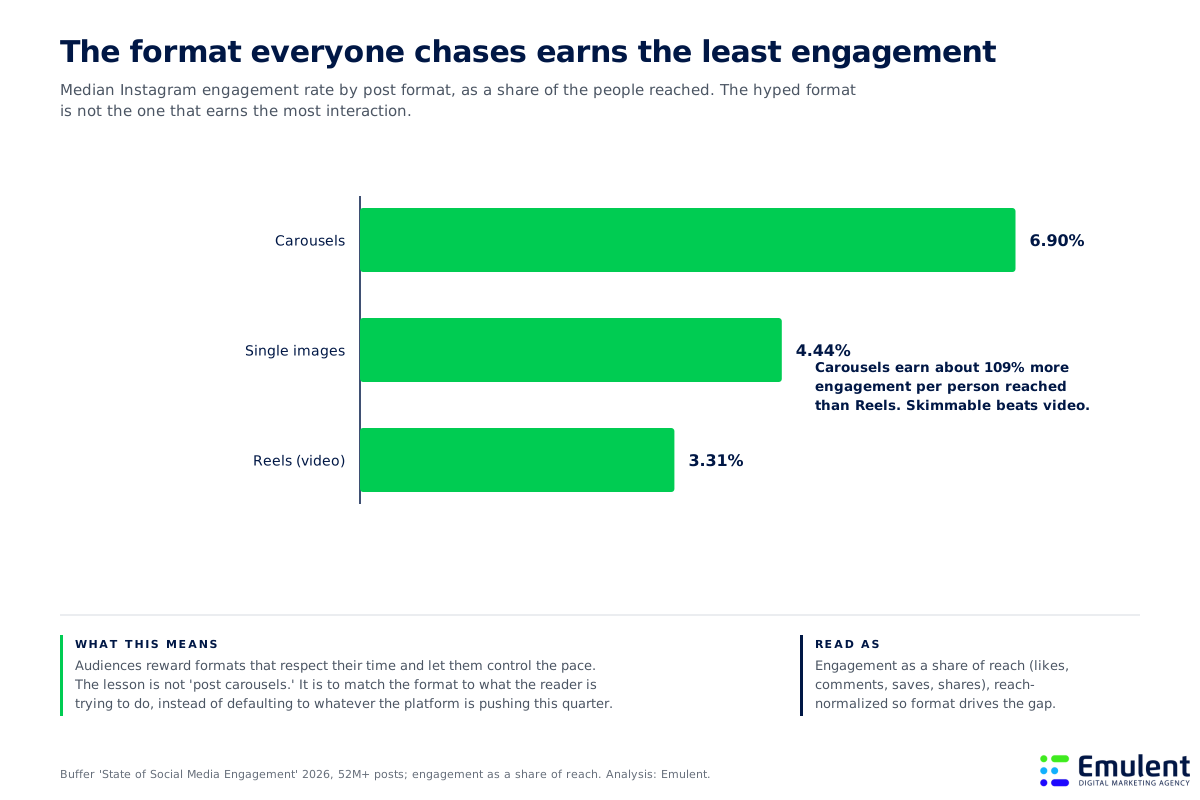
A lot of content fails before anyone judges its quality, because it was written from the wrong calendar. Companies tend to publish around their own events: a launch, an award, a milestone, a “we are excited to share.” Those posts serve the org chart, not the reader, and readers can feel it. The clearest sign shows up in which formats win.
On Instagram, carousels and plain images out-earn polished Reels by a wide margin, because they let the reader move at their own pace and pull out something useful. The point is not about one platform or one app. Audiences reward content built to help them, and they quietly ignore content built to broadcast.
How to rewrite a company-first post as a reader-first one:
- Lead with their problem, not your news: Open on the situation the reader is in, then let your update arrive as the answer to it.
- Trade the feature for the outcome: “We added X” means nothing until you say what X lets the reader do or avoid.
- Cut most of the “we”: Count how many sentences begin with your company name. Most can begin with “you” instead.
When every post is an announcement, you teach your audience that your content is about you. They respond by tuning out, and over time even your useful pieces get read and then forgotten. That reputation is expensive to undo.
Writing for the reader buys you a fighting chance. But even an audience-first piece is lost if its opening line does not earn the next one.
Why is the first line doing all the work?
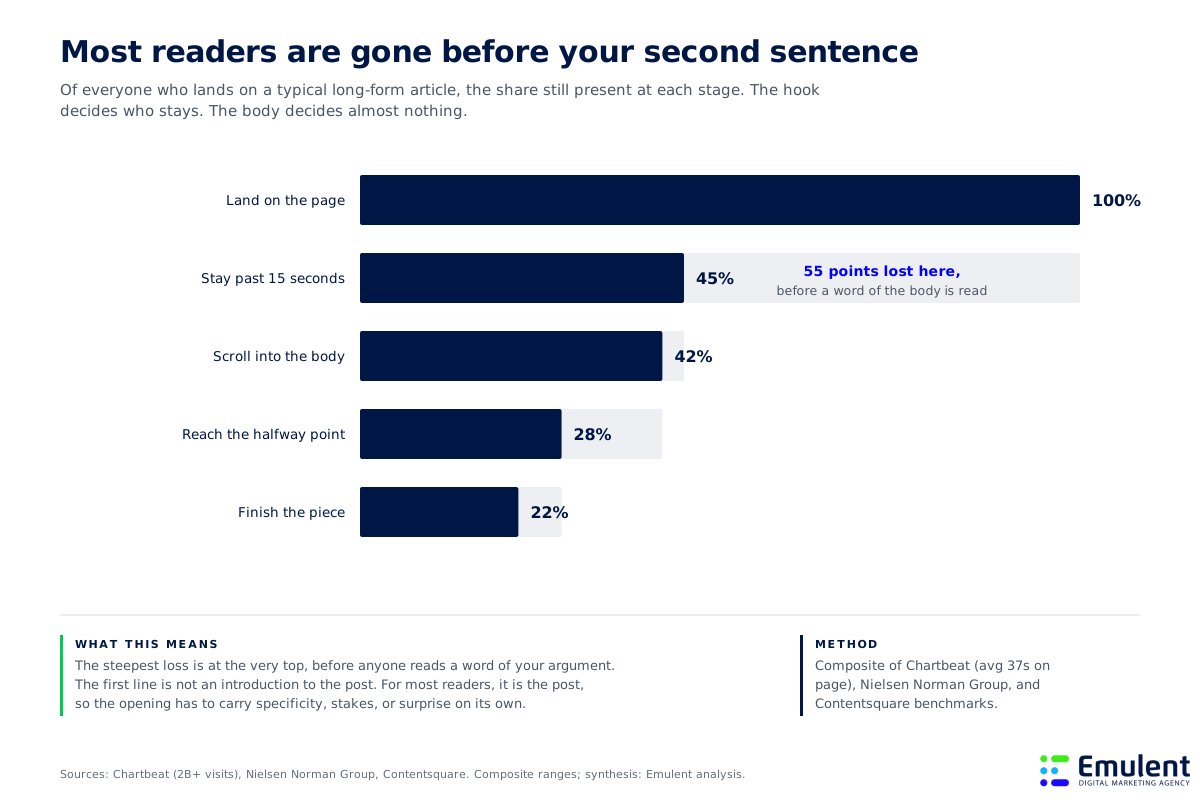
Picture the journey of a single reader who lands on your post. On a typical long-form article, more than half are gone within fifteen seconds, before they scroll into the body at all. By the time anyone reaches your carefully argued middle section, you have lost roughly three-quarters of the people who showed up. The first line is not a warm-up to the real content. For most of your audience, it is the only content they will ever see.
This is also where differentiation lives or dies. Most openers sound identical: a slow throat-clear, a dictionary definition, a long runway before the plane finally takes off. A first line that blends in guarantees your best thinking goes unread, lumped in with everything else in the feed.
What a hook has to accomplish before the reader scrolls:
- Name a specific tension: Point at a real problem or contradiction the reader recognizes, not a generic topic.
- Take a position: Say something that could be argued with. Safe openers are forgettable openers.
- Promise a payoff they cannot get elsewhere: Signal that the next ninety seconds hold something the flood does not.
Skip this and your reach numbers can look healthy while your real readership stays tiny, because traffic counts arrivals, not attention. That gap is exactly why a site can get plenty of traffic and still not convert it into anything. You paid to bring people in and then lost them at the door.
A strong opening earns you attention. The harder question is what to do with it, and most teams answer that with the wrong scoreboard.
– Strategy Team at Emulent Marketing
Which engagement metric actually matters?
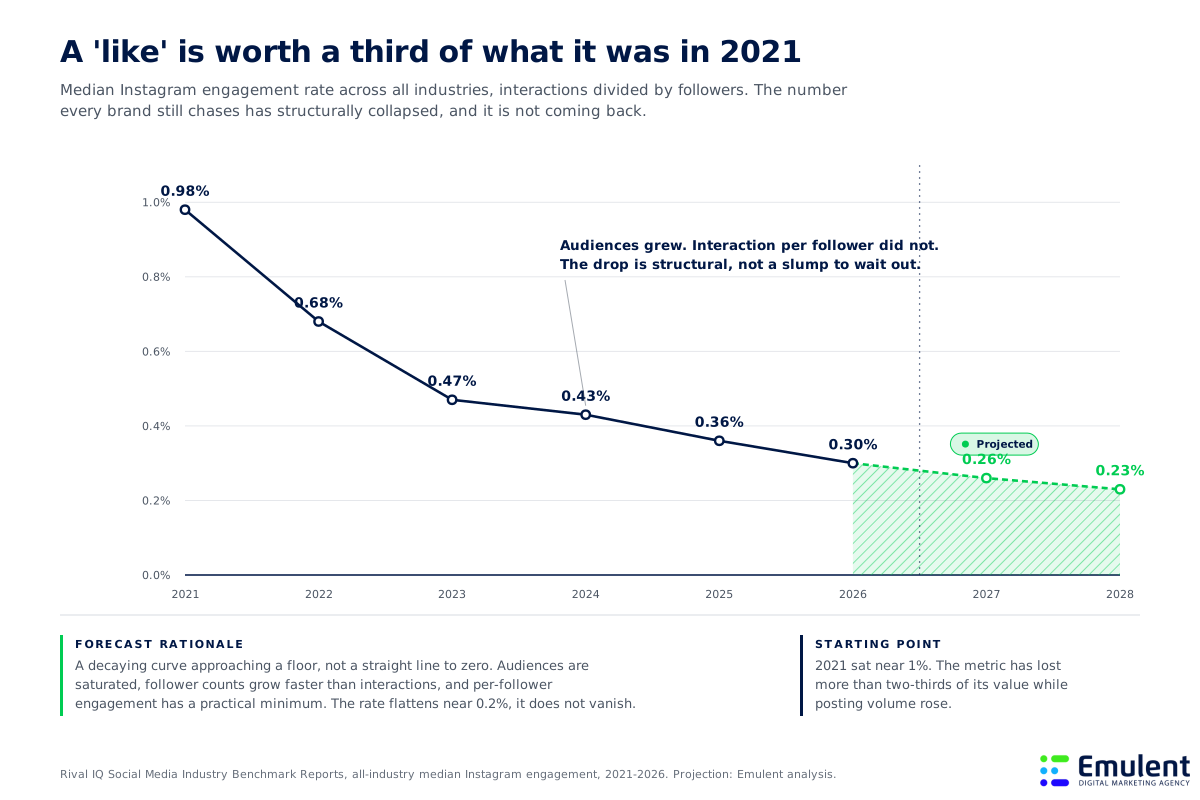
Once you have a reader’s attention, the temptation is to measure success in likes. We would steer you away from that. The median like is worth about a third of what it was in 2021, and the line keeps sliding toward a floor. Building your content strategy around a number that is shrinking, and that barely connects to revenue, is a losing trade. Ranking and like counts are the classic vanity metrics: they feel good and decide little.
The responses worth chasing are the ones that signal intent or trust, and the ones that show up in your business.
The engagement signals that actually carry weight:
- Saves and bookmarks: Someone planning to come back is worth more than a hundred reflex taps.
- Shares and forwards: People stake their own reputation when they pass your content along, which is the strongest vote a feed can give.
- Replies and comments: A conversation is the start of a relationship. Answering comments lifts engagement by 21% to 42%, and accounts that go quiet lose ground faster than they expect.
- The off-platform responses: Replies to your emails, demo requests, and leads are the only metrics that pay salaries.
Chase likes and you point your content at the number falling fastest and tied least to outcomes. The same effort spent prompting a save, a reply, or a click compounds, because each of those actions moves someone closer to buying. Views behave the same way for video: a big view count with no saves or comments is applause, not pipeline.
If the metrics most people chase are decaying, the fair question is what to plan for over the next few years.
– Strategy Team at Emulent Marketing
What should you expect from engagement heading into 2027?
Forecasts in marketing tend to run hot. We would rather give you a realistic one, and two patterns in the content marketing data are already clear. The flood of machine-written content is leveling off near the mid-50s rather than rising to swallow the web, because the pages that actually rank still need human editing and search engines keep pushing low-value content down. And engagement rates are settling toward a floor rather than climbing back to where they were.
Read together, those two lines say something useful: no single tactic is going to “fix” your engagement, and you should be wary of anyone who promises it will. What works instead is slower and steadier.
Where to put your effort as engagement settles:
- Publish less, and deeper: One piece that passes the “so what” test beats ten that do not, and it costs you less to make.
- Build a reply habit: Treat comments and questions as the work, not the afterthought. Conversation is the part of engagement still trending up.
- Pick a few formats and run them as a system: Consistency compounds, while chasing every new format resets you to zero, since content built as a system keeps working after the launch energy fades.
- Say no on purpose: A focused content plan is shaped as much by the channels and topics you skip as the ones you keep.
Teams that jump to each new format spend their time relearning a tool and never build an audience. Teams that pick a lane and keep showing up earn a reader who comes back, and that returning reader is the only kind of engagement that turns into a business.
– Strategy Team at Emulent Marketing
Where the Emulent team fits in
Engaging content has less to do with generating more ideas and more to do with earning attention you can turn into action. Our team helps companies build content that passes the “so what” test, leads with the reader, and gets measured on saves, replies, and leads instead of vanity counts. We handle the research, the positioning, and the publishing rhythm so your content competes on substance rather than volume.
If you want help making your content worth engaging with, contact the Emulent team to talk through your content marketing.