
SaaS marketing has split into two playbooks. One group of companies keeps running the 2019 formula of free trials, paid search, and MQL quotas, and watches acquisition costs climb every quarter. A smaller group, the fastest growers, has rebuilt its B2B SaaS marketing around three shifts: a hybrid motion layered on top of product-led growth, deliberate visibility inside AI assistants, and a budget that funds brand building instead of treating it as a leftover. We pulled the benchmark data for each shift, charted it, and projected where the numbers are headed next, so you can pressure-test your own SaaS growth strategy against what the leaders are doing.
Key takeaways from this study:
- CAC payback jumped from 14 to 18 months in one year. Acquisition spend now takes half a year longer to return its money, and we project a plateau near 20 months by 2026, not relief.
- Pure PLG has stopped differentiating itself. 58% of B2B SaaS companies run a product-led motion, and 67% of the successful ones operate a hybrid model by year three.
- Product-qualified leads convert at 25% versus 9% for traditional MQL funnels. The win comes from routing product signals to humans, not from removing humans.
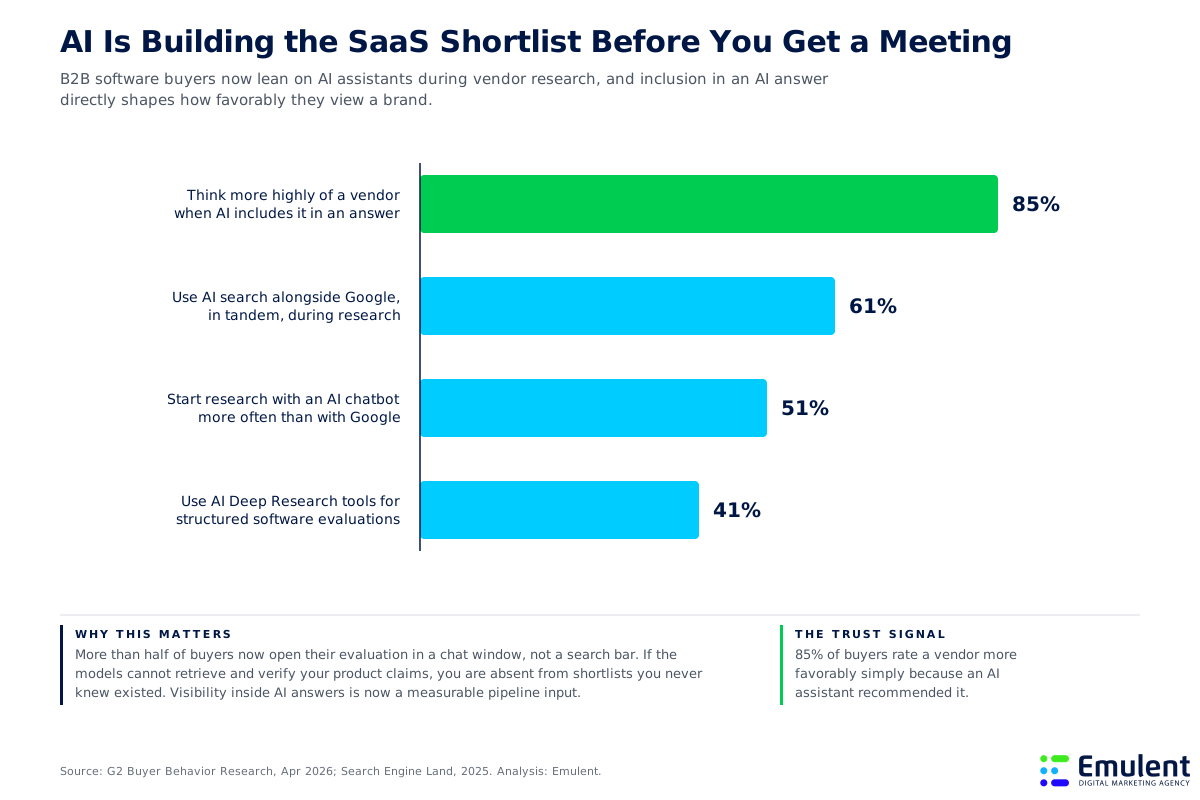
- 51% of B2B software buyers now open vendor research in an AI chatbot more often than in Google, and 85% rate a vendor more favorably when AI recommends it.
- Typical B2B teams spend 31% on brand against a research-backed optimum of 46%. The fastest growers close that gap and spend roughly 40% more on marketing overall.
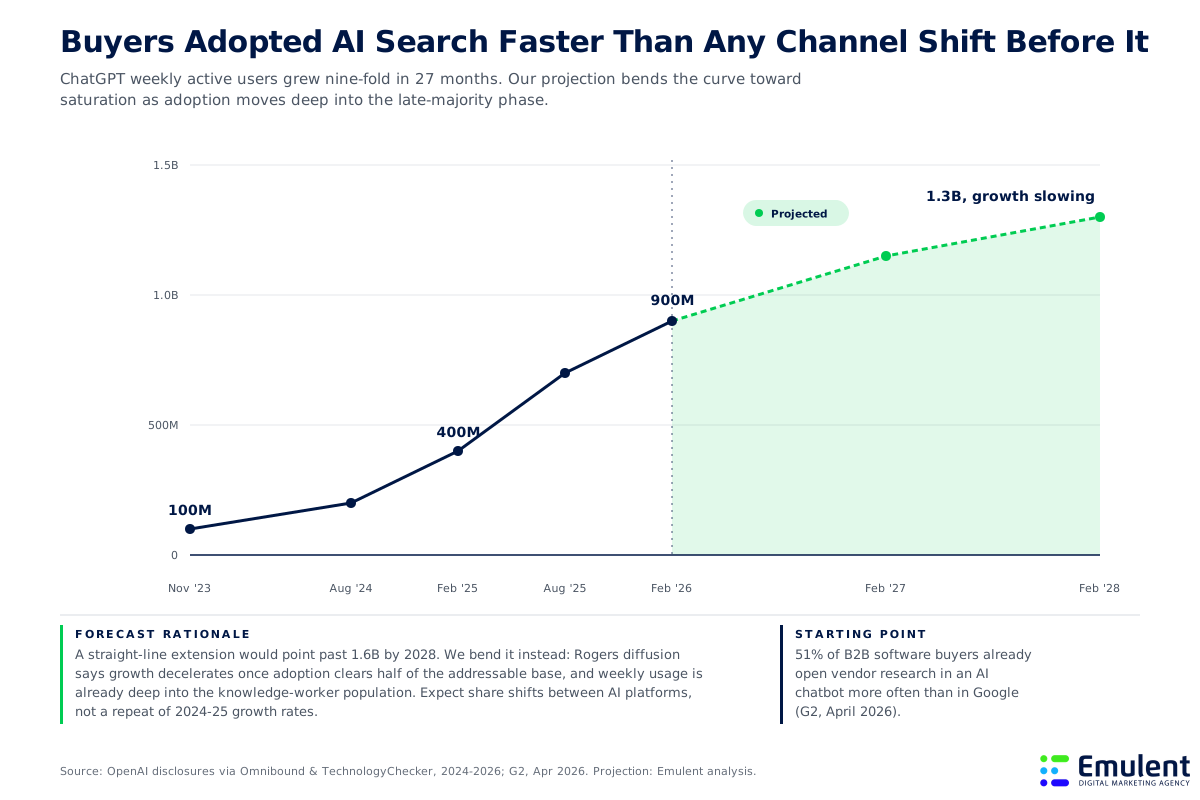
- AI search adoption is decelerating, not disappearing. The land-grab window for AI visibility is open now and will narrow as platforms mature.
Why Is Product-Led Growth No Longer Enough on Its Own?
Product-led growth won the last decade because it was cheap. Let the free tier do the selling, skip the sales headcount, and acquisition costs stay low while competitors burn cash on outbound. That math broke once everyone adopted the same playbook. With 58% of B2B SaaS companies running a PLG motion, a free trial is now the price of entry, and the acquisition efficiency it once delivered has evaporated.
The clearest evidence is in payback. Benchmarkit’s data on private B2B SaaS companies shows the median CAC payback period stretched from 14 months in 2023 to 18 months in 2024, while the new-customer CAC ratio rose 14% in a year to roughly $2 spent for every $1 of new ARR. Median growth rates fell over the same window. Companies are paying more, waiting longer, and growing slower, which is the textbook signature of a saturated channel. Our customer acquisition cost benchmarks show the same pattern repeating across most digital categories, but SaaS is feeling it first because SaaS adopted self-serve first.
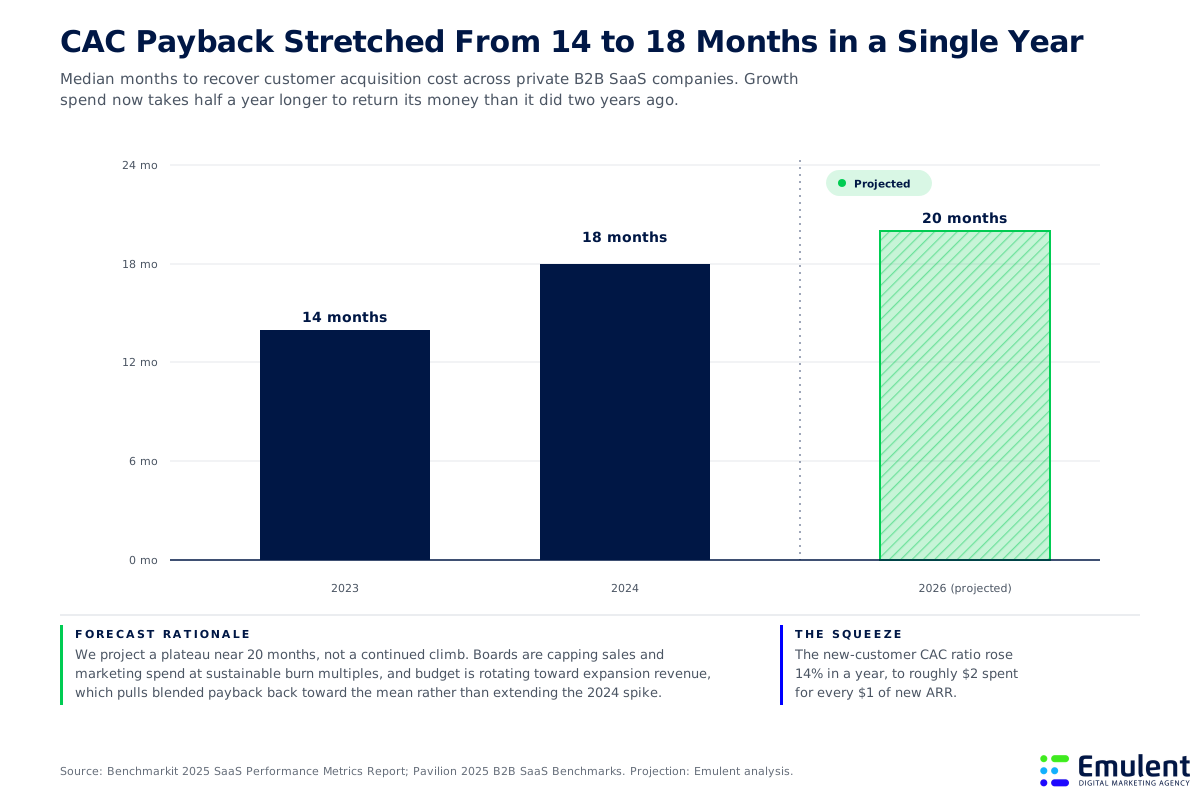
We project a plateau near 20 months rather than a runaway climb, because boards are capping sales and marketing spend at sustainable burn multiples and rotating budget toward expansion revenue. That plateau is not good news, though. It means the era of buying your way to efficient growth is over, and the companies that keep pulling ahead are the ones changing what they layer on top of the product motion.
“When every competitor has a free tier, the free tier stops being a strategy. The strategy becomes what you do with the usage data it generates.” – Emulent Strategy Team
What Do Fast Growers Layer on Top of PLG?
The fastest-growing SaaS brands did not abandon product-led growth. They stopped treating it as the whole engine and started treating it as the intake valve. The numbers make the case plainly: companies that route product-qualified leads to sales convert free accounts to paid at 25%, against 9% for companies running a traditional MQL funnel. Product-led companies also post a Rule of 40 score of 34 versus 20 for sales-led peers, meaning the model produces healthier growth-plus-margin economics when humans enter at the right moment.
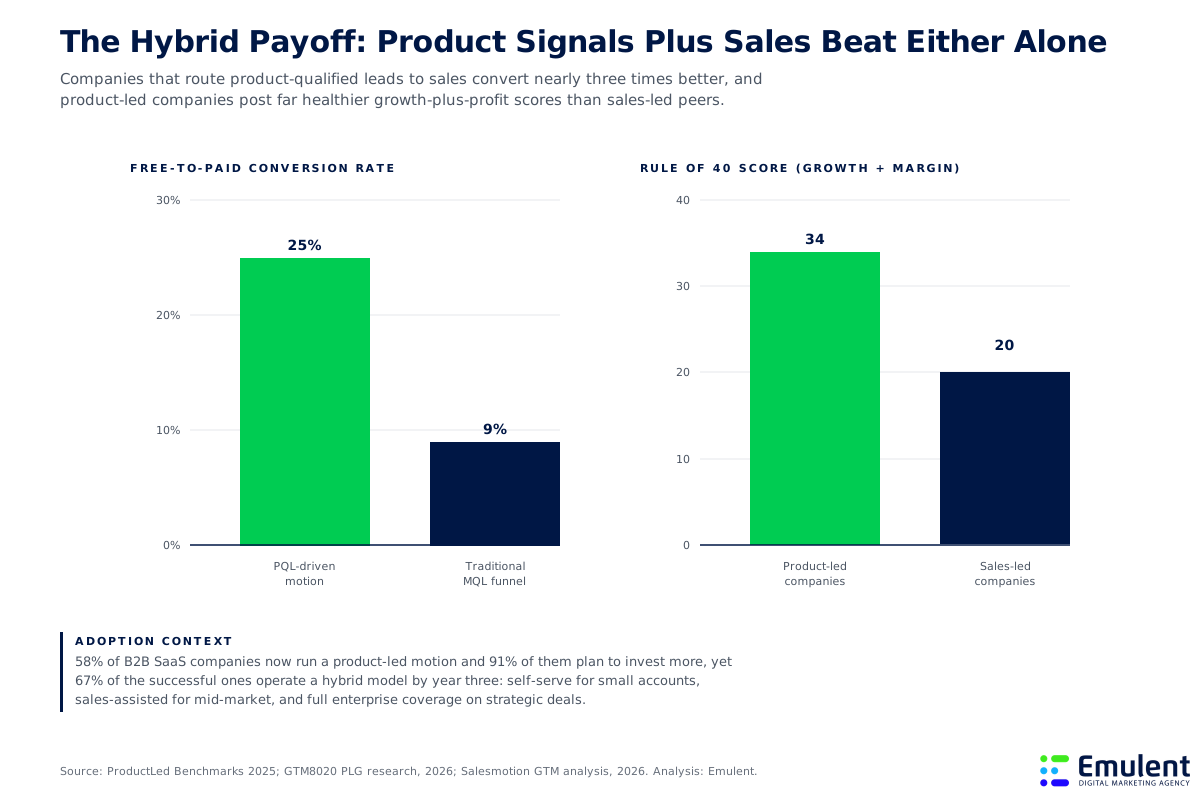
That is why 67% of successful SaaS companies operate a hybrid model by year three, and 91% of PLG companies plan to increase their investment in the motion. The layering follows a consistent pattern we see across high-growth clients of our B2B marketing services practice as well.
The layers fast growers add to a product-led base:
- Sales triggered by product signals. Reps engage when an account hits usage thresholds, invites teammates, or touches a paywalled feature, so outreach lands when intent is provable instead of guessed.
- Segmented motions by deal size. Self-serve handles small accounts, sales-assist covers mid-market, and a full enterprise motion takes strategic deals, all fed by the same product data.
- Expansion as a marketing channel. With existing customers now generating about 40% of new ARR, lifecycle campaigns aimed at seat growth and cross-product adoption get real budget, not leftover automation.
- Category content that earns the evaluation. Comparison pages, honest pricing breakdowns, and practitioner-grade education pull buyers in before the trial, which raises trial quality instead of trial volume.
Every one of those layers depends on being found and trusted during research, and the place that research happens has moved.
How Is AI Search Rewriting the SaaS Shortlist?
The shift in buyer behavior is faster and further along than most marketing plans assume. G2’s April 2026 buyer research found that 51% of B2B software buyers now start their vendor research with an AI chatbot more often than with Google, and 61% run AI search and Google in tandem. The trust effect is even more striking: 85% of buyers think more highly of a vendor simply because an AI assistant included it in an answer, and 41% are using Deep Research tools to run structured software evaluations end to end.
The audience scale behind that behavior built up in about two years. ChatGPT grew from 100 million weekly active users in late 2023 to 900 million by February 2026. We project the curve bending toward saturation near 1.3 billion by 2028, because diffusion slows once adoption clears half of the addressable base. The practical read: the growth phase that rewarded early movers is closing, and what follows is a fight for share of answers, much like the fight for share of rankings that followed Google’s own maturation. The mechanics differ from classic SEO, though, and they interact with what Google AI Overviews are doing to traditional click-through at the same time.
“Buyers are not asking AI for a list of links. They are asking for a verdict. Your job is to be retrievable, verifiable, and consistent enough that the verdict includes you.” – Emulent Strategy Team
What Do AI-Recommended SaaS Brands Have in Common?
When we audit which SaaS brands the major assistants recommend in a category, the winners share traits that have little to do with ad spend and a lot to do with how machine-readable their reputation is. AI models assemble answers from product documentation, review platforms, comparison content, and community discussion, then weigh how consistently those sources agree. Brands that win AI recommendations have engineered that agreement on purpose, which is the core of the AI SEO services work we do for software companies.
Traits shared by the SaaS brands AI assistants recommend:
- A clean entity footprint. The company name, product names, category label, and feature claims match across the website, review profiles, directories, and structured data, following the principles of entity-based SEO. Models penalize ambiguity by leaving you out.
- Deep third-party review coverage. G2, Capterra, and Reddit threads function as the citation layer models trust most for software. Thin or stale review profiles read as risk.
- Comparison and pricing content the model can quote. Honest “us versus them” pages and transparent pricing give assistants the specific, attributable claims they need to recommend with confidence.
- Open, crawlable documentation. Brands that gate their docs behind logins remove themselves from the training and retrieval data that answers technical buyer questions.
- Presence across every assistant, not just one. ChatGPT still leads B2B AI referrals, but its share fell from 89% to about 63% in eight months while Claude, Gemini, and Perplexity grew. Visibility work has to cover the field.
If you want a structured starting point, our AI SEO checklist walks through the audit in order. The common thread across every trait is that they are reputation assets, which brings up the budget question most SaaS teams keep dodging.
How Do the Fastest Growers Split Brand and Demand Spend?
Binet and Field’s research with the LinkedIn B2B Institute puts the optimal B2B budget split at roughly 46% brand building and 54% demand activation. Survey data shows typical B2B teams actually spend about 31% on brand and 69% on performance. That 15-point gap is where slower growers quietly tax themselves, because brand investment is what makes every performance dollar work harder: it lowers cost per click on branded terms, lifts conversion rates on paid traffic, and feeds the third-party reputation signals AI assistants rely on.
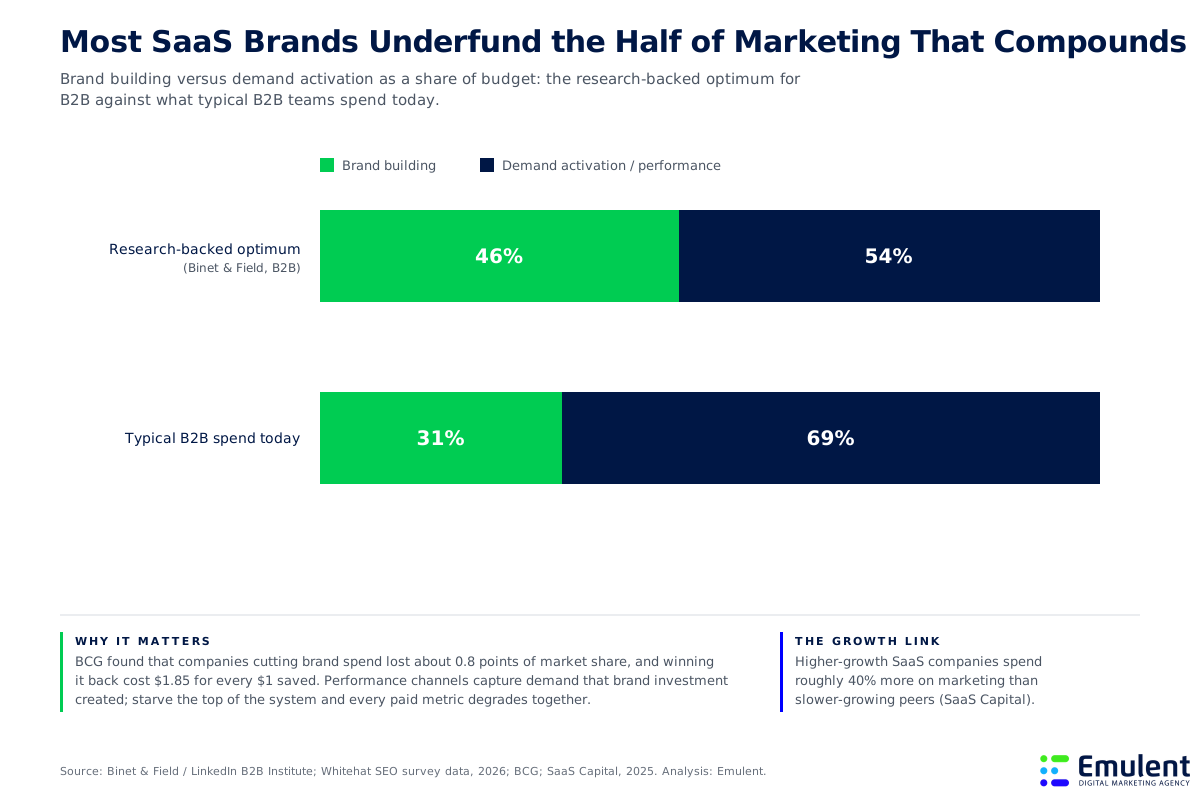
The cost of getting this wrong is measurable. BCG found that companies cutting brand spend lost about 0.8 points of market share, and winning it back cost $1.85 for every $1 saved. SaaS Capital’s spending benchmarks add the other half of the picture: higher-growth SaaS companies spend roughly 40% more on marketing than slower-growing peers, with the largest premium going to brand and category programs. In crowded software categories, that brand layer is also the only asset competitors cannot copy with an AI tool and an ad budget, a point we expand on in our guide to differentiation techniques for marketing in a saturated market. Building it deliberately is the job of brand strategy services, not a side effect of demand campaigns.
“Performance marketing harvests demand. Brand marketing plants it. The fastest growers we study are simply the companies that refused to eat their seed corn.” – Emulent Strategy Team
How Can Emulent Help With Your SaaS Marketing?
The Emulent Marketing Team works with SaaS companies on exactly the three fronts this study covers: designing the hybrid motion that converts product signals into revenue, building the AI visibility that puts your brand inside buyer-facing answers, and rebalancing budget so brand investment compounds instead of getting cut every planning cycle. We bring senior practitioners, benchmark data, and a plan tied to your unit economics rather than a generic playbook.
Our SaaS marketing agency offers a suite of marketing strategies to help you grow and take advantage of these trends.
- SaaS Branding
- SaaS Content Marketing
- SaaS Web Design
- SaaS PPC
- SaaS SEO
If you want help applying these findings to your SaaS marketing, contact the Emulent Team for a free digital marketing consultation, and we will show you where your biggest gaps are.