
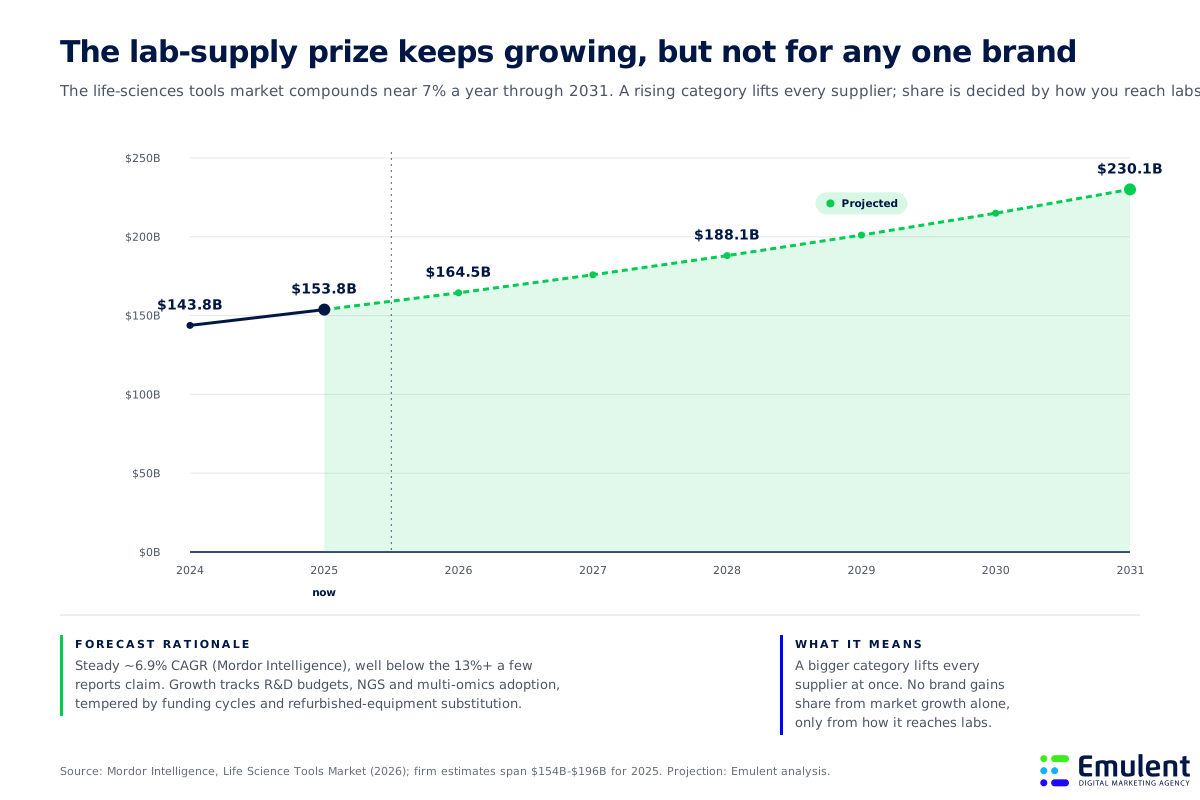
The life-sciences tools market is on track to pass $230 billion by 2031, and every reagent, instrument, and consumables maker is chasing the same finite set of labs. Category growth does not pick winners. The suppliers pulling ahead earn trust with a skeptical scientist and clear a cautious purchasing team at the same time, using content built to be useful at the bench. Here is what separates them, and what you can change this week.
A few findings stand out from this study:
- Scientists filter out promotion. Close to three-quarters of B2B buyers avoid suppliers that send irrelevant outreach, so education has to do the work a sales pitch once did.
- An application-content library compounds. Protocols and use cases keep earning discovery for years, while one-off campaigns lose their pull the moment they stop running.
- The real win is a signed purchase order, not a pageview. Six to ten people approve a life-sciences purchase, and both the bench champion and procurement have to say yes.
- Part of the growth comes from what you stop doing. Cutting generic outreach, heavy gating, and thin coverage across too many channels frees budget that actually moves the pipeline.
- Running the standard playbook is what makes suppliers look alike. Difference comes from application depth and a clear point of view, not from copying the same tactics.
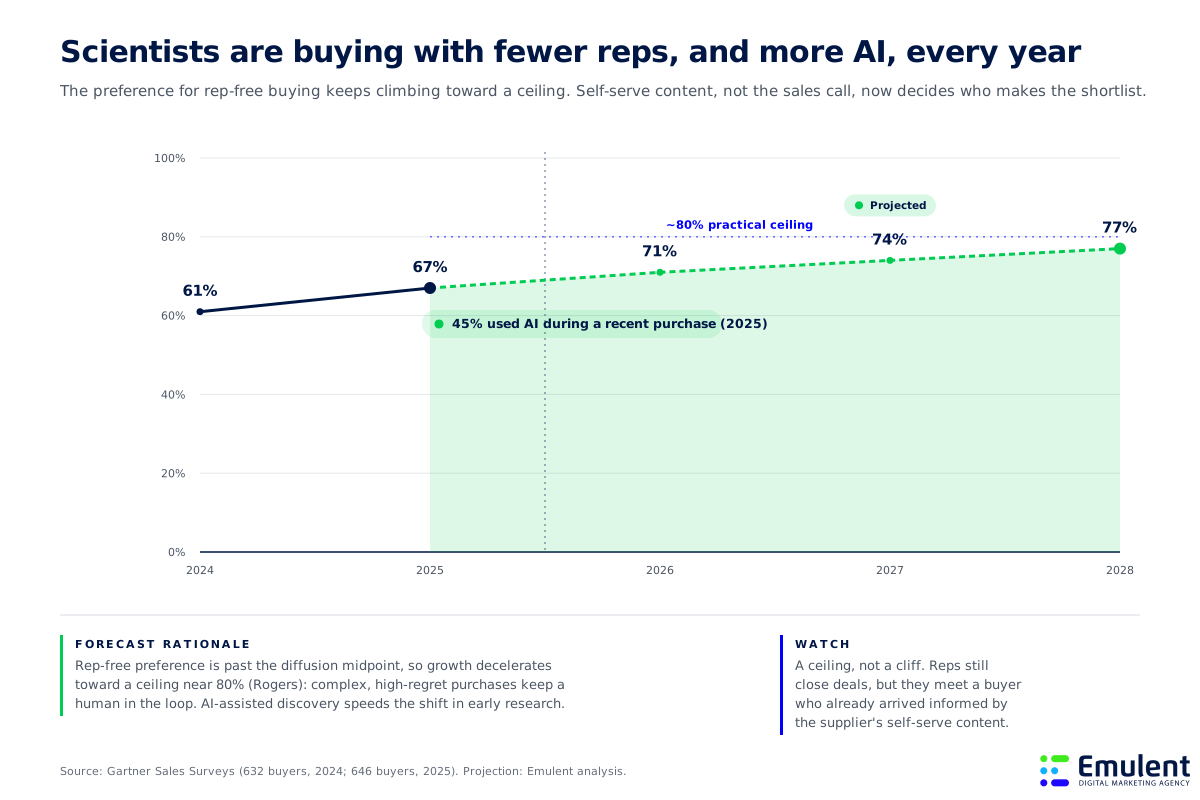
- Self-serve discovery is climbing toward a ceiling. Rep-free buying is past two-thirds, and 45% of buyers already use AI during a purchase, so your content has to answer questions before anyone calls.
Why do scientists ignore most of what suppliers send them?
Scientists are trained to distrust a claim that arrives without evidence. A bioreactor pitched as the top performer on the market reads as noise to someone who wants the throughput numbers and the validation data. The behavior backs this up. Around 73% of B2B buyers actively steer clear of suppliers who send irrelevant outreach, and life scientists spend roughly fifteen hours a week online for their research, with only about a quarter of that time spent learning about products and services. They protect those hours. Material that teaches earns a place in them, while a glossy pitch gets read and then ignored.
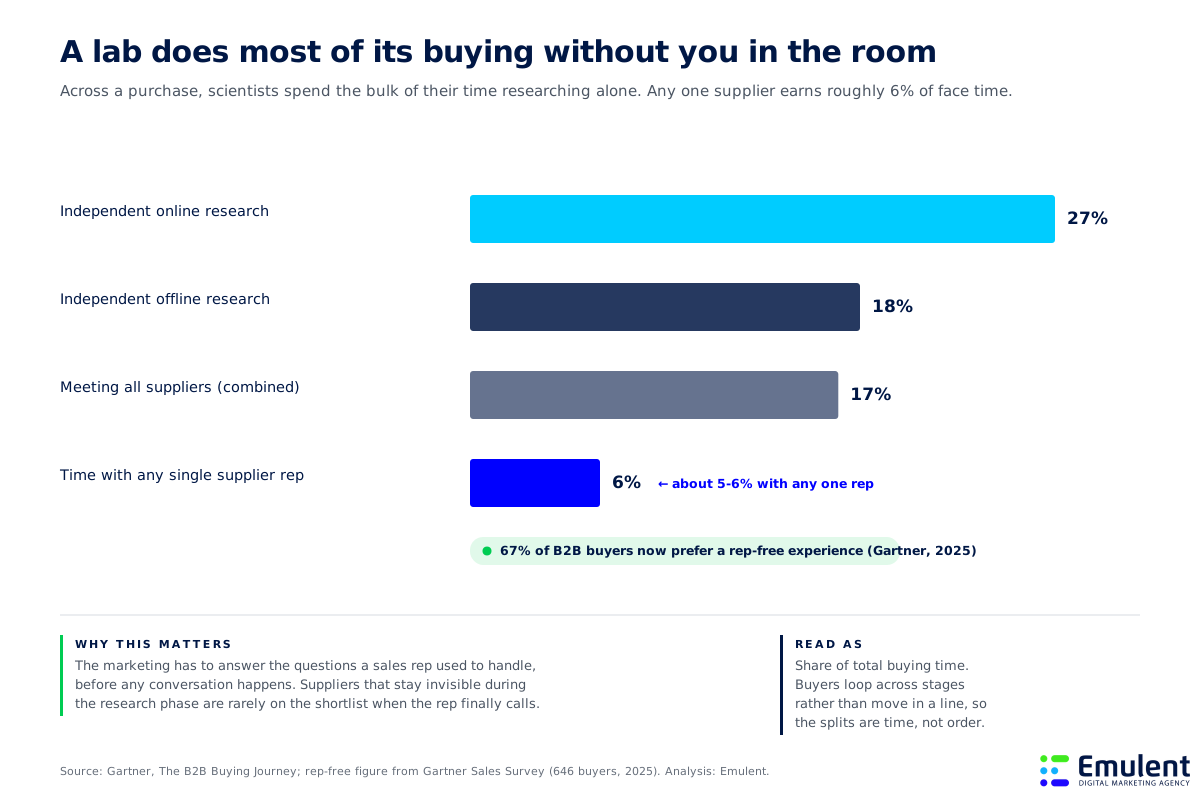
This is why education-first content beats the pitch. Most life sciences buyers read between three and seven pieces of content before they ever speak with a person, so the early decision happens while you are not in the room. Our reading of the buying journey shows how lopsided that is: across a full purchase, a single supplier earns only about 6% of a buyer’s time in direct contact, and buyers split just 17% of their time across all suppliers combined. The rest is the scientist researching alone. If your marketing for a life sciences company only switches on when a rep makes contact, you have skipped the part where the choice is actually made.
 What scientists actually open and finish:
- Method and validation data: the numbers behind the claim, in tables and figures they can check.
- Honest limits: a clear note on where the product does not fit, which builds more trust than a flawless pitch.
- The language of the technique: “CRISPR-Cas12a editing in primary T cells,” not “gene-editing solutions.”
Scientists can smell a sales pitch in the first sentence, and they close the tab. The suppliers that win treat every page as a chance to teach one specific thing well. Helpfulness is the marketing. – Strategy Team, Emulent Marketing
Earning that first read is the hard part. Keeping the value after the read is a different discipline, and it is where most supplier programs quietly fall apart.
What makes an application-content library compound instead of fade?
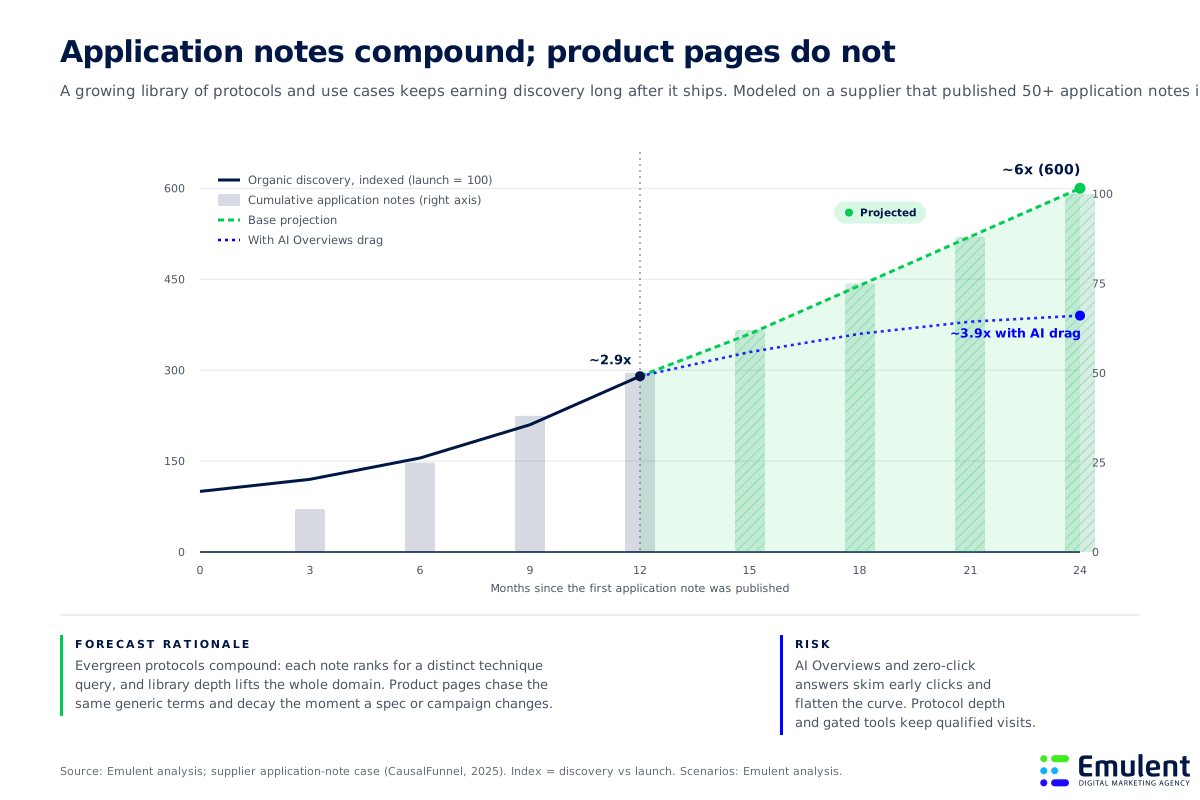
The fastest-growing suppliers treat content as a system, not a string of campaigns. One reagent supplier built more than fifty application notes in a single year, each focused on one technique, lightly gated, and written for the exact searches scientists run. Those notes kept ranking and kept pulling qualified visits long after they shipped, because every one answers a real “how would I run this in my lab?” question, and depth across the set lifts the whole domain. A strong content strategy for this field is a library that grows, not a launch that ends.
Product pages do the opposite. They chase the same generic terms every competitor targets, and they lose value the moment a spec sheet or a promotion changes. Our model puts numbers on the gap: a maturing application library can compound organic discovery several times over two years, even after AI Overviews skim some of the early clicks. The catch is consistency. Stop publishing and the curve stalls, the same way organic visits slide when SEO work is paused. This is why content built as a system beats the one-off project, and why the decay stays invisible until traffic is already gone.
 What belongs in a compounding library:
- Step-by-step protocols: the exact method, reproducible at the bench.
- Troubleshooting guides: the failure modes and the fixes scientists search for at 2 a.m.
- Customer validation data: results from real labs, not a spec table.
- Technique-specific use cases: one application per page, mapped to a real search.
A campaign spikes and dies. A library earns compound interest. We would rather publish thirty protocols that still pull qualified labs in three years than run one launch everyone forgets in three weeks. – Strategy Team, Emulent Marketing
A library that compounds is only worth building if you measure it against the outcome that pays the bills, which is where a lot of supplier marketing loses the plot.
Which signal actually predicts a purchase order, not just a pageview?
Traffic, impressions, and downloads feel like progress, but none of them clears an invoice. A life-sciences purchase is approved by six to ten people, and almost every B2B purchase is tied to an organizational change rather than a single person’s whim. Treating a top ranking or a traffic spike as the goal is a vanity-metric trap: it counts attention, not the decision. The bench scientist has to champion the product on performance and reproducibility, and procurement has to clear it on price, vendor risk, and documentation. Marketing built only for clicks can win the scientist and still die in purchasing.
So the metric that matters is qualified pipeline that clears both gates: sample requests, quote requests, and approved orders, tracked by the role of the person who acted. That reframe changes what you publish, because B2B marketing in this field has to serve two readers who judge the same product by different standards. Give each one the proof they need and the purchase moves; serve only the scientist and it stalls at the signature.
Who signs off, and what each one needs to say yes:
- Bench scientist: performance, reproducibility, and fit with the existing protocol.
- Lab manager: workflow, throughput, and the quality of support.
- Principal investigator: citations, credibility, and proof that peers already trust it.
- Procurement: price, terms, lead times, and vendor reliability.
- Finance and compliance: budget fit, audit trail, and clean documentation.
A first-page ranking that never produces a quote request is a number for a slide, not a result. We hold every program to one question: did it create qualified pipeline that both the scientist and procurement signed off on? – Strategy Team, Emulent Marketing
Once you know the outcome and who owns it, the next move is cutting everything that does not serve it, which is harder than it sounds.
What should a life sciences supplier stop doing?
Most marketing advice for this field is a longer to-do list. Real gains come as much from subtraction. Generic outreach is the clearest cut: most buyers actively avoid suppliers who send it, so spray-and-pray campaigns burn more goodwill than they create. A focused plan, the kind a brand strategy that helps you say no is built to produce, frees the budget those campaigns waste.
Gating every asset is the next thing to drop. When a scientist hits a form before they can read a protocol, many leave, and you lose the trust the content was meant to earn. Capture an email when the value is high, like a full dataset, a calculator, or a sample request, not before someone has read a single line. Spreading a small team across every channel is the third problem: thin presence everywhere builds authority nowhere. Leading with specs is the fourth, because it leaves the buyer to translate features into research value on their own, and most will not bother.
What to cut this quarter:
- Untargeted cold outreach that ignores role and research area.
- Forms in front of top-of-funnel content that should be open to read.
- Channels you cannot staff well enough to sound like a credible expert.
- Spec-first messaging that never names the research outcome.
Saying no also means refusing the default tactics that make every supplier in the category look the same.
Why does following the standard playbook make you invisible?
When every supplier runs the same demand-generation motion, on the same channels, behind the same stock photo of a gloved hand and a pipette, buyers cannot tell them apart. The standard playbook is the sameness problem. Scientists notice generic imagery and vague claims and lower their trust on sight, so copying what already ranks earns you a seat in a crowd, not a lead. Standing apart in a saturated market is a deliberate choice, not a coat of paint.
Difference in this field is earned, not styled. It comes from depth in a specific application area, a clear point of view on a method or a trade-off, and first-party data from real client and customer work that no competitor can copy. A supplier known for the most thorough protocols on one technique owns that search and that conversation, while a supplier that sounds like everyone else competes only on price. Sameness is comfortable and cheap, and it is the reason many capable suppliers stay invisible to the labs they want most.
Where suppliers blur together, and how to break out:
- Identical imagery: swap generic stock for real instruments, data, and lab work.
- Interchangeable claims: replace “high performance” with the specific number.
- Me-too topics: own a narrow application area instead of covering what everyone covers.
- Borrowed data: publish your own benchmarks rather than citing the same third-party stats as rivals.
Standing apart matters even more as the way scientists discover suppliers shifts under everyone’s feet.
How will AI search and rep-free buying reshape discovery?
The self-serve trend is not slowing, and it is reshaping who makes the shortlist. The preference for a rep-free buying experience has climbed past two-thirds of B2B buyers, and our projection has it bending toward a practical ceiling near 80% rather than racing to 100%, because complex, high-stakes purchases keep a human in the loop. The shift is real, but it is a ceiling, not a cliff. Reps still close deals; they now meet a buyer who already formed an opinion from the supplier’s own content.
AI is speeding the early research. Almost half of buyers already use AI during a purchase, and AI Overviews answer many questions before a click ever happens. That rewards suppliers whose protocols and validation data are deep enough to be the source an AI summarizes and a scientist still wants to read in full. It also raises the value of AI search optimization and of strong reviews, since the reviews scientists leave shape what AI tells the next buyer. Suppliers absent from self-serve research and AI answers will quietly drop off the list, without ever knowing they were in the running.
 What to prepare for over the next two to three years:
- Deeper technical pages: content an AI can cite and a scientist still opens in full.
- Structured, answer-ready content: clear questions and direct answers an AI can lift.
- Reviews and citations: third-party proof that feeds both buyers and AI.
- Self-serve evaluation: sample requests and calculators that move a buyer without a call.
The buyer arrives at the first sales call already ninety percent decided, often briefed by an AI that read your content and your competitors’. The only question that matters now is whether you were one of the sources it trusted. – Strategy Team, Emulent Marketing
How Emulent helps life sciences suppliers grow
We help reagent, instrument, and consumables companies build the marketing this study describes: education-first content that scientists trust, an application-content library that compounds, and measurement tied to qualified pipeline that both the bench and procurement approve. We do the research, write to the technique, and keep the system running so results build instead of reset.
If you want help with life sciences marketing, contact the Emulent team and we will map the next right step for your suppliers and your labs.