
Home services marketing has split into two camps. Most contractors keep bidding on the same expensive keywords, and a small group of fast-growing brands has quietly changed the playbook: they invest in being known, they treat reviews as a ranking asset, and they show up in AI answers their competitors have never checked. We pulled the current benchmarks, surveys, and ad-spend data behind that divide to show what the fastest growing home services brands do differently in 2026, and what each habit costs when you skip it.
Key takeaways from this study:
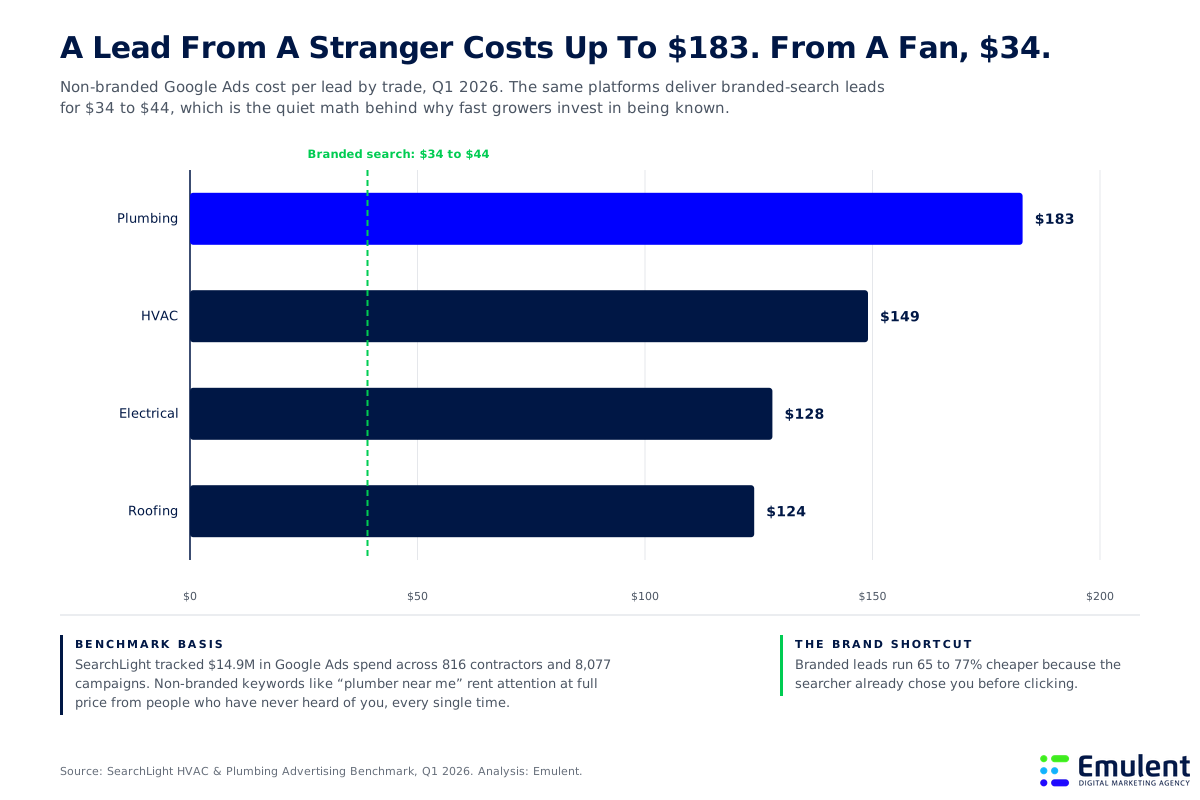
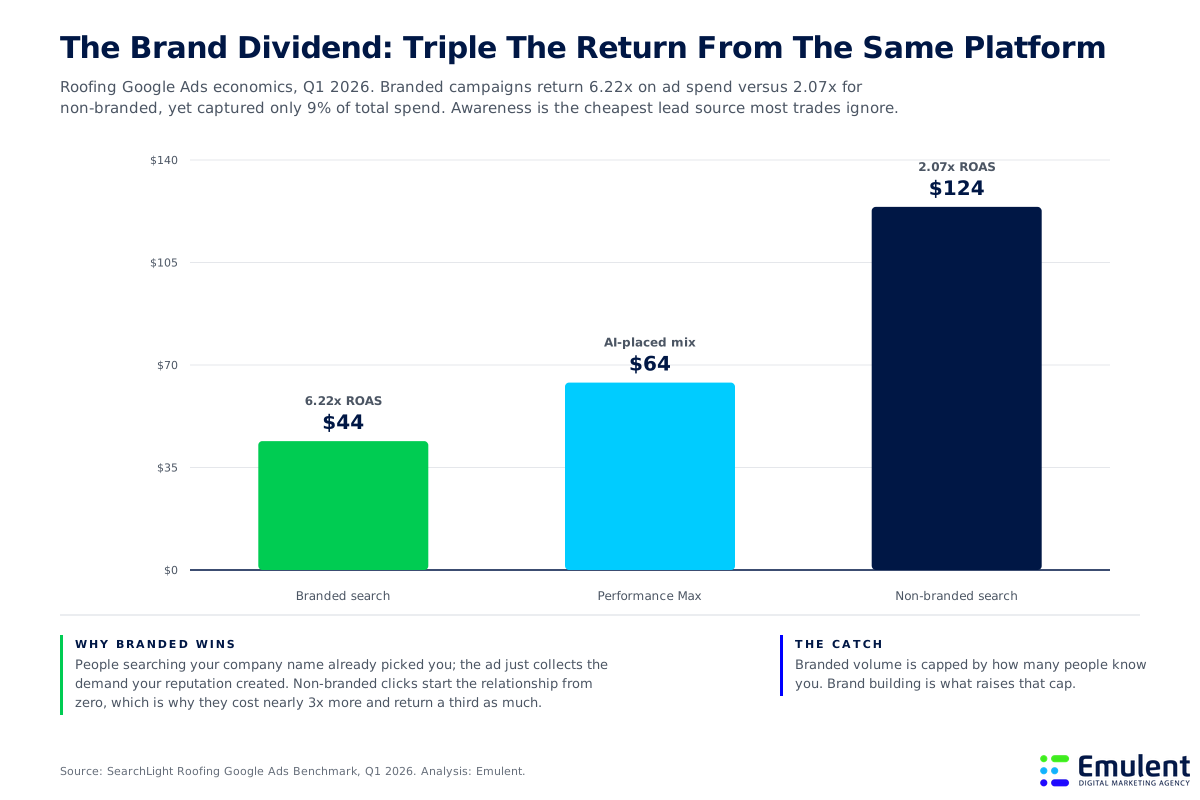
- Known brands buy cheaper leads: Branded search leads cost $34 to $44, while non-branded leads run $124 to $183 depending on the trade. Branded roofing campaigns return 6.22x on ad spend versus 2.07x for non-branded.
- The market grows 3.3% a year, so fast growers take share: In an $842 billion market expanding at a mature pace, outsized growth comes from winning customers away from competitors, not riding demand.
- Review reading became a habit: 41% of consumers now always read reviews before choosing a local business, up from 29% a year earlier, and 97% read them at least sometimes.
- AI is the new referral source: 45% of consumers use ChatGPT or similar tools for local business recommendations, up from 6% in 2025.
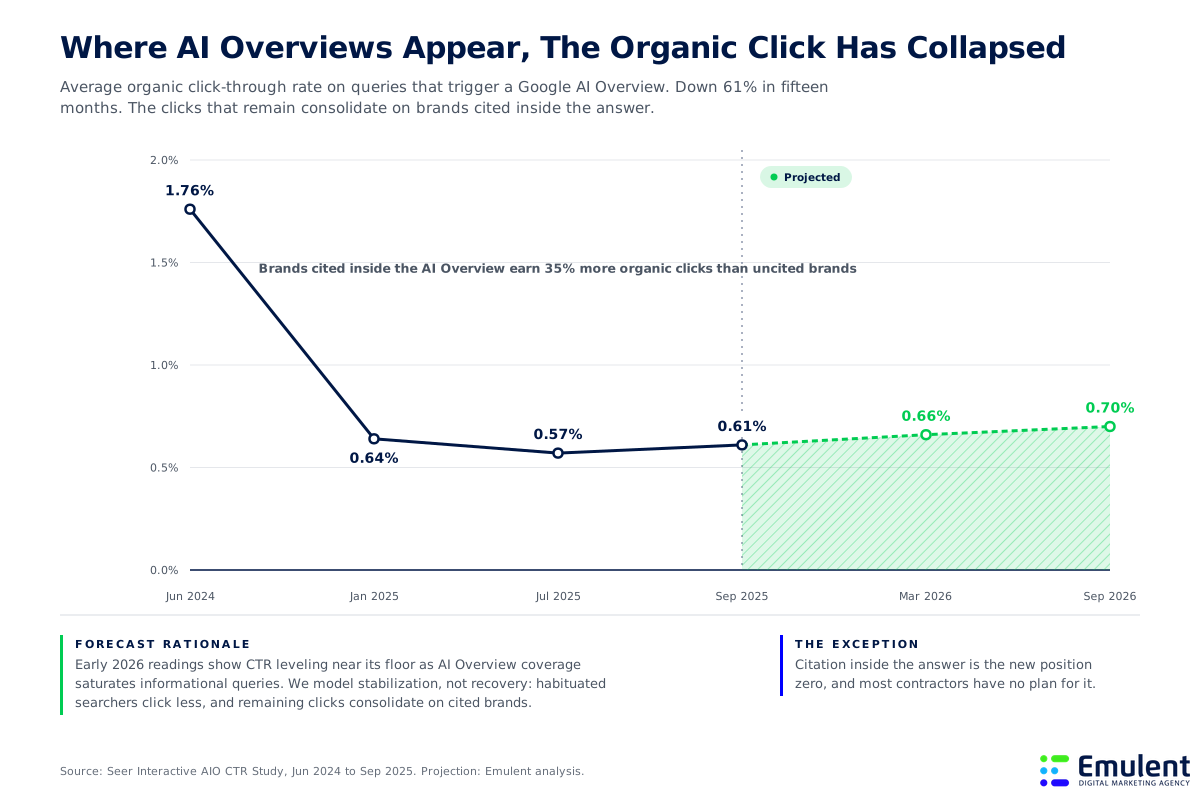
- The organic click is shrinking: Click-through rates on searches with AI Overviews fell 61% in fifteen months, and brands cited inside those answers earn 35% more clicks than brands that are not.
- Video now shapes trust: 89% of consumers say video quality affects how much they trust a brand, which makes production value a sales input, not a vanity expense.
Why Is a Growing Market No Longer Enough to Grow Your Business?
The US home services market sits at roughly $842 billion in 2026 and is projected to reach $989 billion by 2031, a 3.27% annual pace according to Mordor Intelligence. Demand is propped up by the oldest housing stock in modern history: the median home purchased in 2024 was 36 years old, up from 27 years in 2012, and old houses need constant mechanical attention. That makes repair demand steady and non-discretionary, and it also means the tide is no longer rising fast enough to lift every boat.
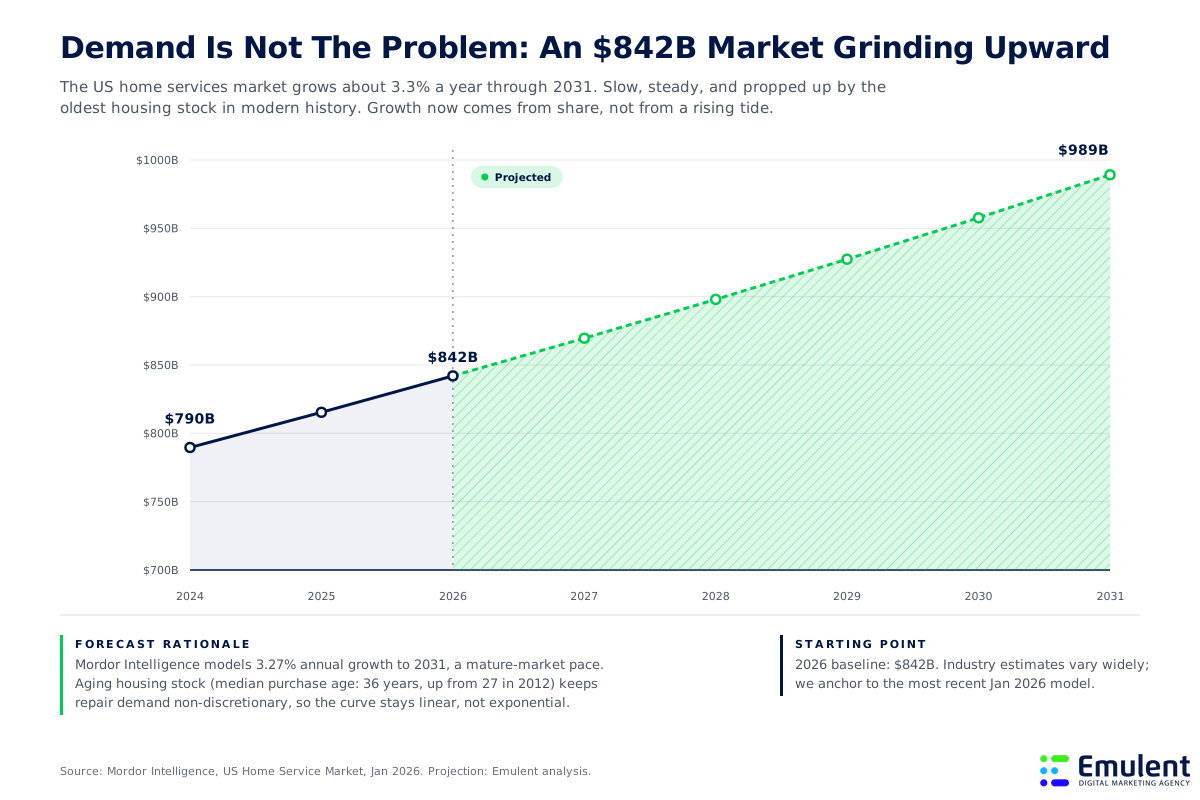
Here is the math that matters: if the market grows 3.3% and your company grows 25%, the extra 22 points came out of someone else’s pipeline. The fastest growing brands plan for that reality. They treat home services marketing as a share-capture discipline and measure themselves against local competitors rather than against last year. The broader patterns behind this shift are tracked in our home services marketing trends report, and they all point to the same conclusion: the cost of acquiring a stranger keeps rising, which is exactly where the first strategy comes in.
Should You Spend on Brand or Lead Generation First?
Common advice says small contractors should pour everything into lead generation and worry about brand later. The fastest growing brands do the opposite, and the ad-spend data explains why. SearchLight’s benchmark of $14.9 million in Google Ads spend across 816 contractors found that non-branded leads (someone typing “plumber near me”) cost $124 to $183 depending on the trade. Branded leads (someone typing your company name) cost $34 to $44.
The return side is even more lopsided. In roofing, branded campaigns return 6.22x on ad spend versus 2.07x for non-branded, yet branded captured only 9% of total spend. The constraint is supply: branded volume is capped by how many people already know you. Every dollar spent on awareness, community presence, truck wraps, sponsorships, and memorable creative raises that cap, which converts expensive stranger-clicks into cheap fan-clicks over time. Skip the brand work and you rent attention at full price forever. Our guide to marketing in a saturated market covers how to build a position competitors cannot copy.
The contractors who complain loudest about lead costs are almost always the ones spending zero on being remembered. Brand is what makes your lead generation cheaper every year instead of more expensive. – Emulent Strategy Team
Brand spending only pays off, though, if what people find when they look you up confirms the promise. That brings us to reviews.
What Do Rising Review Expectations Mean for Your Reputation Strategy?
BrightLocal’s 2026 Local Consumer Review Survey of 1,002 US consumers found that 97% read reviews before choosing a local business, and 41% now always read them, a jump from 29% just one year earlier. The average consumer checks six different review platforms, and Google’s share of review usage dropped from 83% to 71% in twelve months while AI tools surged from 6% to 45%.
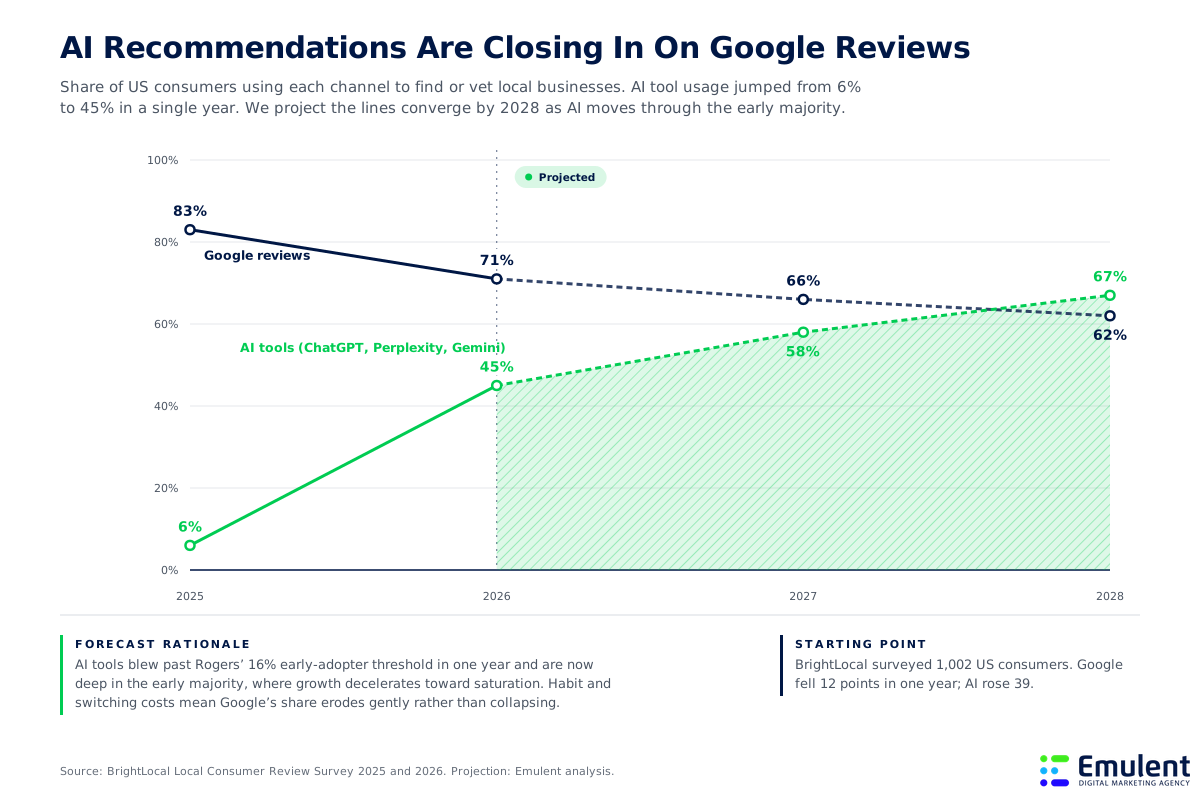
For contractor marketing, this changes what “reputation management” means. A wall of five-star reviews from 2022 no longer carries weight; consumers scan recency first, and AI systems pull from whichever platforms have fresh, detailed, consistent signals. The fast growers operationalize reviews the way they operationalize dispatch.
What the fastest growing brands build into their review process:
- Same-day review requests: The ask happens at job completion, by text, from the tech’s tablet, while satisfaction is at its peak.
- Responses to every review: 88% of consumers say they would use a business that replies to all of its reviews, so silence reads as indifference.
- Platform spread beyond Google: Profiles stay active on Yelp, Facebook, BBB, Nextdoor, and Apple Maps because consumers and AI tools cross-reference an average of six sources.
- Detail prompts: Asking customers to mention the service, the city, and the tech’s name produces reviews that rank for local queries and feed AI summaries.
Review signals are also a documented input to map-pack rankings, which we break down in our guide to local SEO ranking factors, and the operational side is covered step by step in our local SEO checklist. The same review corpus that persuades humans is now training data for the AI systems deciding who gets recommended, which is the next battleground.
How Do You Stay Visible When AI Answers the Search?
Seer Interactive tracked 25.1 million organic impressions from June 2024 through September 2025 and found that when a Google AI Overview appears, the average organic click-through rate fell from 1.76% to 0.61%, a 61% drop. Early 2026 readings show the rate leveling near its floor rather than recovering. The one bright spot: brands cited inside the AI Overview earn 35% more organic clicks than brands left out of it.
Layer on the SOCi finding that visibility in ChatGPT’s local recommendations is roughly 30 times harder to achieve than ranking in Google’s local results, and that fewer than half of Google local leaders even appear in AI recommendations, and the opportunity is obvious. Most of your competitors have never checked what an AI says about them. The fastest growing brands audit their AI presence quarterly: they ask ChatGPT, Perplexity, and Gemini who the best HVAC company in their city is, then work backward from the sources those tools cite. We cover the mechanics of how Google AI Overviews work in a dedicated breakdown, and our AI SEO services page explains how we earn those citations for clients.
AI visibility in 2026 looks like local SEO did in 2008. The companies that build the asset now will spend the next five years being recommended while everyone else figures out what happened. – Emulent Strategy Team
None of these strategies applies with equal force to every trade, though. Job value and purchase urgency change the playbook.
How Do HVAC, Plumbing, and Roofing Growth Plans Differ?
The economics of digital marketing for home services vary sharply by trade because ticket size, emergency frequency, and research time vary. The same dollar belongs in different places depending on what you sell.
What should HVAC marketing prioritize?
HVAC sits in the middle on lead cost ($149 non-branded) but carries a two-sided business: low-ticket repairs that arrive in seasonal spikes and $10,000+ replacements that get researched for weeks. Fast-growing HVAC brands run maintenance-plan offers to smooth seasonality and own the replacement-research phase with comparison content and financing pages. Demand spikes reward whoever is already remembered when the heat wave hits, which is why HVAC marketing programs that pair brand building with capacity-aware paid spend outgrow pure lead buying.
What should plumber marketing prioritize?
Plumbing carries the highest non-branded lead cost of the major trades at $183, and most jobs are urgent. The winning formula in plumber marketing is dominance of the emergency moment: Local Services Ads (which average roughly $60 per lead versus $91 for traditional search ads), a deep review profile that wins the three-second trust scan, and answer speed, since most mobile searchers call someone within 24 hours. Branded recall matters most here because nobody comparison-shops with water on the floor.
What should roofing marketing prioritize?
Roofing has the cheapest non-branded leads ($124) and the largest tickets, often $8,500 or more, so a single closed job can carry a month of ad spend. The risk is the long, trust-heavy sales cycle. Fast growers in roofing marketing invest in proof assets: drone footage of finished jobs, named-neighborhood case studies, and storm-response content prepared before the storm. The 6.22x branded ROAS figure above came from roofing, which tells you how much a known name is worth when the purchase is five figures.
Across all three trades, the proof assets that close high-ticket jobs increasingly take one form: video.
Where Does Brand Video Fit in a Contractor Marketing Plan?
Wyzowl’s 2026 data shows 91% of businesses now use video, 89% of consumers say video quality affects their trust in a brand, and 85% have been convinced to buy by watching one. For home services lead generation, video does the job a stranger’s website copy cannot: it shows the faces that will be inside the customer’s home. The fastest growing brands keep it simple and repeatable rather than cinematic and rare.
The video assets that earn their production cost:
- Technician introductions: Thirty-second clips of real employees, used in booking confirmations and ads, that lower the anxiety of letting a stranger in.
- Job walkthroughs: Before-and-after footage with the owner narrating what was wrong and what it cost, which doubles as AI-citable content.
- Review films: A happy customer on camera outperforms the same words as text because it cannot be faked cheaply.
- Process explainers: “What happens during a replacement quote” videos that pre-sell the appointment and filter price shoppers.
Production quality matters because consumers read it as a proxy for workmanship, and our brand videography team builds these libraries so a year of content comes from a few shoot days. Video, reviews, AI citations, and brand recall all compound the same way: slowly at first, then all at once, which is why the growth gap between brands that started two years ago and brands that have not started keeps widening.
Every fast-growing contractor we studied made the same trade: they accepted a slightly worse quarter to build assets that made every following quarter cheaper. The laggards kept buying leads at full price to protect a quarter nobody remembers. – Emulent Strategy Team
How Can Emulent Help You Apply This Study?
The Emulent Marketing Team builds growth programs for HVAC, plumbing, roofing, and other home service companies that combine the strategies in this study: brand systems that lower your cost per lead, review operations that compound, AI visibility work that gets you cited, and trade-specific paid media that respects your capacity. If you want help with home services marketing, contact the Emulent Team and we will walk through where your market stands and where the share is up for grabs.