
Buyers treat photographs as evidence and treat your copy as claims, which is why brand photography builds trust in seconds while words spend months earning it. That gap was always real. In the last five years, it turned into a canyon, because the trust buyers place in written words is collapsing while the supply of fake imagery explodes. The businesses that respond with a library of real, verifiable photography are inheriting the trust that words are losing. The businesses that respond with stock photos and generated images are volunteering to look like everyone the buyer has learned to doubt.
We are going to show you the numbers behind that claim, the psychology underneath the numbers, and a 20-minute audit you can run on your own visual presence today.
Trust in Written Words Is Collapsing on a Measurable Curve
In 2020, BrightLocal’s Local Consumer Review Survey found 79% of US consumers trusted online reviews as much as personal recommendations. By the 2025 edition, that figure had fallen to 42%. Reviews are the purest form of trust-by-words a business can hold: unpaid strangers writing sentences on your behalf. Even that currency lost nearly half its value in five years.
The mechanism is habituation. A buyer who has met manufactured praise enough times stops crediting praise at all, including the honest kind. Every fake review, AI-written testimonial, and paid endorsement a person encounters raises the discount rate they apply to the next block of text a business shows them. Your carefully written About page pays that discount whether or not you earned it.
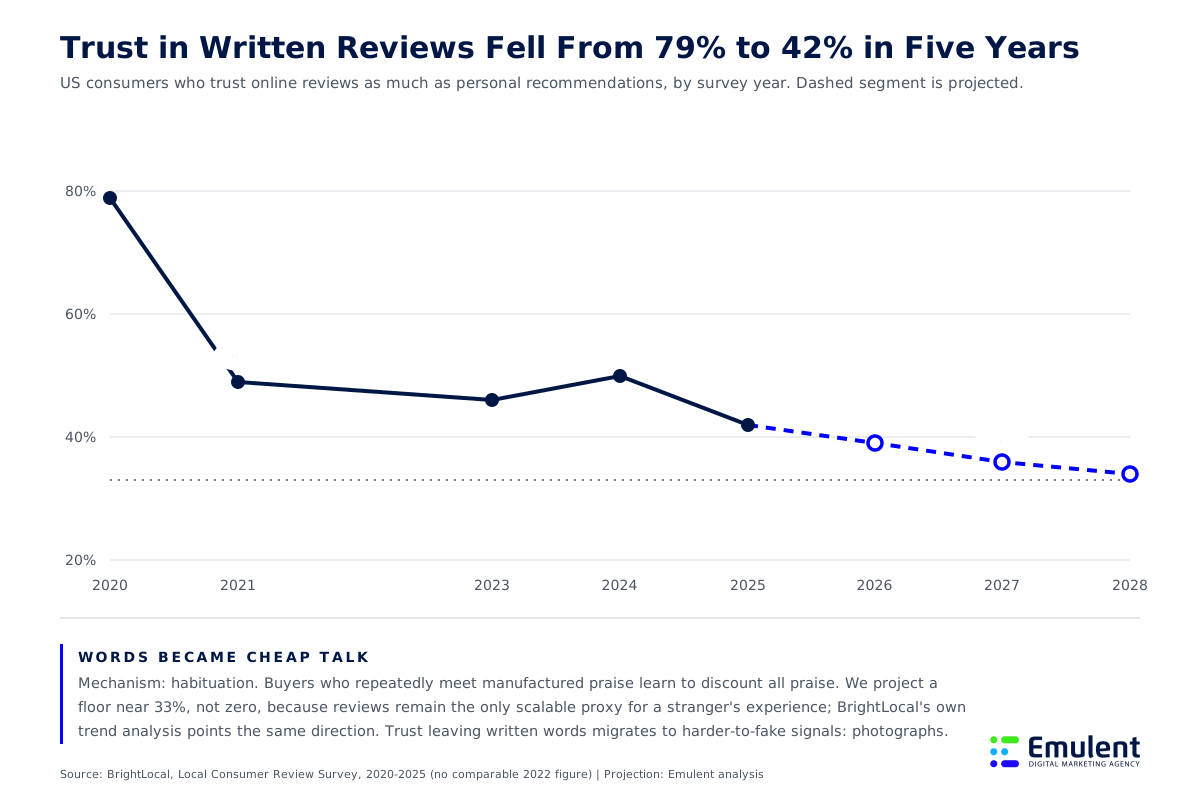
Our projection bends toward a floor near a third of consumers rather than continuing straight down, because reviews remain the only scalable proxy for a stranger’s experience. Buyers will keep reading them; they will just stop taking them at their word. What matters for this article is where the displaced trust goes. It migrates to signals that are harder to fake, and a photograph of your actual team, in your actual space, doing your actual work sits at the top of that list.
“A phone photo of your real crew beats a five-hundred-dollar stock photo of somebody else’s. Buyers are not grading your lighting. They are checking whether you exist.” – The Strategy Team at Emulent
The Brain Files Photos as Evidence and Copy as Argument
Words and images take different roads through a buyer’s head. Copy gets processed as an argument: the reader evaluates it, weighs the source’s motive, and holds a verdict open. A photograph gets processed as an observation. Seeing your team standing in your shop registers closer to having visited than to having been told, and observations skip most of the skepticism that arguments trigger. Psychologists call the broader effect processing fluency: what the brain absorbs easily, it also rates as more true. Nothing your buyer encounters is absorbed more easily than a face.
Consumers say this out loud when researchers ask. Getty Images’ VisualGPS report “Building Trust in the Age of AI,” a 2024 global survey of more than 30,000 adults, found that 98% agree authentic images and videos are pivotal in establishing trust in a brand, 90% want to know whether an image was made with AI, and 76% agree it is getting to the point where they cannot tell if an image is real. Note what that last number means for you: three out of four buyers are actively scanning your imagery for fakery before they read a word.
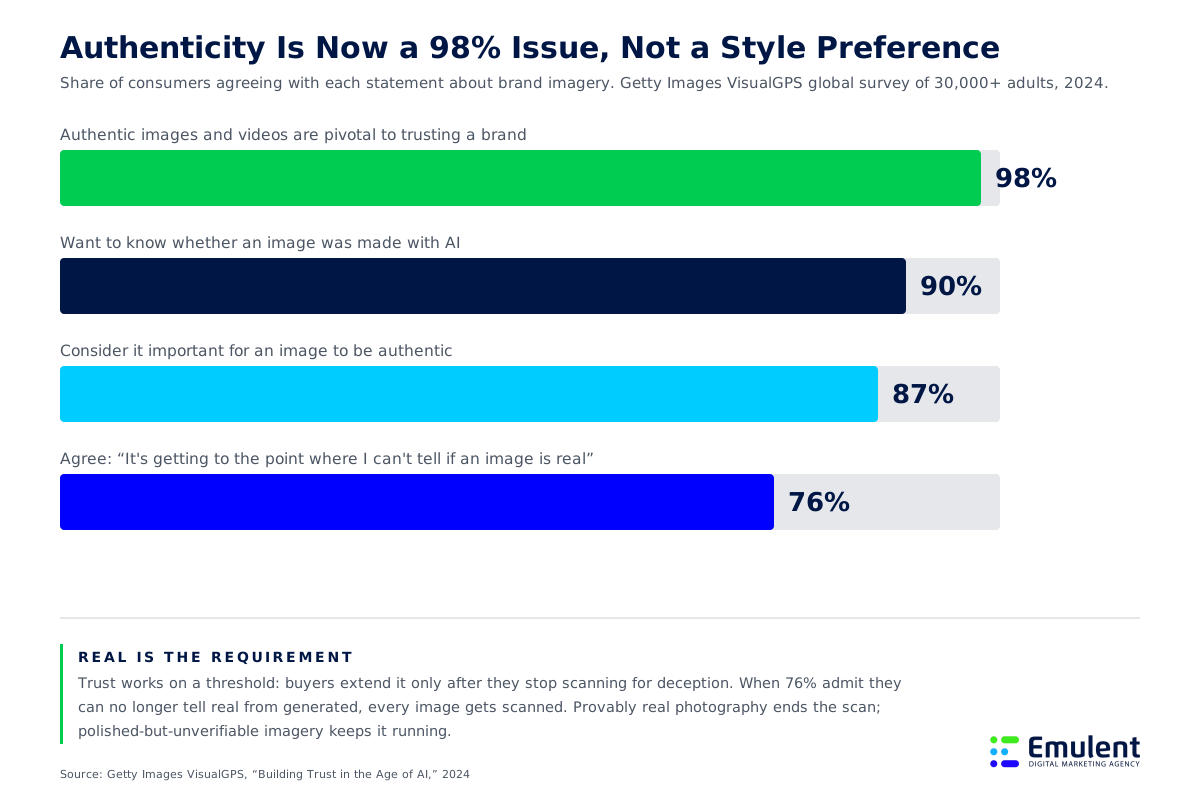
Trust operates as a threshold, not a dial. A buyer keeps scanning for deception until something gives them permission to stop, and only then does the relationship move forward. Words rarely end the scan, because words are exactly what a deceptive business would also write. Real photography ends it, because a specific person in a specific place is the one thing a pretender struggles to show. We covered the team-photo version of this effect in why professional team photos build instant trust, and everything in that piece has gotten more true since we published it.
“Trust is a scan for deception that ends. Every borrowed or generated image keeps the buyer’s scan running. The entire job of brand photography is to give them permission to stop checking.” – Bill Ross, Founder of Emulent
AI Made Polish Free, Which Broke What Polish Used to Signal
Here is the position most of page one gets backwards: generative AI did not make professional photography less valuable. It made professional photography more valuable, by destroying the signal value of everything photography used to compete with.
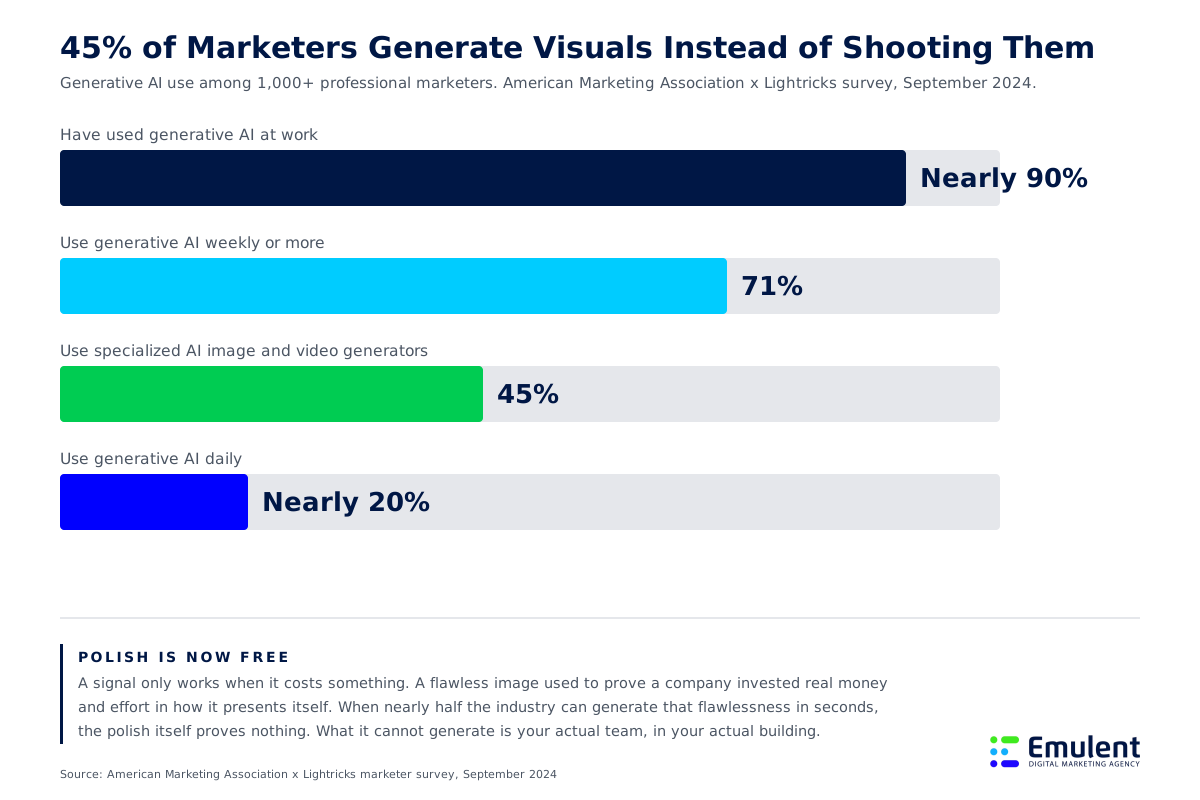
A polished image once worked as a costly signal. Producing it required money, coordination, and effort, so its presence proved a business invested in how it presents itself. That cost is now gone. A September 2024 survey of more than 1,000 marketers by the American Marketing Association with Lightricks found nearly 90% have used generative AI at work, 71% use it weekly or more, and 45% already use specialized image and video generators. When almost half of your competitors can produce a flawless visual in seconds, flawlessness proves nothing about any of you.
This flood is still rising. The Wharton Human-AI Research and GBK Collective adoption study, a survey of 800 senior leaders at US companies with more than $50 million in revenue, tracked weekly generative AI use climbing from 37% in 2023 to 72% in 2024 to 82% in 2025. We project the curve bending into a 90 to 93% ceiling by 2028: adoption follows the classic S-curve from diffusion research, the steep middle is already behind us, and status quo bias keeps a laggard segment out permanently. The study’s own respondents point the same direction, with 88% planning to raise AI spend within twelve months.
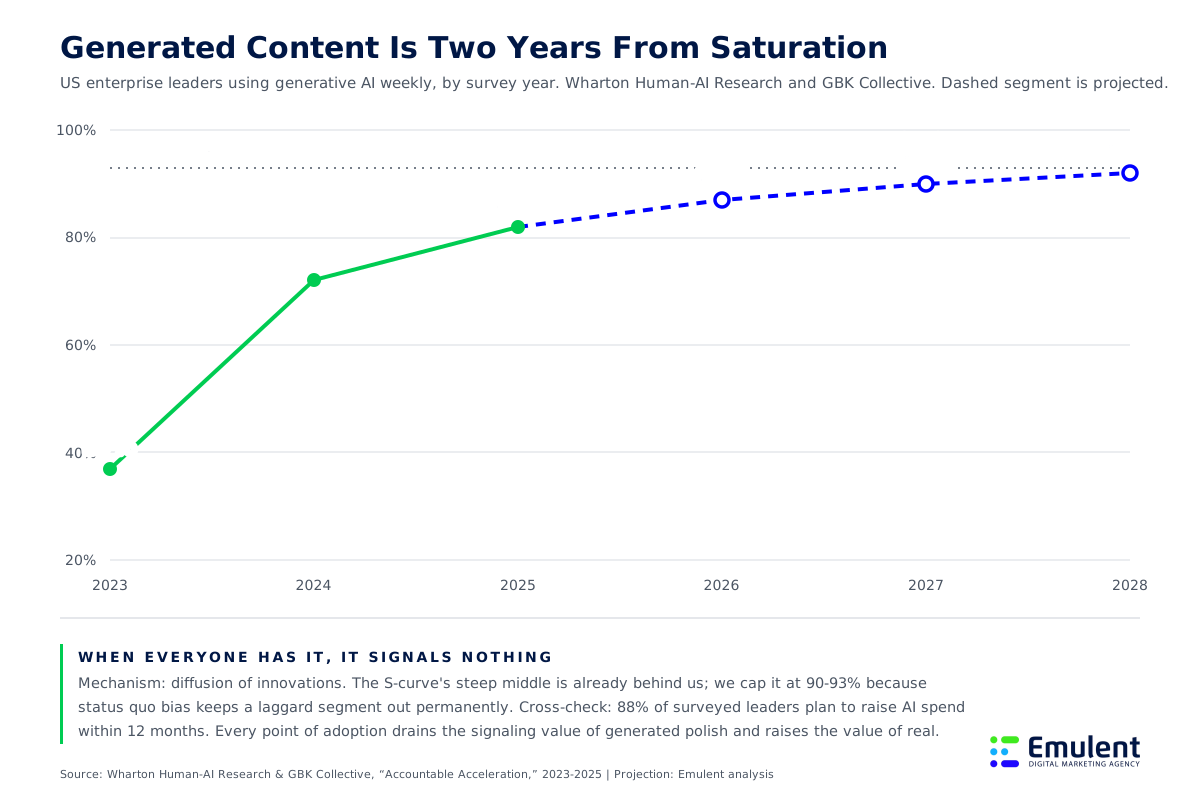
Read that curve as a countdown. Every point of adoption drains meaning from generated polish and concentrates it in the one thing generation cannot produce: verifiable reality. Your building. Your people. Your unglamorous Tuesday-morning process. The imperfections a photographer captures on site are turning from flaws into proof.
This is also why stock photography, which every ranking article on this topic calls a fine starter option, is worse than nothing. A stock photo is a claim of professionalism wearing someone else’s face, and buyers who are already scanning for fakery read it exactly that way. If your photography budget is zero, put your own team on a smartphone before you put a model from a photo library on your homepage. We would rather you spend nothing than spend it on borrowed faces.
Your Photos Now Do Their Work in Places You Do Not Control
The venue where trust gets decided is shifting too. BrightLocal’s 2026 survey found the share of US consumers using ChatGPT and other generative AI tools for local business recommendations jumped from 6% to 45% in a single year, making AI assistants the third most popular source of recommendations. A growing share of your buyers now meet you inside an answer box before they ever reach your site.
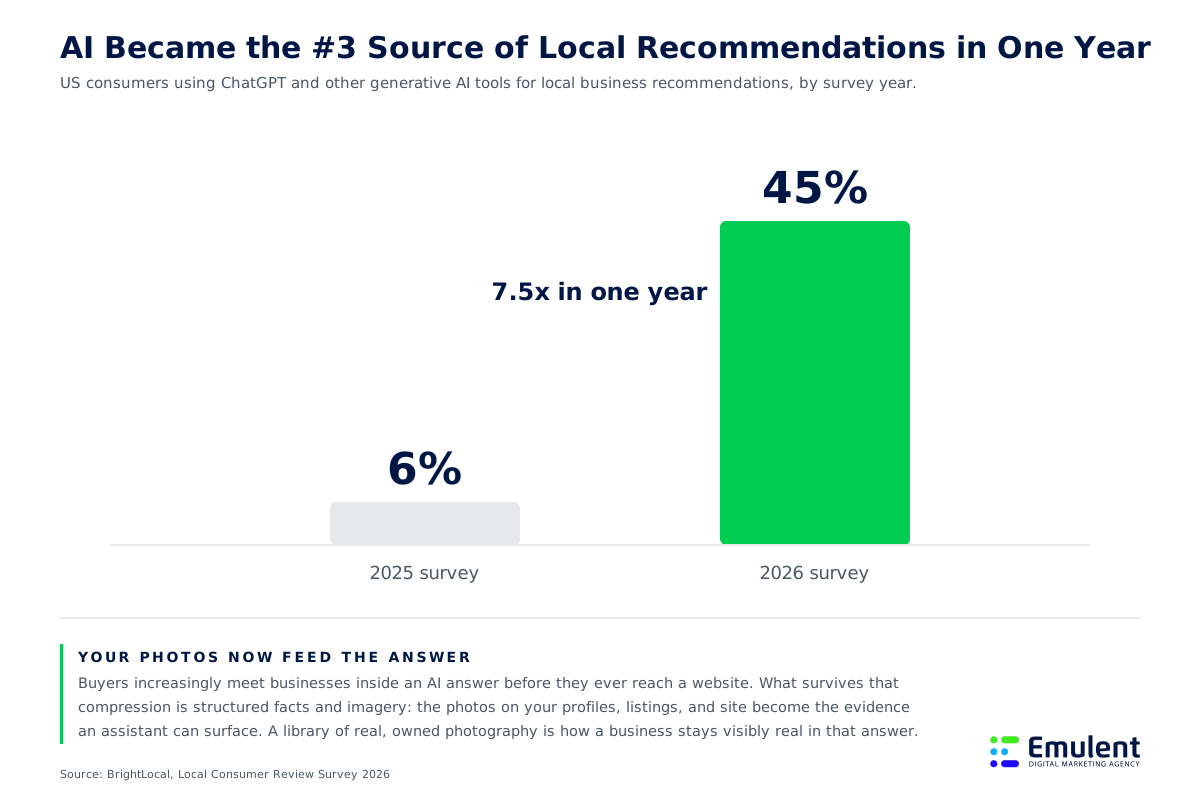
What survives that compression is structured facts and imagery: the photos on your business profiles, your listings, and your site become the evidence an assistant can surface about you. A business with a deep library of real, owned photography stays visibly real inside those answers; a business running on stock imagery shows up looking like a template. Feeding those surfaces deliberately is a core part of search everywhere optimization, and photography is the raw material it runs on.
The same logic governs your own site. Traffic that lands on generic imagery bounces before your copy gets a chance, a pattern we broke down in why your website gets traffic but doesn’t convert. Your website design should hand its hero positions, team pages, and service pages to real photography, because those are the exact spots where a visitor decides whether to keep scanning you for deception or stop.
What a Trust-Building Photo Library Actually Contains
Professional brand photography is not a folder of headshots. A library built to end the buyer’s deception scan covers four subjects, and the order matters:
- People. The founder, the team, the hands that do the work. Faces carry more trust weight than any other subject you can photograph, so they come first. Named people, not silhouettes from behind.
- Place. Your building, your shop floor, your trucks, your front desk. Place photos prove you are a physical operation a buyer could walk into or call, which is the fastest possible answer to “does this business exist.”
- Process. The work mid-flight: measuring, drafting, installing, plating, arguing at a whiteboard. Process photos let a buyer pre-experience working with you, and pre-experience converts better than promises.
- Proof. Finished work, real clients (with permission), the outcome a buyer is shopping for. For ecommerce, this is where product photography carries the burden on the product page.
The higher the stakes of the purchase, the harder this library works. Nobody hires an attorney, a surgeon, or a contractor from a logo; they hire a person they have decided to trust, which is why categories like lawyer brand photography repay the investment faster than almost any ad budget of the same size. And a shot list should come out of your positioning, not a photographer’s default checklist, so we treat photography as one working part of brand development services rather than a standalone purchase. The same reasoning extends to brand videography: motion adds voice and mannerism to the evidence file, and the two are shot best as one system.
One piece of revenue-reducing honesty before you book anything: if your positioning is about to change, wait. Photography freezes your brand at a moment in time, and a beautiful library of the wrong message is expensive twice. Settle the strategy, then shoot it.
The 20-Minute Photography Trust Audit
Run this today. You need your website, your Google Business Profile, and a stopwatch.
- Homepage hero (2 minutes). Is the first image a real photo of your people, place, or work? If it is stock, generated, or an abstract graphic, you fail the audit at the door, and fixing this one image outranks every other item on the list.
- Count real versus borrowed (5 minutes). Click your top five pages and tally: photos of your actual business versus stock or generated images. Below 70% real, buyers are scanning a costume, not a company.
- Face check (3 minutes). Can a visitor find a named, photographed human within two clicks of your homepage? If your About page shows a skyline instead of your team, you are hiding the most persuasive asset you own.
- Business profile depth (5 minutes). Open your Google Business Profile. Twenty or more real photos, with something added in the last 90 days, is the working floor. A profile whose newest photo is three years old reads as a business that may no longer exist.
- The screenshot test (5 minutes). Screenshot your homepage and your top competitor’s, strip the logos, and ask someone outside the company which business they would call. If the answer is not instant, your imagery is not doing its job.
Score it honestly and spend in the order the failures appear. Replacing a stock hero with a real photo is a bigger trust move than any copy rewrite you could commission this quarter, and it is measured the only way we measure anything: in customers, not in compliments. A gorgeous library that never converts is expensive art. This is also the standard to hold us to; it is the reason we refuse long-term contracts, on photography or anything else, because work that builds real trust should not need paperwork to keep the client.
The Businesses That Win the Next Three Years Will Be Provably Real
Words will keep losing evidentiary value as generation gets cheaper, and imagery will keep splitting into two piles: the synthetic pile buyers discount and the verifiable pile they trust. Professional brand photography is how a business moves itself, permanently, into the second pile. Fix the homepage hero first, then build the library: people, place, process, proof.
If you want a second set of eyes on your audit results, or a shot list built from your actual positioning, schedule an Emulent consultation and bring the screenshots. We will tell you plainly whether photography is your next dollar or whether something upstream needs fixing first.