
Most advice about what small businesses can learn from enterprise SEO strategies stops at a comforting idea: copy the big brands on a smaller budget. That is half true and half misleading. Some enterprise SEO tactics scale down to a 30-page site and pay back fast. Others only make sense once you have thousands of pages, a dedicated team, and a five-figure monthly retainer. The skill is telling the two apart. This piece looks at the enterprise habits worth stealing for small business and B2B SEO, the ones to leave on the shelf, and the data that shows where the return actually lives.
Key takeaways before we start:
- Copy methods, not budgets: the enterprise tactics worth stealing are topic clustering, disciplined internal linking, and templated pages with schema. Multi-domain sprawl and large-scale link buying are not.
- A small site can run like a big one: a 30-page site competes by running on templates, a clean taxonomy, and internal-linking rules. Volume is not the lesson; the system is.
- Rankings are a breaking scoreboard: most Google searches now end without a click, and we project that share flattening near 74% by 2028. Being the cited answer beats holding a position nobody sees.
- Discipline is the cheap advantage: skip broad head-term portfolios, thousands of thin pages, and enterprise-size retainers. Small firms win by doing fewer things well.
- Return tracks customer value, not company size: three-year SEO return swings from 317% in e-commerce to nearly 1,400% in real estate. That pattern tells you which enterprise tactic to copy first for your industry.
Which Enterprise SEO Tactics Actually Scale Down to a Small Site?
An enterprise team’s real edge is rarely a secret tactic. It is resources: more people, more pages, more data, and a budget that buys breadth. The useful question is not what big brands do, but which of their methods still work when you strip the resources away. Three of them survive the trip to a small site, and they tend to be the unglamorous ones.
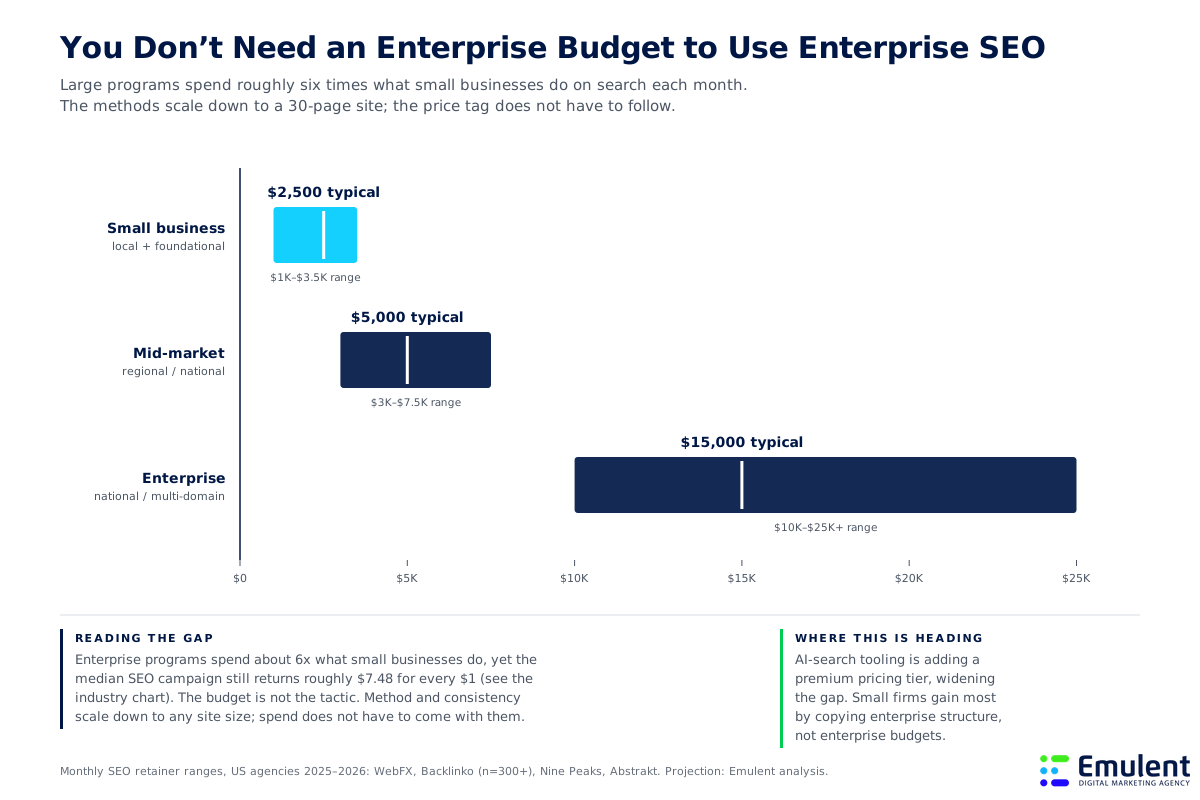
The spend gap above is the point. Enterprise programs run on five-figure monthly retainers, while small businesses get strong results in the low thousands. The methods below cost almost nothing to adopt because they are habits, not line items.
The three enterprise tactics that scale down cleanly:
- Topic clusters instead of scattered posts: group your pages into a few tight subject areas with one pillar page each, the same siloing large sites use. Search engines and AI models then read you as a focused authority on a handful of things rather than a generalist on none.
- Internal linking as a system: big brands route authority between pages on purpose. A 30-page site can do the same with one rule: every new page links up to its pillar and out to two related pages.
- Templated pages with schema markup: enterprises build reusable page templates (service, location, comparison) with structured data baked in. A small business can run three or four templates and publish consistent, machine-readable pages without rebuilding each one from scratch.
What does not survive the trip: multi-domain and subdomain sprawl, buying links at scale, and crawl-budget engineering. Those solve problems a small site does not have, and chasing them burns money you should spend on content. Notice that all three tactics that do transfer share one trait. They are systems you repeat, not projects you finish, which is the deeper lesson worth its own section.
Most “enterprise-grade” SEO sold to small businesses is theater. The parts that actually move revenue are the boring ones: a clean structure, internal links, and pages built to answer one question well. – Strategy Team, Emulent Marketing
How Does a 30-Page Site Think Like a 10,000-Page One?
The enterprise advantage that small businesses underrate is operational. Big sites run like a publishing operation: a taxonomy decided in advance, page templates, internal-linking rules, consistent schema, and reporting that runs every month. Small sites usually run on bursts of effort that start strong and fade. The gap is not page count. It is whether the work is a system or a one-time event.
The numbers argue for fewer, better pages run as a system. Across the web, the large majority of published pages earn no traffic from Google at all, and only a sliver of newly published pages reach the top of search within a year. Pumping out volume without a structure behind it mostly produces dead weight. A focused 30-page site, kept current and tightly linked, will out-earn a sprawling one. The catch is consistency: when the work stops, the results decay, so the system has to be one you can actually keep running. A simple content strategy that you maintain beats an ambitious one you abandon.
The small-site operating system, in four parts:
- A taxonomy you choose on purpose: sort everything into a few pillars before you write, so every page has a home and a reason to exist.
- Templates that carry the rules: bake titles, headings, schema, and internal links into reusable page types so quality does not depend on anyone remembering the checklist.
- An internal-linking habit: link each new page to its pillar and to related pages the week it goes live, not in a cleanup six months later.
- A cadence you can keep: two solid pages a month beats ten thin ones in a sprint that never repeats.
Roughly two hundred indexable pages is where running everything through one busy marketer tends to stall. The thinking, though, should start on day one, long before you hit that size. A system is only worth running if you are measuring the right outcome, and for years the default scoreboard has been rankings. That scoreboard is breaking.
A small site that runs on a system beats a big site that runs on heroics. The work that compounds is the work you can repeat next month without thinking hard about it. – Strategy Team, Emulent Marketing
Why Is Ranking #1 the Wrong Scoreboard Now?
Rankings and traffic were always inputs, not outcomes. They are now less reliable than ever, because the click that used to follow a top ranking is vanishing. A number one position today can earn fewer visits than a number three position did three years ago, and the trend is moving one way.
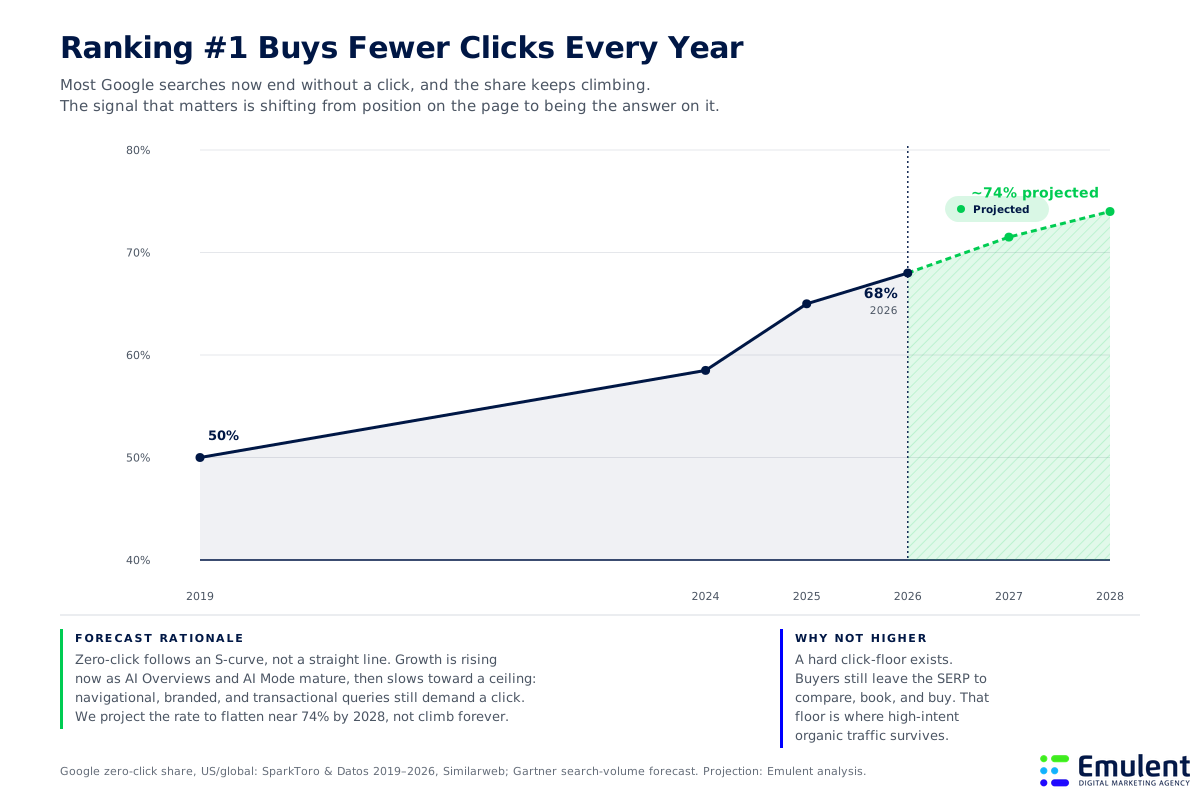
Two forces drive this. Google AI Overviews now appear on close to a third of all queries and on almost every informational one, and when they show, organic click-through on those searches falls by roughly 60%. People still search constantly. They just get the answer on the page. The enterprise response worth copying is to stop scoring on position and start scoring on revenue, and to build pages that earn a citation inside the AI answer instead of a blue link below it. Clear answers near the top of each page, structured data, and strong reviews are what get a brand named in those summaries, which is the core of search everywhere optimization. Being cited is worth far more than a ranking you cannot see, since organic leads cost a fraction of paid ones.
What to measure instead of position:
- Assisted pipeline, not sessions: track which organic pages touch deals that close, then build more pages like them.
- Citations and brand mentions in AI answers: being named inside an AI Overview now drives more value than a rank buried under it.
- Cost per qualified lead: organic leads run a small fraction of paid leads, and that number is what defends your budget in a board meeting.
Treating a number one ranking as the goal made some sense when it reliably bought clicks. It does not anymore. Knowing the right scoreboard also tells you what to stop doing, and the biggest savings for a small business come from refusing the enterprise tactics that never fit in the first place.
We stopped celebrating a number one ranking years ago. If the click never happens, the ranking is a trophy nobody sees. Pipeline is the only score that pays salaries. – Strategy Team, Emulent Marketing
Where Should a Small Business Deliberately Not Copy Enterprise?
Good strategy is defined as much by what you decline as by what you chase. The enterprise budget, often ten to fifty times a small business retainer, buys breadth: coverage of thousands of keywords, hundreds of pages, and competition for terms that a smaller brand will lose anyway. Copying that breadth on a small budget spreads you too thin to win anything. The discipline of saying no is the cheapest advantage a small business has.
The math supports restraint. A small share of high-intent pages drives most of the qualified traffic on almost any site, so a wide net of generic, high-volume terms is mostly wasted motion. Win the specific queries, including the local ones, where intent is clear and competition is thinner. If you want a reality check on spend before you commit, our breakdown of what SEO actually costs shows how little separates a focused program from a bloated one.
Four enterprise habits to skip on purpose:
- Broad head-term portfolios: you will lose the high-volume generic terms to brands with more authority. Win the specific, high-intent, often local queries instead.
- Thousands of thin pages: mass production drags your whole site down when most of those pages earn nothing. Publish fewer pages you can keep strong.
- Enterprise-size retainers: a six-figure annual program is breadth insurance for a big brand, not a requirement for real results.
- Technical-SEO theater: a 30-page site does not need crawl-budget engineering or a migration committee. Fix the basics and move on.
This holds for B2B marketing too, where a handful of bottom-of-funnel comparison and service pages tend to generate more pipeline than a year of broad blog posts. Saying no clears room for the few things that work. The question then becomes how to choose those few things, and that is where patterns across industries become useful.
How Do You Turn Cross-Industry Patterns Into an Edge Instead of a Copy?
We have run search programs across a lot of verticals and company sizes, from local small businesses to global brands, and the clearest pattern is simple: SEO return tracks customer value, not company size. A business where one client is worth five or six figures sees a very different payback than one selling low-ticket items, even with the same effort.
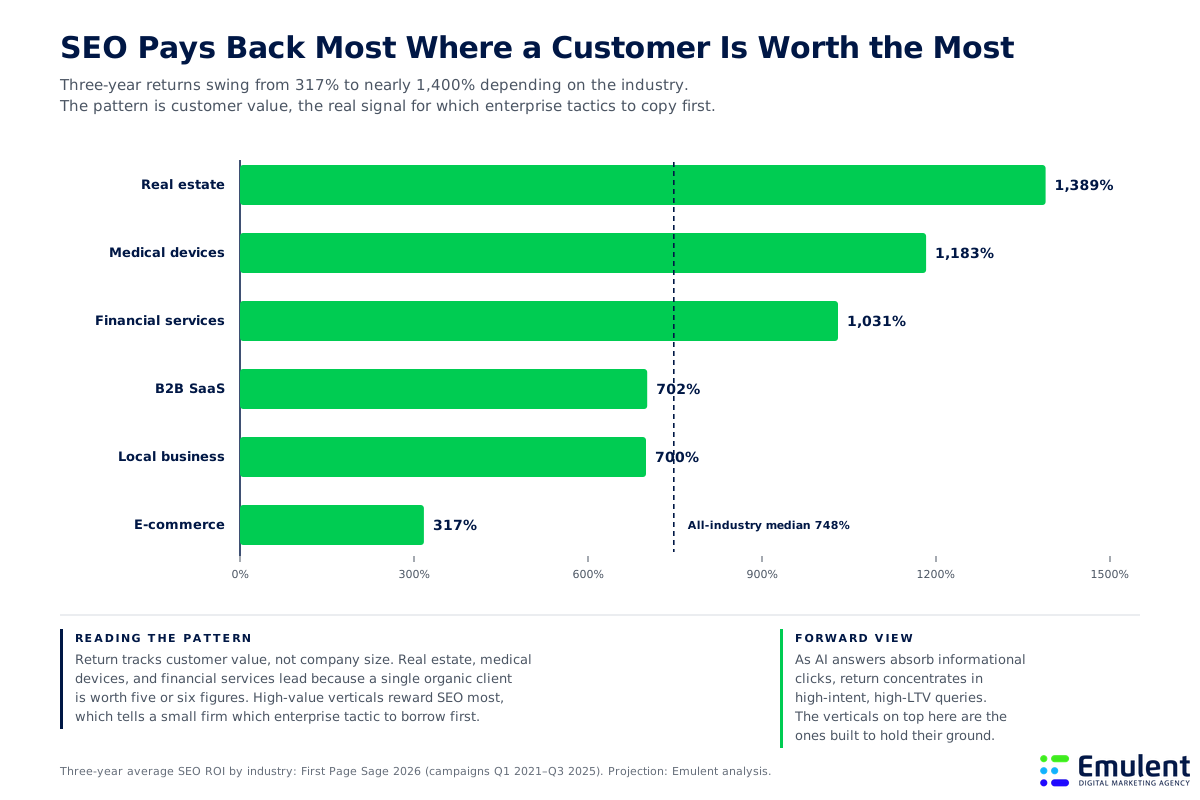
Read the chart as a guide for where to point your effort. A high-value small business, a specialty contractor, a clinic, a boutique law firm, should copy the enterprise tactic that compounds authority over time, because every organic client earns back the patience. A high-volume, lower-ticket business should expect a steadier, smaller return and price its effort accordingly. The pattern tells you how hard to lean in. It does not tell you to copy the pages your competitors already published. The moment your content looks like everyone else’s in your category, you have handed the click to whoever ranked first, which is why blending in costs you more than it saves.
How to apply a pattern without blending in:
- Borrow the structure, write your own substance: use the proven page types, comparison, location, and problem-solution, but fill them with first-hand specifics only you have.
- Match effort to customer value: if one client is worth five figures, a few deeply researched pages beat a content mill running on autopilot.
- Lead with a position, not a summary: AI answers and buyers both reward the source that says something, not the one that restates what everyone already agreed on.
Copying the pattern is smart. Copying the page is how you disappear. The day your content reads like your competitor’s, you have given the click to whoever got there first. – Strategy Team, Emulent Marketing
Bringing It Together
At Emulent, we build small businesses the kind of search system big brands run, sized to your team and your budget. That means a clean structure, templated pages built to earn citations in AI answers, and reporting tied to pipeline instead of rankings. You keep ownership of all of it, with no long contracts and no jargon hiding the work from you. If you want help applying enterprise-grade SEO to your business without the enterprise price tag, contact the Emulent team and we will map out a plan you can run.