
Veterinary practice marketing has moved from a nice-to-have to the factor that decides which clinics fill their appointment books through 2028. Pet owners research, compare, and judge a practice online long before they call, and a fast-growing share now ask an AI tool to build the shortlist for them. This report gathers the numbers that matter for the next three years, covering market size, the pet-owner care gap, reviews, local search, AI discovery, and telehealth, and turns each one into a decision you can act on this quarter.
Key takeaways from this report:
- The market keeps growing. U.S. veterinary services revenue is on pace to approach $48 billion by 2028, climbing about 7.6% a year.
- Demand leaks inside the building. Roughly half of pet owners skipped or declined recommended care last year, and 71% of them blamed cost.
- Reviews are the gate. 97% of consumers read reviews before choosing a local business, and 71% read them on Google.
- AI discovery went mainstream in a single year. The share of consumers using AI tools to find local services jumped from 6% to 45%.
- Telehealth is the fastest-growing service line. U.S. veterinary telehealth is compounding above 20% a year.
- Strategy beats budget. 94% of high-performing local brands run a deliberate marketing plan, against 60% of average performers.
How big is the opportunity, and who captures the growth?
The money behind pet care is steady and rising. U.S. veterinary services revenue is projected to grow from about $38 billion in 2025 to nearly $48 billion by 2028, an annual rate near 7.6%. Owners now treat pets as family, which keeps demand resilient even when household budgets tighten. That resilience has limits, though. Veterinary prices rose 7.6% between 2023 and 2025, faster than general inflation, and price-sensitive owners are starting to comparison-shop before they commit.
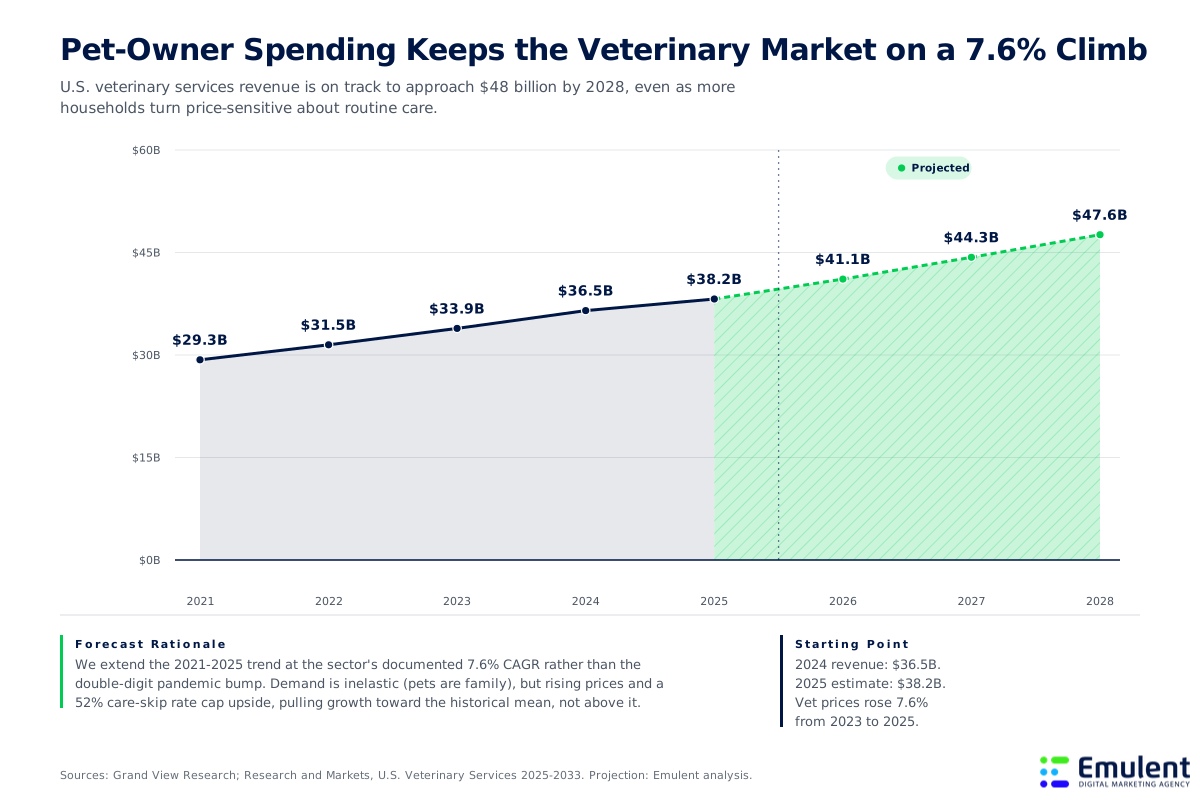
The risk for any single practice is assuming a rising market lifts everyone equally. It does not. As prices climb, owners spend more time choosing where to go, which means growth flows toward clinics that are easy to find, easy to trust, and easy to book. A practice that ignores its digital presence can watch the category expand while its own new-client count flattens.
Where the next three years of growth concentrate:
- Preventive and wellness care. The largest share of revenue and the easiest visit to win back through reminders and forward booking.
- Specialty and diagnostics. Advanced imaging and referral services carry higher margins and reward practices with clear, dedicated content.
- Corporate consolidation. Group-owned clinics arrive with marketing teams, raising the bar in nearly every local market.
- Convenience-led demand. Owners increasingly pick the practice that fits their schedule, not just the closest one.
A growing market hides weak practices for a while. When prices rise and owners slow down to choose, the gap between visible clinics and invisible ones turns into a revenue gap almost overnight. – Emulent Strategy Team
Why do pet owners with a vet still skip the visit?
The clearest leak in veterinary revenue is not at the front door. It is inside the relationship. About 83% of pet owners say they have a regular veterinarian, but only 69% visited one in the past year, and roughly half skipped or declined recommended care. The drop-off compounds at every step, and most of it traces back to one cause.
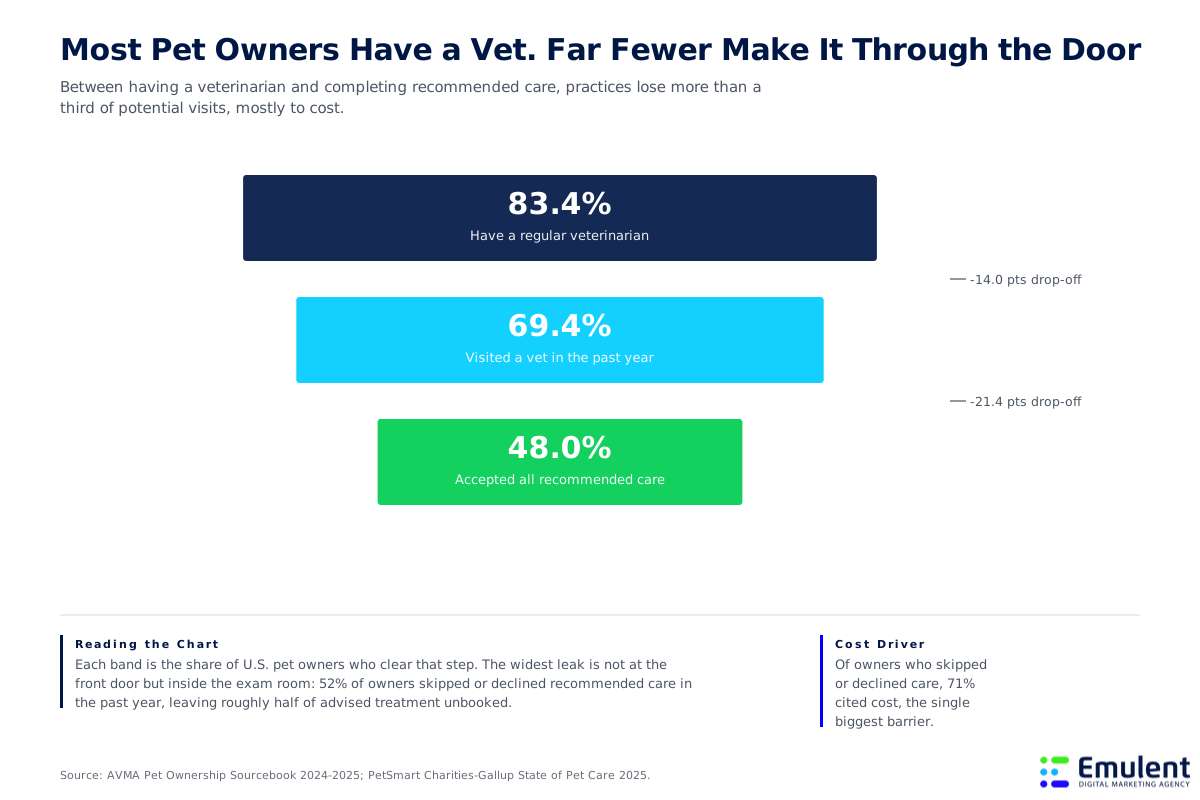
Cost drives the decision: 71% of owners who declined care said price was the reason. That makes the care gap a marketing and communication problem as much as a clinical one. When owners do not understand the value of a recommendation or cannot see a path to afford it, they defer, and deferred care often becomes lost care. Practices that treat price as a conversation rather than a surprise recover a meaningful share of those visits.
How to close the care gap without discounting your way to it:
- Transparent pricing. Publish starting prices and explain what a visit includes so cost stops being a reason to avoid the call.
- Forward booking. Schedule the next visit before the owner leaves, which lifts return rates more than any reminder sent later.
- Recall and reminders. Automated, friendly nudges bring overdue patients back without staff chasing phone calls.
- Wellness plans. Spreading predictable care into monthly payments removes the lump-sum barrier that causes deferral.
Closing the gap depends on owners choosing your practice in the first place, and that choice now happens almost entirely on a screen.
Where do pet owners actually decide which practice to call?
The decision runs in a predictable order: search, find a listing, read reviews, then call. Reviews sit at the top of nearly every step. 97% of consumers read reviews before choosing a local business, 72% use Google for local information, and 42% click the map pack before any other result. A complete Google Business Profile makes a practice 2.7 times more likely to be seen as credible.
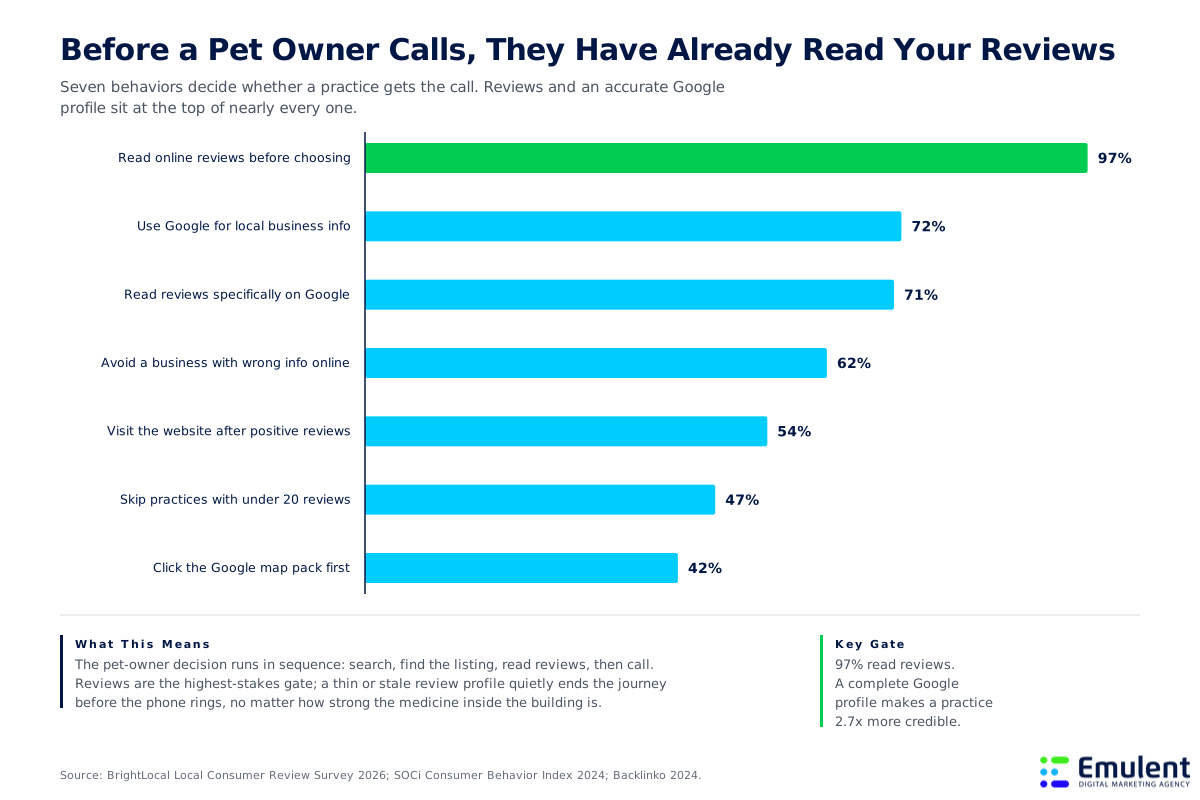
This is where strong local SEO earns its keep. A practice with a thin or stale review profile loses the owner before the phone rings, no matter how good the medicine inside the building is. The same applies to listing accuracy: 62% of consumers avoid a business when they find wrong information online, and a single incorrect set of holiday hours can send a dozen new clients to the clinic down the road. The signals that move the map pack, your primary category, proximity, and review strength, are spelled out in the local SEO ranking factors that Google weighs most heavily.
The local visibility checklist every practice owner should pressure-test:
- Google Business Profile. Fill every field, add photos, post regularly, and answer questions, since this is your most trusted public face.
- A real review engine. Ask for a review at the end of every positive visit so your profile grows 10 to 15 reviews a month, not a handful a year.
- Dedicated service pages. Give dental, surgery, wellness, and emergency care their own pages, the single strongest organic ranking signal, supported by a fast, modern website design.
- Consistent name, address, and phone. Match your details across every directory so search engines and owners trust what they find.
Owners do not grade your reviews against perfection. They grade them against the practice two miles away. Twenty fresh reviews beats two hundred from three years ago. – Emulent Strategy Team
How is AI rewriting the way pet owners find a clinic?
The biggest shift in local discovery happened in twelve months. The share of consumers using AI tools to find local services rose from 6% to 45%, and AI is now the third most-used discovery channel after Google and Facebook. Pet owners are asking ChatGPT, Gemini, and Perplexity questions like “what is the best vet near me,” and they are acting on the answers.
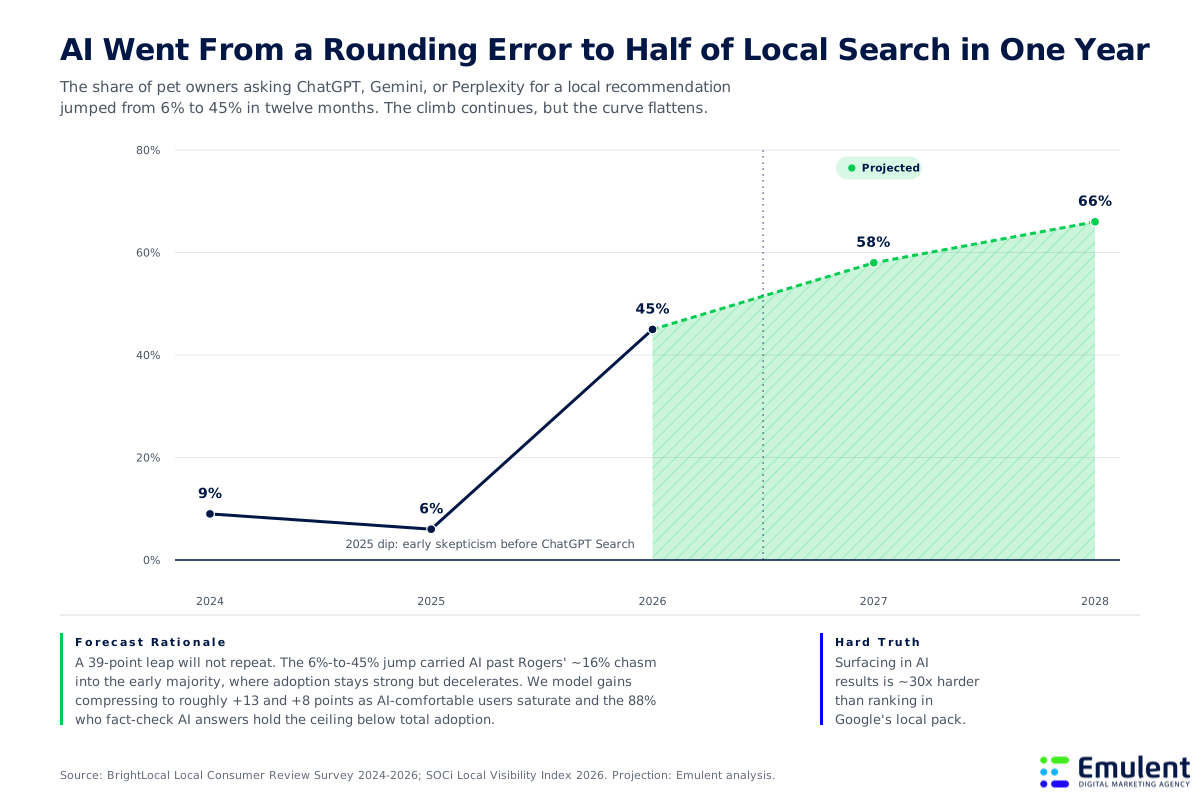
We do not expect the 39-point jump to repeat. The leap carried AI past the early-adopter chasm into the early majority, where growth stays strong but slows, and a ceiling forms because most people still fact-check what AI tells them. Even so, the strategic problem is urgent: appearing in AI recommendations is about 30 times harder than ranking in Google’s local pack, and only 68% of the business details AI tools surface match what is on Google. A wrong phone number in an AI answer costs you the call without you ever knowing.
The good news is that AI SEO, sometimes called generative engine optimization, rests on the same foundation as traditional search. Practices that win citations in Google AI Overviews tend to have deep website content, accurate listings, and a strong review profile already. Building once for both Google and AI is the core idea behind search everywhere optimization.
What AI readiness actually requires:
- Authoritative website content. AI tools cite business websites more than any other source, so your own pages are the record they read.
- Consistent listings everywhere. Matching details across directories raise the odds AI represents your practice correctly.
- Earned mentions and best-of lists. Coverage on trusted local and veterinary sources is a top signal for AI recommendations.
- Review depth and recency. A steady review flow feeds both your rankings and the answers AI gives, a sequence laid out in our AI SEO checklist.
AI does not reject the practices it leaves out. It simply does not know they exist. The clinics building authority now are quietly claiming shelf space that latecomers will not be able to buy back. – Emulent Strategy Team
Which new service models deserve a place in the plan?
Convenience is becoming a competitive line, and telehealth is where it shows up first. The U.S. veterinary telehealth market is growing from about $111 million in 2025 toward nearly $195 million by 2028, an annual rate above 20%. Walmart and Amazon have both entered pet telehealth, a clear sign that owners expect remote options for routine questions and follow-ups.
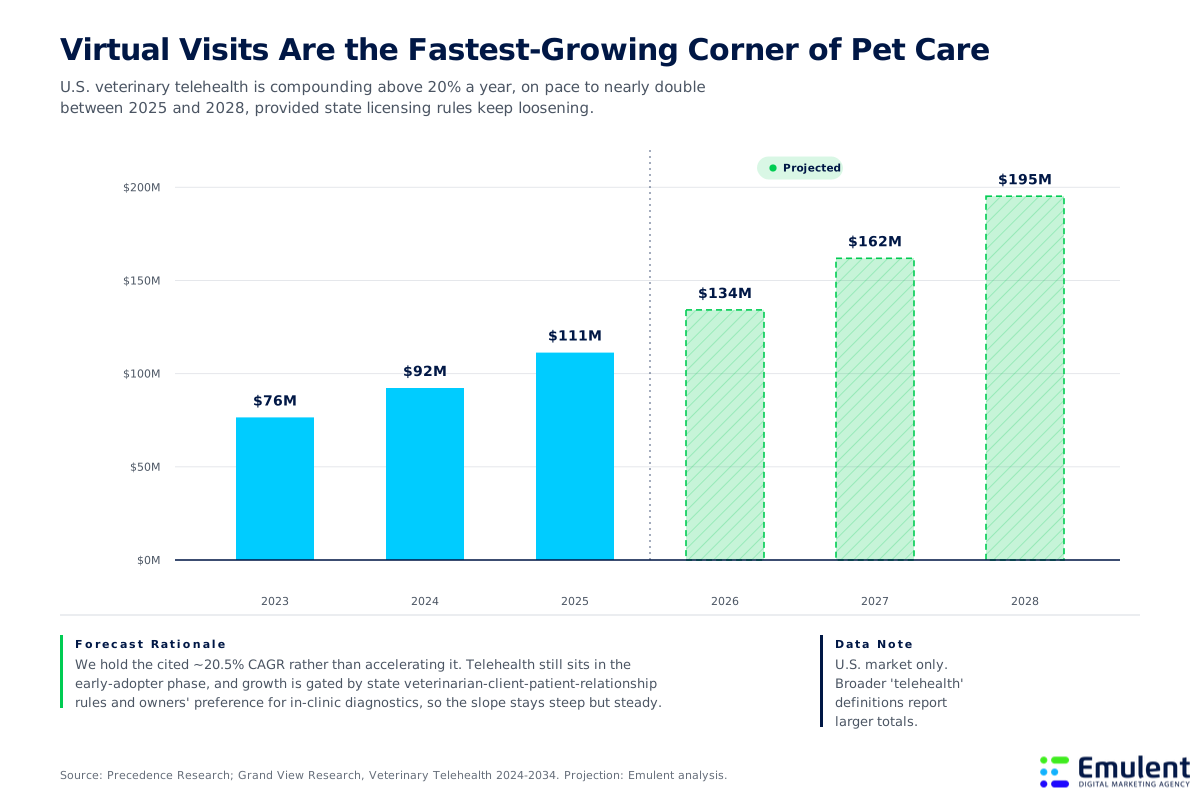
We hold the growth rate steady rather than projecting it higher, because state veterinarian-client-patient-relationship rules still limit what a clinic can diagnose remotely, and many owners prefer in-person care for anything serious. Telehealth is not a replacement for the exam room. It is a way to capture visits that would otherwise be skipped and to serve owners who value speed. A practice that markets a telehealth option, even a simple one, signals that it meets owners where they are.
Where telehealth fits inside a practice plan:
- Triage and quick questions. Sort which pets need to come in now, reducing wasted exam slots and owner frustration.
- Follow-up checks. Confirm a recovery or medication response without a second trip to the clinic.
- Chronic condition monitoring. Keep tabs on long-term cases, which improves adherence and lifetime value.
- Rural and access-limited owners. Reach clients who would otherwise delay care because the nearest clinic is far away.
New service models pay off only when they sit inside a plan rather than beside it, which is the real divide between practices that grow and practices that stall.
What separates practices that grow from those that stall?
The difference is not budget size. It is whether a practice runs marketing as a coordinated system. Among high-performing local brands, 94% have a dedicated marketing strategy, against just 60% of average performers. That 34-point gap is the clearest predictor of which practices win their market.
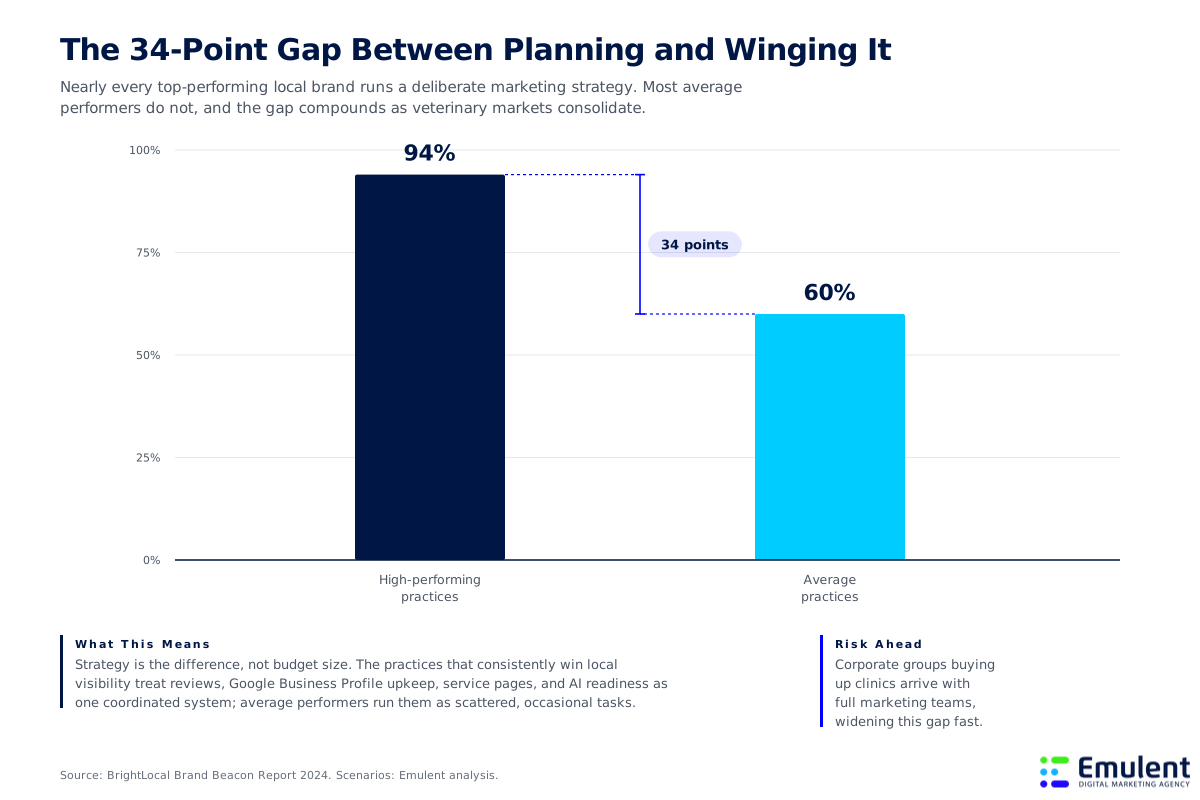
The gap matters more every year because veterinary markets are consolidating. Corporate groups buy clinics and bring full marketing teams with them, so an independent practice running scattered, occasional tasks falls behind on every front at once: reviews, local search, AI visibility, and brand. The practices that hold their ground treat these as one connected effort, which is the heart of standing out through differentiation in a saturated market. For most independent clinics, the answer is a steady plan run with senior-level focus, the same model behind effective small business marketing and grounded in clear brand strategy.
The traits of strategy-led veterinary practices:
- A connected system. Reviews, profile upkeep, content, and AI readiness work together instead of as separate chores.
- Owned channels first. A strong website and review base they control, not rented attention that disappears when spending stops.
- Honest measurement. Tracking that ties each channel to actual new-client revenue, not vanity numbers.
- Consistency over bursts. A monthly rhythm of small actions that compounds, rather than a once-a-year push.
Independent practices do not lose to corporate groups because the medicine is worse. They lose because the marketing is occasional. A plain, consistent plan closes most of that gap. – Emulent Strategy Team
Turning these trends into new clients
The pattern across every number in this report is the same: the practices that grow through 2028 are the ones owners can find, trust, and book without friction, whether the search starts on Google, in the map pack, or inside an AI answer. At Emulent, we help veterinary practices build that system, from Google Business Profile and review strategy to website content, AI readiness, and measurement that connects each channel to real new-client revenue.
If you want help putting these veterinary marketing trends to work for your practice, contact our Veterinary Marketing Agency to talk about Veterinary Web Design, or Veterinary SEO