
Small business marketing in 2026 looks fundamentally different than it did even two years ago. AI tools have crossed the majority adoption threshold among small business marketing teams. Zero-click search has reshaped what organic traffic means. Budget caution is real, yet decrease-intent is shrinking. The owners who win this year are the ones reading these signals correctly and reallocating with confidence rather than reacting late.
Key takeaways for small business marketers in 2026:
- AI adoption has crossed 68% among small businesses and is on a logistic curve toward 90% by 2030.
- Email marketing returns $42 per $1 spent, nearly double the next-best channel and roughly 14× the return of paid social.
- Two-thirds of Google searches now end without a click, pushing the optimization target from “ranking” to “being cited.”
- Local search converts at 13% from query to purchase, which is 4–6× the conversion rate of paid social.
- Budget intent has cooled but not collapsed: only 8% of small businesses plan to cut marketing in 2026, down from 16% in 2024.
- SEO and email are the most underused high-ROI channels, adopted by barely half of SMBs despite outperforming every paid alternative.
Why has AI adoption hit late-majority territory so quickly?
Small business AI adoption tripled between 2023 and 2026, moving from 23% of SMBs in 2023 to 68% by early 2026 according to the U.S. Chamber of Commerce/Teneo Small Business Index and BizBuySell’s Insight Report. This is not the usual lagging-SMB story for new technology. Small firms are now adopting AI at a faster pace than large enterprises for the first time in any tech cycle the SBA has measured.
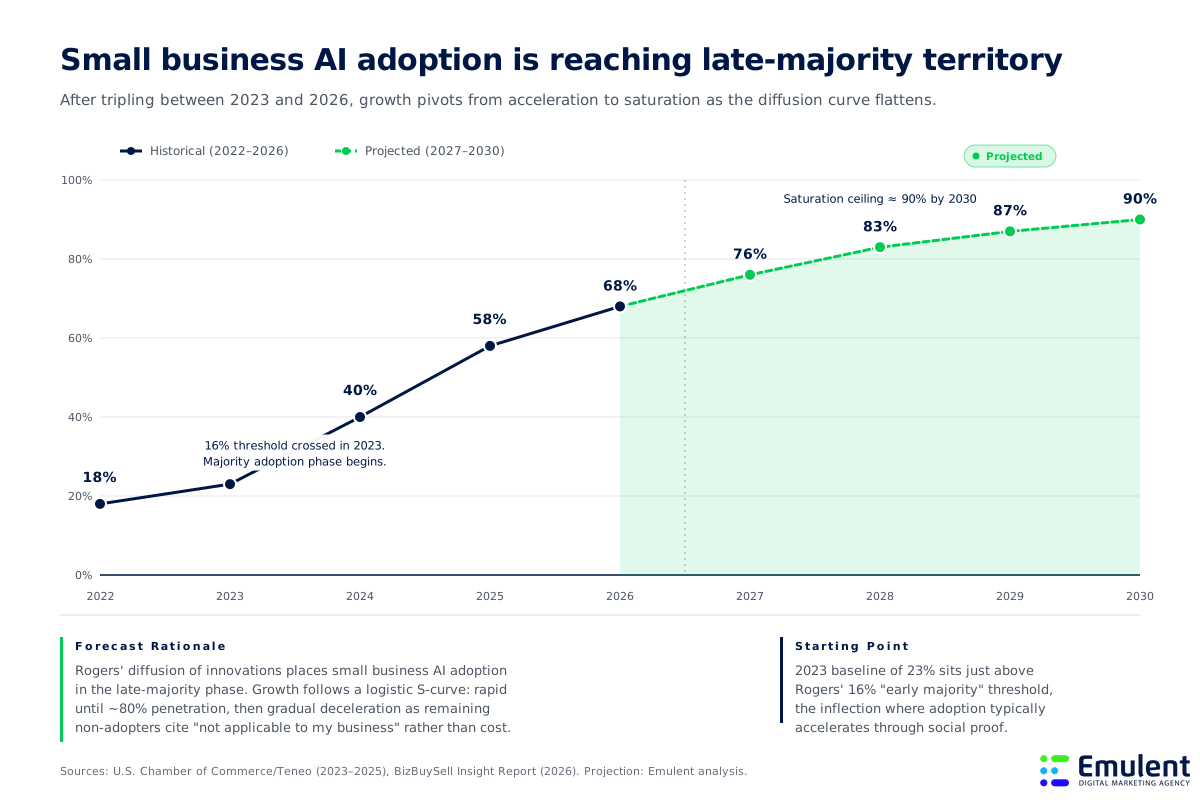
The pace makes sense when you map it to Rogers’ diffusion of innovations. The 16% “early-majority” threshold was crossed in 2023 with the post-ChatGPT cohort. Once a technology clears that threshold, social proof and competitive pressure accelerate adoption until roughly 80% penetration, then the curve flattens as remaining holdouts cite reasons that are not really about the technology. Among the 18% of non-adopters left, 82% of firms under five employees say AI is “not applicable” to their business. That is an education barrier, not a cost or capability barrier.
What changes when AI is table stakes:
- Content production is no longer a bottleneck. A marketing coordinator who used to spend four hours drafting a week of social posts can produce the same output in under an hour with AI assistance.
- The competitive advantage shifts from “doing it at all” to “doing it well.” When 68% of competitors use the same tools, sloppy AI output is now a brand liability, not just a missed opportunity.
- Strategy and judgment become the scarce input. Tools generate options. Knowing which option fits the audience and the brand is human work.
Our Strategy Team sees a clear pattern in the data we audit: small businesses that crossed 80% AI utilization in their workflows in 2025 are spending less on agencies for execution and more on agencies for strategy. The dollars are not shrinking, they are moving up the value chain. – Emulent Strategy Team
Adoption metrics tell only half the story. The harder question is what AI is actually doing to the search ecosystem small businesses depend on.
What does zero-click search mean for organic traffic strategy?
Roughly 65% of U.S. Google searches now end without a click to any external website, according to SimilarWeb and SparkToro/Datos research. The trend predates AI Overviews, but the May 2024 rollout of Google’s generative answers accelerated it. Some content sites have reported organic traffic drops of 15–25% on informational queries even when their pages still rank on the first page.
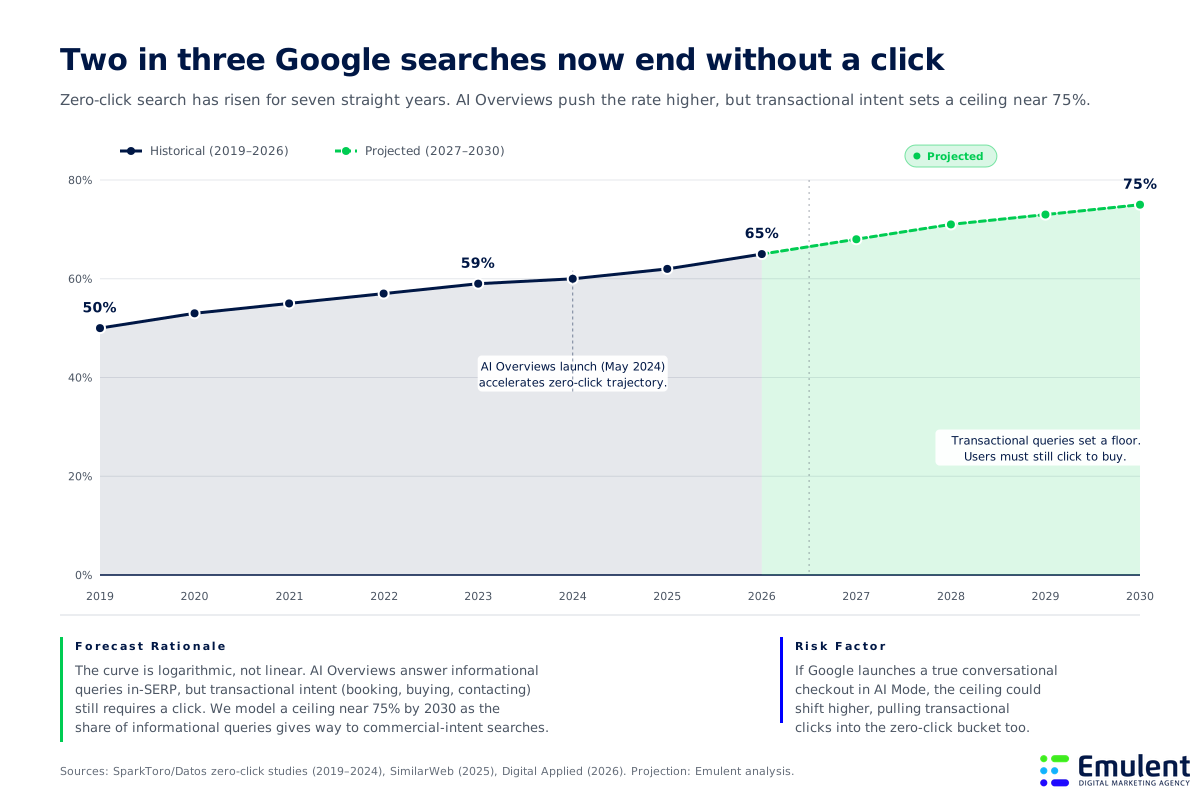
The forecast we model puts zero-click at roughly 75% by 2030, but not higher. The reason is a floor effect: transactional intent still requires a click. Booking a service, requesting a quote, ordering a product, getting directions, and calling a phone number all force users out of the SERP. The implication for small business SEO is not “abandon organic.” It is “stop optimizing only for clicks.” Citation by an AI Overview or AI Mode answer now counts as a brand impression even when no traffic follows.
This is why search everywhere optimization and AI SEO services have moved from emerging discipline to baseline requirement. Content engineered for citation in generative answers looks different than content engineered to rank: shorter standalone passages, structured data, clear authorship signals, and factual density measured in statistics per paragraph rather than keyword variants. The full mechanics of the shift are covered in our Google AI Overviews update analysis, which we will not re-cover here.
The question we get most often from small business owners is whether to keep investing in SEO. Our answer is yes, but the deliverable changed. The new deliverable is brand mentions across surfaces, not just rankings on a SERP that is itself becoming an answer engine. – Emulent Strategy Team
If clicks are getting harder to earn from search, the natural question is which channels still pay back reliably.
Which marketing channels actually return what they cost?
The ROI gap between channels has widened in 2026, and it favors owned channels almost without exception. Email marketing returns $42 for every $1 spent according to Litmus and Campaign Monitor, with SEO at $22:$1 per HubSpot’s State of Marketing 2026, Google Ads at roughly $8:$1, and paid social bringing up the bottom at roughly $3:$1.
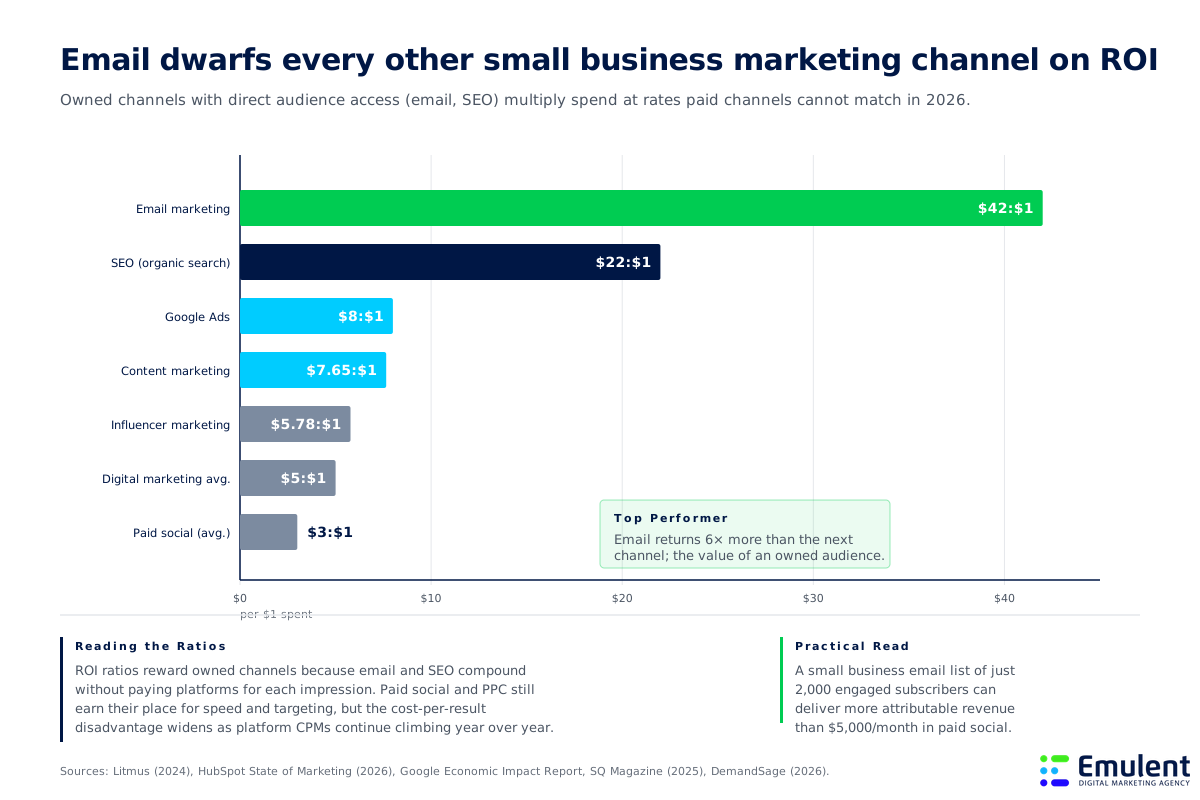
Owned channels keep widening their lead for three reasons that compound year over year. Platform CPMs continue rising on paid social. Algorithm changes keep eroding organic reach on social. And email lists, unlike followers, do not get throttled by a platform looking to monetize. A small business with a clean list of 2,000 engaged subscribers can drive more attributable revenue from a single email send than a $5,000/month paid social budget delivers in a typical month.
What this means for budget allocation:
- Build the email list first, then the social presence. Treat social as an acquisition layer that feeds the email list, not as a destination in itself.
- Treat paid social as a velocity tool, not an ROI tool. It buys time and reach during a launch, not durable returns.
- Run SEO as a multi-quarter investment. The 22:1 ratio shows up after the first 6–9 months of compounding work, not in week three.
- Measure customer lifetime value, not first-purchase ROAS. Channels that produce repeat customers usually look worse on day-one attribution and better on year-one cohort math.
None of these channel choices matter, however, if the budget itself is in retreat. The real question is whether small businesses are still funding marketing at the level required to compound returns.
Are small businesses pulling back on marketing budgets?
The headline reading of the 2026 LocaliQ Small Business Marketing Trends Report is that budget caution returned. Increase-intent dropped from 56% in 2024 to 38% in 2026. The more useful read sits one row deeper in the data: “plan to decrease” fell from 16% to 8% over the same period.
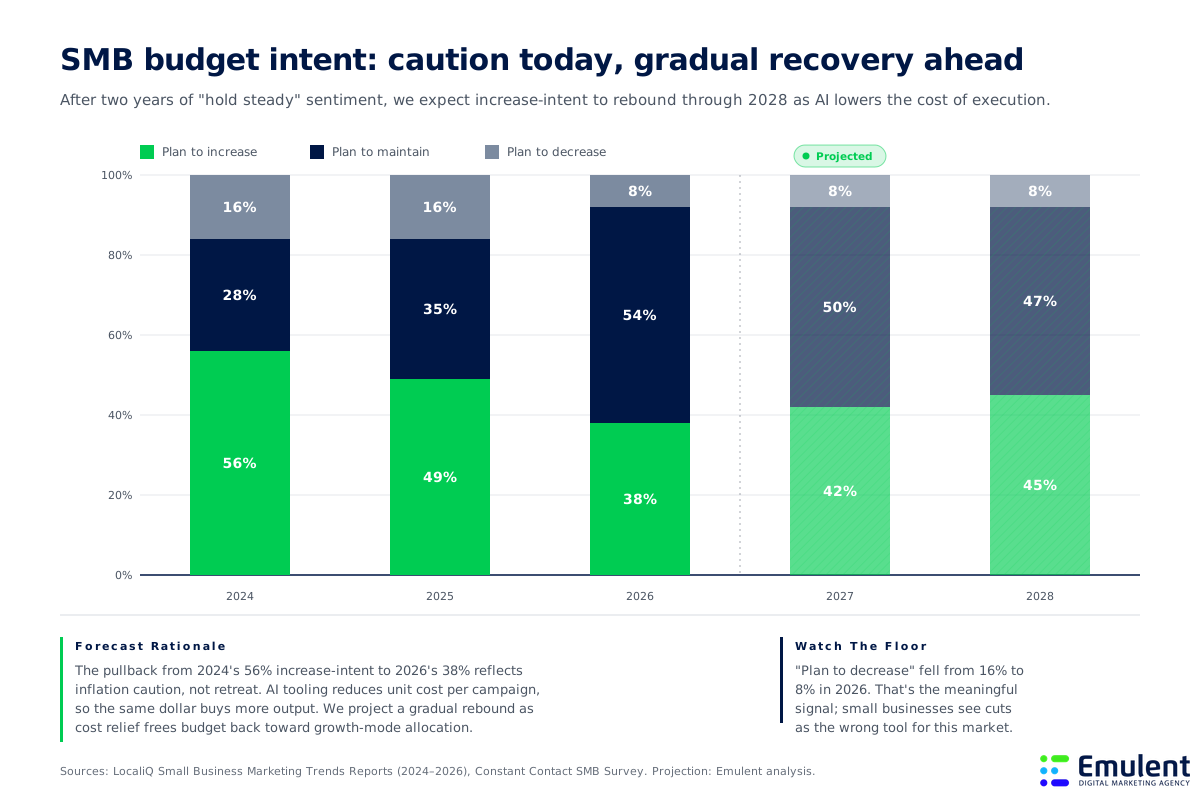
Small businesses are not retreating from marketing. They are holding position. The maintain category, which represents owners who plan to spend roughly what they spent last year, climbed from 28% in 2024 to 54% in 2026. When inflation and interest rate pressure ease, the historic pattern is for maintain-intent owners to shift back into increase-intent, not into decrease-intent. We model a gradual rebound to 45% increase-intent by 2028 on that basis.
If you are competing against businesses that did pull back, this is the moment to consolidate share. Companies that maintain marketing spend during periods when competitors retreat consistently gain market share at the same dollar level, because share of voice rises mechanically when fewer voices are bidding for attention.
Why does local search outperform every other small business channel?
For any small business with a physical location or service area, local search converts harder than any other source of traffic. According to Google’s own data and digital analyst Digital Applied’s 2026 Local SEO Statistics, 46% of Google searches now carry local intent, up from 30% in 2019. Three out of four local searchers visit a business within 24 hours, and 28% make a purchase from that visit.
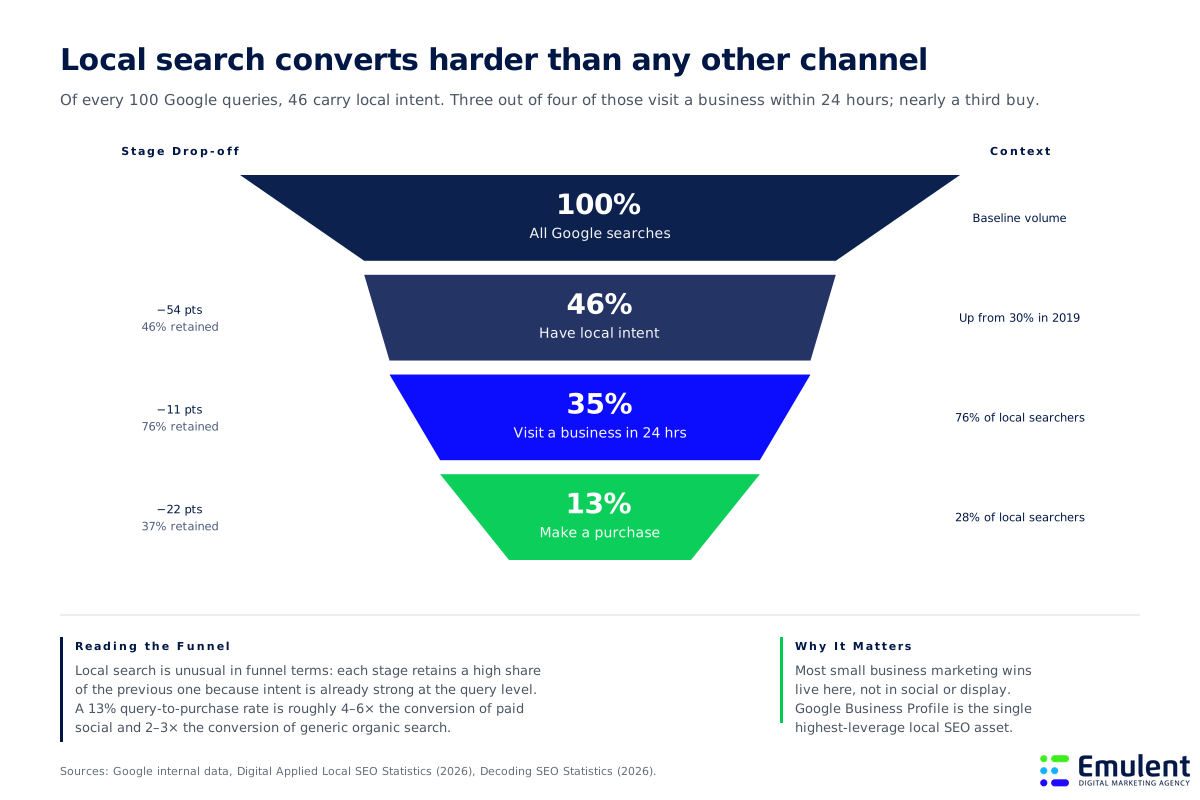
Compounded through the funnel, that is a 13% query-to-purchase rate. The same intent profile is the reason local SEO services consistently outperform broad organic SEO for small businesses competing in defined geographies. The remaining work is making sure your Google Business Profile actually shows up and converts when those queries fire. The current playbook is covered in our running analysis of local SEO trends.
If a small business has a budget of $2,000 a month and a service area that fits within a 25-mile radius, we spend it on Google Business Profile optimization, review velocity, and a content layer that earns citations from local AI answers. Everything else is downstream of those three. – Emulent Strategy Team
Knowing where the highest-converting traffic comes from is half the puzzle. The other half is whether small businesses are actually using the channels that work hardest.
Which channels are most small businesses still leaving on the table?
Adoption data from HubSpot, LocaliQ, and PostcardMania shows a familiar gap between what small businesses use widely and what actually returns the most per dollar. Social media adoption sits at 96% in 2026. Video marketing reached 91%. AI marketing tools jumped 28 points in two years to 68%. SEO and email, the two highest-ROI channels in our analysis, are still used by barely half of SMBs at 53%.
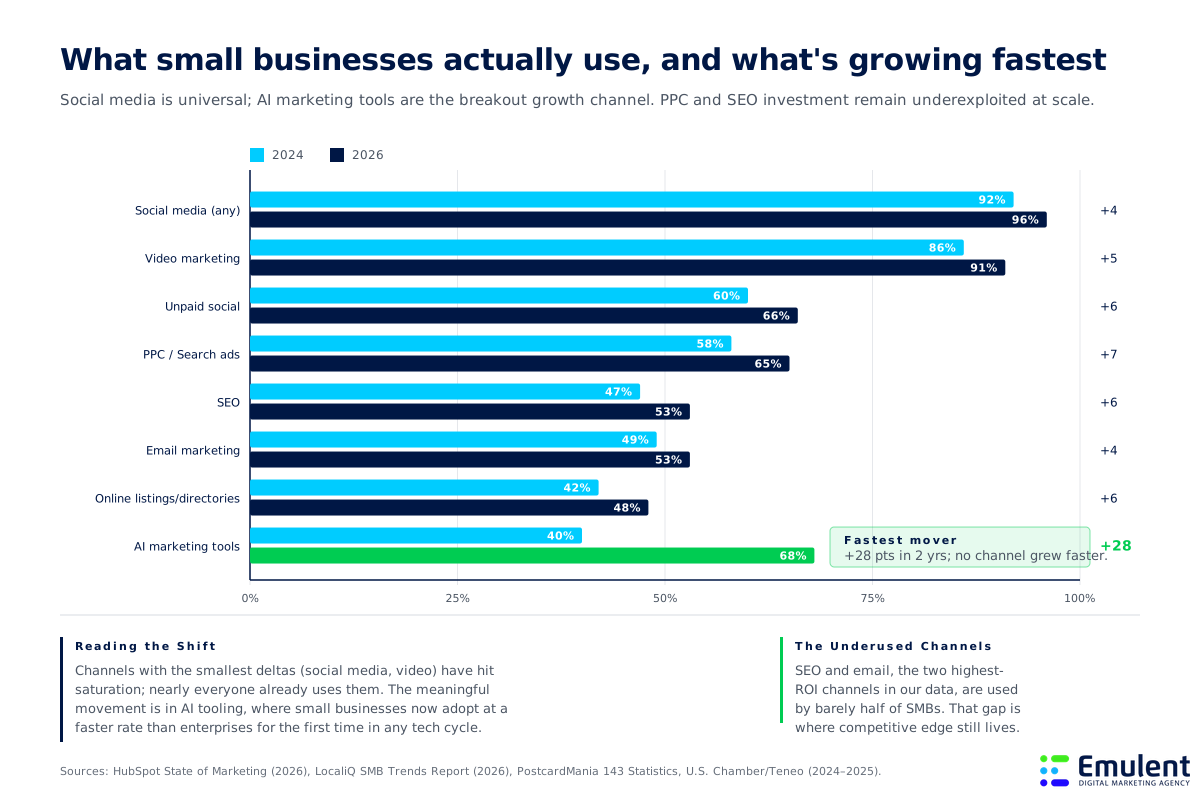
This is the most important strategic asymmetry in small business marketing right now. The channels with the highest returns are also the channels with the lowest adoption. That is rare in mature markets, where competition typically arbitrages high-return opportunities until the return collapses. The gap exists because email and SEO require sustained execution rather than one-time setup, and most small businesses lack the time or the in-house specialism to commit.
Where the unexploited edge lives:
- List growth as a primary KPI. Most small business websites collect emails passively. Active list growth through lead magnets, content upgrades, and post-purchase capture can double a list inside 12 months.
- Topical authority over keyword targeting. Modern content strategy services treat the topic cluster, not the single keyword, as the unit of work. AI search engines reward depth across a topic, not isolated pages.
- Reviews as a ranking and conversion lever simultaneously. Review velocity influences both Google Business Profile rankings and conversion rates from the profile itself. Both matter, and they share infrastructure.
- Owned media before paid media. Before scaling paid social or PPC, validate that the audience you reach actually converts on owned channels. If they do not, paid spend amplifies the leak.
The gap between high-ROI channels and high-adoption channels is the single best competitive opportunity small businesses have in 2026. Most owners look at it and see work they cannot make time for. The ones who solve the time problem capture the gap. – Emulent Strategy Team
How should small business marketers respond in 2026?
The data points in one direction. AI lowers the cost of execution but raises the bar on strategy. Zero-click search rewards brands that earn citations across surfaces, not just rankings on Google. Owned channels return multiples of what paid channels do. Local search remains the highest-converting traffic source available. And the gap between high-ROI channels and actual SMB adoption rates is wider than at any point we have measured.
The small businesses that grow through 2026 and into 2027 are the ones treating marketing as a strategic investment, measuring returns honestly, and using AI to multiply what their limited team can do. That is not a forecast. It is what the adoption data, ROI data, and budget data already show working for the businesses we audit.
How Emulent helps small businesses execute against these trends
We work with small business owners who want clarity on where to spend, what to measure, and which channels actually move the business. Our team builds digital marketing services programs around the data above: email and SEO as the compounding base, local search as the highest-converting layer, AI tooling to multiply output without adding headcount, and paid channels deployed surgically rather than by default.
If you want to talk through your 2026 marketing plan with people who do this every day, contact the Emulent team. We will tell you what we would change first if it were our business.