
Life sciences marketing in 2026 looks nothing like it did three years ago. Pharma and biotech brands face a tightening regulatory environment, the largest patent cliff in industry history, a generational shift in how healthcare professionals consume clinical information, and an AI tooling stack that has moved from pilot to production in less than 24 months. This piece pulls together the data points that matter for life sciences, pharma, and biotech marketing leaders planning budgets and campaigns for 2026 through 2028, with grounded projections on where each trend goes next.
Key takeaways from this report:
- Digital ad spend is now the default: US healthcare and pharma digital ad spending is projected to grow from $24.8B in 2025 to roughly $32B by 2028, with digital expected to absorb 82% of category spend by 2027.
- Linear TV is in structural decline: For the first time in 2025, social media spend in healthcare and pharma exceeded linear TV. The gap widens through 2028 as FDA scrutiny on DTC ads intensifies.
- Patent cliff dwarfs everything else: About $236B in branded pharma revenue is at risk between 2025 and 2030 across 70 blockbuster drugs, with 2028 as the peak year (Keytruda U.S. biosimilar entry).
- AI in drug discovery is scaling fast: The market is on track to nearly triple from $19.9B in 2025 to $56.5B by 2030, growing at roughly 23% CAGR.
- HCPs read more than they click: 82% of physicians still get clinical information from articles and journals, with email and webinars now rivaling in-person reps.
- Owned channels are outpacing rented ones: Pharma marketers reported a 24% rise in marketing research use and a 20% rise in brand website investment for 2026, while paid social, display, and content marketing fell.
How big is the addressable market for life sciences marketing in 2026?
The story for 2026 starts with the size of the prize. US healthcare and pharma digital ad spending climbed from $14.0B in 2021 to $24.8B in 2025 according to eMarketer’s January 2026 forecast, and the category is on track to clear $32B by 2028. Pharma alone makes up roughly 88% of that pool, which means biotech, medical device, and life sciences services brands are competing for a much smaller slice than the headline number suggests.
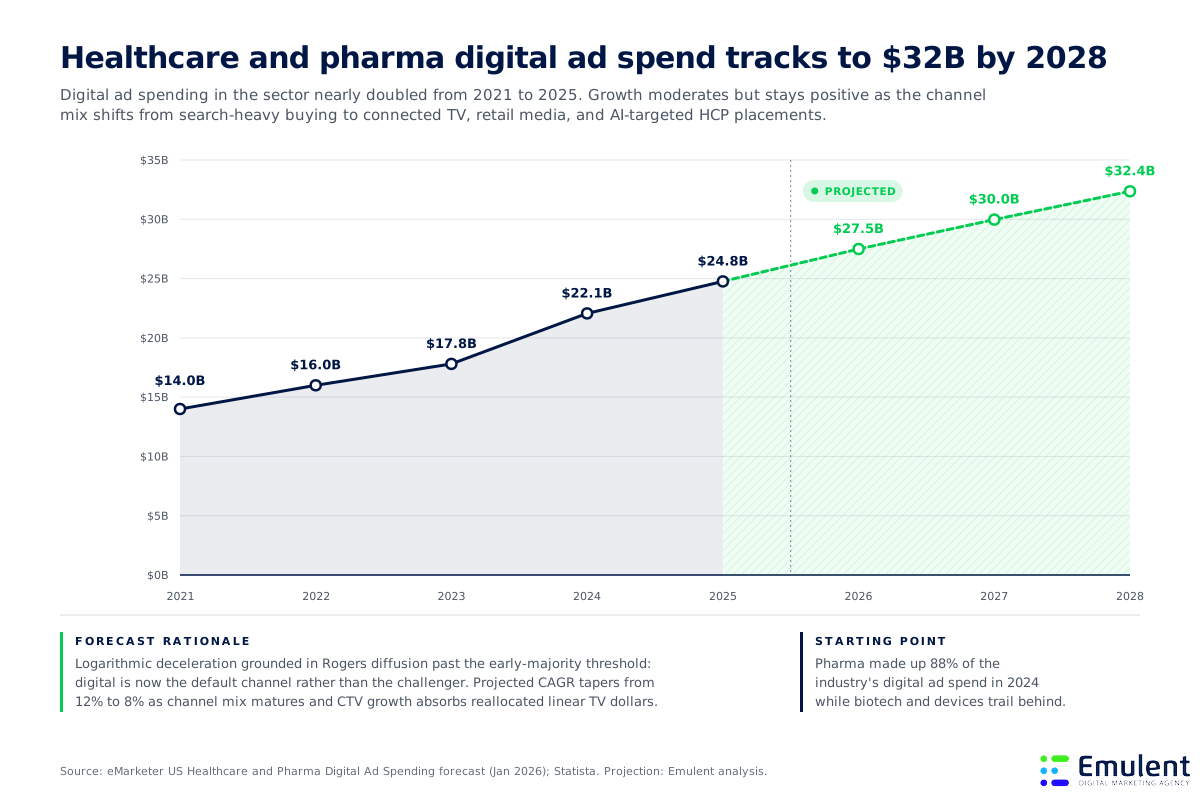
The growth curve flattens after 2025 because the easy gains are behind us. Search, programmatic, and CTV are no longer the novel channels they were in 2021. Most pharma brands have moved past the “should we test digital” conversation and into “how do we make digital genuinely accountable.” That reframing changes what marketing leaders need from agencies and consulting partners. The question is no longer whether to invest in pharmaceutical marketing across digital channels, but how to architect attribution, content workflows, and HCP engagement so the next dollar produces measurable lift.
The pharma brands winning in 2026 are not the ones with the biggest digital budgets. They are the ones who built the data plumbing between their CRM, content management system, and analytics stack early enough that they can actually answer the question “did this campaign change prescribing behavior?” – Emulent Strategy Team
Why did digital ad spend overtake linear TV, and what comes next?
2025 was the inflection year. According to eMarketer, social media spend in healthcare and pharma exceeded linear TV for the first time, and digital surpassed linear TV in total category spend. iSpot.tv reported $5.96B in prescription drug TV ad spending in 2025, up 16% year over year, but eMarketer projects the broader healthcare and pharma linear TV category to drop 11% as brands rebalance toward CTV, social, and HCP-targeted programmatic.
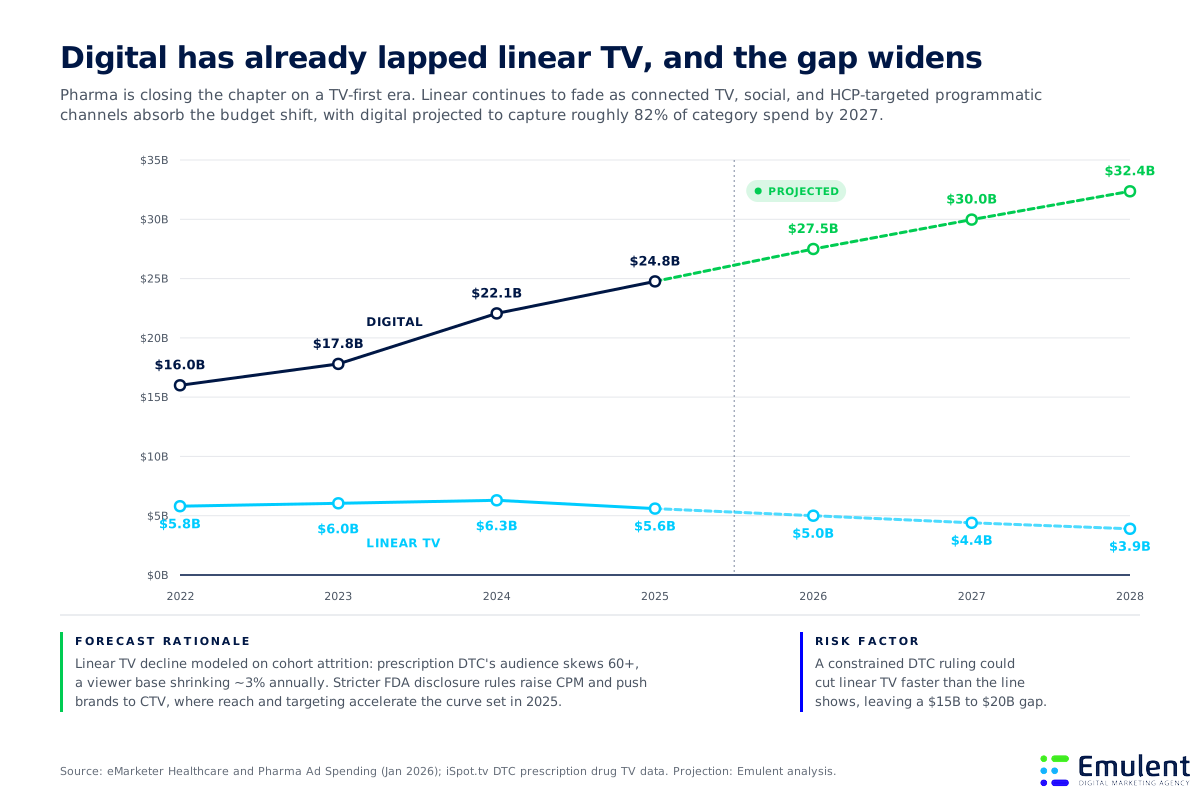
The decline is structural, not cyclical. Linear TV’s prescription drug audience skews 60+, a viewer base shrinking roughly 3% annually as cohorts age out and younger demographics never adopt the channel. Layer in the FDA’s September 2025 crackdown on deceptive DTC advertising and more than 100 warning letters issued during that year, and the regulatory cost of running a linear TV campaign rises every quarter. Brands are not abandoning television. They are moving the same dollars to connected TV, where targeting is sharper and disclosure burdens are easier to manage.
What this means for budget owners in 2026:
- Reassess CTV as a replacement, not a supplement: Connected TV inventory now reaches the same audiences linear TV did, with addressable targeting that matches HCP and patient segments more cleanly.
- Plan for stricter disclosure rules: The FDA has signaled it will redraw DTC regulations to require fuller risk disclosures. That extends ad length and raises CPMs on linear TV, accelerating the shift.
- Treat out-of-home as a hedge: Pharma OOH spend grew sixfold between 2016 and 2024 according to the Out of Home Advertising Association of America. It is a quieter channel for diversifying away from regulatory exposure.
What does the 2025 to 2030 patent cliff mean for marketing strategy?
The single largest force reshaping life sciences marketing is the patent cliff. Deloitte estimates $236B in branded pharma revenue is at risk between 2025 and 2030 across 70 blockbuster drugs, with PitchBook and STAT projecting up to $400B at risk by 2033. The peak year is 2028, when Keytruda’s U.S. biosimilar window opens in September and roughly $58B in revenue comes under direct biosimilar competition.
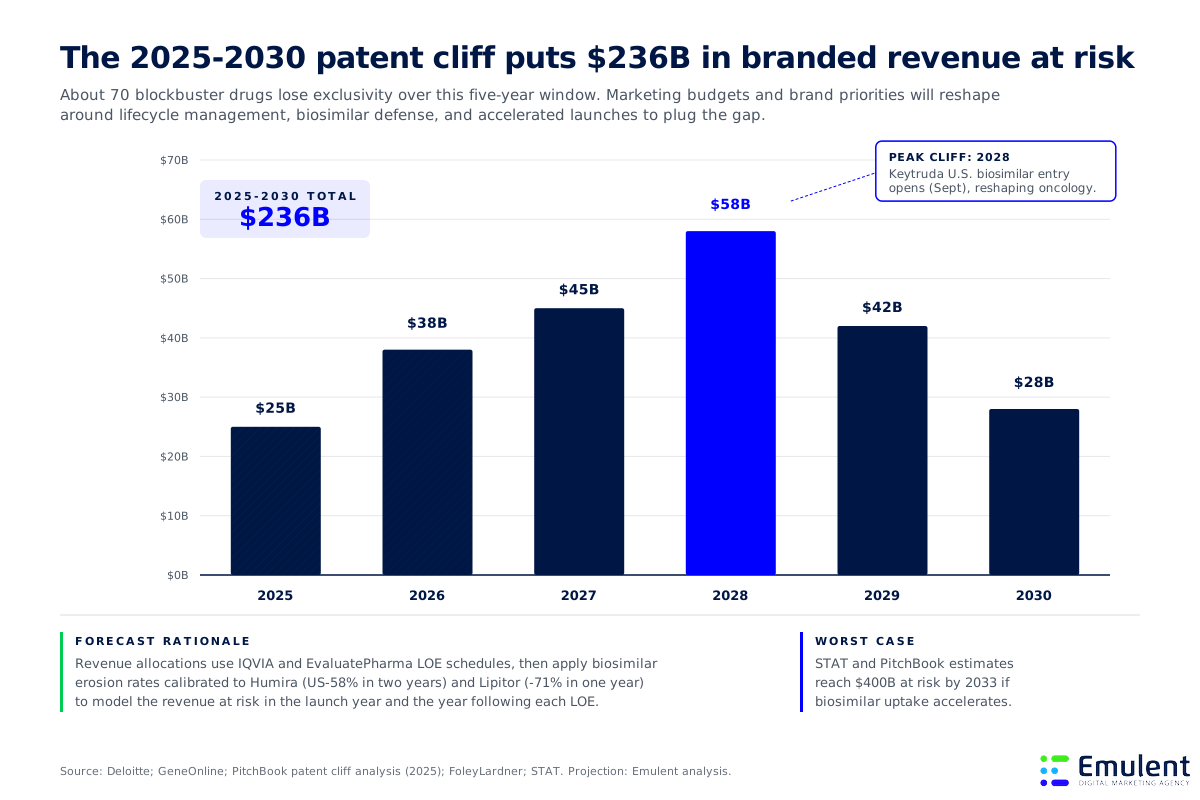
The marketing implications are not subtle. By 2026, eight of the 13 largest pharma firms (about 55% of global market value) could see 30% or more of their revenue jeopardized according to GeneOnline’s analysis. Three responses are reshaping budget allocation:
How pharma marketing budgets are responding to the cliff:
- Defensive lifecycle management: Brands facing loss of exclusivity are accelerating second-indication launches, line extensions, and combination therapy positioning to retain prescriber loyalty before biosimilars enter.
- Accelerated new product launches: The launch playbook compressed from 18 months to 9 months for blockbuster candidates. Marketing teams are pre-building HCP engagement, payer access, and patient support infrastructure before approval.
- Biosimilar offensive moves: Companies on the other side of the cliff (Amgen, Sandoz, Teva, Celltrion) are scaling commercial teams for U.S. biosimilar launches, a market opportunity worth tens of billions across 2026 to 2030.
The pattern shows up most clearly in biopharma marketing budgets, where the shift from defensive brand support to launch-readiness has changed how teams allocate creative, media, and field resources. Brands that fail to pre-build digital infrastructure for accelerated launches lose 30% to 40% of peak sales potential in the first 24 months post-approval.
Why is AI in drug discovery moving from pilot to production faster than expected?
If the patent cliff is the largest near-term threat, AI in drug discovery is the largest medium-term opportunity. Towards Healthcare’s April 2026 report puts the market at $24.51B in 2026, projecting growth to $160.5B by 2035 at roughly 23% CAGR. That makes AI drug discovery one of the fastest-growing software categories in life sciences, second only to AI clinical trials.
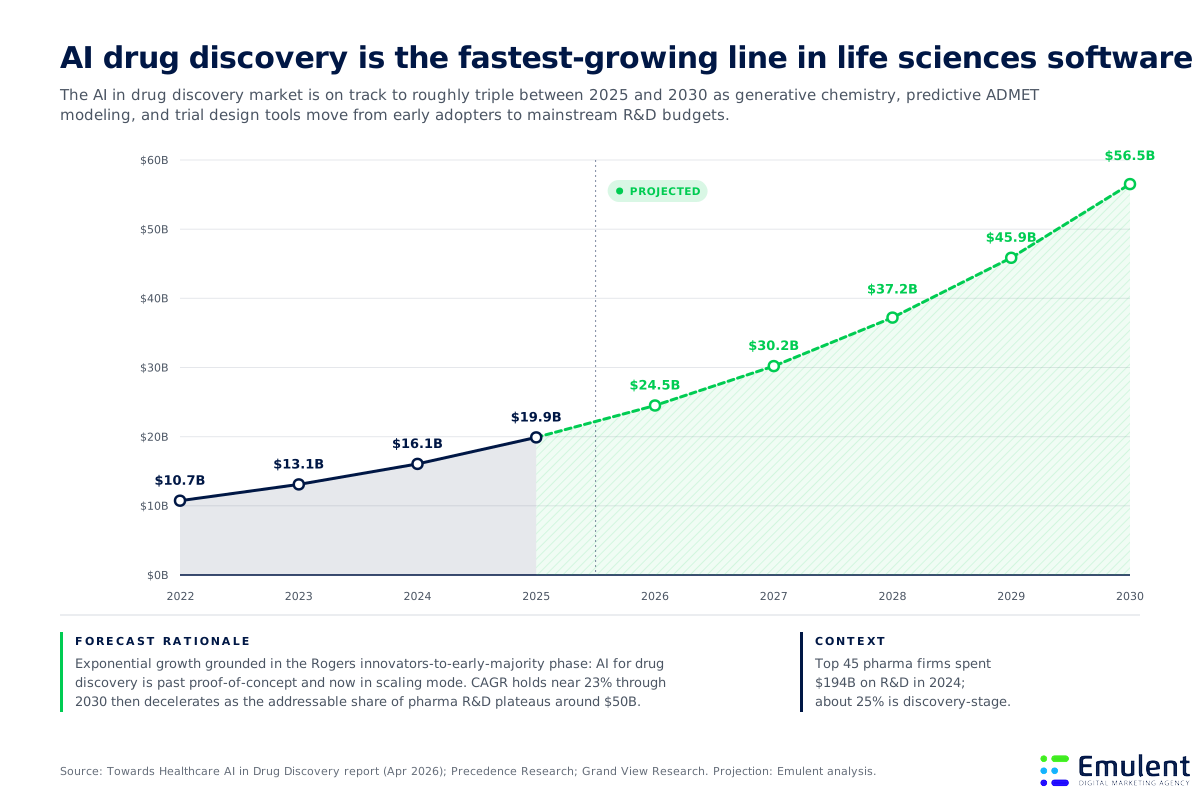
The marketing implication is twofold. First, AI-native biotechs (Isomorphic Labs, Insilico Medicine, Recursion, Schrödinger, Insitro) are now serious competitors for the same scientific advisory board members, conference visibility, and KOL relationships that legacy pharma has owned for decades. Second, traditional pharma is forming partnerships and acquisitions with AI biotechs at a pace that requires brand and content strategy teams to communicate complex technical differentiation to investor, partner, and HCP audiences simultaneously.
The brands that built a content strategy around explaining their AI capability in plain English, for patients, prescribers, and partners, are winning the licensing deals. The ones still leading with vague claims about “AI-powered discovery” are losing them. – Emulent Strategy Team
For biotechnology marketing teams, this means the editorial bar has risen. Vague platform language no longer differentiates. Specific molecular targets, validated benchmarks against existing tools, and named pharma partnerships do.
Where do healthcare professionals actually consume clinical information in 2026?
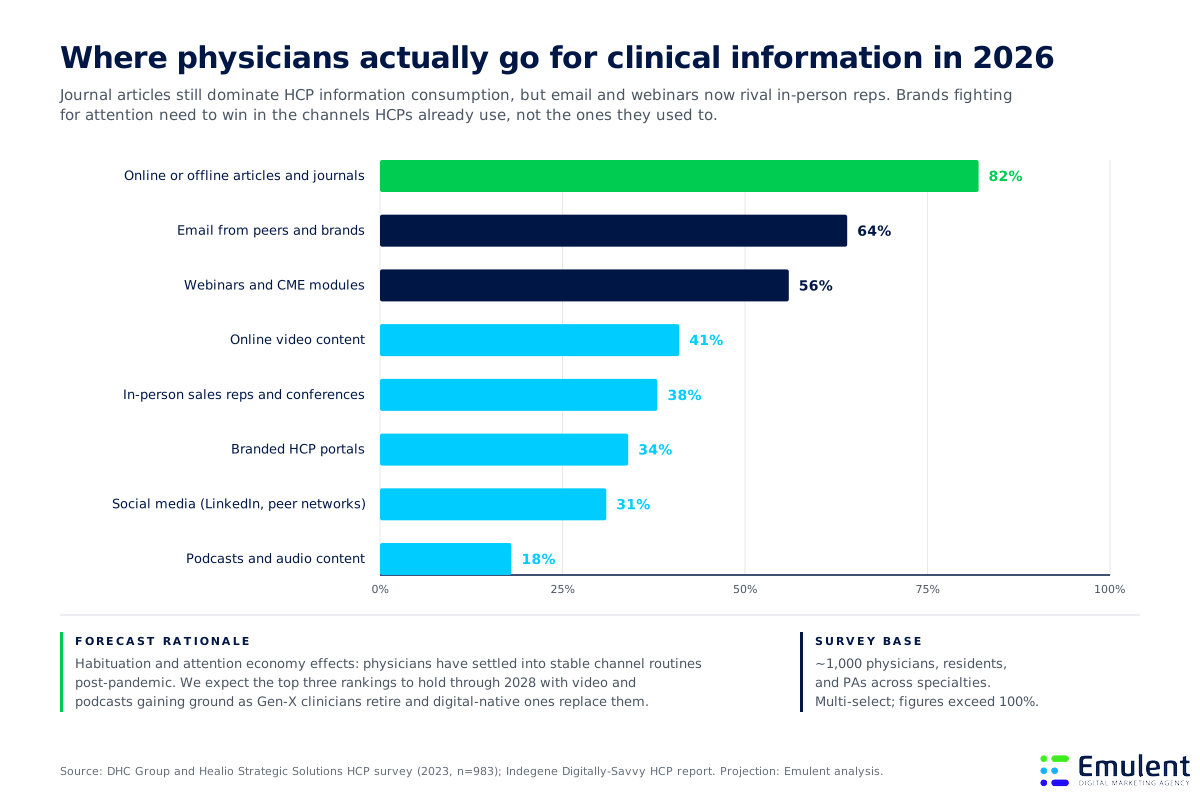
Channel selection drives campaign performance, and the survey data on HCP information consumption is more stable than most marketers expect. The DHC Group and Healio Strategic Solutions survey of nearly 1,000 physicians, residents, and PAs found 82% consume clinical information from online or offline articles and journals, 64% from email, 56% from webinars, and 41% from video.
Three observations matter for media planning:
What the HCP channel data actually tells brand teams:
- Long-form still wins on attention: Articles and journals remain the top channel because physicians use them to verify clinical claims. Brand placements adjacent to peer-reviewed content carry more credibility than the same message in a programmatic display ad.
- Email is undervalued: At 64% usage, email outperforms most of the digital channels brands pour budget into. The gap is execution, not channel viability. Most pharma email programs are generic, blast-style sends that physicians ignore.
- In-person is not dead, but it is not the lead channel either: Only 38% of physicians cite in-person sales reps and conferences as a primary information source. Field teams that operate as orchestrators of a digital-led experience outperform field teams operating as standalone messengers.
The Indegene Digitally-Savvy HCP report adds a useful nuance: 77% of HCPs use digital channels primarily for personal learning and development, not for receiving pharma marketing messages. That distinction matters. The brands earning attention are the ones providing genuine educational utility, not the ones interrupting learning with promotional content.
How fast is pharma social media spending growing, and where is the budget going?
Social media has shifted from experimental to core in the pharma media mix. The InsightAce Analytic pharma and healthcare social media marketing market was valued at $14.65B in 2025 and is projected to grow at 14% CAGR to $53.34B by 2035, with the category nearly doubling by 2030 alone.
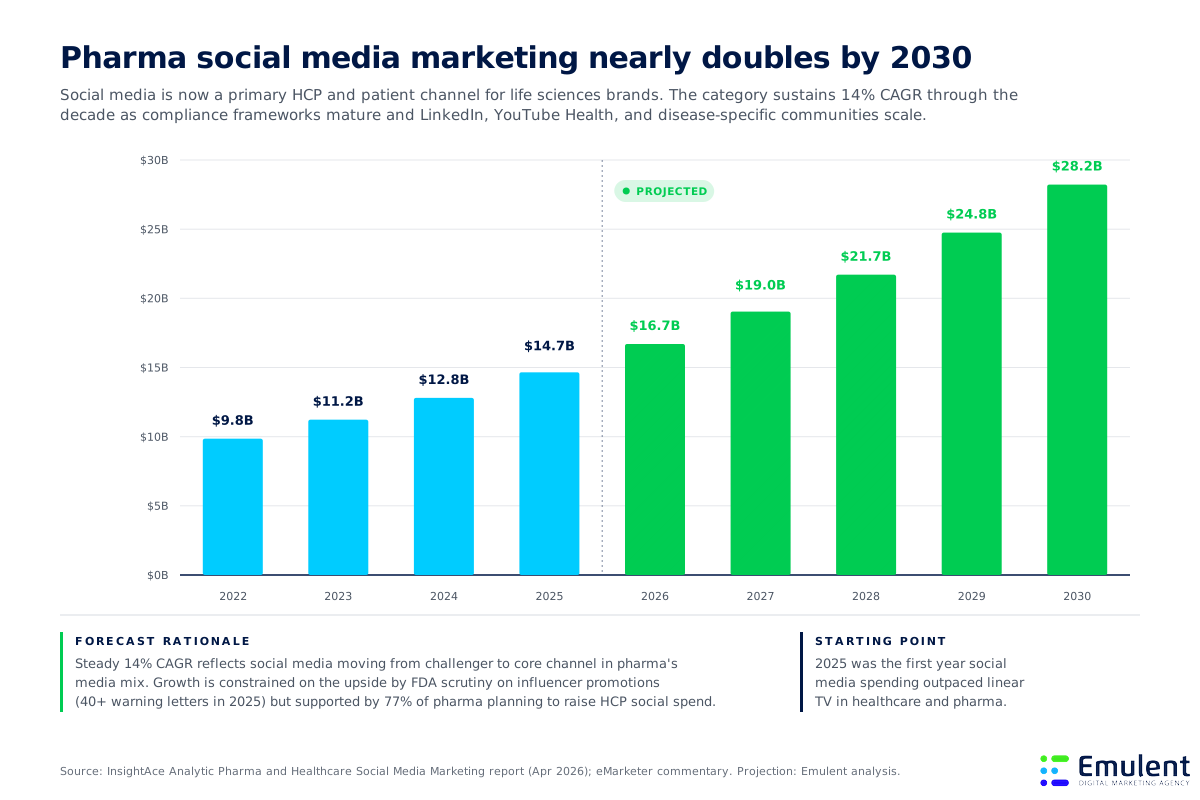
The growth is constrained on the upside by FDA enforcement (more than 40 warning letters on social and influencer content in 2025) and supported on the downside by 77% of pharma respondents planning to raise HCP social media spend according to industry survey data. LinkedIn is the workhorse platform for HCP-directed content, while YouTube Health and disease-specific patient communities (Inspire, PatientsLikeMe) absorb most of the patient-facing budget.
Social compliance frameworks have matured. The MLR (medical, legal, regulatory) review process that used to take 6 to 8 weeks for a single social post now runs in 5 to 10 days at brands that have invested in pre-approved content libraries and modular asset systems. That speed change matters because reactive marketing, like responding to a clinical conference, a competitor data readout, or a payer policy change, only works if the compliance workflow can keep pace.
What is the realistic adoption rate of AI tools across pharma marketing teams?
The gap between AI announcements and AI adoption is wide, but the survey data shows commitments are now genuine majorities. Accenture’s 2025 pharma field team survey (n=300) found 73% of field teams believe AI can elevate HCP engagement. Industry data shows 72% of pharma respondents using or planning agentic AI for marketing workflows, 70% citing omnichannel as a top priority, and 65% exploring AI-driven advanced analytics.
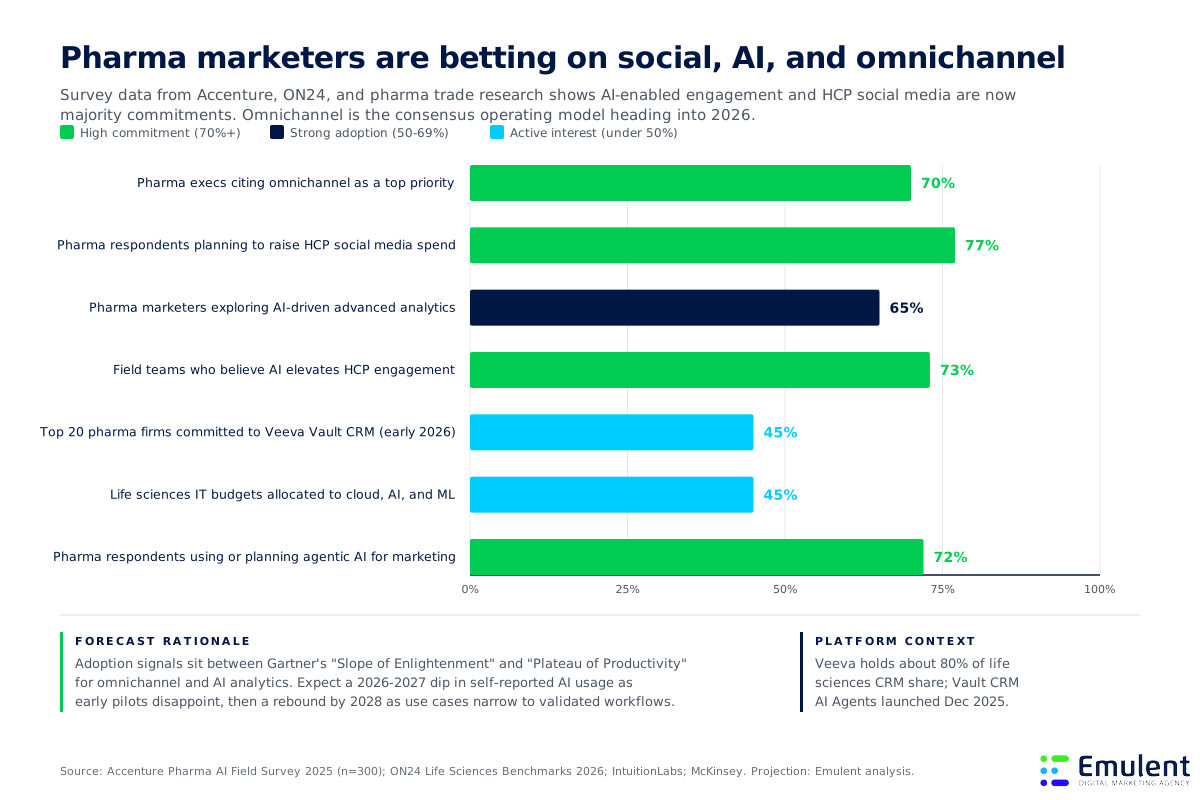
The platform context matters as much as the survey numbers. Veeva holds approximately 80% of the global life sciences CRM market, and Vault CRM AI Agents launched in December 2025. As of early 2026, 9 of the top 20 pharma companies (about 45%) have committed to Veeva Vault CRM, with most other top-20 companies expected to migrate between 2026 and 2029. The choice of CRM platform now also dictates the AI marketing tooling roadmap, which means brand marketing leaders cannot make AI adoption decisions independently of IT and commercial operations.
AI adoption in pharma marketing will follow the Gartner hype cycle. We are past the peak of inflated expectations and heading into the trough of disillusionment for 2026 and 2027. The brands that keep investing through the trough will own the plateau of productivity by 2028. – Emulent Strategy Team
Which marketing channels are pharma teams cutting in 2026, and which are growing?
The Healthcare Marketers Trend Report 2026 (MM+M) surfaced a counterintuitive finding: even as overall digital spend climbs, pharma marketers reported using fewer paid digital channels for HCP engagement in 2026 than in 2025. Marketing research usage rose 24%, brand website investment rose 20%, while HCP-directed digital display, social media, and content marketing all declined.
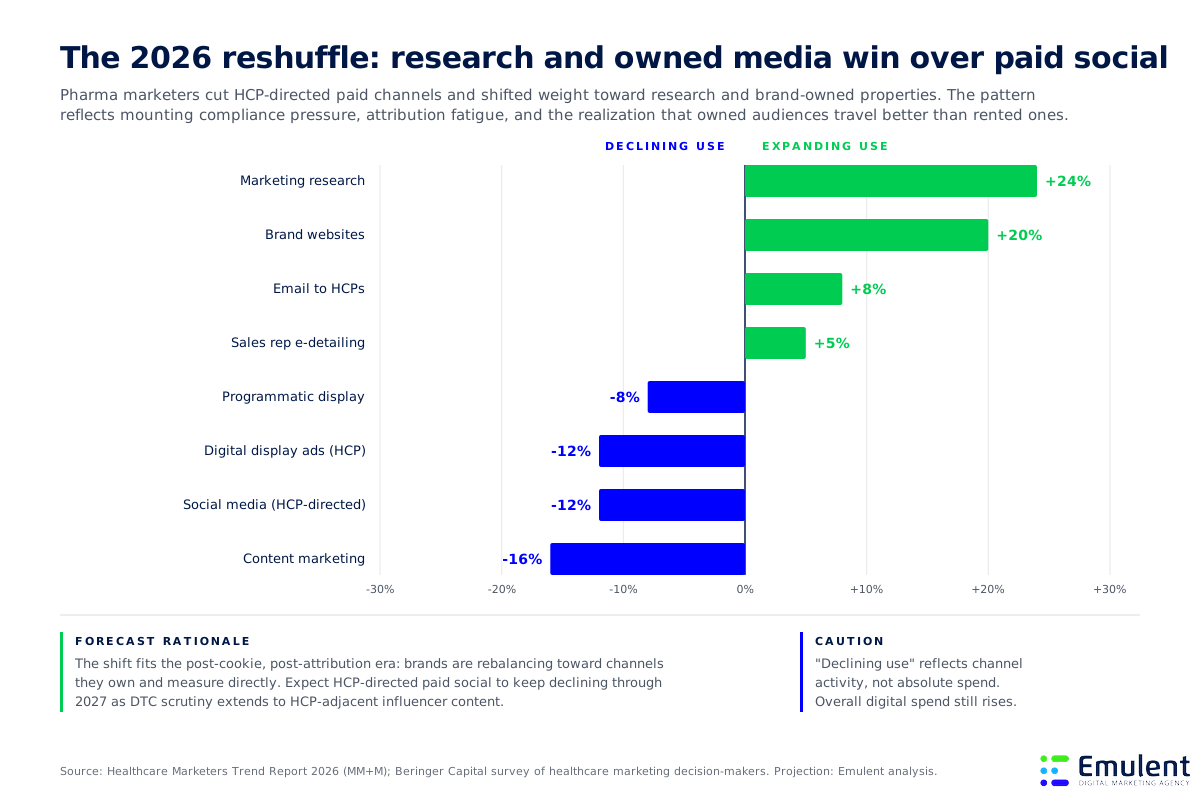
The shift fits a post-cookie, post-attribution era. Brands are rebalancing toward channels they own and measure directly. Brand websites give clean first-party data, predictable performance, and full control over compliance. Paid social, while still growing in absolute spend, becomes harder to measure as third-party tracking degrades and regulatory scrutiny on HCP-directed promotional content intensifies. Content marketing’s 16% decline is the sharpest in the dataset, reflecting the realization that publishing more content does not solve attention problems when HCPs already feel overwhelmed.
How to read the channel shift if you are planning 2027 budgets:
- Owned media is the new baseline, not a supplement: A brand website that loads in under 2 seconds, surfaces clinical data cleanly, and integrates with CRM is now table stakes. Brands without that foundation pay an attention tax on every paid channel.
- Marketing research is replacing third-party data: First-party research panels, prescriber surveys, and patient journey studies fill the measurement gap left by cookie deprecation and HIPAA-driven privacy changes.
- Paid social is not gone, but the bar is higher: HCP-directed paid social only works when it points to genuinely useful destinations. Brands using paid social to drive traffic to weak landing pages are correctly pulling spend.
How does Emulent help life sciences brands navigate the 2026 to 2028 window?
The next three years will reward life sciences brands that move on three fronts simultaneously: defending revenue against the patent cliff, building digital infrastructure for accelerated launches, and adopting AI tooling without losing the editorial discipline that earns HCP trust. The brands that get all three right will outperform peers by margins that are visible in 10-K filings, not just in marketing dashboards.
Emulent works with pharma, biotech, medical device, and life sciences services brands on the strategy, content, and digital infrastructure that supports those moves. Our work spans life sciences marketing, brand strategy, AI-enabled SEO, and the CRM-integrated content systems that make accelerated launches feasible. If your team is planning 2026 to 2028 campaigns, evaluating CRM migration to Vault, or rebuilding owned media infrastructure ahead of a launch, contact the Emulent team to talk through how we can help with your life sciences marketing.