
A #1 spot in the Google Maps pack is not a sale. It is a viewing appointment, and most businesses spend that appointment showing the wrong thing. We keep running audits where a business has fought its way to the top of the map pack, watched impressions climb, and then asked us why the phone still isn’t ringing. The answer is almost never rank. It’s that the profile earning the click describes a business the searcher didn’t come looking for: the wrong service listed first, a description written for Google instead of the buyer, photos that show the building and not the work. Rank gets a business into the room. What’s in the room decides whether the visitor stays.
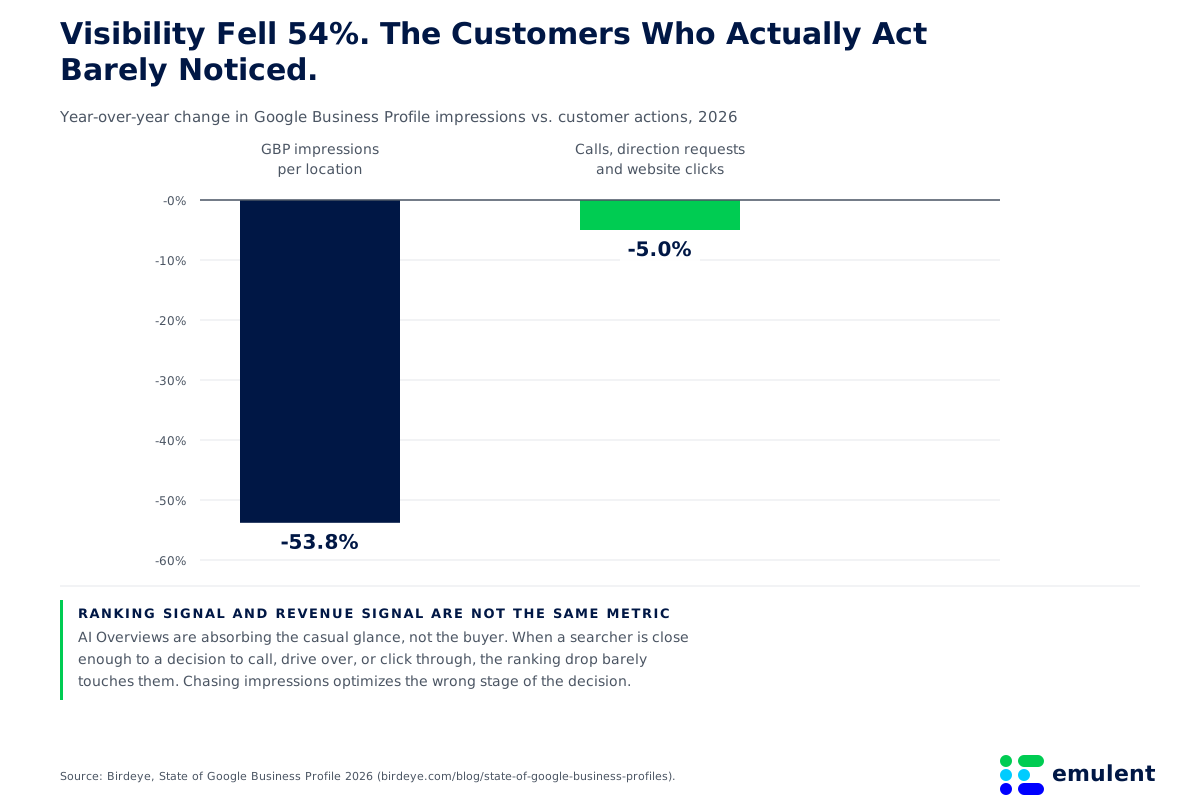
That gap shows up in the data at scale, not just in individual audits. Businesses that pulled their local SEO visibility higher in 2026 didn’t see a matching lift in calls, direction requests, and clicks. According to Birdeye’s State of Google Business Profile 2026 report, impressions per location fell 53.8% year over year as AI Overviews intercepted the casual glance, while customer actions, the calls, direction requests, and website clicks that actually signal a buyer, dropped only about 5%. Visibility and revenue moved almost independently of each other. Treating a ranking as the finish line misreads what that number was ever measuring.
Why Reviews Rank You, but the Rating Threshold Decides Whether You’re Considered
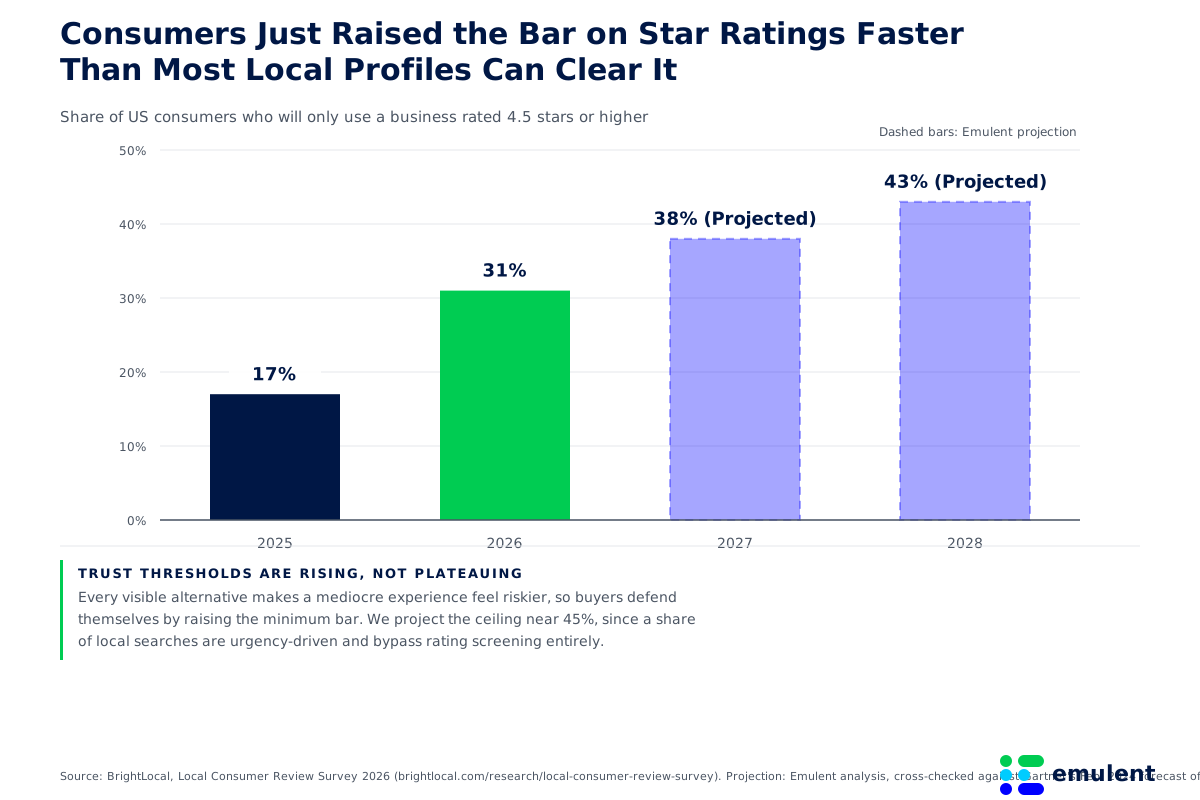
Reviews do two separate jobs, and most local businesses only manage one of them. The first job is ranking: review volume and recency feed the algorithm. The second job is psychological: the star number is a pass/fail gate a buyer applies before they read a single word of the profile. In 2026, that gate got harder to clear. BrightLocal’s Local Consumer Review Survey 2026 found that 31% of US consumers will only use a business rated 4.5 stars or higher, nearly double the 17% who said the same the year before. Sixty-eight percent now require at least 4 stars, up from 55%. A business sitting at 4.3 stars isn’t ranking lower. It’s being filtered out of consideration before the searcher ever opens the listing.
The mechanism behind that jump is loss aversion, not fussiness. When a buyer sees a dozen visible alternatives, a mediocre experience feels riskier than it did when comparison meant driving past three storefronts. Buyers respond by raising their own minimum bar, and that bar is still climbing.
We don’t think the fix is chasing a perfect score. A flawless 5.0 rating with twelve reviews reads as suspicious next to a 4.6 with three hundred. The fix is treating the rating threshold as a hard business requirement, not a nice-to-have, and building a review system that keeps a business consistently above the line the buyer is now enforcing, not the line the business used to clear a few years ago.
“We stopped telling clients to ‘get more reviews’ a while back. It’s not specific enough to act on. The instruction we give now is: know your category’s threshold, know your current number, and close the gap before you spend another dollar on ads pointed at a listing that’s filtering itself out of consideration.”- The Strategy Team at Emulent
A Ranked Profile Still Loses Almost All of Its Own Traffic
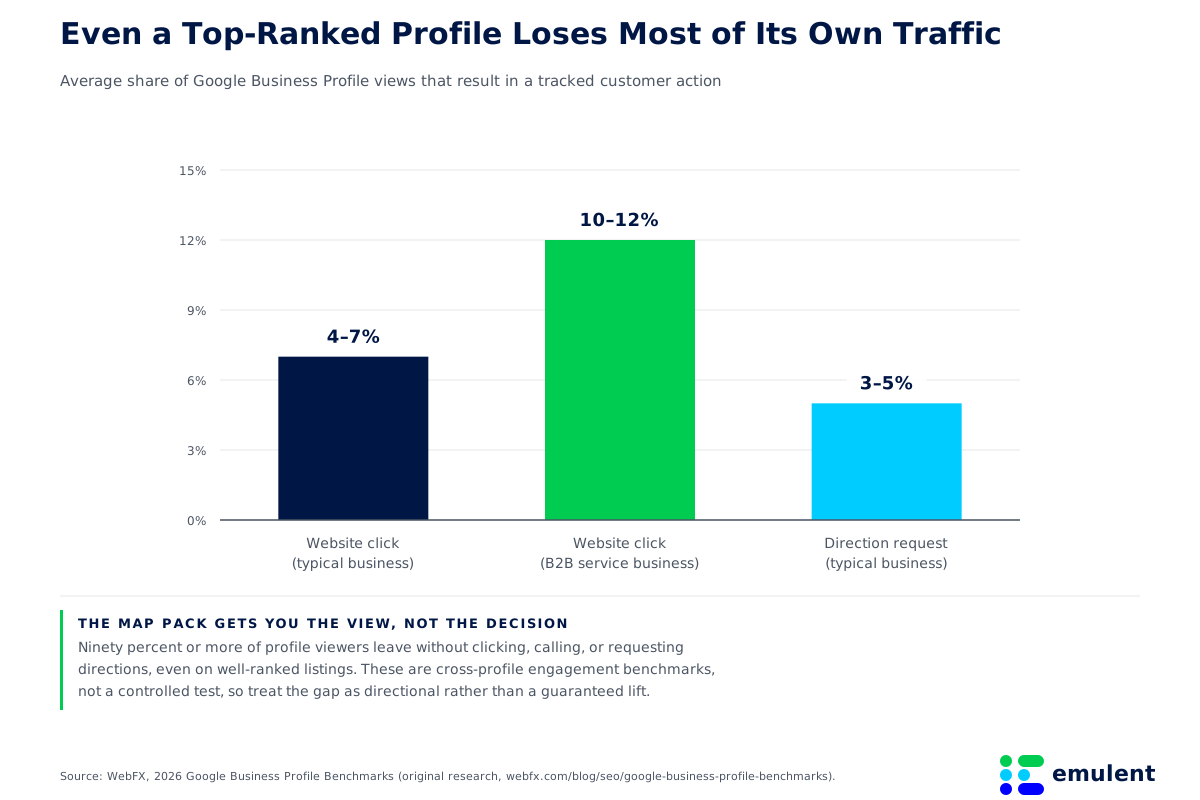
Most of the people who see a #1-ranked profile never take a measurable action on it. WebFX’s 2026 Google Business Profile benchmarks put the average view-to-website-click rate at 4% to 7%, with B2B service companies reaching 10% to 12%. Direction requests land at 3% to 5% of views. Even generously combined, that leaves the overwhelming majority of viewers walking away from a top-ranked listing having done nothing a business can track.
This is where “selling the wrong thing” gets specific. A profile with the wrong primary category, a description written in vague industry language, or a service list that doesn’t match how the buyer phrased their search isn’t losing to a competitor’s better ranking. It’s losing to its own irrelevance the moment a qualified viewer actually reads it. Eighty-six percent of Google Business Profile impressions come from category-based searches rather than the business’s own name, according to Birdeye’s 2026 research, which means most of a profile’s viewers arrived already holding a specific need. A profile that answers a general need instead of that specific one burns the visit it worked so hard to earn.
What “Selling the Wrong Thing” Actually Looks Like on the Ground
The pattern repeats across almost every audit we run. A roofing company ranks #1 for “roofer near me” with a primary category of “General Contractor,” so it shows up for searches it can’t win against specialists and gets buried for the roof-repair searches it should own. A dental practice’s photo gallery is three years of stock imagery and a single exterior shot, so a buyer comparing two 4.7-star practices has nothing to differentiate on and defaults to whichever profile shows an actual human being. A law firm’s business description reads like the “About” page from 2015, packed with credentials and empty of the specific practice areas a searcher typed into Google thirty seconds earlier.
None of these businesses have a ranking problem in the way they think they do. They have a match problem: the profile that Google is correctly surfacing doesn’t answer the question the searcher actually asked. Brand photography that shows the real work, the real space, and the real team fixes more of this gap than another round of citation building, because it answers the question a category label and a star rating can’t: what does it actually look like to work with you.
“People don’t choose the business Google ranks first. They choose the business that answers the question they actually asked. Ranking gets you into the room. What’s in the room decides whether they stay.”- Bill Ross, Founder, Emulent
AI Tools Are Already Reading the Profile for the Searcher
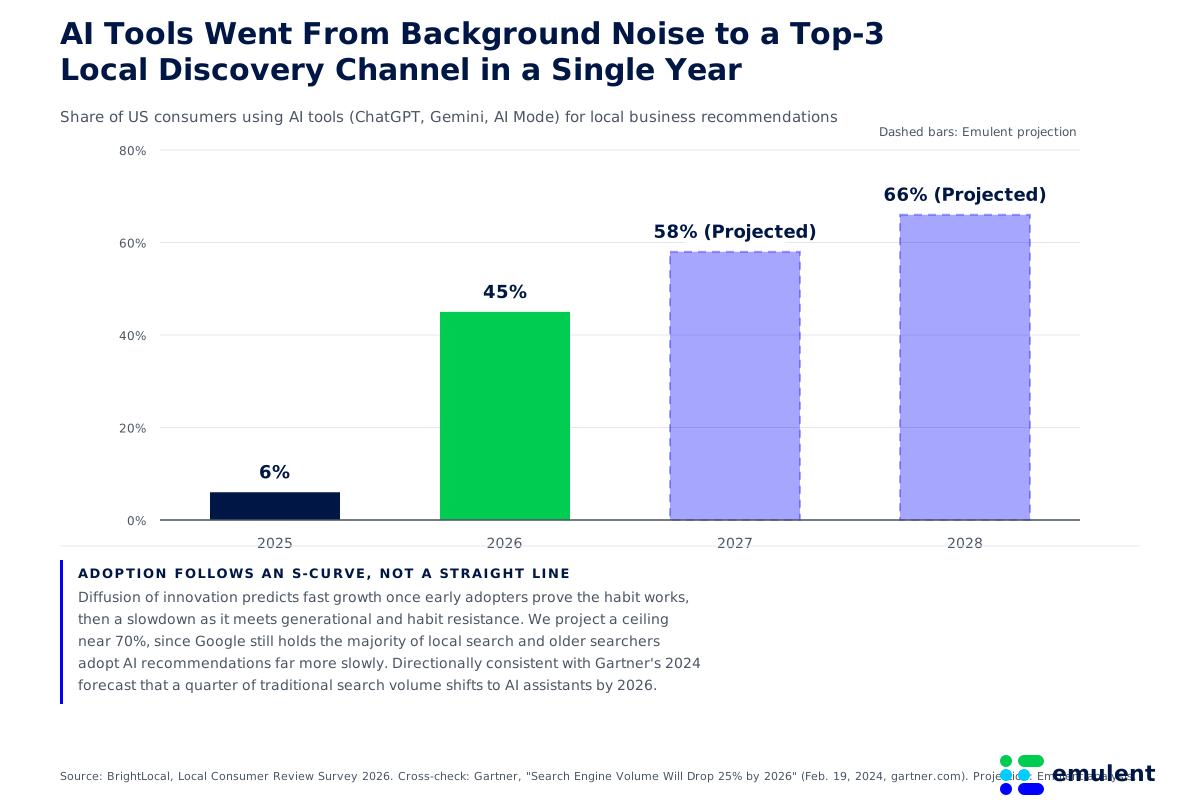
The buyer isn’t always the one reading the profile anymore. BrightLocal’s 2026 survey found that consumer use of AI tools like ChatGPT and Google’s AI Mode for local business recommendations jumped from 6% to 45% in a single year, while Google’s own share of local-business discovery slipped from 83% to 71%. That’s not a rounding shift. It’s a meaningful fraction of searchers who now let an AI system pre-filter the options and hand them a shortlist.
An AI system doesn’t scroll a map pack and click the top pin. It reads structured data: category accuracy, service descriptions, attributes, and the aggregate sentiment of reviews, then synthesizes a recommendation from whichever profile actually states what it does in plain, specific language. A profile tuned purely to outrank a neighbor on the old scoreboard, heavy on keyword-stuffed categories and thin on real detail, is exactly the kind of listing an AI system skips over in favor of one that reads like it was written for a person. Our guide to how reviews shape what AI says about your business goes deeper into what that synthesis actually rewards.
The Audit We Run Before We Touch a Single Ranking Factor
We don’t start a local SEO engagement by trying to move a business up the map pack. We start by checking whether the profile that’s already ranking is selling the right thing, because pushing a mismatched profile higher just means more people see the wrong answer faster. The sequence that matters, in order: primary and secondary category accuracy against how the buyer actually searches, a service list and description written in the buyer’s language instead of the business’s internal terminology, a photo set that shows the real work rather than a logo and an exterior shot, and a review volume and rating that clears the threshold the buyer is currently enforcing, not the one from two years ago. Our 20-point local SEO checklist lays out the full sequence, and our breakdown of current local SEO ranking factors covers where category and profile accuracy sit in that weighting.
Only after that audit is clean do we spend budget pushing the ranking higher. A #1 position on a profile that answers the wrong question is a bigger loss than a #4 position on one that answers the right one, because the #1 spot just means more people see the mismatch before they scroll past it.
“If a client asks us to prioritize rank over relevance, we’ll say no to that. We’d rather have them at position three with a profile that converts than position one with one that doesn’t, and we’ll tell them exactly why before we touch a single ranking factor.”- The Strategy Team at Emulent
A Logo-Deep Fix Won’t Hold
A rewritten description and a fresh photo batch will lift the numbers for a quarter, then decay again if nothing behind the profile actually changed. The businesses that hold their gains treat the Google Business Profile as one surface inside a larger brand strategy, where the words on the profile, the site, and the sales conversation all describe the same specific thing to the same specific buyer. A logo is not a brand strategy, and neither is a well-tuned listing sitting on top of a business that hasn’t decided who it’s actually for. The businesses that keep their rank and their conversion moving together are the ones that already know the answer to that question before they touch a single field on the profile.
Average conversion rates vary enormously by industry, which is exactly why a generic profile underperforms even when it ranks well. Our average conversion rate by industry report breaks down what a realistic benchmark looks like for a given category, so a business can tell whether its map pack ranking is actually underperforming or whether the profile itself is the ceiling.
The Ranking Was Never the Point
Ranking #1 on Google Maps won’t save a business if its profile sells the wrong thing, because the searcher was never buying a ranking. They were buying an answer to a specific question, and a #1 position only guarantees that more people will see whatever answer the profile actually gives. Fix the answer first: the category, the description, the photos, the review threshold. Push the ranking after, once the profile earns the click it’s about to get. That order is the difference between a map pack position that decorates a Google search and one that shows up on the P&L.
If a rank check is the first thing on the to-do list, that’s the sign to run the profile audit first. Talk to Emulent about what your Google Business Profile is actually telling searchers before you spend another dollar moving it up the page.