
Small business marketing rewards focus more than it rewards reach. We studied the current research on how the fastest growing small businesses spend their time and money, and a clear pattern emerged: the growers run fewer marketing activities than their stalled peers, and they run them with far more concentration. This growth study breaks down the data behind that pattern, including why a limited budget often works in your favor, which small set of activities separates growers from stalled peers, and why the “be everywhere” advice circulating online does not match how winning businesses behave.
Key takeaways from this study:
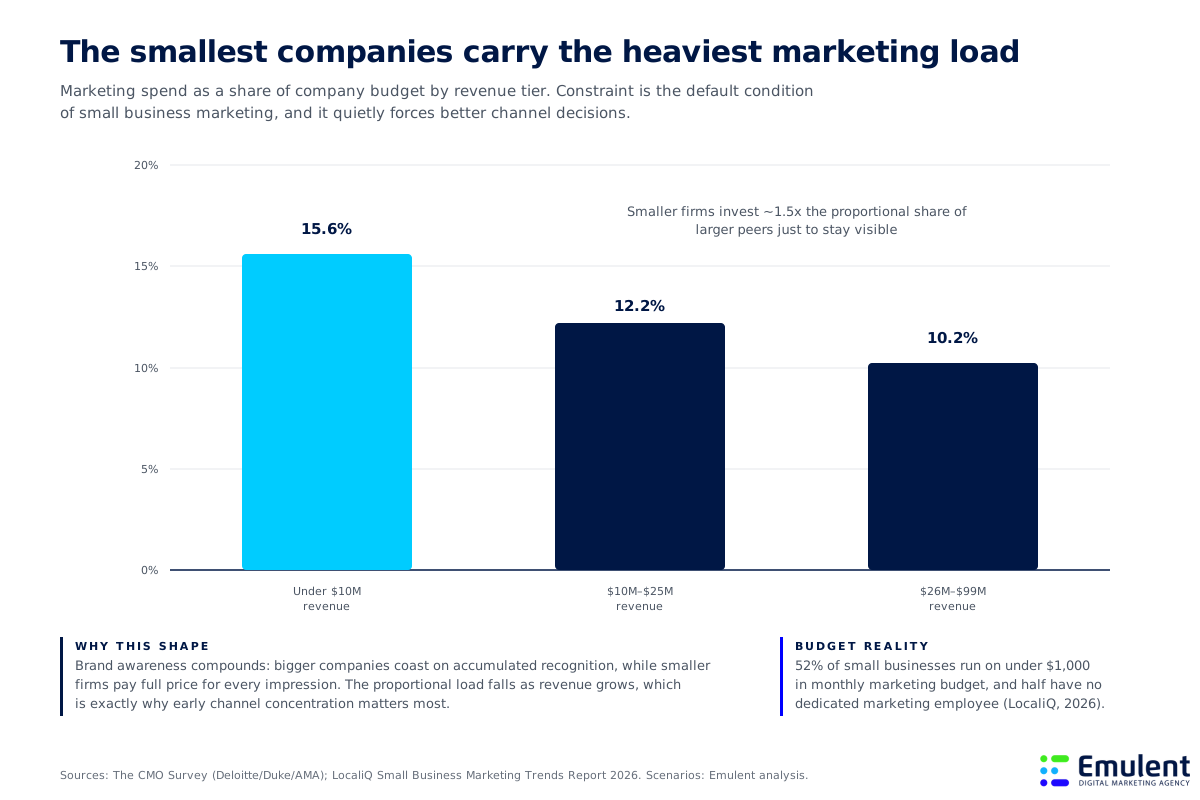
- Constraint is an advantage: Businesses under $10 million in revenue commit 15.6% of their budget to marketing, roughly 1.5x the proportional load of larger firms, and that pressure forces sharper channel decisions.
- Returns follow an 80/20 split: Email returns roughly $36 per $1 and SEO about $22, while paid search averages around $2. A small set of owned channels produces most of the return.
- Top growers dominate two channels, not ten: The typical small business now runs three to four channels, and only 10% run six or more. Depth beats coverage.
- Paid reach is inflating fast: Google Shopping CPCs rose 33.7% and Meta CPMs rose 20% year over year, and acquisition costs are up roughly 60% in five years.
- AI removed the production excuse: 58% of small businesses used generative AI in 2025, up from 23% in 2023, so output volume no longer separates winners from losers. Judgment does.
- A written plan is the cheapest multiplier: Small businesses with a documented marketing plan are 6.7x more likely to report marketing success.
Why Does a Smaller Budget Produce Faster Growth for Some Businesses?
The data starts with an uncomfortable truth: the smaller your company, the heavier your marketing load. The CMO Survey shows that firms under $10 million in revenue dedicate 15.6% of their budget to marketing, compared to 12.2% for firms between $10 and $25 million and 10.2% for those between $26 and $99 million. Larger brands coast on recognition they already paid for. You pay full price for every impression. LocaliQ’s 2026 small business report makes the squeeze even more concrete: 52% of small businesses run on monthly marketing budgets under $1,000, and half have no employee dedicated to marketing at all.
Here is the part most articles miss: that constraint is the very thing producing the focused behavior we see in fast growers. A business with $800 a month cannot afford to “test” seven channels at $115 each, because $115 buys nothing meaningful anywhere. The math forces a choice, and the businesses that grow are the ones that accept the choice instead of fighting it. Businesses that spread thin spend the same dollars and get a fraction of the compounding, which is the quiet reason so many small companies feel like marketing “doesn’t work” for them.
The fastest growers we work with treat their budget cap as a filter, not a ceiling. When you can only fund two channels properly, you are forced to answer the one question most companies avoid: where do our customers actually come from? – Emulent Strategy TeamWhat a hard budget cap forces you to do well:
- Channel honesty: You measure where revenue originates instead of where activity feels good, because you cannot afford to be wrong for long.
- Minimum effective dose: You fund a channel at the level where it can actually perform, rather than sprinkling token spend across many.
- A written plan: Documented plans correlate with a 6.7x higher rate of reported marketing success, and constraint makes planning non-optional.
- Faster kill decisions: Underperforming tactics get cut in weeks, not quarters, because every dollar has somewhere better to go.
Accepting the constraint is step one. Step two is knowing which channels deserve the concentrated dollars, and the return data makes that decision far less mysterious than it looks.
What Does the 80/20 Split Look Like in Real Channel Returns?
When we lined up published return benchmarks side by side, the gap between channels was not 20% or 50%. It was an order of magnitude. Email marketing returns roughly $36 for every $1 invested. SEO and organic search return about $22. The blended average across all digital marketing sits near $5, and paid search averages around $2 per dollar. Execution quality moves these numbers, but the shape of the curve is the finding: a short list of compounding, owned channels generates the large majority of small business marketing return.
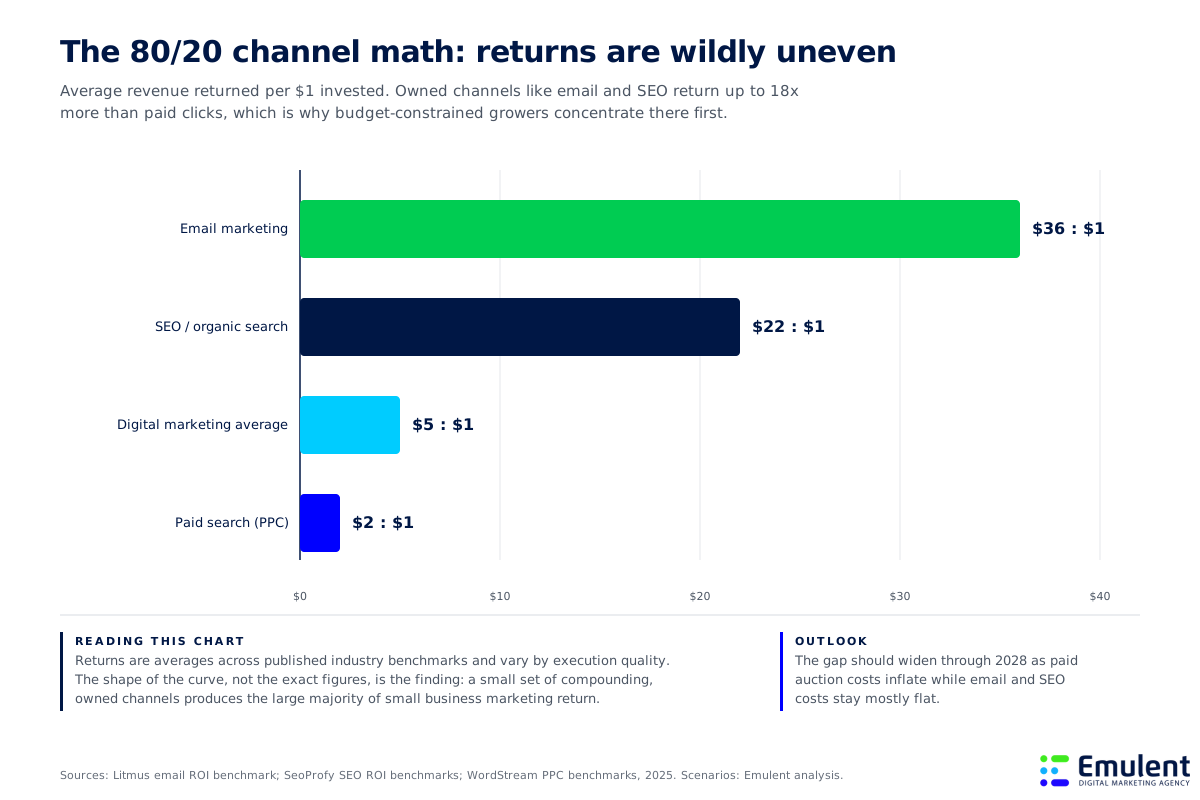
This is the 80/20 finding in practice. The activities that separated growers from stalled peers in the research were not exotic. They were a documented plan, a maintained email list, consistent search visibility, and a reputation engine that turns customers into reviews and referrals. HubSpot’s 2026 data adds a useful wrinkle: small businesses are 23% more likely than average to see ROI from blog content, and website, blog, and SEO together rank as the top return-generating channel among marketers. If your market is local, the same logic applies to map rankings and reviews, and our local SEO checklist covers that system step by step.
The short list that showed up in growers again and again:
- An owned audience: An email or SMS list the business controls, immune to algorithm changes and auction prices.
- Compounding search visibility: Organic and local search assets that keep producing leads after the work is paid for.
- A proof engine: Reviews, case results, and referrals gathered systematically rather than by accident.
- One conversion-ready website: A site that turns the traffic those channels produce into inquiries, instead of leaking it.
Knowing the high-return list raises the obvious objection: if a few channels are this lopsided, why does so much advice still push small businesses to show up everywhere? The channel-count data answers that directly.
Is “Be Everywhere” a Myth? Here’s What the Channel-Count Data Shows
The “be everywhere” idea sounds safe. The numbers say almost nobody who grows actually does it. Intuit’s 2025 survey found the typical small business runs three to four advertising channels, and only 10% run six or more. Taradel’s multi-year tracking shows reliance on a single channel falling from 24% in 2022 to 13% in 2023 and 11% in 2025. Read those two facts together and the real pattern appears: businesses are leaving single-channel fragility behind, but they are not sprinting toward sprawl. They are settling into a focused core of two to four channels, usually two that dominate and one or two in a supporting role.
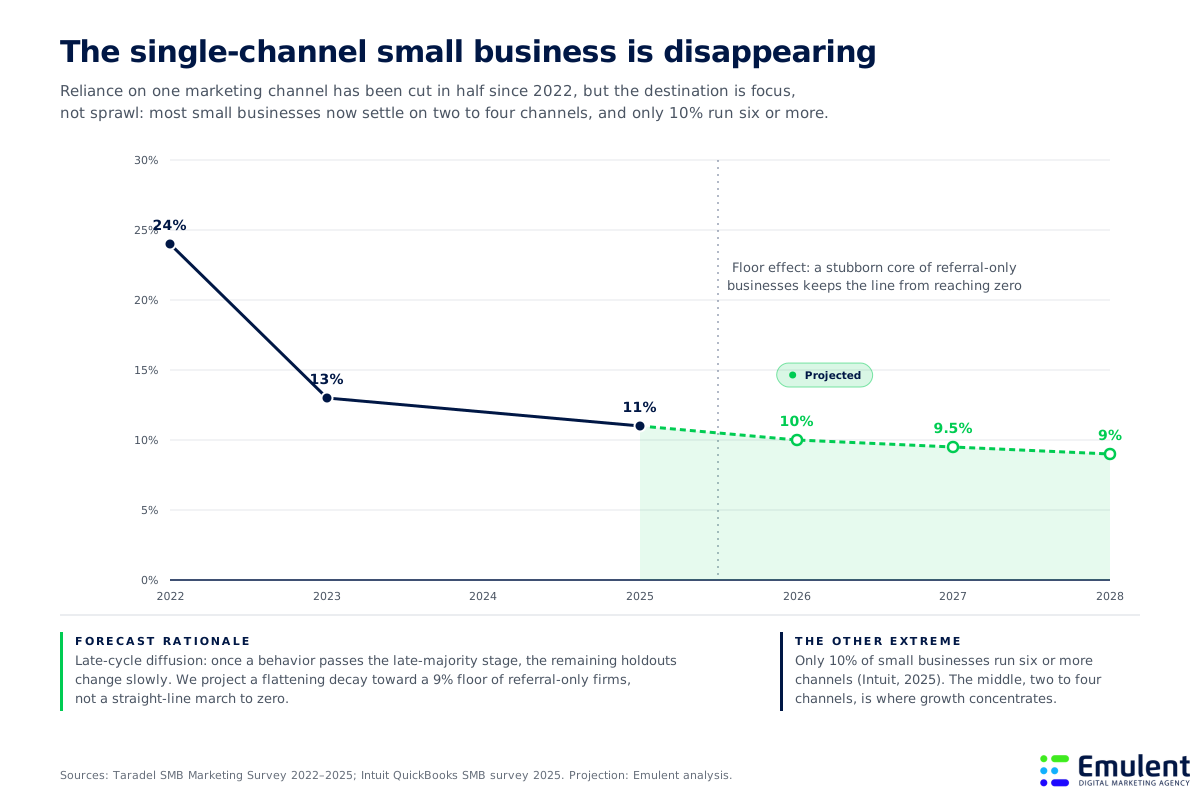
We project that decline flattening toward a floor near 9% by 2028 rather than marching to zero, because late in any diffusion curve the remaining holdouts (often referral-only trades businesses) change slowly. The practical lesson sits in the middle of the distribution. Spreading across six or more channels with a sub-$1,000 budget guarantees that none of them reaches the depth where results compound. You end up paying the overhead of every platform while collecting the returns of none. Businesses competing in crowded categories feel this hardest, which is why our guide to marketing in a saturated market pairs naturally with channel concentration.
Every channel has a minimum effective dose. Two channels funded above that line will outproduce eight channels funded below it, every time. The growers figured out the dose; everyone else mistook presence for progress. – Emulent Strategy TeamHow to pick the two channels you will dominate:
- Follow existing revenue: Ask your last twenty customers how they found you, and weight that answer above any industry trend.
- Match the buying moment: Urgent, high-intent purchases favor search and maps; considered, relationship purchases favor email and content.
- Pick one rented, one owned: Pair a discovery channel you rent with an owned channel that captures and keeps the audience.
- Commit for two quarters: Compounding channels look like failures at week six; judge them at month six.
Concentration only works if you concentrate in the right place, and the place that keeps getting worse for small budgets is rented attention. The cost data shows why.
How Do Rising Ad Costs Change Where Growth Comes From?
Every dollar a small business spends on paid reach buys less than it did a year ago. In 2025, Google Shopping CPCs rose 33.7%, Meta CPMs rose 20%, TikTok CPMs rose 16%, and Google Search CPCs rose 12.9%. Zoom out and the compounding becomes alarming: customer acquisition costs across industries are up roughly 60% over the past five years. Crowded auctions, privacy changes that weakened targeting, and AI-automated bidding all push the same direction, and none of those forces is reversing. Our customer acquisition cost benchmarks track these figures by industry if you want to see where your category sits.
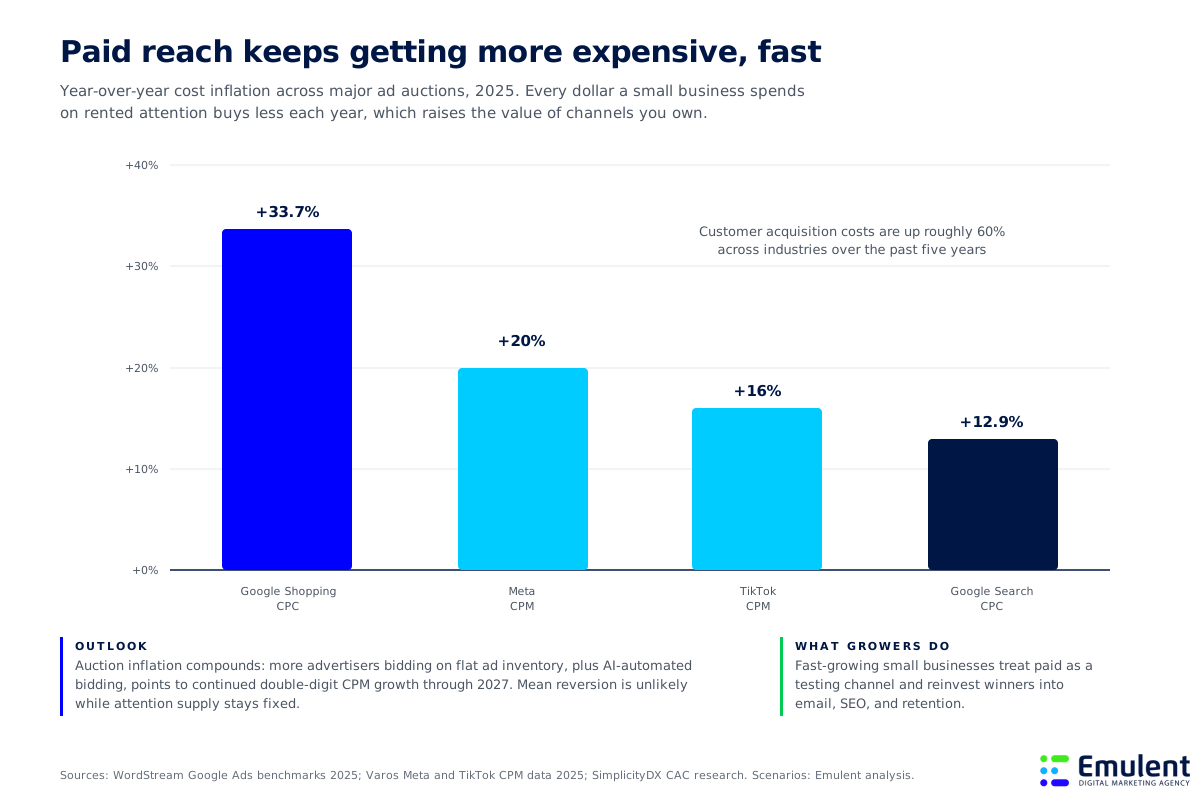
This is the economic engine behind everything else in this study. When the rent on attention rises double digits every year while email and SEO costs stay mostly flat, the return gap between rented and owned channels widens on its own, without you doing anything. Fast growers respond by changing the job description of paid media: it becomes a testing and amplification channel, not the foundation. They run paid to find which messages and offers convert, then reinvest the winners into search content, email flows, and retention, where the same insight keeps paying without a per-click toll. Businesses that keep treating paid as the foundation will watch the same budget produce fewer customers each year, which is exactly the stall pattern the study set out to explain. How much total budget this requires varies by industry and growth stage, and our marketing budget benchmarks lay out the ranges.
Owning your channels solves the cost problem but creates a workload problem: owned channels demand content, and small teams have no spare hours. That is where the last data set comes in.
Where Does AI Fit for the Fastest Growing Small Businesses?
Generative AI adoption among small businesses went from 23% in 2023 to 40% in 2024 to 58% in 2025, according to the U.S. Chamber of Commerce’s survey of nearly 3,900 firms. That is one of the fastest adoption curves the Chamber has ever tracked, and we project it decelerating past the majority threshold toward roughly 81% by 2028, following the classic diffusion pattern where growth slows after half the market converts. The same research found that small businesses making full use of technology platforms were significantly more likely to report growth in sales and profits than low-tech peers.
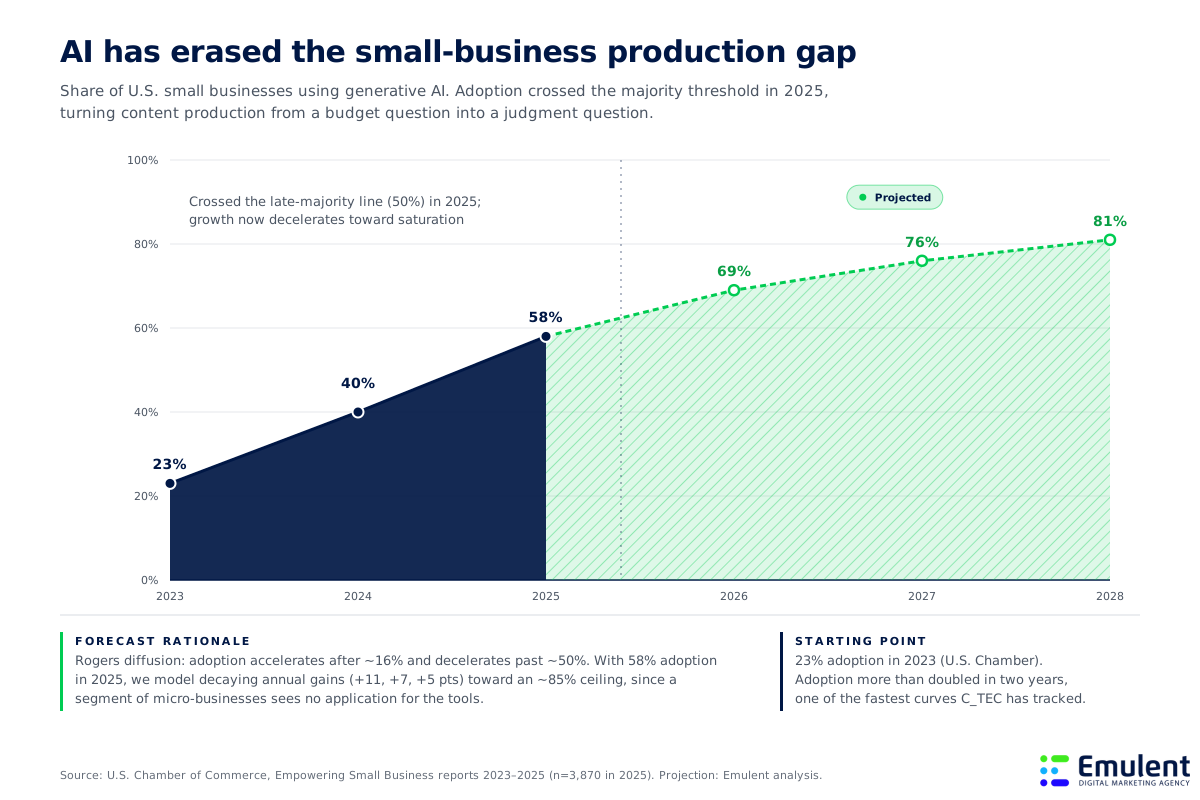
For marketing, the implication is sharper than “use AI.” With nearly six in ten competitors already producing AI-assisted content, volume stopped being a differentiator sometime in 2024. What separates growers now is judgment: knowing which channel deserves the output, what your customers actually need to read, and what proof only your business can supply. AI compresses production from hours to minutes, which means the two-channel concentration strategy is now executable by a team of one. It also means search itself is changing, as AI-generated answers reshape how buyers find businesses; our AI SEO checklist covers how to stay visible inside those answers, and our breakdown of Google AI Overviews explains what the shift means for organic traffic.
AI handed every small business the same printing press. The winners decided most carefully what was worth printing, while everyone else competed on volume. – Emulent Strategy TeamHow fast growers apply AI without diluting quality:
- Production, not strategy: AI drafts, repurposes, and personalizes; humans decide positioning, offers, and channel priorities.
- Depth in the core two channels: Saved hours go into more email segments and deeper search content, not into opening channel number seven.
- Proof injection: Every AI draft gets real numbers, customer language, and specifics only the business knows, because generic output is now invisible.
- Faster feedback loops: Weekly tests of subject lines, offers, and pages replace quarterly guesses.
Taken together, the picture is consistent: constraint forces focus, focus flows to the highest-return owned channels, rising ad costs reward that flow, and AI makes the whole system runnable on a small team. The remaining question is execution.
How the Emulent Marketing Team Can Help
We help small businesses do exactly what this study describes: identify the two channels worth dominating, build the owned assets that compound, and put a measurement system in place so every dollar has a verdict. Our small business marketing services are built around senior strategists rather than handoffs to junior account teams, and we track the same small business marketing trends data referenced throughout this study to keep client strategies current. If you want help with small business marketing, contact the Emulent Team for a no-pressure conversation about where your growth should come from next.