
The dermatology and medical-aesthetics brands growing fastest right now are not the ones spending the most on ads or stacking the most service lines. They are the ones that turned local visibility and patient trust into a working system, then let everyone else keep buying one-time clicks.
We pulled the current numbers on where this market is headed, how patients actually choose a provider, and what search is doing to that choice. The pattern is consistent across every data set. Winning a zip code beats winning a keyword. Keeping a patient beats booking a stranger. And being the answer a patient trusts beats being the ad they scroll past. This study lays out the evidence, names the psychology underneath it, and gives you a short audit you can run before your next dollar of ad spend.
The field is splintering into thousands of local shops
The medical-aesthetics industry has passed 17 billion dollars and is adding more than a billion dollars a year, according to the American Med Spa Association. The location count tells the sharper story: U.S. med spas grew from 8,899 in 2022 to 10,488 in 2023, and about four in five run as single-site businesses. That is not a market consolidating under a few national names. It is a market breaking into thousands of independent operators, each fighting for the patients inside a few miles of its front door.
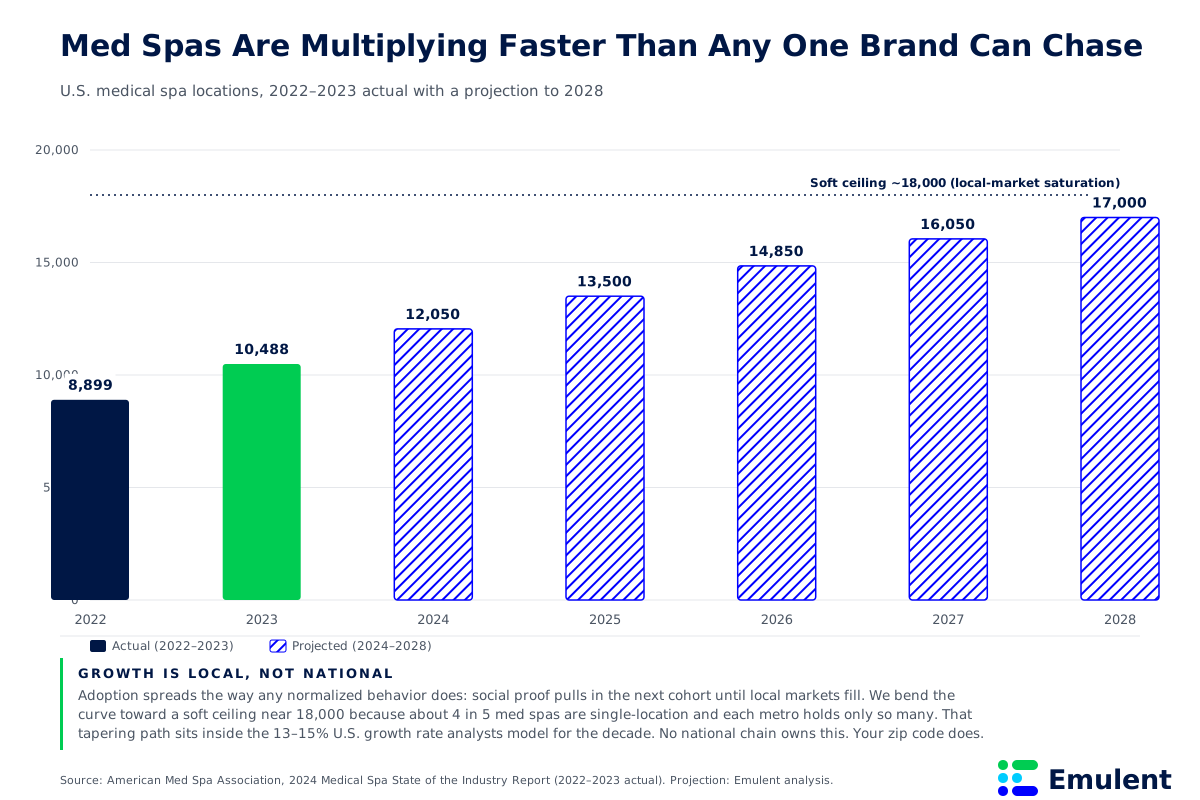
Read that as a map, not a trophy shelf. When no national brand owns the category, the growth goes to whoever becomes the obvious local choice. That is why a strong med spa marketing agency spends its energy on the few square miles a practice can actually serve, and why the same logic drives smart digital marketing for dermatology practices. The fragmentation is the opportunity. A single well-run practice can dominate its area without ever outspending a chain, because there is no chain to outspend.
Injectables grow because they book their own return visit
Most marketing plans treat injectables as the thing that gets a patient in the door. That framing undersells them. Neuromodulators like Botox and Dysport were the top minimally invasive treatment in 2024 at 9.88 million procedures, up 4 percent, with hyaluronic acid fillers second at 5.33 million, per the American Society of Plastic Surgeons. Skin resurfacing (3.70 million) and laser skin treatments (3.11 million) round out the top of the list.
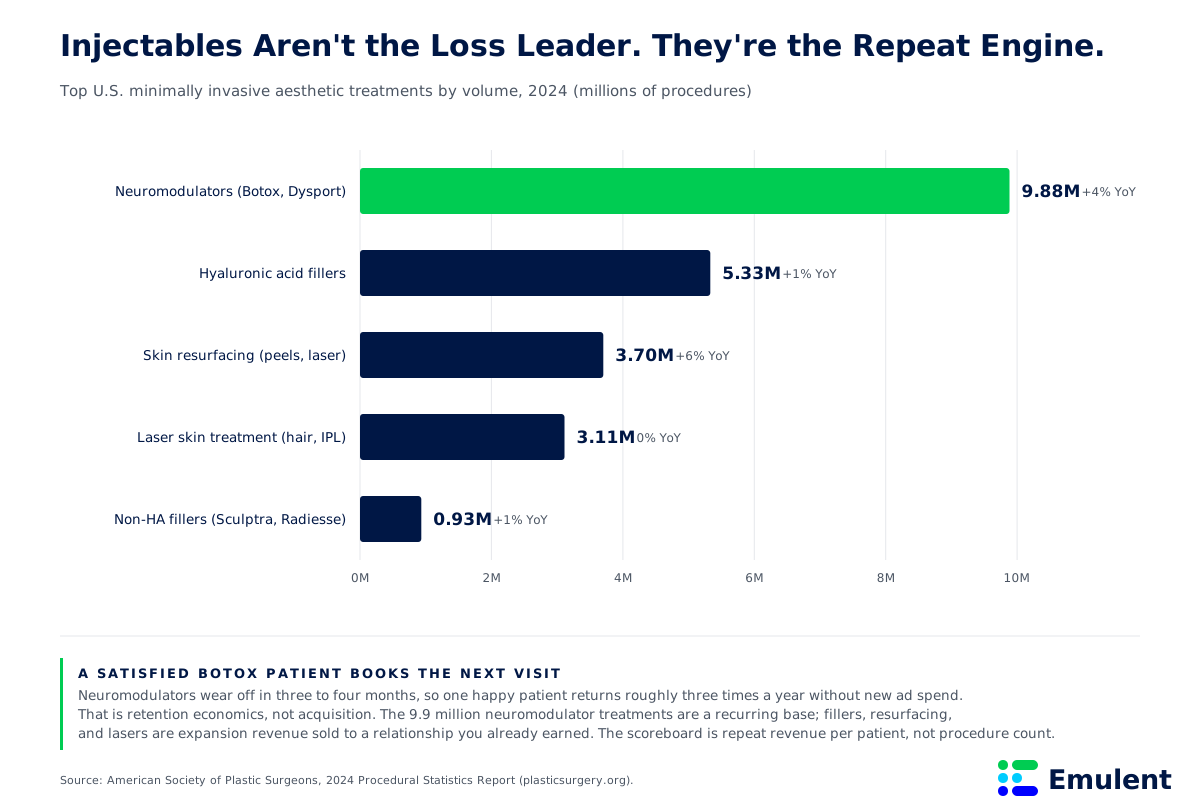
The number that matters is not the volume. It is the calendar. A neuromodulator result fades in three to four months, so a satisfied patient comes back roughly three times a year on a schedule the treatment sets for them. That is a subscription in everything but name. It means the growth math in aesthetics is retention math: the 9.88 million neuromodulator treatments are a recurring base, and fillers, resurfacing, and lasers are expansion revenue sold to a relationship you already earned. Practices that measure success by new-patient count are counting the wrong thing. The brands compounding fastest measure repeat revenue per patient, then build the reminders, recall texts, and membership plans that protect it.
– Bill Ross, Founder, Emulent
This is where the vanity trap opens. Follower counts and procedure tallies feel like growth, but they do not pay rent unless they convert into booked, returning patients. We have argued for years that ranking number one is nothing more than a vanity metric if it never turns into revenue, and the same test applies to a med spa’s Instagram. The scoreboard is patients and repeat visits. Everything else is decoration. Practices running a serious plastic surgeons marketing program apply that test to every line of the budget.
In this category, reviews are the cover charge, not the bonus
Aesthetic and dermatologic care is a high-consequence, cash-pay decision made about a patient’s own face. That raises the trust bar well above a routine purchase, and the data shows patients clearing it deliberately. In the 2026 BrightLocal Local Consumer Review Survey, 97 percent of consumers read reviews before choosing a local business, 47 percent will not use one with fewer than 20 reviews, and 31 percent will only use a business rated 4.5 stars or higher, nearly double the share who said so a year earlier.
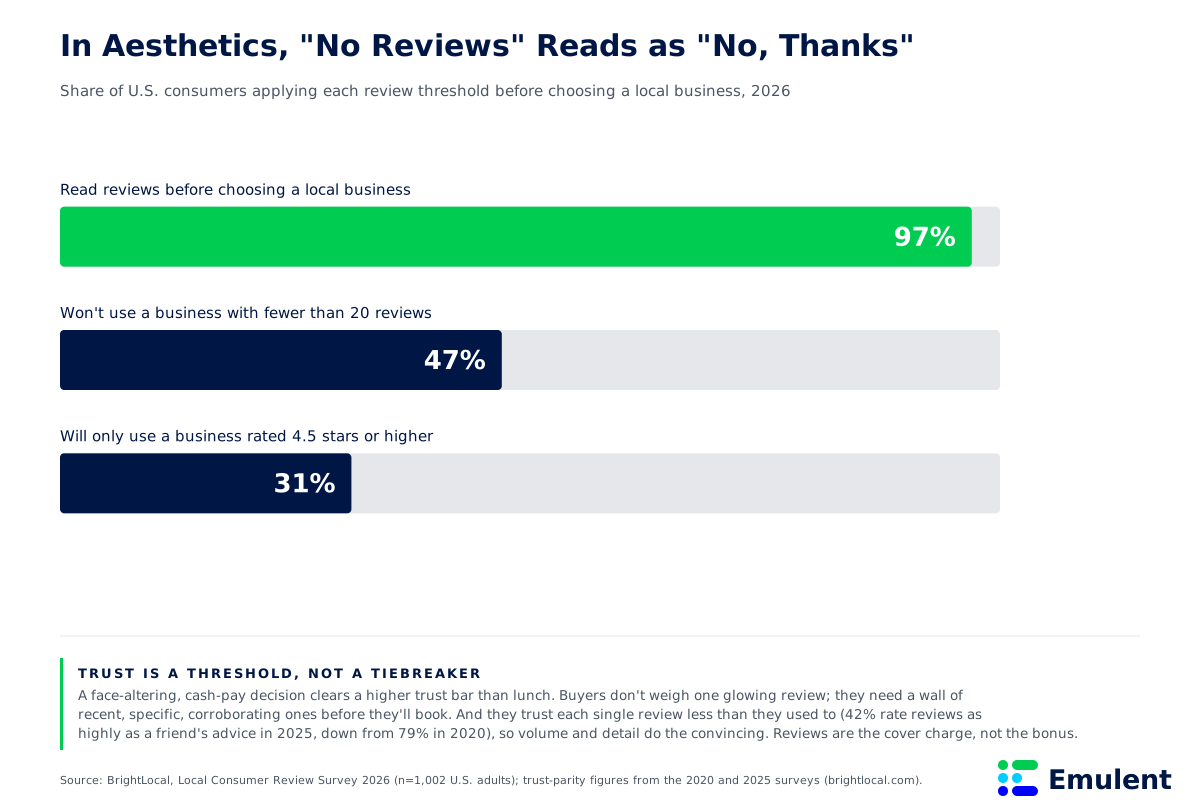
Here is the twist that changes how you build proof. People read more reviews than ever and trust each one less. The share who trust reviews as much as a personal recommendation fell from 79 percent in 2020 to 42 percent in 2025. So a single five-star note does almost nothing. What clears the trust threshold is a wall of recent, specific, corroborating reviews, plus visible proof of real work. That means real before-and-after galleries with consent, and real faces of the people who do the treatments. Stock imagery signals the opposite of what a nervous first-time patient needs to see, which is why serious brand photography earns its place in the plan, and why professional team photos build instant trust in a way a polished stock library never will.
Reviews and photos are also a local-search signal, not just a persuasion tool. A profile thick with recent reviews and real images is what surfaces a practice in the map results where patients actually look, so this work does double duty inside a disciplined local SEO program.
– The Strategy Team at Emulent
Google now answers the skin question before anyone clicks
The way patients find that proof is shifting under everyone’s feet, and healthcare sits at the front of the shift. Pew Research Center tracked real browsing and found that when a Google AI summary appears, users click a traditional link just 8 percent of the time, down from 15 percent without one, and 26 percent of those sessions end without any further click at all. Health queries feel this first: BrightEdge’s industry tracker put the AI Overview trigger rate for healthcare at 88 percent in 2025, the highest of any category. The answer is arriving on the results page, and the click is disappearing.
Patients are also skipping the results page entirely. BrightLocal found that the share of consumers using AI tools like ChatGPT to find local businesses jumped from 6 percent to 45 percent in a single year.
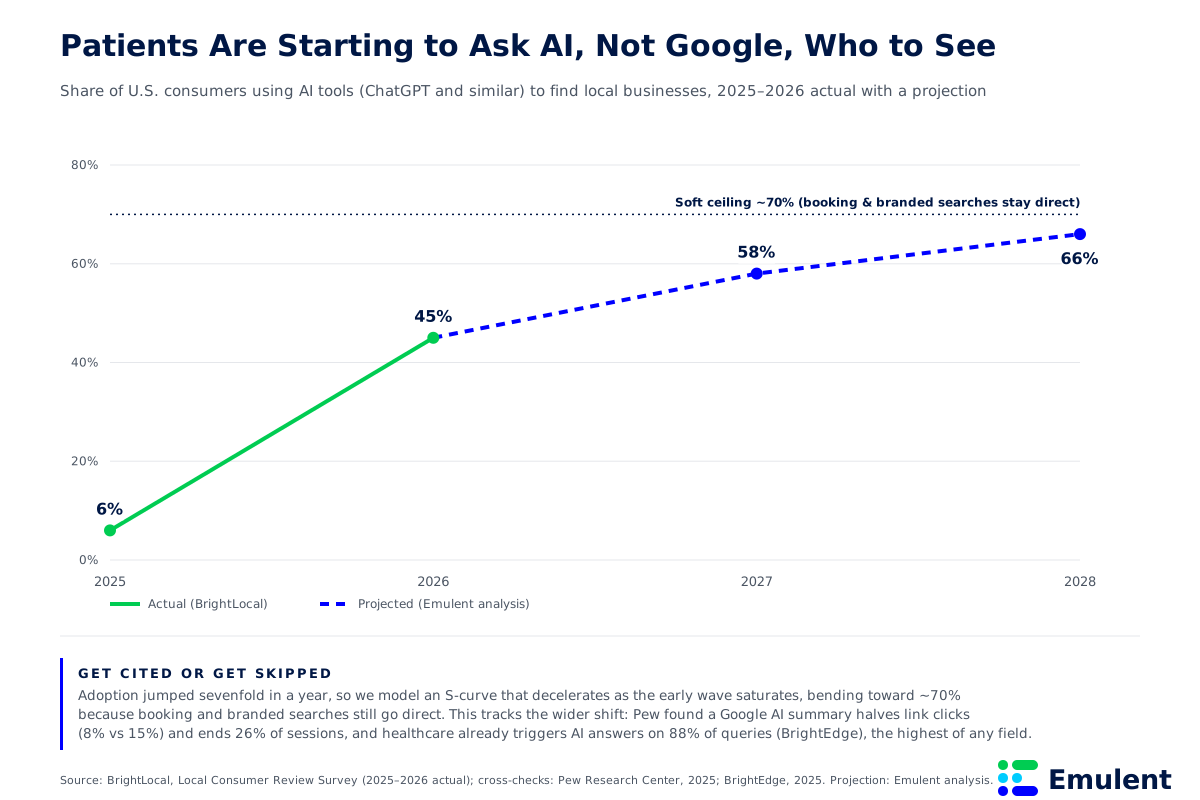
When the answer is generated rather than clicked, the game changes from ranking to being cited. The practice named inside the AI answer, with the reviews and structured information to back it up, gets the patient. The practice buried on page one does not. That is the case for treating AI answer engines as a channel you earn your way into, which is the whole point of search everywhere optimization. Paid search still has a role, and a well-run med spa PPC campaign captures the ready-to-book patient at the bottom of the funnel. But paying for clicks while ignoring the answer layer is a losing trade as the clicks keep shrinking.
What the fastest-growing brands actually do differently
The practices pulling ahead are not doing one clever thing. They are running the pieces above as one connected system, where the reviews feed the local ranking, the photos feed the reviews’ credibility, the injectable cadence feeds the recall calendar, and the whole thing feeds the AI answer that surfaces them. A logo and a boosted post are not that. This is why we treat brand development as a system, not a project, and why the practices that win their market almost always built the system before they scaled the spend. It is also why we refuse long-term contracts. A system that works retains the client on results. Paperwork only retains the ones a system failed.
Before you spend another dollar acquiring patients, run this audit on your own practice. If you fail any line, fix it first. Buying traffic on top of a weak foundation just raises your cost per wasted click.
- Count the real photos on your Google Business Profile. Fewer than 20 authentic images of your space, team, and results is a problem before it is an opportunity.
- Count reviews from the last 90 days. Recency clears the trust bar; a wall of two-year-old reviews reads as a practice that stopped delivering.
- Check your star average. Below 4.5, that is your first project, ahead of any ad campaign.
- Map your injectable recall. Every neuromodulator patient should be on a three-to-four-month reminder before they leave the chair.
- Ask AI who the best provider in your area is. If your practice is not named, your answer-engine visibility is the gap, not your ad budget.
- Open your homepage on a phone. If a first-time patient cannot see proof and book in two taps, fix the site through focused med spa SEO and design before you send it more traffic.
Where aesthetics budgets go to die
The fastest way to stall a growing practice is to pour money into acquisition while the retention and trust systems leak. We see it constantly: a practice buying a wider top of funnel while patients slip out the bottom because no one texted them at the three-month mark, and new visitors bounce because the profile looks thin. Spending more to fill a leaking bucket feels like growth for a quarter, then stops. The honest advice, the kind that costs us short-term budget, is to spend less on ads this quarter and put that money into proof, recall, and being the cited answer. The practices that do it grow on a base that keeps paying back. The ones that do not rent their growth one click at a time and wonder why it never compounds.
Build the system, then scale the spend
If your practice is growing but leaning on paid clicks to do it, the fix is usually the foundation, not the budget. Our team builds the reviews, proof, local visibility, and answer-engine presence that make a dermatology or aesthetics brand the obvious local choice in its market. Let’s talk about what your market actually rewards, and where your spend is quietly leaking.