
The sports business is growing, but not evenly, and not in the places most brands are spending. We pulled market data from 2020 through 2026 and built forecasts to 2030 across five areas that decide where sports brands win: sponsorship, media rights, women’s sports, college athlete marketing, and where fans actually watch. The same pattern shows up in every one of them. The brands growing fastest are the ones putting money behind assets that compound and attention that is still under-priced, not the ones chasing the biggest crowd.
This study is written for marketing leaders at sports brands, teams, leagues, and the companies that sponsor them. Every chart below is sourced, and every forecast is labeled so you can see exactly where the data ends and the projection begins. Emulent is a sports marketing agency, and this is the research we use with our own clients before we recommend where a dollar should go.
What the data shows
- Sponsorship grows by building, not spiking. Sports sponsorship spending should climb from about $70 billion in 2025 to roughly $96 billion by 2030, with growth steady year over year and not tied to any single event. The brands that capture it treat sponsorship as a system that keeps producing, not a one-time activation that disappears after the final whistle.
- Fans already moved to streaming. US digital sports viewers surpassed traditional TV viewers in 2024, and the gap widens every year thereafter. Buying the same volume of TV impressions now reaches fewer of the fans who matter, at a higher price.
- Women’s sports revenue tripled, and sponsors are driving it. Global women’s sports revenue has more than tripled since 2022 to surpass $3 billion in 2026, and the commercial slice (sponsorship) is both the largest share and the fastest-growing. Women’s sponsorship grew about 17.5% in a single year, while the men’s side grew in the low single digits.
- College athletes became a real brand channel. Name, image, and likeness spending grew from about $1 billion to $2.6 billion in four years. About 84% of it pools into two sports, leaving a large, underbid opening for brands willing to look beyond football and men’s basketball.
- Media rights climb in waves, not a straight line. Global rights spending keeps rising toward roughly $78 billion by 2030, but in a cycle tied to the event calendar. Reading that calendar matters more than reading the headline trend, because a World Cup year makes everything look bigger than the baseline.
The five sections that follow each take one of these findings, show the data behind it, and explain what we would actually do about it.
Stop paying for reach you cannot use
The clearest shift in sports media is where people watch. In 2024, US digital sports viewers surpassed traditional TV viewers for the first time, and the two lines continue to diverge. Digital viewing rose past 100 million while linear settled below 86 million, and the cord-cutting curve has not reversed in a single year since.
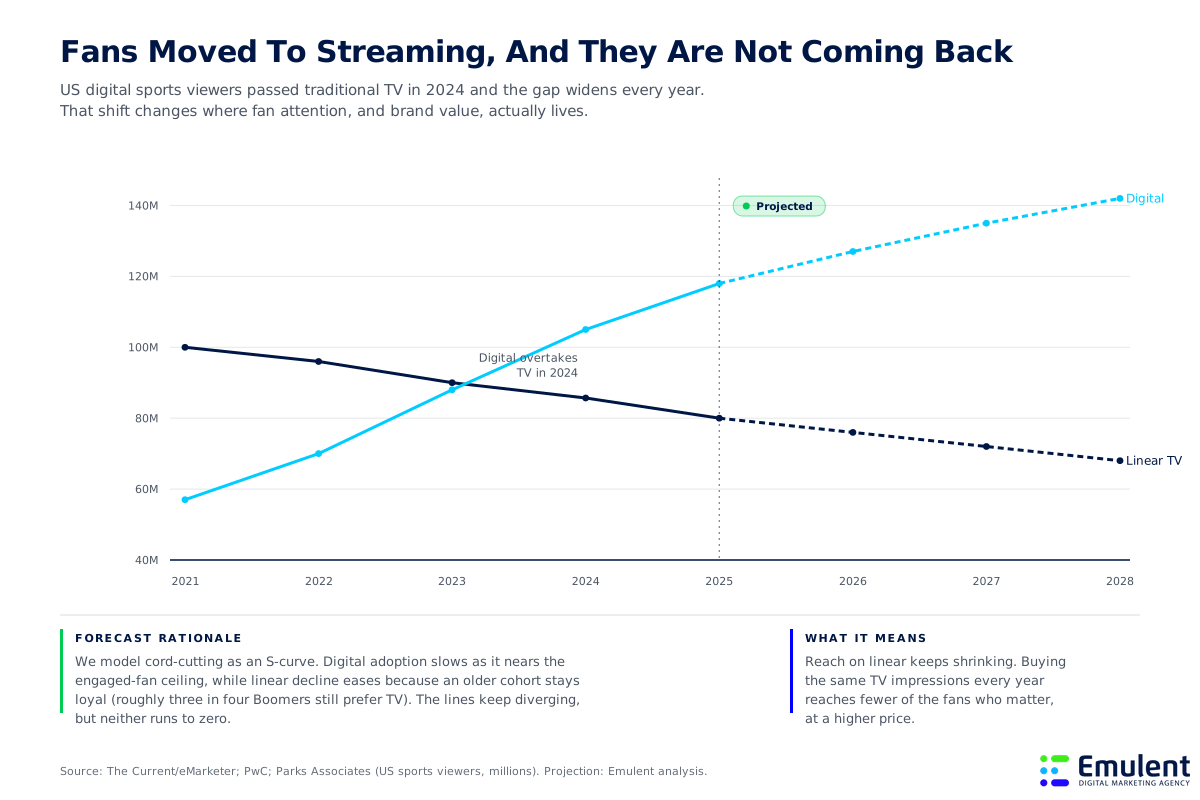
The number of screens is only half the story. Attention on each screen is thinner than it used to be. Roughly four in five sports viewers watch with a second screen in hand, only about a fifth of 18-to-34 year olds sit through a full game, and around 63% of sports video watched in 2025 was vertical, short-form clips rather than full broadcasts. An impression is not a view, a view is not attention, and attention is what you are actually paying for.
This is why reach, impressions, views, and follower counts mislead the brands that lean on them. They count exposure, which is cheap to buy and easy to inflate, instead of counting the fan who remembers you and does something. We wrote more about why views are the vanity metric for video, and the same logic applies to every reach number in a sports media plan.
The fix is to measure outcomes rather than exposure: branded search, site and store visits, email signups, ticket and merchandise sales, repeat attendance. Branded search in particular is a clean signal that a campaign created real demand, which is one reason sports SEO belongs in the same conversation as paid media. Pair that measurement with sports content marketing built for how people watch now, which means short, vertical, mobile-first sports brand videography rather than thirty-second spots cut down from a TV edit.
Reach is the easiest number to buy and the hardest to bank. If your sports campaign cannot point to fans who searched for you, showed up, or bought something, you measured the size of the crowd instead of the result.
Build assets that compound, not activations that decay
Sponsorship money is growing on a steady curve, from about $70 billion in 2025 to roughly $96 billion by 2030, a yearly rate near 6.6%. The steadiness is the lesson. This market grows because brands keep building positions year after year, not because any one tournament spikes the total.
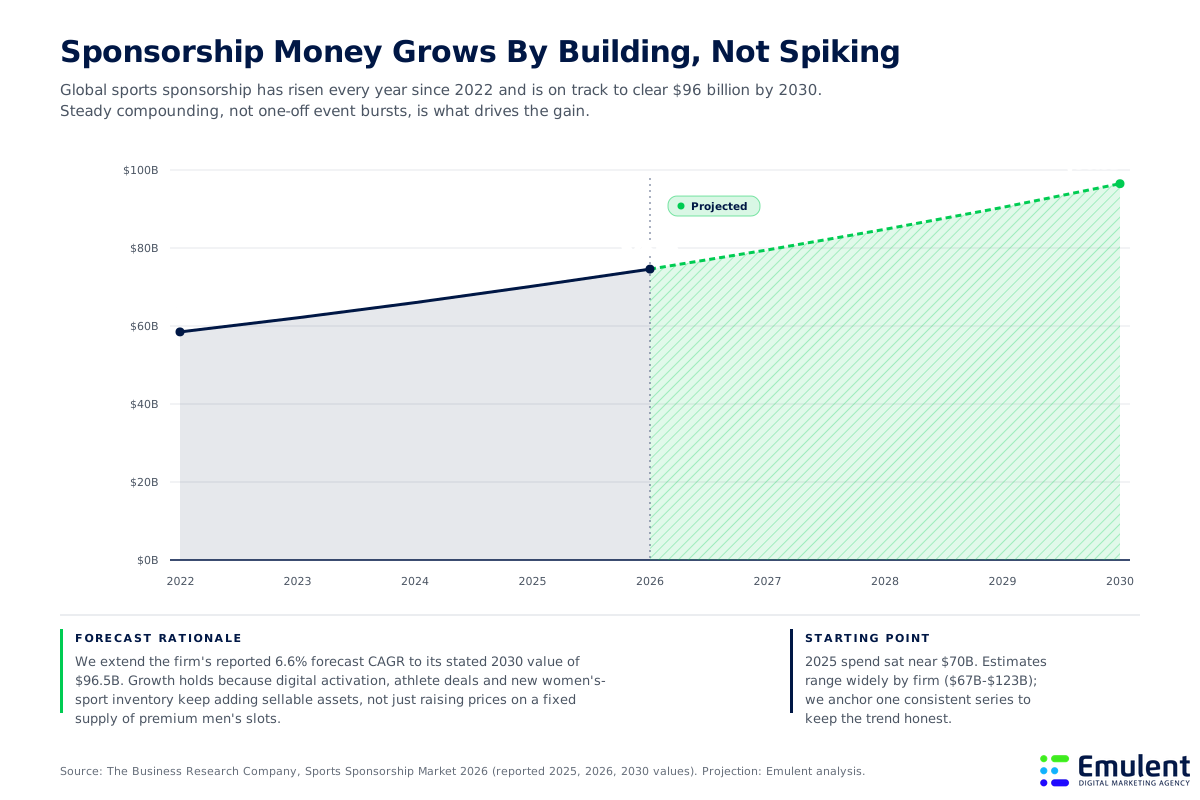
The brands capturing that growth treat sponsorship and content as a system that keeps paying out after the event ends. A World Cup activation that lives for six weeks and then vanishes is a cost. The same budget spent building an owned audience, a content library, and a fan database keeps returning value long after the tournament. The question to ask before any sports spend is simple: when this campaign is over, what do we still own?
It helps to sort every line of a sports budget into two buckets. Spending that decays includes one-off event activations, paid reach, and hospitality, all of which stop working the moment you stop paying. Spending that compounds includes owned media, an email list, evergreen content, and your own digital platforms, all of which keep working on their own. The growth in the chart above flows mostly to brands weighted toward the second bucket. This is the same reason we argue that brand development is a system, not a project.
The platform you own is the anchor of that system, which is why sports web design is not a one-time build but the home base every campaign should drive back to. Renting space on a broadcast or a social feed is fine for reach. Owning the destination is what turns a moment into an asset.
If you stop paying and your audience disappears, you were renting attention. The brands growing fastest in sports are the ones quietly building things they own outright, then pointing every paid moment back at them.
When everyone runs the same play, sameness is the risk
College athlete marketing grew from about $1 billion to $2.6 billion in four years, one of the fastest-moving channels in all of sports. It also became the most crowded. Read any competitor’s 2026 trends piece and you will see the same three instructions: work with athletes, make authentic content, build community.
When every brand chases the same athletes with the same authentic content, authenticity stops being a difference and becomes a template, and templates do not separate anyone. The concentration in the data makes this worse. About 84% of college athlete money pools into football and men’s basketball, the most expensive and most crowded inventory in the category. Bidding into that pool means paying a premium to look like everyone else who bid into it.
Real difference is a deliberate choice about what you will not do and who you will not chase. The brands that stand out when the tactics converge are the ones with a distinct identity: a visual system that looks like no one else’s, a consistent voice, and imagery built for them rather than pulled from a stock library. We have seen first-hand how much it costs when a brand looks like everyone else, and the same trap is wide open in sports right now.
That difference is built, not bought. Sports branding sets the identity and voice that a thousand athlete posts cannot give you on their own, and original sports brand photography is often the fastest way to stop looking interchangeable. A trend report can tell you which athletes are popular. It cannot tell you how to be recognizable.
Authenticity stopped being a differentiator the moment every brand claimed it. What you actually own is your identity, your voice, and the way your work looks. None of that can be copied out of a competitor’s playbook.
Put money where the return is, and say no to the rest
Women’s sports revenue more than tripled since 2022 to clear $3 billion in 2026, and the makeup of that money is the part most brands miss. The commercial slice, which is mostly sponsorship, is both the largest share at roughly 45% and the fastest growing. Women’s sponsorship grew about 17.5% in a single year, several times the rate of the men’s side over the same stretch.
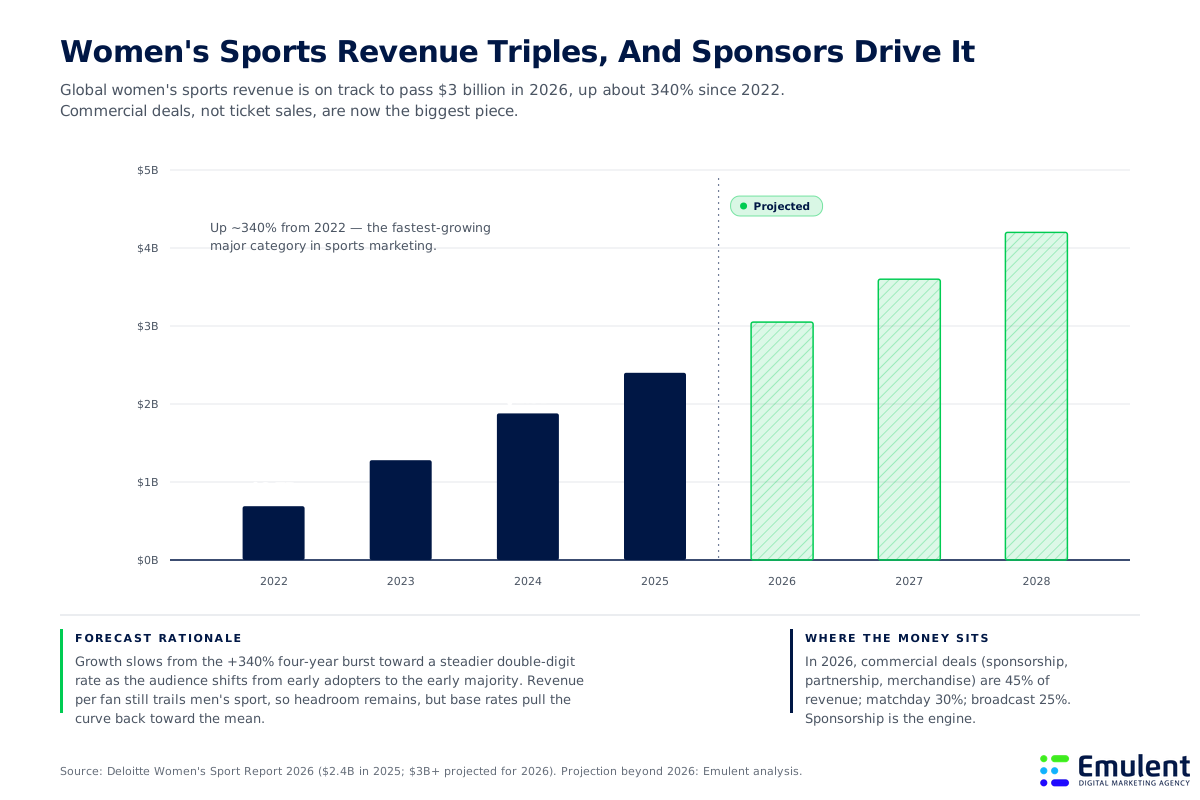
This is a high-return space sitting right next to an oversubscribed one. Demand for women’s sports inventory is rising faster than supply, which is exactly the condition that produces strong returns for early money. Spreading the same budget thin across crowded men’s inventory, where you pay a premium to blend in, produces the opposite. The growth rates are not close, and the prices have not caught up to them yet.
Acting on that means treating focus as a strategy of subtraction. Saying yes to the under-bid, fast-growing space requires saying no to the prestige buys that feel safe and move nothing. That is the harder discipline, because the safe buys are the ones nobody gets fired for. We make the case in full for why a brand strategy should help you say no, and women’s sports is one of the clearest places in 2026 to practice it. The brands that concentrate budget where the return is highest will look prescient in three years. The brands that spread it evenly to avoid hard choices will look average.
Plan for the cycle, not the hype
Media rights spending keeps climbing toward roughly $78 billion by 2030, but it does not climb in a straight line. It moves in waves tied to the sports calendar. Even-numbered years with Olympics and World Cups spike the global total, and quiet years dip. 2026 jumps on the Winter Games and the FIFA World Cup, reaching around $67 billion, then the year after settles back before the next event cycle lifts it again.
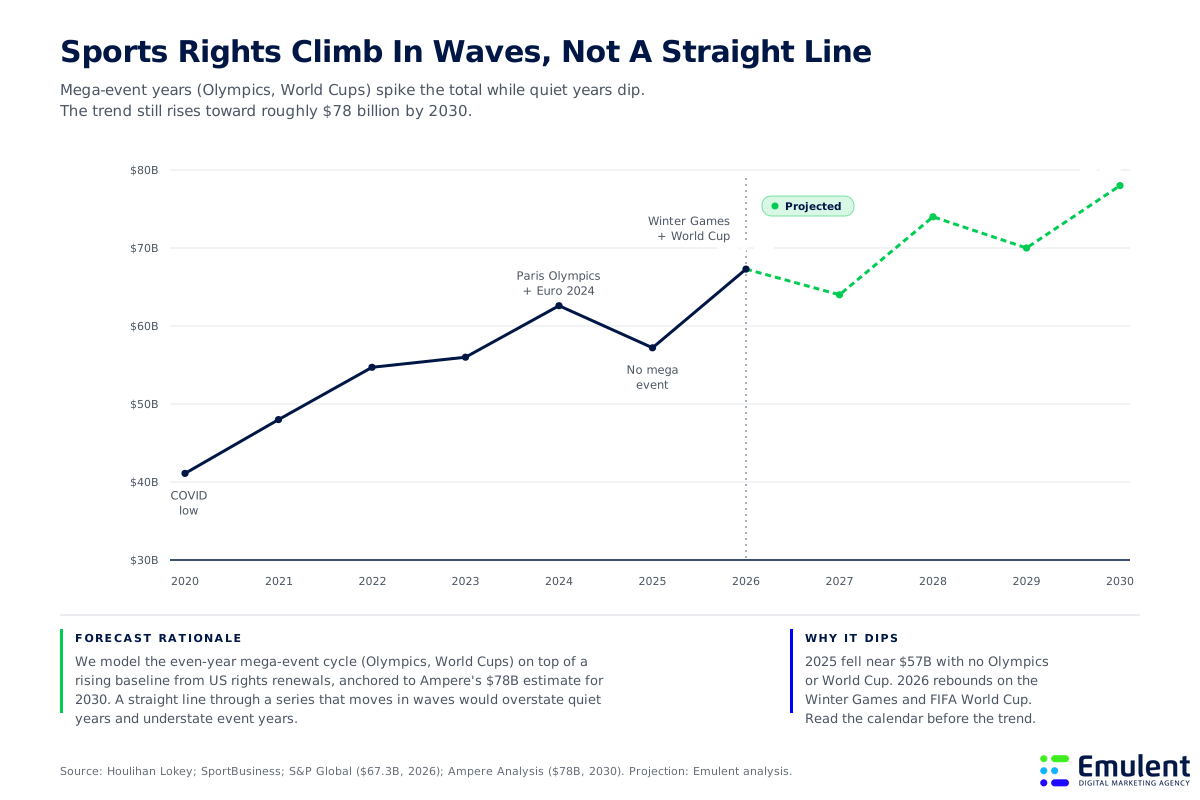
The common mistake is reading a mega-event year as a permanent trend and then over-committing against it. A straight line drawn through a series that actually moves in waves overstates the quiet years and understates the event years, and budgets built on that line tend to look inflated the moment the calendar turns. 2026 is a peak. Plans that quietly assume 2026 numbers repeat in 2027 are planning for a year that the event calendar will not deliver.
Realistic planning reads the calendar first. Build for the baseline that compounds underneath the spikes, treat event years as additions on top of that baseline rather than the new normal, and resist the urge to mistake a World Cup bump for structural growth. The brands that stay steady through the cycle are the ones that did not bet the next budget on this year’s peak.
A World Cup year makes everyone look like a genius. The discipline is building for the baseline that compounds underneath the spikes, and refusing to set next year’s budget against this year’s high-water mark.
What the growth actually rewards
Sports is growing across every area we measured, but the growth is not handing out rewards evenly. It is paying the brands that behave a specific way. They measure outcomes instead of reach. They build assets that compound instead of activations that decay. They choose a distinct identity instead of copying the same authentic-athlete play as everyone else. They concentrate the budget where the return is highest and decline the rest. And they plan for the event cycle instead of extrapolating the hype.
None of that requires the biggest budget in the category. It requires putting your budget behind the things that keep working after the moment passes. If you want help deciding which of your sports spend compound and which ones quietly decay, that is the work we do every day, and the research above is where we start.
We’ll show you the math before asking for a contract. No long-term lock-ins.