
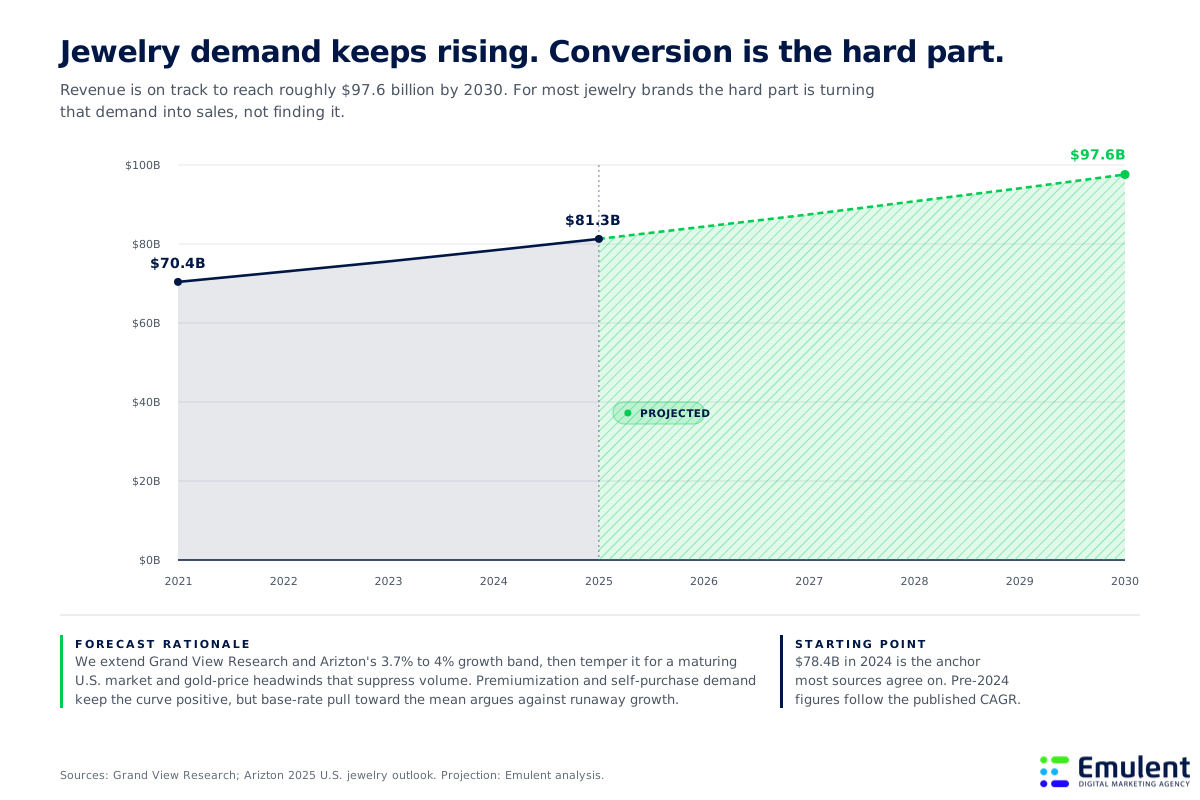
Demand for jewelry has rarely looked healthier. The U.S. market is near $78 billion and on track to exceed $97 billion by 2030, with self-purchase, premiumization, and steady gifting all driving the curve upward. So if you run marketing for a jewelry brand, the hard question is not whether people want jewelry. They do. The hard question is why so much of that demand slips through the digital cracks before it turns into a sale. Jewelry marketing in 2026 lives or dies on that gap, and most brands are still pouring budget into the top of the funnel while the bottom leaks.
This piece takes a position. We pulled current data on market size, online buying, lab-grown diamonds, and conversion rates, then matched it against what a working jewelry brand can actually do about it. The numbers point to a handful of choices that separate brands that grow from brands that just stay busy. Each section below is framed as a decision you can make this quarter, not a trend to admire from a distance.
Are you measuring sales, or just measuring attention?
Start with the number that reframes everything. Jewelry has the lowest e-commerce conversion rate of any major retail category, hovering around 1.2 percent, compared with an all-retail average near 2.6 percent. Food and beverage sites convert at nearly 5.5 percent. Beauty sits around 4.7 percent. Jewelry sits at the bottom, and it has sat there for years. This is structural, tied to high-order values and long consideration cycles, not a sign that your store is broken.
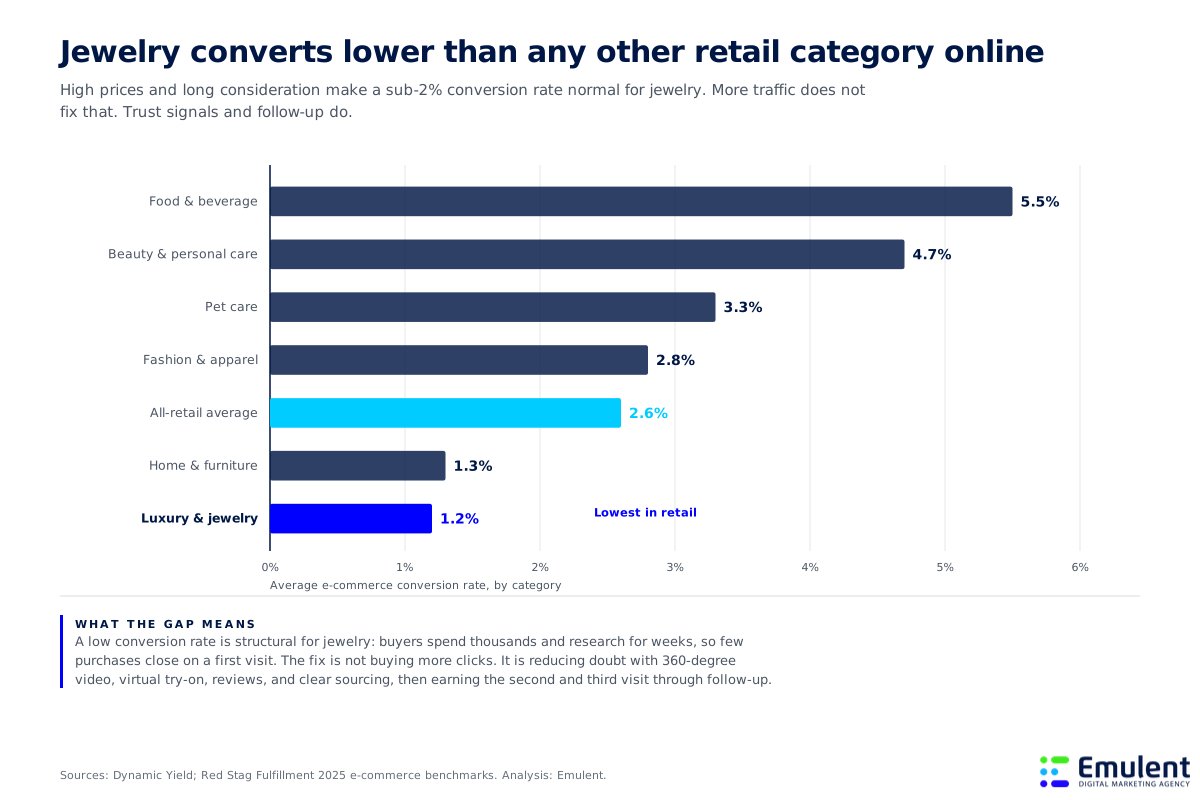
Here is why that matters for how you spend. When your conversion rate is structurally low, every extra dollar of traffic you buy converts at that same thin rate. Doubling sessions doubles your ad cost and returns the same fraction of buyers. The brands that win the math work the rate, not the volume. They earn trust before the visit, reduce hesitation during it, and bring people back after. Chasing impressions while the rate stays flat is how a jeweler can post record traffic and flat revenue in the same quarter. We wrote more about that exact trap in Why Your Website Gets Traffic but Doesn’t Convert, and the jewelry version is the sharpest case of it we see.
The market backdrop confirms there is real money to capture if you fix the rate. Demand keeps climbing, so the constraint is conversion, not interest.
“A jeweler doing 100,000 visits a month at a 1.2 percent rate has the same revenue as one doing 50,000 visits at 2.4 percent. One of those brands is paying twice as much for the same result. We always start with the rate, because traffic you have to keep buying is the most expensive growth there is.” – Strategy Team, Emulent
So the first decision is a measurement decision. Pick the metrics that track money, not motion. Conversion rate, revenue per visitor, return on ad spend, and repeat purchase rate tell you whether the work is paying off. Reach, impressions, and follower counts feel good and rarely move the bank balance. If you want a sense of where your rate should land against your category, our breakdown of average conversion rate by industry gives you a realistic target instead of a vanity benchmark to paste into a deck.
Is your marketing a system, or a series of one-off projects?
Now look at who is winning and losing share. Independent jewelers have watched their slice of the market fall from roughly 42 percent in 2020 to about 35 percent in 2025. That decline is not mostly about product. Independents still cut, set, and source with as much skill as anyone. They are losing on the machinery around the product: the content engine, the review pipeline, the email program, the local search presence that runs whether or not anyone remembers to post this week.
Big chains and direct-to-consumer brands treat marketing as a system that produces output on a schedule. Photography gets shot in batches and reused across the site, ads, and email. Reviews get requested automatically after every purchase. Search content ships every month against a plan. Independents too often treat each of these as a project: a website refresh this year, a photo shoot when the calendar clears, a social push before the holidays. Projects end. Systems compound. That gap is the share gap, quarter after quarter.
The fix starts with the visual layer, because in jewelry the image does the selling. Professional, consistent jewelry brand photography is the raw material a content system runs on. Shoot once at volume, then feed product pages, ads, email, and social from the same library for months. The brands that grow stop treating photography as an event and start treating it as inventory they draw down. We made the broader case for this in brand development is a system, not a project, and jewelry is where the difference shows up fastest, because the catalog turns over and the content has to keep pace.
Does your content build trust, or just chase trends?
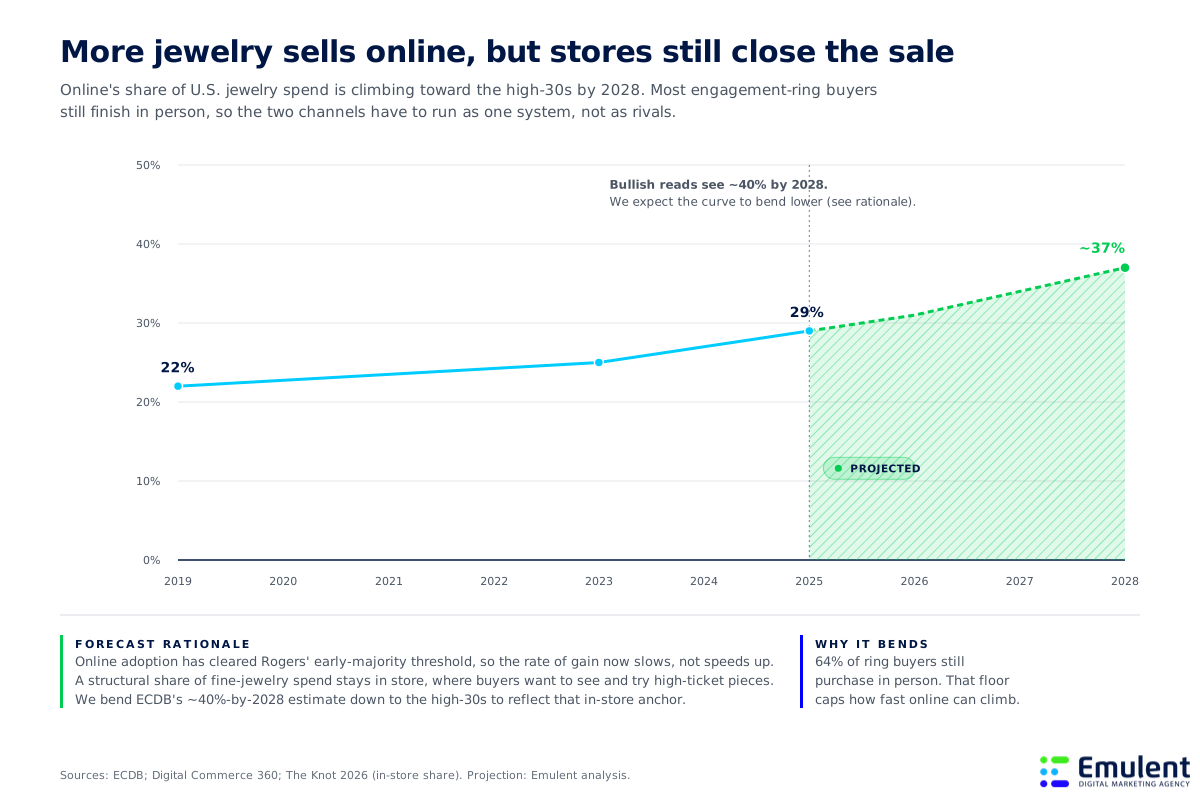
Online buying keeps gaining ground. The online share of U.S. jewelry spend has climbed from 22 percent in 2019 to roughly 29 percent in 2025, and the trend points toward the high thirties by 2028. Mobile already drives more than 60 percent of those online transactions. So the screen is now the showroom for a large and growing share of buyers, and the screen has to do the work a sales associate used to do in person.
This is where many brands chase the wrong thing. The temptation is to copy whatever format is trending: the viral sound, the rapid-cut reel, the AI gimmick of the month. Those can earn attention, but attention at a 1.2 percent conversion rate is cheap fuel. What actually moves a high-consideration buyer is trust, built through specifics. Video that shows a ring turning in real light and on a real hand answers the question a static photo cannot. Detailed sourcing information answers the question every serious diamond buyer now asks. Reviews answer the question of whether anyone like them has been happy. These are the mechanics that lift a thin conversion rate, and they age well instead of expiring with the trend cycle.
Two pieces of the system carry most of the weight here. First, motion. Short, honest jewelry brand videography that shows scale, sparkle, and fit removes the biggest reason people hesitate to buy a ring they have never held. Second, the store itself. A jewelry web design built around trust, with clear pricing, visible sourcing, fast mobile pages, and reviews placed where doubt peaks, is the difference between a beautiful catalog and a store that sells. The fundamentals beat the gimmicks because the buyer’s underlying question never changed: can I trust this enough to spend this much?
“The brands stuck at the bottom of the conversion range almost always have a content problem disguised as a traffic problem. They have plenty of pretty pictures and almost no proof. Show the ring in motion, show where the stone came from, show the reviews near the buy button, and the same traffic starts converting better. Trust is the conversion lever in jewelry. Trend-chasing is not.” – Strategy Team, Emulent
There is one more reason to keep the store and the showroom working together. Roughly 64 percent of engagement-ring buyers still purchase in person, and seven in ten say shopping in person matters to them. At the same time, around 80 percent of luxury jewelry purchases are shaped by digital research before anyone walks in. Your site is selling even when the transaction happens at the counter. Treat online and in-store as one path, because for most jewelry buyers, they already are.
Does your brand look like every other jeweler?
Open ten independent jeweler websites and you will struggle to tell them apart. The same white-background macro shots. The same stock language about craftsmanship and timeless elegance. The same trending sounds on the same social formats. The same long-tail keywords. When every brand in a category runs the identical playbook, the playbook stops working, because nothing about it helps a buyer choose you over the shop down the road.
Sameness is expensive in a category built on emotion and meaning. People buy jewelry to mark something: a proposal, an anniversary, a promotion, a private win. A brand that says something specific about who it is for and what it stands for gives the buyer a reason that price comparison cannot erase. A brand that looks like everyone else competes on price alone, which in jewelry is a slow way to lose margin. We laid out the cost of blending in over at does your website look like everyone else’s, and the jewelry market is the clearest example of a field where looking generic quietly drains revenue.
Real jewelry branding is the work of choosing a point of view and carrying it through every image, line of copy, and product story. Not a new logo. A position. Who is this for, what do they care about, and why does this brand exist rather than the hundred others selling similar stones? Answer that with conviction and the rest of the marketing gets easier, because the buyer finally has a reason to remember you.
“We can usually predict a jeweler’s margin pressure by how interchangeable their brand is. If we swap your logo onto a competitor’s homepage and nothing feels wrong, you have a positioning problem, and you will keep competing on discounts. Differentiation is not decoration. It is the thing that lets you charge what your work is worth.” – Strategy Team, Emulent
Is your plan built on real forecasts, or on hype?
No shift has reshaped the category faster than lab-grown diamonds. Their share of U.S. engagement rings has gone from about 12 percent in 2019 to roughly 61 percent in 2025, according to The Knot’s annual study of more than 10,000 couples. That is one of the fastest consumer adoption curves in recent retail history. The reflex is to draw that line straight up and assume natural diamonds are finished. The data says something more useful.
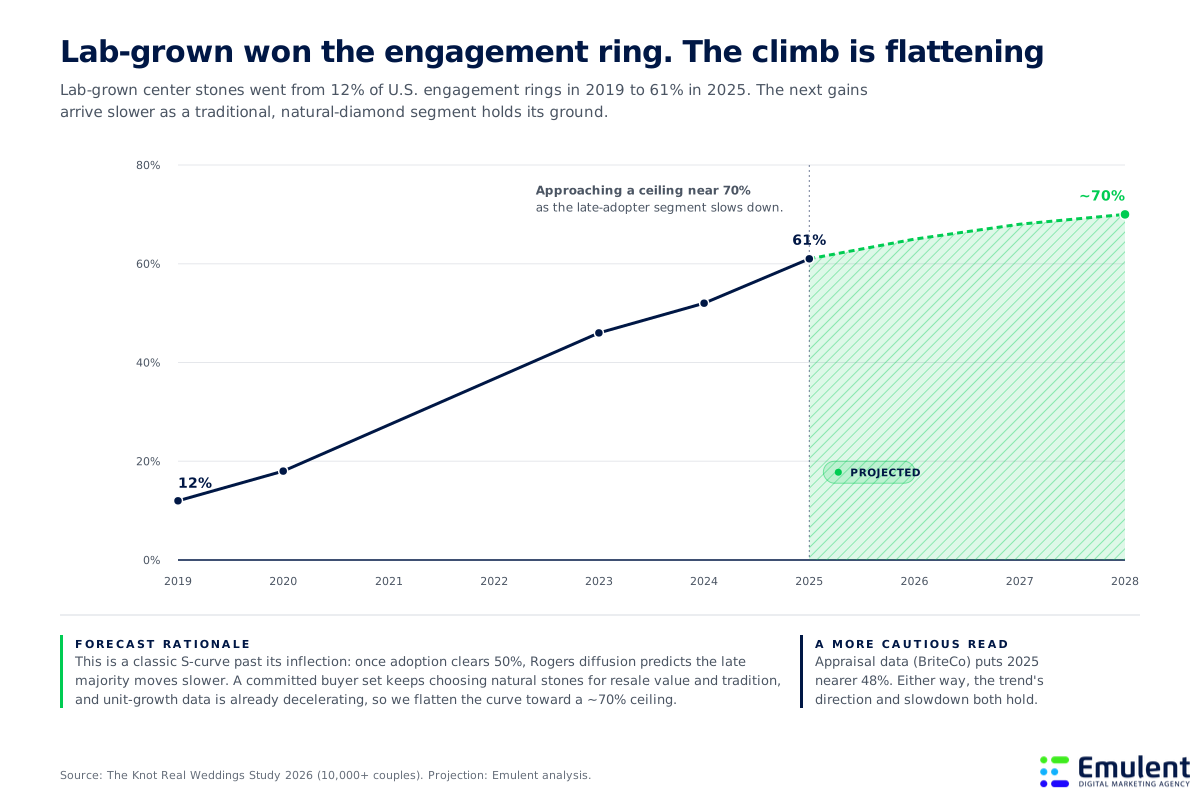
The curve is bending, not racing. Adoption has already passed the mainstream buyer, so the easy growth is behind us. A real share of couples still want a natural stone for reasons of tradition and resale, and that segment holds rather than vanishes. The honest forecast is a slowing climb toward a ceiling, not a vertical line. Planning as if lab-grown reaches 100 percent will lead you to abandon a natural-diamond audience that still spends, and still converts.
The price story matters just as much for your plan. The average amount couples spend on an engagement ring has fallen from around $6,000 in 2021 to roughly $4,600 in 2025, with lab-grown rings averaging near $4,900 against about $7,600 for mined. Lower stone prices mean buyers can spend the same budget on a bigger or better-set piece, which shifts the selling point from carat size to design, craft, and story. Add rising gold prices squeezing margins on settings, and the brands that plan around real numbers will price and merchandise very differently from the ones riding a hype curve. Search demand is shifting with all of this, so your jewelry SEO needs to track how buyers actually search now, around lab-grown, sourcing, and value, rather than the queries that mattered three years ago.
What are you willing to say no to?
Every section above points to the same underlying discipline: focus. A jewelry brand cannot be on every platform, chase every trend, stock every style, and target every buyer at once, at least not well. Spreading effort thin across a low-conversion category is how budgets disappear without much to show. The brands that grow decide what they will not do, and they protect that decision.
Saying no is a strategy, not a limitation. No to the channel where your buyer is not paying attention. No to the trend that earns views but never buyers. No to the product line that pads the catalog and confuses the brand. No to the keyword that brings traffic with no intent to purchase. Each no frees budget and attention for the few moves that actually lift the rate. We made the full case for this in your brand strategy should help you say no, and in a category where conversion is this hard, focus is not optional. It is the whole game.
“The fastest growth we drive for jewelry brands usually starts by cutting something. Drop the two channels that never converted, kill the trend content that ate the calendar, and put that time into video, reviews, and the site. Focus beats effort. A brand that does five things well will outsell one that does fifteen things halfway, every quarter.” – Strategy Team, Emulent
Six decisions worth making this quarter
- Measure money, not motion. Jewelry converts near 1.2 percent, the lowest of any retail category, so track conversion rate, revenue per visitor, and repeat purchase rate rather than reach and follower counts.
- Work the rate before the volume. With a structurally thin conversion rate, buying more traffic mostly raises your ad bill. Earn trust before the visit and reduce hesitation during it.
- Run marketing as a system. Independent jewelers fell from about 42 percent of the market in 2020 to roughly 35 percent in 2025 by treating content, reviews, and search as projects instead of an engine that runs on a schedule.
- Build trust, not trends. Online buying is heading toward the high thirties as a share of spend, and mobile drives most of it. Video, sourcing detail, and reviews lift the rate. Viral formats rarely do.
- Refuse to look generic. When every jeweler runs the same playbook, the playbook fails. A clear position lets you charge what your work is worth instead of competing on discounts.
- Plan on real forecasts. Lab-grown share is flattening toward a ceiling, not racing to 100 percent, and ring prices are falling. Price and merchandise around grounded numbers, and keep selling the natural-diamond buyer who still spends.
Where this leaves your 2026 plan
The jewelry market is growing, buyers are moving online, and the category still converts worse than any other. Those three facts together are the whole opportunity. Brands that keep buying traffic against a thin rate will keep paying more for the same result. Brands that fix the rate, build trust through real content, stand for something specific, and plan on honest forecasts will take share from the ones that do not. None of this requires a bigger budget. It requires spending the budget on the moves that actually move money.
That is the work we do every day. If you want a partner who starts with your conversion rate and your real numbers rather than a list of trends, our jewelry marketing agency team can help you decide what to do next, and just as important, what to stop doing. The brands that grow in 2026 will be the ones that choose.