
National SEO ranking factors are the signals Google weighs when deciding which sites earn visibility for keywords searched across the entire country, rather than within a single zip code. Brands competing nationally face a different ranking calculation than local businesses. There is no map pack to win, no proximity multiplier, and no single market to dominate. The 100 factors below are grouped into ten weighted categories, scored on a 1-to-10 scale based on what actually changes rankings in 2026, with our projection of where each weight is heading by 2028.
Key takeaways from this article
- Brand and entity signals are the fastest-rising category, climbing from an average weight of 7.3 in April 2026 to a projected 8.9 by 2028.
- Content quality holds the top spot with an average weight of 8.6, but it is approaching the natural ceiling of 9 out of 10.
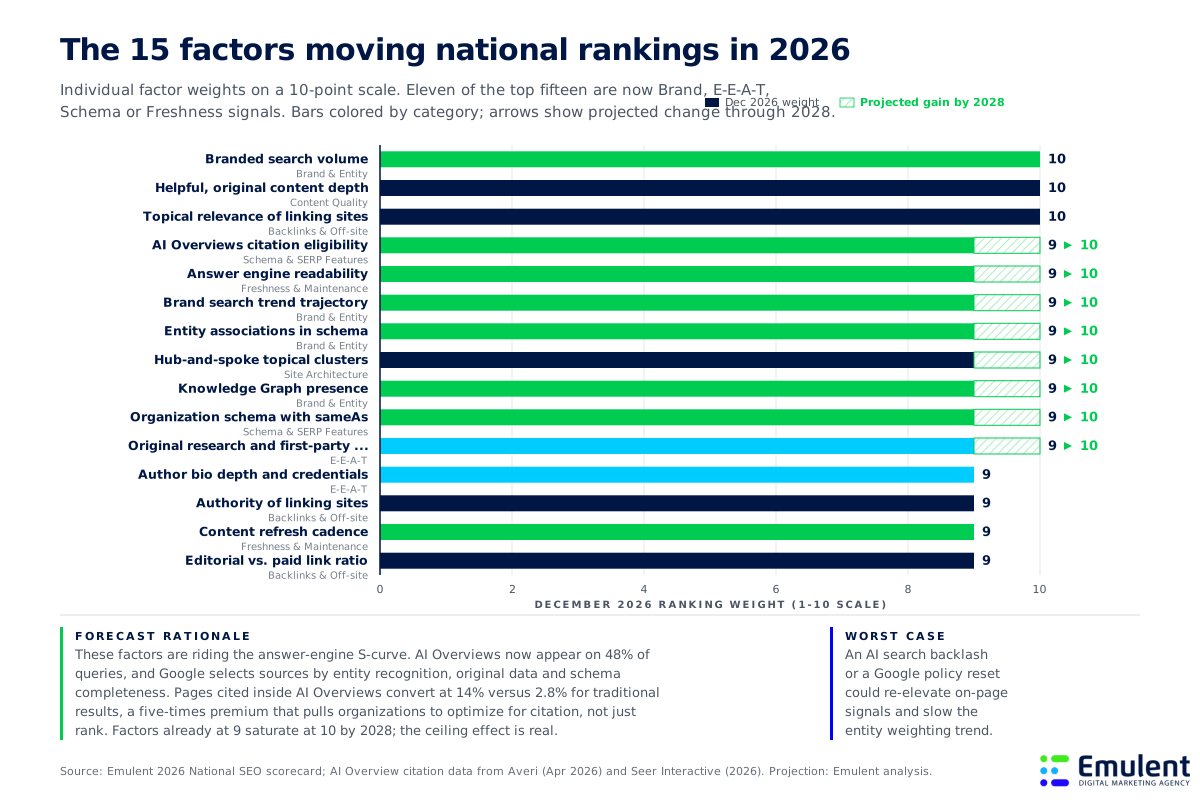
- Eleven of the top fifteen individual factors fall within the Brand, E-E-A-T, Schema, or Freshness categories, rather than traditional on-page SEO.
- Link quality and link quantity have decoupled: authority and topical relevance now outweigh raw referring-domain counts by nearly two-to-one.
- On-page and architecture weights are flat. Google is reallocating marginal weight toward signals it uses to judge brand authority and topical entity recognition.
- AI Overviews citation eligibility is a top-five gainer, projected to rise from a weight of 7 in April 2026 to 10 by 2028 as query coverage grows from 48% toward 70%.
How does national SEO differ from local ranking?
National SEO targets queries that carry no geographic intent. A search for “best CRM for small business” returns the same blue links in Atlanta as in Seattle, which removes the proximity advantage local businesses use to rank. Weight shifts toward signals Google uses to judge topical authority across an entire industry: depth of coverage, brand recognition, link quality from topically relevant sites, and entity associations in the Knowledge Graph.
This matters because most lists of ranking factors treat every site the same. A national B2B SaaS brand and a multi-location dentist are evaluated against very different signal weights, even though both are technically subject to the same algorithm. Our Enterprise SEO work for national brands consistently shows that topical breadth and brand search volume move rankings faster than another round of citation building. Local citations and review velocity, the lifeblood of local SEO, carry almost no weight for a national query. With that distinction set, we can look at how those signals stack up category by category in 2026.
Which ten categories carry the most ranking weight in 2026?
We score every one of the 100 factors in our enterprise SEO audit on a 1-to-10 scale, then average each of the ten category clusters. The chart below shows where the categories sit in April 2026, where they finish the year, and where Emulent projects each will land in 2028. Reading the categories in order tells you which buckets carry the most ranking weight, and which ones are quietly losing share.
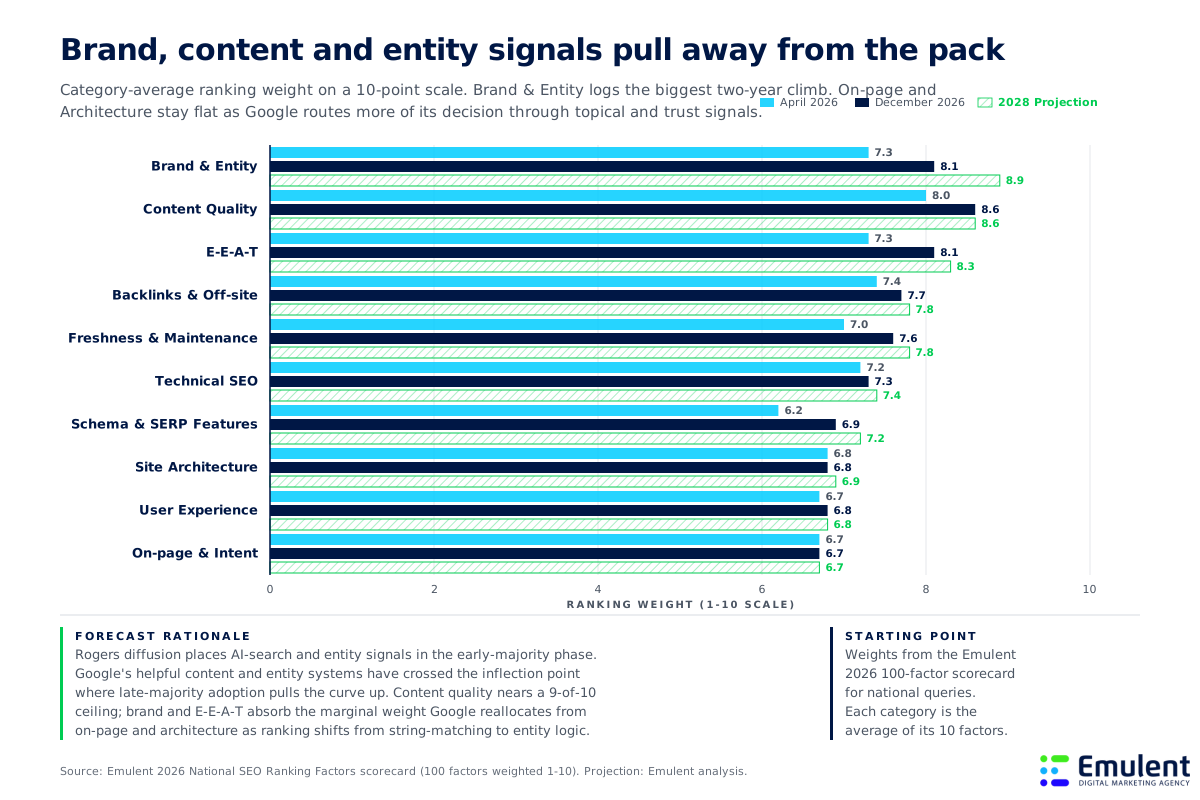
The headline shift is the reallocation of weight from on-page and architecture signals toward brand, E-E-A-T, and freshness. Content quality remains the heaviest single category at an 8.6 average, but it is already close to the natural ceiling that Google rarely allows any one category to exceed. Brand and entity signals carry the largest two-year gain (+1.6 points), and we expect them to continue climbing as AI Overviews source more answers from entities Google can verify.
“For two decades we have watched Google move from keyword matching to entity matching. The 2026 weight reallocation is the clearest data point we have ever seen for that shift. Brands that built recognition and topical depth before 2024 are the ones absorbing rankings now. Brands that built nothing but link inventories are watching their authority drain quietly.” – Strategy Team, Emulent Marketing
Category averages tell you where to allocate budget at the highest level. Individual factor weights tell you which specific levers to pull this quarter.
What individual factors are now the heaviest in the Google algorithm?
When we sort all 100 factors by their December 2026 weight, the top fifteen tell a story that does not match the conventional SEO playbook. Title tags and header hierarchy do not make the list. Backlink counts do not make the list. What does make the list is a tight cluster of brand recognition, topical authority, schema completeness, and content originality signals.
The patterns inside the top fifteen
- Five of fifteen are Brand and Entity factors: branded search volume, Knowledge Graph presence, entity associations in schema, brand search trend trajectory, and Wikipedia or Wikidata entry.
- Three are E-E-A-T factors: author bio depth, original research and first-party data, and press coverage from recognized outlets.
- Three are Schema or AI-citation factors: Organization schema with sameAs, AI Overviews citation eligibility, and Answer engine readability.
- Only one is a traditional on-page factor: hub-and-spoke topical clusters, which is really an architecture and content strategy hybrid.
Many of these factors are sitting at weight 9 and projected to hit 10 by 2028. The ceiling matters here. Google rarely lets a single factor saturate at 10, so the brands that arrive first lock in a structural advantage that newer entrants cannot easily catch. Knowing where the heaviest factors sit today is only half the picture. The more useful question is where Google is reallocating marginal weight next.
Where is the marginal weight moving by 2028?
When you rank the 100 factors by absolute point gain from April 2026 to projected 2028, a clear group of twelve emerges as the biggest gainers. Each one moves by two or three points on the 10-scale, which is a significant reallocation when you consider the system as a whole.
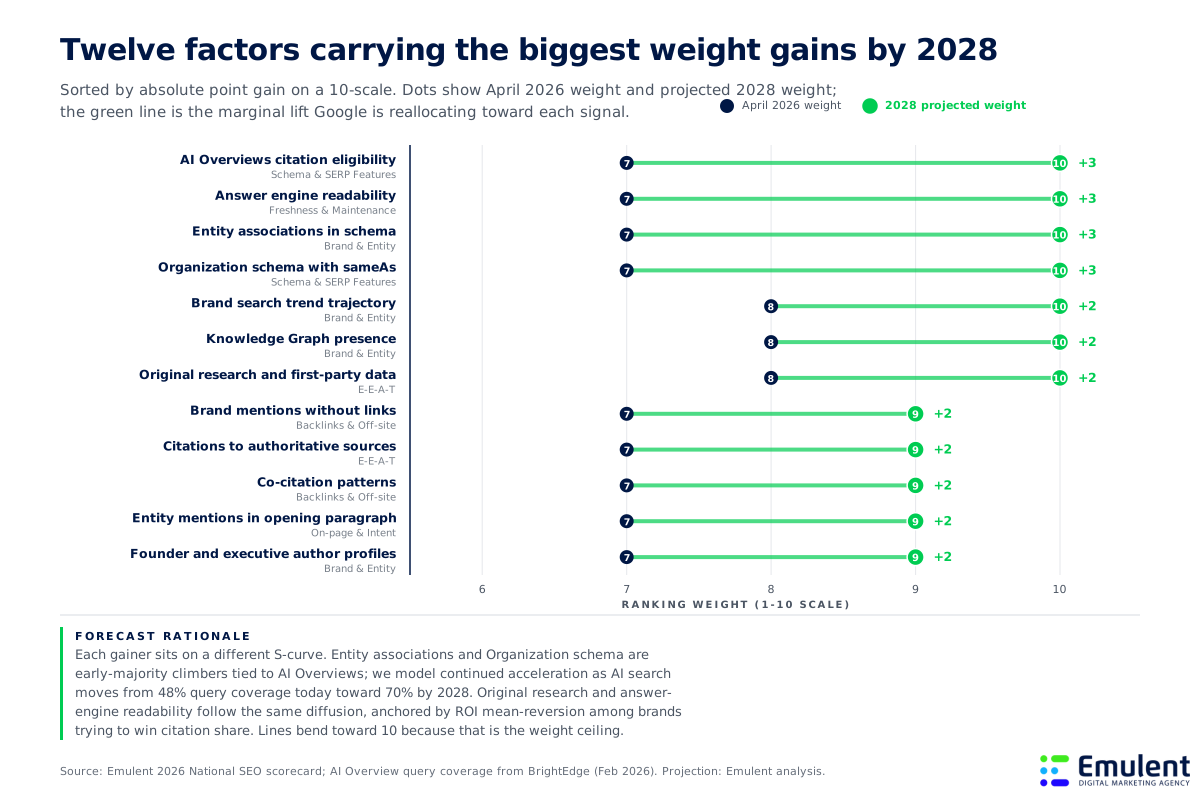
The four biggest gainers each pick up three points. All four are tied to the AI search transition. AI SEO services built around these specific factors are the work we are doing most of for enterprise clients in 2026. AI Overviews now appear on roughly 48% of queries, and Google selects the sources it cites by reading entity recognition, schema completeness, and original data signals first. Pages cited inside AI Overviews convert at 14.2% compared to 2.8% for traditional organic results, a five-times premium that has reset every brand’s calculus on where to spend optimization hours.
The next eight gainers each pick up two points. They cluster around brand mentions, citations to authoritative sources, co-citation patterns, and author profile depth. Every one of them is downstream of one decision: invest in the brand and the entity behind it, not the page in isolation. With that pattern set, the brand and entity category deserves a closer look at its full historical arc.
How are brand and entity signals reshaping national rankings?
Brand and entity ranking weight has not arrived overnight. It has tracked a slow, deliberate S-curve since the Knowledge Graph matured around 2018. The chart below traces the category average from 2018 through our 2028 projection, with two milestones marked: Google rolling its Helpful Content System into core ranking in 2022, and the launch of AI Overviews in 2024-25.
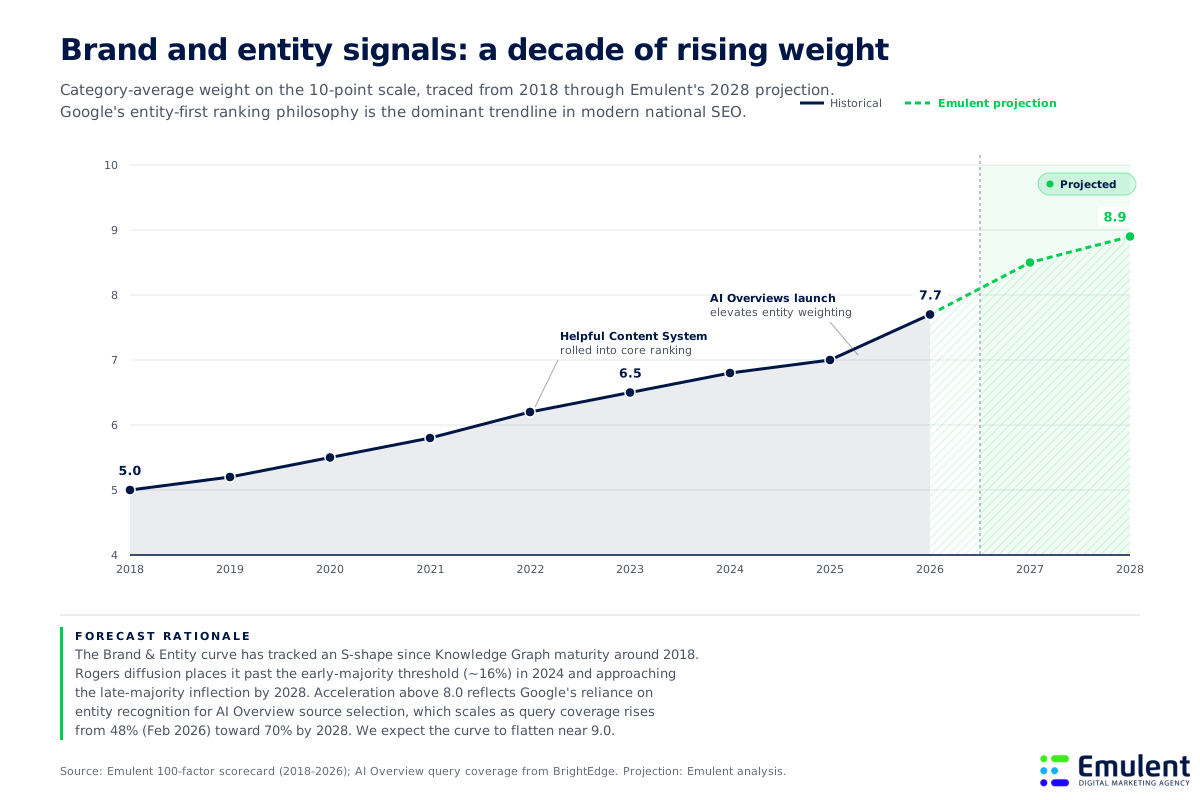
The accelerating curve in 2026 has a specific cause. AI Overviews and AI Mode both rely on entity recognition to select sources, and Google’s confidence in entity-level signals has grown faster than its confidence in any single page-level signal. Brand strategy work that used to live in the marketing department is now a ranking input. Brands that earn coverage in tier-1 outlets, claim Knowledge Panels, build sameAs schema across verified social profiles, and grow branded search volume month over month are seeing rankings improve even for queries they have never targeted directly.
“The clients we see climbing fastest in 2026 are not the ones publishing more content. They are the ones investing in the entity Google sees when it crawls them. The schema, the author profiles, the executive presence in earned media, the Knowledge Graph linkage. These are ranking factors now, and they are the ones AI engines look at first when they pick whose answer to surface.” – Strategy Team, Emulent Marketing
The strategic implication is direct. A brand that wants national visibility in 2028 has to be an identifiable entity in the open web by 2027. Our work on entity-based SEO covers the foundational schema, structured data, and Wikidata linkage that gives Google something to recognize. Brand and entity weight is the rising star, but the link graph is going through an equally important shift in the opposite direction.
Why is link quality outweighing link quantity, and what should you do about it?
Backlinks remain one of the heaviest input categories for national queries, but the math inside the category has changed. Raw referring-domain counts have lost weight every year since 2018. Authority and topical relevance have gained weight in the same period. The two trendlines crossed in 2021, and we project they will continue to diverge through 2028.
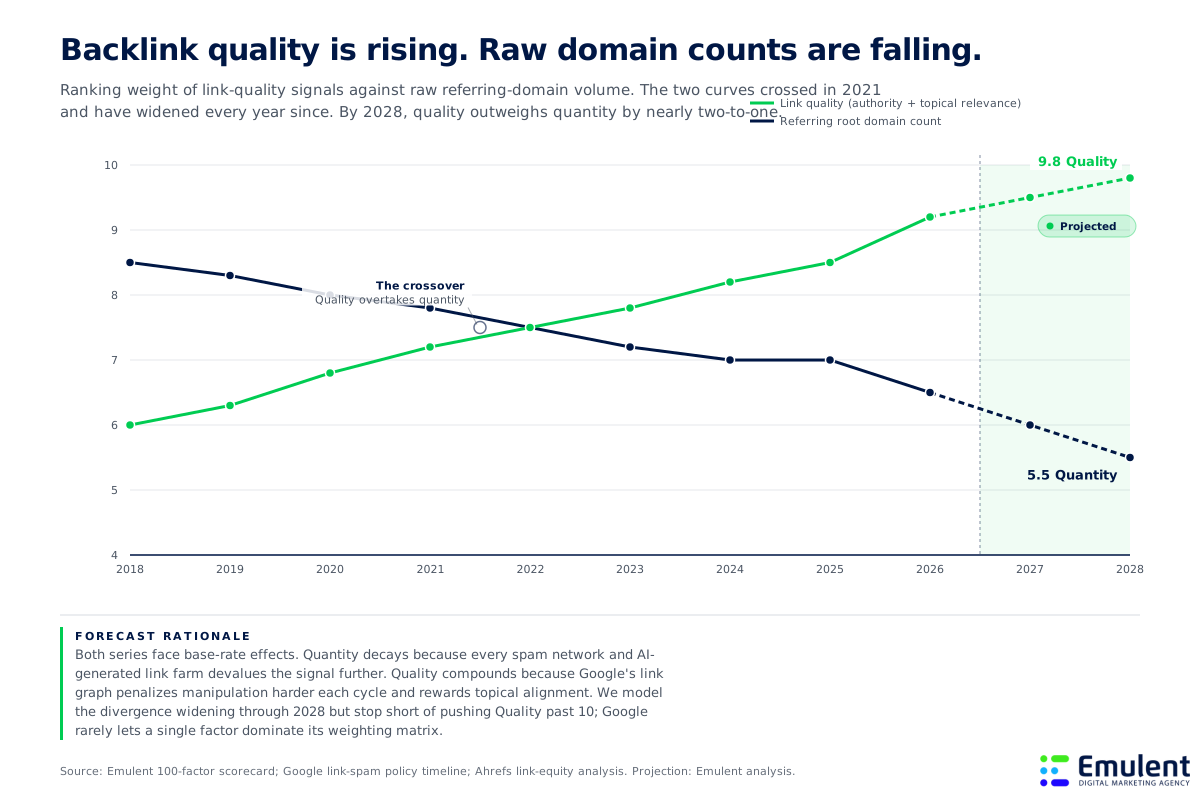
The reason for the divergence is structural. Google’s link-spam systems penalize manipulation harder every year, and every cycle of AI-generated link farms further devalues raw counts. Quality compounds because Google rewards topical alignment between the linking site and the target page more than it rewards generic authority transfer. Competitive backlink research for the top-ranking national pages routinely shows them holding fewer total links than competitors below them, but earning links from sites that Google considers topically authoritative for the specific query.
What this divergence means for your link program
- Target editorial coverage in your vertical: a single link from an industry publication with its own organic traffic outranks ten links from generic directories.
- Cut paid placements posing as editorial: Google’s editorial-versus-paid ratio signal is now weighted 9 of 10, up from 8 in April. Disclosed sponsorships are fine; disguised ones are flagged.
- Pursue unlinked brand mentions: co-citation signals carry a weight of 9 by 2028. PR coverage that names your brand without a hyperlink still moves the needle.
- Audit and disavow toxic links quarterly: link toxicity is a defensive factor, not a growth one, but a contaminated profile suppresses everything else.
The link program shift maps onto a larger truth about national SEO in 2026: the work is moving from quantity to quality across every category. That has direct implications for how an enterprise SEO roadmap should be built.
What does this mean for an enterprise SEO roadmap?
Every brand has finite time and budget. The difference between a national site that ranks and one that does not usually comes down to which twenty of the 100 factors get addressed first. The category weights and biggest-gainer data points are not abstract. They are a prioritization matrix that points to a specific roadmap for 2026 and 2027.
The order we recommend for an enterprise SEO program rebuild
- Audit content quality first: prune thin pages, refresh the top fifty revenue-adjacent URLs, and rewrite anything that ranks for an informational query in a lookup format. Our content strategy work always begins here because the ceiling on every other factor is set by the quality of the page Google is being asked to rank.
- Build the entity Google sees: Organization schema with sameAs, Knowledge Panel claims, author profile pages with credentials, and Wikidata linkage where eligible.
- Earn original-research coverage: publish first-party data once a year and pitch it to tier-1 outlets in your vertical. This single tactic moves three of the top fifteen factors simultaneously.
- Restructure for hub-and-spoke clusters: map pillar pages and supporting articles before you publish anything new. Topical clusters move from a 9 to a projected 10 in our 2028 weighting.
- Optimize for AI Overview citation: answer the question in the opening 100 words, use clear factual statements, and structure for snippet pulls. The same content patterns that earn AI citations also earn featured snippets and zero-click brand exposure.
“We recovered 2.4 million organic sessions for an enterprise client after a core update penalty. The fix was not a single change. It was rebuilding author profiles, pruning 40% of the URL count, refreshing every page that ranked, and rewriting content from a lookup format to a guided answer format. Recovery is possible, but it is not a one-tactic exercise.” – Strategy Team, Emulent Marketing
The factors that survive Google’s next algorithm update are the same factors winning today. Brand recognition, content originality, entity clarity, and topical link quality. The roadmap that focuses on those four pillars in that order is the one we have seen consistently produce ranking gains across our enterprise client base. Where this leaves your team is a question of which gap to close first.
How the Emulent Marketing Team can help
National SEO comes down to weighting. We have spent two decades helping national and enterprise brands make those calls, recover from core update penalties, and build the kind of topical authority that survives algorithm changes instead of fearing them. If you are building a national SEO program, refreshing one that has stalled, or trying to recover from a ranking drop, we would be glad to talk through what should sit at the top of your list.
If you would like a second set of eyes on your national SEO program, or if you want to compare your current allocation of effort against the 2026 and 2028 weighting of influence, contact our digital marketing agency and we will walk through the data together.