
Nobody picks a business off Google Maps because it stuffed a keyword into its name. They pick the one that looks like it will not waste their afternoon. Reviews from last month, a reply written by a person, photos that match the actual room, hours that turn out to be correct: that is what a local searcher screens for in the eight seconds before tapping. Google reads roughly the same signals, for roughly the same reason. The businesses winning the local pack in 2026 are not the ones gaming relevance. They are the ones who are easy to trust.
What this article commits to:
- Most local SEO statistics on page one are broken. The famous ones trace to 2014 and 2018. We use current primary sources and name them.
- Proximity deserves none of your attention. You cannot move your building, so stop reading articles about it.
- Reviews expire. 74% of consumers only value reviews written in the last three months, so a 200-review profile that went quiet loses to a 30-review profile that did not.
- Templated review replies are worse than silence. They put off half of all consumers, which makes most automated reply tools a liability.
- AI local search is near its ceiling, not at its start. The runway is far shorter than the hype implies, and your reviews are still the input.
- Fewer than 20 reviews? Do not hire anyone yet. Go get 20 reviews. That is free, and no agency can skip the step for you.
Proximity, prominence, relevance: only two are worth your time
Google’s own documentation says local results rest on relevance, distance, and prominence, and it adds a line most guides skip: there is no way to request or pay for a better local ranking. Distance is the pillar everyone obsesses over. It is also the one you cannot touch. Your address is your address.Relevance and prominence are where the work lives. Relevance is Google understanding what you actually do, which comes from a complete profile and a primary category that is specific rather than aspirational. Prominence is Google deciding you are well known and well regarded, which Google explicitly ties to how many reviews you have and how positive they are. Both are trust proxies. Neither responds to keyword tricks. The rest of this piece is about the local SEO ranking factors you can actually move, in the order we would move them.
– Strategy Team, Emulent Marketing
The local SEO numbers you keep reading are broken
Three statistics dominate page one for this topic, and all three fail a basic date check. “46% of Google searches have local intent” traces back to a remark made at a 2018 conference. “76% of people who search locally visit a business within a day” and “28% of local searches end in a purchase” both come from a Google and Ipsos study fielded in 2014. That research describes a shopper with no AI summary, no assistant, and no review profile worth reading. We will not publish those figures, and we would push back on any agency that quotes them at you.
The most repeated claim of all is that 84% of consumers trust online reviews as much as a personal recommendation. Current measurement puts it at 49%, from the BrightLocal Local Consumer Review Survey 2026, a panel of 1,002 US adults that has asked the same question for sixteen years. Reviews carry real weight. They are not twice as persuasive as your customer’s actual friends, and a plan built on the inflated figure will over-buy review volume and under-build everything reviews hand off to.
Every number below carries its year and its source. A statistic that cannot survive that check should not survive into your budget.
What buyers actually check before they call you
Local shoppers apply hard filters, not preferences. The BrightLocal 2026 data shows 47% will not use a business with fewer than 20 reviews, and only 9% will use one with five or fewer. Half are put off by generic, templated review replies. And 74% give weight only to reviews written in the last three months, which quietly means your review profile has a shelf life.
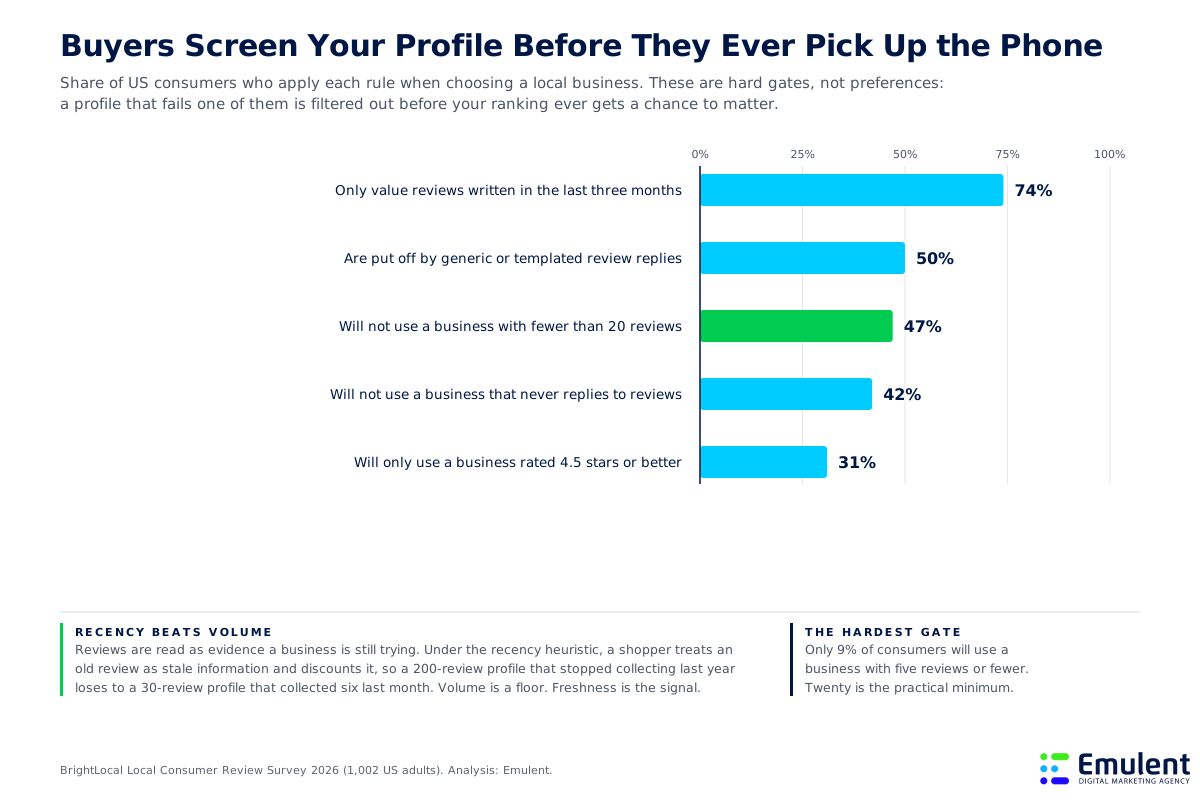
Read the top bar again, because it reframes the whole job. Review count is a floor you clear once. Review recency is a treadmill you never step off. A contractor with 200 reviews whose newest is from last spring is, to three quarters of the market, a business with no reviews at all. This is why we treat review velocity as the core deliverable of Google Maps SEO services rather than a bonus line item, and why our 20-point local SEO checklist ranks a weekly asking rhythm above nearly everything technical.
Why review velocity beats keyword stuffing
The bar for an acceptable star rating moved further in one year than in the previous five. In 2025, 17% of consumers said they would only use a business rated 4.5 stars or better. In 2026 that is 31%. The 4.0 threshold climbed from 55% to 68% across the same twelve months. A rating that passed comfortably last year is now below par for two thirds of your market.
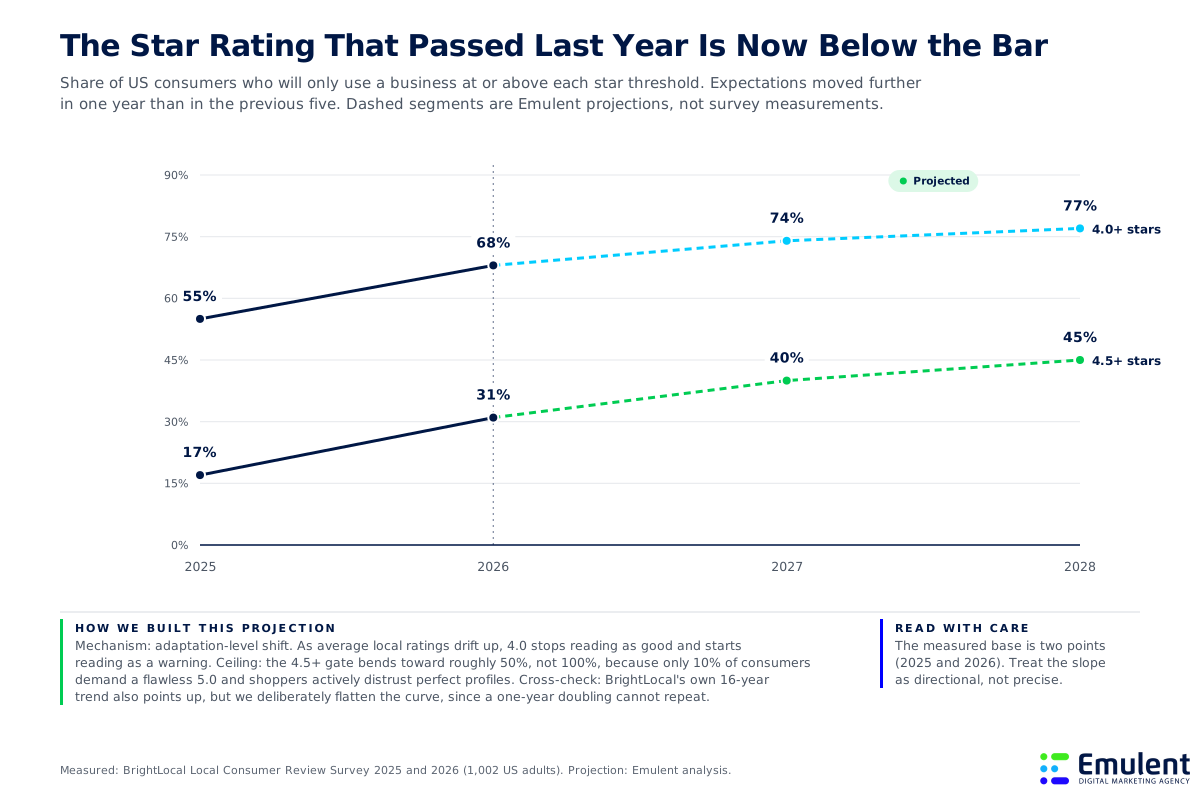
Set that against what a keyword-stuffed business name buys you. It violates Google’s guidelines, any competitor can report it, and it moves none of the signals above. It cannot raise your rating, refresh your reviews, or answer a complaint. It survives as a tactic because it is easy to sell and easy to invoice. Reviews are slower, harder, and the only thing here that compounds.
– Strategy Team, Emulent Marketing
The behavioral signals Google reads are the ones people read
A local searcher is deciding under ambiguity, fast, on a phone, often because something already went wrong. They cannot test your service before buying it. So they test the one behavior on display: how you answer. Speed of reply, tone of reply, whether a reply exists at all. People lean on that proxy hard, because it is the only evidence in front of them.
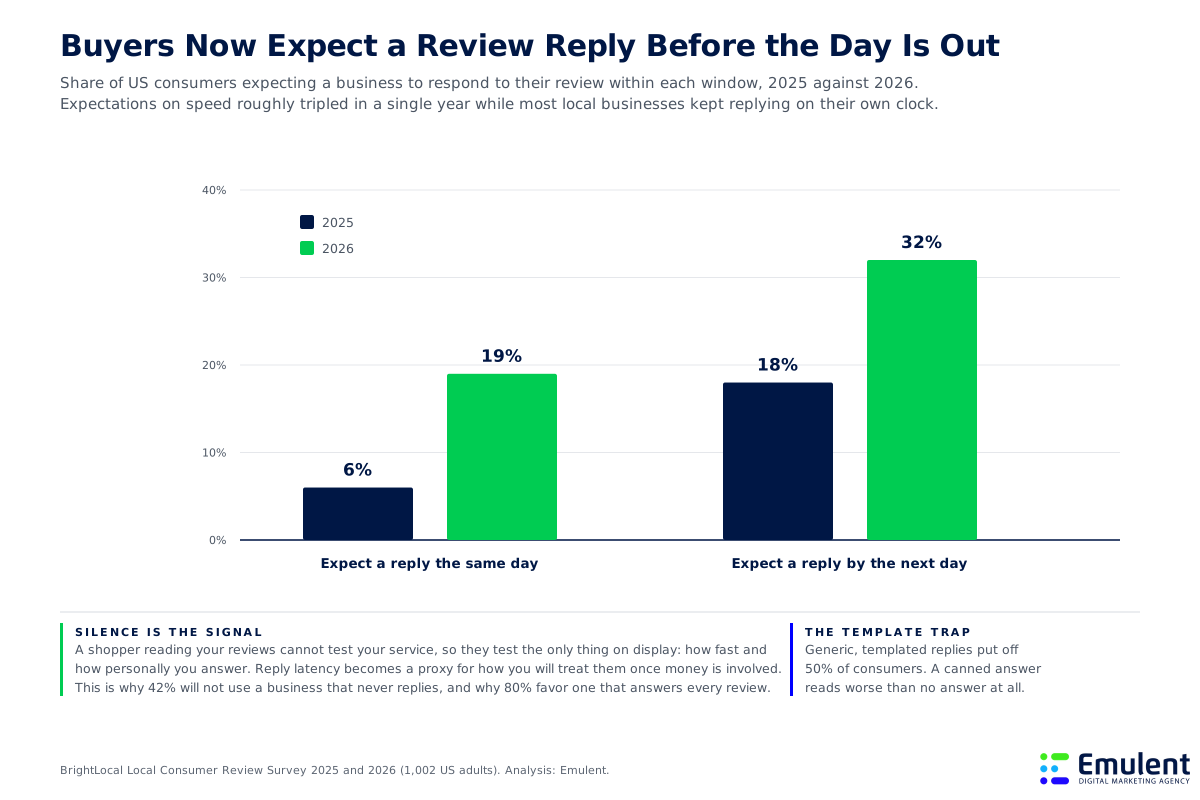
The figures underneath are unforgiving. 89% of consumers expect owners to respond to reviews, 81% expect it inside a week, and 42% will not use a business that never replies. But the finding that should change what you buy is this one: generic or templated replies put off 50% of consumers. That is not a small penalty for a small shortcut. It means the automated review-response feature bundled into most local SEO packages is working against the business paying for it. A canned reply lands worse than no reply, because it proves someone was there and still could not be bothered. Our founder Bill Ross has argued for years that marketing outcomes are just human behavior with a dashboard bolted on, and this is the cleanest example on the page: the thing that looks like efficiency gets read as contempt.
Photos run on the same logic. A profile full of stock imagery signals a business that would rather not show you the real room. Photographs of your space, your work, and the people who do it answer the silent question every local searcher is asking, which is whether this place is real. We have written separately on why professional team photos build instant trust, and it is why we fold brand photography into a local program instead of selling it as a separate project.
AI is now the third place people ask for a local recommendation
Use of ChatGPT and similar tools for local business recommendations jumped from 6% to 45% of consumers in a single year, putting AI third behind Google and Facebook as a source of recommendations. Most of the industry read that number and concluded the surge is just getting started. We read it the other way, because of a second dataset nobody puts next to the first.
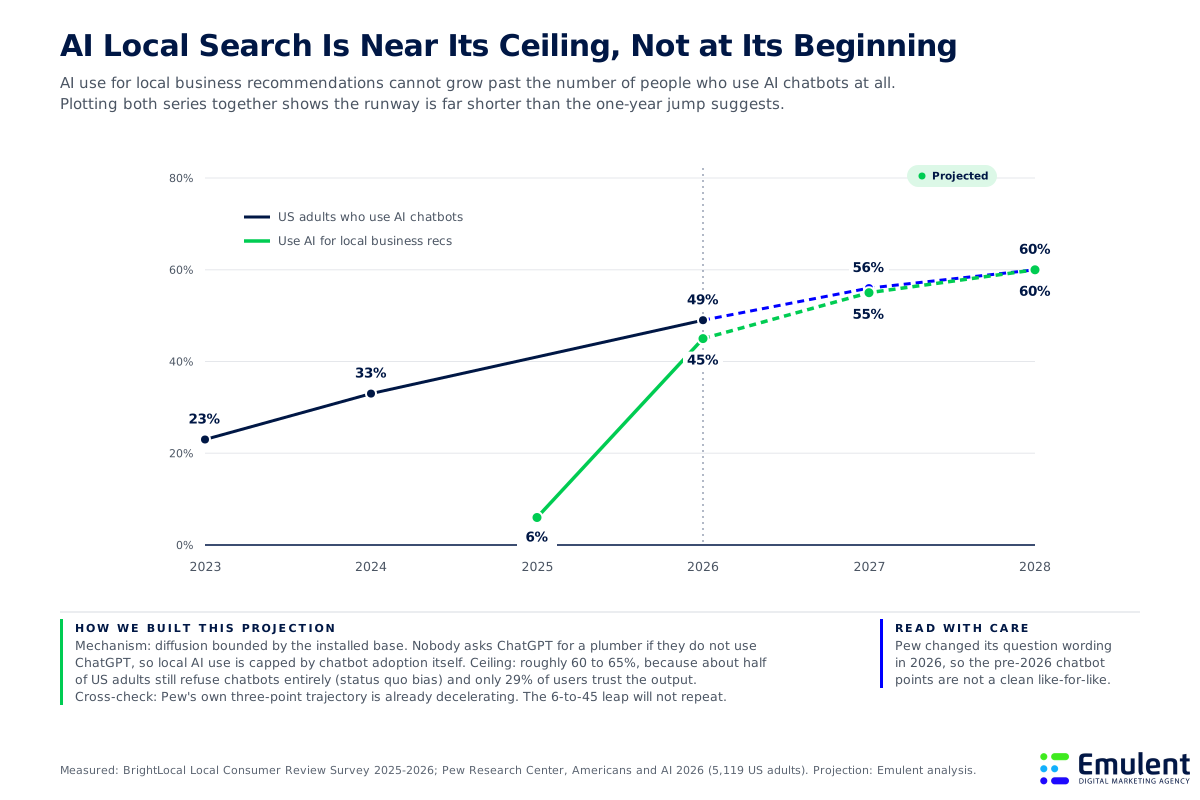
The consequence is reassuring and boring. AI has not introduced a new ranking game. It reads your reviews, your listings, and your website, so the trust work already on your list is the work that gets you recommended. That is the basis of how we run AI SEO and how we tell clients to think about Google AI Overviews. Fix the inputs and both systems find you.
The Maps mistakes that quietly destroy local trust
Most local trust damage is self-inflicted and slow, which is why owners rarely connect it to the calls that stopped arriving. The failures we find most often, ordered by what they cost:
- Letting reviews go stale. The most expensive mistake here, because it is invisible. Your star rating holds steady while three quarters of shoppers quietly stop counting your reviews.
- Automated or templated replies. Half of consumers are put off by them. Switch the feature off and write twenty real sentences a week instead.
- Inconsistent name, address, and phone details. Mismatched information across directories reads as a business that may have moved, closed, or never existed.
- Buying reviews. Google blocked 240 million policy-breaking reviews in 2024, the FTC made purchasing them illegal, and 97% of consumers want businesses punished for it. Temporary upside, permanent downside.
- Outsourced, white-labeled work. Much local SEO gets subcontracted overseas to teams pasting duplicate descriptions across hundreds of unrelated clients. That is the exact pattern Google is learning to discount and customers are learning to spot.
For brands with many storefronts, every one of these multiplies by location, and a single neglected listing drags perception of the whole chain. That is a governance problem before it is a marketing problem, which is why franchise local SEO needs one standard applied everywhere rather than a different part-timer per branch, and why we publish our local SEO pricing for multi-location brands rather than quoting it behind a call.
Your ranking is a handoff, not a finish line
Reaching the top three closes nothing. After reading a positive review, only 34% of consumers are ready to buy or book. The other 66% go looking for confirmation, and 54% of them go straight to your website.
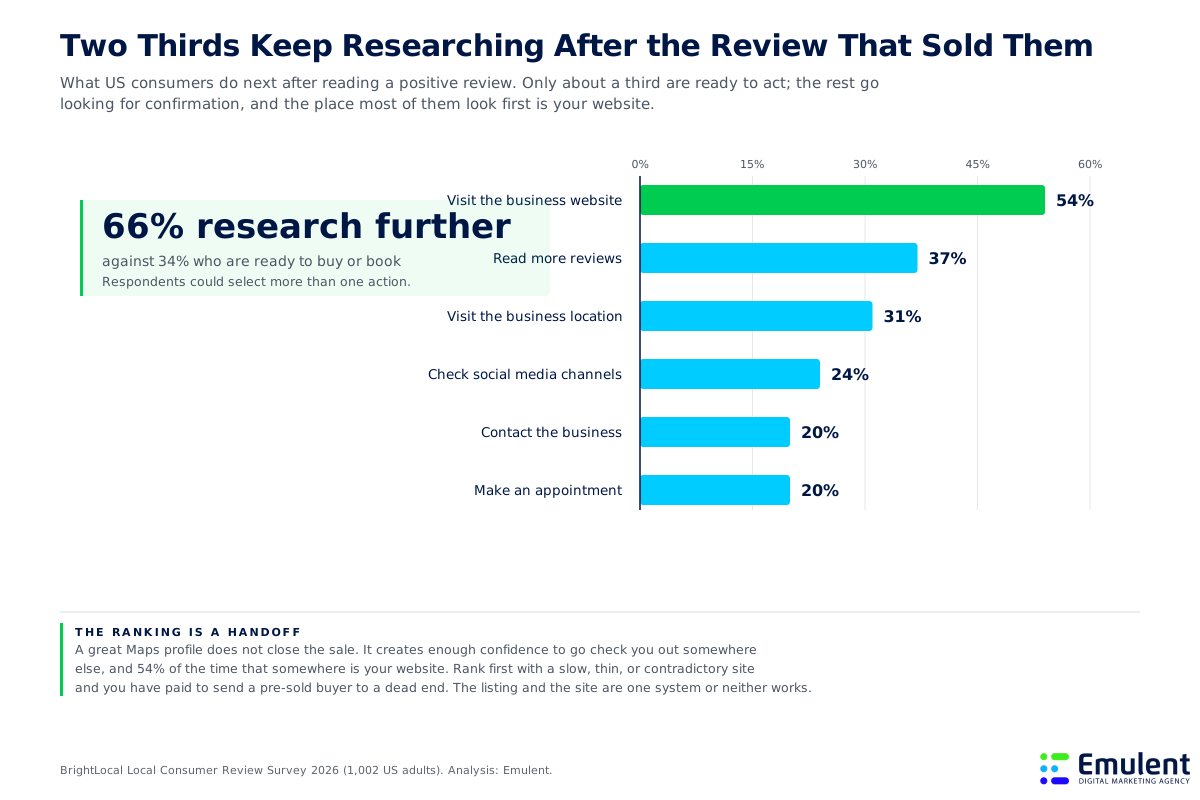
This is where local SEO money quietly dies. You can win the pin, earn the reviews, clear every gate on this page, and still lose the customer to a homepage that loads slowly, buries the phone number, or contradicts the hours on your profile. A number one ranking that sends a pre-sold buyer to a dead end is expensive art. We have written at length about why a site gets traffic but doesn’t convert, and the local version is the sharpest case of it, because this buyer arrived already believing you.
– Strategy Team, Emulent Marketing
A 30-day plan to build Maps trust
Trust compounds, so the job of the first month is to start the compounding, not to finish anything. Run it in this order:
- Week one, get accurate. Claim and verify the profile, choose the most specific primary category that describes what you really do, and make the name, address, hours, and phone identical everywhere they appear. Fix the directory mismatches you find on the way.
- Week two, get real. Replace stock imagery with photographs of your space, your team, and finished work. Write the description in the words customers use, not the words your industry uses.
- Week three, start the treadmill. Text or email a direct review link to every customer as the job closes, and reply personally to every existing review, including the ones that sting. Budget twenty minutes a day and protect it.
- Week four, make it a habit. Post an update, answer the questions on your profile, and set a standing weekly rhythm of new review requests and same-day replies. The rhythm is the deliverable.
If you have fewer than 20 reviews right now, that is your entire month, and you should not pay anyone to do it. Asking is free. An agency that takes your money before you clear the 20-review gate is selling you a ranking for a profile that shoppers have already filtered out. We would rather say so and wait, for the same reason we refuse long-term contracts: when the work stops earning, you should be free to stop paying for it.
Where to put your effort next
Spend nothing on the factor you cannot change and everything on the ones you can. Keep reviews arriving every week. Reply to each one in your own words, within a day. Keep your details identical across every listing, show real photographs, and make sure the website behind the pin can catch a buyer who already trusts you. That is the entire game, and it holds up precisely because it is hard to fake.
If you want an outside read on where your local trust signals are strong and where they leak, talk to a marketing agency that will show you the audit before it shows you a proposal. We will tell you if the honest answer is to go collect twenty reviews first and call us in a month.