
Website design in 2026 is no longer a debate about aesthetics. It is a debate about which design choices measurably lift engagement, conversion rate, and search visibility, and which ones quietly cost revenue. We pulled the numbers behind the most-talked-about trends, modeled the trajectories, and built this article around the design decisions that actually move the needle.
Key takeaways from this article
- Mobile is the default canvas: Mobile devices generated 63% of global web traffic in 2026 and are projected to reach roughly 66-67% by 2029. Sites that still treat mobile as a secondary experience are designing for the smaller audience.
- AI is a baseline workflow, not a differentiator: 93% of professional web designers used AI tools in 2026. The competitive edge is no longer using AI, it is using it well and shipping work that does not feel generated.
- Speed is the highest-ROI design lever: Every additional second of mobile load time costs roughly 7% of conversions. Most real-world sites sit in the 3-5 second danger zone.
- Personalization is wildly uneven: Personalized CTAs deliver a median lift of 202%, while many widely-deployed tactics return less than 25%. Effort should follow impact, not novelty.
- Accessibility is now a legal line item: ADA Title III digital lawsuit volume more than doubled since 2020 and is on track to keep rising. Overlays are not a defense.
- Core Web Vitals improvement is real but slow: Only 47% of websites passed all three Core Web Vitals in 2026, and the global ceiling looks structural, not aspirational.
Why does mobile-first now mean mobile-only design thinking?
Mobile crossed 60% of global web traffic in 2026 and the trajectory is not slowing. The chart below shows the eight-year climb and the projection through 2029, which lands at roughly two-thirds of all visits.
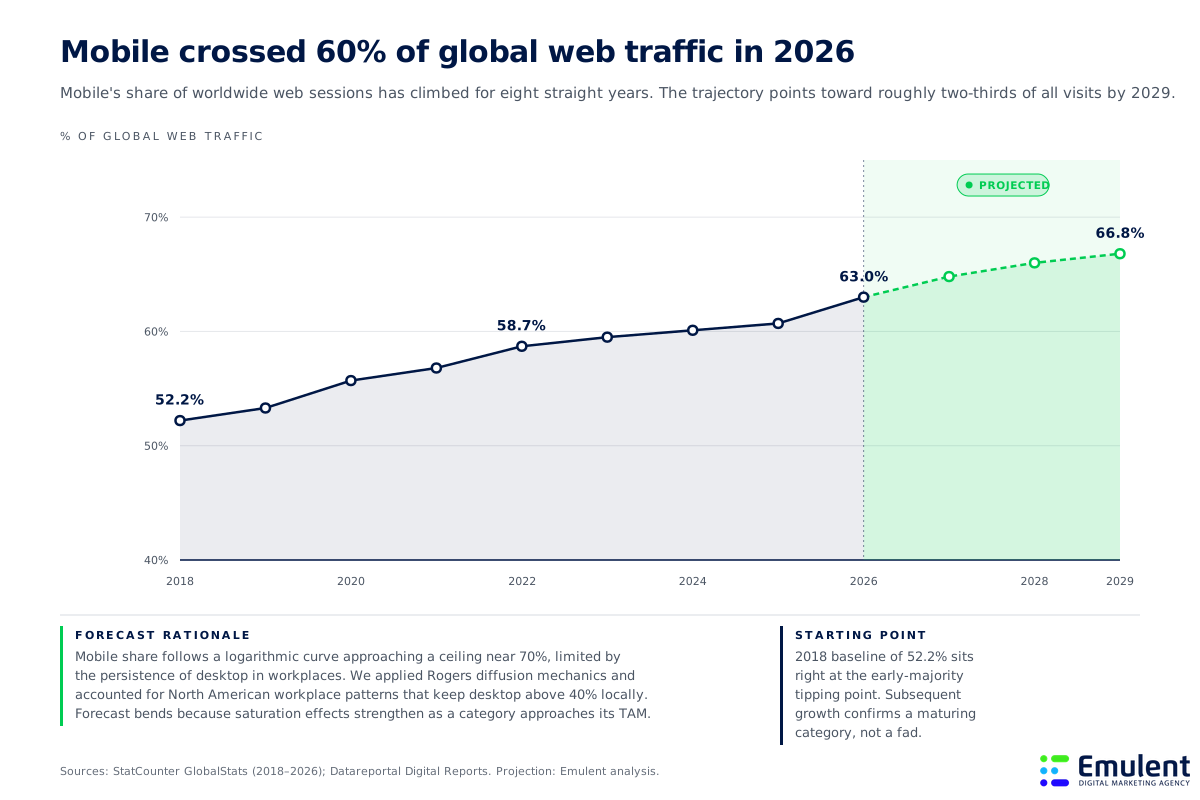
The number that matters more than the traffic share is the conversion gap. Mobile converts at roughly 1.82% while desktop converts at 3.14%, a 42% gap that has actually widened since 2024. The audience is mostly on mobile, and the mobile experience is leaving money on the table. The fix is not a responsive breakpoint added late in the build. It is treating mobile as the primary surface from the first wireframe.
What “mobile-first” actually requires in 2026
- Thumb-zone navigation: Primary actions belong in the lower third of the screen where thumbs naturally rest. CTAs floated above the fold work on desktop and fail on phones.
- Tap targets at 44 pixels minimum: Apple’s Human Interface Guidelines and WCAG 2.2 converge on this threshold. Smaller targets correlate with missed taps and abandoned forms.
- Forms designed for one hand: Long fields stacked vertically, native input types invoked (tel, email, number), and autofill respected. Each unnecessary field on mobile reduces completion by a measurable amount.
- Vertical hierarchy over horizontal: Side-by-side desktop modules need a deliberate stacking order on mobile. Default reflow rarely produces the right reading sequence.
The agencies winning on mobile in 2026 are the ones that stopped treating it as the responsive afterthought. When the design starts on a 390-pixel canvas and gets richer from there, the math on engagement and conversion looks completely different. – Emulent Strategy Team
If mobile is the dominant surface, the design tools used to build that surface have changed just as dramatically. The next trend has reshaped the production process itself.
How fast did AI design tools become the default workflow?
The adoption curve for AI in web design is the cleanest Rogers diffusion S-curve we have seen in a creative tool category. Eight percent of professional designers used AI in 2021. By 2026, that number is 93%.
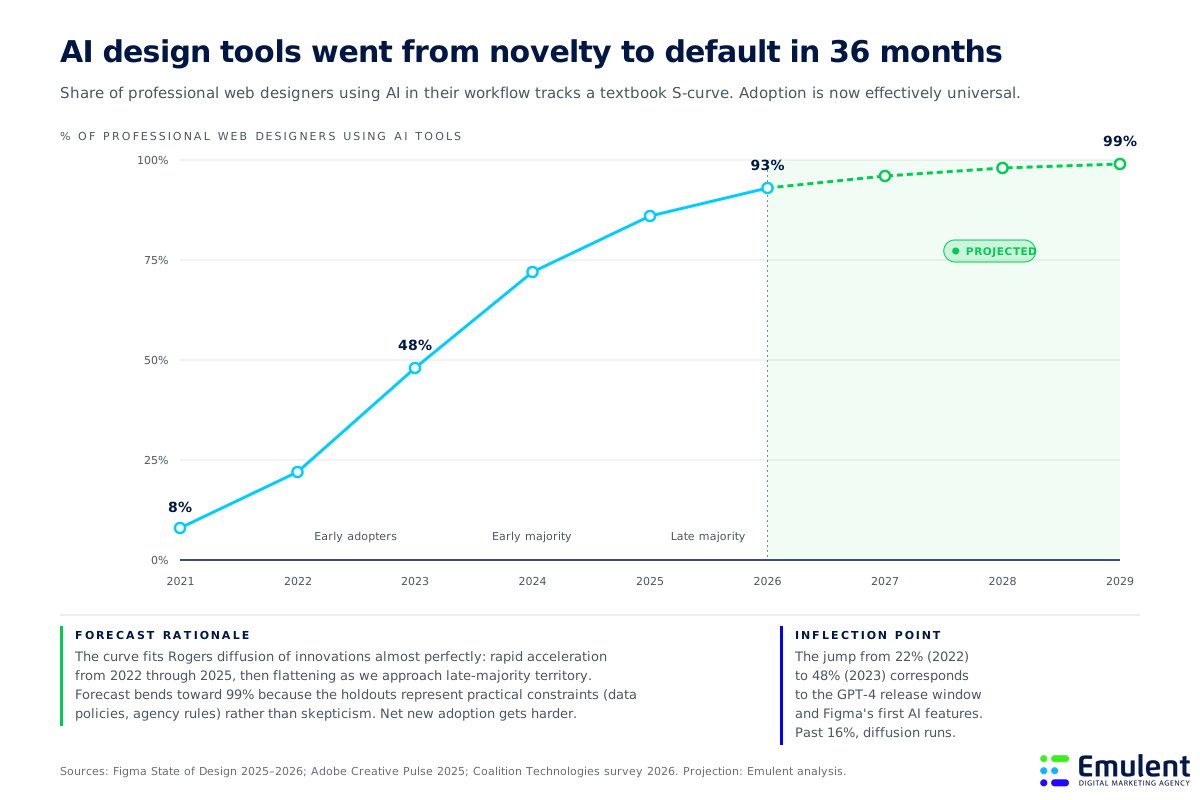
This matters for two reasons that get less attention than the headline number. When a tool reaches universal adoption it stops being a competitive advantage. The differentiation moves elsewhere. AI-generated output also has a recognizable look, which is why visual craft and intentional imperfection are now showing up as trust signals precisely because so much of the web looks machine-made.
Coalition Technologies found that constraint-driven AI workflows let brands test up to 42% more content monthly without increasing overhead. AI handles variation generation and accessibility auditing. Humans handle the strategic and creative decisions that AI still cannot reliably make.
Where AI tools add value in a 2026 web design workflow
- Layout generation from brief: Tools like Figma Make and Framer AI produce responsive layout candidates from a prompt in seconds, useful as a starting point for human refinement.
- Accessibility auditing: AI flags missing alt text, color contrast failures, and form labeling issues during the design phase rather than after handoff. This is one of the highest-ROI uses of AI in the workflow.
- Content and microcopy variation: A/B test variants, headline alternates, and segment-specific CTAs at scale, paired with a clear style guide and human review.
- Image asset creation: Custom illustrations, hero variants, and on-brand stock alternatives, with the caveat that anything user-facing needs review for brand voice and bias.
For teams new to integrating AI into a structured workflow, our broader writeup on AI SEO services covers how the same tools that generate layouts now also influence how content gets discovered by AI search systems. The two questions are inseparable.
What does the data say about page speed as a design decision?
Page speed is the single highest-ROI optimization in modern web design, and the math is consistent across industries. Every additional second of mobile load time costs roughly 7% of conversions. The relationship is not linear, it is steeper between 2 and 4 seconds, which is exactly where most real-world sites live.
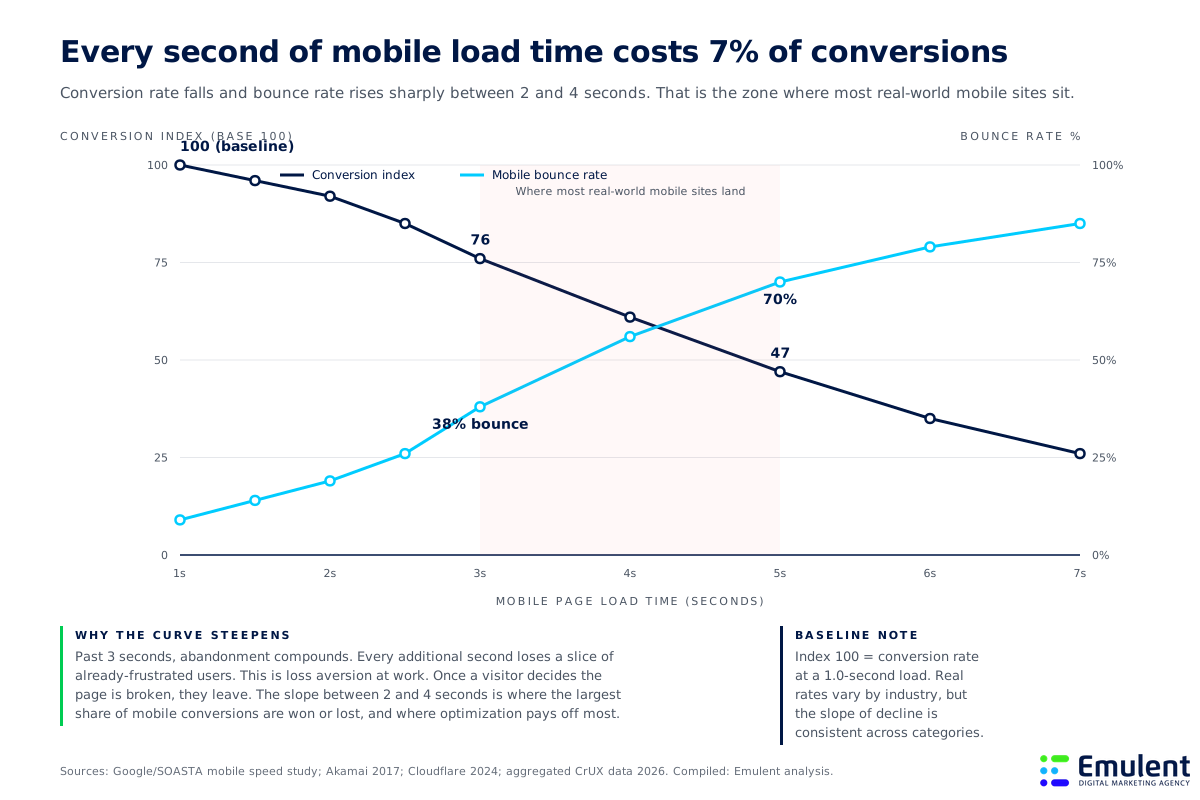
The behavioral psychology behind the curve is loss aversion. Once a visitor decides a page is broken, they leave. They do not give it a second chance even if it loads two seconds later. Sites at 4 seconds are not losing visitors who would have stayed at 5. They are losing visitors who would have stayed at 2.
This is where Core Web Vitals enter the conversation as a measurable design constraint. Only 47% of websites pass all three in 2026, and the improvement curve is slower than the industry hoped.
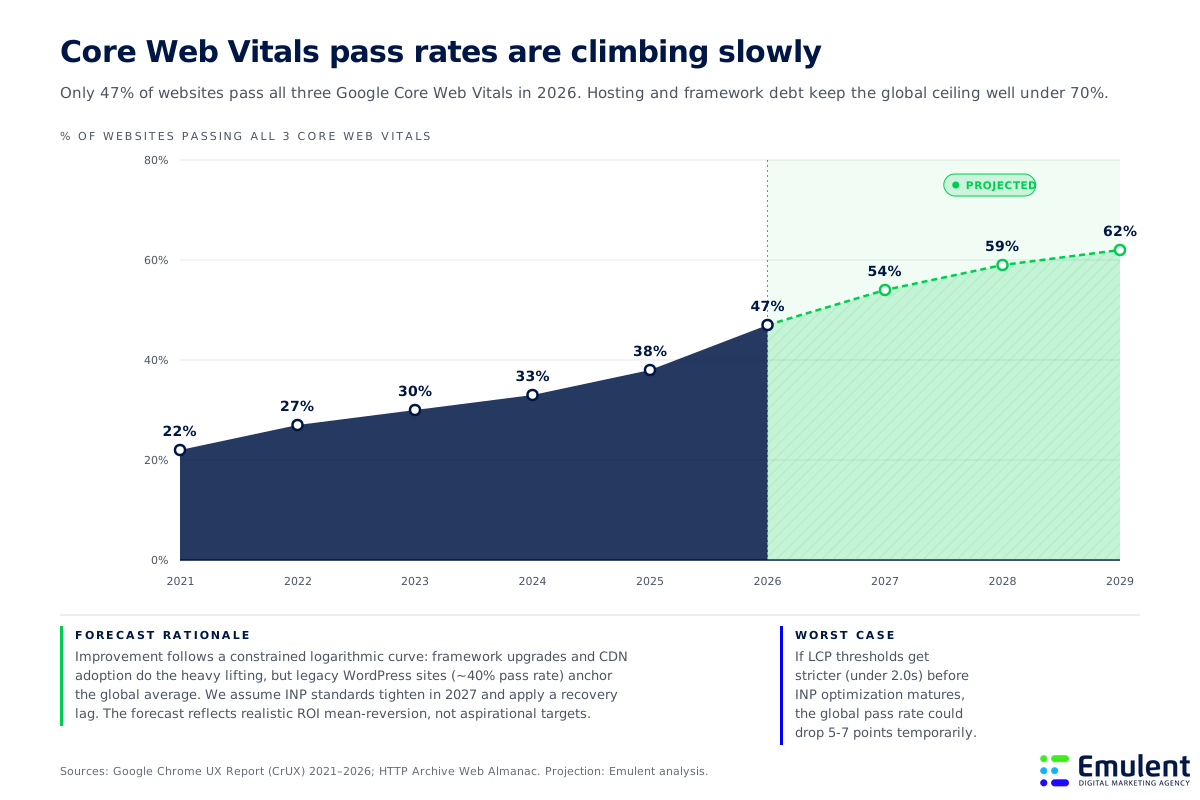
Legacy WordPress sites pass at around 40%, while hosted platforms like Shopify hit 75% or higher. The hosting platform is now a design decision in its own right. For WordPress builds, we consistently recommend WordPress page speed optimization as an early-stage workstream rather than a post-launch fix. The compounding cost of leaving it until later is rarely worth the calendar savings.
If your site sits at 4 seconds on mobile, you are not losing the visitor who would have stayed at 5. You are losing the visitor who would have converted at 2. Speed is not a technical metric. It is a design constraint that shapes every layer of the build. – Emulent Strategy TeamDesign decisions that lock in performance from day one
- Hero LCP candidate selected before layout: The largest contentful paint element is usually a hero image or H1. Pick which it will be early and size everything else around making it load fast.
- Font stack with system fallbacks: Custom web fonts add 100-200ms per family. Limiting to one display and one body face, with font-display: swap, prevents the worst layout shifts.
- Image budget per page: A stated kilobyte ceiling per page forces design discipline. WebP or AVIF formats, explicit dimensions, and lazy loading should be defaults, not optimizations.
- JavaScript discipline: Each tag manager script, chat widget, and tracking pixel has a cost. The design team should sign off on what gets added, not just the marketing team.
Speed sets the floor. The next trend is what sites use the time gained back from a fast page to do.
Which personalization tactics actually move conversions?
Personalization is the trend most often oversold and most unevenly executed. The conversion-lift data shows huge spreads between tactics, which means design and product teams should be deeply selective about where they invest.
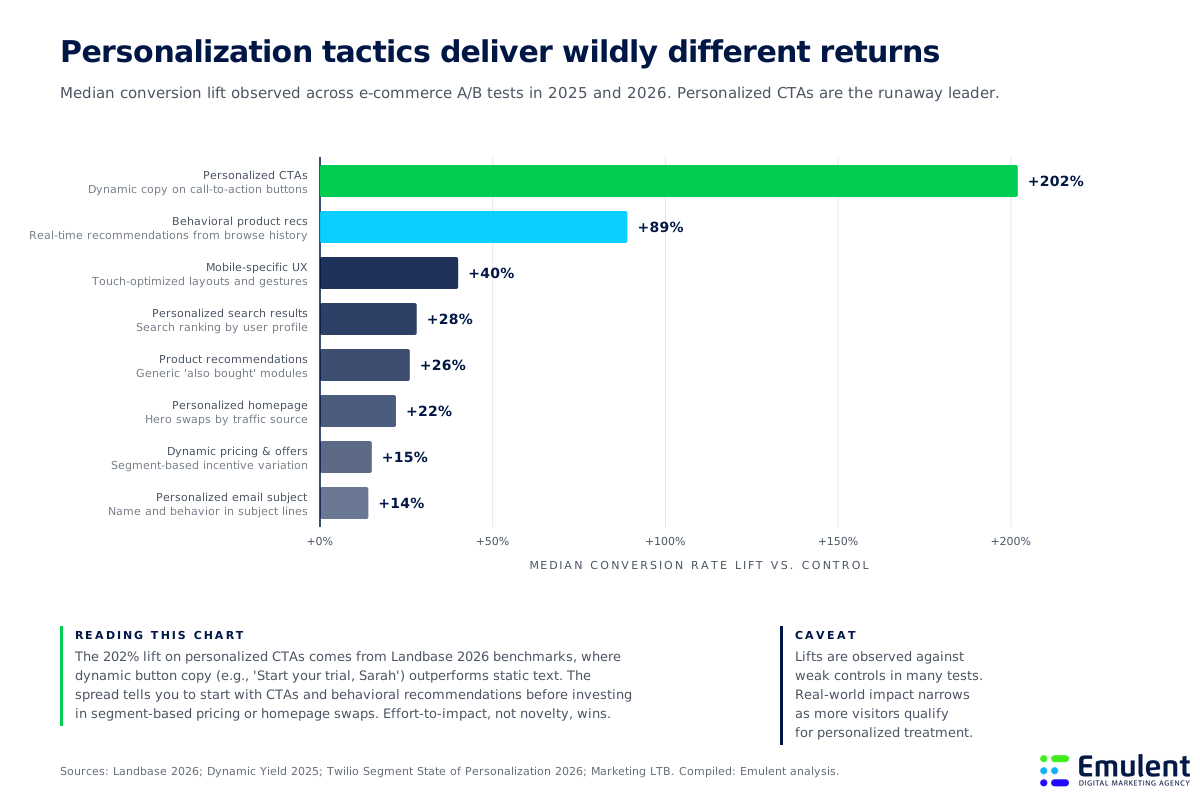
Personalized call-to-action copy delivers more than ten times the lift of personalized email subject lines. That is the difference between investing in a tactic that compounds and a tactic that decorates. The 202% number deserves a caveat. It is observed against generic controls, and real-world impact narrows as more visitors qualify for personalized treatment. The relative ranking is what matters.
The takeaway for design teams is to start with the highest-lift tactics. CTAs and behavioral product recommendations belong in the first wave. Dynamic pricing and personalized email subject lines belong in the second.
Where to deploy personalization based on the conversion data
- CTA copy by traffic source: A visitor from a paid search ad has different intent than one from an organic blog post. Matching the CTA to that context is the single highest-lift personalization tactic.
- Behavioral product recommendations: Real-time signals from browse history outperform generic “also bought” modules by a factor of three. This is where AI personalization earns its budget.
- Returning-visitor adjustments: Hide the welcome video, skip the onboarding modal, lead with the unfinished task. A 13% lift on SaaS free-trial pages comes from simply respecting that the visitor has been there before.
- Geo and language: Pricing in local currency, dates in local format, and translations done well. The downside risk of getting these wrong is far larger than the upside of getting them right, so it is foundational rather than optional.
For ecommerce builds, we recommend Shopify for stores where personalization needs to integrate cleanly with inventory, payments, and analytics. The platform decision shapes how many of these tactics are actually achievable. For broader site builds, our website design services bake personalization considerations into the architecture rather than treating them as later additions.
Even the best-personalized site fails if a slice of visitors cannot use it. The next trend has moved from compliance footnote to legal priority.
How serious is the accessibility risk in 2026?
Web accessibility lawsuits more than doubled between 2020 and 2025, and projections through 2028 show the curve continuing upward, driven mostly by state court actions rather than federal filings.
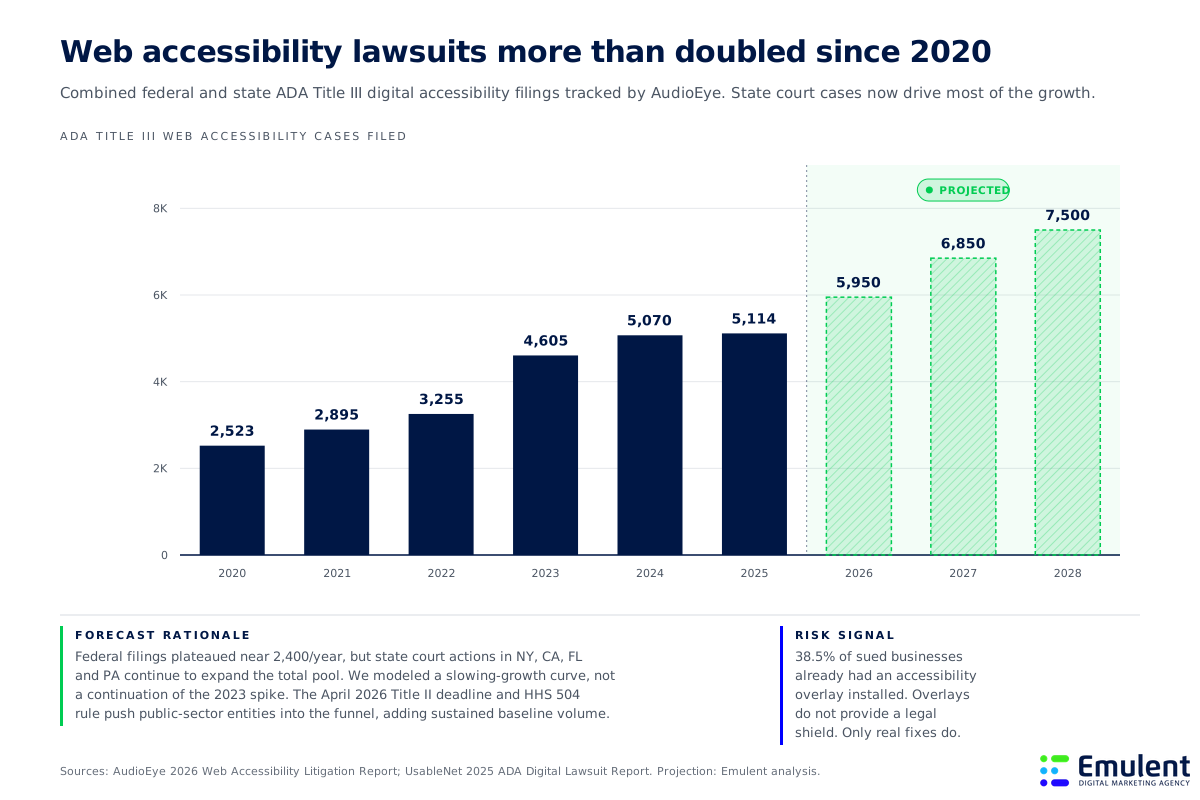
Two numbers from the AudioEye 2026 report deserve sharper attention. First, 95.9% of the top one million homepages had detectable WCAG failures, averaging 56 issues per page. Second, 38.5% of businesses sued in 2025 already had an accessibility tool installed. Overlays did not protect them. The FTC’s $1 million order against accessiBe made clear that claiming overlay-based compliance is, in the agency’s view, a deceptive trade practice.
The design work has to happen in the underlying code. Color contrast above the WCAG threshold, alt text that describes the image, form labels screen readers can parse, and keyboard navigation that does not break in a modal. These are baseline design requirements as of April 2026 for public-sector entities under the new DOJ Title II rule, and they have been litigated against the private sector for years.
Treating accessibility as a compliance project is the wrong frame. It is a design discipline. Build the site so it works for everyone from the first wireframe, and the lawsuit risk takes care of itself. Bolt it on later and you are paying twice. – Emulent Strategy TeamThe accessibility errors driving most lawsuits in 2026
- Low contrast text (79% of sites): The single most common WCAG failure. Designers chasing a muted aesthetic frequently land below the 4.5:1 ratio required for normal text.
- Missing alt text (55% of sites): Decorative versus informative images need different treatments, and “image of a man smiling” is not useful alt text for either.
- Missing form labels (48% of sites): Placeholder text disappearing on focus is the most common cause. Visible labels are not optional.
- Empty links and buttons (45% and 30% of sites): Icon-only navigation without aria-labels is the typical culprit. Screen readers announce nothing, and the user moves on.
For sectors with the highest exposure, including healthcare marketing and ecommerce, accessibility is now a design system requirement rather than a QA pass. The cheapest moment to fix an accessibility error is before it has been designed twice.
How should these trends shape what you build in 2026?
The data points in this article are not independent. They compound. A mobile-first design that is fast, accessible, and personalized to the visitor’s context will outperform a desktop-first design that is slow, inaccessible, and generic by a margin that grows every year. The ROI from optimization stacks, which is why agencies still earn their keep even with AI tools handling more of the production work.
The discipline is the same as it has always been. Pick the highest-impact lever for your context, ship the work, measure it honestly, and iterate.
How can Emulent help with website design in 2026?
The Emulent team builds and rebuilds websites for clients across healthcare, B2B, professional services, and small business. Our work blends design, performance engineering, accessibility, and SEO strategy under one roof because, as the data in this article shows, those disciplines no longer make sense as separate workstreams. We use AI in our production pipeline where it earns its place, and we apply human judgment where it still matters more.
If you are planning a redesign, a performance overhaul, or a discovery sprint to figure out what your site should become, we would like to talk. Contact the Emulent team if you need help with website design strategy for 2026 and beyond.