
Brand photography entered 2026 with an identity crisis that the data does not support. Generative AI now touches nearly every marketing team, yet spending on professional photography keeps climbing, consumers keep rewarding real imagery, and stock libraries are transforming faster than they are growing. We pulled current market data, consumer research, and performance benchmarks to map where brand photography is headed through 2028, and what that means for the visual decisions your brand makes this year.
Key takeaways from this report:
- The market is growing, not shrinking: Global photography services revenue reached $37.5 billion in 2025 and is on pace for $42.8 billion by 2028, with corporate brand work as the fastest-growing segment.
- AI adoption is near its ceiling: 87% of marketers now use generative AI in at least one workflow. We project the curve flattens in the low 90s by 2028.
- Consumers want proof, not polish: 98% say authentic images and video are pivotal to trusting a brand, and roughly 90% want to know when an image is AI-generated.
- AI acceptance collapses near the purchase: Only 27% of consumers accept AI images of products they can actually buy.
- Authentic imagery wins on performance: Customer photos lift product page conversions by 74%, and real photos beat stock by 35% on website conversions.
- Stock photography is changing in kind: Revenue grows toward $6.2 billion by 2028, but one in five new uploads is already AI-generated and the Getty + Shutterstock merger signals consolidation, not expansion.
How Big Is the Brand Photography Market, and Where Is It Headed?
The most important number in this report is the one that contradicts the loudest narrative. Global photography services revenue grew from $32.8 billion in 2022 to $37.5 billion in 2025, and we project it reaches $42.8 billion by 2028 on a steady 4.5% annual climb. Commercial and advertising buyers drive 31.7% of that revenue, and corporate brand work is growing fastest of any segment at 7.1% annually. If generative AI were replacing the camera, this curve would be bending down. It is not.
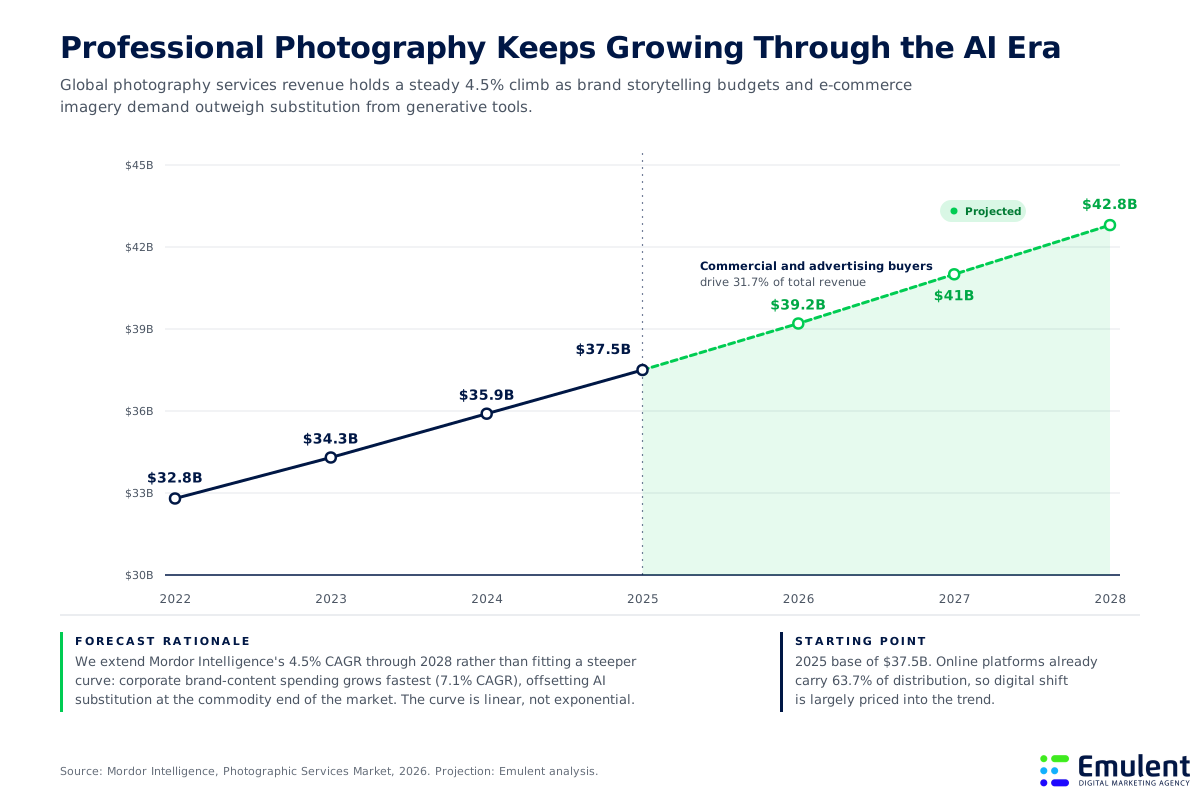
The growth holds because demand for imagery is expanding faster than AI can absorb it. Every new channel, product page, and campaign variant needs visual assets, and the volume requirements of modern marketing have outrun what any production model handled five years ago. AI is soaking up the commodity end of that demand. The brand-defining end still gets shot.
Three forces keeping the market on its growth track:
- E-commerce imagery demand: Product photography now represents roughly 45% of commercial photography work, and 67% of online shoppers rate image quality as very important to their purchase decision.
- Corporate brand storytelling: Companies are investing in owned visual libraries that document real people, places, and processes, the one asset category AI cannot fabricate credibly.
- Channel multiplication: Each platform demands native formats and refresh cadences, which multiplies the number of shots a single campaign consumes.
The market data settles the replacement question. Budgets for real photography are growing through the same years AI adoption is peaking. Brands are buying both, for different jobs. – Emulent Strategy Team
So if photography budgets and AI budgets are rising together, the next question is what marketing teams are actually doing with all that generative capacity.
Has Generative AI Replaced the Camera in Marketing Teams?
Adoption numbers tell a clear story about speed and a quieter story about limits. The share of marketers using generative AI in at least one recurring workflow jumped from 51% in 2024 to 87% in 2026, and 62% now use it to create image assets. That is one of the fastest tool adoptions in marketing history. But adoption curves follow predictable physics: growth decelerates sharply once a technology passes the 50% midpoint, and marketing crossed that line back in 2024. We project adoption reaches 91% in 2027 and 93% in 2028, flattening against a practical ceiling near 95%.
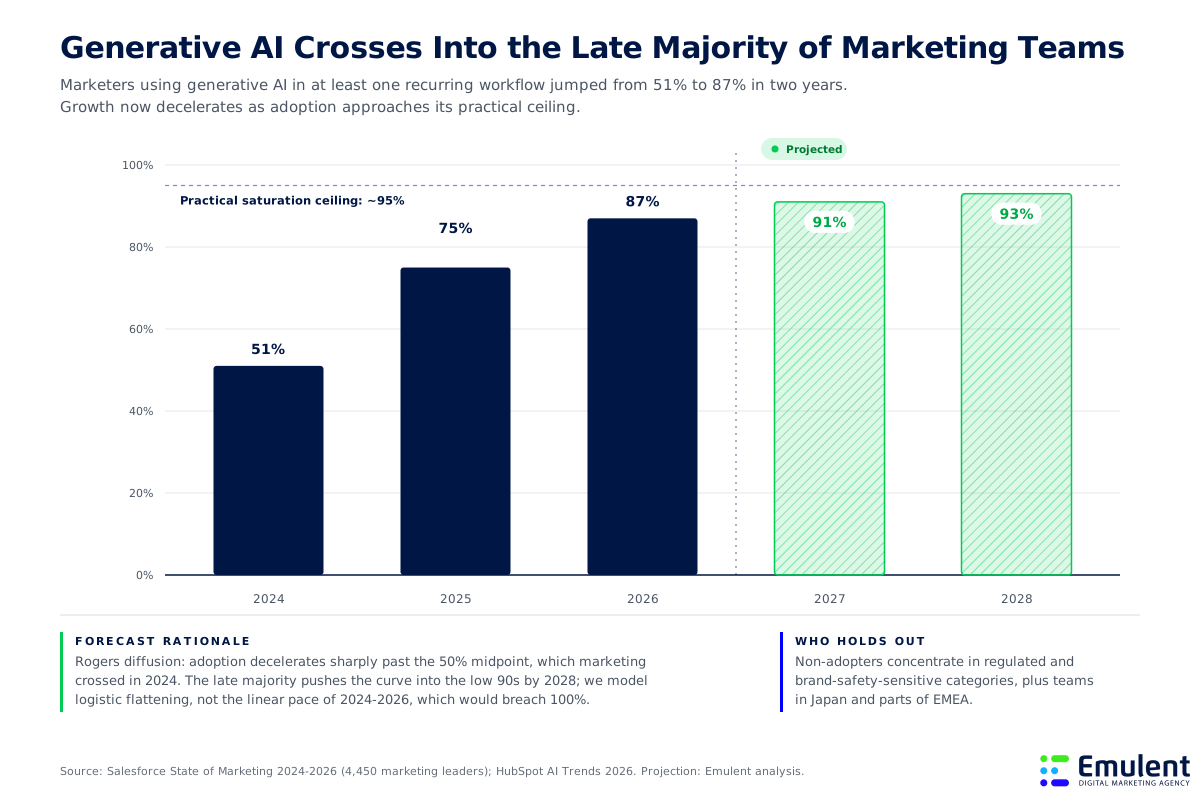
The more useful question is no longer who uses AI but where it earns its place in the visual workflow. In practice, teams have sorted the work into two piles: imagery that supports an idea, and imagery that proves a claim. AI dominates the first pile and struggles badly in the second.
Where generative AI fits in a brand visual workflow:
- Concepting and pre-visualization: Mood boards, shot lists, and client previews that used to take days now take an afternoon.
- Backgrounds and scene extension: Placing a real, accurately photographed product into generated environments cuts location costs without faking the product itself.
- Variant production: Resizing, recoloring, and reformatting one hero shot into dozens of channel-specific assets.
- Illustration and abstraction: Conceptual imagery where no one expects a photograph of reality in the first place.
What AI cannot manufacture is the thing consumers increasingly check for, and that brings us to the trust data.
What Do Consumers Actually Think About AI Imagery?
Consumer research on AI imagery is remarkably consistent, and it should shape every visual decision a brand makes through 2028. Getty Images surveyed more than 30,000 adults across 25 countries and found that 98% consider authentic images and video pivotal to trusting a brand, while nearly 90% want to know when an image was created with AI. A 2025 Clutch survey adds the sharper edge: acceptance of stock-style AI photography sits at just 34%, and only 27% of consumers accept AI images of real products they can purchase.
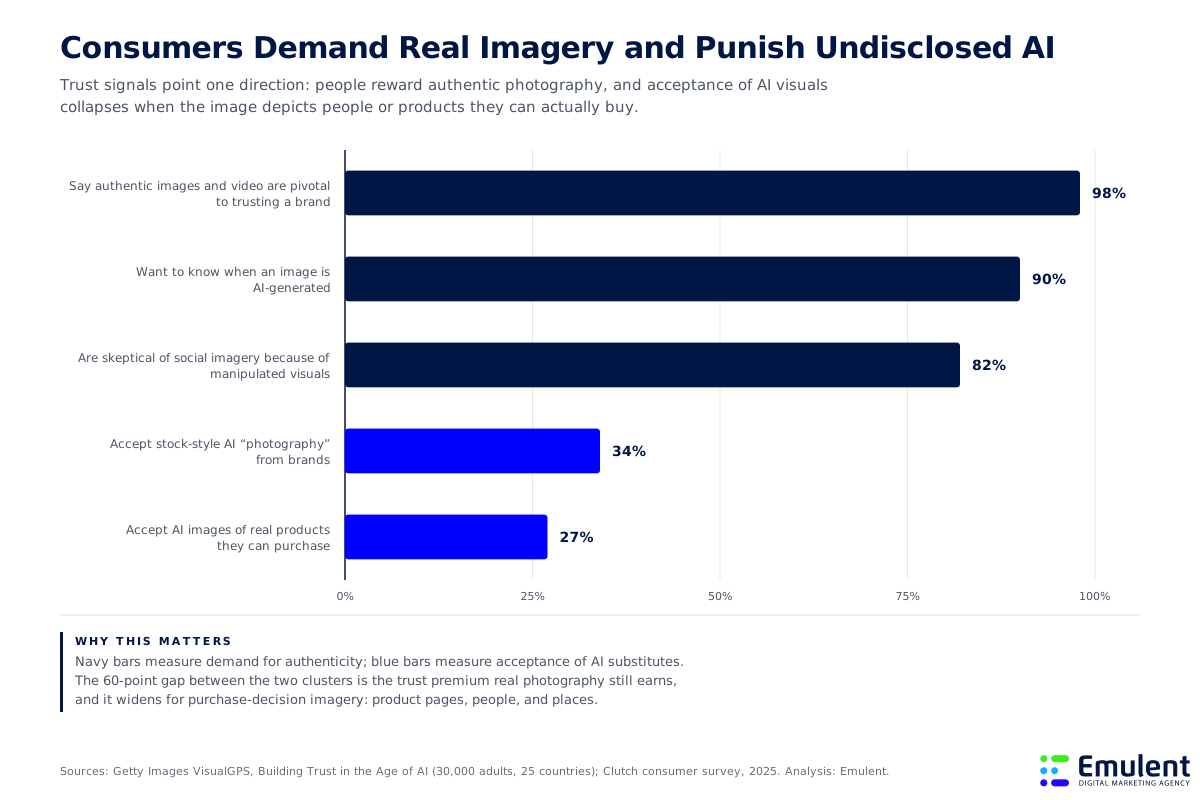
There is a 60-point gap between what consumers demand from brand imagery and what they will accept from AI substitutes, and the gap widens the closer the image gets to a purchase decision. The same Clutch research found 57% of consumers could not reliably identify AI photos when tested, yet 84% want disclosure anyway. People know they can be fooled, and they resent the possibility. That is why undisclosed AI is the highest-risk move in visual marketing right now: the penalty is paid in trust, and it arrives after the fact. Younger audiences show somewhat more openness to AI visuals, a pattern consistent with what we documented in our Gen Z and Gen Alpha purchase behavior report, but even there the disclosure expectation holds.
Disclosure is the cheapest trust play available right now. If a consumer discovers on their own that an image was AI, you lose twice: once on the image, once on the cover-up. – Emulent Strategy Team
Trust research tells you what consumers say. Performance data tells you what they do, and the two point in exactly the same direction.
Why Does Authentic Photography Keep Winning on Performance?
Across controlled studies, authentic imagery beats polished stock and brand-only content at every measurable step of the funnel. Product pages featuring customer photos convert 74% better. Instagram posts that include user-generated content earn 70% more engagement than brand-only posts. Swapping stock photos for real photos lifted website conversions by 35% in Marketing Experiments testing, and paid ads built on customer imagery show a 28% engagement lift with click-through rates up to four times higher than traditional creative.
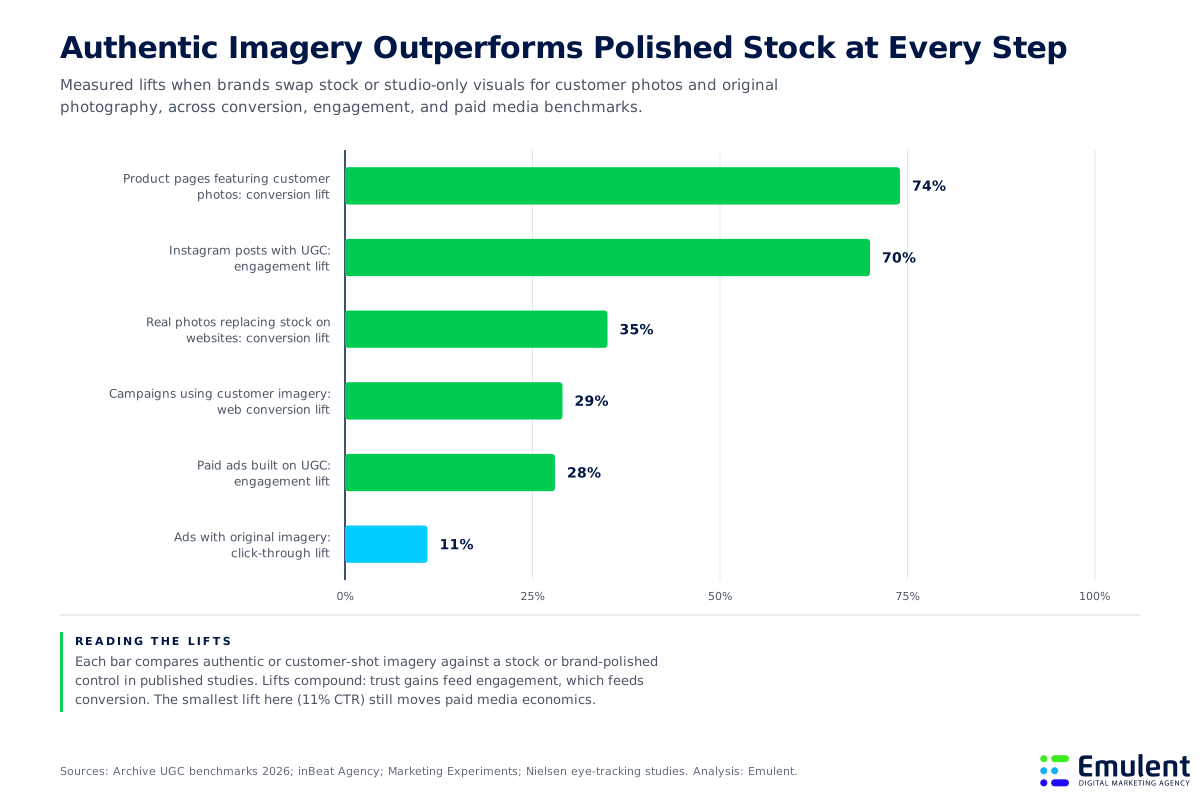
The mechanism behind these lifts is social proof, not production value. Ninety-two percent of consumers trust peer recommendations over brand messages, and a photo of a real customer in a real setting carries that peer signal even when the brand publishes it. This is also why 39% of marketers report that stock photos perform worst of any content type they use: a generic image carries no proof of anything. The performance pattern extends to motion as well, which we cover in depth in our state of brand videography report.
How brands turn authenticity into a repeatable system:
- Customer photo programs: Build permission-based pipelines that collect, license, and route customer imagery to product pages, where it produces the largest measured lift.
- Employee and behind-the-scenes imagery: Real teams and real facilities photograph cheaply and convert well, particularly for service businesses where the people are the product.
- Quarterly brand shoots: A recurring production cadence builds an owned library so teams stop defaulting to stock under deadline pressure.
- Proof-first art direction: Brief photographers to capture evidence of claims (results, process, scale) rather than generic lifestyle aesthetics.
A photo of a real customer using your real product will beat a flawless render every quarter we have measured it. Polish is not the asset. Proof is the asset. – Emulent Strategy Team
If authentic imagery wins and AI handles the commodity work, the squeezed middle is the stock photography industry, and its next three years deserve their own chapter.
What Happens to Stock Photography Between Now and 2028?
Stock photography looks healthy on the surface and transformed underneath. Licensing revenue grew from $4.4 billion in 2022 to $5.1 billion in 2025, and we project it reaches $6.2 billion by 2028. But the composition of that growth has changed. The Getty + Shutterstock merger announced in January 2025, a $3.7 billion deal, was a consolidation play built on pricing power and on a new revenue line: licensing archives to AI developers. Shutterstock booked $104 million in AI-license sales in 2024 alone. Meanwhile, 21% of new uploads to stock platforms are already AI-generated or AI-tagged, and contributor earnings per image have fallen 14% as libraries saturate.
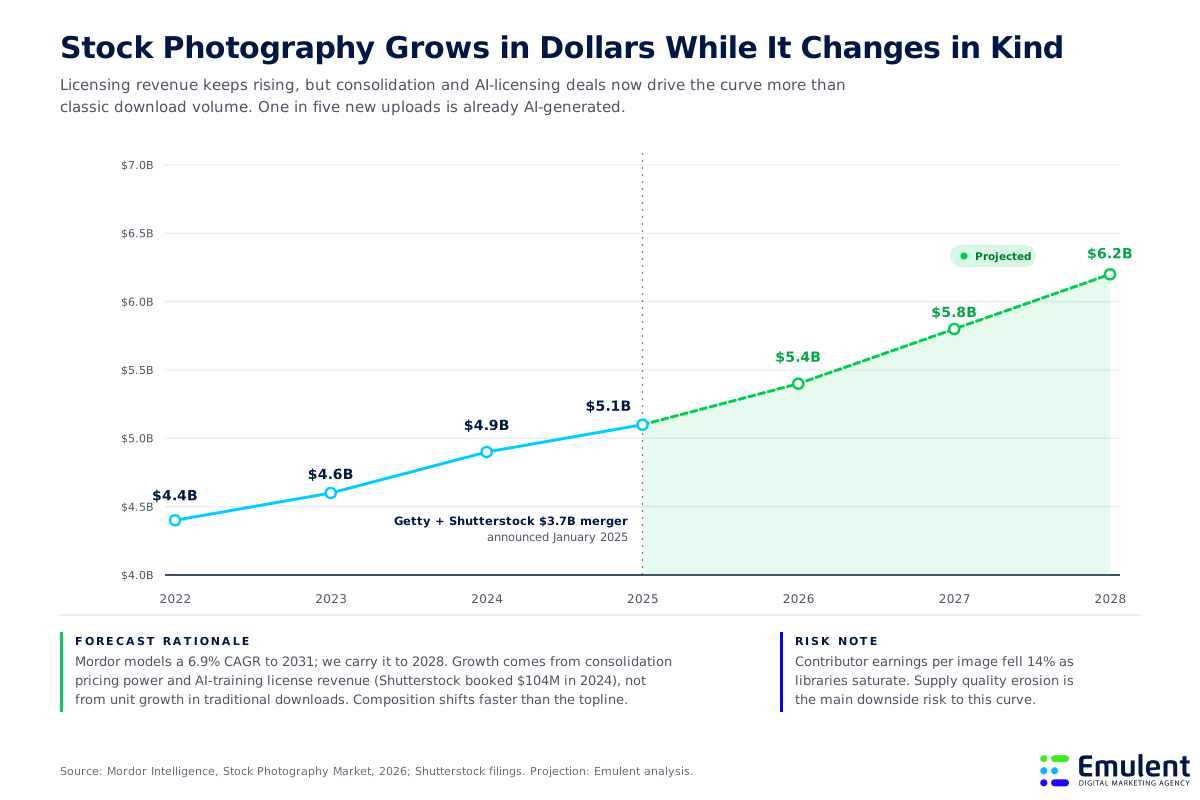
For brands, the practical takeaway is that the stock library you license from in 2027 will be a different product than the one you used in 2023: more consolidated, more expensive at the premium tier, and increasingly blended with synthetic content that your competitors can license on the same day you do.
What the stock inflection means for your visual sourcing:
- Differentiation through stock is gone: When identical images and AI-blended libraries are available to every competitor, stock can fill gaps but cannot define a brand.
- Provenance becomes a buying criterion: Expect licensing tiers that certify human-shot, model-released imagery at a premium, because that certification is what consumers now reward.
- Owned libraries gain value: Every dollar moved from recurring stock subscriptions into original photography produces assets competitors cannot access at any price.
Which raises the real strategic question this report exists to answer: how should a brand structure its photography investment for the next three years?
How Should Brands Build a Photography Strategy for 2026-2028?
The data supports a hybrid model with a clear hierarchy, not an either-or choice. Real photography carries everything tied to trust and purchase decisions. AI carries volume, variants, and concepts. Stock fills true gaps. And disclosure governs all of it. Brands that invert this hierarchy, using AI where proof is expected, pay for it in the conversion and trust metrics charted above. Visual consistency across every channel compounds these gains, a principle at the center of our brand experience system: customers form their perception of a brand from the sum of every image they encounter, not from any single campaign.
The four-part visual system we recommend through 2028:
- An owned photography core: Recurring brand photography production that documents your real products, people, and customers, organized in a searchable library with usage rights tracked.
- A written AI usage policy: Define where generated imagery is allowed (concepts, backgrounds, illustration), where it is banned (products, people, testimonials), and how disclosure works when it ships.
- A customer content pipeline: Systematic collection and licensing of customer photos, prioritized for product pages and paid social where the measured lifts are largest.
- A motion extension: Plan stills and video in the same productions; pairing photography with brand videography cuts per-asset costs and keeps the visual voice consistent across formats.
One more reason to overweight original imagery: AI search engines and Google’s visual results increasingly surface unique images over duplicated stock, so an owned library now earns visibility and trust. Photography has quietly become part of content strategy rather than a line item beneath it.
Treat photography like infrastructure, not a campaign expense. The brands winning in 2026 shot their way into a library their competitors cannot prompt their way out of. – Emulent Strategy Team
Where Emulent Fits In
The Emulent Marketing Team helps brands put this report into practice: planning and producing brand photography, building the owned visual libraries and customer content pipelines described above, and setting AI usage standards that protect trust while capturing the efficiency gains. If you want a clear-eyed read on where your current imagery helps or hurts you, we will give you one. Contact the Emulent Team if you need help with brand photography, and we will map out the next best step together.