
Local medical practice marketing in 2026 looks almost nothing like it did three years ago. Patients now decide where to book care based on reviews, AI-generated answers, and short-form video long before they ever pick up the phone. At the same time, the cost of winning a new patient keeps climbing, and the channels that used to deliver steady website traffic are quietly drying up. For independent practices and small medical groups, the next two years reward the ones who read these shifts early and reposition before their competitors do.
Key takeaways from this report:
- Budgets have already crossed over: US healthcare digital ad spend passed traditional channels years ago and is on track to reach roughly $29 billion by 2028 while TV and print keep shrinking.
- Reviews are the front door: 84% of patients check online reviews before choosing a new provider, and 61% now trust those reviews more than a personal recommendation.
- AI is eating informational content, not local search: AI Overviews are absorbing clicks on general health questions, but local “near me” searches stay protected because a search engine cannot book the visit for the patient.
- New patients cost more: The price to acquire one new patient has jumped about 56% since 2022, and the climb continues into 2028.
- Younger patients research on social: Nearly half of Gen Z and more than a third of Millennials vet providers on TikTok and Instagram.
- The winners consolidate: Practices that treat reputation, local search, and video as one connected system will absorb the patients that scattered, single-channel competitors lose.
Where are healthcare marketing dollars actually moving?
The money has voted, and it picked digital. US healthcare and pharma digital ad spend overtook traditional channels years ago, and the gap widens every year as television and print budgets contract. This matters for a local practice even if you never buy a national ad, because it tells you where attention has gone and where the tools, talent, and measurement are improving fastest.
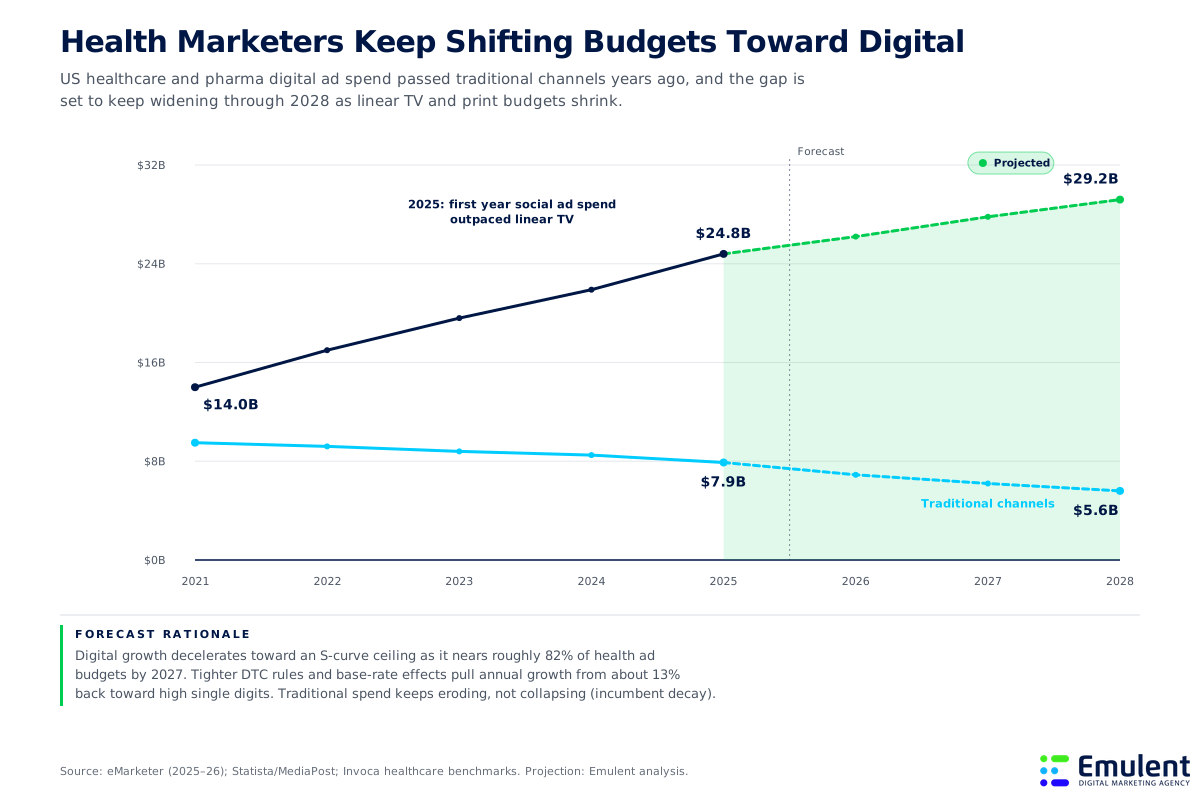
The reason the curve bends the way it does is simple. Digital lets a practice tie a dollar spent to a patient booked, and that level of accountability is something a billboard or a radio spot can never match. The risk of staying parked in legacy media is that you keep paying for reach you cannot measure while younger competitors compound their advantage with channels that improve every quarter. A focused healthcare marketing program built for accountability beats a bigger budget spread across channels nobody can track.
“The practices we see winning are not spending more. They are spending where they can prove a result. The moment you can name the cost of a booked patient by channel, you stop guessing and start compounding.” – Emulent Strategy Team
Knowing where the dollars go is only half the picture. The harder question is what convinces a patient to choose you once they find you, and that decision now happens on a screen before any conversation takes place.
Why do online reviews decide who books the appointment?
For most patients, the choice is made before they ever call. Online reputation has become the front door to the practice, and the data on patient behavior is hard to ignore.
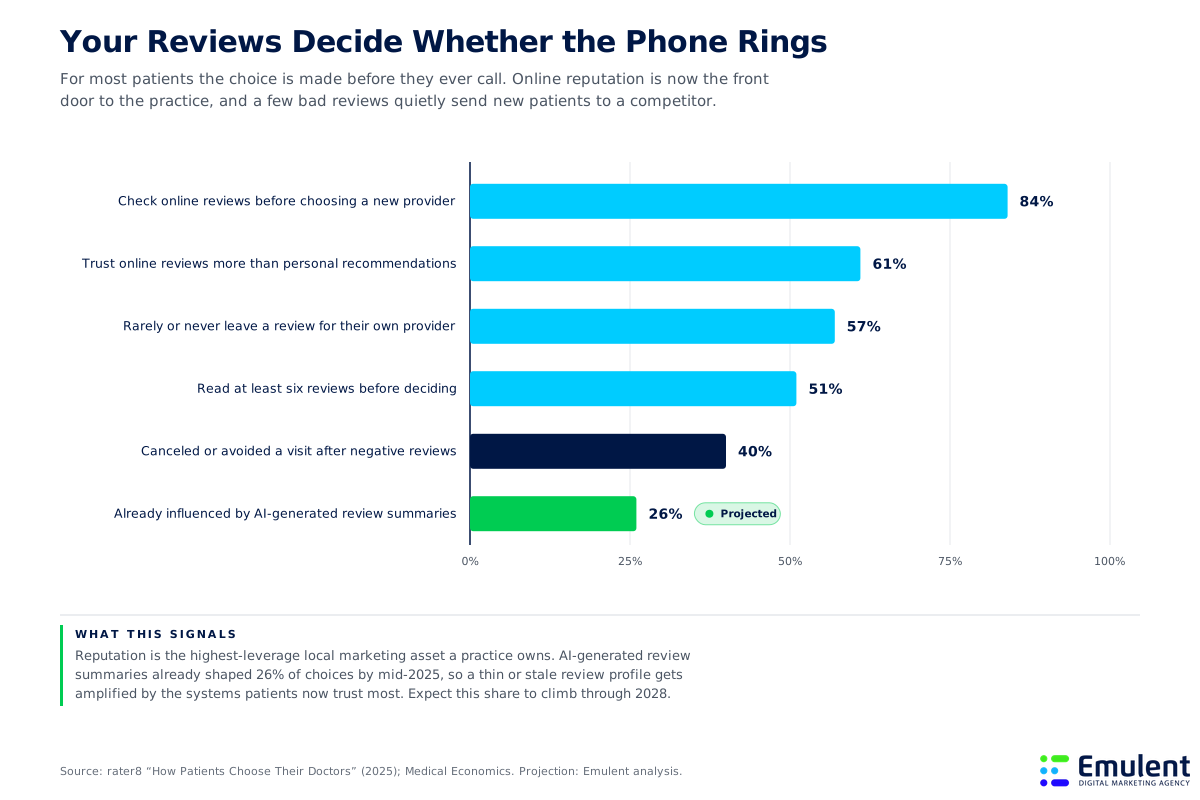
What makes reviews so powerful is that they carry more weight than the recommendation of a friend. When 61% of patients trust strangers online over the people they know, a thin or stale review profile is not a neutral position. It is an active liability, because 40% of patients have canceled or avoided an appointment after reading negative feedback. The practice with twelve old reviews loses to the practice across town with two hundred recent ones, even when the care is identical.
The reputation habits that move patient volume:
- Ask at the moment of satisfaction: Request a review right after a positive visit, when the patient is most motivated to leave one. Most patients never volunteer feedback on their own, so the practices that build a simple ask into checkout collect far more reviews than the ones that wait and hope.
- Respond to every review: A timely, professional reply signals to future patients that you are present and accountable. Silence on a negative review reads as confirmation.
- Treat your Google Business Profile as a homepage: For a local practice, the profile patients see in the map results often matters more than the website, because it is where the comparison and the decision happen.
Reviews also feed the search results that patients see, which connects directly to a bigger shift. The way people search for health information is changing faster than at any point since the smartphone arrived, and it is splitting in two very different directions.
What happens to your blog traffic when AI answers the question first?
Google now answers many health questions directly on the results page through AI Overviews, and the health category is one of the fastest-growing places this is happening. For practices that built an audience on educational blog content, the effect is real and measurable. The good news is that the damage is not evenly spread.
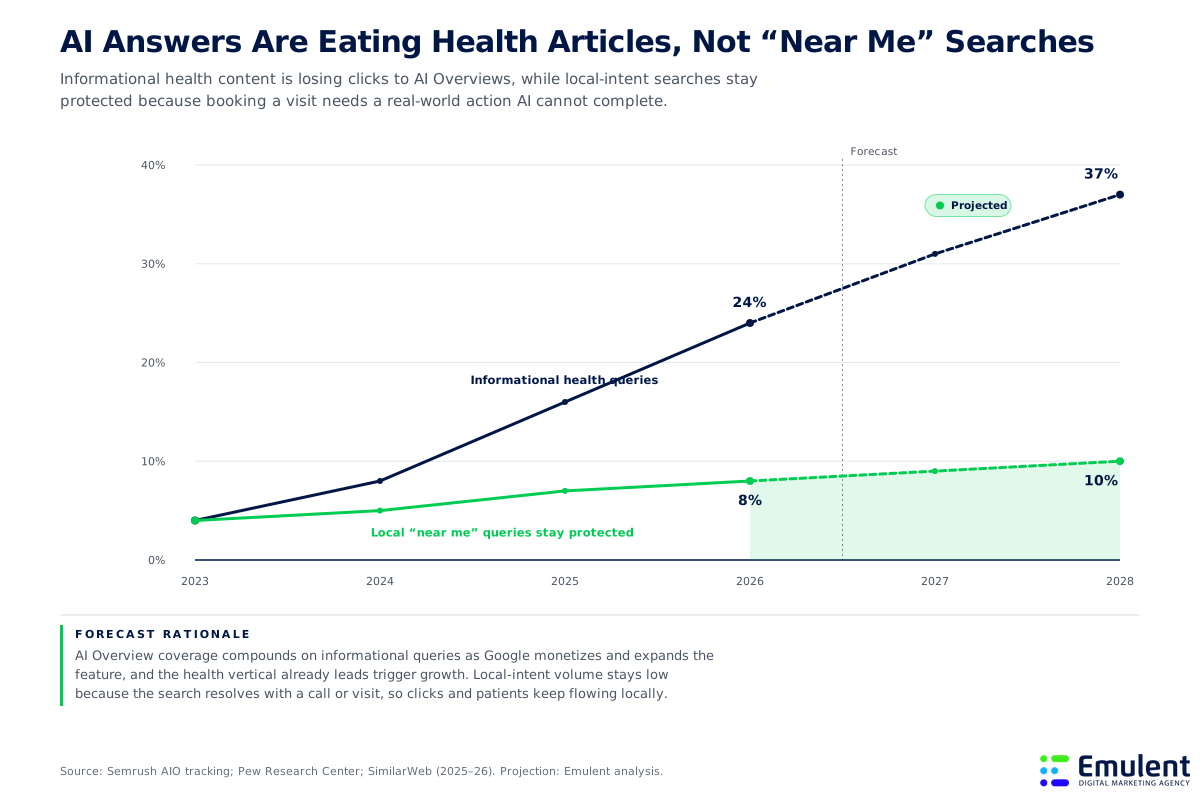
The split is the whole story. A search like “what causes high blood pressure” gets absorbed by an AI summary, so the article that used to earn that click loses it. A search like “cardiologist near me” or “dermatologist in Raleigh” behaves completely differently, because the person needs to take a real-world action that a summary cannot complete. They still click, still compare, and still book. This is why local SEO is becoming more valuable for medical practices at the exact moment general informational content is becoming less valuable.
“Stop measuring a health blog by the traffic it sends and start measuring it by the authority it builds. The article that gets cited inside an AI answer and supports your local pages is doing more for the practice than the one chasing a question Google now answers itself.” – Emulent Strategy TeamHow to reposition for an AI-first results page:
- Anchor content to a place, not just a topic: Pages tied to your city, your neighborhoods, and the conditions you treat locally hold their clicks because they answer a question with physical intent behind it.
- Earn citations, not just rankings: Structure content so it can be quoted inside an AI answer with your name attached. Showing up as the cited source builds trust even when the click does not come. A focused AI SEO approach is built around being the answer rather than only ranking near it.
- Cover the platforms beyond Google: Patients now research providers inside ChatGPT and other assistants. Being visible across these surfaces through search everywhere optimization protects the discovery you used to get from one search box.
If you ignore this shift, your traffic erodes quietly month after month while your rankings look stable, which is exactly why so many practices miss it until the patient calls stop. For a deeper look at how this feature reshapes results, our breakdown of the Google AI Overviews update covers the mechanics. Protecting that local visibility costs money, though, and the price of attention is the next pressure every practice is feeling.
How much should a new patient cost, and where is that headed?
The price of winning a new patient has climbed sharply, and the practices that set their budgets a few years ago and never revisited them are quietly overpaying. The cause is structural, not seasonal.
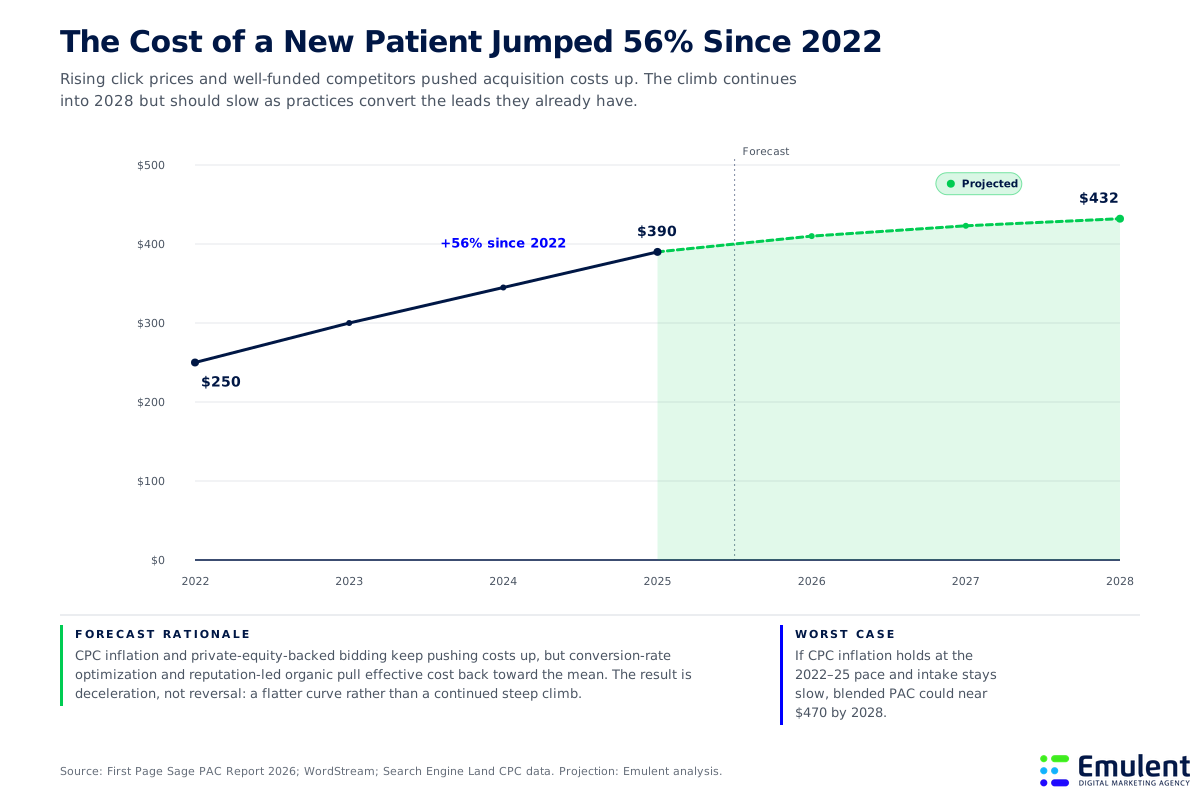
Two forces pushed costs up. Click prices in healthcare keywords rose steeply as more practices bid for the same patients, and well-funded competitors backed by private equity entered local markets with deeper pockets. We project the climb continues but flattens, because rising costs force practices to get smarter about conversion rather than simply spending more. The lever that bends the curve is not a cheaper click. It is a higher share of leads turned into booked patients.
Where practices recover margin as costs rise:
- Answer fast: A lead that reaches a person within minutes converts at a far higher rate than one that lands in voicemail. Speed of response moves acquisition cost more than any change to the ad itself.
- Keep the patients you have: Retaining an existing patient costs a fraction of acquiring a new one. Every patient who stays is a patient you do not have to pay to replace, which is the cheapest growth a practice can buy.
- Let reputation lower paid reliance: A strong review profile improves the conversion rate of every paid click and earns organic patients for free, which pulls your blended cost down across the board.
If you do not measure cost per booked patient by channel, you cannot see which channels are quietly draining the budget, and you end up subsidizing the losers with the winners. Our data on average cost per lead shows how wide the spread runs across channels. Lowering that cost depends on meeting patients where they already research care, and a growing share of them are not on a search engine at all.
Where are patients under 45 actually researching care?
A large and growing group of patients now research providers on social platforms rather than search engines. The pattern is sharply generational, and the practices that treat social as optional are forfeiting visibility with the patients who will fill their schedules for the next two decades.
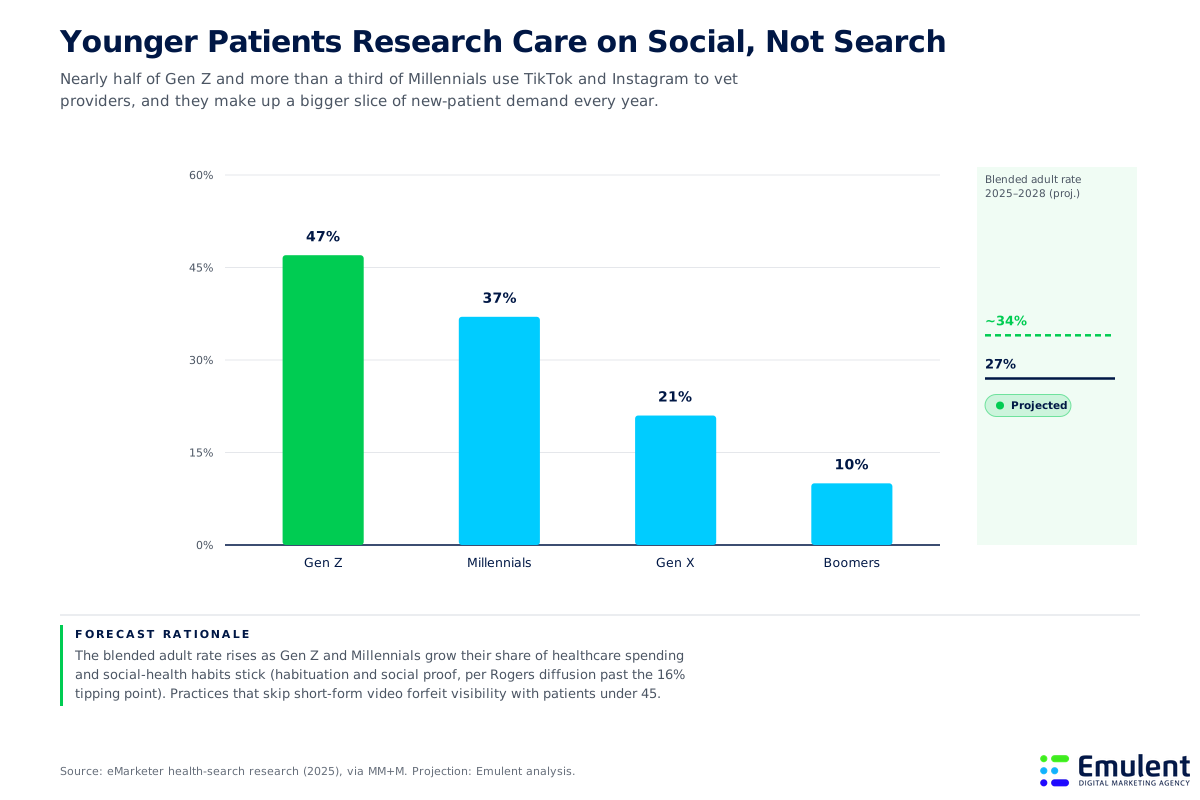
The blended rate across all adults sits around a quarter today, but that number rises every year as younger patients make up a larger share of healthcare demand and the habit of researching care on social becomes normal rather than novel. Short-form video is the format that carries this, because it lets a provider show expertise and warmth in a way a text page cannot. A patient who watches a dermatologist explain a procedure in sixty seconds arrives already trusting that person.
“Video is no longer a nice extra for a medical practice. For patients under 45 it is the introduction, and the provider who feels familiar on a phone screen wins the appointment over the one who only exists as a list of credentials.” – Emulent Strategy TeamHow practices show up where younger patients look:
- Put providers on camera: Authentic, plainly shot clips of a doctor answering common questions outperform polished brand video, because patients are choosing a person they will trust with their health.
- Repurpose one idea across formats: A single patient question can become a short video, a social post, and a section on a service page, which stretches limited time across the channels that matter.
- Match the platform to the patient: A pediatric or aesthetics practice lives on Instagram and TikTok, while a practice serving older patients still earns more from search and reviews. Investing in brand videography pays off fastest where your patients already spend their attention.
The thread running through every one of these shifts is the same. Patients now move through reviews, AI answers, local search, and social before they ever contact you, and the practices that connect those moments into one experience are the ones that grow.
Turning these trends into patient growth
The practices that pull ahead over the next two years will not be the ones with the biggest budgets. They will be the ones that treat reputation, local search, AI visibility, and video as a single connected system rather than five separate tasks. That is the work we do every day. At Emulent, we help medical practices build the reviews that earn trust, the local search presence that captures real intent, the AI visibility that protects discovery, and the video that introduces providers to the patients who are watching. We measure it all by the only number that matters, which is patients booked.
If you want help putting these healthcare marketing trends to work for your practice, contact the Emulent team and we will build a plan around the patients you want to reach.