
Chatbot statistics tell a clear story heading into 2026: conversational AI has moved out of the pilot phase and into operational infrastructure. The global chatbot market is on pace to triple by 2030, AI now resolves three in ten support cases without a human touching the ticket, and younger consumer cohorts use chatbots more often each week than boomers use them in a year. Below are the numbers by industry, the trajectory over the next three years, and how marketing teams should read the signal.
Key takeaways from the chatbot statistics and projections
- Market growth has compounded above 23% annually since 2020, reaching roughly $9.6B in 2025 and on track for $27B by 2030.
- Banking, retail, and tech lead vertical adoption at around 69 to 71% of organizations, while government services trail at 22%.
- Chatbot and live-chat preference is climbing eight points per year while phone and email steadily decline; the crossover with phone arrives in late 2026.
- AI resolves 30% of customer service cases today with no human handoff, and Salesforce projects 50% by 2027.
- An AI-handled ticket costs roughly $0.55 to $0.95, versus $5.10 for a phone agent, a 9× unit-economics gap that is reshaping support budgets.
- Two-thirds of Gen Z and Millennials use AI chatbots weekly, compared with 39% of boomers, a generational fault line that determines which brands need chatbot-first interaction by default.
How big is the chatbot market today, and where is it heading through 2030?
Grand View Research, Mordor Intelligence, and Fortune Business Insights converge on the same shape, even with different absolute numbers. The global chatbot market sat near $2.6B in 2020, crossed $5.4B in 2023, and reached roughly $9.6B in 2025. By 2030 it is projected to climb past $27B at a compound annual rate near 23%. The three independent forecasts, drawn from different methodologies, agree on the slope. That kind of consistency is a signal that the trajectory is structural rather than speculative.
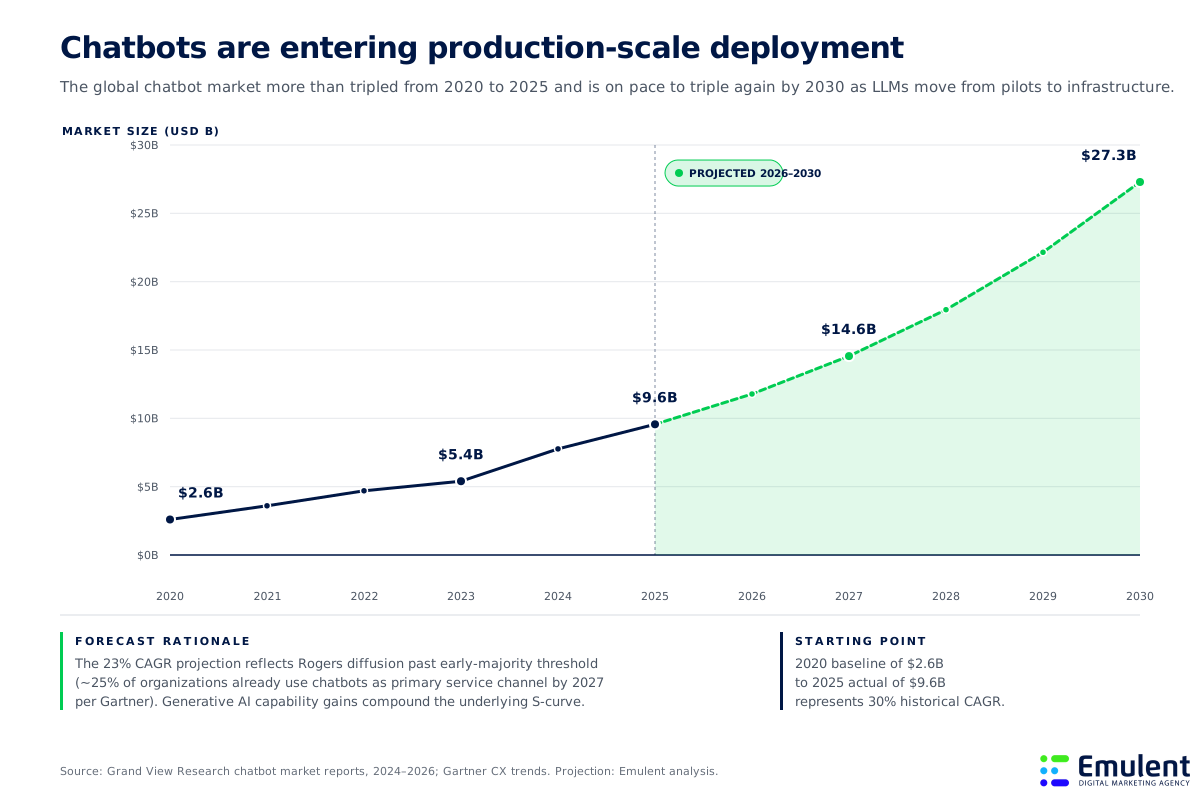
The shape of the curve matters more than any single end-point number. The 2020 to 2024 period was largely experimental: pilot programs, proof-of-concepts, limited rollouts. The acceleration from 2024 onward reflects production-scale deployment as large language models replaced brittle rule-based systems. Gartner predicted in 2022 that chatbots would become the primary customer service channel for about 25% of organizations by 2027. The data so far suggests that prediction is tracking ahead of schedule.
The chatbot category sits firmly past the early-majority threshold on Rogers diffusion, which means the next leg of growth comes from organizations adopting because their peers already have, not because they are convinced by the technology itself. That changes the urgency calculation for marketers who have been waiting on the sidelines. – Emulent Strategy Team
Knowing the headline market trajectory is one thing. The more useful question for marketing leaders is which sectors are already at scale and which still have headroom.
Which industries are running ahead on chatbot adoption, and which are still hesitating?
Adoption is uneven, and the pattern is easier to read once the verticals are ranked side by side.
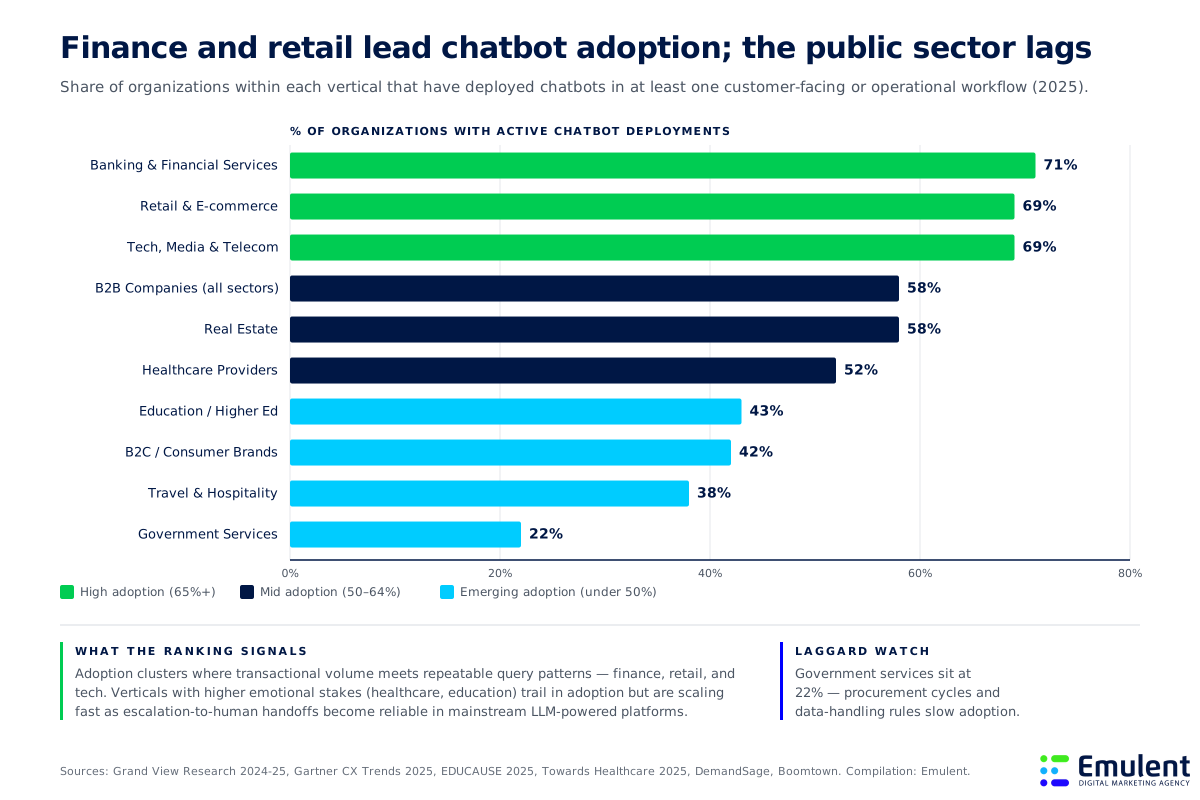
Banking and financial services lead at 71%, followed by retail and tech at 69%. B2B and real estate cluster around 58%. Healthcare providers are at 52%, with education at 43% and B2C consumer brands at 42%. Travel and hospitality run at 38%, and government services lag at 22%. The pattern reflects a simple structural truth: adoption clusters where transactional volume meets repeatable query patterns. Banks field millions of identical “what is my balance” requests. Retailers face the same return and order-status questions on every product page. Both translate cleanly to a chatbot script.
The verticals lower on the list face higher emotional stakes per interaction. Healthcare answers carry liability. Education answers shape enrollment decisions. Government answers are scrutinized for fairness and bias. These verticals are not lagging because the technology fails them. They are lagging because the cost of a wrong answer is higher, which raises the escalation and quality-assurance bar before any deployment goes live. If your business sits in healthcare marketing or a regulated category, expect adoption to ramp through 2027 rather than spike.
The verticals already past 50% adoption signal something else worth tracking: changing default consumer expectations across channels.
What is happening to phone, email, and chat as default support channels?
Capgemini Research Institute has tracked the same support-channel preferences for several years, and the trend lines are now sharp enough to forecast with confidence. Phone preference has slipped from 65% to 60% over two years. Email has dropped from 54% to 49%. Chatbot and live-chat preference has climbed from 27% to 40%.
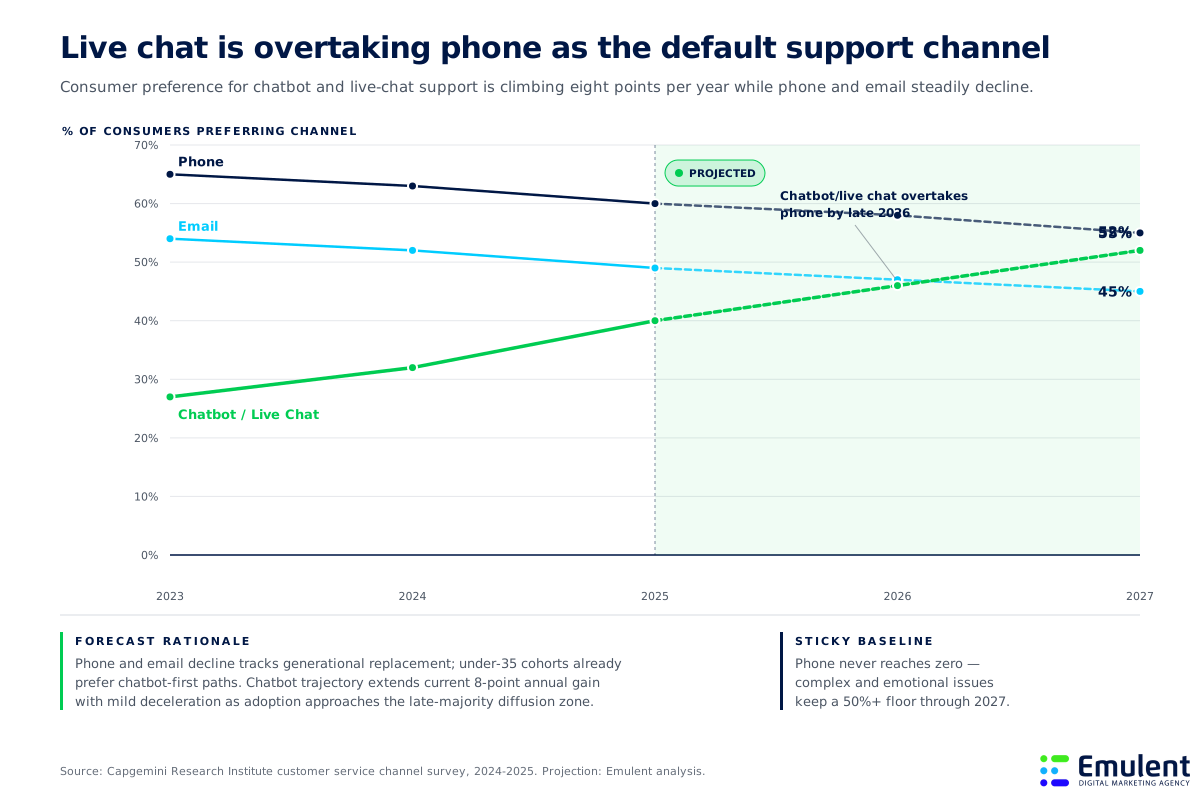
Extending those slopes forward, chatbot and live-chat preference crosses phone preference around late 2026. By 2027 it sits roughly at parity with phone at 52% vs 55%, and the trajectory keeps climbing. Phone never reaches zero. Complex and emotional issues, account disputes, fraud claims, and grief support all keep a 50%-plus floor for live human handling. But the default channel for routine interaction is shifting, and the brands still treating chatbot as a budget-line afterthought are about to be on the wrong side of consumer expectation.
The mistake we see most often is treating the chatbot as a deflection mechanism to keep customers away from human agents. That posture shows up in the conversation tone, and customers immediately disengage. The brands winning here are using chatbots as the front door to a better human escalation, not as a wall in front of it. – Emulent Strategy Team
The percentages tell you what consumers say they prefer. The deeper operational metric is how many cases the AI actually resolves on its own once it gets the conversation.
How many service cases can AI actually resolve without a human?
Salesforce’s State of Service 2025 reports that 30% of customer service cases were resolved by AI in 2025, with no human handoff. That number was in the single digits in 2022. The Salesforce projection puts AI resolution at 50% by 2027.
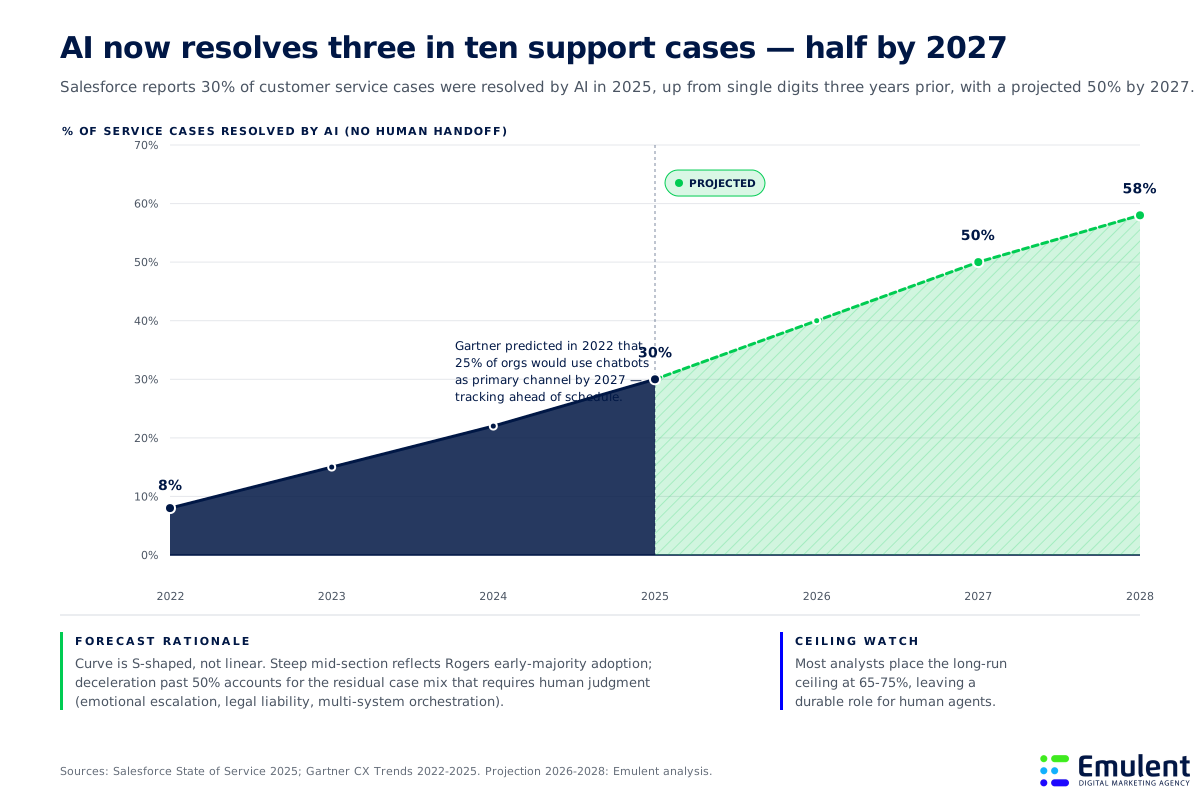
That curve is S-shaped, not linear. The steep middle reflects Rogers early-majority adoption, where organizations move from pilots to production because the case for staying out becomes harder to defend each quarter. The deceleration past 50% accounts for the residual case mix that genuinely requires human judgment: emotional escalation, legal liability, multi-system orchestration, or anything where a confident wrong answer creates real downstream cost. Most analysts place the long-run ceiling between 65% and 75%, which leaves a durable role for human agents and the agencies that train them.
Resolution rate is the leading indicator marketers should watch on their own deployments. A bot that opens 60% of conversations but resolves 8% of them is a deflection mechanism with a coat of paint. A bot that opens 60% and resolves 35% is shifting the cost structure of the support organization. The economics of that shift are the next part of the story.
What does an AI interaction actually cost compared to human-staffed support?
Per-interaction costs are where the financial case for chatbots stops being theoretical. Industry averages across Juniper Research, Mordor Intelligence, and IBM Institute for Business Value tell a consistent story.
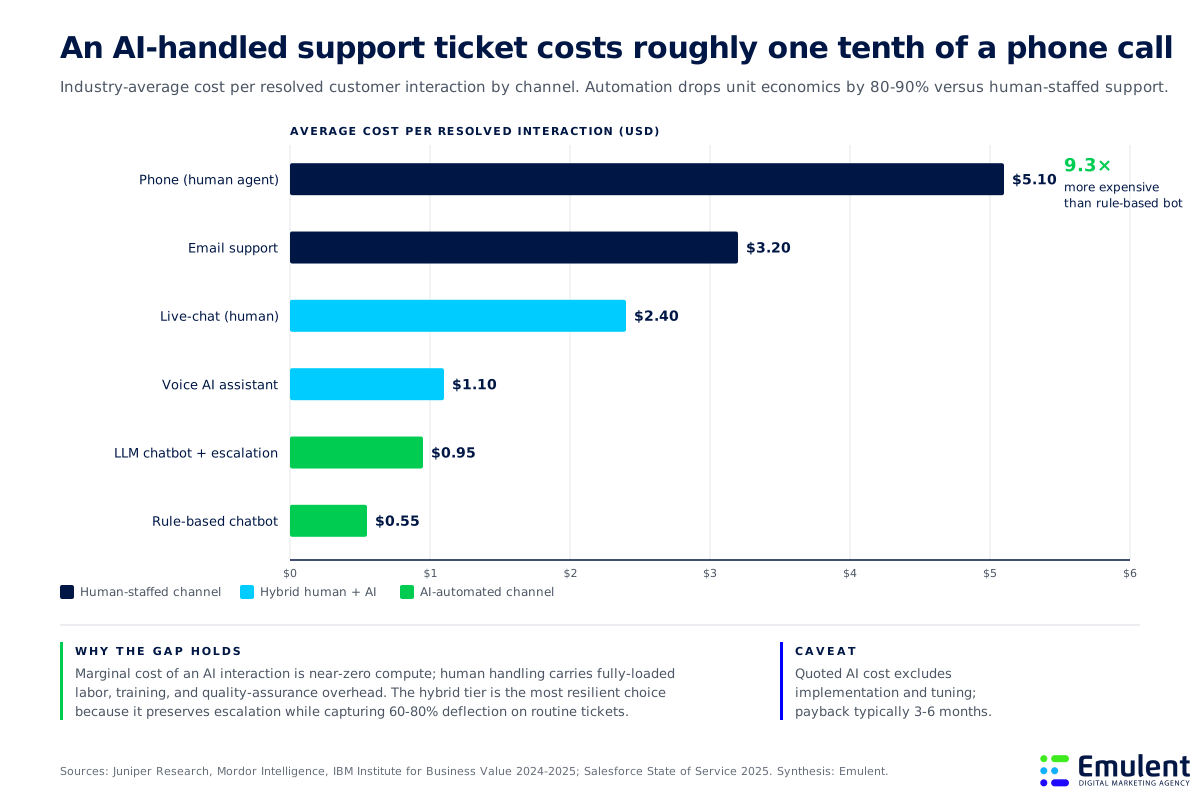
A phone interaction with a human agent costs around $5.10 once fully-loaded labor, training, and quality assurance are included. Email runs about $3.20. Live chat with a human handler sits around $2.40. The AI-side numbers are an order of magnitude lower: voice AI assistants near $1.10, LLM-powered chatbots with escalation paths at $0.95, and traditional rule-based chatbots at $0.55. The gap between a phone call and a rule-based bot is 9.3×.
The hybrid tier in the middle, LLM chatbot plus human escalation, is the most operationally resilient choice. It captures 60 to 80% deflection on routine tickets while preserving the warm handoff to a human for the cases that need it. The same hybrid model is what most successful B2B marketing services programs are deploying for lead qualification: the AI does the first round of discovery, then routes a qualified prospect to a salesperson with full conversational context.
We tell clients to count three numbers when evaluating chatbot ROI: cost per resolved interaction, average resolution rate, and customer satisfaction on bot-only conversations. If any one of those numbers is moving the wrong way, the deployment needs surgery before it needs expansion. – Emulent Strategy Team
The unit economics tell you the gap exists. The reason brands are racing to close it has more to do with shifting consumer behavior, and that behavior splits sharply by generation.
Why does generational chatbot use matter for brand strategy?
Tinuiti’s November 2025 survey of 1,037 US adults plus the London School of Economics workplace AI study put numbers on what consumer brands have been suspecting. Two thirds of Gen Z and Millennial respondents use AI chatbots weekly or more often. Gen X drops to 55%. Boomers sit at 39%. The workplace AI numbers are even steeper: 83% of Gen Z, 73% of Millennials, 60% of Gen X, and 52% of Boomers.
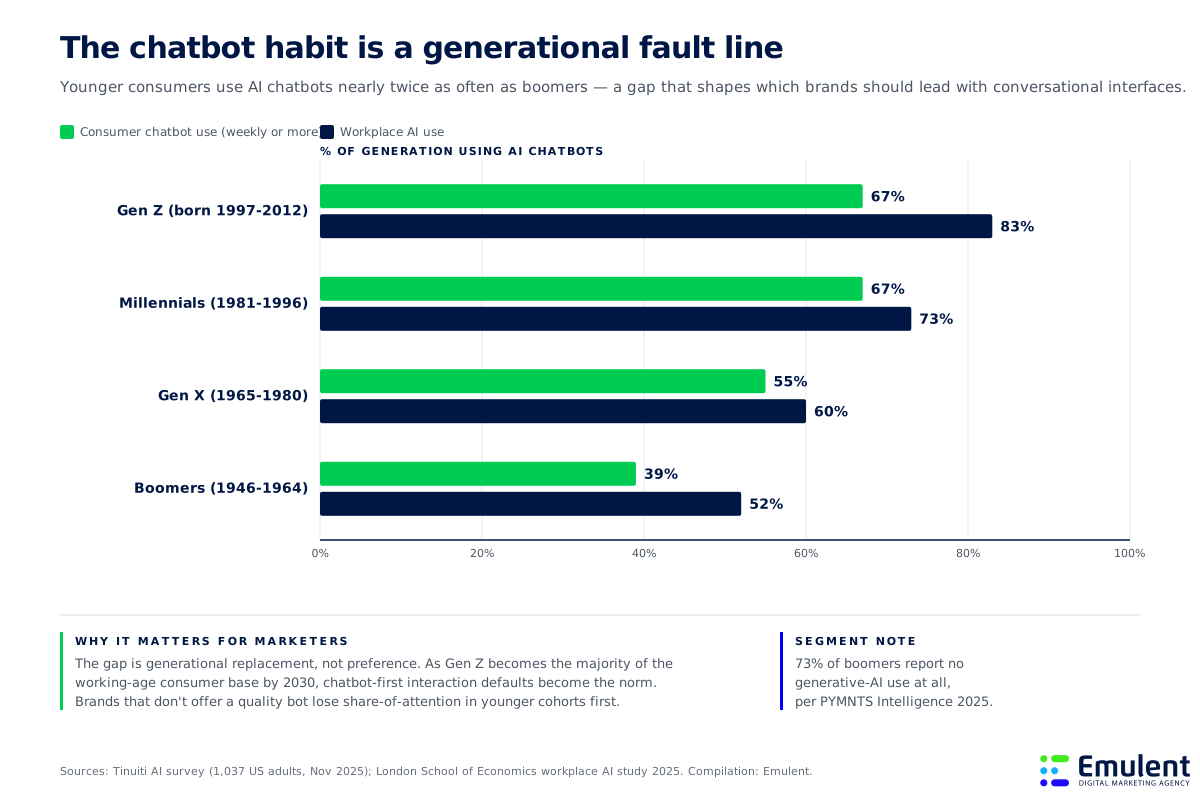
The gap is not preference. It is generational replacement. As Gen Z becomes the majority of the working-age consumer base by the end of this decade, chatbot-first interaction defaults shift from a nice-to-have to the assumed standard. The brands that under-invest now lose share-of-attention in younger cohorts first, which becomes share-of-wallet within two product cycles. PYMNTS Intelligence reports 73% of boomers have never used a generative AI tool at all, which means the patience for waiting on hold by phone is going to remain real for at least another decade. Brands that serve mixed-age audiences need both paths, properly resourced.
Generational behavior shifts also bleed into search and discovery patterns. Around 34% of Gen Z report using AI chatbots as a primary search interface, which has direct consequences for any organic-traffic strategy. If your brand is not appearing inside AI Overviews and generative answer sets, you are absent from the discovery layer that younger consumers default to. The AI SEO services conversation is now a discovery-channel question, not a technical SEO one. The same logic applies to search everywhere optimization, which extends the work beyond Google to where audiences actually look.
Search and discovery is one consequence of the generational shift. The commercial consequence shows up most directly in retail spending.
What is driving the surge in retail chatbot spending through 2028?
Juniper Research projects worldwide retail chatbot spending will climb from $12B in 2023 to $72B in 2028. That is a roughly 6× increase in five years, faster than any other vertical-specific chatbot category.
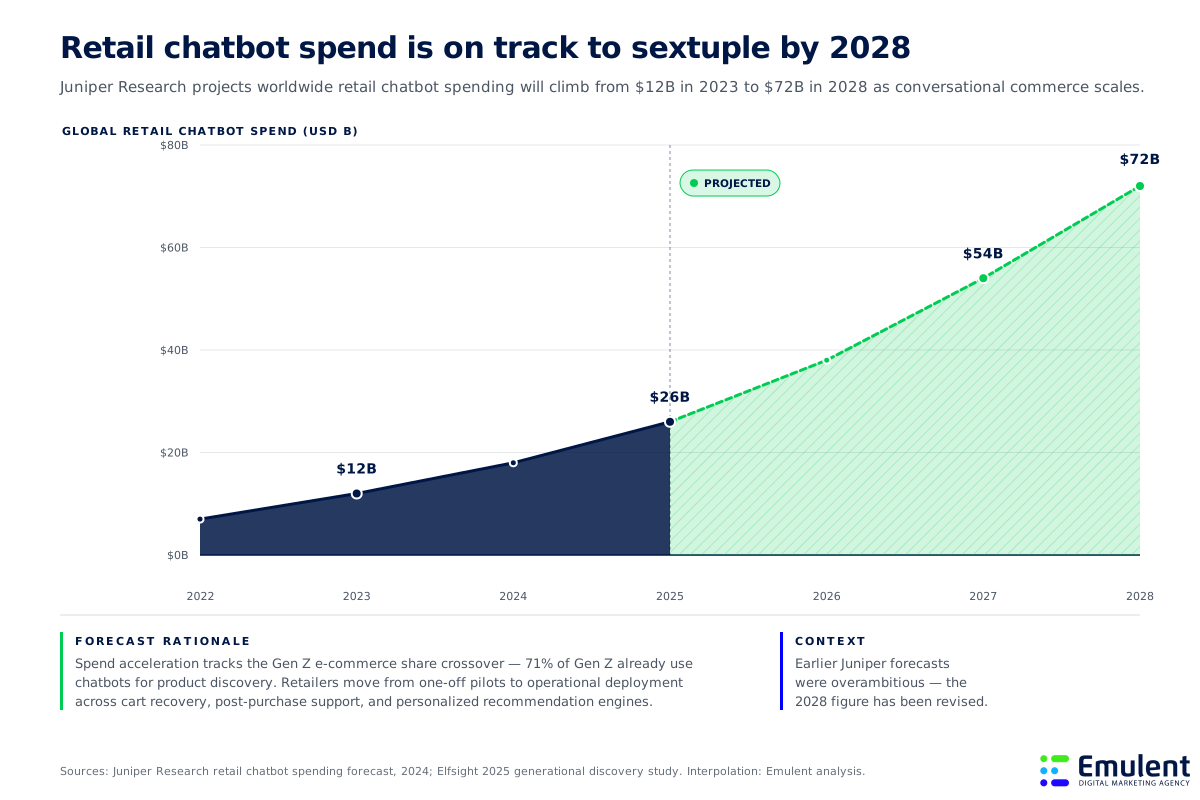
Three forces are stacking. First, Gen Z and Millennials are the dominant spending cohort in most categories now, and 71% of Gen Z already use chatbots for product discovery according to Elfsight’s 2025 generational study. Second, conversational commerce has moved past the experimental stage: cart-recovery bots, post-purchase support, and personalized recommendation engines are now standard line items in enterprise retail tech stacks. Third, WhatsApp Business now handles 175 million daily business conversations globally, opening a distribution channel that did not exist at scale three years ago, and one with a 98% open rate compared to roughly 20% for email.
The retail forecast also informs how to read forecasts for other verticals. Categories that look like retail in structure, high transaction volume, predictable question patterns, generational skew toward younger consumers, are likely to follow a similar curve with a one-to-two year lag. Healthcare patient communication, financial services account management, and home services scheduling all share that structure to varying degrees.
What should marketing teams actually do with these chatbot statistics?
Three actions follow from reading the data honestly. Audit the chatbot you already have, if you have one, against the three numbers that matter: cost per resolved interaction, resolution rate, and bot-only CSAT. If any of those numbers is moving the wrong direction, the deployment needs surgery before it needs another round of scope expansion. Map your audience generationally. If younger cohorts dominate your customer base, your chatbot is the front door. If older cohorts dominate, it is a complementary channel that needs to make the path to a human shorter and not longer. And invest in the discovery layer, because the consumers using chatbots to find brands are the same ones whose default search behavior is moving inside generative answer surfaces.
The Emulent team builds chatbot strategies as part of broader digital marketing services programs across regulated and non-regulated verticals. We integrate conversational tools with the SEO, content strategy, and brand work that determines whether a chatbot is actually finding the right audience to talk to. If you would like help making sense of where chatbots fit in your stack, or you would like a second opinion on a deployment that is not delivering the numbers it should, please contact our digital marketing agency and we will set up a working session with the strategy team.