
Knowing the best times to post on social media by industry is one of the cheapest ways to get more reach from content a team has already produced. The same post can pick up two or three times the engagement when it lands during a buyer’s active window instead of during a quiet hour. The trick is that “active window” looks different for a chiropractic practice than it does for a SaaS company, and the platform-by-platform data has moved meaningfully in 2026 compared with even a year ago. This article walks through what the current research says about industry-specific posting times, where engagement rates are heading next, and how AI timing tools are starting to take that decision off marketers’ plates.
Key takeaways from this article:
- Midweek mornings dominate everywhere except TikTok. Tuesday through Thursday between 10 AM and 2 PM accounts for the majority of cross-platform engagement in 2026.
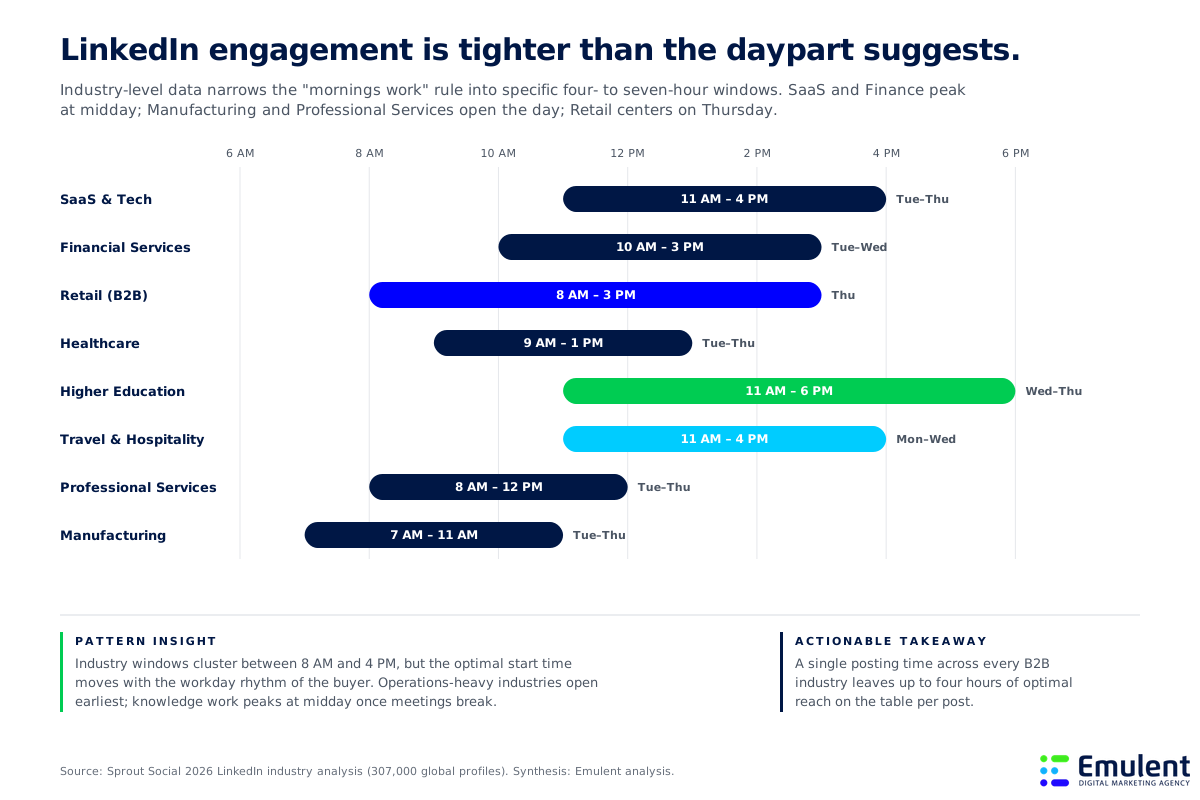
- LinkedIn windows compress by industry. SaaS and Finance peak at midday; Manufacturing and Professional Services peak before 11 AM; Retail centers on Thursday.
- Engagement leaders swap by platform. Higher Education tops TikTok at 7.36%, but Tech and Healthcare lead on LinkedIn.
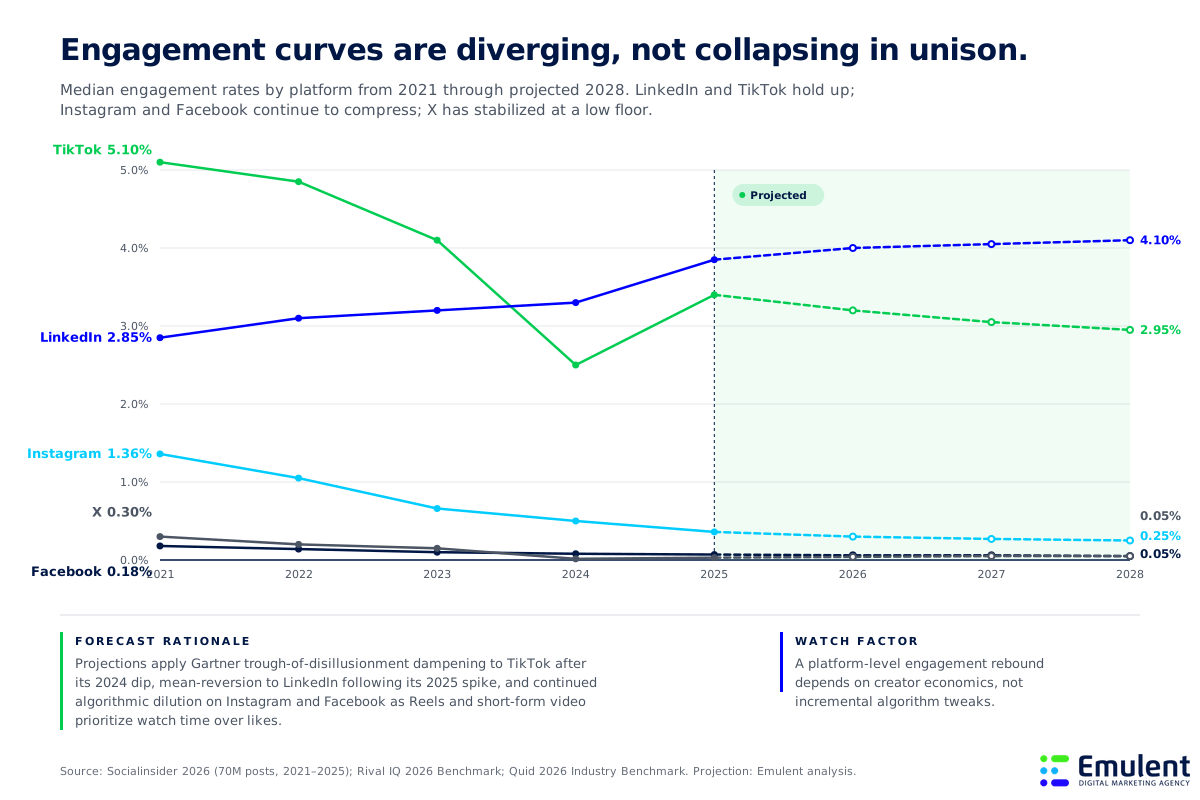
- Platform curves are diverging, not collapsing together. LinkedIn keeps climbing while Instagram and Facebook keep compressing.
- The scheduling tool market more than doubles by 2030. Spend grows from $1.2B in 2024 to a projected $2.85B by 2030 at a 15.5% CAGR.
- AI is moving from content creation into timing. 41% of marketers will use AI for posting time decisions by 2026, up from 22% two years earlier.
What does the universal midweek engagement window actually look like?
Before slicing the data by industry, it helps to anchor on the cross-platform baseline. When Sprout Social, Buffer, and Socialinsider all looked at billions of posts in 2026, they landed on the same answer: engagement is concentrated in a tight band of midweek daytime hours. Tuesday and Wednesday between 10 AM and 2 PM are the hottest cells of the week, with Thursday close behind. Weekends sit two to three engagement tiers below the weekday average on every major platform except TikTok.
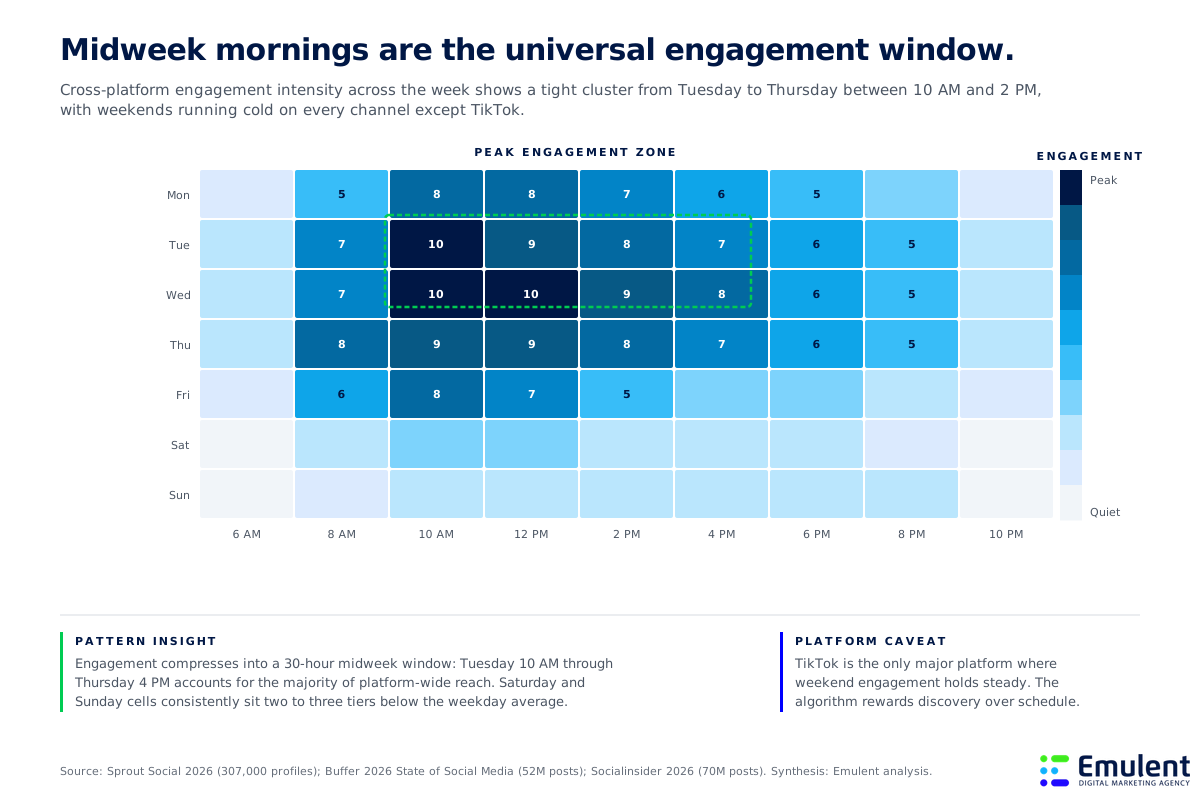
What this tells us at the strategy level: the “best time to post” question is really a “least crowded high-attention window” question. Sunday at 9 AM has plenty of attention but almost no brands posting; Tuesday at 11 AM has both attention and competition. The midweek window wins because the math of attention pays for the competition, but only if the post is good enough to clear the noise.
“When clients ask us what the single best time to post is, we tell them the wrong question is being asked. Find your buyer’s active window, then find the moment inside that window when your competitors are not also posting. That is your real best time, and it is rarely the round-number hour everyone tells you to use.” – Emulent Strategy Team
The midweek baseline is the starting point, not the answer. The real lift comes from layering industry behavior on top, and that is where most teams stop short.
How do optimal LinkedIn windows differ by industry?
LinkedIn is the platform where industry-specific timing matters most, because the audience itself is defined by industry. Sprout Social’s 2026 LinkedIn analysis of 307,000 profiles shows that the “mornings work” rule of thumb collapses into much tighter four- to seven-hour windows once a specific buyer is in view.
Where the operations-heavy industries peak earliest:
- Manufacturing (7 AM to 11 AM, Tue-Thu): Production-floor decision makers are at desks early and offline by lunch. Posts that hit after 11 AM tend to miss the window entirely.
- Professional Services (8 AM to 12 PM, Tue-Thu): Billable-hour cultures push social check-ins to the open-of-day before client work begins.
- Retail B2B (8 AM to 3 PM, Thursdays): Inventory planners and category managers finalize the next week’s plans on Thursday before the weekend’s operational pressure hits.
- SaaS and Tech (11 AM to 4 PM, Tue-Thu): Buyers check feeds between morning standups and afternoon meetings. The midday block doubles as discovery time for product launches.
- Financial Services (10 AM to 3 PM, Tue-Wed): Engagement tracks market hours. Once the closing bell rings, the audience disengages until the next trading day.
- Healthcare (9 AM to 1 PM, Tue-Thu): Clinical staff check feeds between morning rounds and lunch breaks. Posts after 1 PM compete with afternoon patient blocks. We see this pattern reinforced in healthcare marketing programs across hospitals, group practices, and biotech.
- Higher Education (11 AM to 6 PM, Wed-Thu): Students stay engaged later than B2B audiences, pushing the window into early evening.
- Travel and Hospitality (11 AM to 4 PM, Mon-Wed): Aspirational content lands hardest during the workweek when audiences are planning escapes.
Three industries on the same platform can have non-overlapping optimal hours. A single posting time across every B2B audience leaves up to four hours of optimal reach on the table per post.
Which industries hit hardest on which platform?
Timing only matters once a platform is delivering enough baseline engagement to justify the effort. The 2026 industry data shows that the leaders flip dramatically depending on which platform is being measured.
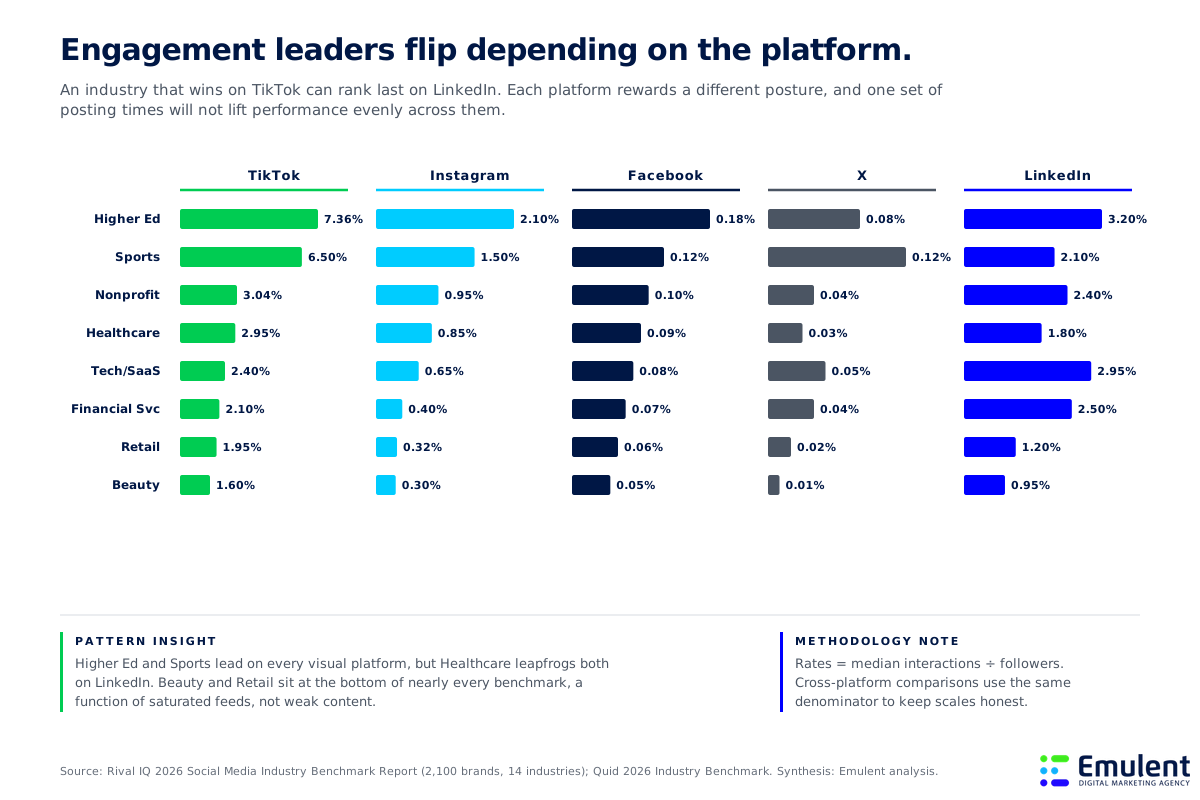
Higher Education and Sports lead on every visual platform. Their content is naturally suited to short-form video, and their audiences (students, fans) check feeds outside of work hours, which gives them a broader posting window. Healthcare moves into the top three on LinkedIn, where clinical thought leadership has an attentive audience. Tech and SaaS sit mid-pack on visual platforms but jump into the top two on LinkedIn. The pattern carries a strategy implication: a B2B brand should not benchmark its Instagram engagement against a college athletics program, and a higher-ed marketer should not be discouraged by a low LinkedIn rate.
“Engagement rate is a relative metric, not an absolute one. We work with construction companies whose 0.4% Instagram rate is excellent for the category, and we work with media brands whose 2% rate is barely a passing grade. Benchmark against the right peer set or the data sends you in the wrong direction.” – Emulent Strategy Team
Retail and Beauty sit at the bottom of nearly every benchmark in 2026. That is not a content problem; it is a saturation problem. Their feeds are too crowded for any single brand to break out without paid amplification. For categories under that kind of saturation pressure, the timing question loses some of its impact and the differentiation question takes over. We unpack that tradeoff at length in our work on brand differentiation strategies for saturated markets.
Where are platform engagement rates actually headed?
Choosing a posting time is a bet that the platform will still be worth the effort by the time the content goes live. Looking at the trend lines from 2021 forward, that bet looks very different depending on which platform is on the table.
How we read the four-year trajectory:
- LinkedIn keeps climbing. The shift to text-first thought leadership and PDF carousels has pushed engagement from 2.85% in 2021 to 3.85% in 2025. We project a continued rise toward 4.10% by 2028 as B2B audiences consolidate their professional reading on the platform.
- TikTok plateaus after a turbulent stretch. The 2024 dip to 2.50% reflected a real trough-of-disillusionment moment. The 2025 rebound to 3.40% is partial recovery. We project a mild decline to 2.95% by 2028 as supply grows faster than attention.
- Instagram keeps compressing. The shift to watch time over likes cost the platform 17% of its engagement rate year over year. We expect the slide to continue to 0.25% by 2028 unless the algorithm meaningfully changes again.
- Facebook erodes slowly. The 0.07% rate in 2025 is the steady state of a platform whose organic reach for brand pages is now incidental to its real revenue model.
- X stabilizes at a low floor. The 2024 crash to 0.015% has reversed slightly to 0.03%. We project a stable but very low future, useful mostly for real-time conversation, not steady-state brand publishing.
The strategic implication is that timing precision matters more on platforms with shrinking engagement budgets. A LinkedIn post that misses its window by an hour gives up a smaller share of available engagement than the same miss on Instagram or Facebook, where the absolute pool is now small enough that any drop hurts.
What is driving the rise of scheduling and AI timing tools?
The narrower posting windows of 2026 are not a problem marketers can solve manually. A multi-platform brand publishing across LinkedIn, Instagram, TikTok, and Facebook on industry-optimal schedules has to hit eight to twelve different posting slots per week, in the right time zone, with platform-specific content. The market response has been swift.
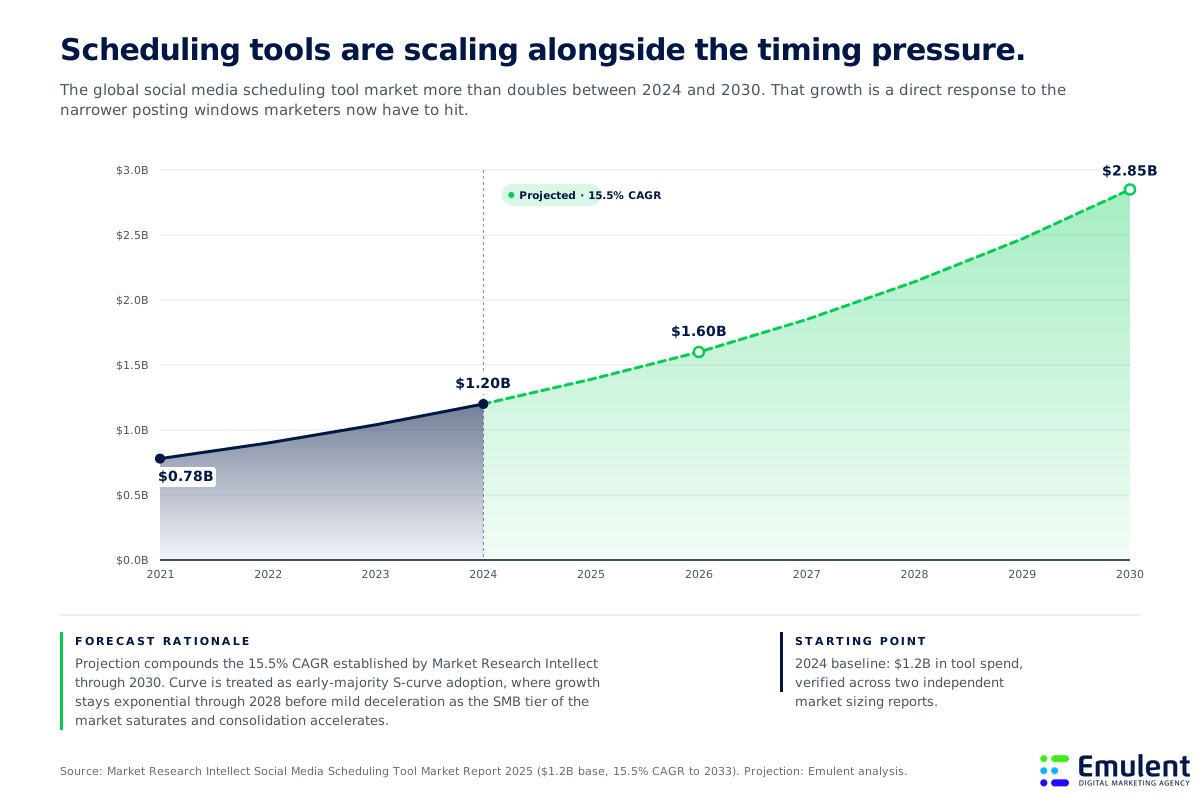
The scheduling tool market reached $1.2B in 2024 and is projected to more than double to $2.85B by 2030. The growth tracks the increasing fragmentation of what counts as an “optimal” posting time. Five years ago a brand could publish once a day at noon and call it a strategy. The 2026 version of that strategy requires platform-specific timing, industry-specific timing, and audience-specific timing layered together.
“Scheduling tools used to be a productivity layer. In 2026 they are a strategy layer. The platforms that decide when your post goes live now do more of the work that used to live on a content calendar in a spreadsheet, and the brands that ignore that capability are leaving organic reach on the floor.” – Emulent Strategy Team
The next layer of that capability is AI-driven timing prediction, and the adoption curve is bending fast.
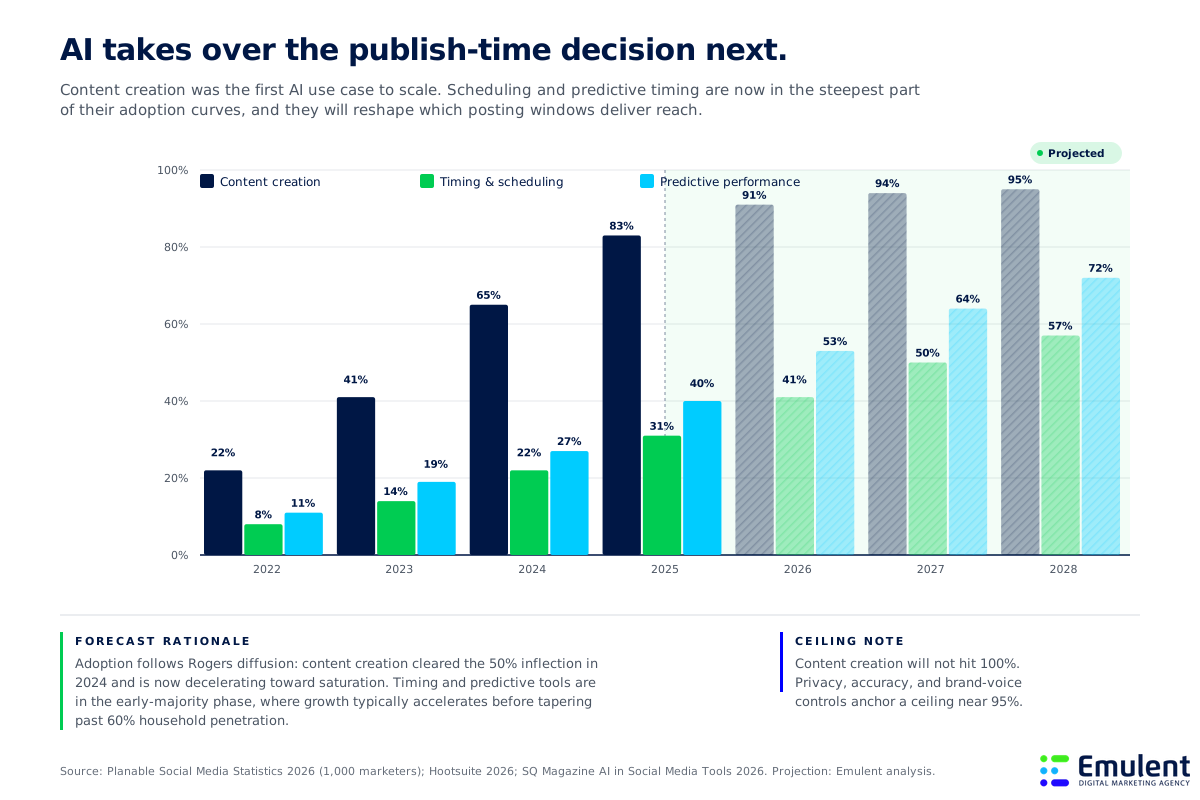
How the three AI use cases are scaling:
- Content creation (22% in 2022 to a projected 95% in 2028): The first use case to clear the Rogers diffusion inflection point. Most marketing teams now use generative AI for at least some social copy or imagery. The ceiling near 95% reflects privacy, brand-voice, and accuracy controls that cap full adoption.
- Timing and scheduling (8% in 2022 to a projected 57% in 2028): Currently in the early-majority phase. Tools that pick the publish moment based on individual account history are moving from niche to standard. Sprout Social, Buffer, and Hootsuite all shipped versions of this capability in 2025 and 2026. Smart scheduling is a natural complement to a strong underlying content strategy.
- Predictive performance (11% in 2022 to a projected 72% in 2028): Tools that forecast which post will perform before it ships. Adoption is accelerating now that the underlying models have enough training data to be reliable.
For brands serving local or regional audiences, the timing layer compounds with location-based discovery work; we cover that intersection in our overview of local SEO trends and search everywhere optimization, both of which now lean heavily on AI for the same reasons social timing does.
How should a team actually use this data without overengineering it?
The risk of charts like the ones above is that they encourage paralysis. A team that tries to honor every industry-specific window on every platform will burn out in two weeks. The realistic path is a two-step approach.
How to put the data to work without breaking the team:
- Pick one or two priority platforms. For B2B, that is almost always LinkedIn plus one secondary. For B2C, it is Instagram plus TikTok, with Facebook as a paid-only channel for most categories.
- Use industry benchmarks as the starting schedule, then override with first-party data after eight weeks. The Sprout Social and Buffer benchmarks are a strong default, but a brand’s own audience data wins as soon as there is enough of it.
- Let a scheduling tool handle the platform-specific timing. Native analytics inside Sprout, Buffer, or Hootsuite already pick optimal slots per platform. Manually overriding them rarely improves performance.
- Reserve human judgment for content type and tone. Timing is the easiest part of social media to automate. The hard part, what to actually say and how to say it, still belongs with the marketer.
Posting time is a high-impact lever, not the strategy itself. Treat it like compound interest: small, consistent improvements over months matter much more than perfect hits on individual posts.
Conclusion
If your team is publishing without industry-specific timing data, you are leaving organic reach on the table that your competitors are starting to claim. Our team helps brands build the underlying publishing systems, set up the analytics to verify what is actually working, and integrate AI scheduling tools without losing the editorial judgment that makes the content worth reading in the first place.
Whether you are running a regional service business, a national B2B SaaS company, or a healthcare practice, we can help you turn timing data into a measurable lift. Contact our team if you want help building a social media marketing program that uses these patterns instead of guessing at them.