
Stock photos have flipped from a shortcut into a liability: now that flawless images cost nothing to generate, the only imagery that still earns a buyer’s trust is imagery that proves your business is real, and a generic photo proves nothing. We are going to argue that most companies should stop paying for polish they can no longer get credit for, and put that money into photos no competitor could reuse. The data behind that argument comes from Adobe’s own platform numbers, a peer-reviewed face-perception study, Getty Images consumer research, and BrightLocal’s 2026 survey of US consumers, and every one of those sources points the same direction.
Polish Stopped Being Proof of Anything
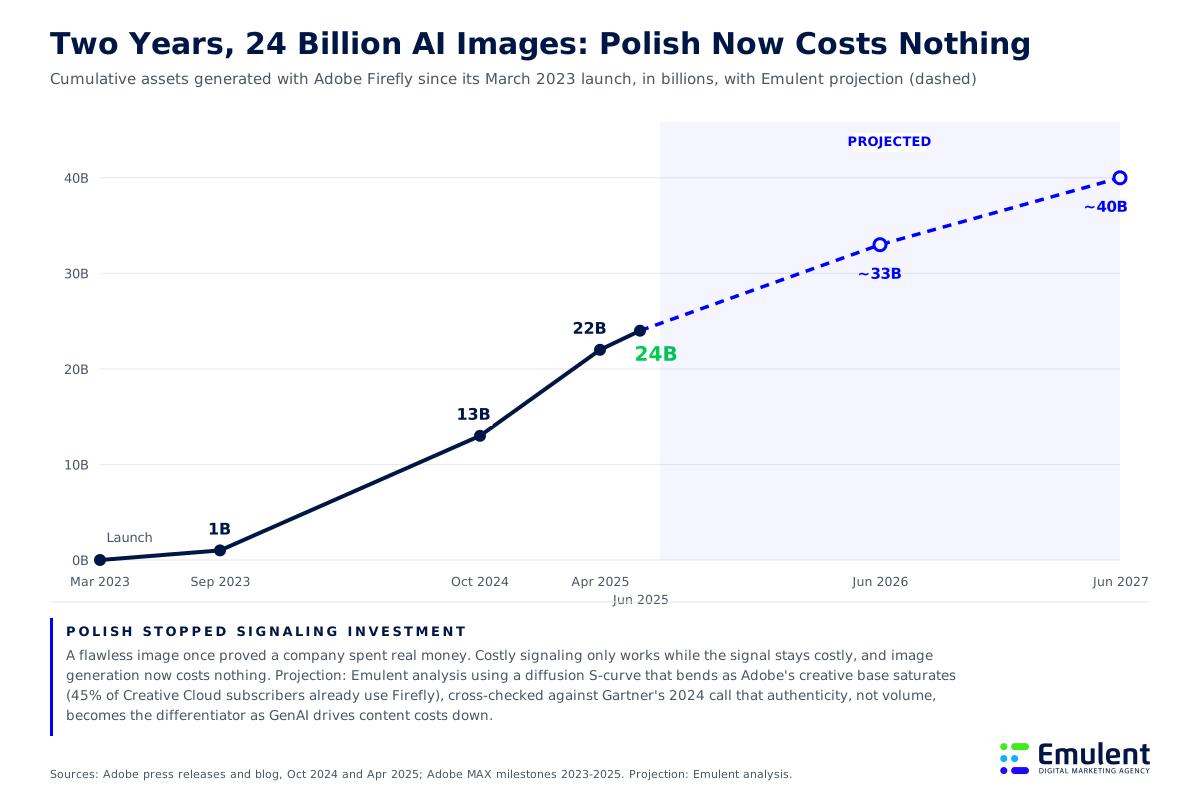
A crisp, professionally lit image used to carry information. It told a buyer this company spent real money on how it presents itself, which implied stability, standards, and the intent to stick around. Economists call that costly signaling: the signal works because faking it is expensive. That mechanism broke the moment image generation became free. Adobe reported that its Firefly models had produced 13 billion assets by October 2024, just nineteen months after launch. The count passed 22 billion by April 2025 and 24 billion by June 2025, per Adobe’s announcements. That is one platform. Every one of those images is polished, and every one of them costs roughly nothing.
Our projection below extends that curve to roughly 40 billion by mid-2027. We built it on a diffusion S-curve rather than a straight line: 45% of Creative Cloud subscribers already use Firefly, so the growth rate bends as the remaining adopters, the slower segments, come aboard. Gartner made the matching call in its February 2024 analysis: as generative AI drives content costs toward zero, quality and authenticity become the things that separate one company from another. The exact billion count matters less than what the curve means. When anyone can produce a perfect image in eight seconds, a perfect image tells a buyer nothing about you.
“Polish used to be proof. A flawless image told a buyer this company spent real money, which meant it planned to be around. The moment anyone can generate that image for free, the proof evaporates, and the only thing left to trust is the photo nobody could fake: your people, your shop, your work.” – Bill Ross, Founder, Emulent
Buyers Can’t Spot the Fake, So They Stopped Trusting Polish
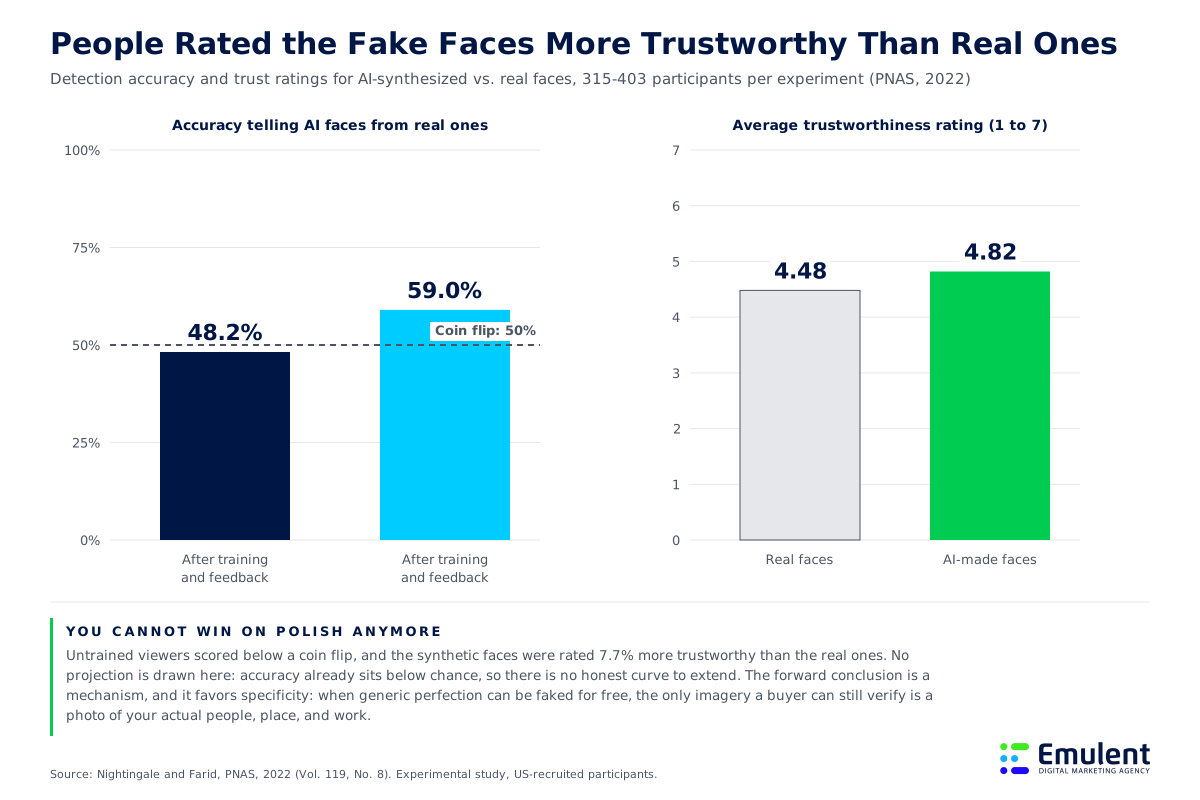
Some business owners assume customers will notice the difference between a real image and a generated or generic one, and reward the real one on quality. The research says the opposite. In a 2022 study published in PNAS, Nightingale and Farid showed participants a mix of real photographs and AI-synthesized faces. Untrained viewers identified which was which 48.2% of the time, worse than flipping a coin. With training and trial-by-trial feedback, accuracy climbed to only 59%. The finding that should stop every marketer mid-scroll: participants rated the synthetic faces 7.7% more trustworthy than the real ones, 4.82 against 4.48 on a seven-point scale.
Read that carefully, because it kills the argument most photography pitches are built on. You cannot out-pretty a machine, and your buyer’s eye cannot referee the contest anyway. What a buyer can still do is verify specifics. A generated face floats free of any checkable fact. A photo of your actual crew in front of your actual truck at an address the buyer can find on a map is a claim they can confirm. We drew no projection on this chart because accuracy already sits below chance and has nowhere meaningful to fall; the forward conclusion is the mechanism itself. Once generic perfection is free and undetectable, specificity is the only visual property left that carries information.
Trust Now Requires Something to Verify
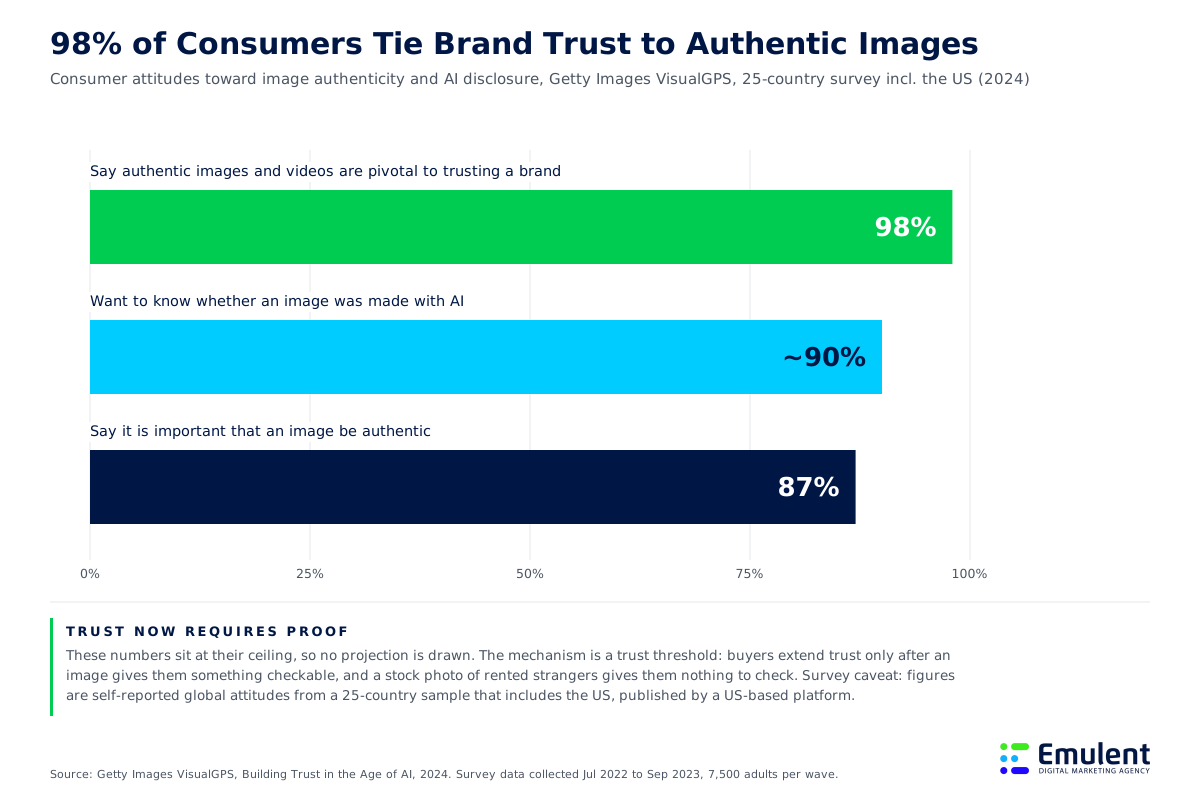
Consumers have adapted to a feed full of synthetic images the way people adapt to any unreliable signal: they demand receipts. Getty Images’ VisualGPS research, published in 2024, found that 98% of consumers agree authentic images and videos are pivotal in establishing trust, 87% say it matters that an image be authentic, and almost 90% want to know whether an image was created with AI. One honest caveat: this is a self-reported survey across 25 countries that includes the US, run by a US-based platform, so treat it as attitude data rather than measured behavior. Even so, when 98% of people agree on anything, the direction is settled.
Here is the part the survey does not spell out and most articles on this topic skip. To a buyer scanning your website, a stock photo of rented strangers and an AI-generated office scene are the same thing: an image with nothing to check. Buyers extend trust after crossing a threshold of verifiable evidence, and generic imagery contributes zero toward that threshold. Real photos of named people do the opposite, which is why we made a full case for why professional team photos build instant trust. This is also why we treat brand photography as trust infrastructure rather than decoration: the shoot exists to produce evidence, and evidence compounds everywhere a buyer meets you.
When AI Does the Recommending, Real Photos Are Your Receipts
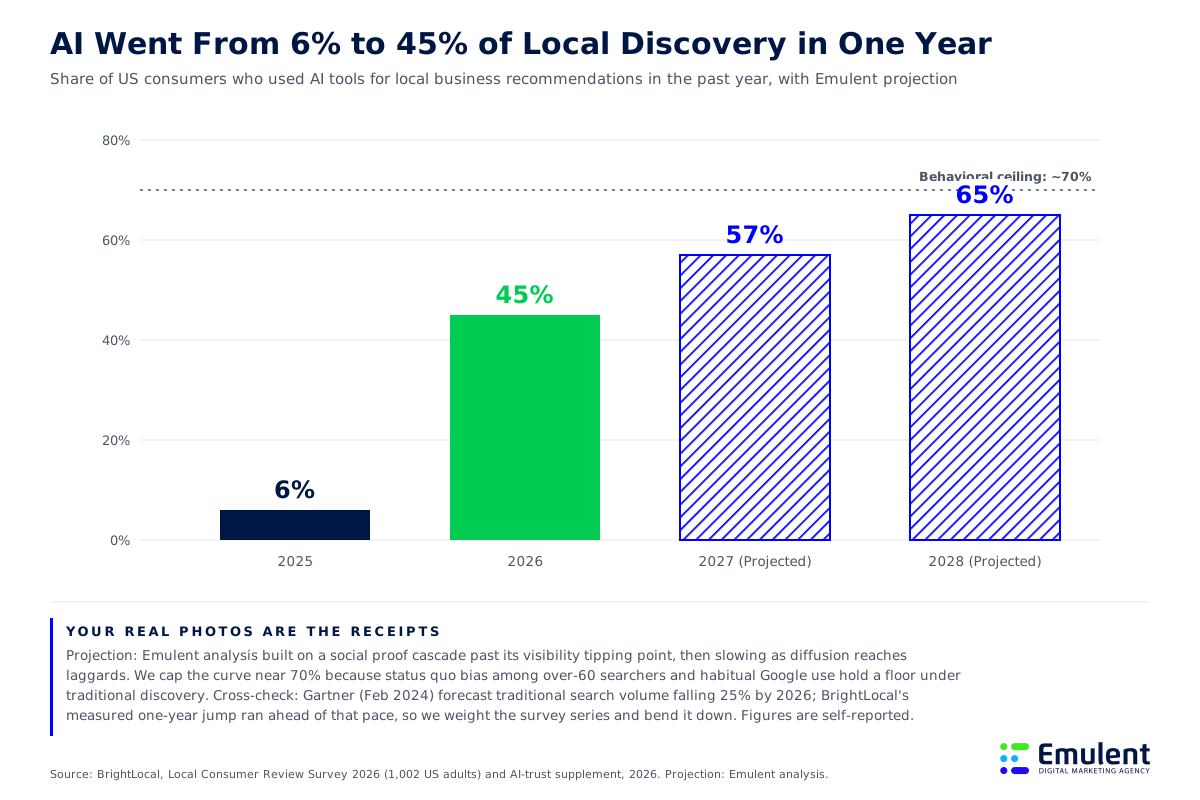
The verification pattern is about to get much more expensive to ignore, because the recommender is changing. BrightLocal’s Local Consumer Review Survey 2026, a February 2026 survey of 1,002 US adults, found the share of consumers using AI tools for local business recommendations jumped from 6% to 45% in a single year, passing Yelp and Tripadvisor as a discovery channel. The same research shows those users are anything but credulous: 88% fact-check AI recommendations against sources and real reviews before acting. So the buying sequence now runs machine first, human second. An AI tool shortlists you, then a person opens your profile and website looking for proof the machine was right.
Our projection carries that adoption to roughly 57% in 2027 and 65% in 2028, capped near a 70% behavioral ceiling. The mechanism is a social proof cascade that has passed its visibility tipping point; the ceiling exists because status quo bias among over-60 searchers and habitual Google use hold a floor under traditional discovery. As a cross-check, Gartner’s February 2024 forecast had traditional search volume falling 25% by 2026; BrightLocal’s measured one-year jump outpaced that pace, so we weighted the survey series and bent the curve downward rather than extending the spike. These figures are self-reported, and we flag that on the chart itself. The practical takeaway does not depend on the exact endpoint. In the fact-check step, your real photos, on your site and your Google Business Profile, are the receipts. Keeping that profile stocked with current, verifiable images is core work in any serious Google local SEO service, and showing up credibly across the AI tools doing the shortlisting is exactly what search-everywhere optimization exists to do. We have tracked the front end of this shift since Google’s rollout began; our breakdown of how AI Overviews affect SEO covers what changed in the results page itself.
Real Photos Sell Even When They’re Worse
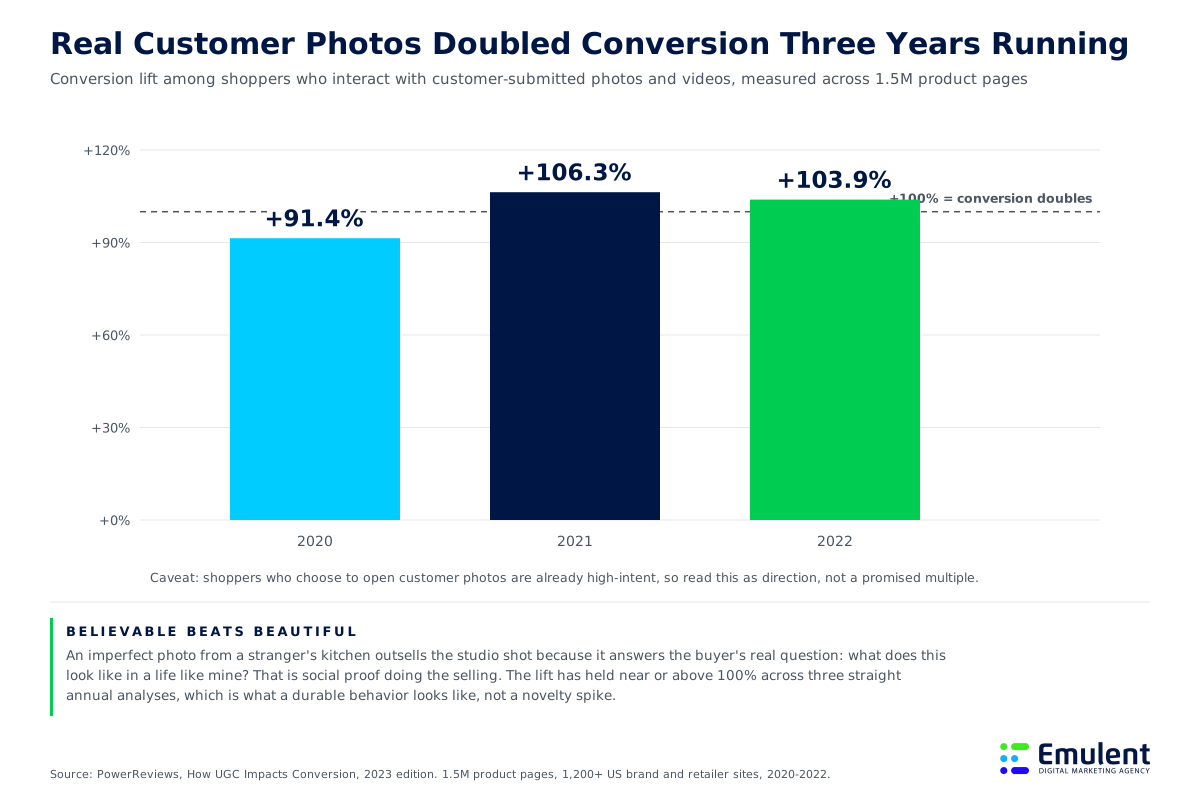
If verification explained everything, the effect would stop at trust. It doesn’t; it shows up at the cash register. PowerReviews’ analysis of 1.5 million product pages across more than 1,200 US brand and retailer sites found a 103.9% conversion lift in 2022 among shoppers who interacted with customer-submitted photos and videos, the third straight year the lift sat near or above 100% (91.4% in 2020, 106.3% in 2021). One caveat we print on the chart itself: this is correlational. Shoppers who choose to open customer photos are already high-intent, so read the series as direction rather than a promised multiple. Three consecutive annual analyses pointing the same way is a durable pattern, though, and the direction is hard to argue with.
The mechanism is social proof answering the buyer’s actual question. A studio shot answers “what does the seller want me to see?” A photo from a stranger’s kitchen answers “what will this look like in a life like mine?” Believable beats beautiful because believability is the information the buyer came for. The same logic scales up to moving footage, which is why we push clients toward brand videography that shows real work in progress instead of drone shots over an empty office.
Where Stock Photos Still Earn Their Place
The strongest objection to everything above is budget, and it deserves a straight answer instead of a sales pitch. A real shoot costs real money, and we will happily tell some readers to keep that money in their pocket for now. Stock and generated imagery remain the right call for abstract editorial concepts (a blog post about interest rates does not need your CFO’s headshot), for interior pages nobody visits during a buying decision, and for businesses so early that the honest photo would be a laptop on a kitchen table. If that is you, spend nothing on photography this quarter and put the dollars into the offer itself.
The line we hold is placement, and here is the position no stock library wants you to read: on any page where a buyer decides whether to trust you (your homepage, your about page, your team page, your Google Business Profile), a stock photo now works against you, because an image that could sit on a competitor’s site without anyone noticing is actively teaching buyers you are interchangeable. Generic imagery on decision pages does the same job as a beautiful site that never converts, a subject we covered in beautiful websites that don’t convert are expensive art: it consumes budget while producing the feeling of marketing instead of customers.
The 20-Minute Photo Audit to Run Before You Spend a Dollar
Run this before booking a photographer or renewing a stock subscription. Open your homepage, about page, top service page, and Google Business Profile, and score every image against one test: could this exact image sit on a competitor’s site without anyone noticing? Count the images that fail. If more than half of your decision-page images fail, you have an interchangeability problem no copywriting fixes, and photography moves ahead of ad spend on your priority list. If your Google Business Profile shows fewer than 20 real photos of your team, space, and work, fix that before spending another dollar on ads, because you are paying to send verification-minded buyers to a profile that cannot verify anything. Then check freshness: any decision-page photo older than three years, or showing people who no longer work for you, fails automatically, since a buyer who meets a different team than the one pictured just caught you in a small lie. Score below those thresholds and one half-day shoot covering your five decision pages will do more for conversion than a site rebuild; our website design teams see this constantly, where the layout was never the problem and the imagery was. Pass the audit and your money belongs elsewhere, probably in the positioning work that brand development services exist to solve, because sharp photos of an unclear brand just document the confusion in higher resolution.
“Most photo budgets die buying prettier versions of pictures nobody believes. Count how many images on your homepage could sit on a competitor’s site without anyone noticing. That number is your problem, and no stock subscription fixes it.” – The Strategy Team at Emulent
What We Would Do With Your Next Photo Dollar
The stance we opened with survives every dataset in this article: generic photos stopped making you look professional the day professional-looking became free, and the only imagery still earning trust is imagery that proves you exist. Adobe’s numbers show polish flooding toward worthlessness. The PNAS data shows buyers cannot referee real from fake, so they reward what they can verify. Getty’s research shows they say so out loud, and BrightLocal’s shows AI-driven discovery is turning verification into the default buying behavior. So spend accordingly: cut the stock subscription on decision pages, run the 20-minute audit, and book one honest shoot of your people, your place, and your work before you touch the ad budget. We track this market every year in the state of brand photography, and if you want a second set of eyes on your audit results, talk to a marketing agency that will tell you when not to spend. Looking like everyone else is now the most expensive look there is.