
One local SEO strategy stretched across 50 locations quietly fails because it treats a portfolio of separate markets like a single market. Running local SEO services for one storefront is a focused project. Running them across 50 locations is a different problem wearing the same name. The playbook that ranked your flagship rarely copies cleanly to location 12 or 47, and when a brand forces a single approach across every market, the cracks stay hidden in roll-up dashboards that look healthy. This piece breaks down where multi-location local search breaks, and how to structure it so each location wins its own market instead of competing with the brand next door.
Key takeaways before we get into the detail:
- Local demand is 50 separate pools, not one. Each location sits in its own market with its own competitors, search volume, and review base.
- One master strategy creates self-competition. Copied location pages and overlapping service areas push your own listings against each other.
- The map pack is winner-take-most. Position one earns nearly half the clicks, so “present in the pack” is not the same as “chosen.”
- AI answers are reshaping local results. A static, centralized approach ages fast as Google answers more queries before the click.
- Rank without conversion is a leak. Local searchers arrive ready to act, and a listing that stalls at the call wastes intent you already earned.
- Reporting has to read two ways at once, rolling up by brand for leadership and by location for the people who run them.
How big is the local search opportunity you are splitting across locations?
Before fixing the mechanics, it helps to size what is on the table. Local-intent search has more than doubled since 2018, with roughly 1.5 billion “near me” queries a month now flowing through Google. For a single business, that is one demand pool to capture. For a 50-unit brand, that volume fractures into 50 separate contests, each shaped by a different city, a different set of rivals, and a different review history.
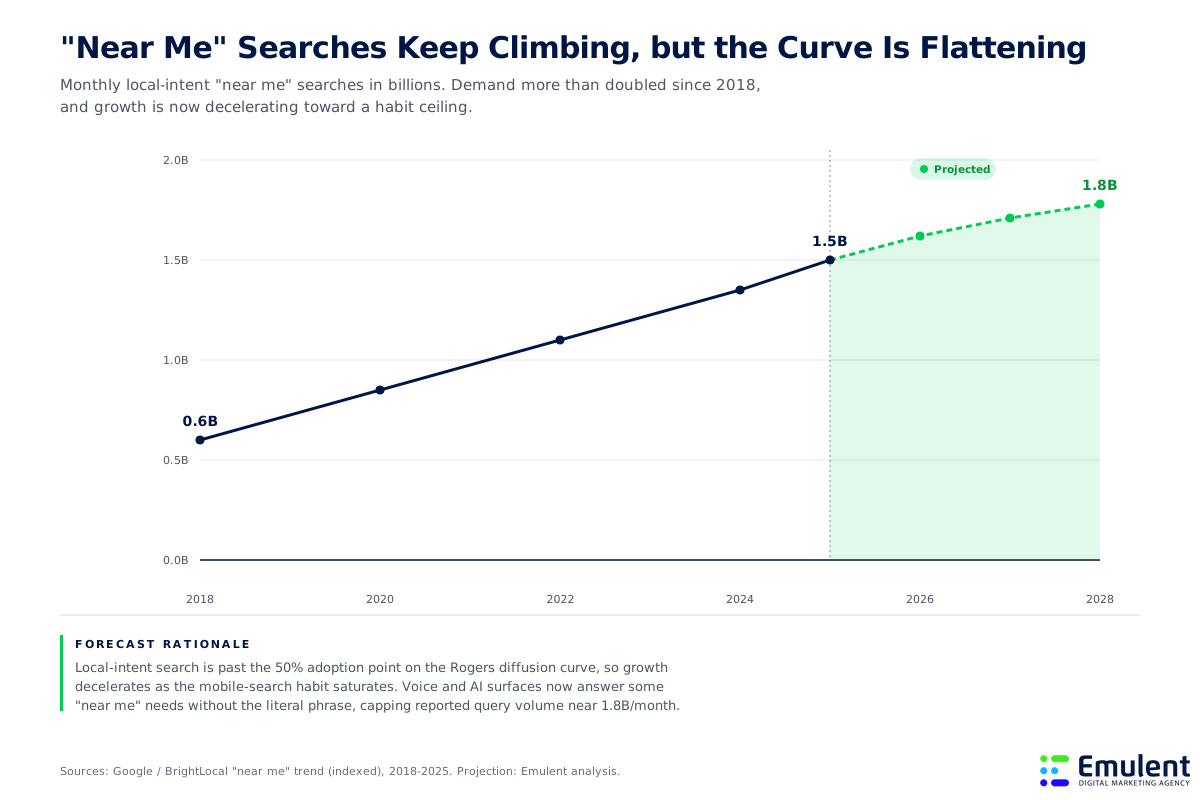 The growth curve carries a warning too. Demand is flattening as the mobile-search habit saturates, so most of the easy lift is behind us. Markets that already pull strong “near me” volume will not keep doubling, which means the brands that win from here are the ones taking share inside each city, not the ones waiting for a rising tide. Our read on where the channel heads next sits in our state of local SEO breakdown. That makes per-location precision the deciding factor, and it sets up the first place a one-size playbook falls apart.
We tell multi-location clients to stop thinking about “the campaign” and start thinking about a portfolio of 50 small businesses that happen to share a logo. The brands that internalize that shift stop fighting themselves in search. – Emulent Strategy Team
Why does one master strategy quietly cannibalize your own locations?
The most common failure in franchise and multi-location programs comes from effort spent the wrong way: a strategy that scales by copying. A brand writes one strong location page, then clones it across every city, swapping in the town name. Google reads that pattern as duplicate content and filters the weaker copies out, so the pages cancel each other instead of stacking. The damage compounds quietly because each individual page looks fine on its own. Handling this well is the core of local SEO for a franchise, where a single brand can hold dozens of listings that must not conflict.
The traps that show up most often across multi-location accounts:
- Cloned location pages. Identical service copy with a swapped city name reads as thin and duplicate, and Google suppresses the copies rather than ranking all of them.
- Service-area overlap. Two nearby locations targeting the same city compete in the same pack, so the brand bids against itself for one slot.
- One profile stretched across many addresses. Sharing a single Google Business Profile across locations breaks Google guidelines and caps visibility for every address tied to it.
- Citation drift. Name, address, and phone details that disagree across directories make Google less confident about which listing to trust, and uncertain listings are shown less often.
Each of these starts as a shortcut and ends as a ceiling. The fix is a page structure that earns its own relevance in each market, built page by page rather than cloned, which is the next decision to get right.
What does a location page need to earn the map pack?
Local visibility rewards the few, not the many. When clicks land on a local pack, position one takes almost half of them and the drop-off to position three is steep. A brand that lands in the middle of the pack in most cities reads as “ranked” on a status board while losing the actual click in every one of those markets.
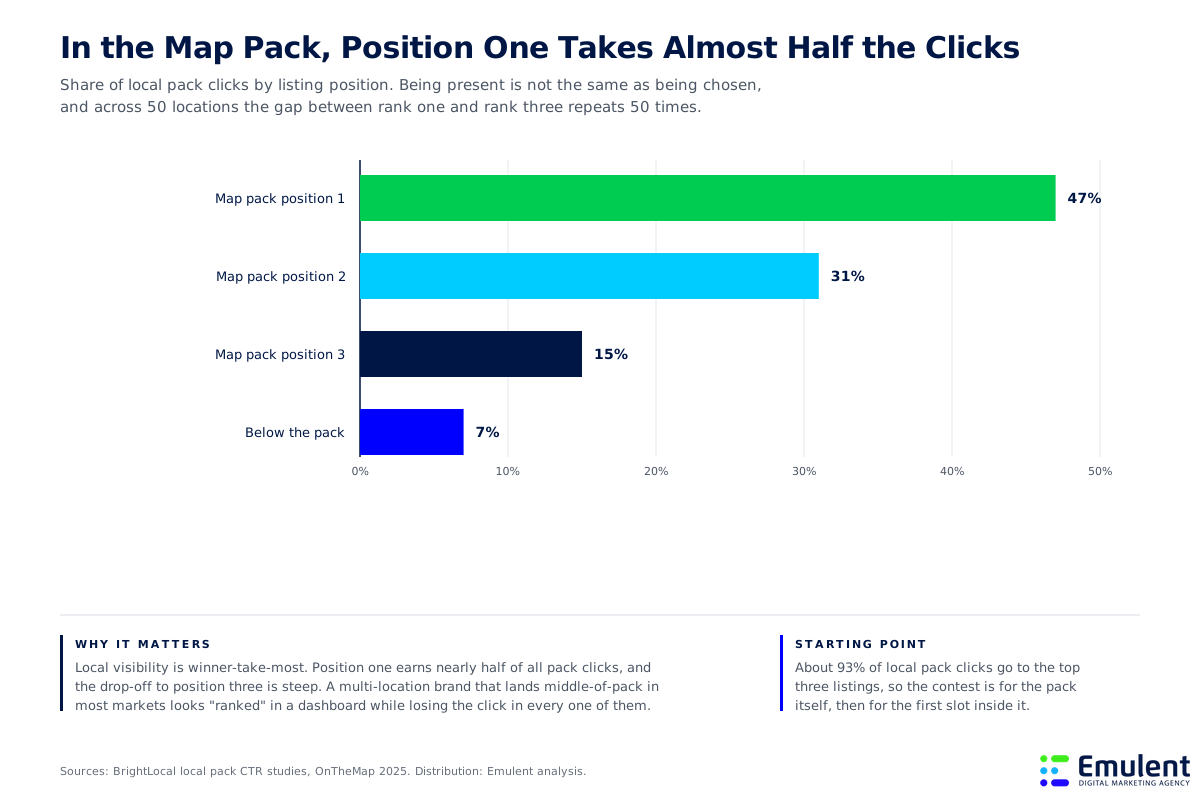 So the contest is twofold. First, win a spot in the pack at all. Then, win the top slot inside it. That only happens when each location sends Google a distinct, locally true relevance signal instead of a templated echo of the brand. The page has to read like it belongs to that city, and the local SEO ranking factors behind it have to agree.
What separates a location page that ranks from one that fills space:
- Unique local content. Real detail about the market, the team, nearby landmarks, and service nuances, written once per location rather than spun from a template.
- A verified profile per address. Each location needs its own claimed Google Business Profile with accurate categories, hours, photos, and services.
- Consistent NAP. The same name, address, and phone format everywhere a listing appears, so Google can verify the location without doubt.
- Local link signals. Backlinks from the actual community, chambers, sponsorships, and local press, which corporate pages rarely earn for an individual address.
- Location schema. Structured data that names the place plainly, which matters more as machines, not people, read your pages first.
Getting the page right per market raises a harder question for the people who manage 50 of them at once: how much local freedom is safe to allow. If you want the full sequence, our 20-point local SEO checklist walks through it step by step.
How do you hold brand control and local relevance at the same time?
This is the tension every multi-location program lives inside. Corporate wants one voice, one look, and one set of promises. Local search rewards pages that feel native to the city. Pull too far toward control, and the pages read generic. Pull too far toward local and the brand fragments. The shift toward AI answers raises the stakes on getting this balance right.
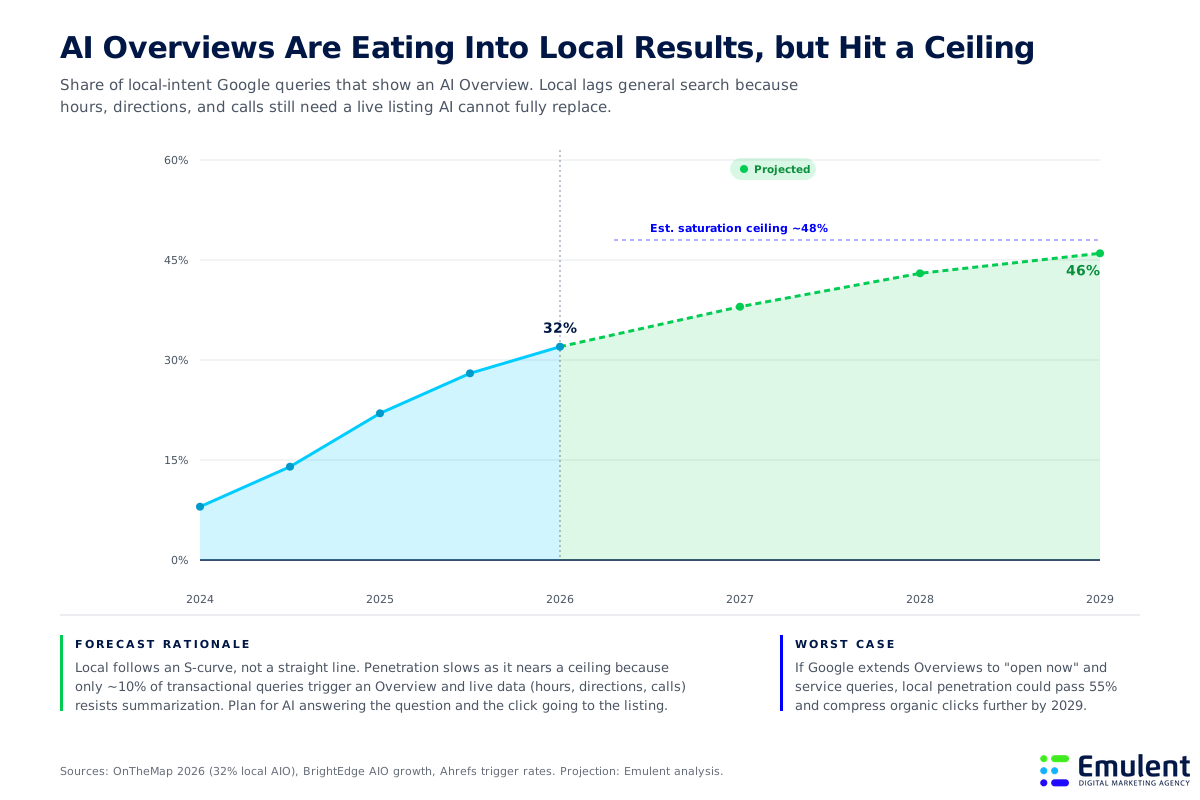 About a third of local queries now surface a Google AI Overview, and that share keeps climbing toward a ceiling rather than a straight line, because hours, directions, and calls still need a live listing that AI cannot fully replace. As machines summarize more of the answer, the clean, consistent facts behind each location, name, category, hours, and reviews become what gets pulled into the response. The resolution is a controlled core with local variables, which is the point of brand-everywhere optimization: one brand system that stays true wherever a buyer meets it.
How to structure centralized brand with local truth:
- Lock the brand layer. Logo, tone, core service descriptions, and legal copy stay standard across every page.
- Free the local layer. Team names, market details, reviews, photos, and community links vary by location and stay up to date.
- Govern with templates plus inputs. Give each location a fill-in structure that forces unique local content instead of allowing copy-paste.
- Feed the machines clean facts. Keep structured data and profile fields accurate so that AI-generated citations cite you correctly.
Brand consistency and local relevance are not enemies. We treat the brand as the fixed frame and the local detail as the picture inside it. Lock the frame, let every market paint its own. – Emulent Strategy Team
Is a top ranking worth anything if the location does not convert?
A ranking is the doorway, not the win. Local searchers act fast, and the gap between local and general intent is wide: local queries convert into purchases at several times the rate of ordinary searches, and a large share buy within a day. That intent is already paid for by the time someone reaches your listing. If the path behind the listing leaks, the rank earned nothing.
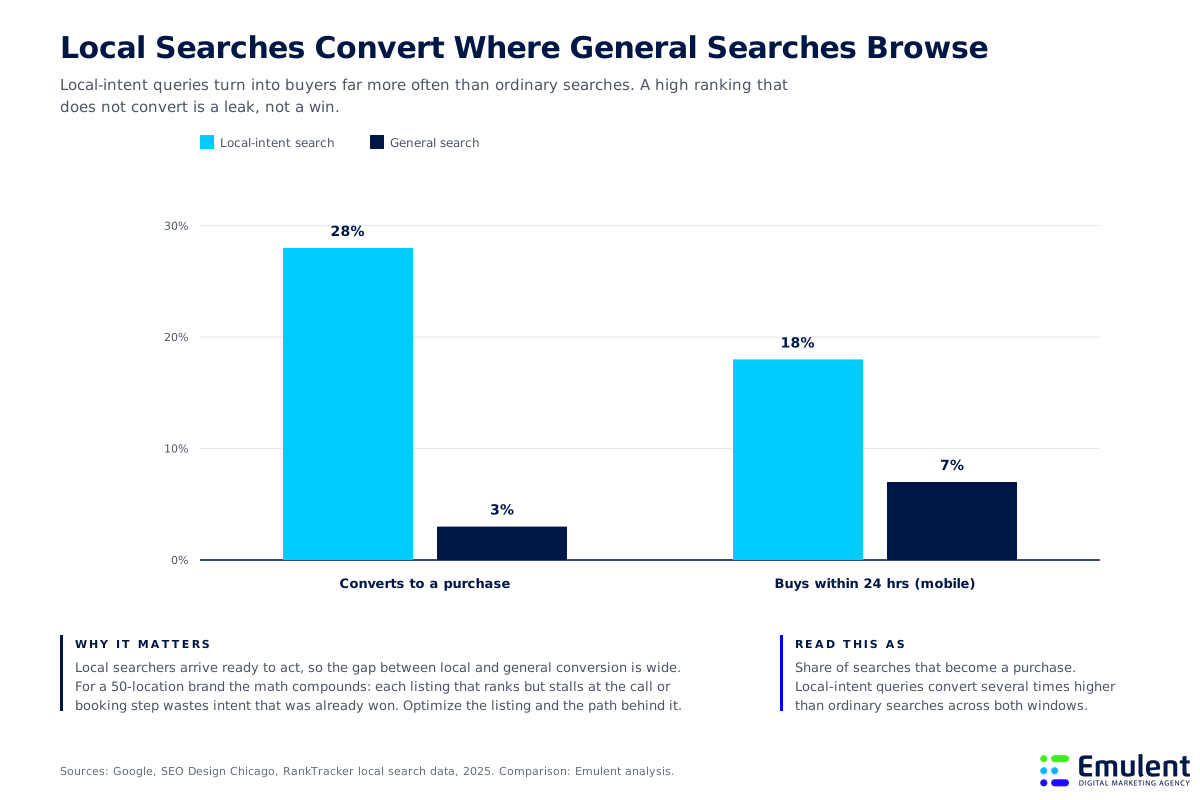 For a single store, one weak conversion step is a problem. Across 50 locations, it is a pattern that drains the whole program. The win is the connected local experience, profile to website to reviews to the call or booking, working end to end in every market. That is brand development as a system, not a project: the listing, the page, and the reviews are one experience, and ranking the map pin while the page behind it stalls just routes hard-won intent into a dead end.
Where local conversions break, and what closes the gap:
- Slow or generic location pages. A fast page with real local proof keeps the searcher moving toward the call.
- Thin or stale reviews. Reviews per location drive rank, trust, and what AI repeats about you, which is why how your reviews shape what AI says matters market by market.
- Broken call and direction paths. Click-to-call and accurate map pins are the primary conversion paths on mobile and need testing for each address.
- Hand-offs to offshore teams. Local work shipped to a white-label vendor overseas loses the market knowledge that makes a page convert, which is why we keep local teams on local accounts.
Closing those gaps depends on seeing them, and seeing them across 50 locations is a discipline in itself. That is where most programs lose the plot.
What should multi-location reporting actually roll up?
Brand-level reporting hides the problems that matter most in local search. An account can show rising total impressions while a dozen locations quietly slide out of their packs. Reporting has to read two ways at once: a brand roll-up for leadership, and a location scorecard for the people who own each market. Bill Ross built Emulent around the idea that the people closest to the work see the truth first, and the approach Bill Ross takes pushes that visibility down to the location level rather than burying it in an average.
What multi-location reporting needs to surface:
- Per-location scorecards. Rank, pack presence, reviews, calls, and conversions for each address, not a brand average that hides the laggards.
- Brand roll-up for leadership. The portfolio view that answers whether the program nets out ahead this quarter.
- Cannibalization flags. Alerts when two locations start competing for the same query so you can fix overlap early.
- Conversion, not just rank. Calls and bookings per location, because a top listing that does not convert is the real failure to catch.
Reporting this honestly also reframes the buyer relationship. Local SEO has a reputation for lock-in contracts because the work is hard to verify month to month. When every location is measured in the open, the program earns its renewal on results instead of a signature, and the cost math per market stops being a mystery, which is why we publish real local SEO pricing for multi-location brands instead of hiding it.
A multi-location report that cannot show you which exact store is losing, and why, is a comfort blanket wearing a report’s clothes. We build the version that names the problem location by location. – Emulent Strategy Team
Bringing it together for multi-location brands
One strategy across 50 locations fails because it treats a portfolio of markets like a single market. The brands that win local search build a controlled brand core, write true local pages per city, chase the top pack slot in every market, close the conversion path behind each listing, and report in a way that names winners and losers by location. Here is the part that costs us business to say: if you cannot resource a real page and a live review engine for each location, run fewer locations well before you scale a thin playbook to 50. Half-built presence across a big footprint loses to a competitor who owns three markets outright.
If you run multiple locations and your local search results feel uneven from one market to the next, we can help you identify where the program is leaking and fix it, market by market. Talk to our team about your local SEO across every location you operate.