
Marketing channel diversification is the practice of spreading reach, leads, and revenue across several channels so that no single platform controls your results. Most teams talk about which channel to win. Far fewer talk about how dangerous it is to depend on one. That gap is the opening, because the brands that quietly build a balanced mix are the ones still growing when an algorithm shifts, a search result stops sending clicks, or an ad auction gets more expensive overnight.
Key takeaways from this article:
- Single-channel dependence is a hidden risk: when one platform supplies most of your traffic or leads, its next change becomes your next emergency.
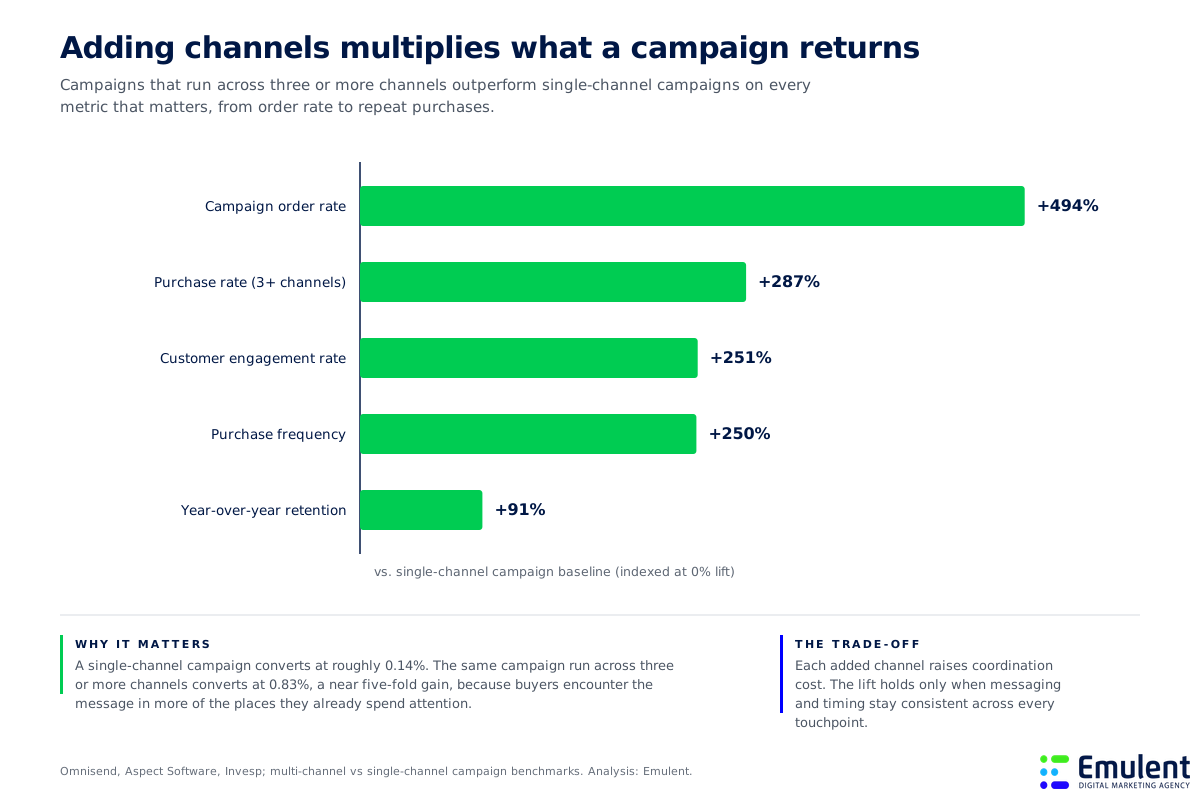
- The multi-channel payoff is large and measurable: campaigns running three or more channels convert at a near five-fold higher order rate than single-channel campaigns.
- Paid budgets are already splintering: search keeps losing share while retail media, social, and connected TV pull dollars in new directions.
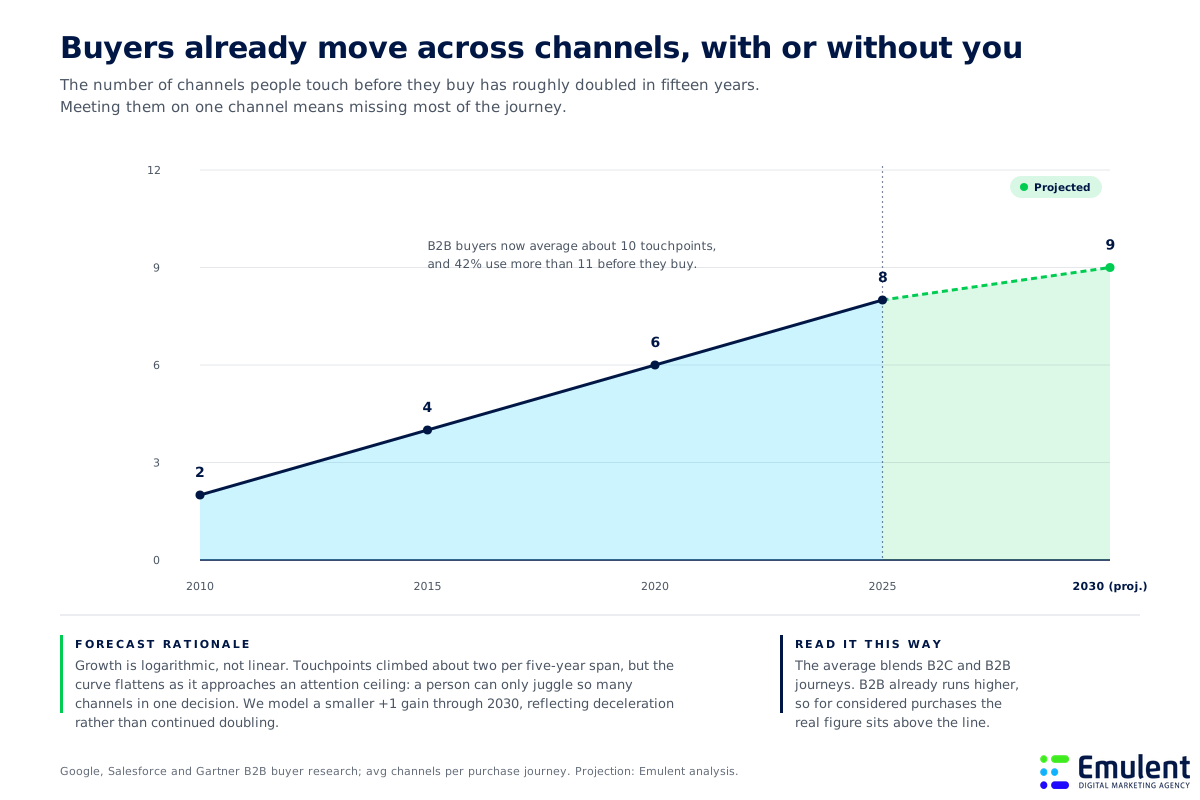
- Buyers are multi-channel before you are: the average purchase journey now touches roughly eight channels, and B2B journeys touch more.
- Owned channels anchor the mix: email still reaches more customers than any other channel and answers to no algorithm.
- Diversify on purpose, not in panic: sequence channels outward from the ones you own and let new platforms earn budget through testing.
Why does leaning on one channel put your whole pipeline at risk?
The clearest warning sign sits inside the channel most brands trust most: organic search. A rising share of Google searches now end without a single click to a website, as people accept the answer shown directly on the results page. The shift accelerated once Google AI Overviews began summarizing sources at the top of results. The chart below tracks that climb and where it is likely headed.

If your pipeline depends on organic clicks alone, this trend is a slow leak you cannot patch from inside that channel. The fix is not to abandon search. It is to make sure search is one of several doors customers can use to find you, and to optimize for the new reality where appearing inside an AI answer matters as much as ranking below it. That work sits at the center of AI search optimization, and it pairs naturally with a wider search everywhere optimization approach that covers Google, ChatGPT, and Perplexity together.
We tell every client the same thing: the moment a channel supplies more than half your leads, it stops being a strength and starts being a single point of failure. Diversification is insurance you buy before the fire, not after. – Strategy Team, Emulent
One bright spot is worth keeping in view. Transactional and local searches still produce clicks at a much higher rate, because a person looking for a nearby service has to call, visit, or book. That is why local SEO remains a resilient channel even as informational traffic erodes. Resilience like that is exactly what a diversified mix is built to capture, and it points to a bigger idea: spreading across channels is not only protection, it is a strategy in its own right.
What makes diversification a strategy and not just a safety net?
The common mistake is treating diversification as defense only, a way to avoid disaster rather than a plan for growth. Spreading reach across channels is a strategy in its own right, because the act of spreading changes the position you operate from and the speed you can react, no matter which specific channels you choose.
What diversification gives you as a strategy:
- Flexibility to move: when a channel’s cost climbs or its rules change, you shift budget elsewhere instead of absorbing the loss. A concentrated brand has nowhere to go.
- Negotiating power: no single platform sets your price, because you always hold alternatives, which keeps your cost to reach customers in check.
- Compounding learning: every channel returns its own read on what your audience responds to, and those lessons carry over to sharpen the rest of the mix.
- Wider coverage: different audiences live in different places, so breadth reaches people that any single channel would miss.
- Steadier acquisition cost: spreading spend smooths the spikes that hit any one channel, so your blended cost per lead holds steadier from quarter to quarter.
This is why we treat the mix itself as the decision that matters. Individual channels are tactics that come and go, but the choice to spread across them is a strategy that outlasts any one of them. A brand built that way competes from a position of strength rather than reacting to whichever platform changed its rules this month.
People ask us which channel is the strategy. None of them is. The strategy is owning a mix you control, so no outside platform gets to decide how your quarter goes. – Strategy Team, Emulent
That strategic position is not abstract, and it surfaces plainly in campaign results.
What does the payoff for going multi-channel actually look like?
Campaigns that reach people across several channels simply perform better, because buyers see a consistent message in more of the places they already spend attention. The lift shows up on every metric a revenue team cares about.
Where the gains come from:
- Order rate climbs sharply: a single-channel campaign converts at roughly 0.14%, while a campaign across three or more channels converts at 0.83%, close to five times higher.
- Repeat behavior improves: purchase frequency and year-over-year retention both rise, so the same customer is worth more over time.
- Engagement compounds: the more places a customer meets a coherent brand, the more familiar and trustworthy it feels, which lifts response on every channel at once.
The trade-off is real. Every channel you add raises the cost of coordination, and the lift only holds when timing and message stay consistent across touchpoints. A scattered mix of disconnected campaigns underperforms a focused one. The discipline that protects the gain is the same one that helps a brand stand out, which is why differentiation across crowded channels belongs in the same plan. Once the payoff is clear, the next decision is where the money should actually go.
Where are paid budgets moving, and what does it mean for your mix?
For most of the last two decades, search collected the largest share of digital ad dollars and the planning conversation started there. That center of gravity is shifting. Retail media networks, social platforms, and connected TV are absorbing the dollars that search once captured by default, and the result is a flatter, more spread-out media market.
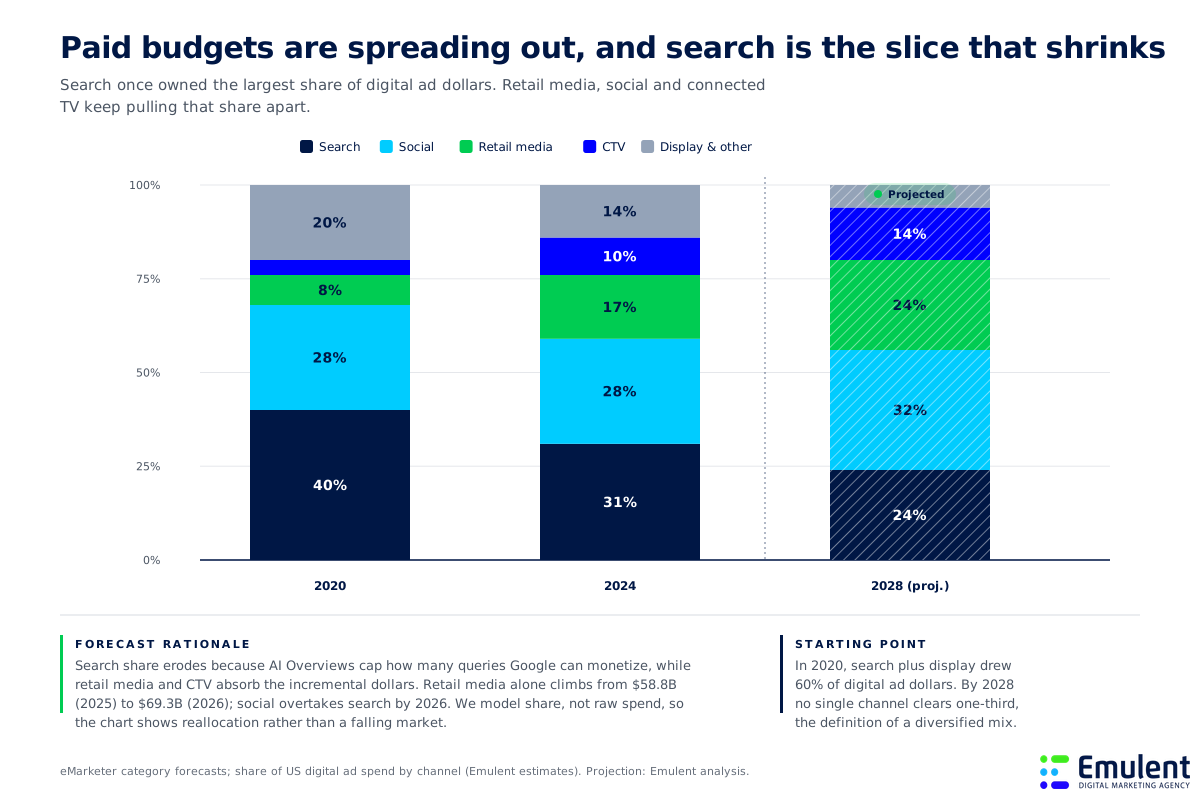
By 2028 we expect no single channel to hold more than about a third of paid spend, which is close to a working definition of a diversified market. Two forces drive the change. AI answers cap how many queries search can profitably monetize, and social advertising budgets keep growing as platforms get better at finding and converting audiences. The practical lesson for a media plan is to treat the splintering as permanent and allocate accordingly rather than defending last year’s split.
Planning a budget around the channel mix of three years ago is how brands quietly overpay. The dollars are moving. A plan that moves with them buys more attention for the same spend. – Strategy Team, Emulent
Deciding how to split a budget across this shifting set of options is one of the harder calls a team makes, and marketing budget benchmarks by industry give a useful starting point. Spend follows behavior, though, so the budget question only makes sense after you understand how many channels your buyers already use.
How many channels do buyers already use before they choose you?
Diversification is not a tactic brands invented. It is a response to how people actually buy. The number of channels someone touches before a purchase has roughly doubled over fifteen years, and the trend is still climbing, even if it is starting to slow as it bumps against the limit of how many channels one person can track.
What this means for how you show up:
- Absence reads as a gap: if a buyer checks eight places and you appear in two, a competitor fills the other six and shapes the comparison without you.
- Consideration purchases are heavier: B2B buyers now average around ten touchpoints, and more than four in ten use eleven or more before they commit.
- Consistency does the work: the same story told the same way across channels lowers the effort a buyer spends to trust you.
Meeting buyers across that many touchpoints sounds expensive until you realize most of those channels are ones you can build and keep, which is where a smart mix starts.
Which channels should anchor a diversified mix?
Diversification done well is not an even scatter across every platform. It starts with the channels you own, then layers rented platforms on top. The data on what brands actually run makes the hierarchy clear.
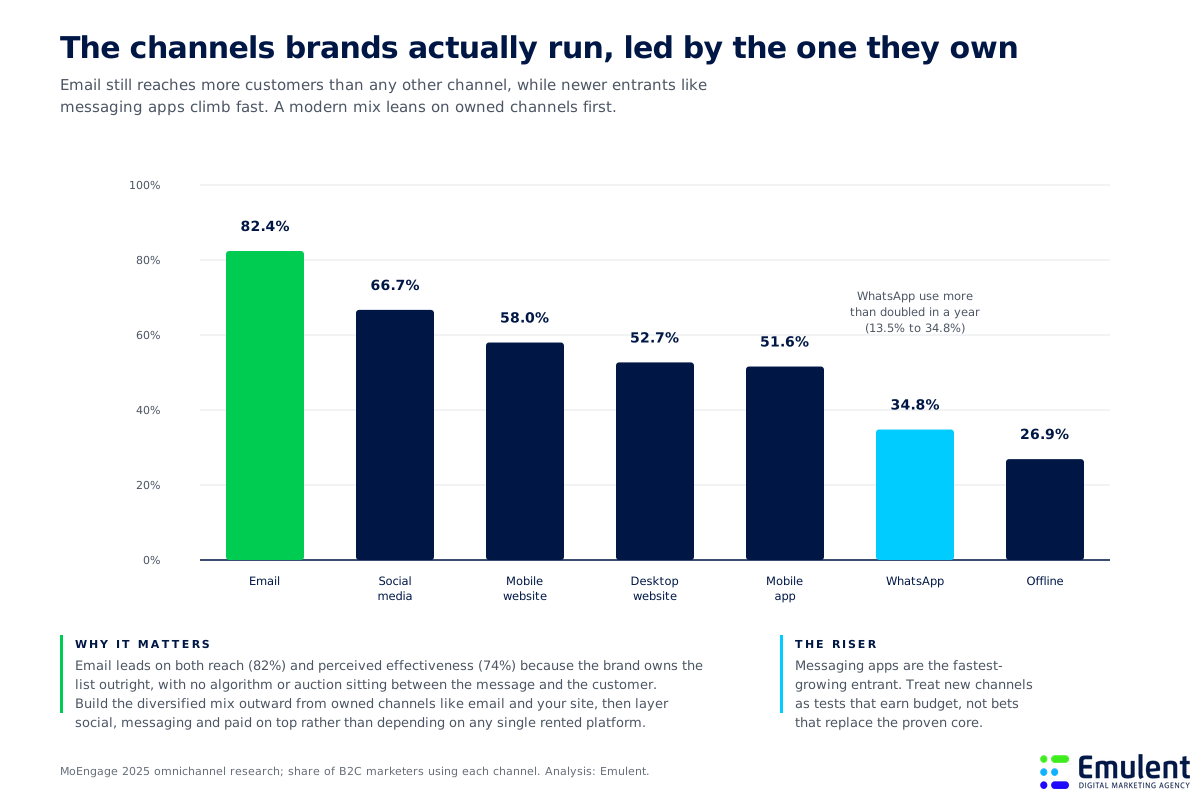
Email leads on both reach and perceived effectiveness for a simple reason: you own the list, and no algorithm or auction sits between your message and your customer. Your website and the content that feeds it earn the same kind of durability, which is why a strong content strategy is the engine that keeps owned channels working.
How to sequence a diversified mix:
- Anchor with owned channels first: email and your website are assets you keep, so they form the stable base the rest of the mix leans on.
- Layer earned and social next: organic social and earned coverage extend reach and feed the owned channels with new audiences.
- Add paid and emerging channels as tests: treat messaging apps, retail media, and connected TV as experiments that earn budget by performing, not bets that replace the proven core.
A new channel should audition before it gets a contract. Give it a clear test, a small budget, and a number to beat. The ones that earn their place make the mix stronger, and the ones that do not never put your revenue at risk. – Strategy Team, Emulent
Built this way, diversification stops being a buzzword and becomes a structure. Owned channels hold the base, social and earned widen the reach, and paid channels flex up or down as performance dictates. No single platform can take your growth hostage, because no single platform is carrying it alone.
How Emulent can help with marketing channel diversification
Spreading your reach across channels sounds straightforward and gets complicated fast, because the hard part is keeping the message consistent and the budget honest while several channels run at once. Our team builds the structure first, anchors it in the channels you own, and adds paid and emerging platforms only after they prove they belong. We bring the full set of digital marketing services under one plan so your channels reinforce each other instead of competing for credit.
If your growth leans too heavily on one platform, or you want a channel mix that holds up when the next algorithm shifts, talk to the Emulent team and we will help you build a marketing program that no single channel can knock over.