
Modern SEO and AI optimization is now a single discipline. The split between ranking on Google and being cited by an AI engine is closing fast, and the strategies that work in one increasingly work in both. This guide walks through 24 practical levers we use with Emulent clients to win visibility across Google, ChatGPT, Perplexity, Gemini, and the AI Overviews layer, which now sits on top of nearly half of all search queries.
Key takeaways:
- The SERP is no longer the destination. AI Overviews appear on roughly 48% of Google queries and zero-click rates have climbed to 60% on standard SERPs and 93% on AI Mode.
- Entity authority has overtaken raw backlink volume as the strongest off-page signal. The share of ranking weight tied to entity signals and brand mentions has more than doubled since 2022.
- Schema markup is the highest-ROI fix in technical SEO. 71% of audited sites deploy structured data, but only 22% pass Google’s Rich Results test cleanly. The 49-point gap is where wins live.
- AI engines cite a small, predictable set of third-party domains. Reddit, YouTube, LinkedIn, Wikipedia, Forbes, G2, and Yelp account for the majority of visible citation share.
- Core Web Vitals still pay for themselves in a quarter. Documented case studies show 25% to 53% conversion lift from passing thresholds, with downside protection against page abandonment.
- Industry exposure is uneven. Healthcare, education, B2B tech, and restaurants saw AI Overview trigger rates climb 25 to 68 points in a single year. E-commerce moved the opposite way as Google pulled AIO from queries that did not convert.
Why has the SERP changed so fundamentally in 24 months?
The single most important shift in search since mobile-first indexing is the rise of synthesized answers above the ten blue links. Google’s AI Overview feature went from 18.5% of queries in Q3 2024 to roughly 48% by Q1 2026. As coverage spread, organic click-through rates on the queries AIO touched collapsed from 10.7% at Position 1 to 2.4%. The change is not gradual. It is the largest single-feature impact on CTR since the Knowledge Graph launched.
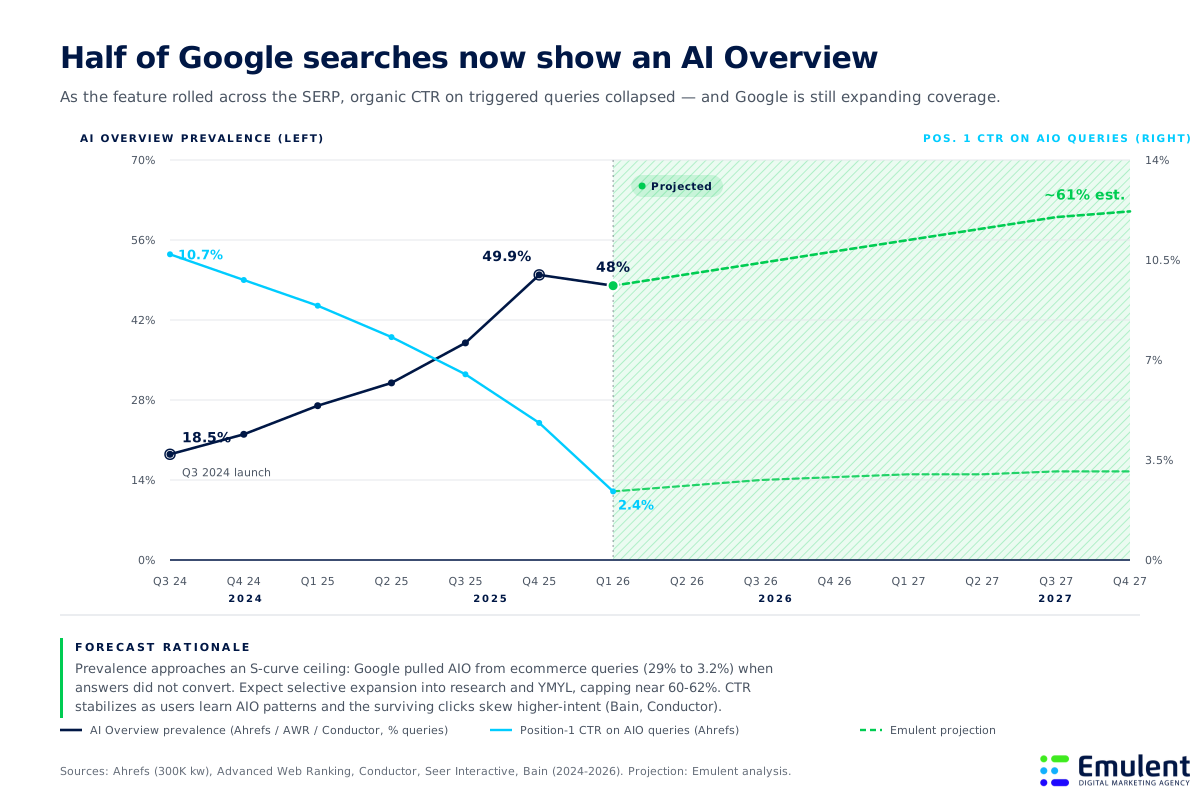
The pattern matters because Google is not done. Coverage has paused near 50% while the system retrains on which query types convert to satisfaction, but expansion continues in research-heavy verticals. The forecast lands near 60% by late 2027, with selective contraction in commercial verticals where AIO answers did not produce purchases. The next section explains where those clicks went, because they did not all leave the SERP.
Where do searches actually end now?
Two-thirds of all Google searches now resolve without a click to an external website. Inside AI Mode, that figure is 93%. The destination shifted from your website to the answer surface itself, and that change is reshaping which metrics make sense to optimize against.
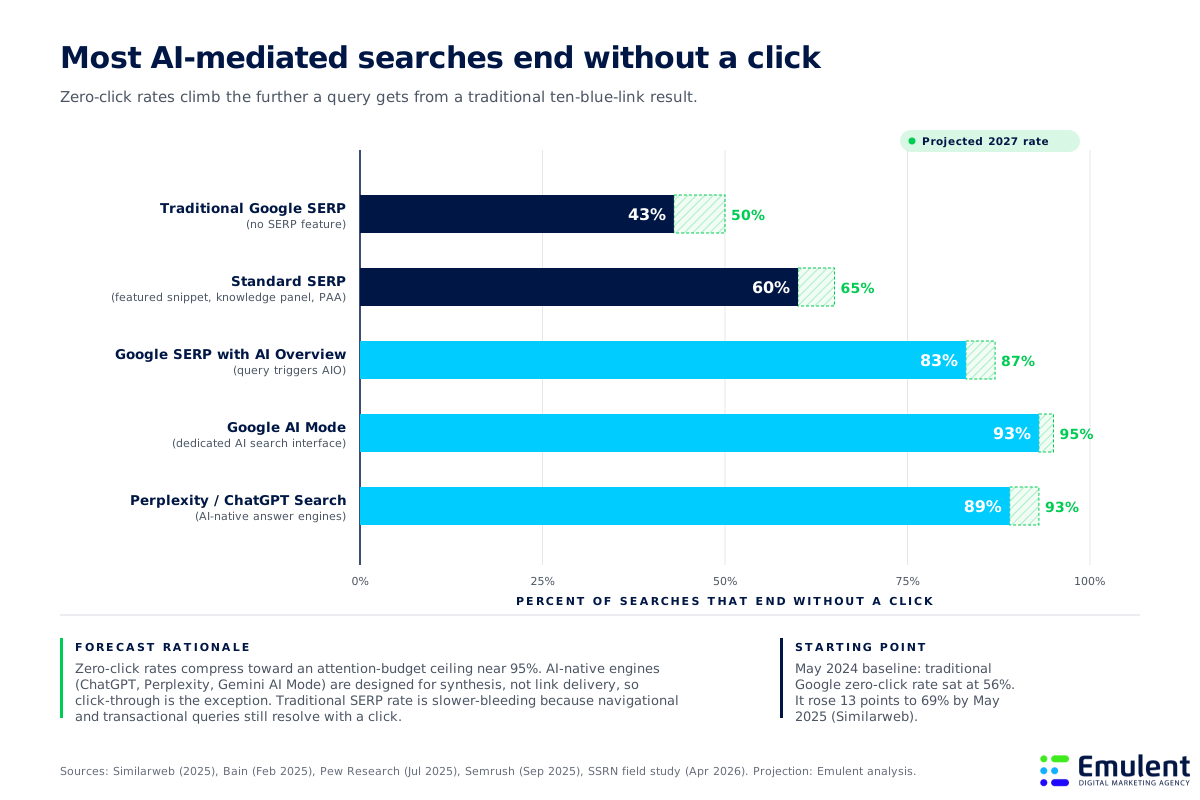
The teams that adjusted earliest stopped reporting on raw organic clicks as the primary success metric. They report citation share, branded search volume, and qualified conversions instead. Click count is now the wrong unit of measurement for half of the funnel. – Emulent Strategy Team
Zero-click does not mean zero value. The clicks that survive an AI Overview convert about 23% better because users have already pre-qualified themselves against the synthesized summary. That changes the goal of upper-funnel content from “earn the click” to “earn the citation.” Which leads directly to the question of which engines actually matter.
Who are the new search players to optimize for?
ChatGPT crossed 900 million weekly active users by February 2026, up from 300 million a year earlier. Google Gemini sits near 275 million weekly users. Perplexity passed 45 million monthly active users on the back of 780 million monthly queries. Claude is the fastest-growing of the major assistants on a percentage basis, with quarterly growth of roughly 14%.
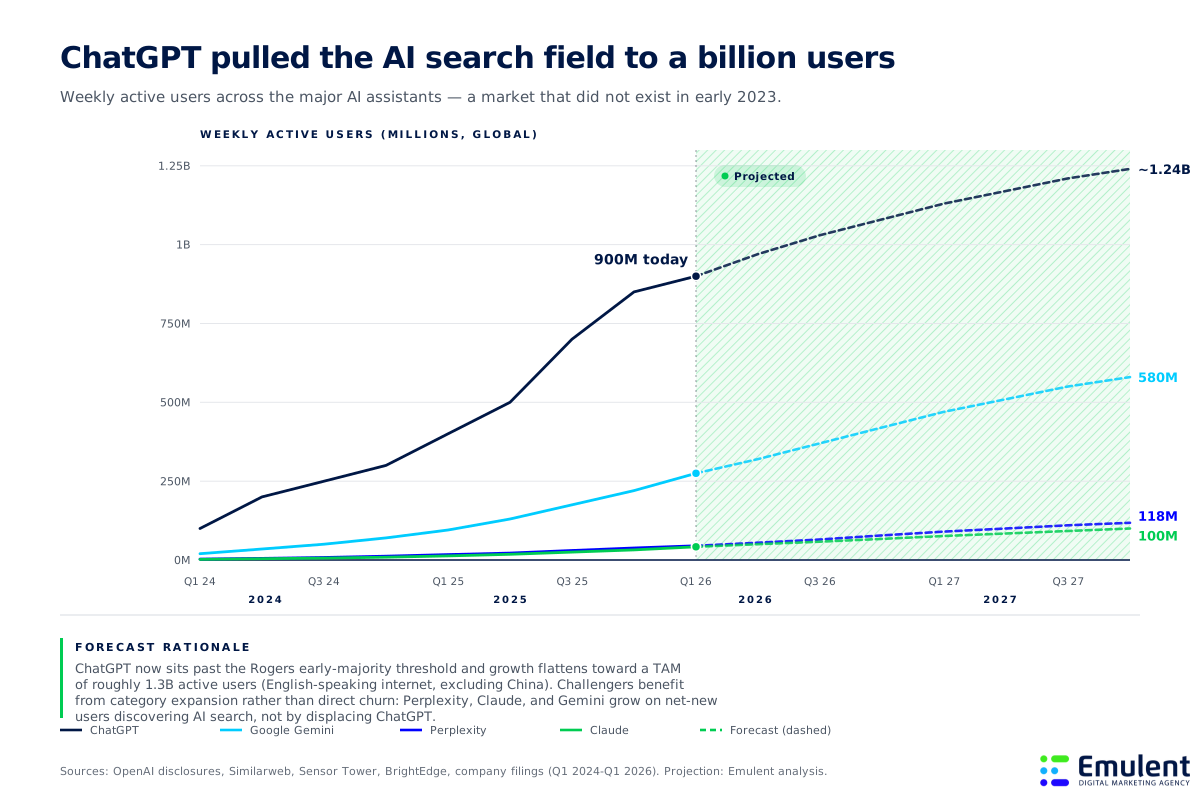
The strategic implication is plural, not singular. ChatGPT alone now handles enough query volume to register as a top-five search property by global query count, but it is not winner-take-all. Perplexity dominates research and citation-heavy queries. Gemini owns the integrated Google experience. Each weights its sources differently, which means a brand visibility strategy needs to be cross-platform from day one. AI SEO services exist because no single optimization pattern works for all four engines at once.
Which industries should worry most about AI Overview saturation?
The AI Overview rollout was not uniform. Healthcare queries trigger an AI Overview 88% of the time. Education jumped from 18% to 83% in twelve months. B2B technology climbed from 36% to 82%. Restaurants went from 10% to 78%. Real estate barely registers. E-commerce dropped from 29% to 3% as Google withdrew the feature from queries that did not convert to purchases.
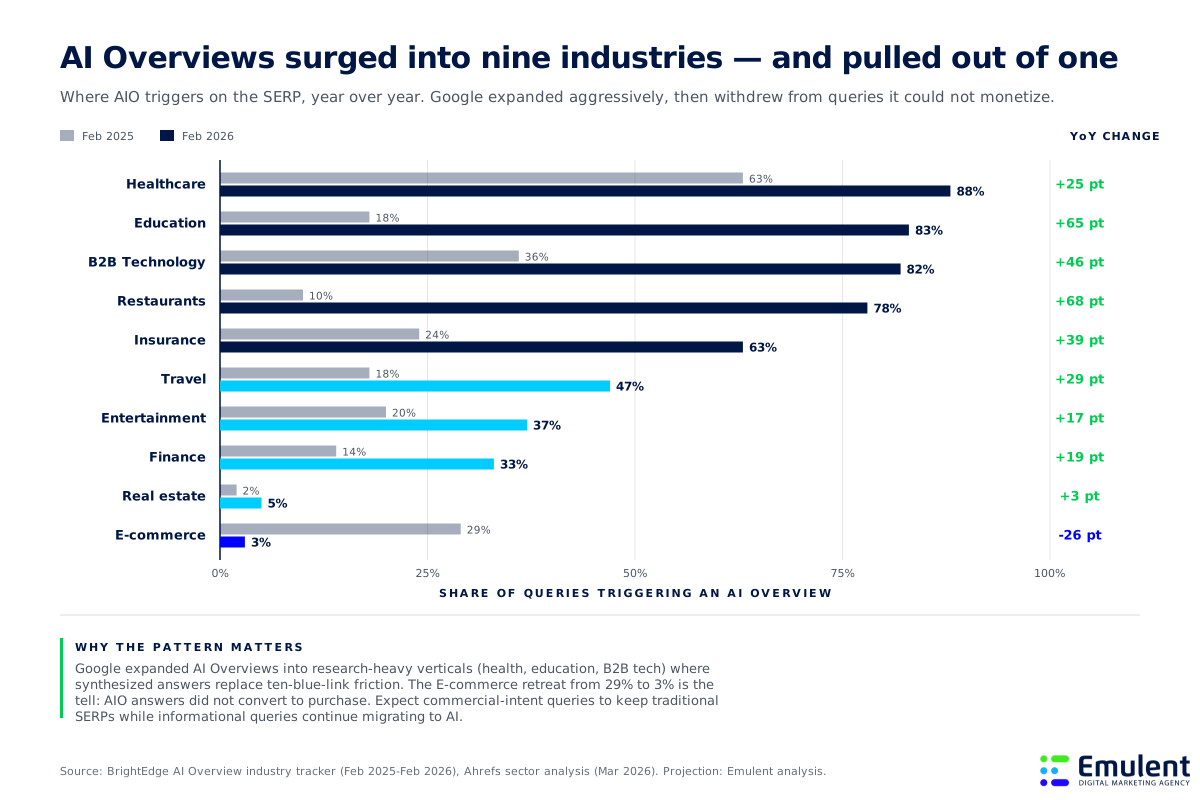
The pattern teaches a useful lesson about how Google evaluates the cost of giving an answer away versus collecting a click. Research-heavy informational queries get the AI treatment because synthesis is what users want. Transactional and high-stakes purchase queries keep the traditional SERP because Google still wants the click and the ad impression. If you operate in healthcare or B2B tech, you are negotiating with AIO whether you want to or not. If you operate in e-commerce or real estate, the traditional SERP still works.
What does entity-based SEO actually mean in practice?
Search has moved from matching strings of keywords to matching concepts. Google’s Knowledge Graph now contains roughly 800 billion facts about 8 billion entities, and AI engines use similar graph structures to decide which brand to associate with which topic. Entity-based SEO is the practice of building those associations deliberately rather than waiting for the model to figure them out from your keyword pages.
The mechanics of entity work look different from the keyword era:
- Co-occurrence pattern optimization. Pages that mention your brand alongside the specific topics you want to be known for create co-occurrence signals. The more consistent the pairing across the open web, the stronger the association.
- Entity association building. Connect your brand to the people, places, and concepts that already have entity entries. A sameAs link from your Organization schema to Wikidata, Crunchbase, or LinkedIn is more useful than a third backlink from a low-relevance directory.
- Entity saturation campaigns. Build content depth around a single core entity rather than scattering across loosely related keywords. Each piece reinforces the relationship and the topical authority that flows from it.
- Brand-entity merging. When your brand becomes the canonical reference for a concept (think Salesforce for CRM or Shopify for ecommerce), entity strength compounds. Most brands cannot get there, but the ones that do earn category-defining presence in AI answers.
The risk of skipping this work is no longer hypothetical. A site without entity reinforcement still ranks for keywords, but AI engines have nothing solid to attach to it, so citation in synthesized answers happens only by accident. The next section covers what triggers a Knowledge Graph entry in the first place.
How do you trigger a Knowledge Graph entry that AI engines can use?
Knowledge Graph triggers require a combination of structured signals and external validation. The most reliable approach combines three layers: Organization schema with complete sameAs links on your own site, consistent NAP citations across authoritative directories, and at least three independent third-party references that confirm what you do.
We see knowledge panels fire after the third or fourth high-quality external mention with consistent description language. Schema gets you in the door. External corroboration is what closes the verification step. – Emulent Strategy Team
This is why citation network design has become a strategic exercise rather than a directory submission task. AI engines and search engines now look for the same kind of corroboration, but they apply it to slightly different surfaces. Citation work that improves your local SEO also improves your AI citation rate, which is one of the few places marketing investment pays back in two channels simultaneously.
Which third-party sources actually carry weight with AI engines?
A small group of platforms account for the majority of visible citations in AI answers. Reddit, YouTube, LinkedIn, Wikipedia, Forbes, G2, Yelp, and a handful of social platforms cover roughly 74% of the top 20 most-cited domains. None of them exceeds 4% individual share, but their concentration matters because they are the surfaces that marketing teams can actually influence.
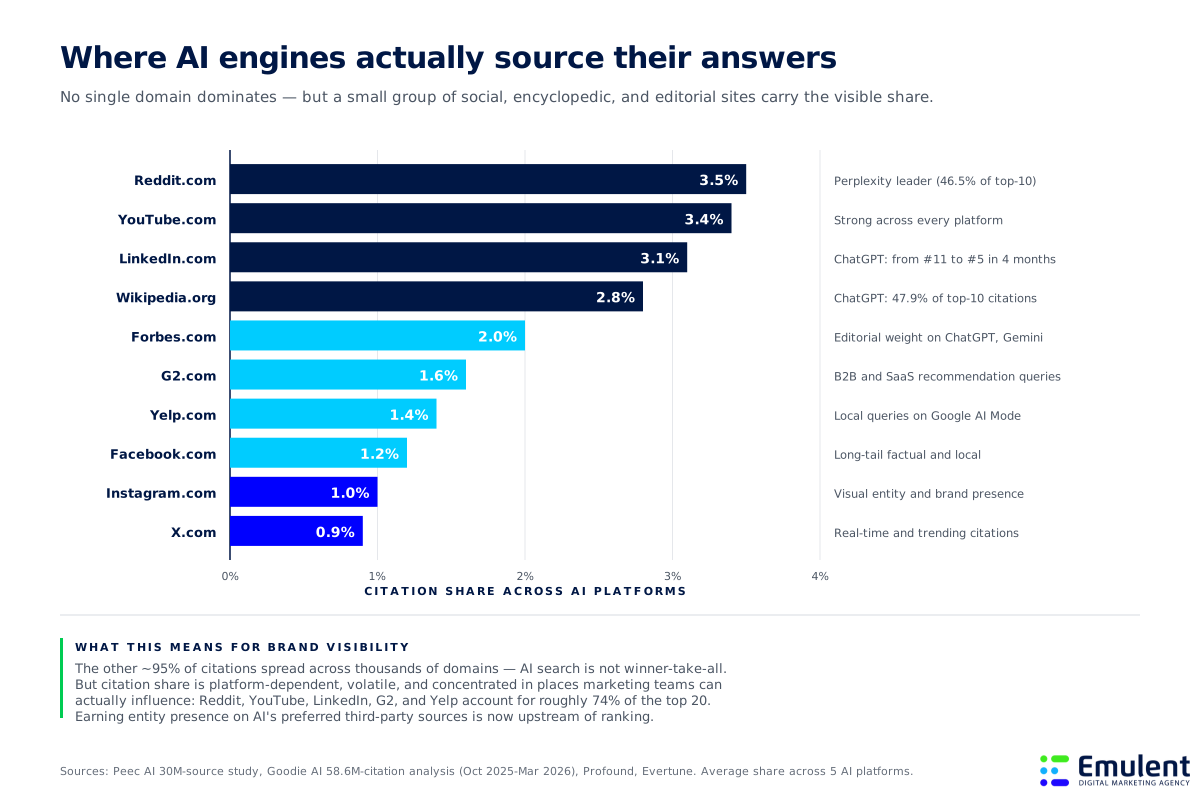
Platform preferences vary in ways that affect strategy. ChatGPT leans hard on Wikipedia. Perplexity leans hard on Reddit. Google AI Mode favors Google-owned properties (YouTube, Google Blog) and social discussion. The practical implication is that a brand visible only on its own website is invisible to most of the AI citation graph. Search everywhere optimization exists to address exactly this fragmentation.
How do source trust and publisher authority build over time?
Source trust is cumulative and asymmetric. AI engines trust a source more when other trusted sources reference it consistently. The math favors brands that earn placement in editorially curated publications, industry reports, and conference programs because those signals reinforce each other.
Publisher authority work has three practical layers. The first is guest contribution to publications that already rank as trusted by the major AI platforms. The second is sustained presence in industry-specific review and comparison sites (G2 for B2B SaaS, Yelp and Google Business Profile for local, Glassdoor for employer-side queries). The third is media network and syndication strategy, where a single piece of research gets coverage across multiple authoritative publications within a tight window, which is something AI engines interpret as collective endorsement.
The catch with syndication is content attribution. AI engines look for the canonical source. If you syndicate without proper rel=canonical or clear original-publisher attribution, citation credit goes to the syndicator, not to you. This is the most frequent unforced error we correct in client audits.
What does citation velocity and network design look like in 2026?
Citation velocity is the rate at which new citations appear. Both Google and the major LLM training pipelines watch for unnatural bursts. A reasonable target is monthly citation growth that tracks your overall growth in branded search and content output, not a synthetic burst tied to a campaign.
Network design is the bigger lever. The shape of your citation network matters more than the count:
- Tier one citations. Authoritative directories, industry associations, and government or .edu mentions. These are slow to earn but heavy in signal.
- Tier two citations. Trade publications, regional business journals, podcasts, and conference programs. These should be earned continuously through PR and thought leadership.
- Tier three citations. Aggregators, niche directories, and community platforms. These provide coverage breadth and protect against single-source dependency.
- NAP consistency. Every citation should match your canonical name, address, and phone number. Drift across sources is the most common reason knowledge panels fail to fire even when individual mentions are strong.
Citation networks reinforce local SEO services when geography is part of your business model, but they also carry weight for national and B2B brands because AI engines use them to verify that the brand exists at all.
Why are brand mentions and unlinked citations now ranking signals?
Google’s 2014 patent on “ranking search results based on entity metrics” described implied links: references to a target resource that are not formal hyperlinks. The patent sat in the background for years. As of 2024, unlinked brand mentions began correlating with ranking lift at rates comparable to traditional backlinks in some studies, and AI engines treat them similarly during answer synthesis.
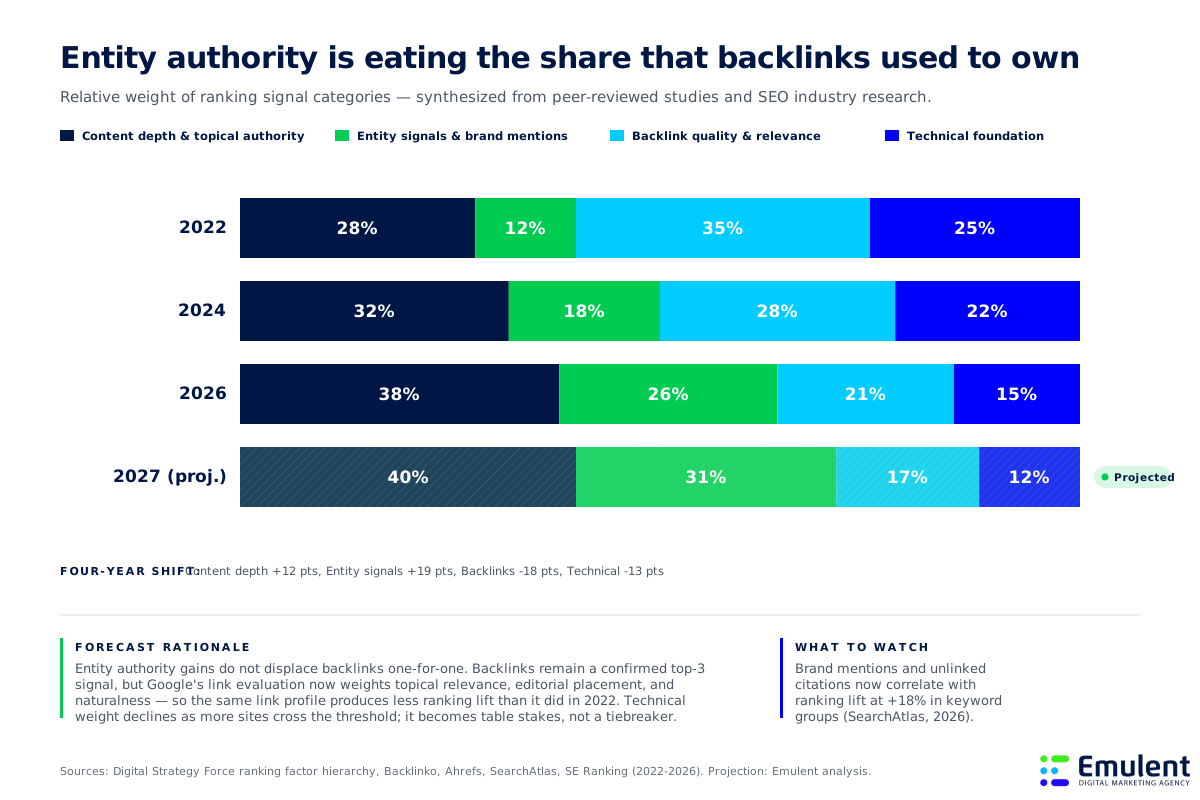
The implication for marketing teams is that PR and brand journalism work now produce direct SEO value, not just downstream brand awareness. A mention of your company in a Forbes article that does not include a hyperlink is still readable by Google’s NLP systems as a brand citation. Campaign tracking that ignores unlinked mentions undercounts the ROI of editorial work by a wide margin.
How does SERP seed site analysis still help in an AI world?
SERP seed site analysis is the practice of identifying the small set of sites that consistently rank for your target topic cluster and reverse-engineering what they have in common. The technique predates AI search but became more useful, not less, after AI Overviews launched. Seed sites are typically the sources AI engines pull from when constructing their answers, because rank correlation with AI citation rate is positive though imperfect.
The practical workflow is to take twenty to thirty target queries, identify the top-ranking domains across all of them, and look at four shared attributes: entity coverage, schema deployment, citation network breadth, and topical clustering. Gaps in your profile against the seed set are usually the cheapest wins available.
How do you build a presence in AI training data?
AI training data is selected on quality, openness, and structure. The frontier labs document their training corpora at varying levels of detail, but the consistent inputs across Anthropic, OpenAI, Google, and Meta include Common Crawl, Wikipedia, Reddit, public GitHub code, peer-reviewed scientific literature, and licensed news archives.
You cannot make a model train on your content. You can make your content trainable, which is the next best thing:
- Crawlability for AI bots. GPTBot, ClaudeBot, Google-Extended, and PerplexityBot need to be allowed in robots.txt if you want to be eligible for inclusion. Many sites block them by default, which forecloses the opportunity.
- Clean structure. Heading hierarchy, explicit Q-and-A patterns, and complete schema let the model parse your content rather than treating it as ambient text.
- Authority through citation. Models weight content the same way humans do: a source that other sources reference confidently is treated as more reliable.
- Open formats where possible. PDFs are harder to parse than HTML. JavaScript-heavy single-page applications can disappear from the training set entirely if the bot cannot execute the script.
The corollary to training data presence is LLM source bias mitigation. Models inherit the biases of their training corpora, and brands that get categorized incorrectly early in a model’s life tend to stay miscategorized until the next major training run. Active correction (publishing canonical descriptions in authoritative places) is the only practical remedy.
What does AI retrieval optimization look like operationally?
Retrieval-augmented generation (RAG) is what most AI search engines actually use at query time. The model does not invent your answer from training memory. It retrieves a set of candidate sources, then synthesizes an answer from them. Optimizing for retrieval means making your content easy to surface against natural-language queries.
The retrieval layer rewards three things that traditional SEO has historically underweighted. First, answer-first writing. The first paragraph of every important page should contain the directly useful answer in a form that can be lifted verbatim. Second, semantic chunking. Long pages should be broken into self-contained sections that work as standalone retrieval units. Third, machine-readable structure. Lists, tables, and Q-and-A blocks are far more retrievable than prose walls.
The shift to retrieval-first writing is the biggest stylistic change in SEO in fifteen years. Pages that read well to humans but fail to answer the question in the first paragraph now lose to pages that do both. – Emulent Strategy Team
Our AI SEO checklist walks through this in more operational detail. The short version is that retrieval optimization is content design plus structural design, and it cannot be retrofitted with a plugin.
Why does Core Web Vitals still pay for itself in one quarter?
Google calls Core Web Vitals a tiebreaker. The case studies suggest the effect is much larger because the business impact is downstream of ranking, not only inside it. Rakuten saw a 53.4% increase in revenue per visitor after LCP optimization. Vodafone Italy improved LCP by 31% and saw 8% more sales. Cross-industry benchmarks show that a 0.1-second improvement in load time produces roughly 8% conversion lift, and a one-second delay produces a 7% loss.
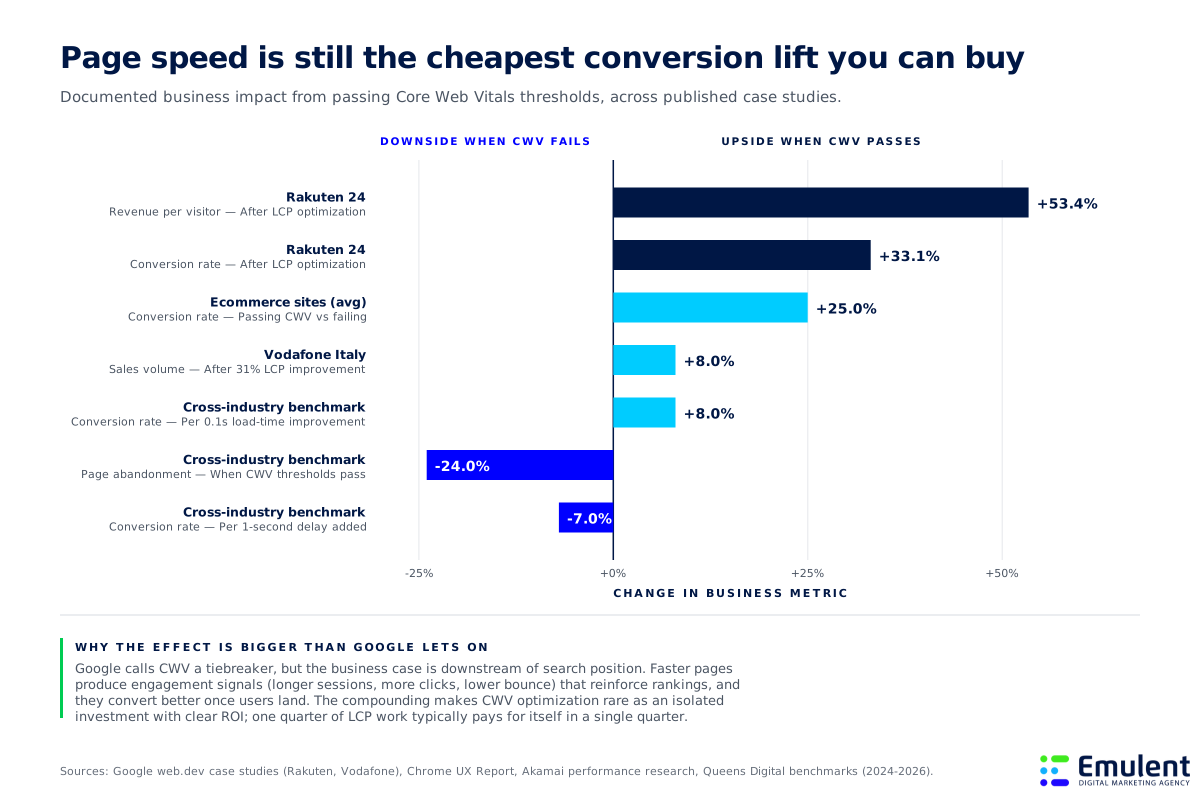
The compounding makes CWV optimization unusually durable. Faster pages produce engagement signals that reinforce rankings, then convert better once users land, then earn more shares and citations because they load reliably on mobile devices. For WordPress sites on quality hosting (WP Engine and Kinsta both pass CWV out of the box on most themes), the investment is mostly in image optimization, JavaScript audit, and font loading discipline. Our WordPress page speed optimization walkthrough covers the specifics.
How do crawlability and indexation problems still hide in plain sight?
Indexation issues are the single most common technical SEO problem we find in audits, and the diagnostic surface keeps getting larger. The four places to check before anything else: the robots.txt file (especially the AI bot directives mentioned earlier), the XML sitemap completeness against Search Console’s index coverage report, internal linking depth (pages more than three clicks from the homepage tend to drop out of the active index), and JavaScript rendering for sites built on React, Vue, or other frameworks where the initial HTML is largely empty.
The crawl budget conversation has changed slightly. Google has been more efficient about which pages it indexes since the Helpful Content updates. Pages that exist but get no internal links, no external references, and no impressions in Search Console will quietly drop out of the index. The fix is rarely “submit again.” The fix is usually deciding whether the page should exist at all, then either consolidating or strengthening it.
What does site architecture look like for AI agents?
Site architecture for human users and architecture for AI agents overlap heavily but not completely. Both want clear hierarchies, predictable URLs, and consistent internal linking. AI agents add two requirements humans tolerate but do not need. The first is canonical URL discipline, because retrieval systems deduplicate aggressively and the wrong canonical can hide your best content. The second is logical chunking at the URL level, where each page covers one entity or concept cleanly rather than mixing topics.
URL structure also matters more than the “URLs do not matter much” consensus suggested two years ago. Short, descriptive URLs that contain the primary entity name correlate with citation likelihood across all four major AI engines. This is probably because URL slugs are one of the few high-signal inputs a retrieval system has when ranking candidate pages against a query.
How do mobile-first technical SEO requirements look in 2026?
Mobile-first indexing is now mobile-only indexing in practical terms. Roughly 64% of all Google searches happen on mobile, and the Chrome User Experience Report data Google uses to evaluate Core Web Vitals weights mobile devices heavily. The implications are operational rather than strategic.
- Render parity. Mobile and desktop versions of a page must contain the same content. Hidden mobile sections that exist only on desktop are read as missing.
- Touch targets and tap accuracy. INP (Interaction to Next Paint) replaced FID and rewards UI that responds within 200 milliseconds.
- Cumulative Layout Shift discipline. Mobile is where CLS hurts most because viewports are small and unexpected shifts feel jarring. Reserve image dimensions, preload web fonts, and avoid late-loading interstitials.
- Connection variability. Mobile users hit your site on cellular networks. Test on throttled connections, not just office Wi-Fi.
Mobile-first is the easiest place to lose a ranking position without realizing it, because most teams test on desktop. We recommend running monthly PageSpeed Insights checks on mobile-only data for at least the top twenty traffic pages.
What security and trust signals does Google still weight?
HTTPS has been a baseline requirement since 2018. The 2026 trust signal stack is broader. Google reads SSL certificate validity, current TLS version, mixed-content warnings, malware status (via Safe Browsing), and increasingly the presence of clear contact information, editorial policies, and author bylines.
The author byline point is new and underappreciated. AI engines weight author entities heavily when synthesizing answers, especially in YMYL categories like health and finance. A page that does not name its author cannot pass author-level E-E-A-T signals. The fix is to add bylines with linked author pages that include credentials, employer affiliation, and sameAs links to LinkedIn and other professional profiles.
How do you fix JavaScript SEO and rendering problems?
JavaScript-heavy sites still trip over the same three problems. The first is content that loads after the initial HTML response, which means Googlebot sees an empty shell on the first pass and has to come back for the rendered version. The second is critical content (titles, descriptions, primary copy) that depends on JavaScript execution. The third is internal links that resolve only after a click handler fires.
The fix is server-side rendering or static generation for any content that matters for SEO. Next.js, Nuxt, Astro, and SvelteKit all handle this well. For WordPress sites with Visual Composer (backend builder, not the live frontend builder), the rendering problem usually does not apply because the markup is server-generated. Sites built as single-page applications on top of WordPress headlessly are a different story, and we typically recommend SSR or hybrid rendering for those configurations.
What does structured data and rich results strategy look like after the 2026 deprecations?
Schema markup is the single biggest under-invested area in technical SEO. A 5,000-site audit conducted in April 2026 found that 71% of production sites deploy at least one schema type, but only 22% pass Google’s Rich Results Test cleanly across every type they emit.
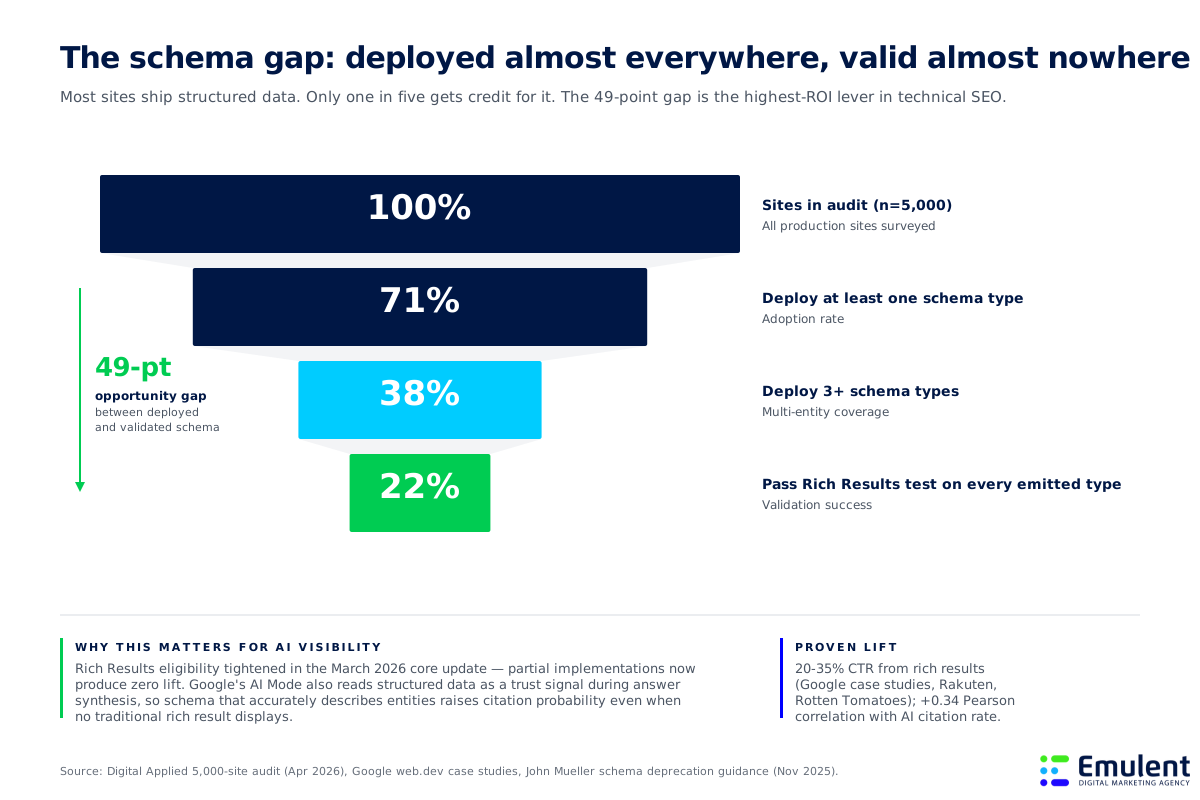
The March 2026 core update narrowed rich result eligibility for several schema types that had been widely abused (FAQ, Review, and How-To on non-primary content pages). The same update introduced a more important change: Google AI Mode now reads structured data as a trust signal during answer synthesis, even when no traditional rich result is displayed. Properly implemented schema increases AI citation probability whether or not a star rating appears in the SERP.
The teams that win the schema gap are the ones who treat it as a quarterly audit instead of a launch-and-forget. Errors creep in every time a template changes. Our experience: about 40% of schema validation failures we find in client audits were introduced after the schema was originally deployed correctly. – Emulent Strategy Team
Five schema types cover the majority of practical use cases for most businesses: Organization, LocalBusiness (for geographically anchored businesses), Article, Product, and Person (for the author bylines mentioned earlier). Each needs to be complete, not partial. A Product schema missing the required AggregateRating property produces no star rating; an Article schema without an author field produces no attribution. Our resource on how to fix schema errors walks through the most common validation failures.
How do all twenty-four techniques fit into one operating cadence?
The twenty-four levers in this guide do not happen in a single quarter. They happen in a sequence, and getting the sequence right matters more than the individual tactics. We organize Emulent client work around a four-phase cadence.
- Phase one: foundation. Crawlability, indexation, mobile parity, Core Web Vitals, structured data completeness. None of the entity work or AI optimization pays back if the technical floor is broken.
- Phase two: entity architecture. Organization schema with full sameAs links, Knowledge Graph triggers, NAP consistency, citation network design, author profile build-out. This phase establishes the “who” so the rest of the work has something to attach to.
- Phase three: content depth and topical authority. Entity saturation across the core topics that matter to the business, retrieval-optimized writing, internal linking that reinforces topical clusters. This is also where existing content gets reworked to answer questions in the first paragraph.
- Phase four: visibility expansion. Editorial PR for brand mentions and unlinked citations, presence on the high-trust third-party platforms AI engines rely on, syndication with proper attribution, ongoing schema audits.
Teams that try to do all four phases at once tend to make slower progress on each than teams that sequence the work. The compounding only kicks in when each phase has a clean foundation to build on.
How should this guide change what your team does next quarter?
Three actions usually produce the biggest improvement in the first ninety days for clients we work with. First, audit your structured data against the Rich Results Test on every template, not just the homepage. The 49-point gap between deployed and validated schema is where most quick wins live. Second, identify the five highest-traffic informational pages and rewrite their opening paragraphs to answer the primary query in the first two sentences. Retrieval systems pull from the top of the page, and most existing content buries the answer. Third, audit your robots.txt for AI bot directives. Many sites block GPTBot, ClaudeBot, or PerplexityBot by default, which forecloses citation opportunities the team probably wants.
None of these require a strategy off-site or a six-month engagement. They are immediate, measurable, and reversible if something breaks.
How Emulent helps with modern SEO and AI optimization
Modern SEO and AI optimization is the work we do every day for clients across healthcare, B2B technology, professional services, home services, and direct-to-consumer brands. We map the entity architecture, fix the technical foundation, design the citation network, and build content that earns visibility across Google, ChatGPT, Perplexity, Gemini, and the AI Overviews layer. Our team treats AI search as a real channel that needs real strategy, not a feature to chase with the same tactics that worked in 2020.
If your organic traffic has dropped in the last twelve months, or if you cannot tell whether AI engines are citing you or your competitors, we can help diagnose the cause and build the recovery plan. Contact the Emulent team to talk through what modern SEO and AI optimization looks like for your business.